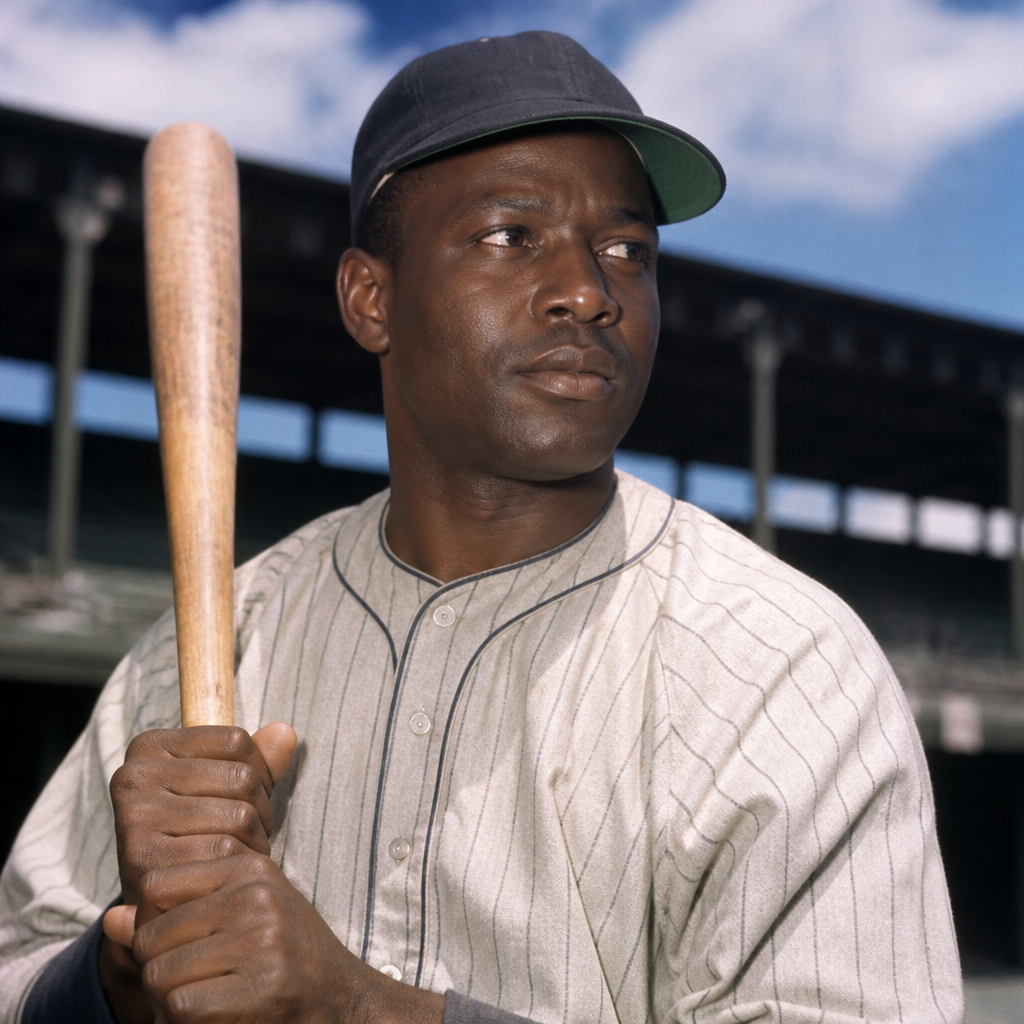
Turkey Stearnes built one of the greatest careers in Black baseball, yet for decades his name lived in the shadows of more frequently celebrated stars. Born Norman Thomas Stearnes in Nashville in 1901, he became a center fielder with uncommon power, a patient eye, and a long, gliding stride that made teammates compare him to a wild turkey, the nickname that stayed with him forever. In any serious discussion of Negro Leagues legends, Turkey Stearnes belongs near the very top. He was not simply a prolific slugger; he was a complete offensive force whose production across the 1920s, 1930s, and early 1940s stands with the best seasons produced by any player in segregated professional baseball.
This player profile hub explains who Turkey Stearnes was, why his record matters, and how to evaluate his place among all-time greats. A player profile is more than a short biography. It combines context, career chronology, style of play, major statistics, team history, and historical significance into one accessible guide. That matters especially in Negro Leagues history, where incomplete schedules, inconsistent recordkeeping, and decades of neglect once obscured the true scale of many careers. Stearnes is a perfect case study because modern research, including work recognized by historians and incorporated into the official major league record, confirms what older observers long said: he was one of Black baseball’s most feared hitters.
I have found that when readers first come to legendary-player coverage, they usually ask the same practical questions. How good was Turkey Stearnes compared with his peers? What teams did he play for? Was he known more for home runs, batting average, or all-around hitting? Why is he often mentioned with Oscar Charleston, Josh Gibson, and Mule Suttles? The clearest answer is that Stearnes combined elite power with durability and consistency over an unusually long prime. He won batting titles, led leagues in home runs multiple times, starred for powerhouse clubs, and remained dangerous well into his late thirties. As a hub article under Legendary Players, this page gathers the essential facts and provides the framework for deeper reading on Negro Leagues stars, player profiles, and Black baseball’s enduring legacy.
Who Turkey Stearnes Was and Why Historians Rank Him So Highly
Turkey Stearnes played primarily in center field and left field, but his reputation rests on his bat. He spent most of his career with the Detroit Stars, one of the flagship franchises of the Negro National League, and later appeared with clubs including the Chicago American Giants, Kansas City Monarchs, and New York Black Yankees. Contemporary accounts describe a quiet, reserved man off the field and a devastating hitter inside the lines. Writers and opponents consistently emphasized his power to all fields. That detail matters. In an era before uniform parks, balanced schedules, and modern travel conditions, all-fields power translated across environments and separated true sluggers from mere pull hitters.
Stearnes ranks so highly because nearly every serious method used to evaluate Negro Leagues players points in the same direction. Traditional newspaper coverage praised him as a game-changing batter. Oral histories from teammates and rivals described him as intimidating and relentless. Modern statistical reconstruction, using box scores and verified league records, places him among the leaders in slugging percentage, isolated power, and adjusted offensive value. Baseball historians such as James A. Riley and researchers associated with Seamheads have repeatedly placed him in the inner circle of Negro Leagues position players. When Major League Baseball officially recognized the Negro Leagues as major leagues in 2020, the broader baseball public gained a clearer statistical basis for understanding just how extraordinary Stearnes had been all along.
His style also helps explain his stature. Some sluggers succeed through brute force alone. Stearnes paired force with rhythm and discipline. He could drive pitches deep, work counts, hit for average, and cover enough ground in the outfield to remain a valuable everyday player. In practical terms, that meant he did not need one specific game condition to dominate. If the ball was carrying, he could hit it out. If pitchers worked around him, he could take walks or line balls into gaps. If his team needed range in center, he supplied it. That breadth of skill is a hallmark of truly great careers.
Early Life, Negro Leagues Entry, and Rise with the Detroit Stars
Stearnes grew up in Nashville, Tennessee, served in the military during World War I, and began building his baseball reputation in semipro and independent Black baseball before joining the Detroit Stars in 1923. Like many Negro Leagues players, he entered a baseball world that demanded versatility and resilience. Teams barnstormed constantly, traveled by bus and rail, and faced financial uncertainty that white major leaguers generally did not. Players had to perform in league games, exhibitions, and high-pressure matchups against local stars, often with little rest. The fact that Stearnes quickly became a foundational star under those conditions says much about both his talent and professionalism.
With Detroit, he found the stage that defined his legacy. The Stars were one of the strongest and most visible Negro National League clubs of the 1920s, drawing large crowds and featuring standout talent. Stearnes emerged as the centerpiece of their lineup. He helped anchor the club’s offense year after year, and his best seasons turned him into a league-wide attraction. By the late 1920s, opposing pitchers already understood that a mistake to Turkey Stearnes could decide a game. Newspapers regularly highlighted his extra-base hits and long home runs, and his consistency made him more than a streaky power bat. He was an offensive engine.
Detroit’s importance to Stearnes’s story should not be understated. The franchise gave him continuity, and continuity is precious in Negro Leagues history. Because so many clubs folded, reorganized, or shifted leagues, long-term team identity could be fragile. Stearnes’s years with the Stars allow historians to trace the arc of an elite Black baseball career with more clarity than is possible for many of his peers. For a player profile hub, this is a useful reminder: team context is essential. Legendary players are not isolated figures. Their greatness develops through organizations, leagues, ballparks, travel schedules, and repeated competition against the same high-level opponents.
How Good Was Turkey Stearnes at the Plate?
The shortest accurate answer is that Turkey Stearnes was one of the greatest hitters in Negro Leagues history. In official Negro Leagues major league statistics compiled from verified league games, he owns a batting average over .340 and a slugging percentage above .600, remarkable figures in any era. He won multiple batting titles and led his league in home runs several times. Researchers also credit him with exceptional rates in on-base percentage and extra-base power, indicating that he was not merely swinging for fences. He created runs in every way a middle-of-the-order star should.
Power numbers in Black baseball require context. Negro Leagues seasons were shorter than American League and National League schedules, and surviving box scores do not capture every exhibition or independent game. Even so, the available evidence shows Stearnes dominating relative to his environment. His home run frequency was elite, and his slugging output remained strong across many seasons rather than peaking briefly. That sustained excellence is one reason historians value him so highly. Anybody can have one extraordinary year; only the rarest hitters remain feared for two decades.
| Category | What It Shows About Stearnes | Why It Matters |
|---|---|---|
| Batting average | He consistently hit above elite league norms | Shows he was not a low-average slugger |
| Slugging percentage | He generated uncommon extra-base damage | Captures his core value as a power hitter |
| Home run titles | He repeatedly led leagues in long-ball production | Confirms dominance against top competition |
| Batting titles | He could control at-bats as well as punish mistakes | Demonstrates complete hitting ability |
| Longevity | He remained productive into later seasons | Separates a star peak from a historic career |
Stearnes also benefited from strong swing mechanics. Observers described a smooth, whiplike stroke rather than an all-out uppercut. That distinction helps explain why his game translated across ballparks. Compact power tends to age better and travel better. His hitting profile resembles the best modern descriptions of a complete slugger: selective enough to avoid empty at-bats, strong enough to clear fences, and athletic enough to stretch singles into doubles and doubles into triples. If a reader wants one takeaway from this section, it is simple: Turkey Stearnes was not just a home run hitter. He was a fully rounded offensive superstar.
Career Highlights, Signature Seasons, and Historical Comparisons
Several seasons define Stearnes’s legacy. In 1925 he broke through as a major force, and by the late 1920s he was firmly established among the Negro National League’s top bats. His 1929 season is often cited as one of his finest, with overwhelming power production and star-level overall offense. He continued piling up value into the 1930s despite league instability caused by the Great Depression, a period that disrupted payrolls, travel, and league structures throughout Black baseball. Many good careers were shortened or fragmented by those conditions. Stearnes adapted and kept hitting.
His ability to survive organizational chaos is historically significant. The first Negro National League collapsed after the 1931 season, and players across Black baseball faced uncertainty about contracts, schedules, and team survival. Stearnes remained a premier talent through that disruption and starred in the reorganized Negro Leagues landscape that followed. That resilience strengthens his legacy because it shows his greatness was not tied to one narrow competitive window. He excelled before the collapse, through the transition, and after new league structures took hold.
Comparisons are unavoidable in any Legendary Players hub. Against Josh Gibson, Stearnes had less mythic fame but comparable offensive credibility in many reconstructed measures. Against Oscar Charleston, he offered similar all-around athletic value though Charleston’s broader fame and earlier peak often draw more attention. Against Mule Suttles, Stearnes stands up as another elite left-handed power threat with a strong argument on average and versatility. The exact order depends on methodology, but Stearnes belongs in the same conversation. That is the essential point. He is not a secondary star elevated by sentiment. He is a primary figure whose record survives rigorous comparison.
Defense, Baserunning, and the Parts of His Game That Get Overlooked
Because Stearnes’s power is so memorable, two parts of his game are often underrated: defense and movement on the bases. Early in his career he played substantial center field, a demanding position requiring reads, speed, and route efficiency. Reports from the period describe him as rangy and graceful. While fielding metrics for Negro Leagues players remain incomplete, position alone tells us something important. Teams do not leave a weak defender in center field for long, especially not in competitive leagues full of line drives into expansive outfields. Stearnes had the athleticism to handle that responsibility.
He was also more mobile on the bases than the stereotype of an old-time slugger suggests. Long strides made him dangerous going first to third and capable of turning hard contact into extra bases. In Black baseball, where aggressive baserunning was often a tactical necessity, that skill added value beyond batting totals. It also made his offensive profile harder to game-plan. A pitcher and defense confronting Stearnes had to worry not only about deep power, but also about the pressure he applied once the ball was in play.
These details matter when building complete player profiles. Greatness is easier to understand when each tool is placed in context. If readers only remember Stearnes as a slugger, they miss why managers built around him so confidently. He could anchor a lineup, cover outfield ground, and contribute in transition play. On balanced teams, that combination is gold. On Negro Leagues clubs dealing with uneven rosters and constant travel, it was even more valuable.
Legacy, Hall of Fame Recognition, and Why This Player Profile Still Matters
Turkey Stearnes was elected to the National Baseball Hall of Fame in 2000, a long-overdue recognition that corrected part of baseball’s historical imbalance. His plaque in Cooperstown confirms his standing, but it should not be the end of the discussion. Hall of Fame induction tells readers he was great. Careful study shows how great. He stands as a reminder that Black baseball produced superstars equal to the best talent anywhere, even while segregation denied them the visibility, salaries, and statistical preservation their achievements deserved.
That is why this player profile hub matters within Legendary Players coverage. A strong hub page does two jobs at once: it introduces newcomers to an iconic figure and gives serious readers a framework for deeper study. Turkey Stearnes offers both. His biography opens the door to larger topics including Negro Leagues team history, Black baseball in Detroit, statistical reconstruction, Hall of Fame debates, and the challenge of comparing players across incomplete records. For editors planning related articles, Stearnes connects naturally to profiles of Josh Gibson, Oscar Charleston, Cool Papa Bell, Mule Suttles, and Cristóbal Torriente, as well as explainers on the Detroit Stars and Negro National League history.
The clearest takeaway is that Turkey Stearnes deserves to be remembered not as an overlooked curiosity, but as one of Black baseball’s definitive careers. He hit for average, power, and impact across an extended prime. He starred for major Negro Leagues clubs through unstable years. He earned the respect of contemporaries and the validation of modern research. If you are building your understanding of legendary players, start here, then continue through the broader player profiles collection to see how Stearnes’s brilliance fits within the full story of Black baseball excellence.
Frequently Asked Questions
Who was Turkey Stearnes, and why is he considered one of the greatest players in Negro Leagues history?
Turkey Stearnes, born Norman Thomas Stearnes in Nashville in 1901, was one of the most complete and feared stars in Black baseball. Best known as a brilliant center fielder with game-changing power, he combined home run ability, speed, patience at the plate, and graceful defense in a way that made him stand out even in an era filled with legendary talent. His nickname came from the long, gliding stride that reminded teammates of a wild turkey, but there was nothing awkward about his impact on the field. He was a lineup anchor, a run producer, and a player who could dominate games without the level of publicity that followed some of his contemporaries.
What makes Stearnes especially important historically is that his excellence held up across seasons, teams, and competitive environments within the Negro Leagues. He was not just a good player with a few standout years; he built a sustained career that placed him among the elite of Black baseball. Historians and researchers consistently rank him near the top because the available records, eyewitness accounts, and modern statistical reconstructions all point in the same direction: Stearnes was an all-time great. In conversations about the best Negro Leagues players ever, his name belongs alongside icons such as Satchel Paige, Josh Gibson, Oscar Charleston, and Cool Papa Bell.
What kind of player was Turkey Stearnes on the field?
Stearnes was the rare player who could hurt opponents in nearly every phase of the game. Offensively, he was renowned for his power, especially for a center fielder, and he was also known for a disciplined approach at the plate. He did not simply swing wildly for extra bases; he understood the strike zone, worked counts, and made pitchers pay for mistakes. That blend of patience and power helped make him one of the most dangerous hitters in Negro Leagues history. He could drive the ball deep, hit for average, and produce runs consistently, which is why he was viewed as far more than a one-dimensional slugger.
Defensively, Stearnes brought range and athleticism to center field. His stride covered ground so smoothly that it became part of his legend, and it helped him patrol a premium defensive position with confidence. He also added value on the bases, not necessarily as a player remembered only for stolen bases, but as an instinctive and intelligent runner who could take extra bases and pressure defenses. Taken together, those skills made him a true all-around star. He was the kind of player managers build around and opponents game-plan against, because he could change the outcome of a game with his bat, glove, or legs.
Why did Turkey Stearnes remain less widely known than some other Negro Leagues legends for so many years?
One major reason is the historical neglect that affected many Negro Leagues stars, even the very best ones. For decades, Black baseball did not receive the same level of media coverage, statistical preservation, or institutional recognition that Major League Baseball enjoyed. That meant players like Stearnes, despite extraordinary accomplishments, often did not become household names in the broader American sports memory. When fans learned about the Negro Leagues at all, the spotlight usually fell first on a smaller group of especially famous figures, leaving other elite players underappreciated.
Stearnes also seems to have been a more understated figure than some of the larger-than-life personalities who became central to baseball storytelling. As a result, his legend was preserved more through the respect of teammates, opponents, and historians than through decades of mainstream promotion. Once deeper research into Negro Leagues history expanded and organizations began to take Black baseball more seriously, Stearnes’ reputation grew accordingly. Today, he is increasingly recognized not as a forgotten supporting star, but as one of the foundational greats whose career deserves much more attention than it originally received.
How impressive were Turkey Stearnes’ achievements compared with other stars of his era?
By any serious standard, Stearnes’ achievements were extraordinary. Researchers who have reconstructed Negro Leagues records regularly identify him as one of the era’s premier sluggers and one of its most productive offensive players. He was known for leading leagues in major categories, delivering elite run production, and sustaining top-tier performance over many seasons. That matters because greatness is not just about a brief peak; it is also about consistency, adaptability, and dominance over time. Stearnes checks all of those boxes.
His standing becomes even more impressive when placed in context. The Negro Leagues featured outstanding competition, including future Hall of Famers and many exceptional players who never received their full due in the segregated baseball system. To separate yourself in that environment required more than reputation; it required repeated excellence against high-level opposition. Stearnes did exactly that. Modern analysts often point to his combination of power, on-base skill, and defensive value as evidence that he was not merely one of the better players of his time, but one of the defining superstars in all of Black baseball history.
What is Turkey Stearnes’ legacy today, and why does his story still matter?
Turkey Stearnes’ legacy today is that of a long-underrated giant whose place in baseball history has become clearer with time. He represents the many Negro Leagues stars whose brilliance was obvious to those who saw them play, yet whose names were not fully celebrated in the mainstream for generations. As historians, fans, and baseball institutions continue to correct the record, Stearnes stands as a powerful example of how much talent existed outside the segregated major leagues. His career forces modern audiences to widen their understanding of who baseball’s greatest players really were.
His story matters because it is about both excellence and recognition. Stearnes was not simply a memorable nickname or a colorful figure from a separate chapter of baseball history; he was one of the sport’s truly elite performers. Remembering him helps restore the full scope of the game’s past and honors the players who built greatness despite exclusion from the established major league system. For readers exploring Black baseball history, Turkey Stearnes is essential not only because he was a superb center fielder and slugger, but because his career captures the depth, quality, and enduring importance of the Negro Leagues themselves.