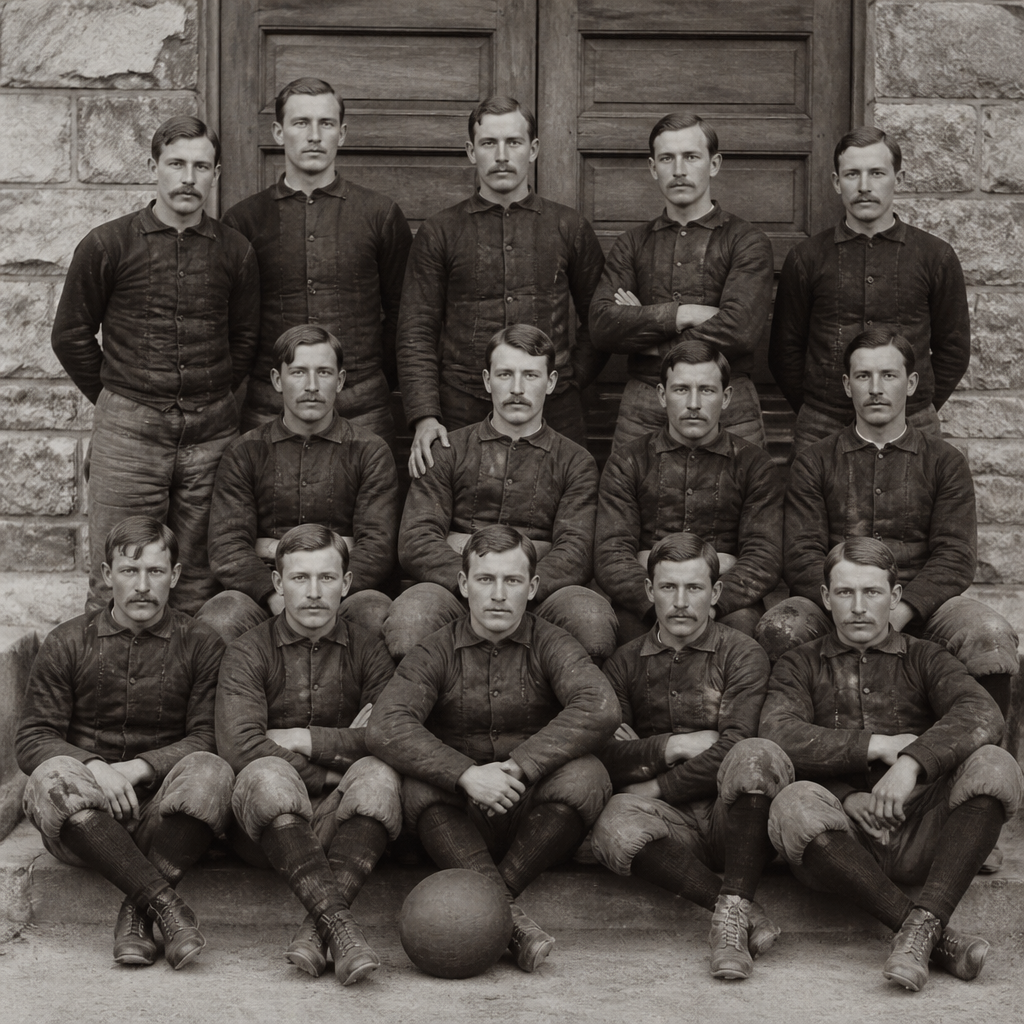
The Detroit Wolverines occupy a strange, revealing place in baseball history: they were the champions of 1887, fielded one of the nineteenth century’s strongest rosters, and then disappeared only two seasons later. For readers exploring famous baseball teams, the Wolverines are essential because their rise and collapse explain how early professional baseball worked before the modern major league structure settled into place. They were not a quirky footnote. They were a championship club shaped by money, territorial limits, railroad economics, and the unstable business model of the National League in the 1880s.
In practical terms, the Detroit Wolverines were a National League franchise based in Detroit, Michigan, from 1881 through 1888. Their signature achievement came in 1887, when they won the league pennant and then defeated the St. Louis Browns in a postseason championship series that many historians treat as a precursor to the modern World Series. The phrase nineteenth-century clubs refers to professional teams formed during baseball’s earliest fully commercial era, when leagues folded, schedules shifted, player contracts were loosely controlled compared with later standards, and club survival depended as much on gate receipts as on baseball skill. I have spent years working through box scores, league guides, and franchise records from this period, and the Wolverines repeatedly stand out because their fate captures the entire era in one story.
This topic matters beyond nostalgia. The Wolverines help explain why some historic clubs endured while others vanished, why star concentration could distort competitive balance, and why market size alone did not guarantee stability. Their story also serves as a hub for understanding nineteenth-century clubs more broadly, including the Chicago White Stockings, St. Louis Browns, New York Giants, Providence Grays, Buffalo Bisons, and Louisville Colonels. If you want to understand how early baseball teams were built, financed, and lost, Detroit is one of the clearest case studies.
The Wolverines in the landscape of 19th-century baseball
Professional baseball in the 1880s was organized around fierce regional competition, uneven travel demands, and overlapping leagues that challenged each other for players and fans. The National League, founded in 1876, aimed to impose more discipline than earlier circuits, but it still operated in a turbulent environment. Franchises could be powerful on the field and fragile in the ledger at the same time. Detroit entered the National League in 1881, replacing weaker or defunct clubs in a period when league membership was still fluid.
Detroit was an ambitious baseball city, but it faced structural disadvantages. Compared with eastern population centers such as New York, Philadelphia, and Boston, it was farther from the league’s travel core. Rail travel increased costs and reduced scheduling flexibility. Weather also mattered more than many modern fans realize. Early and late season dates in the upper Midwest could depress attendance badly, and nineteenth-century clubs lived and died on cash sales at the park. There were no national television contracts, no licensing empires, and no postseason revenue sharing to smooth losses.
The Wolverines also illustrate a defining feature of nineteenth-century clubs: identity could be unstable even when talent was obvious. Teams were often known by city names, nicknames supplied by newspapers, or both. “Wolverines” referenced Michigan’s longstanding state nickname, but the club’s public identity was still tied primarily to Detroit. That pattern was common across the era. The Chicago White Stockings, for example, evolved into the modern Cubs only after decades of nickname drift, while the St. Louis Browns of the American Association eventually became today’s Cardinals through league change and brand evolution.
How Detroit built a championship roster
The Wolverines did not stumble into a title. They assembled talent aggressively, most famously through the acquisition of the “Big Four” from Buffalo: Dan Brouthers, Hardy Richardson, Jack Rowe, and Deacon White. That move, engineered by wealthy owner Frederick Stearns and club leadership willing to spend far beyond ordinary norms, changed the balance of power in the league. Brouthers was one of the greatest hitters of the nineteenth century, a left-handed first baseman with elite bat control and power for the period. Richardson was a versatile infielder-outfielder and dangerous offensive player. Rowe was a reliable catcher and field leader. White, already a legendary figure from baseball’s earliest professional decades, brought skill and credibility.
Detroit already had core talent, most importantly pitcher Charlie Getzien and Hall of Fame outfielder Sam Thompson. Add Ned Hanlon, who later became one of baseball’s most influential managers, and the roster begins to look less like a one-year wonder and more like an all-star concentration before such a term existed. In the 1880s, team-building could depend heavily on ownership wealth because salary regulation was inconsistent and player movement rules were still developing. Detroit used financial muscle to buy excellence quickly.
The result was immediate. In 1887 the Wolverines finished 79-45, won the National League pennant, and outscored opponents with a lineup that combined on-base skill, extra-base hitting, and unusual depth for the time. Thompson drove in runs at a remarkable rate. Brouthers produced like a middle-of-the-order force in any era. Getzien gave the club a workhorse arm in a period when top pitchers routinely threw enormous innings totals. Detroit was not simply better than most rivals on paper; it was built to dominate the style of baseball actually played in the 1880s.
The 1887 championship and why it mattered
Detroit’s greatest triumph came after the pennant race, in an extended postseason series against the St. Louis Browns, the powerhouse champion of the rival American Association. The clubs played a best-of-fifteen contest, with Detroit winning ten games to five. Historians sometimes debate how official these early interleague championship series should be considered, but the practical significance is clear: the two strongest clubs from the two major leagues met to settle supremacy, and Detroit prevailed.
That victory mattered because St. Louis was not a paper champion. The Browns, led by player-manager Charles Comiskey, were one of the era’s dominant organizations, having won multiple Association pennants. Beating them gave Detroit a claim to being the best team in professional baseball, not merely the best in one league. The series also revealed the period’s looser rules and promotional instincts. Venues shifted, financial arrangements were negotiated club to club, and public arguments over gate receipts and playing conditions were common. Early championship baseball was both competitive sport and traveling business venture.
For Detroit, the title should have launched a dynasty. Instead, it highlighted a central weakness of nineteenth-century baseball economics: winning did not guarantee sustainability. A roster loaded with expensive stars created pressure to keep drawing large crowds, and Detroit’s market could not reliably match the attendance base of larger eastern cities. The Wolverines reached the summit at exactly the moment their business model became hardest to maintain.
Key figures who defined the franchise
Several names make the Wolverines worth studying beyond their short lifespan. Dan Brouthers is the headliner. By adjusted offensive measures used by historians, he ranks among the most dominant hitters of the nineteenth century. His combination of average, power, and plate discipline was rare in any era, and Detroit’s offense revolved around his bat. Sam Thompson, another Hall of Famer, gave the team a devastating run producer in right field. His extra-base impact was enormous even in spacious, uneven nineteenth-century parks.
Charlie Getzien was the staff anchor. Pitchers of his time worked under evolving rules, including changing pitcher distance and delivery restrictions, so comparing raw statistics across eras requires caution. Even with that caveat, Getzien’s workload and effectiveness were elite. Deacon White added experience from baseball’s earliest professional generation. Ned Hanlon contributed strategic intelligence that foreshadowed his later fame as a championship manager in Baltimore and Brooklyn.
The franchise also reflected the influence of owners and financiers more directly than modern clubs do. Frederick Stearns, a pharmaceutical executive, was crucial because his resources allowed Detroit to outbid or purchase talent in a way many clubs could not. In nineteenth-century baseball, wealthy backers often mattered as much as front-office systems matter today. When that backing weakened or failed to overcome structural market limits, even a champion could disappear.
Why the Wolverines vanished after winning
The simplest answer is financial contraction, but the full explanation is more instructive. Detroit’s payroll commitments were heavy, its travel burdens were high, and attendance did not consistently support a star-loaded roster. After the 1887 peak, the club slipped to fifth place in 1888, still respectable but no longer dominant enough to offset costs with excitement at the gate. In a business with thin margins, a single down year could undo an aggressive strategy.
Another factor was league geography. Detroit was not isolated, but it was less convenient than the eastern cluster that drove much of the National League’s commercial logic. Long trips increased expenses and complicated scheduling. Owners across the league also had incentives to redistribute talent toward stronger gate cities. In 1888, Detroit sold several stars, most notably Brouthers, Richardson, and Rowe, to the New York Giants. That transaction weakened the team immediately and strengthened a flagship market club.
| Factor | How it hurt Detroit | Example |
|---|---|---|
| High payroll | Expensive star roster required strong attendance | Buffalo stars added major salary pressure |
| Travel costs | Rail trips cut into operating margins | Midwest location increased distance to eastern rivals |
| Market size | Fan base smaller than New York or Chicago | Could not match big-city gate receipts consistently |
| Talent sell-off | On-field quality fell after star departures | Big Four pieces moved to New York |
| League instability | Franchises were judged by finances, not legacy | Champion status did not protect weak economics |
By the end of the 1888 season, the National League contracted, and Detroit was out. The franchise did not relocate into a continuous modern identity. It simply ceased to exist. That outcome was common enough in nineteenth-century baseball that historians treat franchise mortality as a core feature of the era, not an exception. The Wolverines’ fame comes from how dramatic the fall was: from champion to defunct in roughly two years.
What the Wolverines reveal about other 19th-century clubs
As a hub for nineteenth-century clubs, the Wolverines point to several broader lessons. First, championship teams in early baseball were often assembled through concentrated star power rather than deep farm systems or long-term development pipelines. The Providence Grays of 1884 leaned heavily on Hall of Fame talent such as Old Hoss Radbourn, whose workload would be unimaginable today. The Chicago White Stockings sustained success better because they paired stars with a stronger urban market and more durable organizational leadership under Albert Spalding and Cap Anson.
Second, league affiliation mattered. The American Association and National League competed for prestige, players, and fans, and clubs could look dominant inside one structure yet remain financially vulnerable overall. The St. Louis Browns survived because their market and organization adapted successfully over time. Buffalo and Providence produced elite clubs but lost long-term major league standing. Louisville and Cleveland cycled through repeated instability. Detroit belongs in that pattern: successful enough to matter, unstable enough to vanish.
Third, nineteenth-century baseball cannot be understood only through standings. Park conditions, gambling concerns, Sunday baseball restrictions, alcohol policies, and local politics all shaped survival. The National League often positioned itself as cleaner and more orderly than rivals, but moral branding did not solve every commercial problem. Clubs still needed reachable ballparks, dependable paying crowds, and owners willing to absorb shocks.
For readers building out a complete understanding of famous baseball teams, the best path is comparative. Study the Wolverines alongside the White Stockings for continuity, the Browns for rival-league dominance, the Grays for pitching-centered supremacy, and the Bisons for talent-rich instability. Together, these clubs explain why modern baseball emerged from constant experimentation rather than orderly evolution.
How to remember the Detroit Wolverines today
The fairest way to remember the Detroit Wolverines is not as a failed franchise, but as a championship club that exposed the economic limits of early professional baseball. They proved that elite talent could be assembled in Detroit, that western cities could compete for the sport’s highest honor, and that postseason championship play existed in meaningful form before the modern World Series. They also showed that prestige alone could not overcome geography, payroll strain, and league contraction.
Their legacy survives through the players who passed through the roster, the records preserved in nineteenth-century guides, and the influence their collapse had on roster concentration elsewhere. When Detroit sold stars to New York, it helped shape the competitive map of the late 1880s. When historians trace the roots of championship series, the 1887 Wolverines demand inclusion. When fans ask why some famous baseball teams endured and others disappeared, Detroit offers one of the clearest answers.
If you are exploring nineteenth-century clubs, start with the Wolverines and then branch outward to Chicago, St. Louis, Providence, Buffalo, and Louisville. That sequence gives you the full picture: talent, ambition, rivalry, instability, and reinvention. The Detroit Wolverines vanished soon after winning, but their short arc reveals how baseball became a national professional sport. Keep this club at the center of your nineteenth-century reading, because understanding their rise and collapse makes every other early franchise easier to understand.
Frequently Asked Questions
Why are the Detroit Wolverines important in baseball history if the team existed for only a short time?
The Detroit Wolverines matter because they capture a pivotal moment in the sport’s early professional era. Although the franchise played in the National League for only a handful of seasons in the 1880s, it reached the top of the baseball world by winning the 1887 championship and then vanished almost immediately afterward. That rise-and-collapse arc makes the club unusually revealing. It shows that nineteenth-century baseball was not yet the stable, highly structured major league system fans know today. Teams could assemble elite talent, contend for titles, and still disappear because the business side of the game was fragile, regional, and heavily dependent on ownership finances.
The Wolverines also deserve attention because they were genuinely excellent, not merely historically curious. Their roster included some of the biggest stars of the day, and their success reflected aggressive team-building in an era when clubs were still learning how to operate competitively and commercially. Detroit’s story highlights how championships alone did not guarantee long-term survival. Market size, attendance, travel costs, league politics, and ownership decisions often mattered just as much as on-field performance. In that sense, the Wolverines are essential to understanding how professional baseball evolved from a volatile nineteenth-century enterprise into a more permanent national institution.
How did the Detroit Wolverines become champions in 1887?
The Wolverines became champions in 1887 by building one of the strongest rosters in baseball and then delivering on that talent over the course of the season. Detroit’s front office made bold moves to bring in impact players at a time when star acquisitions could transform a franchise almost overnight. The club’s lineup and pitching staff were loaded with high-end ability, and the team benefited from a level of top-to-bottom strength that few rivals could match. In an age before the modern playoff format, success was determined by the grind of the regular season and, in some cases, postseason exhibitions or championship series between league winners. Detroit proved itself as the best club in that environment.
What made the 1887 Wolverines especially formidable was their balance. They had star power, depth, and enough offensive firepower to dominate opponents in a high-scoring era. They also played with the confidence and professionalism of a club built to win immediately. Their championship was not a fluke or a romantic underdog run. It was the result of concentrated investment and elite personnel. That is one reason the team’s disappearance feels so striking in retrospect: the Wolverines reached the summit not as a lucky one-year wonder, but as a legitimately great nineteenth-century team that looked, at least briefly, capable of sustaining a baseball power in Detroit.
Who were the key players on the 1887 Detroit Wolverines?
The 1887 Wolverines were defined by star talent, and several major nineteenth-century names are tied to the club’s success. Chief among them was Sam Thompson, one of the era’s most feared sluggers and a player later recognized in the Hall of Fame. Detroit also featured Dan Brouthers, another legendary hitter whose offensive production made him one of the defining stars of early baseball. At catcher, Charlie Bennett was both a standout player and one of the most respected figures of the period, remembered for his toughness, defensive skill, and importance to Detroit baseball culture. The club also had strength in the pitching staff, most notably with Lady Baldwin, who became one of the team’s central contributors during its championship run.
What is important about this group is not just that these players were famous individually, but that Detroit managed to gather so much high-end talent on one roster. In the nineteenth century, a team with multiple elite bats and reliable pitching could tilt the competitive balance dramatically. The Wolverines did exactly that. Their roster construction helps explain why historians and baseball writers continue to mention them despite the franchise’s short life. When people revisit the best teams of the 1880s, Detroit stands out because its championship club was packed with players who were already major attractions in their own time and who would later help define the historical memory of the sport’s formative years.
Why did the Detroit Wolverines disappear so soon after winning the championship?
The Wolverines disappeared because winning on the field did not solve the underlying economic realities facing a nineteenth-century baseball club. Detroit was able to assemble a championship roster, but keeping such a team together was expensive, and the business model of the time was unstable. Revenues were closely tied to local attendance, and there was far less financial insulation than in modern baseball. National media money did not exist in the contemporary sense, franchise values were not protected by the same long-term structures, and teams often operated under intense pressure to control payroll and travel expenses. A club could be excellent and still be financially vulnerable.
Detroit’s problems were tied to market limitations and ownership choices. The franchise had stars, but maintaining a costly roster in a smaller or less advantageous market compared with eastern baseball centers was difficult. As stronger financial interests elsewhere looked to acquire talent, Detroit became a prime target. The decline of the club was not simply a matter of poor play; it reflected the larger instability of the era, when teams could be dismantled through sales, consolidation, or shifting league priorities. By 1888 and 1889, the Wolverines were no longer positioned to continue as a championship power, and the franchise folded. Their disappearance underscores a crucial truth about early baseball: a title did not guarantee permanence, and even great teams could be temporary creations.
What does the story of the Detroit Wolverines reveal about early professional baseball?
The story of the Wolverines reveals that early professional baseball was dynamic, ambitious, and deeply unstable. Teams were trying to win championships, attract paying crowds, and survive financially all at once, often without the institutional safeguards that later defined Major League Baseball. League membership was more fragile, competitive balance could shift quickly, and owners were constantly weighing whether elite players were worth the expense. The Wolverines illustrate how the sport was still working out basic questions of structure: what markets could support top-level clubs, how talent should be distributed, and what a sustainable major league actually looked like.
The franchise also shows that baseball history is not just a story of teams that endured. Some of the most revealing examples are clubs that burned brightly and then disappeared. Detroit’s 1887 championship team demonstrates that excellence in the nineteenth century could be real, impressive, and historically significant even if it was brief. For modern readers, that makes the Wolverines more than a vanished champion. They are a case study in how professional baseball matured. Their success shows the quality and ambition of the early game, while their collapse exposes the weaknesses of the system before the sport settled into a more durable national framework. That combination is exactly why the Wolverines remain such an important team to remember.