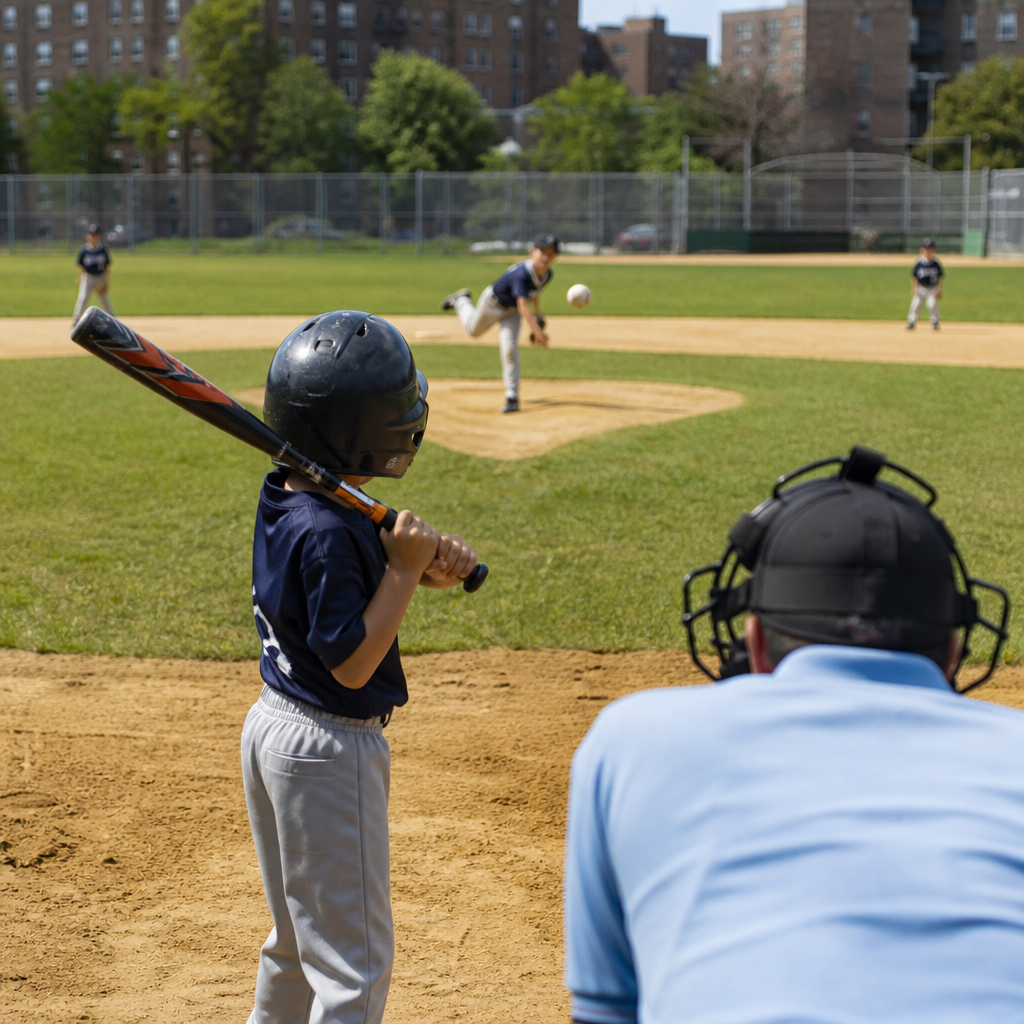
Baseball became a truly national game only when cities built places to play it. Public parks, schoolyards, settlement houses, and rough sandlots turned a pastime associated with private clubs and organized leagues into a daily ritual for working families, immigrants, and children. City recreation programs were the bridge. They supplied diamonds, equipment, supervision, and schedules, then connected neighborhood play to school competition, amateur leagues, and eventually professional scouting. In practical terms, expanded access meant that geography, class, and age stopped being absolute barriers. A boy in a crowded tenement district, a girl at a municipal playground, or a factory worker looking for a Sunday league no longer needed country club dues or vacant private land to join the culture of baseball.
When I have studied municipal recreation records and old newspaper coverage, the pattern is consistent: wherever cities invested in parks and organized play, baseball participation widened fast. The key terms matter. A public park is city-owned recreational land open to residents. A sandlot is an informal playing field, often improvised on vacant land, where rules and teams are flexible. A city recreation program is the municipal system that manages playgrounds, hires supervisors, maintains fields, and runs leagues or clinics. Together, these spaces and institutions shaped baseball culture and fandom. They did more than teach skills. They created spectators, neighborhood identities, civic traditions, and pathways into the wider “Baseball and Society” story, linking this culture and fandom hub to topics like labor, race, education, public policy, and media.
This history matters because access changes who gets to belong. Baseball fandom does not begin with a major league ticket; it begins with seeing a local game, wearing a neighborhood uniform, hearing older players argue about rules, and treating a public field as common ground. City recreation programs made that possible at scale from the late nineteenth century through the postwar era, especially as urban reformers responded to congestion, juvenile crime fears, and the need for structured leisure. The result was not simply more games. It was a durable civic ecosystem in which municipal planning, youth development, ethnic communities, women’s participation, and local pride all met around the ballfield.
Why cities turned baseball into public infrastructure
By the 1880s and 1890s, fast-growing American cities faced overcrowded neighborhoods, limited open space, and intense concern about children playing in dangerous streets. Reformers in the playground movement argued that supervised recreation would improve public health and social order. Baseball fit their goals better than almost any other team sport. It required coordination, discipline, and regular space, but it also carried strong popular appeal. Progressive Era park departments therefore began carving diamonds into new municipal parks and outfitting school grounds for organized play. Chicago’s South Park Commission, New York’s playground initiatives, and similar efforts in Boston, Philadelphia, and Cleveland all treated baseball as a practical tool of urban governance, not just entertainment.
The logic was straightforward. A maintained ballfield converted idle land into visible civic value. Recreation directors could schedule multiple age groups, keep children occupied after school, and offer adults respectable weekend leisure. Baseball also brought spectators. A single municipal diamond might host playground teams during the week, an industrial league on Saturday, and a neighborhood rivalry on Sunday. That density of use justified public spending in a way ornamental parks alone often could not. In annual reports, officials repeatedly highlighted attendance, team registration, and reductions in vandalism or street congestion near playground districts. Those claims were sometimes overstated, but the investment pattern is clear: baseball became embedded in the design of urban public space.
The spread of recreation programs also helped standardize the game. Municipal supervisors marked baselines, set game times, distributed permits, and enforced eligibility rules. That structure mattered for access because it reduced conflict over shared fields and made competition feel fair. If a neighborhood knew when league games would happen, parents were more willing to let children join, employers could support company teams, and local newspapers had fixed events to cover. In short, cities did not just provide grass and dirt. They built a predictable framework that turned casual interest into sustained participation and repeat spectatorship.
From vacant lots to neighborhood identity
Sandlots are often romanticized as purely spontaneous spaces, but their importance lies in how they connected informality to organized community life. On an empty lot, children could adapt the game to tight dimensions, uneven ground, and mixed ages. They used sewer covers as bases, chalked strike zones on walls, and negotiated local rules in real time. Those habits made baseball culturally sticky. The game was portable and cheap, which meant neighborhoods could claim it as their own even before a formal park arrived. Once recreation departments recognized where play was already happening, they often formalized it by grading lots, backstopping fields, or absorbing nearby parcels into the park system.
That transition from improvised sandlot to recognized public field strengthened neighborhood identity. Teams took names from streets, parishes, settlement houses, factories, and ethnic clubs. In many immigrant districts, baseball offered a fast route into civic belonging. Italian, Irish, Jewish, Polish, and later Puerto Rican communities used local teams to display pride while also participating in a common American institution. Settlement houses such as Hull House in Chicago and Henry Street in New York understood this dynamic well. Their athletic programs did not erase cultural difference; they gave young residents a social language through which difference could coexist with competition, ritual, and shared rules.
Neighborhood baseball also created local celebrities long before players reached higher levels. The best pitcher in a municipal junior league, the catcher who worked nights and starred on Sundays, or the groundskeeper who lined the field before dawn all became known figures. This is where fandom deepened. Residents followed standings in local papers, gathered along chain-link fences, and argued over whether a standout player deserved a tryout with a semipro club. City recreation programs made these repeated encounters possible. They transformed baseball from an occasional spectacle into a recurring neighborhood event, and recurring events are what build culture.
Youth development, schools, and the pipeline of play
Municipal baseball expanded most dramatically when park systems worked with schools. In many cities, schoolyards alone were too small or too poorly maintained for full games, while parks needed a steady flow of participants. Joint-use arrangements solved the problem. Recreation departments scheduled after-school practices, school leagues used municipal diamonds, and summer playground programs kept teams active when classes ended. This coordination widened access because it reduced fees and transportation barriers. A child could move from school competition to playground ball without changing neighborhoods or buying new equipment. For families with limited income, that continuity mattered more than abstract claims about athletic opportunity.
Adults involved in recreation understood baseball as character education, but the most effective programs paired discipline with fun. Supervisors taught batting grip, cutoff throws, and basic scorekeeping, yet they also protected time for mixed-skill games. Better departments learned that strict elimination tournaments could narrow access by concentrating attention on the most advanced players. Broader participation came from layered programming: clinics for beginners, house leagues for regular play, all-star teams for stronger athletes, and open sandlot hours for unstructured games. That model still works. Modern parks that only fund travel-ball style competition often serve fewer residents than systems that preserve entry-level leagues and drop-in use.
Recreation baseball also fed higher levels of the sport. High school coaches scouted municipal leagues, semipro managers borrowed talent from playground circuits, and professional organizations eventually monitored urban amateur tournaments. Before expensive club systems dominated youth development, the public pathway was more visible. Not everyone advanced, but many people stayed attached to baseball because they had tangible roles within it: player, scorer, volunteer coach, parent organizer, or fan. That broad base is crucial for any sport’s culture. A healthy baseball ecosystem depends not just on elite talent production, but on thousands of ordinary participants who treat local fields as community assets worth protecting.
Access, exclusion, and the uneven geography of public baseball
City recreation programs expanded access, but not equally. Segregation, discriminatory funding, gender bias, and uneven park distribution shaped who benefited. In the Jim Crow era, Black communities were often denied use of premier municipal facilities or assigned inferior fields with fewer maintenance resources. Even in northern cities without formal segregation laws, practice could be exclusionary through permit systems, policing, or club politics. That reality helped fuel parallel baseball worlds, including Black amateur teams, church leagues, and the broader institutional support that sustained Black baseball culture alongside and beyond the Negro Leagues. Public recreation was therefore both a democratizing force and a site of contest over citizenship.
Women and girls also faced barriers despite long participation in playground and school sports. Some recreation departments welcomed softball for girls while reserving hardball diamonds and prime hours for boys and men. That administrative choice shaped cultural memory by making female participation less visible, even where interest existed. Access was also uneven across class lines. Affluent neighborhoods usually had better-maintained parks, while industrial districts often depended on overused grounds. Cities that mapped recreation need, rather than simply rewarding politically connected areas, did more to broaden participation. The difference between a nearby playable field and a distant crowded one determined whether baseball became a habit or remained an aspiration.
| Barrier | How it limited access | Typical municipal response | Long-term effect on baseball culture |
|---|---|---|---|
| Segregation | Restricted entry to premier parks and leagues | Separate schedules or inferior facilities | Strengthened parallel community institutions and protest |
| Gender bias | Prime baseball resources favored boys and men | Shifted girls into different programs | Reduced visibility of women in baseball memory |
| Uneven park funding | Some districts lacked safe, maintained diamonds | Patchwork upgrades based on politics | Participation varied sharply by neighborhood |
| User fees and equipment costs | Excluded low-income families from regular play | Loaner gear and free leagues where budgets allowed | Public subsidies became essential to broad fandom |
These limitations do not weaken the argument that public recreation expanded access; they clarify it. Expansion was real, but it was negotiated through local power, public budgets, and social hierarchy. Understanding that complexity makes the history more useful. It shows that baseball culture grows when cities treat recreation as an equity issue, not a luxury. It also explains why fights over field permits, lighting, maintenance, and programming still matter. Access has always depended on who gets counted in municipal decision-making.
How public fields created fans, rituals, and civic memory
Baseball fandom is often discussed through radio, television, and professional teams, yet public recreation built the habit of attention that media later amplified. A child who watched an older sibling play in a park league learned lineups, innings, and scorekeeping before ever hearing a major league broadcast. Parents who packed food for doubleheaders or argued about umpiring on a playground sideline were practicing fandom in its most local form. Municipal schedules gave neighborhoods recurring reasons to gather, and gathering repeatedly around competition creates ritual. Opening day parades, championship trophies in park fieldhouses, and annual rivalry games all emerged from that local calendar.
Public baseball also generated civic memory. Ask longtime residents about a neighborhood park, and they often remember a pennant-clinching catch, a dust-filled infield, a coach who opened the equipment shed every summer, or a future star who once played there. Those memories tie personal biography to public space. They are one reason park preservation battles can become emotionally intense. When a city removes a diamond or lets one decay, residents do not see only lost recreation acreage. They see the erosion of stories, traditions, and social bonds accumulated over decades of use.
For the broader “Baseball and Society” conversation, this is the key point. Culture and fandom are not downstream from participation; they are produced alongside it. Public parks and sandlots taught people how to care about baseball, how to debate it, and how to carry it across generations. If you are exploring related issues such as race and integration, media history, youth sports economics, or the role of labor and immigration in shaping the game, start with access. The public ballfield is where baseball became ordinary enough to become beloved.
What this history means for cities today
The lesson for modern cities is direct: access expands when recreation systems lower cost, shorten travel, protect unstructured play, and maintain welcoming facilities. Baseball now competes with digital entertainment, specialized travel sports, and shrinking municipal budgets. Even so, the old principles remain sound. A usable field within walking distance will outperform a distant showcase complex for building everyday participation. Free clinics and equipment libraries do more for inclusion than expensive branding campaigns. Shared scheduling between schools, parks, and community groups still unlocks capacity. When cities neglect these basics, baseball participation narrows and fandom becomes more passive, detached from lived local experience.
Municipal leaders should also think beyond player development. The public value of baseball includes summer jobs for recreation staff, intergenerational volunteering, safer parks with regular foot traffic, and stronger neighborhood identity. Well-run programs can partner with libraries, historical societies, and local museums to document community baseball stories, preserving scorebooks, photographs, and oral histories that would otherwise disappear. That kind of stewardship turns a field into a civic archive. It also reminds residents that baseball’s social importance has never depended solely on professional success or television ratings.
Public parks and sandlots expanded access to baseball because they turned space, supervision, and belonging into public goods. City recreation programs gave structure to informal play, widened entry for working families, and helped neighborhoods build lasting cultures around the game. Their record is imperfect, marked by exclusion and unequal funding, but the central achievement stands: they made baseball local, repeatable, and shared. If you want to understand culture and fandom within “Baseball and Society,” begin at the municipal diamond. Then look at your own community. Support the park league, attend a neighborhood game, and treat public baseball spaces as the civic assets they are.
Frequently Asked Questions
How did public parks and city recreation programs help make baseball a national game?
Public parks and city recreation programs helped turn baseball from a sport centered on private clubs and formal organizations into a genuinely national pastime by giving ordinary people reliable places to play. In the nineteenth and early twentieth centuries, access to open land was uneven, especially in crowded industrial cities where working-class families, recent immigrants, and children often had little private space for recreation. When city governments began setting aside parkland, building playgrounds, marking off diamonds, and staffing recreation departments, they changed that equation. Baseball was no longer limited to those who belonged to a club, attended a well-funded school, or had social connections to organized leagues. It became part of neighborhood life.
These programs mattered because they provided more than just grass and backstops. Municipal recreation departments often created schedules, maintained fields, loaned equipment, set rules, and supervised games, which gave structure to what might otherwise have remained informal street play. That structure made participation easier for families who could not afford bats, gloves, uniforms, or club dues. It also gave cities a way to channel the enormous popularity of baseball into safe, organized recreation. In practice, this meant a child might start on a rough sandlot, move into a playground league, then join a school team or amateur circuit, all within a pathway supported by public institutions. By creating those ladders of access, city recreation systems helped baseball spread across class lines, ethnic communities, and age groups, making it truly national in reach and meaning.
Why were sandlots, schoolyards, and settlement houses so important to baseball’s growth?
Sandlots, schoolyards, and settlement houses were crucial because they brought baseball into the daily routine of urban life. Not every neighborhood had a manicured park, and not every family had the means to participate in fee-based recreation. Sandlots and schoolyards filled that gap. They were flexible spaces where children and adults could adapt local conditions to the game, using improvised bases, shared equipment, and neighborhood rules. Even when the playing surface was uneven or the dimensions were far from official, these places gave people regular opportunities to learn the sport, develop skills, and absorb its rhythms. For many future players and lifelong fans, baseball began not in a stadium or elite club, but in these rough, accessible community spaces.
Settlement houses were especially important in immigrant neighborhoods because they used recreation as a tool for community building, education, and social integration. Reformers and local leaders often sponsored baseball teams, organized leagues, and encouraged supervised play as a way to promote health, discipline, and civic participation. Schoolyards played a similar role by linking recreation to public education. Once baseball entered school settings, it gained legitimacy and routine exposure among children who might never have joined a private athletic association. Together, these spaces made baseball visible, affordable, and repeatable. They helped create a culture in which the game belonged to everyone, not just to organized clubs or affluent players.
What did city recreation programs actually provide to expand access to baseball?
City recreation programs expanded access to baseball by supplying the basic infrastructure that many communities lacked. At the most practical level, they created and maintained playable spaces: diamonds, open fields, fences, benches, backstops, and in some cases lighting and grandstands. They also made participation more affordable by distributing or lending equipment such as balls, bats, gloves, catcher’s gear, and uniforms. For working families, that kind of support was significant. Baseball may seem simple compared with some sports, but consistent access still depends on tools, safe space, and enough organization to keep games going. Municipal programs reduced those barriers.
Just as important, recreation departments provided supervision and scheduling. They hired directors, playground supervisors, and coaches who organized practices, arranged games, enforced rules, and separated age groups or skill levels. This reduced conflict over field use, created safer environments for younger players, and gave parents confidence that participation would be orderly. Many cities also formed neighborhood leagues, tournament systems, and inter-park competitions, connecting local play to broader amateur networks. In effect, recreation programs created an ecosystem. A player could begin casually, then move into more formal competition without leaving the public system. That continuity helped communities sustain baseball over time and made it easier for talented players to be noticed by school teams, amateur organizers, and scouts.
How did public recreation connect neighborhood baseball to schools, amateur leagues, and professional scouting?
One of the most important achievements of city recreation programs was that they linked casual neighborhood play to increasingly formal levels of competition. Before those systems were in place, many players developed skills in isolation, with few clear routes into school athletics or amateur leagues. Recreation departments changed that by creating organized schedules, eligibility rules, standings, and championships. A child might play in a park league, then be recommended for a school team, invited into a citywide youth tournament, or introduced to a local amateur club. Those public systems gave structure to player development long before the modern youth sports industry existed.
This mattered for talent identification as well. Coaches, recreation supervisors, teachers, and local league organizers became informal gatekeepers who could recognize ability and connect players to new opportunities. In many cities, public fields served as the places where high school coaches, semipro managers, and professional scouts observed players who otherwise might have remained invisible. That was especially significant for working-class youth and immigrant communities, whose members often lacked private networks into elite baseball circles. Public recreation did not eliminate every social barrier, but it widened the funnel dramatically. It transformed baseball from a game people played in separate neighborhoods into a connected system in which local participation could lead to higher competition and, for a small but meaningful number of players, professional attention.
Did city recreation programs change who could participate in baseball?
Yes, city recreation programs significantly broadened participation by lowering many of the social and economic barriers that had once restricted access to the game. When baseball depended mainly on private clubs, exclusive grounds, and self-funded organization, participation naturally tilted toward those with time, money, and social standing. Public recreation altered that model. By offering free or low-cost access to fields, equipment, and organized play, cities opened baseball to working families, children, immigrants, and others who had often been left outside elite athletic culture. In practical terms, this meant that baseball became woven into the lives of neighborhoods that did not control major institutions but could make active use of public ones.
At the same time, the expansion of access should be understood realistically. Public recreation made the game more democratic, but it did not erase all inequalities. Access could still vary by neighborhood, funding level, race, gender, and local politics. Some communities benefited from better facilities and stronger supervision than others, and many groups still had to fight for equal use of public space. Even so, the long-term effect was transformative. City recreation programs helped establish the idea that baseball was a public game played in public places by ordinary people. That shift is central to understanding how baseball moved beyond private association and became a daily ritual across American cities, linking local identity, civic life, and national culture.