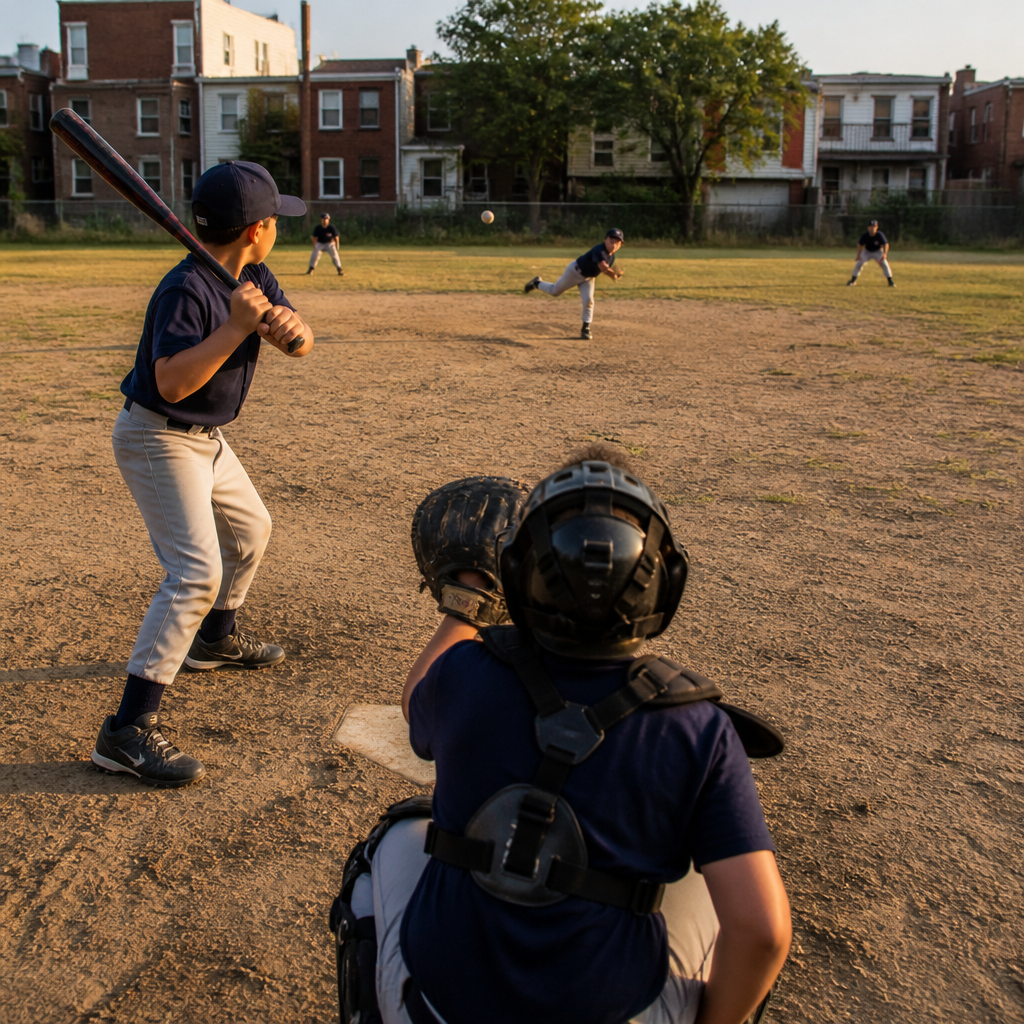
Sandlot baseball shaped the culture of the American city long before organized youth leagues, televised games, and private training facilities turned player development into an industry. In its simplest form, sandlot baseball means informal neighborhood games played on vacant lots, schoolyards, factory edges, park corners, and any open patch of dirt or grass that children and adults could claim for an afternoon. The term also includes semi-organized local teams that represented blocks, parishes, ethnic clubs, union halls, and settlement houses. As a hub within baseball and society, this culture and fandom story matters because it explains how cities produced not only players, but rituals, loyalties, identities, and shared memories that still shape the sport.
When I study old city newspapers, Works Progress Administration surveys, and oral histories from players and fans, the same pattern appears repeatedly: the neighborhood game was baseball’s true civic engine. A sandlot was a classroom without tuition. Players learned how to improvise rules, settle disputes, maintain a field, recruit opponents, and perform in front of neighbors whose judgment mattered. Fans did not need a ticket or a stadium. They leaned on chain-link fences, sat on stoops, listened from fire escapes, and argued every call. In dense urban neighborhoods, where immigrant families, Black migrants, and working-class communities often had limited access to formal recreation, sandlot baseball became both entertainment and social infrastructure.
The American city gave sandlot baseball its distinctive character. Crowded streets forced adaptability. Short right fields, trolley tracks, brick walls, and manhole covers changed how games were played and remembered. Ethnic enclaves used baseball to negotiate belonging. Black neighborhoods built teams and fan cultures in spite of exclusion. Girls and women participated as players, organizers, scorekeepers, and spectators even when institutions minimized their role. Local businesses sponsored uniforms. Barbers, bartenders, priests, and labor organizers became patrons. The result was a baseball culture rooted in place. To understand culture and fandom around the game, it is not enough to look only at major league attendance or media rights. You have to start with the neighborhood lot.
Why sandlot baseball became the city’s baseball school
Sandlot baseball flourished in cities because it solved a practical problem: millions of young people wanted to play, but formal systems could not accommodate them. Before Little League expanded after World War II, most children learned baseball informally. In cities such as New York, Chicago, Philadelphia, St. Louis, Pittsburgh, Detroit, and Baltimore, a vacant lot could host several age groups in a single day. Mornings might belong to younger kids using a taped ball. By late afternoon, teenagers or adult semipro players claimed the same ground. Because access was local and free, repetition was constant. Repetition built skill.
The developmental value of these games was real. Players saw more balls in play, handled bad hops, and learned situational awareness under uneven conditions. A child who fields grounders on cinders and broken infields develops soft hands, quick feet, and resilience. Hitting in traffic-heavy spaces sharpens bat control because a long foul ball may end the inning or break a window. This was not romantic mythology. Hall of Famers from urban backgrounds repeatedly described the lot as the place where instincts formed. Coaches can teach mechanics, but neighborhood games teach anticipation, deception, risk management, and competitive nerve.
Sandlot baseball also taught governance. Without neutral umpires, players had to enforce norms themselves. Every regular lot had local rules: one-bounce off the wall was a double, sewer grate in fair territory stayed live, ball on the roof was an out, hit beyond the third telephone pole was automatic home run. These rules sound playful, but they built habits of negotiation and authority. A respected older player often functioned as commissioner, umpire, groundskeeper, and recruiter. In that sense, sandlots trained future coaches, sportswriters, scouts, and fans as much as future shortstops.
Neighborhood identity, ethnicity, and belonging
Urban sandlot baseball was a map of neighborhood identity. In immigrant districts, teams often formed around parish boundaries, nationality clubs, and mutual aid societies. An Italian American block in one ward might challenge an Irish Catholic team from the next parish; a Jewish social club might organize Sunday games that drew whole families; a Polish Falcons team might double as a civic institution. Baseball offered a language for competing without abandoning coexistence. You could work in the same factory, ride the same streetcar, and still care deeply whether your block beat the one across the avenue.
This mattered because American cities in the late nineteenth and early twentieth centuries were laboratories of assimilation and conflict. Baseball provided a public performance of competence and discipline. Parents who feared that city streets would swallow their children often accepted ballplaying because it connected recreation to respectability. Settlement houses and playground reformers recognized this quickly. Institutions such as Chicago’s Hull House and New York’s Educational Alliance supported organized play not only for health, but for social order. They understood that baseball created routines, mentors, and civic attachment.
Yet sandlot culture was never a simple melting pot. It preserved difference as often as it softened it. Team names, cheers, food traditions, and Sunday gathering patterns marked community boundaries. Fans used baseball to tell neighborhood stories: who worked hardest, who carried himself with pride, who represented the block well. In my experience reviewing local archives, the most revealing details are rarely box scores. They are the notes about a grocer donating balls, a church band leading a pregame march, or spectators spilling from tenement stoops to watch a rivalry that meant more locally than a distant pennant race.
Black urban baseball, exclusion, and community power
No account of sandlot baseball and the American city is complete without confronting segregation. Black players and fans built rich neighborhood baseball cultures because exclusion left them little choice and because community institutions transformed that exclusion into collective power. In cities such as Kansas City, Pittsburgh, Philadelphia, Birmingham, and Chicago, Black sandlots fed industrial leagues, semipro clubs, and Negro League talent pipelines. Church teams, company teams, and neighborhood nines gave players regular competition while creating events that anchored local social life.
The lot was often the first stage where future stars learned to dominate. Players such as Willie Mays and Ernie Banks came from environments where resourcefulness mattered more than pristine facilities. Black newspapers, especially the Pittsburgh Courier and Chicago Defender, amplified these local baseball worlds. They treated neighborhood games seriously, covered standout players, and connected local fandom to larger battles for recognition and dignity. This coverage mattered. When mainstream institutions ignored Black baseball, local reporting created legitimacy and memory.
Sandlot baseball in Black neighborhoods also challenged the myth that fandom is passive. Spectators raised travel funds, hosted dances, bought raffle tickets, organized uniforms, and turned games into economic circulation. Barbecue stands, beauty salons, taverns, and benevolent societies all benefited when baseball crowds gathered. That pattern still informs urban sports culture today: community events around games often matter as much as the final score. Baseball was a reason to assemble, exchange news, display style, and reinforce networks of trust.
How local games created lifelong fandom
Major league fandom often begins before a child enters a stadium, and historically it began at the sandlot. Neighborhood games taught the visual grammar of baseball: how a double play develops, why a catcher frames authority, what makes a pitcher seem unhittable, when a crowd senses a rally. A child who watched an older brother or local star play shortstop had a model for admiration that felt personal. The professional game then became legible because its basic drama was already familiar.
That progression from local participant to broader fan is one reason urban baseball traditions remained durable even as teams relocated and media changed. Radio expanded the reach of major league clubs, but it did not replace neighborhood loyalty. Instead, it layered identities. Someone could love the Yankees, Cardinals, Dodgers, Cubs, or Tigers and still reserve deepest emotion for the parish team or corner-lot rivalry. This multi-level fandom is central to baseball culture. It connects family memory, civic pride, and national spectacle rather than forcing a choice among them.
Fandom was built through participation, not consumption alone. Scorekeeping, arguing calls, imitating batting stances, collecting nicknames, and retelling great plays all started locally. Even language traveled from the lot to the grandstand. Fans learned to read effort, toughness, and baseball intelligence because they had seen those qualities up close. That is why sandlot baseball produced unusually knowledgeable audiences. They did not merely recognize stars; they understood what made stars difficult to become.
From vacant lot to organized pathway
As cities modernized, the relationship between sandlot baseball and formal baseball systems changed. Municipal park departments, Catholic youth programs, Police Athletic Leagues, American Legion teams, and later Little League provided structure, equipment, and safer fields. These institutions solved real problems, especially access to supervision and injury reduction. But they also changed the culture. Fixed schedules replaced the open-ended pickup rhythm. Adults controlled rules, lineups, and often playing time. Development became more standardized, which helped some players and squeezed out others.
The contrast is clearest in how each environment rewards initiative. In a pickup game, players recruit bodies, adapt to uneven numbers, and learn several positions because survival requires it. In structured leagues, specialization arrives earlier. A child may become only a pitcher or only a catcher. That can accelerate elite training, but it narrows baseball literacy. Many veteran scouts still say they can identify players who grew up in spontaneous games because they move with more creativity, react better to chaos, and compete with less dependence on adult instruction.
| Feature | Sandlot Model | Organized Youth Model |
|---|---|---|
| Access | Free, local, flexible | Registration, schedules, fees |
| Rules | Adapted to space and numbers | Standardized by league |
| Skill Development | Improvisation, all-around play, instincts | Coached mechanics, role specialization |
| Community Role | Neighborhood gathering point | Program-based family activity |
| Fan Experience | Participants and neighbors blend together | Spectatorship is more formalized |
The best modern baseball communities combine both models. They preserve free play while offering safe facilities and quality coaching. Cities that invest only in travel baseball create barriers. Cities that preserve open diamonds, schoolyard access, and low-cost leagues give baseball a broader social base. That lesson is old, and it remains correct.
Urban space, memory, and the disappearance of the lot
Many classic sandlots disappeared through redevelopment, highway construction, school expansion, and rising land values. Postwar urban renewal erased the informal geography that had sustained neighborhood baseball for decades. In city after city, residents lost more than fields. They lost a daily meeting place where generations mixed without admission price or credential. When that kind of common ground vanishes, sports culture becomes thinner and more transactional.
The disappearance of lots also changed how baseball memory works. Older fans often recall exact dimensions of a vanished field, the angle of late sun, the smell from a nearby bakery, or the house rule for a ball hit into an alley. Those details matter because sports memory is spatial. It attaches feeling to place. Historic preservation usually favors stadiums and famous arenas, yet the deeper democratic history of baseball sits in ordinary parcels now covered by parking structures, apartment blocks, or widened roads.
Some cities have begun recovering this history through murals, oral history projects, neighborhood exhibits, and restored play spaces. That work deserves attention because culture and fandom are inherited through stories made tangible. A plaque alone is not enough. The most effective civic projects connect history to present use: youth clinics on historic sites, walking tours that map former ball grounds, and archives that collect local scorebooks, uniforms, and photographs. When communities do this well, baseball becomes a tool for urban historical literacy.
Why sandlot culture still matters now
Sandlot baseball still matters because the questions it answered have not disappeared. How do cities create low-cost recreation? How do neighborhoods build trust across generations? How do fans form attachments that are stronger than branding? The old lot offers practical guidance. Baseball culture is healthiest when entry is easy, spectators are close, and local pride has room to breathe. Expensive travel systems and shrinking public space cannot fully replace that ecosystem.
For readers exploring baseball and society, sandlot history is the hub that connects many related subjects: youth development, race and segregation, immigration, public space, media, labor, gender, memory, and civic identity. Neighborhood games built players by demanding repetition, adaptability, and courage. They built fandom by turning baseball into a shared language of place. They built community by giving urban residents a recurring reason to gather, argue, cheer, organize, and remember.
The key takeaway is simple. If you want to understand why baseball has mattered so deeply in American life, start below the professional level and below the stadium scale. Start with the city block, the empty lot, the chalked basepath, and the crowd of neighbors who cared enough to stop what they were doing and watch. That is where generations of players were formed and where generations of fans learned what the game could mean. Use that lens as you explore the rest of baseball and society, and the sport’s culture will come into sharper focus.
Frequently Asked Questions
What is sandlot baseball, and how was it different from organized youth baseball?
Sandlot baseball refers to informal or lightly organized games played in neighborhood spaces such as vacant lots, schoolyards, factory margins, park corners, alleys, and other open urban ground that local players could adapt into a field. Unlike modern youth baseball, which usually operates through leagues, fixed schedules, age divisions, uniforms, paid coaches, and maintained facilities, sandlot baseball grew out of convenience, community, and improvisation. A game could begin whenever enough players showed up, and the rules often shifted to fit the space, the number of participants, and the obstacles on the field. One block might use a telephone pole as first base, while another might define home runs by whether the ball cleared a fence or landed in a specific lot.
This flexibility made sandlot baseball an important part of city life. It was not merely a stripped-down version of formal baseball; it was its own culture. Players learned to negotiate rules, settle disputes, and adapt to irregular fields and uneven competition. In many cities, the term also extended to neighborhood clubs and semi-organized teams tied to parishes, workplaces, social clubs, or ethnic communities. These teams could be fiercely competitive even without the structure of school or league athletics. In that sense, sandlot baseball sat between pure pickup play and organized amateur ball, creating a wide pipeline of participation that made baseball feel embedded in everyday urban life.
Why did sandlot baseball matter so much in the development of American cities?
Sandlot baseball mattered because it turned the city itself into a training ground, a social space, and a cultural stage. In dense urban neighborhoods, open land was limited, so any usable patch of ground became valuable. Children and adults claimed these spaces and transformed them into ballfields, giving neighborhoods a shared activity that crossed streets, blocks, and generations. The game offered structure to free time, especially in working-class communities where organized recreation was limited or inconsistent. Long before city recreation departments, suburban youth complexes, and travel-ball circuits expanded, sandlot baseball gave urban residents a way to build local identity and belonging.
It also reflected the rhythms of urban life. Industrial schedules, immigrant settlement patterns, church parishes, and neighborhood loyalties all shaped who played, when they played, and how teams formed. In many communities, local games created informal networks of mentorship, where older players taught younger ones not just how to hit or field, but how to compete, cooperate, and carry themselves. The sandlot could function as a meeting place where recent immigrants, second-generation children, factory workers, and aspiring athletes interacted on equal terms. Because of that, sandlot baseball did more than entertain; it helped define neighborhood culture and gave city residents a common language of rivalry, pride, and community memory.
How did neighborhood games help build generations of baseball players?
Neighborhood games built players by creating constant, low-cost, high-repetition opportunities to play. One of the most powerful features of sandlot baseball was accessibility. A child did not need expensive equipment, formal coaching, or transportation to a distant complex. If there was a bat, some kind of ball, and enough players to improvise a game, baseball could happen. That meant young players often spent countless hours throwing, catching, hitting, and running in real game situations rather than only during scheduled practices. Repetition came naturally, and it happened in an environment that rewarded creativity and resilience.
Sandlot conditions also sharpened instincts in ways that formal instruction sometimes cannot. Uneven ground taught players to expect bad hops. Small spaces forced hitters to develop bat control. Mixed-age competition pushed younger players to improve quickly and gave older players a chance to lead. Without adults managing every inning, players had to think strategically, argue rules, judge fairness, and solve problems on their own. These experiences built baseball intelligence as much as physical skill. For many future high school, college, semi-pro, and professional players, the sandlot served as the first real laboratory of competition. Even for those who never advanced beyond the neighborhood, the game cultivated confidence, toughness, adaptability, and a feel for baseball that stayed with them for life.
What role did community, ethnicity, and local identity play in sandlot baseball?
Community and local identity were central to sandlot baseball. In many American cities, neighborhood teams reflected the social fabric around them. A team might represent a parish, a settlement house, a factory department, a block association, or an ethnic enclave. Irish, Italian, Jewish, Black, Latino, Eastern European, and other urban communities often built strong baseball traditions through local games and amateur clubs. These teams gave residents a way to express pride in where they lived and who they were, especially in cities where neighborhoods were tightly defined and deeply loyal to their own institutions.
At the same time, sandlot baseball could create points of contact across those boundaries. Rivalries were common, but so were exchanges of talent, style, and opportunity. Players moved from one level of neighborhood competition to another, and spectators followed local stars long before they ever entered formal baseball systems. In segregated or economically divided cities, sandlot baseball also highlighted broader social realities. Access to the best fields, equipment, and recognition was not equal. Yet the sandlot remained one of the most important spaces where overlooked players could prove themselves and where communities excluded from elite institutions built their own baseball cultures. That local ownership is part of why sandlot baseball occupies such a meaningful place in urban history: it belonged to the people who played it and the neighborhoods that claimed it.
Why does sandlot baseball still matter in conversations about sports culture today?
Sandlot baseball still matters because it represents a different model of athletic development and community life, one that feels increasingly rare in an era dominated by specialization, private coaching, year-round scheduling, and rising costs. The sandlot reminds us that great players and deep baseball knowledge often grow out of unstructured play, not just formal training. It shows that a sport can be taught through repetition, freedom, observation, competition, and neighborhood mentorship, rather than through constant adult supervision. For historians, coaches, parents, and fans, sandlot baseball offers a valuable counterpoint to the idea that player development must always be expensive, highly managed, and professionally designed.
It also matters culturally. Sandlot baseball carries the memory of cities as lived spaces, where children turned ordinary ground into meaningful places and where local games stitched communities together. The vacant lot, schoolyard, or park corner was not just scenery; it was a social institution. Remembering sandlot baseball helps explain how baseball became woven into American urban identity and why so many older generations speak of neighborhood games with such intensity. Even today, when the physical landscapes of many cities have changed, the sandlot endures as a symbol of resourcefulness, inclusion, competition, and joy. It captures a version of baseball that was immediate, communal, and deeply human, which is exactly why it remains so powerful in the broader story of the American city.