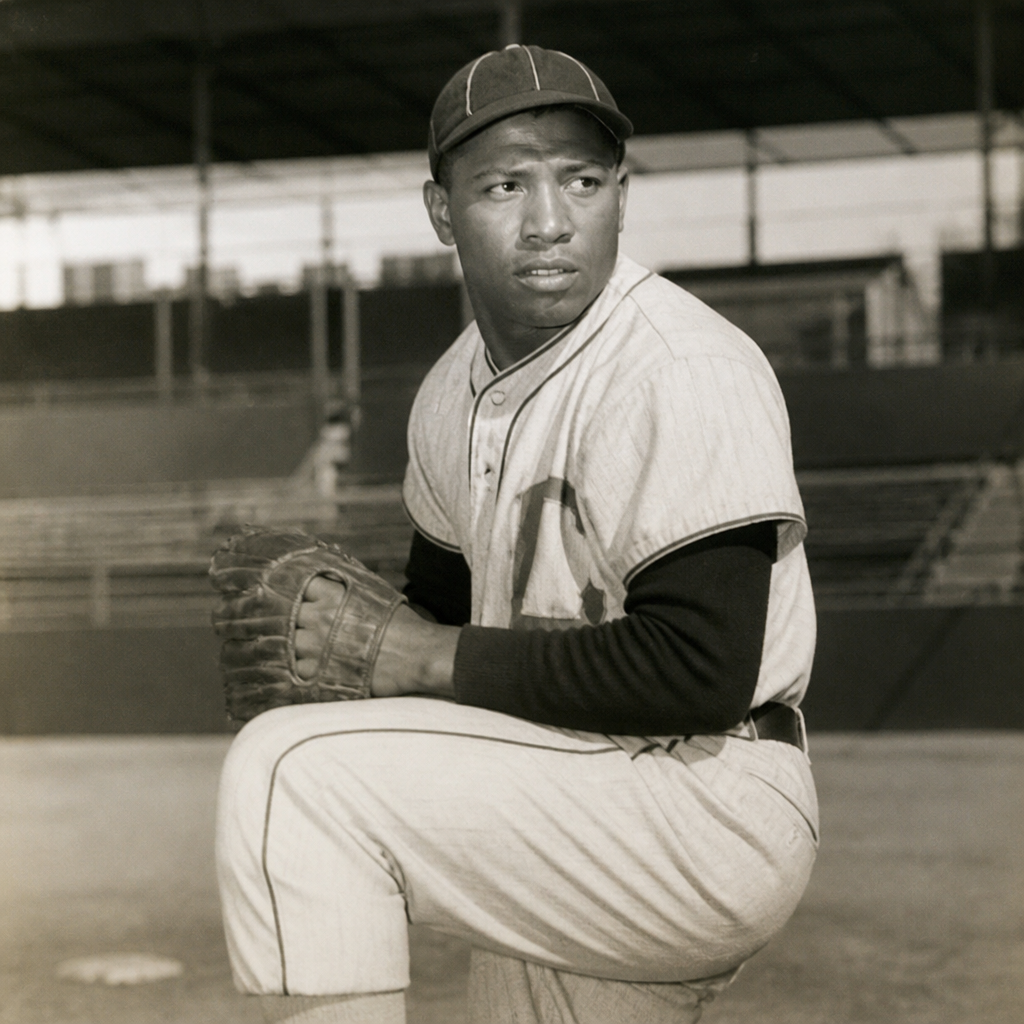
Smokey Joe Williams stands at the center of any serious discussion about legendary Negro League pitchers because he combined overwhelming velocity, uncommon durability, and big-game command in a way hitters remembered for decades. A player profile of Williams is more than a biography. It is a study of how elite pitching looked before modern radar guns, before integrated major league recordkeeping, and before the best Black players were allowed to compete on equal institutional terms. When historians, former players, and researchers describe the most feared mound presence of the era, Williams appears again and again near the top of the list.
Born Joseph Williams in 1886 in Seguin, Texas, he earned the nickname Smokey because his fastball seemed to leave smoke behind it. That image persisted across generations because witnesses consistently described rare speed paired with movement and poise. In Negro League and independent Black baseball, where schedules mixed league contests, exhibitions, barnstorming dates, and games against white semipro or major league talent, reputation mattered. Williams built his through direct evidence: strikeouts, shutouts, marathon workloads, and dominant performances against elite opposition. His profile matters today because it helps explain what made Negro League stars legendary even when official statistics remain incomplete.
For readers exploring Legendary Players, this article serves as a hub for the player profile subtopic. A useful player profile does three jobs at once. First, it establishes who the player was and where he fits historically. Second, it explains what skills made him exceptional in plain language. Third, it points toward related questions readers often ask, such as how he compared with Satchel Paige, how much of his record survives, and why so many contemporaries considered him nearly unhittable. Williams rewards that full treatment because his career connects talent evaluation, Negro League history, oral testimony, and the challenge of comparing players across fragmented archives.
I have found that when modern fans first encounter Smokey Joe Williams, they usually ask one direct question: was he really that hard to hit, or has the legend grown larger than the evidence? The answer is that the legend exists because the evidence, while scattered, is unusually consistent. Accounts from players, sportswriters, and historians repeatedly identify him as one of the fastest pitchers ever seen. Contemporary research from seamheads, baseball historians, and Negro League scholars does not erase the uncertainty around incomplete records, but it does confirm that his excellence was not anecdotal decoration. It was the central fact of his career.
Who Smokey Joe Williams Was and Why His Name Endures
Williams pitched across the first third of the twentieth century, a period when Black baseball featured exceptional talent but uneven league structures. He played for major Black clubs including the San Antonio Black Bronchos, the Chicago American Giants, Lincoln Giants, Homestead Grays, and Pittsburgh Crawfords. That list matters because it places him inside the strongest competitive circuits available to Black players of his time. He was not a local curiosity building a reputation against weak opposition. He was a featured ace for important clubs in the highest levels of Black professional baseball.
His career stretched long enough to show both peak dominance and remarkable staying power. Reports describe him winning with overpowering speed when young, then with a broader craft mix as he aged. That arc is typical of all-time great pitchers. Pure velocity introduces them; command, sequencing, and adaptability keep them effective. Williams appears to have had all three. The Hall of Fame recognized that in 1999 when it inducted him, long after his playing days had ended. That late recognition reflected a larger correction in baseball history, one that acknowledged Negro League greatness had long been underdocumented rather than overpraised.
His name endures because fear is one of the most durable forms of baseball testimony. Hitters can disagree about style, but they remember discomfort clearly. Williams generated that response. Opponents spoke about a fastball that arrived on top of them, a breaking pitch that complemented it, and a mound presence that made a game feel tilted before the first inning ended. In player profiles, those details matter because greatness is not only statistical accumulation. It is also the repeated judgment of peers who had every incentive to be honest about who could actually beat them.
What Made Williams Such a Terrifying Power Pitcher
The foundation of Williams’s reputation was velocity. Multiple baseball figures, including Hall of Fame contemporaries, compared his fastball favorably with the hardest throwers in any setting. Because no radar data exists, responsible analysis avoids exact miles-per-hour claims. Still, the descriptive record is strong enough to support a firm conclusion: he possessed top-tier elite speed by any era’s standards. Catchers and hitters described his pitches as explosive, late, and difficult to track. Those are the same markers scouts still use when identifying overpowering fastballs today.
Velocity alone does not create sustained fear. Wild throwers can intimidate, but they do not dominate for decades. Williams paired speed with control and competitive intelligence. He could attack early, finish hitters when ahead, and hold his stuff deep into games. In the dead-ball and early live-ball periods, when complete games were common and travel brutal, that mattered enormously. Pitchers were expected to carry heavy innings loads, often on uneven rest. Williams did more than survive those conditions. He excelled in them, which explains why managers leaned on him in major matchups and why opponents dreaded drawing him.
Another key part of his profile was adaptability across contexts. Negro League aces did not pitch in neat seasonal boxes. They faced league rivals, top barnstorming clubs, semipro opponents, and white major leaguers in exhibition play. Conditions varied by city, ballpark, defense, and umpiring. A pitcher who dominated repeatedly in those changing environments had to adjust grips, pace, pitch selection, and game plans. Williams’s reputation suggests exactly that kind of advanced baseball intelligence. He was not merely throwing hard. He was solving hitters under unstable conditions, which is a more demanding test of greatness.
| Trait | Why It Mattered | How It Shaped His Reputation |
|---|---|---|
| Elite fastball | Forced hitters to commit early and defend the zone | Made him known as the hardest pitcher many opponents had seen |
| Strong control | Turned raw velocity into strikeouts and weak contact | Separated him from merely wild power arms |
| Endurance | Allowed complete games and frequent use in important series | Built trust with managers and fear among rivals |
| Adaptability | Enabled success across leagues, exhibitions, and barnstorming schedules | Proved his dominance was portable, not situational |
Signature Performances and the Evidence Behind the Legend
No player profile is complete without confronting the difference between documented results and legendary memory. With Williams, both matter. One of the most cited stories is his 27-strikeout, 12-inning performance in 1914 against the Kansas City Giants. Researchers have debated details around some Negro League-era box scores, but the persistence of the account reflects the kind of outing people expected from him. Even where records are imperfect, the pattern is unmistakable: Williams produced extraordinary strikeout games and low-scoring masterpieces often enough to inspire lasting consensus.
He also built credibility by facing white major league and high-level semipro competition in exhibition settings. Those games were not formal integrated league contests, but they were meaningful talent tests. Black stars and white stars both used them to measure quality directly. Williams performed well enough in those environments that his reputation crossed baseball’s color line. That point is crucial. Fear of him was not confined to one closed network telling stories to itself. It spread because opposing players, managers, and observers repeatedly saw evidence that his stuff held up against first-rate competition.
When I evaluate old player profiles, I look for convergence. Do the oral histories, surviving box scores, team roles, and later historical assessments point in the same direction? With Williams, they do. Historians such as Robert Peterson and modern statistical projects like Seamheads treat him as an all-time Negro League pitching great. Hall of Famers spoke about him with unusual respect. Teams used him as an ace. Those independent signals converge on one conclusion: while no reconstruction is perfect, the broad shape of his dominance is well established and not a product of nostalgia.
How Williams Compares With Other Legendary Negro League Pitchers
Any hub article on player profiles has to place Williams among his peers. The most common comparison is Satchel Paige, and it is a fair one because both men became symbols of Negro League pitching excellence. Paige had unmatched showmanship, a longer public afterlife, and more extensive surviving fame in integrated baseball culture. Williams, however, was often the choice of older observers who had seen both and valued pure intimidation on the mound. Several contemporaries insisted Williams had the better fastball at his peak. That does not settle every argument, but it shows how highly experts ranked him.
He also belongs in conversation with Cannonball Dick Redding, Bill Foster, Hilton Smith, and Bullet Rogan. Redding shared the power-pitcher aura. Foster brought left-handed dominance and tactical precision. Smith offered efficiency and versatility. Rogan added two-way brilliance. Williams stands out within that group for the frequency with which fear becomes the defining word in recollections. Great pitchers are respected; some are admired; a smaller number are dreaded. In Black baseball memory, Williams occupied that final category more consistently than almost anyone.
That comparison framework helps readers navigate the broader Legendary Players topic. Not every great player achieved greatness the same way. Some were statistical accumulators. Some were innovators. Some changed how the sport looked in the public imagination. Williams’s distinguishing feature was force. He represented the ceiling of pre-integration pitching power, the idea that one man on the mound could reduce a dangerous lineup to survival mode. For a player profile hub, that clear identity matters because it helps connect him to adjacent articles on pitching legends, Negro League aces, and all-time hard throwers.
The Challenge of Measuring His Career Today
Modern readers often want a final line of statistics that settles every debate, but Negro League history rarely works that way. League schedules changed. Newspapers covered teams unevenly. Exhibition games blurred the boundary between official and unofficial competition. Box scores disappeared. Some seasons are well documented; others are not. As a result, Williams’s surviving statistical record is valuable but incomplete. That incompleteness is not a reason to dismiss his greatness. It is a reason to read his record with proper method and context.
The best approach combines documented statistics with role, opponent quality, and contemporary testimony. Seamheads and other research projects have significantly improved the available data by identifying additional games and standardizing records. Those efforts have helped restore Williams to his deserved place. Still, no responsible historian claims perfect certainty. Instead, the evidence supports bounded confidence: we know enough to identify him as one of the premier pitchers in Negro League history, even if we cannot compress his entire value into one modern leaderboard.
This challenge also teaches a broader lesson for player profiles. Historical evaluation is strongest when it resists false precision. Saying Williams struck fear into elite hitters, anchored major Black clubs, dominated in high-stakes settings, and earned extraordinary peer respect is not vague. It is the most accurate summary the evidence allows. In baseball history, especially before full integration, clear reasoning matters more than pretending the archive is complete when it is not.
Why Williams Matters in the Legendary Players Conversation
Williams matters because he expands how fans understand pitching greatness. Major league history often centers on fully documented white stars from organized leagues with stable recordkeeping. Negro League history demands a wider lens. It asks whether testimony, context, and reconstructed evidence can identify excellence even when institutions failed to preserve it properly. Williams is one of the clearest cases that they can. His career shows that legendary status sometimes survives precisely because performance was too overwhelming for witnesses to forget.
He also matters because player profiles should connect biography to larger history. Williams’s story is not only about one pitcher. It is about segregated baseball structures that denied elite Black players full access to the major leagues. It is about the resilience of Black baseball enterprises that still produced stars, pennant races, and enduring standards of excellence. It is about how Hall of Fame recognition, statistical reconstruction, and modern scholarship can partially repair historical neglect without pretending the loss was minor.
For anyone building knowledge within Legendary Players, Williams belongs near the foundation. He is a gateway figure for understanding Negro League pitching, Black baseball mythology, and the practical realities of pre-integration competition. Read his profile, then follow the thread to Paige, Foster, Rogan, and the clubs that shaped their careers. The reward is a fuller, truer map of baseball history. Start with Smokey Joe Williams, and the entire subject of player profiles becomes sharper, richer, and far harder to oversimplify.
Frequently Asked Questions
Why was Smokey Joe Williams considered the most feared power pitcher in Negro League baseball?
Smokey Joe Williams earned that reputation because he brought together three traits that almost never appear at the same level in one pitcher: elite velocity, remarkable stamina, and the ability to dominate in the biggest moments. Long before radar guns existed, opponents, teammates, and sportswriters consistently described his fastball as overwhelming. In an era when oral testimony and newspaper reporting often serve as the strongest evidence, that kind of repeated praise matters. Williams was not simply “hard to hit” in a generic sense. He was remembered as a pitcher whose raw speed changed the entire approach hitters had to take at the plate.
What made him especially intimidating was that his power was paired with command and composure. Many hard throwers can unsettle hitters, but Williams had a reputation for controlling games rather than just surviving them. He could pitch deep into contests, maintain his stuff, and rise to the occasion against top-level opposition. That combination gave him a mythic standing among Negro League greats and among later historians trying to reconstruct pre-integration baseball excellence. When hitters feared Williams, they were not just reacting to velocity. They were reacting to a complete pitcher who could overpower, outlast, and outthink them.
How fast was Smokey Joe Williams, and can modern fans really compare his velocity to later legends?
There is no precise radar-gun number for Smokey Joe Williams, so any modern comparison has to begin with honesty about the limits of the historical record. He pitched in a time before standardized speed tracking, before integrated major league media coverage, and before Black baseball received the full statistical and technological documentation later generations would take for granted. That said, the testimony surrounding Williams is unusually strong. He was repeatedly described as one of the fastest pitchers anyone had ever seen, and those assessments came from people who spent their lives around elite baseball talent.
For modern fans, the best way to understand his velocity is through context rather than a made-up number. Williams was not remembered as merely above average for his era. He was remembered as exceptional even among exceptional pitchers. That distinction matters. When a player’s speed becomes central to his legend across decades, across regions, and across different eyewitnesses, it suggests a truly rare arm. Historians can reasonably compare his reputation to later hard-throwing icons in terms of intimidation and dominance, even if they cannot attach an exact miles-per-hour reading. In other words, the fairest conclusion is not that we know his exact speed, but that his velocity was so extraordinary for his time that it became inseparable from his identity as a baseball legend.
What made Smokey Joe Williams more than just a hard thrower?
Reducing Williams to pure velocity misses why he remains such a central figure in discussions of the greatest Negro League pitchers. Hard throwers can create highlights and legends, but sustained greatness requires more. Williams had durability that allowed him to carry heavy workloads in an era when pitchers were often expected to do far more than modern aces. He also had big-game command, which meant he could translate his physical gifts into actual results against high-level opponents. That is the difference between a memorable arm and a historic pitcher.
He also pitched in circumstances that demanded adaptability. Negro League and independent Black baseball schedules could be irregular, travel could be exhausting, and playing conditions were not always consistent. Pitchers often had to face strong competition in league games, exhibitions, and barnstorming environments that tested both skill and endurance. Williams’ ability to keep dominating under those conditions says a great deal about his full skill set. He was not simply blowing hitters away on one good night. He was building a reputation over time as someone who could handle pressure, maintain effectiveness, and repeatedly prove himself against respected competition. That is why serious baseball historians place him in conversations about all-time pitching greatness, not just all-time fastballs.
Why is Smokey Joe Williams so important when discussing baseball history before integration?
Williams matters because his career helps illustrate both the brilliance of Negro League-era talent and the structural injustices that kept that talent from being measured on equal terms. A profile of Smokey Joe Williams is not just a story about one great pitcher. It is a window into how baseball excellence developed outside the white major leagues, often with less institutional support, less consistent recordkeeping, and fewer opportunities for national recognition. His legacy reminds readers that some of the greatest players in baseball history performed in systems that were never given equal legitimacy at the time.
That makes Williams a key figure in any honest retelling of pre-integration baseball. He allows historians and fans to ask better questions: What did dominance look like when the best Black players were excluded from the major leagues? How should greatness be judged when the official archive is incomplete? Why do eyewitness accounts and cross-era respect carry so much weight in Negro League history? Williams stands at the center of those issues because his reputation was too strong to disappear, even though the institutions around him were not designed to preserve his achievements as fully as they should have been. Studying him helps restore balance to baseball history by recognizing that elite pitching did not exist only in the segregated major leagues.
How should fans evaluate Smokey Joe Williams’ legacy today?
Fans should evaluate Williams with both rigor and imagination. Rigor means taking the available evidence seriously: surviving box scores, newspaper coverage, historical research, and especially the consistent testimony of players and observers who regarded him as one of the most dominant pitchers they ever encountered. Imagination, in this context, does not mean inventing facts. It means understanding that baseball history is larger than the portion preserved in the most familiar major league record books. To appreciate Williams properly, modern readers have to accept that some all-time great careers were documented unevenly because of segregation, not because they were less meaningful.
His legacy should be seen as both individual and symbolic. Individually, he stands as one of the premier power pitchers in baseball history, a man whose velocity, durability, and big-game presence created a level of fear and respect that endured for decades. Symbolically, he represents the many Negro League stars whose greatness was obvious to contemporaries but only later began receiving broader institutional recognition. That dual legacy is what makes him so compelling. Fans evaluating Williams today should not ask whether he belongs in the conversation with historic pitching greats. They should ask whether that conversation has been too narrow for too long. By that standard, Smokey Joe Williams is not a fringe figure from baseball’s margins. He is a central figure in understanding what true pitching greatness looked like in America before integration.