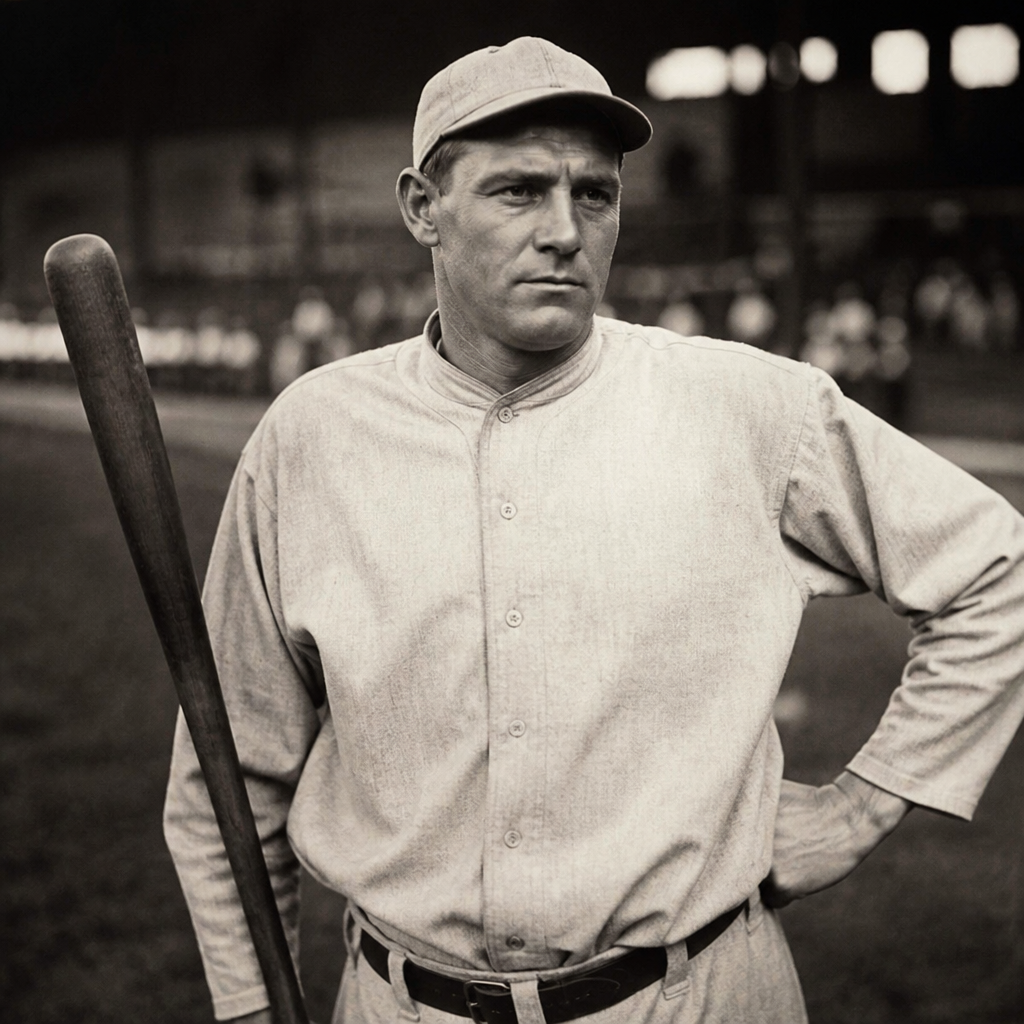
Sam Crawford stands among baseball’s most underappreciated giants, a player whose record book legacy makes the phrase “Deadball Era star” feel far too small. Best known as “Wahoo Sam,” Crawford built a career on speed, line drives, daring baserunning, and a level of extra-base consistency that defined offensive excellence before home runs reshaped the game. Any serious guide to legendary player profiles needs him near the top, because his achievements connect individual greatness, changing strategy, and the realities of baseball between the 1890s and 1910s.
This player profile hub examines who Sam Crawford was, why his triple record still matters, and how to evaluate his place among all-time greats. Crawford played Major League Baseball from 1899 through 1917, primarily with the Cincinnati Reds and Detroit Tigers. He finished with 309 career triples, still the major league record, and led the American League in triples six times. In baseball terms, a triple is a batted ball on which the hitter reaches third base without an error or fielder’s choice. During the Deadball Era, roughly 1900 to 1919, triples carried unusual weight because the game emphasized contact hitting, speed, bunting, hit-and-run tactics, spacious ballparks, and scuffed, softer baseballs that did not travel like later live-ball versions.
Understanding Crawford means understanding context. He was not simply a fast runner who piled up quirky numbers in a primitive game. He was one of the most feared run producers of his generation, a right fielder with a powerful throwing arm, and a central figure on early Detroit clubs that also featured Ty Cobb. His career batting average was .309. He collected 2,961 hits, 525 doubles, 97 home runs, 1,525 runs batted in, and 367 stolen bases. Those totals were compiled in lower-scoring conditions against rough fields, inconsistent equipment, and travel demands modern players would find punishing. When I evaluate historic player profiles, I look for skills that would translate across eras. Crawford checks that box immediately: bat control, gap power, instincts, durability, and arm strength are timeless tools.
He also matters because his record has lasted through every transformation baseball has seen. Expansion, integration, night games, air travel, weight training, video scouting, smaller parks, and the power explosion all changed offensive patterns, yet nobody has surpassed 309 triples. That longevity forces a question every fan asks: what made Sam Crawford so uniquely suited to producing one of the sport’s most unbreakable records?
Who Sam Crawford Was and Why His Profile Anchors This Topic
Samuel Earl Crawford was born in 1880 in Wahoo, Nebraska, the nickname source that followed him throughout his career. He reached the majors as a teenager with Cincinnati, quickly showing the style that would define him: hard contact into the alleys, aggressive turns around first, and a willingness to challenge outfield arms. By 1903 he moved to Detroit, where his best seasons unfolded. In a player profiles hub, Crawford belongs as a foundational case because his career touches several core questions readers often have about legendary players: how to compare stars across eras, how to separate reputation from measurable value, and how a single signature statistic can both reveal and obscure a player’s full impact.
Crawford’s peak was not brief. He led the American League in RBIs three times, doubles twice, triples six times, home runs once, and total bases once. He drove in more than 100 runs six times despite playing in an environment where team offenses were built differently and opportunities were scarcer. The 1911 season is an especially useful snapshot. Crawford hit .378 with 42 doubles, 19 triples, 11 home runs, and 115 RBIs, numbers that place him comfortably among the elite hitters in a famous offensive year. He was not just collecting triples because nobody guarded the gaps; he was crushing baseballs deep enough to punish every mistake.
His Hall of Fame election by the Veterans Committee in 1957 corrected, at least partially, a historical oversight. For decades, Crawford was overshadowed by brighter narratives around Cobb, Honus Wagner, Babe Ruth, and later historians’ preference for players with more visible headline categories. Yet a strong player profile should not chase only celebrity. It should identify sustained excellence. Crawford’s record, production, and reputation among contemporaries make him indispensable in any “Legendary Players” structure.
The Triple King: How Crawford Set a Record That Still Stands
Sam Crawford’s 309 career triples are not a trivia answer; they are a lens into how run creation worked before the modern power game. A triple demands several things at once: authoritative contact, ballpark geometry that creates space, quick acceleration, aggressive decision-making, and enough situational awareness to keep pressure on outfielders. Crawford mastered all of them. He hit hard line drives and long flies into vast outfields, then turned hesitation into extra bases. In my experience reviewing archived game accounts and box scores, players who rank high in triples are rarely one-dimensional speed merchants. The best of them, and Crawford above all, combined force and instinct.
Why has nobody broken his mark? Modern baseball suppresses triples structurally. Ballparks are smaller and more symmetrical than many early twentieth-century parks. Outfielders are faster and better coached. Field conditions are smoother. Cutoff alignments are cleaner. Most important, hitters now optimize for home runs and walks, not line drives aimed at distant gaps. A ball Crawford might have smoked into a cavernous corner in 1908 could leave the park in 2024 or bounce quickly to a padded wall and hold the batter to two bases.
| Factor | Deadball Era Effect on Triples | Modern Effect on Triples |
|---|---|---|
| Ballparks | Deep alleys and irregular dimensions created long chases | Smaller parks reduce open space |
| Baseballs | Softer, scuffed balls limited home run carry | Livelier balls reward over-the-fence power |
| Strategy | Contact hitting and pressure baserunning were central | Launch-angle power dominates many lineups |
| Defense | Less specialized positioning and rougher fields increased chaos | Better positioning, gloves, and relay precision cut extra bases |
| Player profile | Strong runners often hit for the gaps | Sluggers trade triples for home runs |
The record’s durability becomes clearer when compared with later stars. Ty Cobb finished with 295 triples. Speaker had 222. Stan Musial had 177. Willie Mays had 140. No active player is remotely close. Even excellent modern triples hitters usually peak in the teens for a season and never approach the lifetime volume needed to challenge Crawford. The record is not impossible in theory, but it would require a rare athlete playing in an unusually spacious environment for twenty years while resisting the incentives of modern power hitting. That combination is so unlikely that Crawford’s mark is rightly treated as one of baseball’s most secure records.
Offensive Value Beyond the Triples Column
Reducing Crawford to triples alone undersells him. He was a complete offensive force. His 2,961 hits place him just shy of the 3,000-hit milestone, but milestone culture can distort reality. Whether a player stops at 2,961 or 3,004, the underlying achievement is elite. Crawford’s .309 batting average came with substantial extra-base output, and his 525 doubles confirm that his gap power was not a statistical fluke. He also hit 97 home runs, a striking total for his era. In 1901 he led the National League with 16 home runs, a huge figure at the time and evidence that his strength translated even under deadened-ball conditions.
Run production is another essential part of his profile. Crawford’s 1,525 RBIs ranked among the best totals baseball had seen when he retired. RBI statistics depend partly on teammates reaching base, so they should never stand alone, but in his case they match the broader picture of a dependable middle-of-the-order hitter. He excelled at driving the ball with runners aboard and punishing outfield mistakes. Contemporary accounts routinely described pitchers trying to avoid giving him anything elevated they could not keep in the park or the gaps.
Advanced evaluation supports his importance, even if modern metrics must be handled carefully across eras. Baseball-Reference credits Crawford with 75.2 career WAR, a total that places him solidly in Hall of Fame company. WAR is not a perfect final answer, especially for players from incomplete defensive record periods, but it is useful as a summary of total value. Crawford’s number confirms what traditional statistics and eyewitness testimony already suggest: he was not a niche specialist. He was an elite all-around star.
Defense, Arm Strength, and the Parts of His Game Fans Miss
Crawford spent most of his career in right field, where throwing arm quality mattered enormously. Before every stadium had warning tracks, manicured surfaces, and predictable caroms, right fielders had to recover balls cleanly and make long, accurate throws to cut down runners trying to stretch hits. Crawford developed a strong reputation there. Old reports consistently praised both his range and arm, describing opponents who tested him at their own risk. Because complete defensive metrics do not exist for much of his career, this part of his value can be harder to quantify, but it should not be ignored simply because it is less tidy on a spreadsheet.
His baserunning, too, went beyond stolen-base totals. He stole 367 bases, but smart extra-base advancement probably added as much value as the steals themselves. Deadball baseball rewarded nerve. Taking third on a single, scoring from first on a double, or stretching a hit when an outfielder bobbled the pickup could change a game with far fewer scoring chances than modern fans expect. Crawford thrived in exactly that environment because his reads were sharp and his commitment was constant. Many legendary player profiles feature one carrying tool. Crawford had several, and they worked together.
Sam Crawford, Ty Cobb, and the Problem of Historical Shadow
One reason Crawford can feel underrated is simple: he played beside Ty Cobb, perhaps the most consuming personality of the era. Cobb drew headlines, controversy, and lasting myth. Crawford often became a supporting character in narratives centered on Detroit’s mercurial superstar. That framing is misleading. Cobb was the bigger legend, but Crawford was not merely his sidekick. On many clubs, Crawford would have been the unquestioned offensive centerpiece.
Their partnership did, however, reveal how dangerous Detroit’s lineup could be. Cobb applied relentless pressure with average and speed; Crawford punished defenses with deep contact and run production. Opponents had little room to relax. If they focused too heavily on Cobb, Crawford could clear the bases. If they pitched around Crawford, Detroit still had one of the game’s best table-setters already in motion. Comparing them also helps modern readers understand era fit. Cobb is remembered for batting titles and intensity. Crawford should be remembered as the era’s ultimate extra-base threat.
How to Place Crawford Among Legendary Players Today
Where does Sam Crawford rank among baseball legends? He belongs comfortably within the Hall of Fame tier of inner-history stars, even if he is not usually placed in the absolute top circle with Ruth, Mays, Wagner, or Aaron. The best way to assess him is to combine era dominance, skill portability, career value, and record durability. By those standards, he grades extremely well. A player who owns an all-time record, approaches 3,000 hits, posts a .309 average, produces 75-plus WAR, and succeeds as both hitter and fielder is not a borderline historical figure. He is a cornerstone profile.
For readers exploring player profiles as a subtopic hub, Crawford also provides a method. Start with the signature statistic, then test whether the rest of the record supports the fame. With Crawford, it does. The triples record opens the door, but his doubles, RBIs, average, arm strength, and longevity keep him there. He is a reminder that baseball greatness is not always packaged in the categories modern debate emphasizes most. Some legends built their cases in the gaps, on the bases, and through relentless production that only looks unusual because the sport changed around it.
Sam Crawford deserves to be remembered as far more than the answer to “Who hit the most triples?” He was one of the defining offensive players of the Deadball Era, a complete right fielder, and a historical benchmark for how context shapes statistics without diminishing greatness. His 309 triples still stand because he possessed the exact blend of power, speed, decisiveness, and environmental fit that the game is unlikely to reproduce. Yet his legacy reaches beyond that number. Nearly 3,000 hits, a .309 lifetime average, major run production, and strong all-around value make his résumé durable in any era-sensitive evaluation.
For a “Legendary Players” hub focused on comprehensive player profiles, Crawford is essential because he teaches readers how to judge old stars fairly. Look at the conditions they played in. Study which skills were scarce. Ask whether their strengths would translate. Crawford passes every test. He excelled within his time and left marks that outlived it.
If you are building out your understanding of baseball history, use Sam Crawford as a starting point for deeper player profile study. Compare him with Cobb, Wagner, Speaker, and later extra-base hitters, and the shape of the game becomes clearer. That is the main benefit of revisiting his career: it sharpens how you see every other legend who followed.
Frequently Asked Questions
Why is Sam Crawford considered one of the most important hitters of the Deadball Era?
Sam Crawford is considered essential to any serious discussion of the Deadball Era because he embodied what offensive greatness looked like before the modern home run game took over. He was not simply a productive batter in a low-scoring time; he was one of the era’s defining offensive forces. Crawford built his reputation through line-drive contact, relentless gap power, speed on the bases, and a remarkable ability to stretch hits into doubles, triples, and aggressive advances. In a period when ballparks were often huge, baseballs were softer and less lively, and strategy emphasized placement, pressure, and motion, Crawford’s skill set was perfectly suited to dominating games.
What separates him from many other stars of the time is that his production was not narrow or situational. He could hit for average, drive in runs, create havoc with his legs, and change the geometry of a game with one well-struck ball into deep outfield space. His extra-base hit totals were not a novelty; they were a sign of sustained excellence in the exact offensive environment in which they were hardest to produce. That is why Crawford remains so important historically. He was not merely successful within the Deadball Era—he helped define the standards by which Deadball Era hitters are measured.
What makes Sam Crawford’s triples record so remarkable?
Sam Crawford’s triples record is one of baseball’s most fascinating and durable achievements because it reflects both his individual brilliance and the unique demands of his era. He finished his career with 309 triples, the most in Major League Baseball history, and that number has stood for generations despite dramatic changes in the sport. Unlike many records that can be explained mainly by longevity, this one required a rare combination of speed, instinct, toughness, bat control, and consistent hard contact into the gaps. A player did not stumble into triples in Crawford’s time. He had to drive the ball deep, read outfield angles instantly, and commit to aggressive baserunning with no hesitation.
The record also matters because it captures the style of early baseball in a way modern statistics often cannot. In the Deadball Era, large outfields and imperfect field conditions created opportunities, but those opportunities still had to be seized. Crawford did that better than anyone. His triples were not just flashy box-score entries; they were offensive weapons that turned singles into scoring threats and changed innings in a heartbeat. The fact that no modern player has come close to approaching his total underscores how tied the record is to a vanished version of the game—and how extraordinary Crawford was even within that context.
How did Sam Crawford’s style of play fit the strategy of early 20th-century baseball?
Crawford’s game fit early 20th-century baseball almost perfectly because he excelled at the exact qualities teams valued most before the rise of power-centric offense. Deadball baseball emphasized pressure, speed, smart situational hitting, and the ability to exploit every inch of the field. Crawford thrived in that environment. He could drive balls into open space, take the extra base aggressively, and force defenses into mistakes. He was not dependent on one-dimensional slugging; instead, he combined precision and force in a way that made him dangerous in every phase of offense.
Just as importantly, Crawford’s approach was practical rather than ornamental. He played a game built around production. If a pitcher left a ball over the plate, he could hit it with authority. If an outfielder misjudged a line drive, Crawford was already thinking two or three bases. If a run-scoring chance emerged, he knew how to capitalize. That versatility was central to Deadball strategy, where clubs often needed players who could manufacture offense rather than wait for a long ball. Crawford stands out because he did more than adapt to those demands—he mastered them at a level that made him one of the era’s signature stars.
Why doesn’t Sam Crawford receive as much attention today as some other baseball legends?
One major reason Sam Crawford is less celebrated today is timing. He played in an era that is often discussed in broad historical terms but less often examined through the lens of individual superstardom, especially compared with later generations shaped by radio, television, and modern highlight culture. Many fans know the Deadball Era as a style or a period, not as a collection of vividly remembered careers. That makes it easier for a player like Crawford—whose greatness was built on triples, line drives, and all-around offensive pressure rather than towering home runs—to be overshadowed in modern conversations.
There is also the issue of baseball memory itself. Players who fit neat, repeatable narratives tend to remain more visible. Crawford’s greatness was real, but it does not always compress easily into a modern sound bite beyond his triples record. He was a complete offensive player whose value becomes clearer the more closely you study the conditions of his time. Once you do that, his résumé becomes impossible to ignore. He was one of the game’s premier run producers, one of its finest extra-base hitters, and a player whose achievements connect directly to how baseball evolved. In other words, he is underappreciated not because he lacked greatness, but because the kind of greatness he represented has become less familiar to modern audiences.
What is Sam Crawford’s lasting legacy in baseball history?
Sam Crawford’s lasting legacy is that of a player who bridges baseball’s oldest strategic traditions and its enduring fascination with the record book. He represents a form of offensive excellence that modern fans can still admire even if the game no longer looks the same. His name immediately evokes triples, speed, and Deadball Era toughness, but his legacy goes deeper than any single statistic. Crawford showed how a hitter could dominate without relying on the home run, how constant pressure could be as valuable as brute force, and how intelligence and aggression on the bases could shape entire games.
His place in baseball history is also strengthened by the staying power of his accomplishments. The all-time triples record is not just an old number preserved by nostalgia; it is a benchmark that continues to remind fans how exceptional he was. Records survive for many reasons, but the most meaningful ones survive because they reflect a talent set so rare that later eras struggle to reproduce it. That is exactly what happened with Crawford. His career remains a window into a transformative period in the sport, and his achievements still speak loudly enough to demand modern respect. For anyone exploring legendary player profiles, Sam Crawford belongs near the top because his story captures both the character of the Deadball Era and the timeless qualities of baseball greatness.