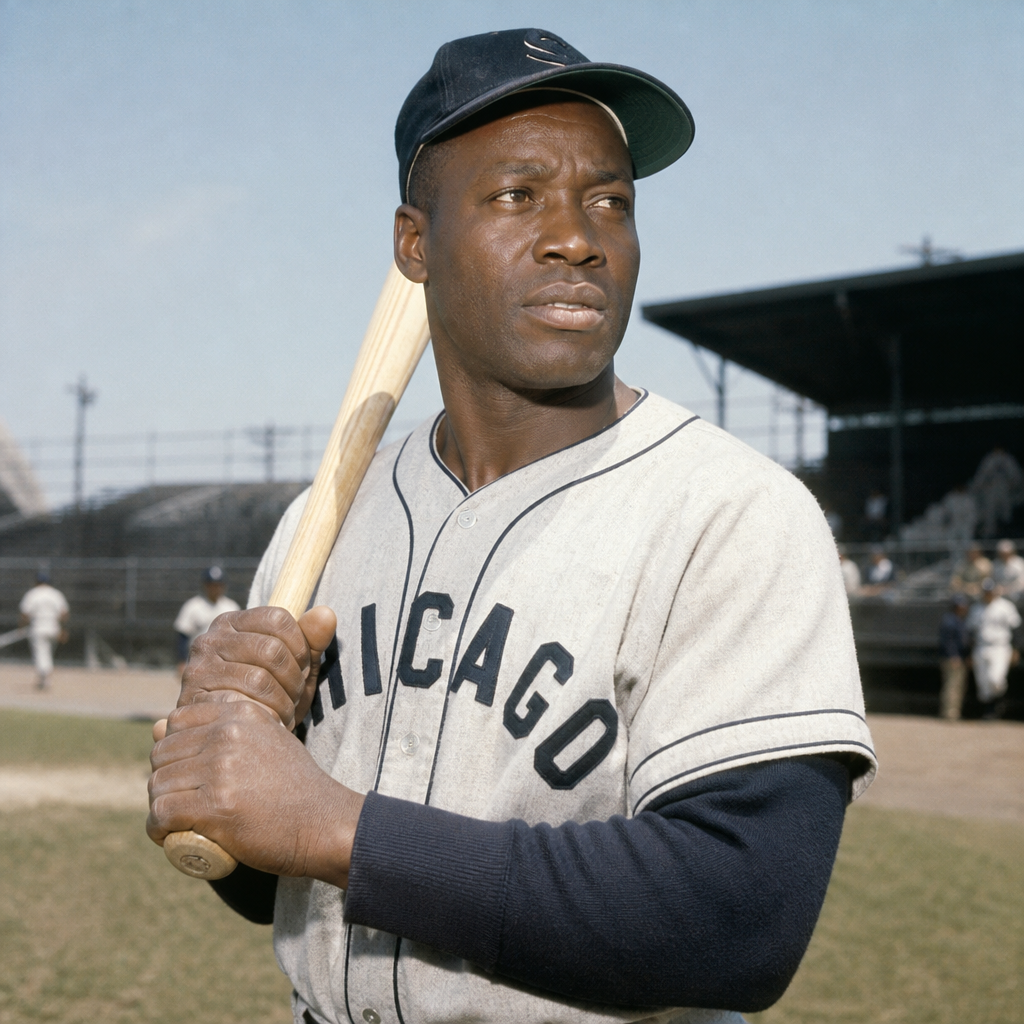
Willard Brown, remembered as “Home Run Brown,” was one of the most feared sluggers in Black baseball and one of the clearest examples of how Negro Leagues stars shaped the game long before full major league integration. A player profile of Brown must do more than repeat his nickname and list a few teams. It has to explain his tools, his records, the context of the Negro Leagues, and why his career still matters inside the broader story of legendary players. Brown was a left-handed power hitter, a strong-armed outfielder, and a proven run producer whose peak came with the Kansas City Monarchs, the most stable and visible Negro Leagues franchise of the 1940s. He also spent time in the integrated major leagues, the Puerto Rican Winter League, and Latin American baseball, giving historians a wide record of elite performance across multiple settings.
For readers using this page as a hub for player profiles, Brown is especially useful because his career connects nearly every major theme in Negro Leagues history: segregated opportunity, barnstorming economics, statistical gaps, postseason importance, migration to Latin America, and delayed recognition by the National Baseball Hall of Fame. When I have worked through old box scores, Hall of Fame files, and league summaries on Brown, the same conclusion keeps surfacing: he was not simply a good player in an overlooked circuit. He was a dominant hitter by any serious standard, and his reputation among contemporaries was earned through years of visible performance against top competition. Understanding Willard Brown means understanding how power, versatility, and timing made one player unforgettable even in an era where records were often incomplete.
Who Willard Brown Was and Why His Profile Matters
Willard Jessie Brown was born on June 26, 1915, in Shreveport, Louisiana, and developed into a star during a period when Black players were excluded from the American and National Leagues. He played professionally from the 1930s into the 1950s, most prominently with the Kansas City Monarchs of the Negro American League. Brown earned the nickname “Home Run Brown” because he hit for exceptional power in league games, exhibitions, and high-pressure matchups that drew large crowds. Contemporary accounts routinely described him as one of the longest hitters in Black baseball, and that was not empty promotion. He combined raw strength with game power, meaning the home runs came in meaningful competition, not just batting practice displays or mythmaking retellings.
His profile matters because he was more than a one-dimensional slugger. Brown could play center field early in his career, later shifted capably to left, and was known for a strong throwing arm. He ran well enough to contribute beyond the batter’s box, and his offensive value extended to extra-base hits, RBI production, and lineup intimidation. In a typical Monarchs lineup, Brown changed how pitchers attacked everyone else. That effect does not always show up cleanly in surviving records, but it appears consistently in newspaper coverage and eyewitness testimony. For anyone building a larger understanding of legendary players, Brown stands as a model of how Negro Leagues stars created complete résumés despite unstable schedules and uneven archival preservation.
Kansas City Monarchs and the Making of “Home Run Brown”
Brown’s defining years came with the Kansas City Monarchs, the flagship franchise of Black baseball. The Monarchs were not merely successful; they were organizationally sophisticated, nationally known, and central to Negro Leagues publicity. Playing for Kansas City put Brown on baseball’s biggest Black stage. He joined a club that valued athleticism, travel discipline, and performance in both league play and the lucrative barnstorming circuit. Within that environment, Brown emerged as a featured attraction. He hit tape-measure home runs, drove in runs in pennant races, and helped the Monarchs maintain their status as a premier team throughout the 1940s.
One reason Brown’s Monarchs tenure matters so much is that it placed him beside other major figures, including Satchel Paige, Hilton Smith, Buck O’Neil, and later Jackie Robinson, depending on the season and roster moment being examined. That level of teammate quality can obscure an individual player, but Brown stood out anyway. In many accounts from the early and middle 1940s, he was the lineup’s central power threat. His 1947 season is often cited as one of the finest in Negro Leagues history; official major league recognized Negro Leagues statistics credit him with a remarkable offensive line and league-leading production. Even allowing for small sample sizes typical of some league schedules, the dominance is impossible to ignore.
Brown also starred in the Negro League World Series. The Monarchs won the 1942 championship over the Homestead Grays, and Brown played a major role in the club’s broader wartime-era success. Those postseason performances matter because the best Negro Leagues teams were loaded with elite talent. Excelling there was the equivalent of performing under the brightest lights available to Black ballplayers of the period. Brown’s combination of power and poise made him dangerous in any format, whether a league contest, a postseason game, or a barnstorming event against white major leaguers after the regular season ended.
What Made Brown an Elite Hitter
Brown’s offensive game was built on leverage, bat speed, and aggressive intent. He hit left-handed and generated carry that turned hard contact into extra bases. Many sluggers are described as pull hitters, but Brown’s reputation suggests a more complete attack. Reports from sportswriters and former players note that he could drive the ball to all fields and punish mistakes without needing a favorable count. That trait is vital when evaluating hitters from the Negro Leagues, where uneven travel, inconsistent fields, and varied pitching styles rewarded adaptability as much as raw talent.
In practical terms, Brown forced defenses to guard deep and pitchers to avoid the inner half. When hurlers challenged him, he could change a game with one swing. When they pitched around him, he still contributed because his presence lengthened innings and increased scoring opportunities. Modern readers sometimes want one neat metric to settle a player’s value, but Brown’s case is stronger when several forms of evidence line up: recognized Negro Leagues numbers, contemporary newspaper praise, Hall of Fame evaluation, and testimony from knowledgeable peers. Buck O’Neil and other respected baseball men consistently spoke of Brown as a legitimate star, not a sentimental historical selection.
| Area | Why Brown Stood Out | Historical Significance |
|---|---|---|
| Power | Produced home runs and extra-base hits against top Negro Leagues pitching | Made him one of the era’s signature sluggers |
| Defense | Played center field early and corner outfield later with a strong arm | Shows he was more than a bat-only player |
| Versatility | Succeeded in U.S. league play, barnstorming, and Caribbean winter baseball | Confirms broad, portable talent across environments |
| Winning impact | Key contributor for championship-level Monarchs clubs | Links individual value to team success |
| Legacy | Eventually elected to the Hall of Fame in 2006 | Represents long-delayed recognition for Negro Leagues stars |
Another point often missed is that Brown’s power played in an era with different incentives and conditions from today. Travel was grueling, schedules were irregular, and teams frequently balanced formal league games with exhibitions needed to generate revenue. A hitter who could maintain authority under those conditions had exceptional durability and concentration. Brown did. His nickname survived because it was repeatedly validated in public competition over many seasons.
Beyond the Negro Leagues: Puerto Rico, Latin America, and the Majors
Brown’s greatness was not confined to one league. Like many Black stars, he played winter baseball in Puerto Rico and elsewhere in Latin America, where competition was intense and local fans followed the game with deep sophistication. These leagues served as both financial opportunity and proving ground. Brown excelled there too, reinforcing the view that his talent was portable. Success in Puerto Rico mattered because the island’s baseball culture drew Negro Leagues stars, white major leaguers, and high-level local talent into the same competitive environment. A player who thrived there was proving himself against a broad baseball population.
His major league opportunity came late and briefly with the St. Louis Browns in 1947. That timing is crucial. Brown was already an established veteran by then, not a young prospect being introduced to the integrated majors at peak development age. He appeared in only a small number of games, yet he still made one memorable mark by becoming the first Black player to hit a home run in the American League. That achievement is historically important, but it should not be mistaken for a full and fair test of his value. By 1947, years of his prime had already been spent outside the major league structure because segregation had blocked access.
This is one of the central interpretive points in any serious Willard Brown player profile. His major league line alone understates him dramatically. Readers who look only at integrated major league statistics miss the actual shape of his career. The correct method is to evaluate the full body of work: Negro Leagues performance, winter league success, reputation among contemporaries, and role on elite teams. When that broader record is used, Brown’s standing rises quickly from historical footnote to genuine star.
Records, Recognition, and Hall of Fame Legacy
Brown was inducted into the National Baseball Hall of Fame in 2006 as part of a major effort to correct generations of under-recognition for Negro Leagues and pre-Negro Leagues Black baseball figures. That induction was not charity and was not based on nostalgia. It reflected years of research by historians, statistical reconstruction, and testimony from people who had seen these players perform. Brown’s case was especially strong because his power was famous in his own time, his teams won, and his excellence appeared in multiple baseball settings.
The Hall of Fame recognition also highlights a broader truth about legendary players from segregated baseball: the archive is uneven, but the evidence is still decisive. Major League Baseball’s 2020 decision to recognize several Negro Leagues as major leagues gave additional structure to this conversation by formally placing Negro Leagues records inside the historical top tier of professional baseball. That change did not create Brown’s greatness; it clarified the framework through which newer fans can evaluate it. When official databases now list Negro Leagues stars alongside American and National League players, the conversation becomes more accurate.
Brown’s legacy persists because it answers a recurring question directly: was he truly great, or simply great relative to a separated league? The answer is that he was truly great. Elite contemporaries feared his bat, championship teams relied on him, and multiple baseball cultures rewarded his performance. That is the definition of a legendary player. If anything, the biggest challenge in writing about Brown is not proving his quality. It is persuading modern readers to move past incomplete surface stats and see the whole career.
How to Read Brown’s Career as a Player Profile Hub
As a hub article within player profiles, Brown’s story points readers toward the main categories that matter when studying Negro Leagues stars. First is context: league quality, segregation, travel demands, and financial structure shaped every career. Second is role: was the player a compiler, a specialist, or a franchise anchor? Brown was a franchise-level force. Third is portability: did the player excel only in one setting, or across regions and formats? Brown produced in league games, postseason play, barnstorming, and Caribbean baseball. Fourth is recognition: how did peers, writers, and institutions judge him? In Brown’s case, praise was persistent and later validated by Hall of Fame election.
This framework is helpful not only for Brown but for comparing him with fellow legendary players such as Josh Gibson, Oscar Charleston, Mule Suttles, Martín Dihigo, and Buck Leonard. Brown may not be the most universally famous name in that group, yet his profile stands up because it combines visible power, championship value, and documented respect from baseball insiders. For researchers, fans, and students, he offers an ideal case study in how to assess greatness when the historical record is rich in testimony but not always complete in traditional statistics.
If you are building out a deeper understanding of player profiles under the legendary players topic, start with Brown’s essentials: left-handed power, Monarchs stardom, postseason credibility, success across borders, and delayed but deserved recognition. Then branch into related profiles and themes, including Negro League World Series history, the Kansas City Monarchs dynasty, Black baseball in Puerto Rico, and the first wave of integrated American League players. Brown connects all of them.
Willard Brown deserves to be remembered not as a marginal figure attached to a colorful nickname, but as one of baseball’s authentic power stars. His career shows what Black players achieved despite exclusion, and it demonstrates how much of baseball excellence existed outside the old major league color line. He hit for power that changed games, defended well enough to add full-spectrum value, and starred for one of the era’s defining teams. He also proved his talent in Latin American winter leagues and left a permanent mark on integration history with his American League home run.
The key takeaway is simple: evaluating Willard Brown correctly requires a full-career lens. Look beyond the brief major league stint. Weigh his Negro Leagues production, his championship role with the Kansas City Monarchs, his cross-border success, and the consistent testimony of those who saw him play. When those pieces are assembled, the portrait is clear. Brown was a major talent in every meaningful sense, and his place among legendary players is secure.
Use this player profile hub as a starting point for further reading on Negro Leagues stars, championship teams, and baseball integration. Follow the connected player profiles, compare Brown with his peers, and revisit the history with the broader evidence now available. The more complete the lens, the more impressive Willard “Home Run” Brown becomes.
Frequently Asked Questions
Who was Willard Brown, and why was he called “Home Run Brown”?
Willard Brown was one of the most dangerous hitters in Negro Leagues history and a central figure in the story of Black baseball before full major league integration. Nicknamed “Home Run Brown,” he earned that reputation through a rare combination of left-handed power, bat speed, and the ability to change a game with one swing. He was not simply a slugger with a memorable nickname. Brown was a complete offensive force whose presence in the lineup could alter how opposing pitchers worked through an entire game. His power stood out in an era and environment where long home runs carried enormous weight, especially against elite pitching and under demanding travel conditions.
Brown is most closely associated with the Kansas City Monarchs, one of the most important franchises in Negro Leagues history, though his career included other teams and stops in Latin American baseball as well. He built his legend through consistent run production, star-level performance in high-pressure games, and a style of play that made him one of the marquee attractions of his time. The nickname “Home Run Brown” reflected more than fan excitement. It captured the fear he put into opponents and the reputation he developed across Black baseball as a hitter capable of producing tape-measure power in any setting.
His significance also goes beyond his individual statistics. Brown represents the kind of superstar talent that thrived in the Negro Leagues while being denied a full major league stage during his prime. For that reason, his name matters in baseball history not only because he was great, but because his greatness helps illustrate the depth, quality, and historical importance of the Negro Leagues themselves.
What made Willard Brown such a feared hitter in the Negro Leagues?
Brown was feared because he paired authentic home run power with the broader offensive skills needed to dominate high-level competition. As a left-handed hitter, he brought a natural power profile that allowed him to drive the ball with authority to multiple parts of the field. He was not a one-dimensional swing-for-the-fences batter. He could hit for average, drive in runs, and pressure defenses with hard contact. That balance made him especially dangerous because pitchers could not neutralize him simply by avoiding the strike zone or forcing him into one type of at-bat.
Another reason Brown stood out was the environment in which he produced. Negro Leagues stars often played under conditions far more taxing than those faced in organized white major league baseball at the time. Long travel schedules, inconsistent playing conditions, frequent exhibition games, and limited institutional support were all part of the reality. Even within that demanding context, Brown established himself as a premier middle-of-the-order threat. That matters when evaluating his reputation. His power was not inflated by comfort or convenience. It was forged in a setting that required resilience as much as talent.
Brown’s offensive reputation was also strengthened by his role on strong teams, especially the Kansas City Monarchs. Great lineups create pressure, but they also put a hitter in situations where he must deliver against top opponents who are fully prepared for him. Brown met those expectations. He developed into the kind of hitter opponents game-planned around, fans came specifically to watch, and teammates trusted in defining moments. That combination of power, consistency, and competitive impact is what made him one of the most feared sluggers in Black baseball.
How should fans understand Willard Brown’s career in the broader context of the Negro Leagues?
To understand Brown’s career properly, fans have to place him within the larger reality of the Negro Leagues as both a baseball institution and a cultural force. The Negro Leagues were not a secondary sideshow to the majors. They were home to elite athletes, major stars, intense rivalries, and teams that developed some of the greatest players in the sport. Brown’s career is a strong example of that truth. His accomplishments show that Black baseball had its own legends, its own power hitters, and its own championship-level excellence long before integrated major league rosters became standard.
Brown played during a period when many Black stars were denied the full recognition and statistical recordkeeping afforded to white players in organized major league baseball. That means his legacy must be evaluated with some historical care. Traditional statistical summaries do not always capture the totality of what Negro Leagues stars did because schedules varied, records were not always preserved completely, and many meaningful contests took place outside neatly archived league structures. Even so, Brown’s reputation among historians, former players, and baseball institutions remains exceptionally strong. He was widely seen as one of the premier sluggers of his era, and that consensus is an important part of his legacy.
His career also helps connect several major themes in baseball history: exclusion, excellence, recognition, and eventual inclusion. Brown’s success demonstrates how much talent existed outside the segregated major leagues. His story reminds readers that the quality of play in the Negro Leagues was real, the stars were legitimate, and the historical record of baseball is incomplete without them. When fans study Brown, they are not just learning about one great hitter. They are learning how the Negro Leagues shaped the sport’s competitive and moral history.
Did Willard Brown play in Major League Baseball, and what does that mean for his legacy?
Yes, Willard Brown did reach Major League Baseball, though only briefly, and that limited opportunity says a great deal about the era in which he played. By the time major league doors began to open more widely to Black players, Brown was already an established star whose prime had been built in the Negro Leagues. His major league stint did not come close to reflecting the full extent of his ability or accomplishments. That is a key point in understanding his legacy. If someone looks only at his major league record, they will miss the far larger truth of his career.
Brown’s brief time in the majors is often discussed because it included a historic moment: he became one of the early Black players to homer in the American League. That achievement matters, but it should not overshadow the more important fact that his reputation was already secure long before that appearance. He did not become notable because he reached the majors. He reached the majors after already proving he was one of the most feared and accomplished hitters in Black baseball. In many ways, his major league appearance serves more as a historical marker of delayed recognition than as the centerpiece of his playing story.
For modern readers, this is one of the clearest lessons Brown’s career offers. Baseball history cannot be judged solely by major league service time during the segregation era. Many all-time talents had their best years in the Negro Leagues, and Brown was one of them. His legacy is strongest when viewed through a full historical lens that values Negro Leagues performance on its own terms while also recognizing how exclusion limited broader fame, statistical visibility, and mainstream acknowledgment.
Why does Willard Brown still matter in baseball history today?
Willard Brown still matters because he stands at the intersection of performance, memory, and historical correction. As a player, he was one of the Negro Leagues’ great power hitters, a left-handed slugger whose nickname reflected genuine dominance rather than exaggeration. As a historical figure, he helps modern fans understand that many of baseball’s most gifted stars spent their prime years outside the segregated major leagues through no fault of their own. His story pushes the conversation beyond simple nostalgia and into a fuller accounting of who built the game’s legacy.
Brown also matters because his career deepens our understanding of the Kansas City Monarchs and the broader network of Black baseball excellence. The Monarchs were a cornerstone franchise, and Brown’s role on teams of that stature places him in the middle of some of the most important competitive and cultural developments in the sport. When historians revisit Negro Leagues achievements, players like Brown help anchor the conversation with a recognizable example of elite skill, star power, and sustained impact.
Finally, Brown remains important because recognition itself is part of the work of baseball history. Studying him restores deserved visibility to a player whose abilities were widely admired in his own time, even if mainstream coverage lagged behind. His legacy reminds fans that the game was always bigger than the segregated major leagues, and that the history of great hitters includes stars whose brilliance was showcased in Negro Leagues ballparks, on grueling road trips, and before audiences who already knew exactly how special “Home Run Brown” was.