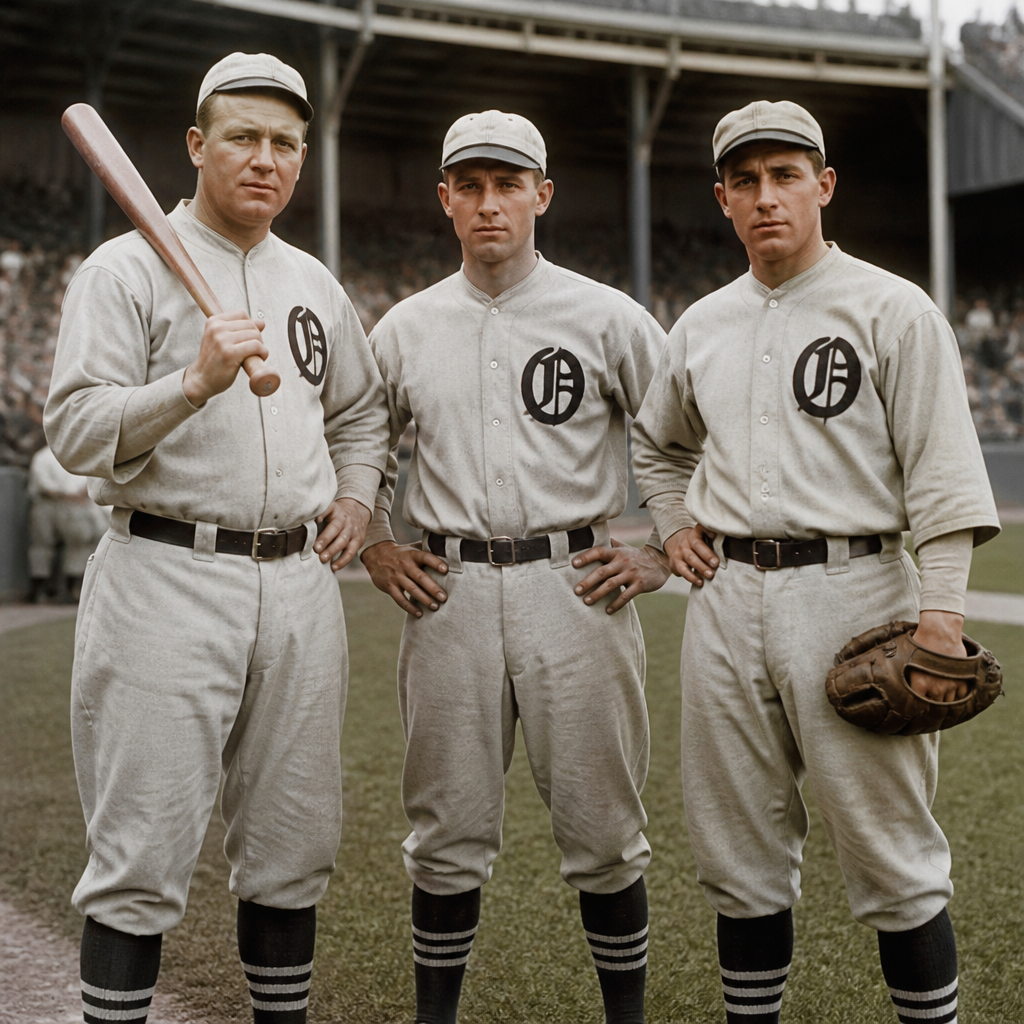
The 1890s Baltimore Orioles were baseball’s roughest dynasty, a club that fused tactical innovation, relentless gamesmanship, and Hall of Fame talent into one of the defining teams of the 19th century. In modern conversations about famous baseball teams, they can be overshadowed by the Yankees, the Big Red Machine, or the early Athletics, yet any serious study of 19th-century clubs has to begin with Baltimore. Managed on the field by John McGraw’s ferocious will and animated by Wee Willie Keeler’s precision hitting, the Orioles won three straight National League pennants from 1894 through 1896 and shaped how the sport was played for decades afterward.
Calling them a dynasty is accurate, but it needs context. The 1890s game barely resembled modern Major League Baseball. Rules were still settling, ballparks were hazardous, travel was grueling, and the line between hard play and outright intimidation was often thin. In that environment, Baltimore mastered every edge available. They excelled at bunting, hit-and-run plays, delayed steals, cutoff positioning, backup responsibilities, and psychological pressure. They also cultivated a reputation for baiting opponents, stretching rules, and turning every loose moment into an advantage. That combination made them admired, feared, and deeply controversial.
This article serves as a hub for understanding 19th-century clubs through the lens of the Orioles at their peak. They were not simply a talented roster; they were a bridge between baseball’s improvisational early decades and the more systematized strategy of the 20th century. Their story connects to the rise of the National League after the American Association, the rough-and-tumble culture of late Victorian baseball, and the emergence of stars whose influence spread far beyond Baltimore. If you are exploring old clubs such as Cap Anson’s Chicago teams, the Boston Beaneaters, the Cleveland Spiders, or the Cincinnati Red Stockings tradition, the Orioles provide the clearest case study in how a 19th-century powerhouse actually functioned.
To understand why the 1890s Baltimore Orioles matter, start with three key ideas. First, they were elite winners: pennants in 1894, 1895, and 1896, plus postseason triumphs in the Temple Cup era. Second, they were strategic pioneers whose style anticipated “inside baseball,” the compact, pressure-heavy approach later associated with dead-ball success. Third, they were central figures in baseball’s power shifts at the end of the century, especially when National League syndicate ownership dispersed talent and Baltimore’s stars helped seed the rise of the New York Giants and, indirectly, the American League Orioles who became the Yankees. Few clubs sit at more important crossroads in baseball history.
The baseball world the Orioles ruled
The Orioles’ dominance makes the most sense when placed inside the unstable baseball landscape of the 1890s. The National League had absorbed competition from rival circuits and expanded to twelve teams in 1892, creating a long, exhausting schedule and sharper disparities between strong and weak clubs. Players faced rough rail travel, inconsistent field conditions, and minimal roster protections. Contracts heavily favored ownership, salaries were tightly controlled, and bench depth could disappear quickly after injuries. In that setting, a club with discipline, tactical cohesion, and hardened veterans could extract enormous advantage over more loosely organized opponents.
Baltimore was perfectly built for that world. Owner Harry Von der Horst and manager Ned Hanlon assembled players who fit a demanding style rather than merely collecting individual stars. Hanlon, one of the sharpest tactical minds in baseball history, insisted on coordinated team play long before that became standard managerial doctrine. He drilled bunt placement, aggressive baserunning, cutoffs, and situational hitting. When people later described clubs as fundamentally sound, they were often describing habits Baltimore had already systematized. I have always found that studying box scores alone understates their strength; contemporary game accounts repeatedly emphasize how prepared they were on every small play.
That preparation mattered because 19th-century rules created tactical openings modern teams do not have. Foul balls were not automatically strikes in the same way they later became, hitters could prolong at-bats, and fielders often played on rough surfaces where bad hops changed outcomes. A smart offense could manufacture runs with bunts, chops, hit-and-runs, and pressure on infield handling. Baltimore did exactly that. They were not a crude team masquerading as innovators. They were sophisticated manipulators of the rulebook and of tempo itself.
Ned Hanlon’s system and the birth of modern pressure baseball
Although John McGraw and Wee Willie Keeler are the headline names, Ned Hanlon was the architect. Hanlon managed Baltimore from 1892 through 1898 and built a system that prized anticipation over reaction. Every player was expected to know where the extra base was, where the throw should go, and how to exploit defenders who relaxed between pitches. The Orioles popularized refined versions of the Baltimore chop, sacrifice tactics, delayed double steals, and aggressive secondary leads. Their style forced mistakes, then multiplied them.
Hanlon’s teams were especially advanced in defensive coordination. Outfielders backed up aggressively, infielders communicated on bunts, and cutoff throws were treated as planned actions rather than improvisations. This sounds ordinary now because every professional team trains that way, but in the mid-1890s Baltimore stood apart. The club’s edge was not only physical toughness; it was repeatable execution. Hanlon also understood roster fit. He valued baseball intelligence, nerve, and adaptability, which is why his teams could keep applying pressure over full seasons rather than merely in short bursts.
In practical terms, Baltimore turned one baserunner into a crisis. A single could become a stolen base, then a bunt that forced an off-balance throw, then a run on an outfield bobble or hurried relay. Opponents knew what was coming and still struggled to stop it. That is the hallmark of an elite system. Similar patterns appeared later in dead-ball clubs managed by men shaped by Hanlon’s methods, showing that Baltimore’s innovations were not anecdotes from an unruly era; they became part of baseball’s strategic bloodstream.
John McGraw: the Orioles’ relentless engine
John McGraw, still in his early twenties during Baltimore’s peak, was the emotional center of the club. As a third baseman, captain, and on-field agitator, he combined patience at the plate, defensive tenacity, and extraordinary competitive intelligence. He drew walks in an era when many hitters swung freely, and he understood exactly how to unsettle pitchers and infielders. Before he became the legendary manager of the New York Giants, McGraw was already one of the game’s most disruptive and effective stars.
What made McGraw so valuable was the fit between his personality and Hanlon’s tactical system. He excelled in close games because he saw opportunities others missed: the extra lead after a pitcher turned his head, the moment to break for home, the chance to challenge an umpire’s control of the contest. Reports from the period routinely describe him as needling opponents, arguing calls, and stretching decorum beyond comfort. That behavior earned him criticism, much of it deserved, but it also reflected a competitive doctrine Baltimore embraced. They believed baseball was a game of pressure applied to bodies, nerves, and judgment.
McGraw’s later managerial greatness can be traced directly to these Orioles seasons. His Giants clubs carried forward Baltimore’s emphasis on discipline, pitching support, and opportunism. When historians map tactical lineage in baseball, the line from Hanlon’s Orioles to McGraw’s Giants is direct. That alone makes Baltimore a cornerstone team for anyone studying 19th-century clubs.
Wee Willie Keeler and the art of impossible contact
If McGraw represented confrontation, Wee Willie Keeler represented precision. Listed at 5-foot-4, Keeler was one of the era’s purest bat-control hitters, famous for “hit ’em where they ain’t.” The phrase survives because it captures a real skill, not a folk saying. Keeler placed bunts and soft liners with remarkable intentionality, exploited defensive positioning, and turned his speed into infield hits and extra pressure. In 1894 he hit .371, in 1895 .377, in 1896 .386, and in 1897 a stunning .424, numbers that reflected both the high-offense environment and his exceptional command of contact.
Keeler thrived under 1890s rules, especially before the foul-strike rule changed hitter incentives. He could spoil difficult pitches, extend plate appearances, and wait for something he could place. Yet reducing his success to old rules misses the point. Plenty of players had the same rulebook; very few had Keeler’s accuracy. Watching descriptions of his game across newspaper archives, what stands out is not just average but repeatability. Defenders knew he might chop, bunt, slash, or punch a ball over the infield and still could not neutralize him consistently.
For Baltimore, Keeler was more than a batting champion. He was the ideal trigger for pressure baseball because his contact skills started action. A strikeout could not move a defense. Keeler moved everyone. His style also linked the Orioles to broader 19th-century baseball themes: smaller players thriving through technique, strategic hitting mattering as much as raw force, and offense being created through geometry as much as strength.
How the Orioles compared with other great 19th-century clubs
The Orioles belong in any top tier of 19th-century clubs, but they were not alone. Comparing them with their main contemporaries clarifies both their greatness and the wider baseball world this hub article covers.
| Club | Peak Years | Signature Strength | Historical Significance |
|---|---|---|---|
| Baltimore Orioles | 1894–1896 | Pressure tactics, depth, discipline | Defined inside play and produced future Giants core |
| Chicago White Stockings/Colts | 1880s | Cap Anson leadership, sustained winning | Early National League standard-bearer |
| Boston Beaneaters | 1890s | Pitching depth, balanced roster | Won multiple pennants and rivaled Baltimore directly |
| Cleveland Spiders | 1890s | Star talent led by Cy Young and Jesse Burkett | Showed how ownership practices could distort competition |
| Cincinnati Red Stockings | 1869–1870 | Professionalism and touring dominance | Established the model for fully professional clubs |
Chicago’s teams under Cap Anson offered organizational continuity and star power in an earlier phase of National League history. Boston’s Beaneaters, led by players such as Hugh Duffy, Tommy McCarthy, Kid Nichols, and later Billy Hamilton, were Baltimore’s most serious rivals for 1890s supremacy. Cleveland had extraordinary top-end talent but became the cautionary tale of syndicate ownership after stars were shifted away and the 1899 club collapsed to 20–134. Cincinnati’s 1869 Red Stockings matter because they represent the professional starting point from which later dynasties emerged. Baltimore sits in the middle of that timeline: more tactical than early powers, rougher and more improvisational than most 20th-century champions.
Roughness, rule-bending, and why they were hated
The “roughest dynasty” label is not romantic exaggeration. Baltimore’s players were notorious for verbal abuse, spikes-high slides, deception on the bases, bench jockeying, and constant efforts to influence umpires. Some tactics were legal but provocative; others lived in murkier territory. McGraw especially developed a reputation for obstructive positioning and incessant argument. Opponents and hostile writers saw the Orioles as dirty players who hid gamesmanship behind claims of cleverness.
That criticism was not baseless, but it should be understood within period norms. Nineteenth-century baseball was physical, confrontational, and only unevenly regulated. Clubs sought every competitive edge because margins were narrow and league governance was weaker than today. Baltimore simply pushed harder and more systematically than most. They turned disorder into a method. The result was a team audiences paid to see partly because they expected conflict.
This roughness also shaped baseball’s evolution. Public frustration with abusive tactics and unstable conditions contributed to later reforms in umpiring authority, rules, and league administration. In that sense, the Orioles were both a peak expression of 1890s baseball culture and a force that made the sport clean up parts of itself.
The collapse of the dynasty and the legacy that followed
Baltimore’s reign did not end because the team forgot how to play. It ended because late-1890s baseball politics reordered talent. The National League contracted from twelve clubs to eight after the 1899 season, and syndicate ownership allowed powerful interests to shuttle players between teams. Several Baltimore stars, including McGraw, Wilbert Robinson, Joe Kelley, and others, were funneled toward Brooklyn or New York connections tied to Hanlon and league power brokers. The original National League Orioles effectively disappeared after 1899 despite remaining rich in baseball knowledge.
The afterlife of the dynasty was enormous. McGraw became the defining manager of the New York Giants. Wilbert Robinson became a major managerial figure with Baltimore roots and later Brooklyn fame. Keeler stayed a star into the American League era. Tactical ideas incubated in Baltimore spread across the majors through players and managers who had lived them daily. Even the city’s later baseball history carries echoes of the old club. The 1901 American League Baltimore Orioles were a separate franchise lineage, but their instability helped produce the club that became the New York Yankees, giving Baltimore an indirect link to another future empire.
For readers exploring famous baseball teams and especially 19th-century clubs, the lesson is clear: the 1890s Baltimore Orioles were not a quirky relic. They were a championship machine, a tactical laboratory, and a cultural flashpoint. Study them and the whole century comes into focus, from professionalization and league warfare to strategy, star-making, and the hard edges of a game still inventing itself. The best next step is to use Baltimore as your entry point, then branch outward to Boston, Chicago, Cleveland, and Cincinnati to see how each great 19th-century club shaped the sport we recognize today.
Frequently Asked Questions
Why are the 1890s Baltimore Orioles considered one of baseball’s first great dynasties?
The 1890s Baltimore Orioles are considered one of baseball’s first great dynasties because they combined sustained winning, elite talent, tactical sophistication, and a distinct competitive identity in a way few earlier clubs had matched. Under manager Ned Hanlon, Baltimore won National League pennants in 1894, 1895, and 1896, and remained a major force even beyond that peak. This was not a one-season wonder or a team riding a temporary hot streak. The Orioles established themselves as the standard of their era, and they did it by excelling in nearly every phase of 19th-century baseball.
What made them especially important in baseball history was that they were not just better than other teams in the standings; they helped redefine how championship baseball could be played. Their success came from blending speed, contact hitting, aggressive baserunning, defensive intelligence, and constant pressure on opponents. In an era before the home run dominated strategy, Baltimore mastered the finer points of the game. They turned bunting, hit-and-run tactics, delayed steals, and situational hitting into weapons that could overwhelm less disciplined clubs.
The roster also helps explain the dynasty label. The Orioles featured Hall of Fame-caliber figures such as John McGraw, Wee Willie Keeler, Hughie Jennings, Joe Kelley, Wilbert Robinson, and Dan Brouthers. That level of star power gave them both depth and versatility, but just as important was the team’s attitude. They played with edge, nerve, and relentless intensity. Their reputation for rough play and gamesmanship made them feared across the league. For modern readers, the Orioles matter not only because they won, but because they showed how a team could build a championship identity around innovation, toughness, and precision long before the sport entered its modern form.
What role did John McGraw play in making the Orioles so dominant?
John McGraw was the emotional engine of the Orioles and one of the central reasons the team became so feared and successful. Although Ned Hanlon was the club’s manager and architect, McGraw functioned as the on-field embodiment of Baltimore baseball. As a player, he was famous for his intensity, intelligence, and willingness to test the boundaries of sportsmanship. He played third base, got on base consistently, disrupted opponents mentally, and helped impose the Orioles’ style inning after inning.
McGraw’s value went far beyond statistics. He represented the team’s mentality: aggressive, confrontational, alert, and always looking for an advantage. He was known for arguing, needling opponents, and exploiting every gray area in the rulebook or in umpiring. In the rough-and-tumble environment of 1890s baseball, that approach was not a sideshow; it was part of a broader strategy. McGraw understood that pressure could be psychological as well as physical. If Baltimore could rattle a pitcher, distract an infielder, or force an umpire into uncertainty, the Orioles believed they had created another opening to win.
He was also a highly skilled player in his own right. McGraw excelled at reaching base, drawing walks, and putting himself in position to score, which made him ideal for a team built around movement and pressure. His baseball mind later became even more famous during his Hall of Fame managerial career with the New York Giants, but many of the traits that defined him as a manager were already visible in Baltimore. When people discuss the Orioles as baseball’s roughest dynasty, McGraw is usually at the center of that conversation because he personified the club’s fierce competitive spirit better than anyone else.
Why was Wee Willie Keeler so important to the Orioles’ success?
Wee Willie Keeler was crucial to the Orioles because he gave the team one of the era’s greatest pure hitters and a perfect offensive catalyst for Baltimore’s style of play. Keeler was not an intimidating slugger in the modern sense, but that was not what 1890s baseball demanded. He excelled at putting the ball in play, spraying hits to all fields, using placement rather than power, and making life miserable for opposing defenses. His famous philosophy, often summarized as “Hit ’em where they ain’t,” captured both his personal approach and much of the Orioles’ larger offensive mindset.
Keeler’s skill set fit Baltimore beautifully. The Orioles thrived on contact, movement, and constant offensive pressure, and Keeler was one of the best in baseball at starting rallies and extending innings. He could bunt for hits, slap line drives into open space, and force fielders into hurried plays. In an era with rough fields, inconsistent gloves, and looser defensive standards than today, a player with Keeler’s bat control and speed was exceptionally dangerous. He did not need to hit the ball over the fence to change a game; he only needed to create one more difficult chance for the defense.
Beyond the numbers, Keeler gave the Orioles balance. While McGraw supplied edge and provocation, Keeler supplied elegance and execution. He showed that Baltimore’s success was not based solely on intimidation or chaos. It was also rooted in extraordinary skill. That is one of the most important things to understand about the 1890s Orioles: they were rough, yes, but they were also brilliant. Keeler’s batting artistry proved that the team’s dynasty was built as much on baseball intelligence and technical excellence as on swagger and aggression.
What made the Orioles “rough,” and how did their style differ from modern baseball?
The Orioles were called rough because they played with a level of physicality, verbal intimidation, and tactical mischief that became central to their identity. In the 1890s, baseball was a far more chaotic and loosely regulated sport than it is today. Players argued constantly, collisions were more common, umpiring could be inconsistent, and teams frequently looked for legal or semi-legal ways to gain an edge. Baltimore embraced that environment more fully and more effectively than almost anyone else.
Their roughness showed up in several ways. They were famous for aggressive baserunning, hard slides, bench jockeying, and attempts to distract fielders or unsettle opponents. They pushed the boundaries of what was acceptable and often forced other teams to react emotionally. But it would be too simplistic to say they were merely dirty players. A better way to describe them is relentlessly opportunistic. They understood that 19th-century baseball rewarded alertness, improvisation, and nerve, and they turned those qualities into a competitive system.
Their style also differed sharply from modern baseball because the game itself was structured differently. Home runs were rare, ballparks and field conditions varied widely, equipment was less advanced, and offensive strategy revolved around manufacturing runs rather than waiting for extra-base power. Baltimore excelled at what would later be called “small ball,” but even that phrase does not fully capture how intricate their attack was. They used bunts, chops, steals, hit-and-run plays, and smart baserunning not as occasional tools, but as the core of their offense.
In modern baseball, some of the Orioles’ habits would draw fines, suspensions, or instant public backlash. At the same time, many of their strategic ideas survive in cleaner, more formalized ways. The emphasis on pressure, situational awareness, and forcing defensive mistakes still matters. So when historians describe Baltimore as rough, they are talking about both temperament and method. The Orioles were intimidating because they mixed talent with disruption, and that combination made them one of the most difficult teams of their century to beat.
Why don’t the 1890s Baltimore Orioles get mentioned as often as the Yankees or other famous dynasties?
The main reason the 1890s Baltimore Orioles are mentioned less often than dynasties like the Yankees is timing. They played in a much earlier version of baseball, before the World Series became the sport’s defining championship spectacle, before modern media turned star teams into national brands, and before the statistical record became as accessible and familiar as it is today. For many fans, baseball history starts with the dead-ball era or even with Babe Ruth, which leaves dominant 19th-century teams outside the everyday conversation.
There is also the issue of historical continuity. The Orioles of the 1890s did not pass into modern memory the way later franchises did through uninterrupted branding, film footage, radio mythology, and repeated postseason exposure. As a result, their story often survives more vividly in historical writing than in popular culture. By contrast, teams like the Yankees became symbols of baseball success across multiple generations, with iconic players whose images were constantly recirculated.
Another factor is that 19th-century baseball can feel unfamiliar to modern readers. The rules were different, the style of play was different, and the sport’s culture was often rougher and less polished. That can make it harder for casual fans to connect with clubs from that period. Yet for serious baseball history, the Orioles are impossible to ignore. They helped shape strategic thinking, showcased a roster full of legendary figures, and demonstrated how a club could dominate through system, psychology, and execution.
In many ways, their relative obscurity today says more about the way baseball memory works than about the quality of the team itself. The 1890s Orioles were not a minor precursor to later champions. They were one of the foundational powers of