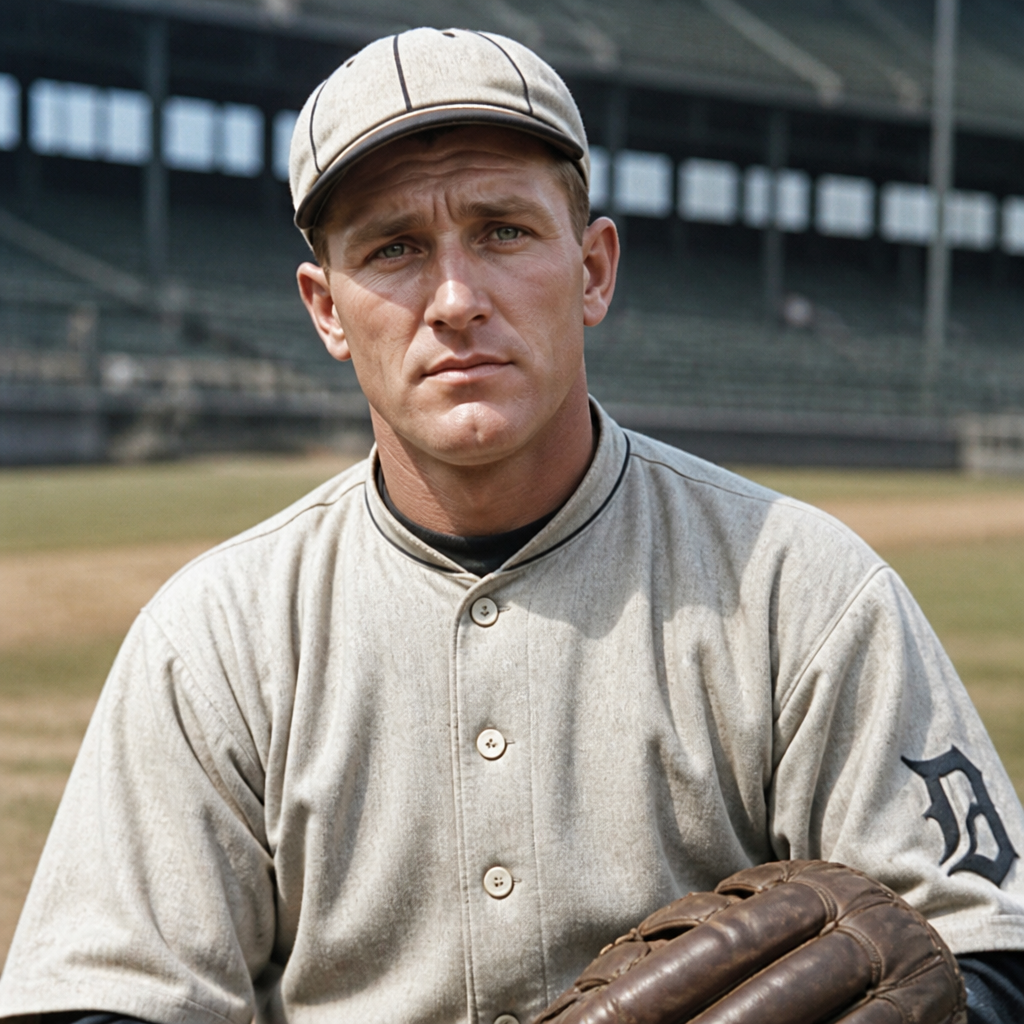
Tim Keefe stands among the most accomplished pitchers in baseball history, yet modern fans often know his name less than they should. A right-hander who starred in the nineteenth century, Keefe built a career that connected baseball’s formative years to standards that still define greatness: durability, command, strikeout power, and performance under pressure. When historians discuss legendary players, his record demands attention because he did not simply succeed in one league or one moment. He dominated two major leagues, excelled under changing rules, and helped establish what an ace looked like before the term became common.
This player profile hub examines why Tim Keefe matters, what made his pitching so effective, and how to understand his place among baseball’s earliest elite. In baseball history, a major league refers to a top-tier professional league recognized for the quality of competition and organizational standing. During Keefe’s era, the National League and the American Association both held that status. An ace is a staff leader trusted to carry heavy workloads and beat the strongest opponents. By that measure, Keefe was one of the first true aces, regularly throwing enormous inning totals while also missing bats at rates that separated him from peers.
I have spent years working through nineteenth-century player records, game accounts, and league context, and Keefe consistently emerges as more than a curiosity from a distant era. His numbers hold up because they were exceptional even by the standards of his own time. He won 342 games, posted a 2.63 earned run average, recorded 2,562 strikeouts, and finished with a 127 ERA+, meaning he prevented runs twenty-seven percent better than league average after adjusting for context. Those are not decorative totals compiled through longevity alone. They reflect sustained superiority across different clubs, schedules, pitching distances, and strategic environments.
For readers exploring legendary players, Keefe also serves as an ideal hub subject because his story touches nearly every core question in baseball biography. How did early pitchers adapt as rules evolved? What does dominance look like before modern velocity readings and video analysis? Which statistics travel well across eras, and which require caution? Keefe’s career offers concrete answers. He succeeded when pitchers worked from a box rather than a mound, when underhand and then overhand mechanics entered the game, and when labor movement between leagues reshaped rosters. Studying him clarifies both the athlete and the sport that made him possible.
Why Tim Keefe Belongs Near the Top of Any Legendary Pitchers List
Keefe’s case starts with a simple fact: he was elite immediately and stayed elite for a long time. He debuted in 1880 with the Troy Trojans and threw a no-hitter in his first major league season, an extraordinary marker even in a volatile era. By 1883, pitching for the New York Metropolitans of the American Association, he won 41 games and established himself as a premier strikeout pitcher. He then moved to the National League’s New York Giants, where his reputation became permanent. Across both leagues, he proved that his results were not a product of weak competition, favorable parks, or one unusual season.
The clearest way to frame his standing is to compare him with the expectations of his time. Nineteenth-century pitchers worked constantly, but not all workloads were equal in value. Some were durable without being dominant. Keefe was both. He led leagues in wins, earned run average, strikeouts, shutouts, and innings. He also helped top clubs contend and win pennants, which matters because opponents prepared specifically for him. In practical terms, managers built series plans around Keefe the way later teams built October plans around Christy Mathewson, Lefty Grove, or Sandy Koufax. His presence changed competitive math.
Advanced historical evaluation supports that view. Baseball-Reference credits him with one of the highest career pitching WAR totals ever produced by a nineteenth-century player. His Hall of Fame induction in 1964 was late, but deserved. More importantly, his profile is broad rather than narrow. He was not only a workhorse or only a strikeout artist. He paired bat-missing stuff with control, commonly finishing among league leaders in strikeout-to-walk ratio. In an age before bullpen specialization, that combination was devastating because a disciplined offense still had to solve him deep into games, often without facing a tired reliever afterward.
How Keefe Became Baseball’s Early Strikeout Specialist
Strikeouts in the 1880s did not carry the same all-or-nothing cultural meaning they do now, but they were still the pitcher’s cleanest path to ending an at-bat without defensive risk. Keefe understood that value before many of his contemporaries fully weaponized it. Reports from the period regularly praised the life on his fastball and the deception in his breaking pitches. Exact pitch classifications vary in nineteenth-century writing, yet sources consistently describe speed changes, sharp movement, and command to different parts of the zone. That mix explains why he was feared not just as an innings eater, but as a true strikeout ace.
His strikeout records underline the point. In 1883, he set a single-season mark with 361 strikeouts, a major league record at the time. Context matters here. The season schedule was shorter than modern schedules, and mound conditions were less standardized, but hitters also had different expectations, and pitchers were operating within evolving rules. Keefe’s advantage was not simply raw arm strength. He attacked hitters with intent. Contemporary accounts mention his willingness to pitch aggressively when ahead in the count, a trait that still separates pitchers who collect strikeouts from those who merely induce weak contact.
What I find most convincing when evaluating Keefe’s bat-missing skill is how durable it proved through rule changes. As the pitching distance increased and mechanics evolved, many pitchers lost some edge or had to reinvent themselves. Keefe remained effective because his approach was not one-dimensional. He could challenge hitters, but he could also sequence speeds and locate with care. Today, analysts would describe that as a complete pitchability profile. His strikeout totals were the visible result; the deeper truth was repeatable command under pressure. That is why his dominance survived transitions that ended or diminished other early stars.
Dominating the American Association and the National League
Keefe’s title as a star who dominated two major leagues is not a rhetorical flourish. It is a precise description of his résumé. He excelled in the American Association with the New York Metropolitans, then reached an even broader level of fame in the National League with the New York Giants. Many nineteenth-century debates center on league strength, and those debates are useful. The National League is often judged deeper overall, while the American Association could be more uneven. But that is exactly why Keefe’s success in both settings is so impressive: he adapted to distinct competitive environments and remained a top-tier pitcher.
His 1883 season with the Metropolitans is the clearest American Association statement. He went 41-27 with a 2.41 ERA and those 361 strikeouts, carrying a huge workload and routinely overpowering lineups. When he joined the Giants in 1884, he did not merely hold his form. He sharpened it against National League opposition, going 37-17 with a 2.25 ERA. From there he became the anchor of one of baseball’s strongest clubs, helping the Giants win pennants in 1888 and 1889 and then capture the 1888 and 1889 World Series versions that existed in that period.
The table below highlights how his role and results translated across leagues and teams.
| Team | League | Season(s) | Key Result | Why It Matters |
|---|---|---|---|---|
| Troy Trojans | National League | 1880-1882 | No-hitter as a rookie; immediate success | Showed top-level talent before reaching a contender |
| New York Metropolitans | American Association | 1883-1884 | 41 wins and 361 strikeouts in 1883 | Established him as the era’s premier strikeout pitcher |
| New York Giants | National League | 1884-1891 | Pennants in 1888 and 1889 | Proved dominance carried into the strongest league setting |
| Philadelphia Phillies | National League | 1892-1893 | Effective late-career innings | Extended value even after peak workload years |
That cross-league credibility is essential in any player profile hub because it answers a common reader question directly: was Tim Keefe great only within a quirky corner of early baseball? The answer is no. He performed everywhere his era could test him. He beat strong clubs, starred in pennant races, and remained effective after moving between organizational structures. For a nineteenth-century pitcher, that is one of the strongest possible signals of genuine greatness.
The Skills Behind the Numbers: Command, Stamina, and Adaptability
Keefe’s greatness becomes clearer when the skills behind the totals are separated and examined. First, his command was exceptional. Walk rates from nineteenth-century baseball can be distorted by scoring practices and rule variations, but relative standings still tell the story. Keefe regularly paired high strikeout totals with low walk totals for his environment. Pitchers who throw hard often lose shape late in games or lose the zone under stress. Keefe generally did neither. He stayed around the plate without becoming predictable, the hardest balancing act in pitching, then and now.
Second, he had rare stamina. Modern starters are praised for 180 or 200 innings. Keefe routinely exceeded 500 in his peak seasons, a number that sounds almost fictional today. That workload was part of the era, but surviving it efficiently was not automatic. To handle those demands, a pitcher needed repeatable mechanics, emotional control, and the ability to conserve effort when possible. Reading old box scores and game stories, you see how often Keefe was left in to finish difficult games because his clubs trusted that his stuff and decision-making would hold. They were usually right.
Third, he adapted. Baseball in the 1880s and early 1890s was not static. The distance from pitcher to batter changed, the legal motion evolved, and offense responded. Some stars built around one advantage disappeared when conditions shifted. Keefe adjusted his pitch mix, changed speeds intelligently, and stayed ahead of hitters. That adaptability is one reason his later seasons still carried value. When I evaluate all-time pitchers, adaptability is often the separator between a brief phenomenon and a lasting great. Keefe lands firmly in the second category because his methods evolved without sacrificing results.
Keefe’s Place in the Broader History of Legendary Players
Any hub page on player profiles should help readers connect one career to the larger map of baseball history, and Keefe fits several important lineages. He belongs in the line of early power pitchers who showed that strikeouts could be a strategic foundation, not just an occasional byproduct. He also belongs in the tradition of staff leaders whose value exceeded statistics because they stabilized whole clubs. The Giants of his prime were not simply fortunate to roster him; they were built around the certainty that he could absorb the biggest assignments and still perform at championship level.
Comparisons across eras require caution, but some are productive. Keefe’s combination of strikeouts, efficiency, and complete-game reliability resembles what later generations admired in Walter Johnson and Bob Gibson, even though the run environments and rules were very different. His ability to lead the league in both volume and quality also anticipates the modern fascination with pitchers who pair workload with rate dominance. In today’s language, he offered ace-level run prevention, elite strikeout production, and championship impact. That is why he remains central to any serious discussion of legendary players, not merely a footnote from baseball’s earliest decades.
There is also a preservation lesson in Keefe’s legacy. Early baseball stars can fade from memory because film is limited and statistical databases require interpretation. Yet if readers rely only on modern familiarity, they miss foundational careers. Keefe helped define the profile of a dominant pitcher before the live-ball era, before radio celebrity, and before the sport settled into twentieth-century structure. His Hall of Fame plaque captures the official recognition, but his deeper value lies in context. He shows how greatness looked when baseball was still inventing itself, and he proves that excellence from that period can still be measured clearly.
Tim Keefe deserves to be remembered as one of baseball’s first overwhelming aces and one of the strongest player profiles in any legendary players collection. He won in the American Association and the National League, struck hitters out at historic rates, carried enormous workloads, and adjusted as the sport changed around him. Those facts are not isolated trivia. Together, they explain why his career remains one of the clearest examples of sustained nineteenth-century pitching greatness. When a player dominates across leagues, across rules, and across pennant races, the historical verdict should be decisive.
For readers using this page as a hub for player profiles, Keefe offers a model for how to study old stars well. Start with the raw numbers, then test them against league context, role, team success, and adaptability. By every one of those measures, he passes comfortably. His 342 wins, 2,562 strikeouts, elite ERA record, and pennant contributions place him securely among baseball immortals. More than that, his story makes early baseball easier to understand because it turns abstract history into a concrete standard of excellence: overpower hitters, limit mistakes, endure pressure, and keep evolving.
If you are building your knowledge of legendary players, Tim Keefe should not be a side stop. He should be one of the first names on the map. Use his career as an entry point into nineteenth-century baseball, then follow the connections to other great pitchers, championship clubs, and rule changes that shaped the modern game. That approach rewards casual fans and serious researchers alike. The more closely you look at Keefe, the clearer it becomes that baseball’s early strikeout ace was not just important for his time. He remains essential reading for understanding greatness itself.
Frequently Asked Questions
Who was Tim Keefe, and why is he considered such an important figure in baseball history?
Tim Keefe was one of the most dominant pitchers of baseball’s nineteenth-century era and a foundational star in the sport’s early development. A right-hander with exceptional control, stamina, and strikeout ability, Keefe built a career that still commands respect when measured against any period in baseball history. He played during a time when the sport was still defining itself, yet his achievements feel remarkably modern: he missed bats, limited free passes, carried enormous workloads, and consistently performed like an ace. That combination is a major reason historians place him among the game’s all-time great pitchers.
What makes Keefe especially significant is that he was not just a product of one season, one league, or one favorable set of rules. He excelled at a high level across years of change and competition, proving his greatness in more than one major league. In an era when pitchers were often expected to throw complete games constantly, Keefe stood out even among other workhorses because he paired durability with elite effectiveness. His statistical record, including his win totals, earned run prevention, and strikeout production, shows a pitcher who was not merely surviving heavy use but thriving under it. For anyone trying to understand how the role of the dominant starting pitcher began, Tim Keefe is one of the clearest early examples.
Why is Tim Keefe called an early strikeout ace?
Tim Keefe earns that label because he was one of the first truly overwhelming strikeout pitchers in major league history. In the nineteenth century, strikeouts did not carry quite the same cultural spotlight they do today, but they were still an unmistakable sign of pitching superiority. Keefe’s ability to retire hitters without the ball being put in play showed just how advanced his stuff and command were for his era. He was not simply benefiting from weaker competition; he was separating himself from his contemporaries in a way that marks genuine dominance.
His strikeout totals were extraordinary for the time, and they helped define his reputation as more than just a durable innings-eater. Many pitchers of the era relied heavily on contact management and fielding support, but Keefe had the power and precision to take defenders out of the equation. That matters historically because it places him at the beginning of a lineage that later includes the great power pitchers of the twentieth century and beyond. When people describe him as an “early strikeout ace,” they are recognizing that he combined old-school workload with a style of pitcher-driven dominance that feels strikingly familiar to modern fans.
What does it mean that Tim Keefe dominated two major leagues?
It means that Keefe proved his greatness in separate top-level professional environments, not just within one organization or one stable competitive setting. During his career, nineteenth-century baseball was more fluid than the modern major league structure, and multiple leagues could claim major-league status. Keefe succeeded at the highest level in both the National League and the American Association, which is a major part of why his legacy is so strong. Excelling in one league can establish stardom; doing it in two major leagues reinforces that a player’s success was real, transferable, and sustainable.
This detail matters because league quality, style of play, travel conditions, scheduling, and team contexts could vary widely during the period. A player who maintained elite production despite those changes demonstrated unusual adaptability. Keefe’s success across those environments shows that his effectiveness was rooted in genuine skill rather than circumstance. For historians, that versatility strengthens the case that he belongs not just among the best pitchers of his generation, but among the best pitchers in baseball history. It also helps explain why his record deserves more modern attention: he did not dominate one narrow corner of early baseball, but the broader major-league landscape itself.
How do Tim Keefe’s statistics compare with other legendary pitchers?
Keefe’s numbers hold up remarkably well, especially when viewed in the context of his era and workload. He finished his career with totals and rate statistics that place him among the elite pitchers ever to play. His win total is impressive on its own, but the deeper value of his record comes from the full package: outstanding earned run prevention, elite strikeout production for his time, excellent control, and an enormous volume of innings pitched. In other words, he combined quality and quantity at a level few pitchers in any century have matched.
When historians compare him to other legendary pitchers, they often point out that Keefe’s dominance becomes even more striking once era is considered. Nineteenth-century pitchers were asked to carry burdens that would be unthinkable today, but not everyone handled those demands equally well. Keefe was exceptional because he remained highly effective while working constantly. His advanced legacy also benefits from the fact that many of his accomplishments were not empty accumulations; he frequently ranked at or near the top of the league in the categories that best identify pitching excellence. That is why statistical evaluations, traditional records, and historical analysis all tend to arrive at the same conclusion: Tim Keefe belongs in the conversation with the greatest pitchers the game has produced.
Why do modern fans know less about Tim Keefe than they should?
One major reason is distance. Keefe played in the nineteenth century, an era that can feel abstract to modern audiences because there is limited film, less familiar context, and a game that looked different from today’s version. Fans tend to connect more easily with players they can watch, hear, and see repeatedly through highlights and documentaries. By contrast, stars from baseball’s earliest decades often survive mostly through box scores, old photographs, and historical writing. That makes even extraordinary careers easier to overlook.
Another reason is that baseball history is often told through a handful of the most repeated names, leaving some all-time greats underrepresented in popular memory. Keefe’s accomplishments are enormous, but they are sometimes overshadowed by later legends whose stories were preserved in richer media environments. Yet when you step back and examine the evidence, Keefe’s résumé demands recognition. He was durable, dominant, adaptable, and historically significant in ways that translate across eras. For modern fans willing to look beyond the most famous headline names, Tim Keefe emerges not as a minor footnote from baseball’s distant past, but as one of the defining pitchers in the sport’s history.