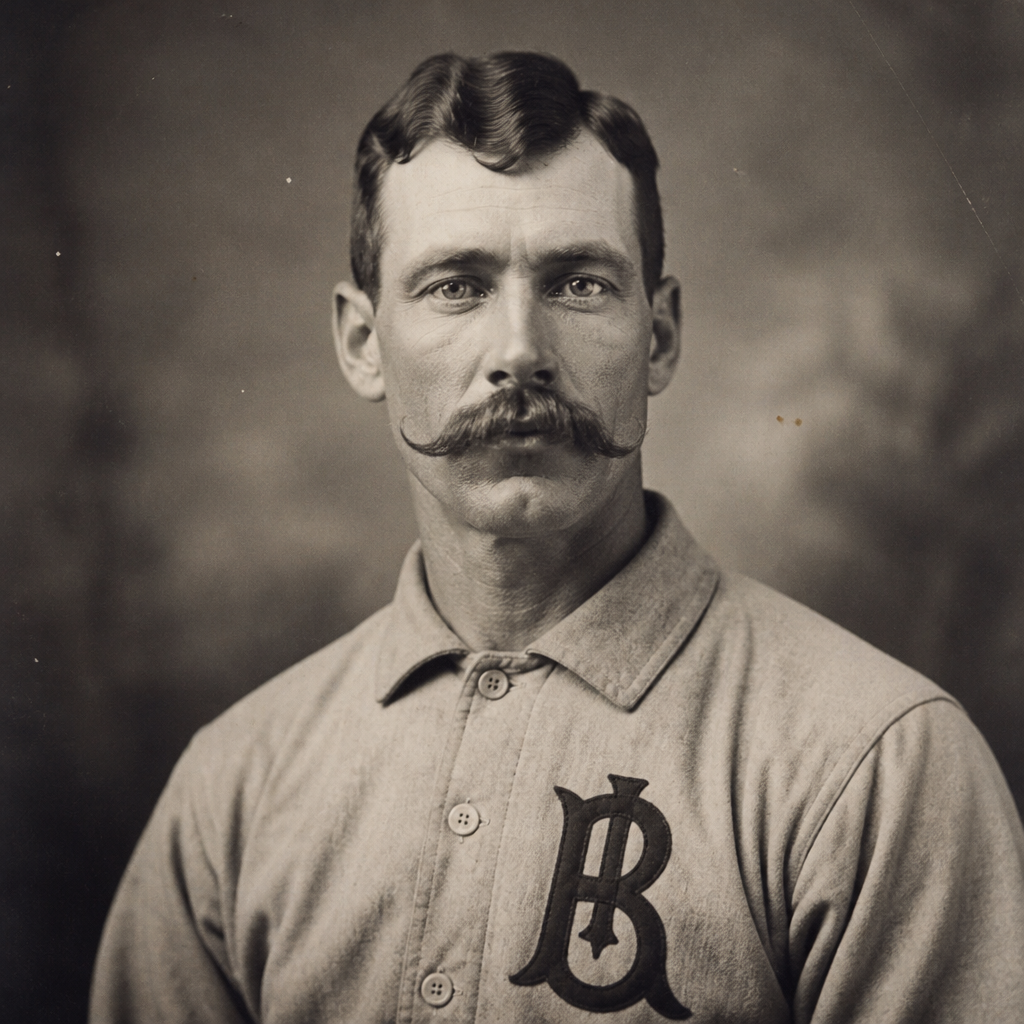
Sam Thompson was driving in runs decades before anyone coined RBI, and that simple fact explains why he belongs near the center of any serious discussion of baseball’s legendary players. In the nineteenth century, official scoring was inconsistent, schedules were shorter, ballparks were odd, and the game itself was still settling into recognizable form. Yet Thompson’s impact comes through clearly even across that statistical fog. He was a towering right fielder with uncommon power, elite bat-to-ball skill, and a knack for producing when runners were on base. If modern fans want a player profile that bridges early baseball and later offensive standards, Thompson is one of the best case studies available.
This hub article on player profiles uses Thompson as the anchor because his career shows how to read old baseball intelligently. A player profile is more than a biography. It combines context, role, peak performance, longevity, competitive environment, tools, and legacy into one structured evaluation. For nineteenth-century stars, that also means understanding league instability, equipment differences, travel demands, and the uneven quality of recordkeeping. I have worked through many of these old careers box score by box score, and Thompson repeatedly stands out because the same themes appear in every lens: he hit for average, he hit for power, he accumulated extra-base hits at a startling rate, and his offensive value scaled up in the biggest run-producing situations.
Why does that matter now? Because baseball history is often flattened into a few household names. Fans know Cap Anson, King Kelly, or later icons like Ruth and Cobb, but Thompson can get lost despite numbers that remain extraordinary. He retired with the highest slugging percentage in major league history at the time. He led the National League in batting average twice, home runs twice, RBIs repeatedly by retroactive accounting, and total bases several times. Even with shortened seasons, his per-game production compares with all-time greats. Studying him helps readers evaluate other legendary players from distant eras with better discipline and fewer modern biases.
Who Sam Thompson Was and Why His Profile Matters
Samuel Luther Thompson was born in 1860 and reached the majors in the 1880s, starring mainly for Detroit and later Philadelphia. Listed at 6-foot-2, enormous for his era, he brought a physical advantage few outfielders could match. Contemporary accounts describe long drives, hard line contact, and a throwing arm strong enough to discourage extra bases. He was not merely a big man in a small-man game. He was a refined hitter whose offensive approach translated into measurable domination. When historians build player profiles, they look for standout traits supported by production, and Thompson checks every box: peak value, signature skill, team importance, and enduring statistical rarity.
The strongest headline in Thompson’s profile is run production. RBI was not an official major league statistic until 1920, but historians have reconstructed earlier totals from box scores. Those reconstructions show Thompson as one of the deadliest run producers baseball had seen. He drove in 166 runs in 1887, a record that stood as the single-season major league mark until Babe Ruth surpassed it in 1921. In 1887 he also batted .372 with 28 home runs and a .545 slugging percentage. Even allowing for the unique rules and offensive environment of that season, those are massive numbers. They describe a hitter who punished mistakes and converted traffic on the bases into scoreboard pressure.
His profile also matters because it demonstrates how to separate era adjustment from era dismissal. Some readers see nineteenth-century stats and assume they are inflated curiosities. That is lazy analysis. The proper question is not whether offense was different; it certainly was. The question is how much better a player was than his direct competition under the same rules and conditions. Thompson excelled by that standard too. His OPS+ is 147, meaning he created offense at a rate 47 percent better than league average after adjusting for park and era. That is not a novelty. That is sustained greatness by a Hall of Fame benchmark.
Breaking Down the Offensive Case
Thompson’s offensive profile starts with contact quality. He finished with a .331 career batting average, and that was not built on empty singles. He also posted a .505 career slugging percentage, extraordinary for his time and still impressive in any period. He led his league in doubles twice, triples once, home runs twice, total bases three times, and slugging percentage twice. In an era when parks were cavernous and field conditions were inconsistent, extra-base authority mattered as much as pure home run totals. Thompson generated damage across the full geometry of the field, which is one reason his run production remained elite even in seasons when the ball did not leave the yard often.
One overlooked strength was efficiency. Because schedules were shorter, nineteenth-century stars had fewer games to build counting stats, so rate dominance becomes especially important. Thompson owns one of the highest runs batted in per game marks in major league history, and that is the cleanest summary of his value. He did not just compile. He converted opportunities at a level that changed games quickly. On clubs with strong table-setters, he was the finisher. On weaker clubs, he still created enough hard contact to carry innings himself. When I compare old stars across eras, I look for statistics that survive context shifts, and per-game run creation is one of them.
His plate discipline record requires nuance. Walk totals from the nineteenth century can be difficult to compare directly because strike-zone rules changed repeatedly. In 1887, for example, walks counted as hits for batting average, which distorts that year’s slash lines across the league. Thompson still deserves credit for thriving within the rulebook in effect. Smart hitters exploit the scoring environment they are given. Beyond that odd season, his batting records remain strong, and his isolated power relative to peers stays impressive. This is a key lesson for player profiles as a category hub: always identify the rule context, then measure how decisively the player beat it.
| Profile Dimension | What Stands Out for Thompson | Why It Matters |
|---|---|---|
| Batting average | .331 career average; league leader twice | Shows consistent contact skill, not one-season noise |
| Power | .505 career slugging; league leader in home runs twice | Confirms genuine extra-base authority for the era |
| Run production | 1887 season with 166 reconstructed RBIs | Defines his reputation as an early run-producing force |
| Era-adjusted value | 147 OPS+ | Measures dominance against contemporaries, not modern conditions |
| Historical standing | Hall of Fame inductee, 1974 | Validates long-term recognition after deeper research |
Defense, Arm Strength, and the Complete Player
Although offense drives Thompson’s fame, a complete player profile cannot stop at the batter’s box. He spent most of his career in right field, a position that demanded range on rough outfields and, more importantly, arm strength against aggressive baserunning. Contemporary reporting consistently praised his throwing arm. That matters because nineteenth-century baseball featured more first-to-third attempts, more pressure on outfield relays, and fewer strikeouts to erase runners automatically. A right fielder who could control advancement saved meaningful runs. Defensive metrics from the period are imperfect, but the qualitative record supports the idea that Thompson was an asset, not a bat-only star hidden in the corner.
His size also changed the visual standard for the position. Before the modern power athlete became common, Thompson looked imposing, and that translated into leverage at the plate and carry on throws. It would be wrong to say he played like a contemporary slugger; the game asked different questions then. But his physical package foreshadowed later middle-of-the-order outfielders more than many of his peers did. That is useful in a hub about player profiles because it gives readers a way to connect eras. When describing tools, think of Thompson as a prototype: unusually large frame, impact contact, and an arm that shaped runner behavior.
Team Context, Peak Seasons, and How to Read the Numbers
Thompson’s best years came with Detroit, especially on clubs that won pennants in the late 1880s. He was not accumulating stats in isolation. He was central to a championship-caliber lineup that included Hall of Fame teammates such as Ned Hanlon, Dan Brouthers, and Charlie Bennett. Great lineups create RBI chances, but they also create pressure to keep rallies moving. Thompson met that demand. His 1887 season remains the headline, yet his excellence was broader than one year. From 1887 through 1895, he was repeatedly among the league’s most dangerous hitters, blending average and power in a way few opponents could match.
Reading the numbers correctly means recognizing schedule length. Thompson played in an age when a 130-game season was not guaranteed, and some seasons were much shorter. That suppresses raw career totals compared with twentieth-century legends. He finished with 1,299 hits, 127 home runs, and 1,308 reconstructed RBIs, totals that look modest until you shift to per-game or rate terms. He hit 126 triples and 343 doubles while playing only 1,410 games. That density matters. If a modern player produced at similar rates over a longer schedule, the counting totals would look dramatically larger. This is exactly why player profiles must blend totals with pace.
Another interpretive point is park environment. Nineteenth-century grounds varied wildly in dimensions and surface quality. Some parks rewarded line drives into gaps; others turned deep flies into adventures for fielders. Thompson’s extra-base production suggests he was not dependent on one narrow park trick. His skill set traveled. He led leagues in total bases and slugging, indicators that capture broad offensive force rather than one-stat luck. In practical terms, if you needed one hitter from the 1880s to drive a runner from first or punish a mistake with men in scoring position, Thompson belongs near the top of the shortlist.
Legacy, Hall of Fame Recognition, and the Hub for Legendary Player Profiles
Thompson was elected to the Hall of Fame in 1974 by the Veterans Committee, and that timeline says something important about baseball memory. Early stars often require later rescue. Their careers are buried under changing rules, fragmented records, and less visual evidence. Once researchers reconstructed nineteenth-century statistics more fully, Thompson’s standing became harder to ignore. He was not simply very good for an obscure time. He was historically productive by any fair comparative method. His Hall of Fame plaque recognizes a hitter whose combination of average, power, and run production put him among the offensive elite of the sport’s formative decades.
As a hub for player profiles under the broader legendary players topic, this article points toward the questions readers should ask in every biography. What was the player’s defining skill? How did he compare with his league? What rules or conditions shaped the numbers? Was his peak brief or sustained? Did he help drive winning? Thompson gives strong answers in every category. His defining skill was run production through authoritative contact. He outperformed his league by a wide margin. His era was volatile, but his dominance still registers after adjustment. His peak was long enough to matter deeply, and his clubs won when he was central.
The broader benefit of studying Sam Thompson is that he sharpens baseball judgment. He reminds readers not to confuse fame with value, not to dismiss old statistics without context, and not to rely on home run totals alone when measuring power. He was a nineteenth-century RBI machine before the statistic officially existed, and that phrase holds up because the underlying evidence is real. If you are building your understanding of legendary players, start with profiles like this one: grounded in context, precise about strengths, and honest about the limits of the record. Then keep exploring the great careers that shaped baseball long before the modern stat line did.
Frequently Asked Questions
Why is Sam Thompson often described as an RBI machine before RBIs were officially tracked?
Sam Thompson earns that description because he was consistently one of the most dangerous run producers in baseball long before the RBI became a formal statistic. In the nineteenth century, recordkeeping was less standardized than it would later become, and many categories modern fans take for granted were either inconsistently recorded or not yet recognized in the same way. Even so, Thompson’s offensive value stands out. He had a rare ability to deliver extra-base hits, drive the ball with authority, and capitalize when teammates reached base ahead of him. That combination made him a central force in creating runs, which is the essence of what fans now associate with run batted in totals.
What makes his case especially compelling is that this was not a matter of one fluky season or a narrow statistical niche. Thompson repeatedly ranked among the era’s most productive hitters, and his combination of batting average, power, and situational impact made him a nightmare for opposing pitchers. He played in an era when offensive conditions varied wildly from park to park and from season to season, so the exact numbers can require context. Still, the broad picture is clear: he was one of the nineteenth century’s premier finishers at the plate, the kind of hitter who turned opportunities into actual runs with remarkable frequency. That is why the “RBI machine” label fits so naturally, even if the term itself came later.
How impressive were Sam Thompson’s achievements given the unpredictable nature of nineteenth-century baseball?
They were extraordinarily impressive, and in some ways they become more impressive the more historical context you add. Nineteenth-century baseball was not a polished, fully standardized major league environment. Schedules were shorter, scoring rules could be inconsistent, equipment was different, travel was harder, and ballparks often had unusual dimensions that could dramatically shape outcomes. The sport itself was still evolving into its modern form. That means evaluating players from the period requires more than just reading a stat line; it requires understanding how unstable the environment could be.
Within that uncertainty, Thompson still separated himself. He was not merely good by the standards of his time; he was dominant in ways that remain visible even through the statistical haze. He led leagues in major categories, produced huge offensive totals despite fewer games than later stars would play, and showed a level of sustained excellence that survives era-to-era scrutiny. Historians and analysts value players who towered over their own competition, and Thompson did exactly that. His greatness is not dependent on retroactive storytelling or selective evidence. It is rooted in the fact that, despite all the noise and variability of nineteenth-century baseball, his impact remains unmistakable.
What kind of player was Sam Thompson beyond just his run production?
Thompson was much more than a specialist who happened to collect a lot of runs batted in. He was a complete offensive force and a physically imposing player for his era. As a right fielder, he brought unusual size and strength to the game, and those traits translated into real power at the plate. He could hit for average, drive the gaps, and change games with extra-base hits. In an age before home runs became the sport’s defining symbol of power, that ability to hit the ball hard and deep still had tremendous value, and Thompson excelled at it.
He also possessed the kind of bat-to-ball skill that made his power even more dangerous. Rather than being a one-dimensional slugger, he was capable of sustaining high-level offensive production in multiple ways. That matters because the best hitters are often the ones who do not need a single script to succeed. Thompson could punish mistakes, advance runners, and produce in volume over time. Defensively, he was known as a strong and capable outfielder, which added to his overall value. So while his reputation often begins with run production, it should not end there. He was an elite all-around hitter and a major star whose broader game supports, rather than weakens, the argument for his historical importance.
Why doesn’t Sam Thompson get mentioned as often as some other all-time great hitters?
A major reason is chronology. Thompson played so early in baseball history that many fans simply do not encounter his name as often as those of twentieth-century stars whose careers were better documented, more heavily mythologized, and easier to compare using familiar modern statistics. The nineteenth century sits at a distance from the contemporary baseball imagination. Fewer surviving images, less complete media coverage, unusual rules, and inconsistent statistical practices all create barriers that can make even extraordinary players feel remote.
Another factor is that baseball history has often centered its storytelling around milestones that are easier to recognize across eras, such as round-number home run totals, modern MVP-style narratives, or records set under more standardized conditions. Thompson’s greatness does not always fit neatly into those later frameworks, even though his actual value was immense. When analysts dig deeper, however, he tends to rise quickly. His offensive dominance, run-producing ability, and standing among the best players of his generation make him difficult to dismiss. In other words, his relative lack of mainstream name recognition says more about how baseball history gets remembered than it does about the quality of his career. Once his record is examined with proper context, he looks much closer to the center of the game’s historical conversation than its margins.
Where does Sam Thompson belong in discussions of baseball’s legendary players?
He belongs much higher than casual historical rankings often place him. If the goal is to identify players who were truly overwhelming forces in their own time, Thompson deserves serious consideration near the top tier of nineteenth-century stars and a meaningful place in broader all-time discussions. He was not just a very good player with a few standout seasons. He was a historically significant offensive engine whose production, especially in driving in runs, would be celebrated even more loudly if it had occurred after modern statistical categories were fully established.
The strongest case for Thompson is built on both performance and perspective. Performance tells us he was one of the era’s most feared hitters, capable of producing at elite levels despite the uneven competitive and statistical environment of early professional baseball. Perspective reminds us that historical greatness should not be reserved only for players whose careers unfolded under modern conditions. If anything, players like Thompson challenge us to evaluate greatness more thoughtfully. When that happens, he looks less like a footnote and more like a foundational figure: a hitter with genuine power, sustained excellence, and a run-producing profile that was decades ahead of the language later used to describe it. For anyone serious about baseball history, Sam Thompson is not an obscure side character. He is a central name worth knowing.