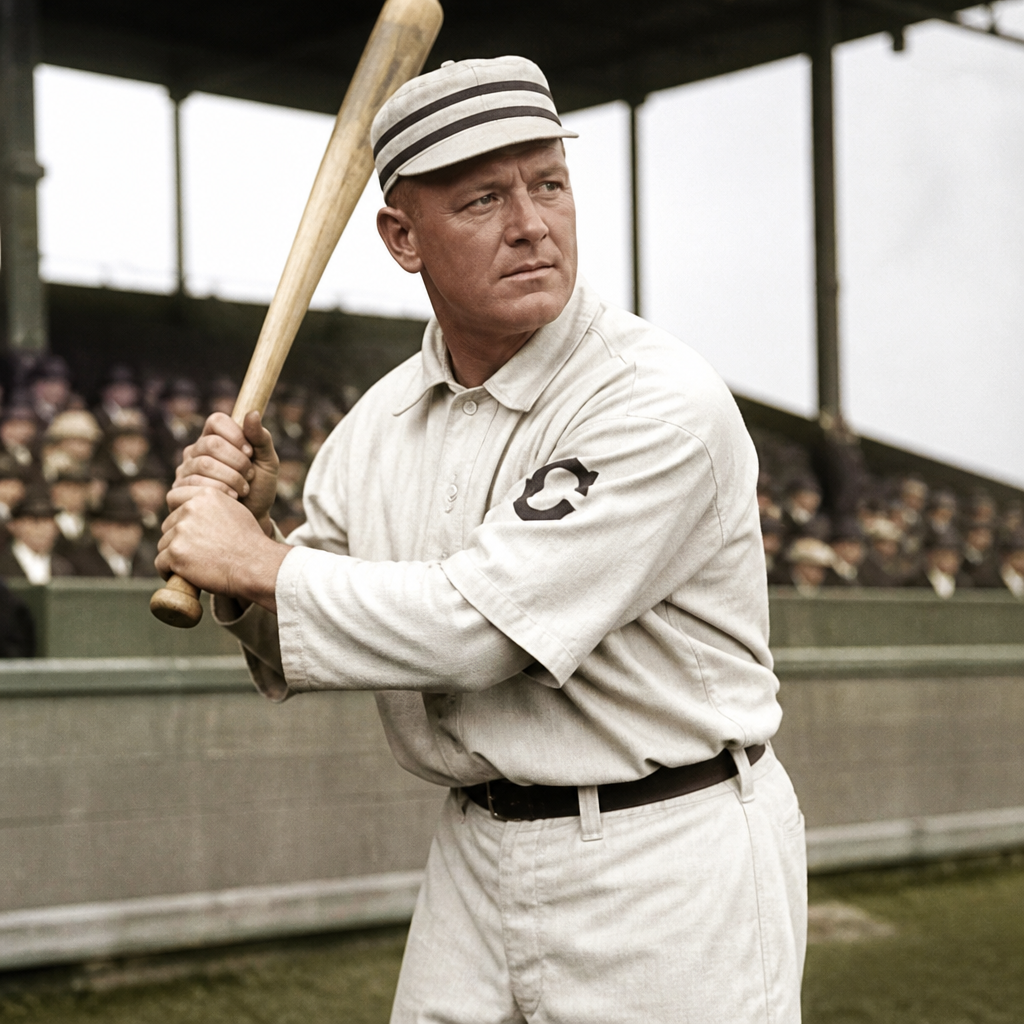
Roger Connor was baseball’s home run king long before Babe Ruth transformed the sport, and his career offers one of the clearest windows into how nineteenth-century stars shaped the game’s earliest standards of greatness. In any serious discussion of legendary players, Connor belongs near the top because he held Major League Baseball’s career home run record for decades, starred across multiple franchises, and built a reputation as one of the dead-ball era’s most complete first basemen. Yet he is often overlooked by modern fans who know Ruth, Hank Aaron, and Barry Bonds, but not the giant left-handed hitter who set the benchmark they eventually passed.
A player profile of Roger Connor must begin with context. He played from 1880 to 1897, a period when the National League was still establishing itself, the players’ profession was unstable, and the home run was far rarer than in later eras. Ballparks were vast, equipment was crude, and official rules changed repeatedly. In that environment, Connor’s 138 career home runs were not a quirky footnote; they were a monumental achievement. The title “home run king” meant something different then, but it still meant dominance. He hit for average, reached base, drove in runs, fielded his position at a high level, and stayed productive across eighteen seasons against changing competition.
This article serves as a hub for player profiles within the broader Legendary Players topic by using Connor as both a case study and a roadmap. A strong player profile explains who a player was, what made him important, how his numbers should be interpreted, and where he belongs in baseball history. That means defining terms such as career value, era context, positional importance, and record significance in plain language. It also means answering the questions readers usually have: Was Roger Connor really baseball’s first great slugger? How good was he compared with his contemporaries? Why did Babe Ruth eclipse him so completely in popular memory? And what can Connor’s story teach us about evaluating early stars fairly?
Having worked through nineteenth-century baseball records, newspaper accounts, and modern databases, I have learned that Connor’s case becomes stronger, not weaker, when examined closely. The best way to understand him is not to force modern expectations onto early baseball, but to see what excellence looked like in his own time. When we do that, Roger Connor emerges as a foundational figure in player profiles: a star whose statistics, durability, and reputation all point in the same direction. He was one of the game’s first sustained superstars, and any hub page on legendary player profiles is incomplete without him.
Who Roger Connor Was and Why His Record Mattered
Roger Connor was born in 1857 in Waterbury, Connecticut, and grew into one of the biggest players of his generation at roughly 6-foot-3, an unusual size in nineteenth-century baseball. He batted left-handed, threw right-handed, and spent most of his career at first base. Connor reached the majors with the Troy Trojans in 1880, then became a star with the New York Gothams and Giants before finishing with the Philadelphia Phillies and St. Louis Browns. Across those stops, he established himself as a durable middle-of-the-order force and a player widely respected for both offense and defense.
His home run record mattered because the long ball was genuinely scarce. In several seasons during Connor’s career, league leaders hit totals that would look tiny today. Outfield fences were distant, the baseball itself was less lively, and many inside-the-park home runs counted the same as over-the-fence drives. That does not cheapen the record; it clarifies it. Connor’s advantage over his peers is what historians focus on. By the time he retired with 138 major league home runs, no one had hit more. Ruth did not pass that mark until 1921, nearly a quarter century later, which shows how enduring Connor’s standard really was.
Record significance also depends on continuity. Connor did not flash for a few seasons and disappear. He remained effective over nearly two decades, collecting more than 2,400 hits, batting above .300 for his career, and frequently ranking among league leaders in slugging-related categories. Modern reference sites including Baseball-Reference and Retrosheet allow us to see his totals in fuller form, but contemporary observers already understood his importance. He was regarded as a premier batsman and one of the sport’s central attractions at a time when star identity was beginning to matter to fans and newspapers.
How to Read Nineteenth-Century Numbers Correctly
The biggest mistake in early player profiles is using raw totals without era adjustment. A home run total from the 1880s does not carry the same environment as one from the 1920s, and a batting line must be read against league norms, schedules, rules, and ballpark dimensions. Connor’s statistics stand up because they remain strong after context is applied. He posted a .317 career batting average and a .397 on-base percentage, numbers that signal broad offensive value beyond home runs. His slugging percentage over .480 was elite for his era, not merely respectable.
Schedule length is another factor. Connor played when seasons were shorter than the modern 162-game format, so counting stats require caution. A player who reaches 100 runs batted in under those conditions is doing proportionally more than the same total might suggest now. League quality also shifted because rival leagues formed and folded, drawing talent in different directions. Analysts often use adjusted metrics such as OPS+ and wins above replacement to compare players across eras, and those tools support Connor’s stature as a historically important performer.
Defensive value matters too. First base is often treated as a bat-first position, but in Connor’s time infield defense was rougher, gloves were primitive, and reliable receiving on throws was more difficult. Connor was considered an excellent defender with soft hands and range unusual for a large player. Contemporary reports credited him with saving errors for teammates simply by handling difficult throws. In player-profile work, that matters because complete players shape games in more ways than one statistic captures.
| Category | Roger Connor | Why It Matters |
|---|---|---|
| Career Home Runs | 138 | Major league record until Babe Ruth broke it in 1921 |
| Career Batting Average | .317 | Shows he was not a one-dimensional slugger |
| Primary Position | First Base | Adds defensive context to his offensive profile |
| MLB Career | 1880–1897 | Demonstrates longevity across changing leagues and rules |
| Historical Significance | Pre-Ruth power benchmark | Frames his place in baseball’s evolution |
Roger Connor’s Peak Seasons and Signature Skills
Connor’s greatness was built on more than one headline statistic. At his peak, he combined contact ability, power, run production, and durability in a way few contemporaries matched. He led his league in home runs, triples, total bases, and batting-rate categories in different seasons, illustrating a versatile offensive game. One of his standout years came in 1885, when he batted .371 for New York and finished among league leaders across major categories. In 1887, he hit 17 home runs, a massive total for the period and the highest single-season mark of his career.
His power showed up in game situations that mattered. Connor was known for driving the ball deep into spacious outfields, producing both over-the-fence blasts and long extra-base hits that turned into inside-the-park home runs. Because nineteenth-century scoring and field conditions rewarded aggressive baserunning, a player with Connor’s strength could pressure defenses even when the ball stayed in play. In modern language, he generated slugging pressure, not just isolated home run totals.
Another signature skill was consistency. Connor had multiple seasons with batting averages over .300 and remained a feared hitter well into his thirties. Durability separated stars from legends in that era because travel was difficult, injuries were poorly treated, and roster depth was inconsistent. Connor’s ability to keep producing through those conditions strengthened his value. When building a player profile hub, this is a useful reminder that legendary status often rests on repeatable excellence, not only on one unforgettable peak.
Teams, Teammates, and the Rise of Baseball Celebrity
Connor’s career also helps explain how baseball stars became public figures. After beginning in Troy, he joined the New York Gothams, a club that would evolve into the Giants and become one of the sport’s defining franchises. In New York, Connor played under influential manager Jim Mutrie and alongside notable figures such as Buck Ewing, John Montgomery Ward, and Mickey Welch. Those teams were prominent, heavily covered, and important to the National League’s growth, which gave Connor a larger stage than many early stars ever had.
His move through different clubs reflects the unstable business structure of nineteenth-century baseball. Contracts, player rights, and league competition were contentious, culminating in the Players’ League revolt of 1890, when Ward and others challenged owner control. Connor participated in that broader labor environment, and his career cannot be separated from it. Player profiles are strongest when they treat athletes as working professionals, not just stat lines. Connor’s era was one in which players helped define what a major leaguer’s career could look like.
Celebrity in Connor’s day did not look like modern fame, but it was real. Newspapers tracked stars closely, fans knew the major names, and memorable incidents spread widely. Connor was reputedly involved in one of baseball’s earliest recognized grand slams and became known for immense physical strength. Stories of his size and hitting power enhanced his identity. Those anecdotes should be handled carefully, yet they show how reputation and performance were already intertwined in baseball culture.
Why Babe Ruth Replaced Roger Connor in Public Memory
Connor’s record lasted so long precisely because breaking it required a change in the game. Babe Ruth arrived in an era with livelier balls, more standardized conditions, shorter fences in some parks, and a strategic shift toward power hitting. Ruth did not merely pass Connor; he redefined what a home run hitter looked like. Once Ruth’s totals exploded, baseball history reorganized around the live-ball revolution, and earlier sluggers were pushed into the background.
That shift in memory was amplified by media scale. Ruth played when photography, national newspaper syndication, postseason spectacle, and later radio made celebrity much bigger. Connor had been famous, but Ruth became mythic. As a result, many fans came to assume the home run began with Ruth, when in reality he inherited and then shattered a preexisting standard established by Connor. Understanding that sequence improves any player profile because it separates innovation from origin. Ruth revolutionized home run hitting; Connor had already defined the record book that Ruth attacked.
There is also a simple narrative bias at work. Sports history favors the figure who transforms the game visibly, not always the one who first set the mark. Connor’s quieter legacy requires more explanation, which is why a dedicated hub page matters. Once readers see the chronology clearly, Connor no longer appears as an obscure trivia answer. He appears as the essential bridge between baseball’s formative years and its first mass-media age.
What Roger Connor Teaches Us About Building Better Player Profiles
Roger Connor is more than a forgotten star; he is a model for how to write stronger player profiles across the Legendary Players topic. First, start with the player’s historical claim in plain language. In Connor’s case, that claim is direct: he was baseball’s career home run leader before Babe Ruth. Second, explain the environment so readers can judge the achievement fairly. Third, expand beyond one stat by covering batting, defense, durability, team context, and influence on the sport’s development.
Connor also reminds us to connect individual careers to larger baseball themes. His profile touches early league formation, labor unrest, changing strategy, ballpark conditions, and the evolution of fame. That breadth is what makes a hub article useful. It should help readers move from one player to another with a consistent set of questions: What did this player accomplish? How dominant was he in context? What skills defined him? How did he influence the game that followed? Those questions work for Connor, and they also work for profiles of Ruth, Cap Anson, Buck Ewing, Hank Aaron, Willie Mays, or Albert Pujols.
The final lesson is that baseball history rewards careful reading. Not every legend fits the modern highlight-reel template, and not every all-time great remains famous to casual fans. Connor’s legacy survives because the record books, contemporary accounts, and modern analysis all align. He was one of the best players of his century, the preeminent home run hitter before Ruth, and an anchor figure for understanding early major league excellence.
Roger Connor deserves recognition not as a curiosity, but as a cornerstone of baseball history and one of the strongest examples of why player profiles matter. His 138 career home runs were the sport’s gold standard for decades, his all-around offensive record was exceptional for any era, and his defense and durability made him far more than a single-category star. When the full context is included, the phrase “home run king before Babe Ruth” is not a romantic exaggeration. It is an accurate summary of Connor’s place in the game.
For readers exploring legendary players, Connor offers a practical benchmark for evaluating everyone else. He shows how records gain meaning from era context, how fame can fade even when greatness is real, and how early baseball still shapes modern debates about value and legacy. If you are building out a deeper understanding of player profiles, start with Roger Connor, then follow the same framework across other all-time greats. That approach will produce a clearer, smarter map of baseball history.
Frequently Asked Questions
Who was Roger Connor, and why is he important in baseball history?
Roger Connor was one of nineteenth-century baseball’s most accomplished stars and, for many years, the sport’s all-time home run leader. Born in 1857, Connor played during an era when baseball was still developing its rules, style, and identity, yet he managed to establish a standard of greatness that lasted well into the twentieth century. He is most famous for finishing his Major League career with 138 home runs, a total that stood as the career record until Babe Ruth surpassed it decades later. That fact alone makes Connor historically important, but his legacy goes much deeper than a single statistic.
Connor was a standout first baseman known for his size, consistency, and all-around offensive value. In a period when home runs were far less common than they would become in the live-ball era, he combined power with batting average, run production, and durability. He played for prominent clubs such as Troy, New York, and Philadelphia, and he was widely respected as one of the premier players of his generation. Because nineteenth-century baseball looked so different from the game fans know today, Connor’s career helps modern readers understand what greatness meant before Babe Ruth, before modern stadium dimensions, and before the home run became baseball’s defining spectacle. In that sense, Roger Connor is not just a statistical curiosity; he is a central figure in the story of how baseball’s earliest legends set the benchmarks that later superstars chased.
Why was Roger Connor called the home run king before Babe Ruth?
Roger Connor earned that distinction because he finished his career with more Major League home runs than anyone who had played before him. His total of 138 career home runs may seem modest by modern standards, but context is everything. During Connor’s era, baseball was played with a different ball, on fields that often had enormous and irregular dimensions, and in a style that emphasized contact hitting, speed, and placement over uppercut power. As a result, home runs were rare and difficult to accumulate, making Connor’s total especially impressive for the time.
What made Connor’s record so remarkable was not just that he reached the top, but that he stayed there for so long. He retired in the late nineteenth century, and his home run mark remained the Major League standard until Babe Ruth shattered traditional expectations in the 1920s. That means Connor’s record survived major changes in players, leagues, and baseball culture. Before Ruth redefined what power hitting looked like, Connor represented the highest career standard in one of the sport’s most celebrated categories. Calling him the home run king before Babe Ruth is historically accurate because he literally held the throne that Ruth eventually claimed, linking the game’s early foundations to its modern mythology.
How did Roger Connor hit so many home runs in an era when power was uncommon?
Connor’s success as a home run hitter came from a combination of physical strength, hitting ability, and adaptability. He was a large, powerful player for his time, reportedly standing well over six feet tall, which gave him a natural advantage in generating force at the plate. But raw size alone does not explain his achievements. Connor was also an advanced hitter who understood how to drive the ball and take advantage of nineteenth-century ballparks, many of which featured quirky layouts that rewarded line drives, hard-hit balls into gaps, and well-placed extra-base contact that could turn into inside-the-park home runs.
It is also important to remember that home runs in Connor’s day did not all look like the towering over-the-fence blasts associated with Babe Ruth or later sluggers. Many were created through speed, field conditions, defensive positioning, and the sheer difficulty of covering vast outfields. Connor excelled within that environment. He consistently hit for average, produced runs, and supplied power relative to his contemporaries, which is the key comparison. Evaluating him fairly means judging him against the conditions of his own era, not against the offensive explosion of later decades. By that standard, Connor was an elite power hitter whose home run total reflected both his individual talent and his mastery of a very different version of baseball.
Was Roger Connor only known for home runs, or was he a more complete player?
Roger Connor was absolutely a more complete player, and reducing him to only his home run record would undersell his greatness. While the career home run mark is the easiest modern headline, Connor was widely regarded as one of the best all-around first basemen of the nineteenth century. He hit for average, drove in runs, scored frequently, and provided dependable defense at first base during a period when the position demanded strong hands, toughness, and adaptability on rougher playing surfaces. He was not a one-dimensional slugger in any modern sense.
Connor’s broader offensive profile is one reason historians continue to place him among the era’s top stars. He accumulated thousands of hits, posted strong run-production totals, and remained productive over a long career. Longevity mattered greatly in early baseball, especially because the sport’s travel, scheduling, and playing conditions were physically demanding. Connor’s ability to perform year after year speaks to both his talent and his durability. In many ways, he embodied the nineteenth-century ideal of a star player: reliable, versatile, productive, and capable of standing out in multiple facets of the game. His reputation as a complete first baseman is a major reason serious baseball historians continue to view him as far more than simply the answer to a trivia question about Babe Ruth’s predecessor.
Why is Roger Connor less famous today than Babe Ruth and other baseball legends?
Connor is less famous today largely because he played so early in baseball history and because the sport changed dramatically after his career ended. Nineteenth-century baseball is often overlooked by casual fans, partly because there is less surviving film, fewer widely repeated stories, and less cultural mythology attached to that period than to the eras of Ruth, Gehrig, DiMaggio, or later superstars. Babe Ruth, in particular, became a national icon at the exact moment baseball was growing into a mass-media phenomenon. His home runs were bigger, more visible, and better documented, and his personality helped turn him into one of the most recognizable athletes in American history. Connor, by contrast, belonged to a more distant and less publicized age.
Another reason is that raw statistics from the nineteenth century can be misleading when taken out of context. Modern fans see 138 career home runs and may not immediately grasp how extraordinary that number was in Connor’s environment. Without understanding the dead-ball style, primitive equipment, ballpark irregularities, and strategic differences of early baseball, it is easy to underestimate his accomplishments. Yet among historians, Connor’s standing remains strong precisely because context restores his significance. He was the benchmark before Ruth, a foundational star at first base, and a player whose record once represented the pinnacle of power hitting in the Major Leagues. His name may not be as widely celebrated today, but his place in baseball history is secure and deserves far more recognition than it often receives.