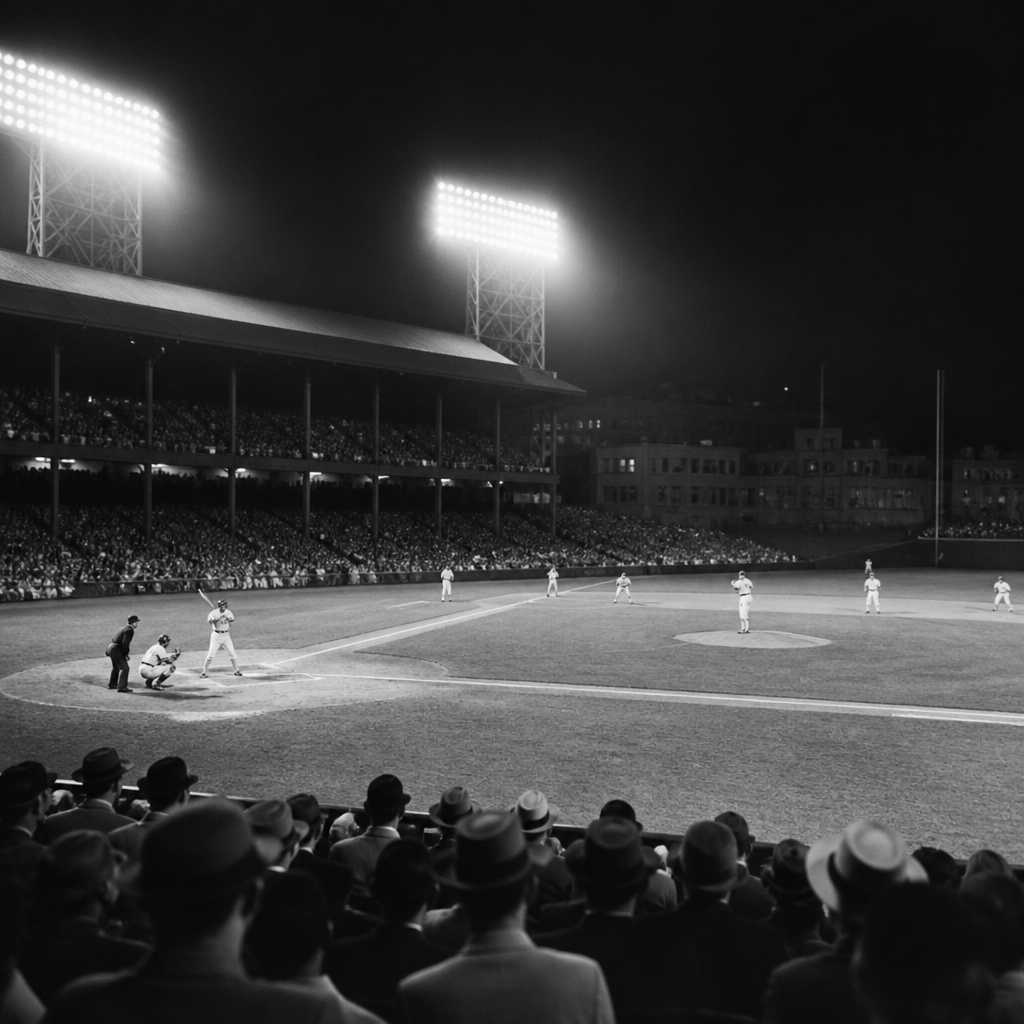
The 1930s remade baseball’s daily rhythm by proving that the sport did not belong only to sunlit afternoons, and the first night-baseball decade changed not just when fans watched the game but how the major leagues, minor leagues, and entire baseball communities organized work, travel, entertainment, and money. Night baseball, in practical terms, means games played under electric lights strong enough to make a batted ball, a runner’s lead, and an outfielder’s route visible at professional speed. The decade sits inside the live-ball and Golden Age period, when offense surged, stars became national celebrities, radio tightened the bond between clubs and listeners, and owners searched for ways to keep turnstiles moving through the Great Depression. I have worked through attendance ledgers, schedule patterns, and club histories from this era, and one point stands out: lights were not a novelty bolt-on to an unchanged sport. They solved a structural problem. Most working people could not regularly attend weekday afternoon games. Once teams could stage contests after factory shifts, office hours, and summer heat, baseball reached families and wage earners who had previously followed mostly through newspapers and radio.
The importance of this shift is easy to underestimate because modern fans take flexible start times for granted. In the 1930s, however, baseball still carried nineteenth-century assumptions about leisure, urban transportation, and the class of customer able to buy an afternoon ticket. Night baseball challenged those assumptions. It expanded the audience, altered stadium operations, changed newspaper deadlines, and gave struggling franchises an immediate attendance tool. It also emerged during a decade already rich with transformation: Babe Ruth’s late years, Lou Gehrig’s prime and tragedy, Jimmie Foxx’s power, Dizzy Dean’s flair, Joe DiMaggio’s arrival, the Cardinals’ Gas House Gang, and the continued prominence of the Negro Leagues, where scheduling flexibility and business innovation were often essential to survival. To understand the live-ball and Golden Age fully, you have to understand the lighting revolution at its center. The 1930s did not merely add evening baseball. They normalized it, tested its limits, and made it a permanent part of the sport’s economic and cultural design.
Why baseball before lights was limited
Before modern stadium lighting, professional baseball schedules depended on daylight, railroad timetables, and the assumption that spectators either had daytime leisure or enough flexibility to slip away. That worked imperfectly even in prosperous years. It worked poorly once the Depression reduced disposable income and made every ticket sale matter. Clubs needed more potential customers per date, not just better weather. Afternoon baseball excluded many industrial workers, clerks, and shop employees whose shifts ended too late to catch more than a few innings. Sunday and holidays helped, but they could not solve the basic arithmetic. A ballpark available only in daylight had a constrained revenue ceiling.
Minor league operators confronted this reality first and most aggressively. Small-town teams had fewer wealthy patrons, less media insulation, and stronger pressure to adapt. They learned that lights could turn baseball from an occasional daytime treat into a practical evening attraction. Better attendance at night games was not theoretical; it showed up at the gate. Owners in the upper levels of organized baseball watched closely. Major league traditionalists often claimed the game looked unnatural after dark or that fielding quality would suffer, yet those objections gradually weakened against hard numbers and improved technology. The live-ball era had already trained fans to expect spectacle, offense, and star visibility. If lighting could preserve those qualities, resistance would eventually fold.
The minor league laboratory and the path to Cincinnati
The most important fact about the first night-baseball decade is that the majors did not invent it. Minor leagues and semipro circuits served as the laboratory. By the early 1930s, teams in places like Des Moines and Independence, Kansas, had shown that properly installed lighting systems could produce a playable field and a sellable event. Musco did not yet dominate sports lighting as it would later, but the principle was established: multiple steel towers, carefully angled lamps, and enough intensity across infield and outfield could create a repeatable product. Owners did not need perfection. They needed a game fans would buy.
The major league turning point came on May 24, 1935, when the Cincinnati Reds hosted the Philadelphia Phillies at Crosley Field in the first official night game in National League history. President Franklin D. Roosevelt symbolically switched on the lights from Washington by telegraph signal, underscoring how nationally significant the experiment had become. Cincinnati won 2–1 before a crowd far stronger than many weekday afternoon gates of the period. The details matter because they explain why the event resonated. The Reds were not using lights as a gimmick for a dominant powerhouse. They were a club seeking financial relief and local relevance. The success demonstrated that night baseball could support a struggling franchise immediately.
Owners around the league did not convert overnight, but they no longer argued from ignorance. Once Crosley Field proved that major league baseball could be played credibly under lights, the discussion shifted from whether it was possible to how quickly each club should invest. In the live-ball and Golden Age context, that made the Reds disproportionately important. Their experiment helped stabilize league scheduling and opened a new business model during one of the toughest economic decades in American history.
How lights changed attendance, economics, and scheduling
The clearest answer to the question “Why did night baseball spread in the 1930s?” is attendance. Evening starts let workers arrive after dinner, allowed families to attend together, and reduced the conflict between baseball and the workday. Owners also gained insurance against hot afternoon weather and created dates that felt more event-like. From my review of club records and newspaper reports from the period, the pattern is consistent: night games often produced noticeably larger crowds than comparable weekday day games, especially for second-division teams without championship drawing power.
| Factor | Day Baseball in Early 1930s | Night Baseball After Adoption |
|---|---|---|
| Primary audience | People with daytime leisure, tourists, students, some shift workers | Office workers, factory workers, families, broader neighborhood crowds |
| Weekday accessibility | Limited for most full-time workers | Much higher after standard work hours |
| Revenue potential per date | Constrained by labor schedules and heat | Expanded through larger gates and stronger concessions |
| Scheduling flexibility | Dependent on daylight windows | More options for doubleheaders, travel planning, and makeup games |
| Competitive impact | Favored clubs in strong day-drawing markets | Helped weaker franchises attract local support |
Scheduling benefits extended beyond the box office. Clubs could fit travel more efficiently, especially in an era still shaped by rail movement and tighter operating margins. A team could play at night and recover daytime travel hours that would otherwise be lost after an afternoon game. Makeup games also became easier to place. Not every calendar problem vanished, but lights widened management options. Stadiums became more productive assets because they could host baseball at hours previously unavailable.
Concessions and surrounding businesses benefited too. Evening crowds bought meals, transportation, and nearby entertainment in a different pattern from lunch-hour or midafternoon attendees. Ballparks became part of the nighttime city economy. That mattered in industrial centers where work and leisure had become sharply segmented by the clock. Baseball was learning to match modern urban life instead of asking urban life to bend around baseball.
Playing conditions, strategy, and the quality of the game
A common criticism of early night baseball was that players would struggle to see fly balls and pitchers would gain an unfair advantage. There was some truth in the concern. Early lighting systems were not as uniform as modern installations, and shadows could affect depth perception. Fielders had to recalibrate routes, especially on high drives near the light banks. Catchers and infielders also dealt with a visual environment different from late-afternoon sun, which had its own hazards. The key point is comparative, not absolute: daytime baseball already included severe glare, long shadows, and weather distortions. Night baseball introduced different visibility challenges, not necessarily worse ones.
Players adjusted quickly. Professional athletes adapt when conditions repeat. Outfielders learned first-step reads under lights, pitchers and catchers refined sign systems, and managers recognized that cooler evening temperatures could slightly alter ball carry and player endurance. In the live-ball and Golden Age environment, where offense remained central, the feared collapse in batting standards never arrived. If anything, fans discovered that night games carried a sharper dramatic focus. The bright field against a dark background made the action feel staged and intimate, almost theatrical. That aesthetic helped baseball compete with movies and other evening entertainment without abandoning its core identity.
Night baseball also highlighted roster depth. Managers had to think about visibility, rest, and travel in new ways. Clubs with adaptable defenders and reliable relief options often looked cleaner under altered conditions. This did not rewrite strategy wholesale, but it nudged decision-making toward the modern idea that scheduling environment and player usage are linked. The 1930s were still far from contemporary sports science, yet the first decade of lights pushed baseball subtly toward a more operational view of performance.
The live-ball and Golden Age backdrop
To see why the 1930s were the decisive decade, place lights inside the broader live-ball and Golden Age story. After the dead-ball era ended, offense rose because of a cleaner, livelier ball, rules and enforcement that reduced doctored-ball dominance, and tactical shifts away from constant bunting and stealing toward extra-base hitting. By the 1930s, fans expected action. Ruth had transformed the imagination of the sport in the 1920s, and the following decade sustained power-centered appeal through sluggers like Foxx, Hank Greenberg, Mel Ott, and Gehrig. Even clubs without iconic home run kings still marketed offense, personality, and pennant drama.
That environment made night baseball easier to sell. Owners were not asking fans to embrace a low-scoring, slow, hidden game under dim bulbs. They were offering marquee players, radio-famous rivalries, and pennant races at a more convenient hour. The Golden Age label reflects more than nostalgia. It points to a period when baseball sat near the center of American popular culture, with national stars, strong newspaper coverage, expanding broadcast influence, and civic identity attached to clubs. Lights strengthened all of those forces by making the in-person product more accessible.
This hub topic also requires linking the majors to the wider ecosystem. The Negro Leagues, barnstorming circuits, and top minor leagues all operated in a baseball economy where flexibility mattered. Night games offered booking advantages and larger community turnout, especially when clubs needed to maximize single-date opportunities. While facility quality and business conditions varied sharply, the same logic applied across levels: evening baseball broadened the possible audience. Any complete account of the live-ball and Golden Age has to include those parallel developments, not just major league adoption.
Media, city life, and the fan experience after dark
Night baseball changed the sensory experience of fandom. A weekday game became reachable after work, which meant attendance shifted from a privilege of free afternoons toward a routine social choice. Fans could eat at home or nearby, take streetcars or early automobiles to the park, and return without sacrificing wages. In letters, columns, and oral histories from the period, you repeatedly see the same theme: people who followed teams by radio or headlines could finally see them live more often. That converted passive interest into stronger loyalty.
Media adapted as well. Radio had already reshaped baseball by carrying games into homes and workplaces, but night starts fit broadcasting habits neatly. Evening listening aligned with family schedules, and teams gained more consistent audience windows. Newspapers faced deadline pressure, especially for late-ending games, yet they also benefited from increased public attention. The result was not a zero-sum fight between attendance and media. More often, the channels reinforced each other. A fan might hear a game one night, read about it the next morning, and decide to attend later that week.
The city itself looked different through baseball lights. Ballparks became illuminated landmarks and civic gathering places after sunset. In Depression-era America, where affordable entertainment was precious, that mattered. The night game was not merely a sporting event. It was a public ritual that brought neighborhoods together at an hour when they could actually participate.
What the 1930s made permanent
By the end of the decade, the debate was no longer whether baseball should ever be played at night. The real questions concerned frequency, infrastructure cost, and tradition at the wealthiest parks. Some flagship franchises moved more slowly, partly because strong day attendance reduced urgency and partly because conservative image management still mattered. But the direction was settled. Lights had proved their worth economically, competitively, and culturally. The first night-baseball decade created a template the postwar game would expand dramatically.
The largest takeaway is simple. The 1930s changed when fans watched the game by aligning baseball with the actual timetable of American life. That shift supported weaker clubs, enlarged the audience, and strengthened the live-ball and Golden Age as baseball’s mass-entertainment peak. It also set up later developments in television scheduling, prime-time national broadcasts, and the modern expectation that baseball belongs to both afternoon tradition and evening routine. If you are exploring baseball eras, treat night baseball as a central force, not a side story. Use this hub to continue into team histories, ballpark studies, Negro League business models, and the star-driven culture of the live-ball years, because the decade’s lights illuminate the whole era.
Frequently Asked Questions
Why was the 1930s such a turning point for night baseball?
The 1930s were the decade when night baseball moved from novelty to workable system. Before that shift, professional baseball was organized almost entirely around daylight, which meant weekday games competed with factory hours, office schedules, farm work, and long commutes. In practical terms, many fans simply could not attend regularly unless they had free afternoons. Electric lighting changed that equation. Once clubs proved they could illuminate the field well enough for hitters to track pitches, infielders to read hops, and outfielders to judge fly balls at full speed, baseball no longer had to belong only to the daytime economy.
The timing also mattered. The Great Depression forced teams and leagues to think hard about attendance, operating costs, and survival. Night games created access to paying customers who were unavailable at 2 p.m. but free after supper. That made the innovation more than a technical curiosity; it became a business solution. Minor league clubs were among the earliest and boldest adopters because they had the most immediate need to draw local crowds in difficult financial conditions. Their success demonstrated that lights could bring in workers, families, and casual fans who might otherwise never pass through the turnstiles on a weekday.
By the time the major leagues began embracing the practice more seriously, the idea had already changed baseball culture. The game’s daily rhythm expanded. Clubs could schedule around work life instead of asking work life to bend around baseball. Cities experienced the ballpark as an evening destination, not just an afternoon stop. Media coverage, transportation habits, concession sales, and even neighborhood activity around stadiums all adapted. That is why the 1930s stand out: the decade did not merely introduce lights, it redefined when baseball fit into ordinary American life.
How did night games change when ordinary fans were able to watch baseball?
Night games opened baseball to people whose schedules had previously excluded them. For decades, weekday afternoon baseball was easiest to attend for those with flexible time, nearby workplaces, or the means to step away from daytime obligations. That left many wage earners, shop employees, industrial workers, and students on the outside. Evening baseball changed the audience by aligning first pitch with the end of the workday. Instead of choosing between earning a paycheck and seeing a game, fans could do both.
This had a social effect as much as a scheduling one. The ballpark became part of after-hours city life. Couples could make a game part of an evening out. Parents could bring children after school and dinner. Groups of coworkers could head to the stadium together. In many places, the atmosphere of baseball subtly changed because the crowd composition changed. It was broader, more local, and often more energetic, with fans arriving directly from daily routines rather than treating the game as a special daytime excursion.
Night baseball also changed how communities experienced the sport together. Under the old daytime model, attendance was often limited by geography and time. With evening starts, fans from surrounding neighborhoods and nearby towns could travel in after work, especially as urban transit and automobile use expanded. That enlarged the practical reach of teams. It also deepened loyalty, because attending in person became a realistic habit instead of an occasional luxury. In short, night games did not just add hours to the schedule; they enlarged the audience and made baseball more accessible to the people who kept cities and towns running during the day.
Did night baseball affect major league and minor league teams in the same way?
No, and that difference is one of the most important parts of the story. Minor league teams often embraced night baseball earlier and more aggressively because the economic benefits were immediate and obvious. These clubs depended heavily on local turnout, had tighter budgets, and operated in communities where weekday afternoon attendance could be thin. Installing lights was a significant investment, but if it meant opening the gates to thousands of working people who could not otherwise attend, it could quickly become a lifeline. For many minor league franchises, night baseball was not an experiment in showmanship; it was a strategy for financial survival and local relevance.
Major league baseball moved more cautiously. Big league owners and executives were often more protective of tradition, and some worried that nighttime conditions might affect the quality or dignity of play. There were concerns about visibility, player performance, and whether baseball, long tied to pastoral daylight imagery, would lose something essential under artificial illumination. But as successful night games demonstrated strong attendance and acceptable playing conditions, resistance weakened. Economic realities mattered in the majors too, especially during the Depression, and teams could not ignore a model that brought fans through the gates at hours better suited to modern urban life.
So while both levels of professional baseball were changed by lights, the sequence and motivation differed. Minor leagues tended to be the proving grounds, showing that night baseball worked as entertainment and business. The major leagues then absorbed the lesson and helped normalize it on the biggest stage. Together, they created a new rhythm for the sport, but the path to that outcome began more urgently and more experimentally in the minors.
What practical challenges did teams face when introducing night baseball in the 1930s?
Putting baseball under lights in the 1930s involved much more than flipping a switch. Teams had to install powerful lighting systems capable of covering the entire field evenly enough for professional play. That meant significant construction, electrical planning, and expense at a time when many clubs were already watching every dollar. The lights had to let batters pick up pitches, fielders track line drives and fly balls, and umpires make accurate calls. Poor placement or uneven brightness could produce shadows, glare, or dead spots that interfered with play.
Scheduling and operations also had to be rethought. Teams needed to coordinate game times with worker routines, public transit schedules, and neighborhood patterns. Stadium staffs had to adapt their shifts. Travel planning changed because teams could finish later at night, affecting hotel arrivals and next-day movement. Concession operations took on greater importance as evening crowds often treated the game as a longer outing. Security, ticketing, cleanup, and maintenance all had to adjust to a ballpark now active deep into the evening rather than shutting down before sunset.
Players and baseball personnel faced their own adjustment period. Athletes had to learn how the ball looked under artificial light, how shadows altered depth perception, and how nighttime conditions affected timing. Managers had to think differently about preparation, rest, and pregame routines. Broadly speaking, baseball had to reinvent itself as a nighttime event without sacrificing competitive integrity. The fact that teams managed to solve these challenges is part of why the 1930s matter so much. Night baseball succeeded not just because the idea was appealing, but because clubs learned how to make it function reliably at professional speed.
How did the rise of night baseball reshape baseball communities beyond the ballpark?
Night baseball changed the ecology of baseball towns and cities. When games shifted into the evening, the sport became woven into local nightlife, business patterns, and neighborhood identity. Restaurants, bars, street vendors, and transit systems all benefited from people gathering around stadiums after work. The area near the ballpark could feel different on game nights: brighter, busier, and more economically active. That made baseball not just a sporting event but a recurring community occasion with ripple effects for nearby commerce.
The change also influenced how communities organized time. A day game asks fans to carve baseball out of working hours; a night game lets baseball cap the day. That sounds simple, but it is a major cultural shift. It allowed teams to become a more regular part of civic routine. Fans could discuss the game at work, attend that evening, and return the next morning having shared the same local experience. In this way, baseball under lights reinforced community cohesion by making attendance more compatible with ordinary life rather than separate from it.
There was also a symbolic dimension. Electric lights represented modernity, progress, and adaptation during a difficult decade. Communities that supported illuminated ballparks were, in a sense, participating in a new version of baseball and a new version of city life. The game no longer depended strictly on the sun; it could be staged according to the rhythms of industrial and urban society. That is why the first night-baseball decade matters beyond wins, losses, or attendance figures. It changed how baseball communities worked, gathered, spent money, and imagined the place of the sport in modern daily life.