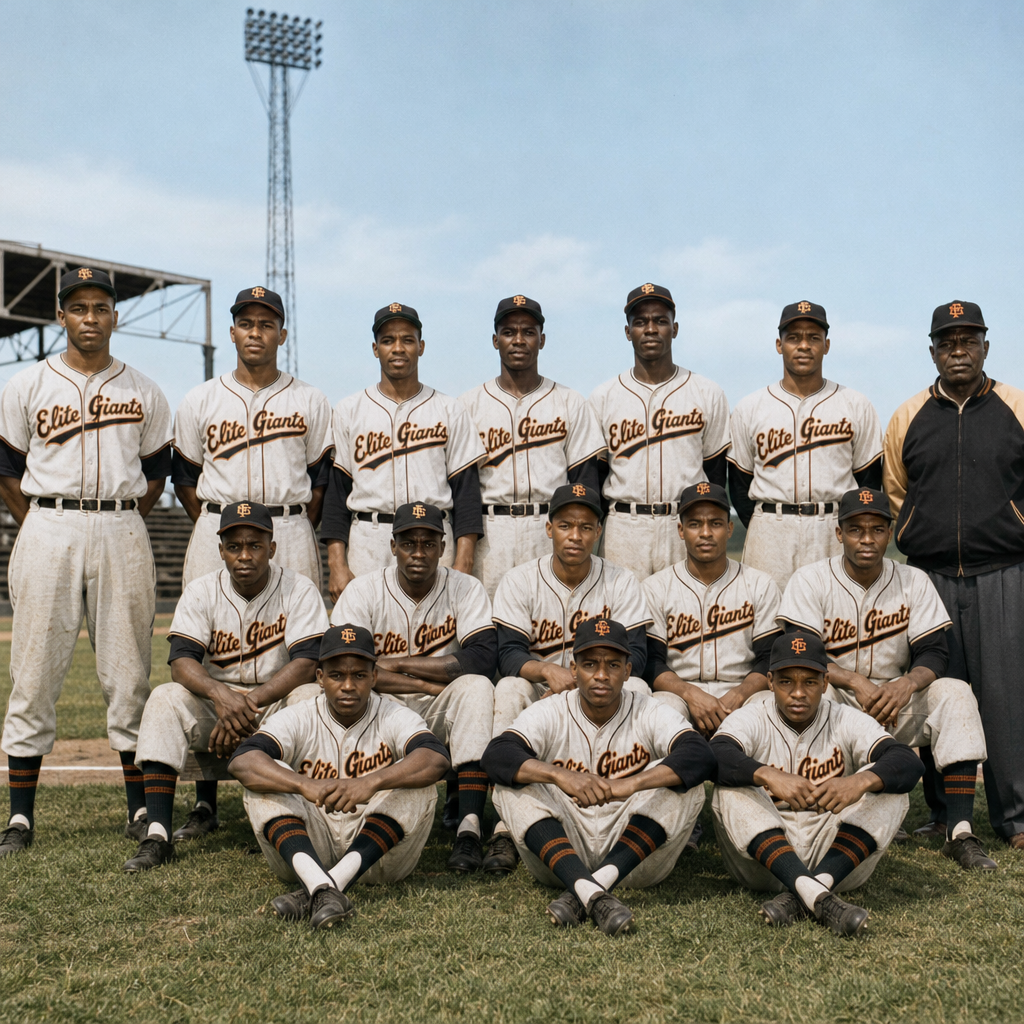
The Baltimore Elite Giants were one of the most resilient and important Negro Leagues teams, a club whose journey from Nashville to Baltimore mirrored the larger story of Black baseball in America. To understand their place among famous baseball teams, you have to see them as more than a franchise that changed cities and names. They were a barnstorming enterprise, a community institution, a proving ground for star players, and ultimately a championship club that helped define the highest level of Negro Leagues competition. In practical terms, the Negro Leagues were organized professional circuits created because Black players were excluded from Major League Baseball by segregation. Those leagues produced elite talent, drew large crowds, and built fierce regional rivalries long before integration began to dismantle the color barrier in organized baseball.
I have found that readers often know a few iconic names such as Satchel Paige or Josh Gibson, yet they do not always know how teams like the Elite Giants held the entire ecosystem together. A Negro Leagues team had to do everything at once: sign and develop talent, survive unstable finances, travel relentlessly, schedule league games around exhibitions, and maintain fan loyalty despite constant pressure from white-owned booking networks, uneven ballpark access, and economic disruption. The Baltimore Elite Giants did all of that across multiple cities. Their path started in Tennessee, ran through several Southern and Mid-Atlantic stops, and culminated in a strong Baltimore identity that still resonates when historians rank the most influential Negro Leagues teams.
This article serves as a hub for the broader Negro Leagues teams topic by using the Elite Giants as a central case study. Their history helps explain how Black professional baseball operated, why franchise movement was common, how championships were won, and why city-based baseball culture mattered so deeply in places shut out of equal opportunity. It also connects naturally to other key teams in the subtopic, including the Homestead Grays, Kansas City Monarchs, Newark Eagles, Pittsburgh Crawfords, and Birmingham Black Barons. If you want one team that reveals the business realities, competitive standards, and cultural significance of Negro Leagues baseball, the Baltimore Elite Giants are an ideal place to start.
From the Nashville Standard Giants to a Traveling Power
The franchise began in 1920 as the Nashville Standard Giants, founded by Thomas T. Wilson, a businessman whose influence on Black baseball in Nashville was substantial. Wilson understood that a successful club needed both local roots and regional ambition. Nashville already had a rich Black baseball culture tied to semipro play, civic pride, and entertainment districts that supported weekend crowds. By launching a professional-caliber team, Wilson gave the city a serious contender and gave Southern Black fans a club that could compete against better-known opponents from larger markets.
The team soon became known as the Elite Giants, a name that signaled aspiration and class while also branding the club as a top-flight attraction. This was not a cosmetic shift. In the Negro Leagues, branding mattered because clubs had to sell tickets in every town they entered. A strong name, sharp uniforms, and recognizable stars helped secure bookings against independent teams and league opponents. The Elite Giants built a reputation for disciplined play, speed, and dependable pitching, traits that were especially valuable in an era when grueling travel and inconsistent fields punished sloppy baseball.
Like many Negro Leagues organizations, the franchise moved in search of stronger gate receipts and more stable league opportunities. It played as the Columbus Elite Giants, then spent time associated with Washington and other markets before eventually settling in Baltimore. These moves reflected common conditions rather than dysfunction alone. Segregated baseball restricted stadium access, and Black teams often rented parks from white clubs, municipal operators, or private owners under unfavorable terms. A move could mean better dates, bigger Black population centers, easier rail connections, or stronger Sunday attendance. The Elite Giants survived because their leadership adapted faster than many rivals.
Why Negro Leagues Teams Moved, Adapted, and Endured
Franchise movement in Black baseball can seem chaotic when compared with the National or American League, but the underlying logic was clear. Revenue depended heavily on attendance, and attendance depended on location, promotion, transportation, and local competition. Teams with championship-caliber rosters could still struggle if they lacked a favorable lease or had to surrender prime dates. In my review of Negro Leagues team histories, the clubs that lasted were often the ones willing to reconfigure their business model quickly. The Elite Giants were among the best examples of that survival strategy.
Travel was central to the business. League schedules rarely generated enough cash on their own, so strong clubs arranged exhibitions against local semipro teams, white independent clubs, and other Negro Leagues powers. Barnstorming created income, but it also exhausted players and complicated standings. For a team like the Elite Giants, success required a roster deep enough to absorb travel fatigue and a management structure capable of booking profitable games. This is one reason Negro Leagues teams cannot be judged only by win-loss records. Operational competence was as important as talent.
The broader Negro Leagues teams landscape helps explain the Elite Giants’ place in history. The Kansas City Monarchs became famous for stability and innovation. The Homestead Grays set the standard for sustained dominance. The Newark Eagles rose through strong ownership and urban support. The Elite Giants were different. Their significance comes from mobility, persistence, and eventual consolidation in a city that embraced them. That makes them a useful hub subject for anyone studying Negro Leagues teams as a whole, because their story touches nearly every structural issue the leagues faced.
Arriving in Baltimore and Building a Lasting Identity
By the late 1930s, Baltimore gave the franchise what earlier stops had not fully provided: a durable urban identity linked to a large Black fan base and a baseball-hungry market. Baltimore already had deep baseball traditions, easy rail access, and strong connections to East Coast Negro Leagues competition. Once the Elite Giants settled there, the club stopped feeling like a wandering operation and started to look like an institution. That distinction matters. Fans support traveling attractions, but they love hometown teams. In Baltimore, the Elite Giants gained the emotional and commercial foundation required for a lasting legacy.
Home games at Bugle Field became part of that identity. The venue was not as famous as some major league parks, but it gave Black baseball in Baltimore a recognizable stage. On game days, the atmosphere mixed sport, style, music, and neighborhood pride. Negro Leagues baseball was entertainment in the fullest sense, yet the competition was intense and highly professional. Fans came to see elite athletes, and the Elite Giants rewarded them with fast, aggressive baseball. Baltimore support also placed the team in direct conversation with other premier clubs, strengthening rivalries that drew larger crowds and better press coverage.
The city connection had broader cultural meaning as well. In segregated America, Black-owned or Black-centered sporting institutions were public expressions of dignity, excellence, and self-determination. When Baltimore embraced the Elite Giants, it was not merely backing a team in the standings. It was celebrating Black achievement in a space where exclusion remained official policy elsewhere. That is why Negro Leagues teams cannot be understood only through statistics. Their value also lies in what they represented to the communities that sustained them.
Roster Strength, Style of Play, and the 1938 Championship
The peak of the Baltimore era came in 1938, when the Elite Giants won the Negro National League pennant and then captured the Negro League World Series. Championships in Black baseball were never easy to secure because the competition at the top was formidable and the season structure could be irregular. The 1938 club blended speed, contact hitting, reliable defense, and enough pitching to survive postseason pressure. In the series, Baltimore defeated the Homestead Grays, one of the era’s great powers, which gives the title added weight. Beating a team associated with stars and sustained excellence left no doubt about the legitimacy of the achievement.
One of the central figures in the franchise’s story was Biz Mackey, the Hall of Fame catcher and manager who was widely respected for his defensive mastery, game calling, and leadership. Mackey’s reputation among players and historians is enormous. He handled pitchers with precision, controlled the running game, and set a professional standard that younger catchers studied closely. His presence gave the Elite Giants credibility and tactical intelligence. When people ask what separated top Negro Leagues teams from merely good ones, I often point to players like Mackey who influenced every inning, not just the box score.
Other notable players passed through the Elite Giants orbit, including Roy Campanella in his teenage years before his major league fame. That detail alone shows the organization’s role as a talent incubator. The team was not simply chasing wins in the moment; it was part of the developmental pipeline that sustained Black baseball at the highest level. The roster changed over time, as all Negro Leagues rosters did, but the Elite Giants consistently identified athletic, intelligent players suited to travel-heavy schedules and pressure games.
| Topic | Baltimore Elite Giants Example | Why It Matters in Negro Leagues History |
|---|---|---|
| Founding | Started in 1920 in Nashville under Thomas T. Wilson | Shows Southern roots of professional Black baseball |
| Mobility | Played in multiple cities before settling in Baltimore | Illustrates financial and logistical realities of the era |
| Home Identity | Established a stable fan base in Baltimore | Demonstrates how urban support sustained elite clubs |
| Championship Peak | Won the 1938 Negro League World Series | Confirms status as a top-tier championship team |
| Star Influence | Led by figures such as Biz Mackey | Links the team to Hall of Fame-level talent and leadership |
How the Elite Giants Fit Among the Great Negro Leagues Teams
When ranking famous Negro Leagues teams, historians usually separate dynasties from essential contenders. The Monarchs, Grays, and Crawfords often occupy the dynasty conversation because of sustained dominance, star concentration, or national fame. The Baltimore Elite Giants belong in the next tier of indispensable teams, though on some measures they overlap with the elite. They were not a novelty act or a brief success story. They were a serious organization with longevity, a title, respected leadership, and relevance across multiple phases of Negro Leagues history.
They also provide an excellent entry point for readers exploring the subtopic broadly. The Homestead Grays reveal what a long-running powerhouse looked like. The Kansas City Monarchs show operational sophistication and postwar influence. The Newark Eagles highlight strong ownership and urban baseball culture. The Elite Giants, by contrast, show adaptation. Their history explains why clubs moved, how they built fan bases, and what it took to transform from a regional Southern team into a champion in a major Atlantic city. For a hub article on Negro Leagues teams, that combination is especially valuable because it connects many strands of the wider story.
Their legacy extends into the integration era as well. Once Major League Baseball began signing Black stars after Jackie Robinson debuted in 1947, Negro Leagues teams faced talent raids and declining economics. That shift affected every major Black club, including Baltimore. Yet the Elite Giants had already done the work that matters historically. They had proven that Black baseball could produce disciplined, championship-caliber organizations supported by knowledgeable fans and led by exceptional baseball minds. Modern recognition by Major League Baseball of Negro Leagues statistics and status has only strengthened the case for treating the Elite Giants as a major chapter in professional baseball history.
Legacy, Memory, and Why This Team Still Matters
The Baltimore Elite Giants matter today because they help correct a distorted baseball narrative that once treated Black teams as side stories rather than central institutions. That old framing was wrong. The Elite Giants were not peripheral to baseball history; they were baseball history, operating at a high competitive standard under unequal conditions that would have crippled many white-owned franchises. Their championship, player development, and city-building role make them essential to any serious list of famous baseball teams.
They also matter because their story is teachable. If you are introducing someone to Negro Leagues teams, the Elite Giants offer a complete case: Southern origin, entrepreneurial ownership, constant travel, eventual urban stability, Hall of Fame leadership, and a world championship. Few teams concentrate so many defining themes in one franchise arc. That makes them an ideal hub topic for further reading on the Monarchs, Grays, Eagles, Crawfords, Black Barons, and other clubs that shaped Black professional baseball.
The clearest takeaway is simple. The Baltimore Elite Giants were champions, innovators through necessity, and a bridge between local pride and national Black baseball excellence. Their move from Nashville to Baltimore was not a detour; it was the path that forged their identity. Explore the wider Negro Leagues teams subtopic with that perspective in mind, and the full richness of baseball history comes into view.
Frequently Asked Questions
Who were the Baltimore Elite Giants, and why are they so important in Negro Leagues history?
The Baltimore Elite Giants were one of the most significant franchises in Black baseball, not just because they won games, but because their history captures so many of the defining realities of the Negro Leagues. The club began in Nashville, where it emerged as a serious baseball enterprise at a time when Black teams had to survive through a combination of league play, independent scheduling, barnstorming, and strong local support. Over time, the team evolved in identity, geography, and stature, eventually becoming the Baltimore Elite Giants and establishing itself as one of the strongest clubs in the Negro National League.
What makes the Elite Giants especially important is that they represent endurance and ambition. They operated in a system shaped by segregation, unstable finances, and constant travel, yet still developed a professional standard that rivaled the best teams in Black baseball. They were not a novelty act or a temporary regional team. They were a serious organization that scouted talent, drew crowds, built rivalries, and became part of the social fabric of the cities they represented.
Their story also matters because it connects local baseball culture to the larger Black sporting experience in America. The Elite Giants gave Black fans a team to follow with pride, and they gave Black players a place to compete at the highest possible level available to them before integration. In that way, their importance goes beyond standings and championships. They were a symbol of excellence, self-determination, and community identity during an era when Black institutions had to fight for recognition and survival.
How did the team move from Nashville to Baltimore, and what did that journey say about Black baseball at the time?
The Elite Giants’ move from Nashville to Baltimore was not simply a matter of relocation in the modern professional sports sense. It reflected the fluid, often difficult economics of Negro Leagues baseball. Black teams frequently had to follow opportunity, chasing stronger attendance, better travel routes, larger Black populations, and more reliable revenue streams. For the Elite Giants, the journey from Nashville through other stops before settling in Baltimore showed how adaptable a successful Negro Leagues club had to be in order to survive and grow.
Nashville was a meaningful starting point because it gave the club its early identity and grounding in Southern Black baseball culture. But the South could also present limits in terms of market size, facilities, and financial stability. As the franchise evolved, it sought environments that could better support a top-tier professional team. Baltimore, with its strong Black community, baseball enthusiasm, and strategic East Coast location, offered a setting where the Elite Giants could become more than a traveling club with ambition. It gave them a chance to build a deeper urban following and compete as a major force in one of the most visible regions of Negro Leagues baseball.
This journey says a great deal about the period. Negro Leagues teams were often entrepreneurial operations in the fullest sense. They had to be creative, mobile, and resilient. Owners and managers were not just baseball people; they were business operators navigating segregation-era America. The Elite Giants’ path from Nashville to Baltimore shows how Black baseball was shaped by migration, economics, regional culture, and the need to continuously adapt. Their eventual success in Baltimore proves that relocation was not a sign of instability alone. It could also be a step toward prominence, legitimacy, and lasting historical relevance.
What role did barnstorming play in the identity and success of the Baltimore Elite Giants?
Barnstorming was central to the Elite Giants’ development and identity. In the Negro Leagues, barnstorming was not a side activity; it was often essential to survival. Teams played exhibition games in towns large and small, traveled constantly, and brought high-level Black baseball to communities that might never otherwise see it. For the Elite Giants, barnstorming helped generate income, expand their reputation, and strengthen their connection to Black fans across a wide geographic area.
This style of baseball demanded far more than talent. It required stamina, organization, and flexibility. Players had to perform under difficult travel conditions, adjust to varying field quality, and play frequent games with little rest. A team that could thrive in that environment developed toughness and professionalism. The Elite Giants did exactly that. Their barnstorming background helped shape them into a disciplined and battle-tested club capable of competing with the best teams in Negro Leagues baseball.
Barnstorming also made the Elite Giants part of a broader cultural network. When they traveled, they were not just playing baseball. They were bringing entertainment, pride, and visibility to Black communities. In many places, these games were important social events. Fans came not only to watch elite athletes but also to participate in a communal experience during a segregated era when Black institutions mattered deeply. That gave the Elite Giants a significance beyond league standings. They became ambassadors of Black baseball, helping spread the game’s popularity while building the kind of recognition that later supported their rise as a championship-caliber team.
Why is the Negro League championship won by the Baltimore Elite Giants considered such a major achievement?
The Baltimore Elite Giants’ Negro League championship stands as a major achievement because of the level of competition they had to overcome and the broader historical conditions under which they competed. Negro Leagues baseball featured extraordinary talent, including many players who later proved, once given the opportunity, that they belonged among the best in professional baseball anywhere. To win a championship in that environment meant a club had depth, star power, strategic leadership, and the ability to perform under pressure over the course of a demanding season.
For the Elite Giants specifically, the title validated years of growth and persistence. This was a franchise that had endured relocation, shifting league structures, and the constant uncertainty that affected Black baseball. A championship confirmed that the organization was not merely durable; it was elite in the truest competitive sense. It showed that the team had successfully transformed itself from a mobile, ambitious operation into a polished contender capable of reaching the top of Negro Leagues baseball.
The championship also carried symbolic weight. In the segregated baseball world, Black teams were too often denied equal coverage, resources, and institutional recognition. Winning a title was therefore not just about the trophy or pennant. It was a statement of excellence in a system that regularly undervalued Black achievement. For Baltimore’s fans, the championship gave the city a team to celebrate as one of the best in Black baseball. For historians today, it marks the Elite Giants as more than a noteworthy franchise. It confirms them as a defining championship club in the story of the Negro Leagues.
How should the Baltimore Elite Giants be remembered among the most famous baseball teams in American history?
The Baltimore Elite Giants should be remembered as one of the essential franchises in the history of Black baseball and as a team fully worthy of inclusion in any serious conversation about important baseball clubs in America. They may not always receive the same mainstream recognition as some Major League teams, but historically they stand for many of the qualities that make a franchise memorable: resilience, mobility, strong fan connection, player development, competitive excellence, and a championship legacy.
They should also be remembered for what they reveal about the broader American story. The Elite Giants existed within the constraints of segregation, yet they built a respected and accomplished baseball institution anyway. Their path from Nashville to Baltimore reflects the movement of Black communities, the realities of Black entrepreneurship, and the central role sports could play in community identity. They were a team that adapted to changing circumstances without losing its competitive purpose, and that ability to endure is one reason their legacy remains so compelling.
Most importantly, the Elite Giants should be seen as more than a franchise that changed cities and names. They were a proving ground for top Black talent, a source of civic pride, and a championship team that helped define the highest level of Negro Leagues play. When viewed in full context, they belong among the most meaningful teams in baseball history because they represent both athletic achievement and cultural significance. Their legacy is not limited to Baltimore or Nashville alone. It is part of the larger history of how Black baseball shaped the game in America.