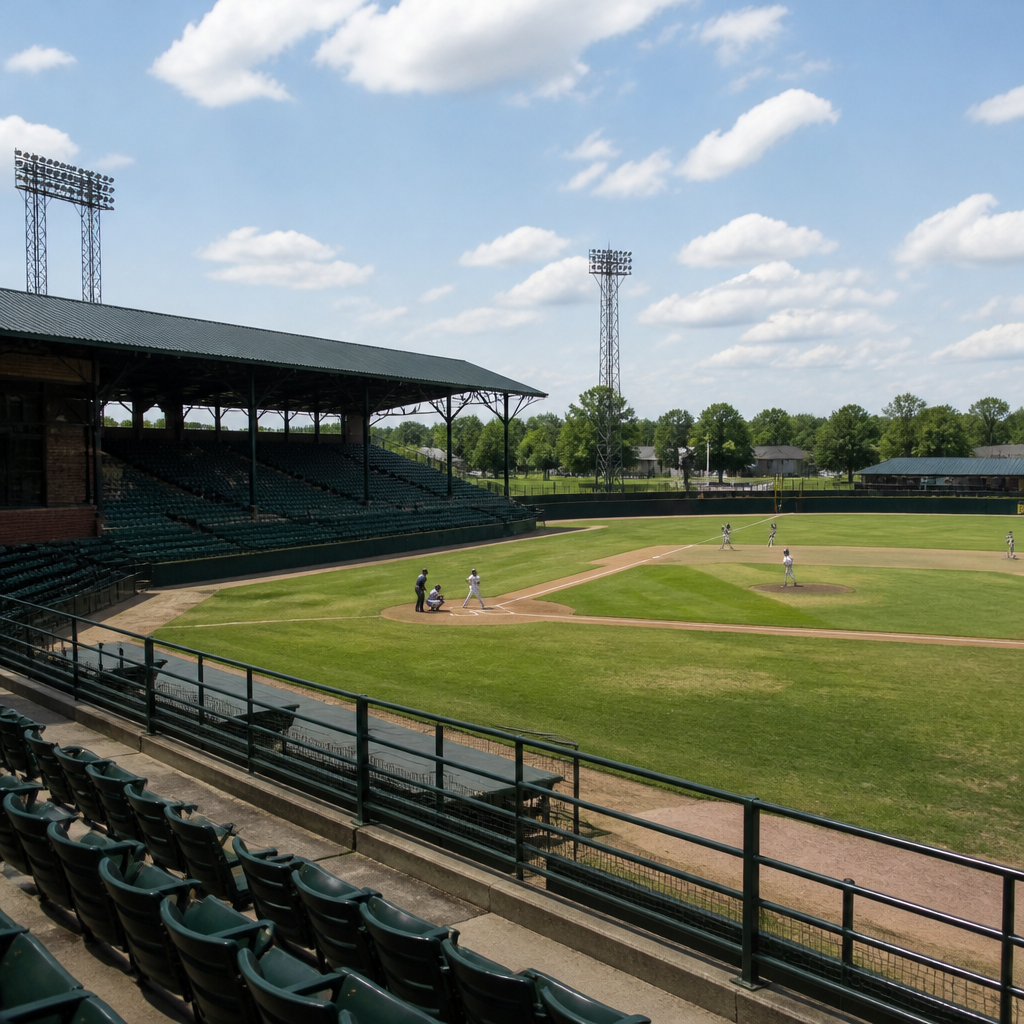
The Birmingham Black Barons stand at the center of any serious discussion of Negro Leagues teams because their story joins elite baseball, Black business history, Southern urban life, and the long fight for recognition. Founded in Birmingham, Alabama, in 1920 as a charter member of the Negro Southern League, the club became one of the most durable and visible franchises in Black baseball. Their home, Rickwood Field, gave them a stage unlike almost any other team in the South. Opened in 1910 and still standing today, Rickwood is the oldest professional ballpark in the United States, and it remains inseparable from the Black Barons’ identity. When fans ask why the Birmingham Black Barons matter, the short answer is simple: they connect the local history of segregated Birmingham to the national history of baseball excellence, entrepreneurship, and civil rights.
In practical terms, the Black Barons serve as an ideal hub for understanding Negro Leagues teams because their history touches nearly every major theme in the subject. They reveal how Black clubs were organized, how players developed, how barnstorming sustained revenue, how regional leagues fed stronger circuits, and how stars moved from Black baseball into the integrated major leagues. The franchise is also the best entry point for understanding why Rickwood Field matters beyond nostalgia. This was not merely an old ballpark used by a famous team. It was a living workplace where Black athletes performed under unequal conditions, drew large crowds, and built a sporting institution that shaped generations of fans across Alabama and the wider South.
Any overview should begin with clear definitions. “Negro Leagues” refers to the organized Black professional baseball leagues and independent clubs that operated mainly from the late nineteenth century through the middle of the twentieth, created because segregation excluded Black players from white major leagues and many white-owned minor leagues. “Negro Leagues teams” includes clubs in major circuits such as the Negro National League and Negro American League, but also important regional teams whose influence reached beyond league labels. The Birmingham Black Barons fit both categories over time. They began in a regional league, competed against the best teams in Black baseball, and produced talent and cultural impact on a national scale. That layered history is exactly why they deserve close study.
I have found that when people first encounter the Black Barons, they often know one name: Willie Mays. That is a useful starting point, but it is far from the whole story. The franchise also featured Satchel Paige, Mule Suttles, Piper Davis, Bill Greason, and countless working players whose names are less famous but whose careers sustained Black baseball. Looking at the club only through future Hall of Famers misses what made it an institution. The Black Barons mattered because they endured. They drew fans year after year, they adapted to changing leagues and economics, and they made Rickwood Field a landmark where local memory and national baseball history still meet.
How the Birmingham Black Barons emerged in Black baseball
The Birmingham Black Barons were established during a period when Black baseball was becoming more formally structured, though still subject to unstable finances, travel demands, and racial discrimination. Birmingham was an industrial city with a large Black population, a strong working-class fan base, and a culture that supported baseball as both recreation and civic expression. Those conditions helped the team take root. As a charter member of the Negro Southern League in 1920, the Black Barons represented a Southern answer to the larger Black baseball circuits centered in places like Chicago, Kansas City, and Pittsburgh. They gave Southern fans a top-level club to claim as their own.
One reason the Black Barons lasted was that they fit their market. Birmingham was not simply hosting occasional exhibitions; it supported a regular baseball enterprise. Owners and operators understood that the team needed local credibility, recognizable talent, and a schedule that balanced league play with profitable independent dates. Like many Negro Leagues teams, the Black Barons did not live on gate receipts from league contests alone. They barnstormed, booked games against independent clubs, and traveled where demand existed. That business model required flexibility and strong local organization, and the Black Barons showed both more consistently than many rivals.
The club also benefited from Birmingham’s place in Southern rail networks and industrial commerce. Travel was never easy for Black teams in the Jim Crow South, but cities connected by rail made scheduling more feasible. Teams could draw workers from steel mills, mines, and rail yards who saw baseball as an essential part of weekend life. In that setting, the Black Barons became more than a sports team. They were a source of pride and public visibility for Black Birmingham. The team’s very existence challenged assumptions about who could build successful professional institutions in the segregated South.
Why Rickwood Field is essential to the Black Barons story
Rickwood Field gives the Birmingham Black Barons story unusual permanence. Built by industrialist Rick Woodward for the white Birmingham Barons, the park opened in 1910 and introduced modern features inspired by major league venues, including concrete and steel construction. For Black baseball history, its importance lies in use as a shared but unequal space. The Black Barons played many home games there, transforming a ballpark identified with white professional baseball into one of the South’s most important sites of Black sporting achievement. That dual history matters because it shows how Black institutions often flourished inside systems designed to marginalize them.
From a baseball standpoint, Rickwood Field gave the Black Barons a first-rate stage. Its dimensions, grandstand presence, and urban setting made games feel significant, and that atmosphere helped clubs market contests as must-see events. From a cultural standpoint, the park embodied segregation’s contradictions. Black players and Black fans could create a rich baseball culture there while still confronting discriminatory seating, access, and treatment. I have always found Rickwood compelling for that reason: it is not a tidy monument. It is a place where excellence and exclusion existed at the same time, and any honest account of the Black Barons has to hold both truths together.
Rickwood’s survival into the present strengthens the Black Barons’ place in public memory. Many Negro Leagues teams played in parks that were demolished, radically altered, or forgotten. Rickwood remains tangible. Preservation efforts, museum interpretation, and high-profile tributes have turned the stadium into a classroom for baseball history. For readers exploring Negro Leagues teams broadly, this matters because place can anchor understanding. The Black Barons are easier to grasp than some franchises precisely because fans can still visit the field where so much of their history unfolded. In an area of sports history often fragmented by missing records, Rickwood Field offers rare continuity.
Players who made the Black Barons nationally significant
No franchise becomes central to Negro Leagues history without elite talent, and the Black Barons produced and attracted plenty of it. Willie Mays is the most celebrated example. Before becoming one of the greatest major leaguers in history, Mays played for Birmingham as a teenager in 1948. His presence illustrates how Negro Leagues teams functioned as development spaces for extraordinary young players who were ready for high-level competition before white organized baseball would fully open its doors. Mays learned in an environment where speed, instinct, and baseball intelligence were demanded every day, not polished after the fact.
Satchel Paige also spent part of his career with the Black Barons, adding star power and national attention. Paige’s drawing power demonstrates how Negro Leagues teams depended on personalities as much as standings. A club with Paige on the mound could fill seats in Birmingham and on the road. Mule Suttles, one of Black baseball’s great power hitters, and Piper Davis, a versatile leader and mentor, further strengthened the franchise. Bill Greason later became another important link between the Negro Leagues, military service, and postwar baseball history. Together, these names show that Birmingham was not peripheral. It was a significant stop in the careers of major Black baseball figures.
The broader lesson is just as important as the famous names. Negro Leagues teams were ecosystems, not highlight reels. Every star depended on catchers, middle infielders, utility men, business staff, and local promoters who made the operation work. The Black Barons developed reputations for competitiveness and professionalism because they consistently fielded capable teams, not because they briefly employed celebrities. That distinction matters for anyone using this article as a Negro Leagues teams hub. If you want to understand Black baseball, study roster depth, local support, and continuity alongside Hall of Fame biographies.
What the Black Barons reveal about Negro Leagues teams as a whole
The Black Barons are a powerful case study because their history reflects the main realities faced by Negro Leagues teams across the country. Those realities included unstable league structures, dependence on gate receipts, relentless travel, racial discrimination in lodging and transportation, and the need to entertain as well as win. Black clubs often survived by mixing league schedules with exhibitions, holiday doubleheaders, and barnstorming dates against local semipro or all-star teams. The Black Barons used the same methods. Their survival was not accidental; it was the result of business adaptation inside a segregated economy that rarely offered security.
They also show how regional identity shaped Black baseball. Northern hubs often dominate popular memory because their teams received more press and were closer to major media markets. Yet Southern clubs like Birmingham mattered enormously for player development and fan culture. The South supplied talent, crowds, and competitive baseball even when facilities, pay, and travel conditions were harsher. The Black Barons demonstrate that Negro Leagues history is incomplete if it is told only through Kansas City, Chicago, or Pittsburgh. Birmingham belongs in that conversation because it reveals what Black professional baseball looked like in the heart of Jim Crow territory.
| Theme | How the Black Barons illustrate it | Why it matters for Negro Leagues teams |
|---|---|---|
| League instability | Moved through changing structures and schedules | Shows why records and standings can be hard to compare |
| Shared ballparks | Played at Rickwood Field under segregated conditions | Reveals unequal access to premier venues |
| Star development | Featured young Willie Mays and veterans like Paige | Demonstrates the leagues’ role as elite talent pipelines |
| Barnstorming revenue | Relied on flexible scheduling beyond league games | Explains how Black clubs balanced sport and survival |
| Community identity | Represented Black Birmingham publicly and proudly | Shows teams were civic institutions, not just entertainment |
The Black Barons also help explain why statistical evaluation in Negro Leagues history requires caution. Researchers at Seamheads, the Negro Leagues Baseball Museum, and Major League Baseball’s historical initiatives have all contributed to improving records, but gaps remain because of inconsistent reporting and mixed schedules. That does not weaken the Black Barons’ significance. It strengthens the case for looking at context, testimony, newspaper coverage, and game accounts together. In my experience, readers understand Negro Leagues teams far better when they stop asking for perfectly complete data and start asking better historical questions about labor, mobility, and opportunity.
Legacy, recognition, and how to explore this Negro Leagues hub
The legacy of the Birmingham Black Barons now reaches well beyond Birmingham because public recognition of Negro Leagues history has expanded. Major League Baseball’s formal acknowledgment of several Negro Leagues as major leagues increased mainstream attention, but the Black Barons had already endured in historical memory through Rickwood Field, oral histories, local preservation, and the fame of former players. Their story is now regularly used to teach broader lessons about segregation, talent exclusion, and the economic creativity of Black sports institutions. That educational role makes them especially valuable as a hub topic under Famous Baseball Teams.
For readers building a broader understanding of Negro Leagues teams, the next logical step is comparative study. Pair the Black Barons with the Kansas City Monarchs for dynastic success, the Homestead Grays for sustained dominance, the Pittsburgh Crawfords for concentrated star power, and the Chicago American Giants for early organizational leadership. Then compare Southern experiences through teams such as the Atlanta Black Crackers or New Orleans Black Pelicans. The Black Barons provide the framework for those comparisons because they combine regional identity, star development, and a surviving home ballpark in one narrative. They are not the only essential Negro Leagues team, but they may be the most effective gateway into the whole subject.
The clearest takeaway is that the Birmingham Black Barons were a Southern Black baseball institution, not a historical footnote. They mattered on the field, in the stands, in the local economy, and in the long arc of baseball integration. Rickwood Field remains the physical proof. If you want to understand Negro Leagues teams in a complete way, start with Birmingham, follow the players, study the ballpark, and then branch outward to the wider network of clubs that sustained Black professional baseball for decades. That approach turns a single team history into a deeper understanding of American baseball itself, and it is the best place to begin your exploration.
Frequently Asked Questions
Why are the Birmingham Black Barons so important in Negro Leagues history?
The Birmingham Black Barons matter because they sit at the crossroads of several major American stories at once: Black baseball excellence, Black entrepreneurship, Southern city life, and the long struggle to preserve African American achievements in the face of exclusion. Founded in Birmingham, Alabama, in 1920 as a charter member of the Negro Southern League, the club quickly became one of the most recognizable and durable teams in Black baseball. That durability is significant. Many Negro Leagues clubs faced unstable finances, irregular scheduling, and the constant pressures created by segregation, yet the Black Barons built a lasting identity that extended well beyond a single season or a single star player.
Their importance also comes from the quality of baseball they played. The Black Barons were not just locally popular; they were a serious competitive force that developed and showcased top-level talent. Most famously, the team helped launch the career of Willie Mays, whose time with Birmingham connected the Negro Leagues directly to one of the greatest players in the history of the sport. But the Black Barons’ legacy is broader than one Hall of Famer. They represented the high standard of play that Negro Leagues teams sustained even when white-owned institutions refused to acknowledge it fully.
Just as important, the Black Barons were a civic institution in Birmingham. In a segregated Southern city, they offered Black fans a source of pride, entertainment, and community identity. Following the team meant participating in a public culture that celebrated Black skill, professionalism, and ambition. That is why the Black Barons remain central to any serious discussion of Negro Leagues history: they show how baseball could be both a business and a social force, and how a team could become a lasting symbol of Black excellence in the Jim Crow South.
What made Rickwood Field such an important home for the Birmingham Black Barons?
Rickwood Field was crucial to the Black Barons’ identity because it gave them a stage with unusual stature, especially for a Black team in the South. Opened in 1910, Rickwood Field is widely celebrated as the oldest surviving professional ballpark in the United States, and its age alone makes it historically remarkable. For the Black Barons, though, its real significance lies in what it represented during the segregation era: a major baseball venue where Black baseball could be seen, celebrated, and remembered. In a region where opportunities for Black institutions were systematically limited, playing at a ballpark of Rickwood’s quality helped elevate the club’s visibility and prestige.
The field also linked the Black Barons to the broader baseball culture of Birmingham. Rather than existing on the margins in some forgotten space, the team performed in a park that already carried strong baseball associations. That gave fans a sense that Black baseball belonged within the sport’s main story, even if white baseball authorities refused to treat it that way. Rickwood Field became a place where local pride and larger historical meaning came together. It was not simply where games were played; it was where Black athletic achievement took on public form in one of the South’s most baseball-conscious cities.
Today, Rickwood Field remains central to the memory of the Black Barons because it makes their history tangible. So much of Negro Leagues history has had to be reconstructed from newspaper accounts, family memories, and scattered records. Rickwood offers something rare: a surviving physical setting that helps modern audiences imagine the crowds, the atmosphere, and the importance of these games. That continuity between past and present is one reason the Black Barons’ story has endured so powerfully. Rickwood Field is not just a backdrop to their history; it is one of the reasons their history can still be felt so vividly.
How did the Birmingham Black Barons reflect Black business and community life in the South?
The Black Barons were more than a baseball team; they were part of a larger Black economic and civic world that developed under segregation. Like many Negro Leagues clubs, they depended on organized Black consumer support, local promotion, and the infrastructure of African American urban life. In Birmingham, that meant the team was tied to the rhythms of a growing Black community that created its own institutions, businesses, newspapers, and public culture despite legal and social discrimination. Baseball was entertainment, but it was also enterprise. Every ticket sold, every crowd gathered, and every road trip arranged reflected the determination to sustain a Black-run or Black-supported institution in a deeply unequal society.
This business dimension is one of the main reasons the Black Barons matter historically. Negro Leagues teams were often forced to operate in difficult financial conditions, balancing league play with exhibitions, travel demands, and uncertain access to facilities. A club that lasted and remained visible had to do more than win games; it had to build trust with fans and function within a complicated marketplace. The Black Barons’ endurance suggests they succeeded in becoming a recognizable and valued part of Birmingham’s Black public life. They gave people not just a team to root for, but an institution to invest in emotionally and economically.
The community role of the Black Barons was equally important. In segregated Birmingham, public spaces where Black achievement could be celebrated carried deep meaning. Ballgames offered recreation, but they also created moments of collective affirmation. Families, workers, young athletes, and neighborhood fans could gather around a team that reflected their own aspirations and talents. In that sense, the Black Barons were woven into the social fabric of the city. Their legacy helps historians understand that Black baseball in the South was never just about sport. It was also about building community, claiming public visibility, and sustaining pride in the face of exclusion.
Which famous players are most closely associated with the Birmingham Black Barons?
The player most commonly associated with the Birmingham Black Barons is Willie Mays, and for good reason. Before he became a Major League icon and one of the greatest all-around players in baseball history, Mays played for the Black Barons as a teenager. That connection has become one of the most powerful links between Negro Leagues history and the larger national baseball narrative. Mays’s presence on the Black Barons reminds readers that Negro Leagues teams were not secondary operations populated by overlooked talent; they were elite baseball environments capable of identifying, developing, and showcasing extraordinary players.
Mays’s early experience with Birmingham is historically valuable because it captures a transitional moment. He emerged from a world in which Black baseball had created its own stars, traditions, and standards of excellence, even as integration began to reshape the professional game. His path from the Black Barons to Major League Baseball illustrates both the brilliance of Negro Leagues institutions and the complicated reality that integration often absorbed Black talent without fully honoring the teams and business structures that had nurtured it. In other words, when people mention Willie Mays in connection with the Black Barons, they are really pointing to a much larger story about recognition, migration of talent, and historical memory.
Although Mays is the most famous name, the Black Barons’ significance should not be reduced to a single player. Their reputation rested on sustained team quality and on the broader pool of Black baseball talent that passed through Birmingham over time. That is one reason the franchise remains so important to historians. It demonstrates that the Negro Leagues were filled with clubs whose rosters contained major talent, even if incomplete records and decades of neglect have kept many names from receiving the same level of public recognition. The Black Barons are remembered partly because of Mays, but they deserve attention because they represented a deeper tradition of excellence than any one biography can capture.
Why does the story of the Birmingham Black Barons still matter today?
The story of the Birmingham Black Barons still matters because it helps correct how baseball history has traditionally been told. For many years, the Negro Leagues were treated as a side chapter rather than as an essential part of the sport’s development. The Black Barons challenge that narrow view. Their history shows that Black baseball in the South produced stable institutions, passionate fan cultures, serious business operations, and elite players long before broader recognition arrived. To study the Black Barons is to understand that the history of American baseball is incomplete unless it fully includes teams like theirs.
The team also matters because its story opens onto larger questions about race, memory, and public history. Birmingham is one of the most symbolically important cities in the history of civil rights, and the Black Barons belong within that wider landscape of struggle and achievement. They remind us that African American life in the South cannot be reduced only to oppression, however real and brutal that oppression was. It also included institution-building, celebration, commercial creativity, and cultural achievement. The Black Barons gave Black Birmingham a visible symbol of excellence, and that kind of symbol carried enormous weight in a segregated society.
Finally, the Black Barons matter today because their legacy can still be experienced through Rickwood Field and through ongoing efforts to preserve Negro Leagues history. Preservation is not just about nostalgia. It is about making sure future generations understand what these teams meant to the communities that supported them and to the athletes who used Black baseball as a stage for greatness. When people revisit the history of the Birmingham Black Barons, they are not simply looking back at old box scores. They are recovering a story about dignity, talent, place, and perseverance that still speaks clearly in the present.