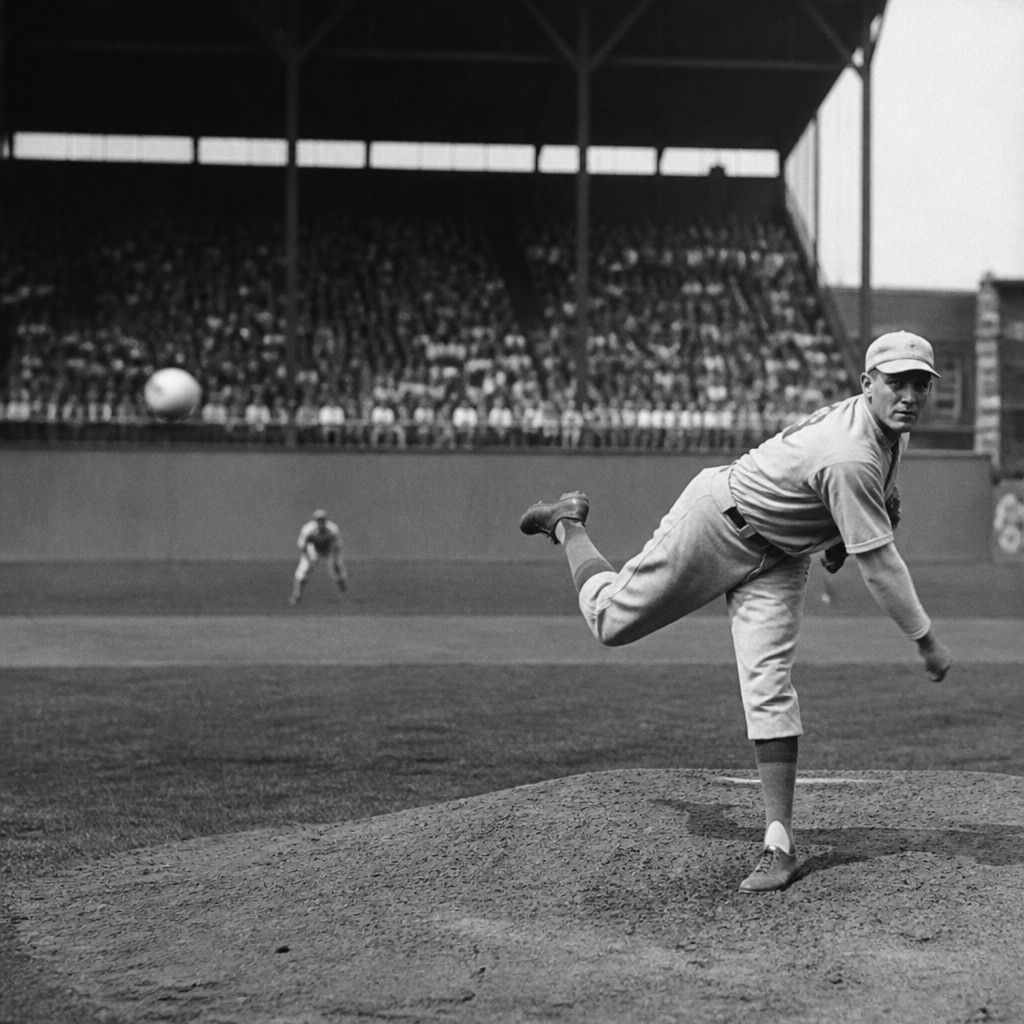
The live-ball era transformed baseball so completely in the 1920s that lineups, ballparks, and pitching strategy all had to be rebuilt around a new offensive reality. Before this shift, major league baseball was defined by the dead-ball style: low-scoring games, soft and often misshapen baseballs, spacious outfields, bunting, hit-and-run plays, stolen bases, and pitchers who could legally or semi-legally doctor the ball to make it dive, dart, and darken through a game. When historians use the term live-ball era, they mean the period when cleaner, tighter, more frequently replaced baseballs, changing rules, and a different style of hitting made home runs and hard contact central to winning. The “Golden Age” label often overlaps with the 1920s because the sport became faster, louder, more star-driven, and more commercially powerful at the same time.
I have always found that this era makes the most sense when you stop treating it as a simple Babe Ruth story and instead see it as a systems change. Ruth was the biggest symbol, but he was not the only cause. The ban on the spitball for most pitchers after 1920, the practice of replacing dirty or scuffed balls more often, the league’s response to the 1920 Ray Chapman tragedy, and a broader willingness to swing for extra-base damage all contributed. Owners and managers had to rethink roster construction. Architects and grounds crews had to evaluate how dimensions, wall heights, and foul territory affected run scoring. Pitchers had to move from conserving weak contact toward surviving relentless hard contact. That is why this subject matters for anyone studying baseball eras: the 1920s created the template for modern offense, modern star marketing, and modern game planning.
As a hub for the live-ball and Golden Age subtopic, this article explains the major structural changes and shows how they connect. It covers why lineups became power oriented, how ballparks either amplified or restrained the new game, and how pitchers adapted with command, sequencing, and new usage patterns. It also points toward related subtopics such as Babe Ruth’s influence, the Yankees’ rise, the 1920 rule changes, the end of the dead-ball game, and the strategic evolution that carried into the 1930s. If you want one page that explains how the live ball changed baseball in practical terms, this is the starting point.
Why the live-ball era began and what changed on the field
The live-ball era did not begin because hitters suddenly became stronger. It began because the environment changed. In the dead-ball period, one baseball might stay in use for long stretches, becoming discolored, softer, and harder to track. Pitchers also had more freedom to alter the ball with saliva, tobacco juice, mud, or abrasion. A darkened ball was difficult to see, especially in late afternoon light, and a softened ball simply did not jump off the bat the same way. After Chapman was struck by a pitch and died in August 1920, pressure increased to keep baseballs clean and visible. Umpires began putting new balls in play far more often. At nearly the same moment, Ruth demonstrated that uppercut power could break old assumptions about efficient offense.
The rule environment shifted too. The spitball was effectively outlawed, though a small group of established pitchers was grandfathered and allowed to continue using it for the remainder of their careers. That exception matters because it shows the transition was immediate but not absolute. Still, the direction was clear: pitchers would have fewer tricks, hitters would see cleaner baseballs, and hard contact would be rewarded more consistently. League scoring reflected the change. In the American League, teams averaged 4.39 runs per game in 1919 and 4.76 in 1920, then continued climbing as the decade developed. Home runs, once occasional events, became strategic weapons. Ruth hit 54 in 1920 and 59 in 1921, totals that redefined what a lineup could be built to produce.
Once clubs understood that run creation no longer depended primarily on advancing one base at a time, every baseball department decision shifted. Managers still valued bunting and situational play, but not as the foundation of the offense. They wanted hitters who could drive the gaps, hit overfielders’ heads, and force pitchers to throw from stress. This did not eliminate speed or contact skills. Instead, it changed their place in the order and their relationship to power. The live-ball game made slugging percentage and extra-base hit production more decisive, even before those metrics were formally popularized.
How lineups changed from one-run tactics to sustained power
The most visible effect of the live ball was the redesign of batting orders. In the dead-ball era, clubs often stacked the top of the lineup with bunters, base stealers, and bat handlers who could execute the hit-and-run. In the 1920s, managers increasingly prioritized on-base ability ahead of impact bats, then added secondary sluggers to extend innings rather than surrender outs for advancement. The core idea was simple: if one swing could produce two or three runs, giving away outs became less logical. That sounds obvious now, but at the time it represented a break with decades of baseball orthodoxy.
The Yankees are the clearest example. Ruth did not just add home runs; he changed the value of the hitters around him. A lineup with a dominant power threat could force opposing pitchers into the strike zone, raise walk totals, and create more hittable counts for everyone else. Players such as Bob Meusel and later Lou Gehrig fit the era because they offered run-producing strength behind elite table setters. The result was lineup depth, a term that became more meaningful once teams understood that rallies could survive without bunts. The best offenses attacked in waves rather than waiting for a single defensive mistake.
Roster construction changed accordingly. Clubs still needed middle infielders who could defend, but they became more willing to tolerate limited range if a corner player produced genuine slugging. Catchers with offensive value became more attractive because weak bats were harder to hide once league scoring rose. Even platoon logic, though less formalized than it would become later, gained importance because maximizing favorable matchups against tired or vulnerable starters mattered more in a higher-scoring environment.
| Feature | Dead-Ball Approach | Live-Ball Approach in the 1920s |
|---|---|---|
| Primary offensive goal | Create one run through bunts, steals, and advancement | Create multiple runs through extra-base hits and home runs |
| Ideal top-of-order hitter | Bunter, contact hitter, base stealer | On-base threat who can score on power behind him |
| Middle-of-order profile | Line-drive contact, situational hitting | Slugger with gap power or home run power |
| Use of outs | Outs often traded for bases | Outs treated as scarce; fewer sacrifice attempts |
| Bench value | Pinch runners and utility defenders | Pinch hitters and role bats with matchup value |
Just as important, the live-ball era changed player development. Young hitters were no longer taught only to chop down, slap the ball, and run. More were encouraged to drive the ball with loft, use stronger swings, and punish mistakes. Not every club embraced the change at the same speed, which is one reason some teams looked old-fashioned by the middle of the decade. But the competitive pressure was relentless. If one franchise built a lineup that could erase a deficit with two swings, rivals either adapted or fell behind.
How ballparks shaped the new offensive game
Ballparks did not suddenly become small in the 1920s, but their dimensions mattered differently once power became central. Many early twentieth-century parks were asymmetrical, with deep alleys, odd corners, and large foul grounds. In the dead-ball era, those features encouraged speed and placement. In the live-ball era, they became strategic variables that could either suppress or reward emerging slugging styles. A short right-field porch favored left-handed pull power. Deep power alleys rewarded line-drive hitters who split outfielders. Large foul territory could still help pitchers by turning mishits into outs, but less often if hitters were attacking better baseballs with more authority.
Yankee Stadium, which opened in 1923, became the era’s most famous architectural symbol. Its right-field dimensions were friendly to a left-handed slugger like Ruth, and critics quickly nicknamed it “The House That Ruth Built.” That phrase was not just marketing. It captured the feedback loop between power hitting and ballpark economics. A transcendent slugger drew crowds, crowds financed grander facilities, and facilities were then discussed in terms of how they fit offensive stars. This was a modern sports business model taking shape in real time.
Not every park rewarded the same style. The Polo Grounds, with its famously short foul lines and cavernous center field, could produce strange offensive profiles: home runs down the lines, triples into the gaps, and outfield positioning challenges unlike those in more regular parks. Sportsman’s Park in St. Louis and Shibe Park in Philadelphia also played differently based on dimensions, weather, and construction. Teams had to understand their home environments with more precision because roster mistakes were magnified by the live ball. A fly-ball staff in a homer-friendly setting could be punished brutally. A right-handed-heavy lineup in a park favoring left-handed loft might leave value on the table.
Groundskeeping and field conditions also mattered. Better infields increased the pace of play, but offense in the 1920s was driven less by bad hops than by carry. Outfield wall heights, fence distances, and even prevailing wind patterns became part of baseball conversation in a more public way. Reporters and fans increasingly linked specific ballparks to specific hitters, which helped grow the star system and deepened strategic analysis. The live-ball era taught baseball that context mattered. Raw statistics needed interpretation based on where they were produced.
How pitchers and managers responded to a more dangerous baseball
No group felt the shock more sharply than pitchers. In the dead-ball game, a starter could work deep with a changing ball, induce weak contact, and use legal or tolerated manipulation to stay ahead. In the 1920s, cleaner balls were easier to see and harder to kill off the bat. Pitchers had to survive against lineups built to do damage. That required better command, more careful pitch selection, and a more modern understanding of changing eye levels and speeds, even if those phrases were not yet part of mainstream coaching language.
One major adaptation was increased emphasis on throwing strikes without becoming predictable. Walks were always harmful, but in a power era they became even more dangerous because one baserunner could turn a solo shot into a crooked number. Pitchers who could locate a fastball to both sides of the plate, mix a curveball for disruption, and stay calm under traffic gained value. Urban Shocker, for example, remained effective by combining command and movement rather than pure velocity. Dazzy Vance became a strikeout force because missing bats was suddenly an even more valuable survival skill when contact quality around the league improved.
Managers also had to think differently about fatigue. Starters still threw enormous workloads by modern standards, but the cost of leaving a tiring pitcher in the game rose as lineups deepened. Relief pitching was not yet specialized in the modern sense, yet clubs began to appreciate the situational value of a fresh arm who could stop momentum. Defensive positioning mattered too. Outfielders needed to play deeper against sluggers, which could open room for singles. Infielders had to anticipate harder-hit balls. Catchers became critical game planners because sequencing mistakes were punished quickly.
The decline of the spitball and similar tricks did not mean pitchers were helpless. Many sharpened legal offerings like the curve, screwball, or change-of-pace delivery. Some focused on deception in arm slot or timing. Others leaned on impeccable control and scouting memory, learning which hitters chased up, which could be jammed in, and which would attack first pitches. The essential point is that pitching strategy did not disappear in the live-ball era. It matured under pressure. The best pitchers became problem solvers rather than magicians with a darkened ball.
Why the 1920s became baseball’s Golden Age and what lasted beyond it
The “Golden Age” label fits because the live-ball revolution reached beyond tactics into culture, finance, and identity. Attendance boomed as fans came to see dramatic scoring and nationally famous stars. Ruth was central, but so were Rogers Hornsby, Gehrig, Al Simmons, Hack Wilson, and a growing cast of players whose value was tied to forceful offense. Newspaper coverage expanded. Radio helped carry personalities and pennant races to audiences who might never visit a major league park. Baseball became more urban, more commercial, and more celebrity driven in the 1920s, and the live-ball style made that spectacle easier to sell.
What lasted was even more important than what changed immediately. Teams never fully returned to dead-ball logic. Sacrifice bunts remained part of the game, and speed still mattered, but front offices and dugouts had seen too much evidence to deny the value of power. Ballparks continued to be discussed as offensive environments. Pitchers continued searching for legal ways to disrupt timing and limit hard contact. Lineups continued to be organized around the principle that outs are precious and extra-base damage changes everything. Those are modern baseball ideas, and their broad acceptance dates to this decade.
For readers exploring the larger Baseball Eras topic, the live-ball and Golden Age period is the hinge point between nineteenth-century habits and the modern major leagues. It explains why the Yankees became baseball’s dominant brand, why home runs became central to fan imagination, and why pitchers, hitters, and architects all had to rethink their jobs at once. The key takeaway is straightforward: the live ball did not merely increase scoring; it reorganized baseball’s entire competitive structure. Use this hub as your starting point, then continue into the connected stories of Ruth, rule changes, iconic parks, and the strategy debates that reshaped the sport for generations.
Frequently Asked Questions
What exactly was the live-ball era, and why did it change baseball so dramatically in the 1920s?
The live-ball era refers to the period when major league baseball shifted away from the low-scoring, tactical dead-ball style and into a game built much more around hard contact, extra-base hits, and home-run power. In the dead-ball years, teams regularly played with softer baseballs that stayed in use for long stretches, becoming scuffed, darkened, and misshapen as games progressed. Pitchers also had more freedom to alter the ball’s behavior through spitballs and other doctored pitches, which made offense more difficult and less predictable. As a result, lineups emphasized bunting, stolen bases, hit-and-run plays, and scratch-run manufacturing rather than sustained slugging.
In the 1920s, several developments pushed the sport in a different direction. Baseballs were replaced more frequently, making them cleaner, brighter, and more resilient off the bat. Rules and enforcement also moved against many forms of ball doctoring, reducing pitchers’ ability to control games through deception and manipulation. At the same time, hitters began embracing a more aggressive, upward swing path designed to drive the ball with authority instead of simply punching it into play. The result was not just a modest increase in offense, but a structural transformation of the sport. Scoring rose, power mattered more, and teams had to reconsider what kinds of players they valued, how they built their rosters, how their ballparks played, and how pitchers could survive in an environment where contact was louder and more damaging.
How did the live-ball era reshape lineup construction and offensive philosophy?
The live-ball era changed lineups from top to bottom because it altered what teams most needed from their hitters. During the dead-ball era, clubs could carry several light hitters as long as they could bunt, run, move runners over, and execute situational plays. Once the live-ball environment took hold, however, that offensive model became less efficient. Teams discovered that stringing together bunts and steals was often less productive than building innings around hitters who could drive the ball into the gaps or over the fence. That realization pushed front offices and managers to place far greater importance on slugging ability, run production, and hitters who could do serious damage with one swing.
This did not mean speed and contact disappeared, but their role changed. Instead of being the central pillars of offense, they became supporting skills around middle-of-the-order bats. Clubs began to think more deliberately about lineup balance: table-setters at the top, high-impact hitters in the middle, and deeper offensive threats throughout the batting order. The presence of a true power hitter could now reshape how an entire team functioned, because pitchers had to work differently, fielders had to position differently, and opposing managers had to be more cautious about baserunners in front of dangerous bats. In practical terms, the live-ball era rewarded teams that could generate crooked numbers rather than merely scratch out single runs. That was a profound philosophical shift, and it helps explain why the 1920s feel like the beginning of modern offensive baseball.
Why did ballparks become such an important part of baseball’s live-ball transformation?
Ballparks became more strategically important in the live-ball era because offensive conditions and hitter profiles were changing so quickly. In the dead-ball game, many parks were expansive, with deep alleys and large outfields that fit a style centered on speed, placement, and chasing down batted balls. When hitters began driving the ball harder and more often in the 1920s, those same dimensions started to produce different results. Deep parks could still suppress home runs, but they also created room for doubles and triples when outfielders had more ground to cover against better-struck balls. Smaller or more favorable dimensions, meanwhile, could dramatically amplify the value of a power bat.
Teams and observers increasingly recognized that park design was not neutral. Fence distances, wall heights, foul territory, and outfield geometry all affected roster construction and strategy. A club with a pull-heavy slugger could benefit enormously from a friendlier power alley or shorter porch, while a team built around speed and line drives might still prefer room to run. Ballparks also shaped defensive alignments and pitching plans. In a larger park, a pitcher might challenge hitters more aggressively, trusting that long fly balls would die in the outfield. In a smaller park, that same approach could be dangerous. So the live-ball era did not simply create more offense in the abstract; it heightened the importance of environment. Teams now had to think seriously about how their home park interacted with their roster, making stadium dimensions a more visible and meaningful part of baseball strategy.
How did pitching strategy have to evolve once the dead-ball style gave way to the live-ball game?
Pitching strategy had to evolve because many of the old survival tools became less reliable or disappeared altogether. In the dead-ball era, pitchers often worked with darker, worn baseballs and could exploit legal gray areas to alter movement and visibility. They also operated in a game where hitters were more likely to bunt, slap the ball, or prioritize contact over power. Once cleaner baseballs, stricter enforcement, and more aggressive swing mechanics arrived, pitchers faced a much harsher offensive reality. Mistakes that might once have produced harmless fly balls or weak contact were now driven into gaps or over fences.
That forced pitchers to rethink sequencing, command, and risk. Rather than merely trying to induce weak contact through trickery, they had to become more precise about location and more careful about pitch selection in key counts. Keeping the ball down, changing speeds, and avoiding predictable patterns became increasingly important. Pitchers also needed help from managers who understood matchups and game context, especially with dangerous middle-of-the-order hitters capable of changing a game instantly. In broader terms, the live-ball era made pitching more confrontational and less controlling: pitchers could no longer assume they dictated every at-bat. They had to adapt to an era in which offense had more leverage, and that changed how staffs were managed, how pitchers attacked lineups, and how teams evaluated which arms could succeed under modern offensive pressure.
Why is the live-ball era considered a turning point in the history of modern baseball?
The live-ball era is considered a turning point because it fundamentally redefined what winning baseball looked like. Before the 1920s, the sport’s strategic center of gravity rested on run manufacturing, pitcher craft, defensive range, and constant pressure through small-ball tactics. After the transition, offense became more explosive, stars with power became more central to team identity, and clubs increasingly built around the ability to create runs in bunches. That shift influenced everything from player development to fan expectations. Home runs and extra-base hits became more than occasional events; they became major drivers of success and excitement.
Just as importantly, the live-ball era linked together lineup construction, ballpark design, and pitching philosophy in a way that feels recognizably modern. Teams had to think in systems: what kind of hitters fit their park, what kind of pitchers could survive their environment, and how a roster should be balanced in a higher-scoring game. The 1920s did not invent every feature of modern baseball, but they accelerated and consolidated a new model of the sport. That is why historians treat the live-ball transition as more than a change in equipment or scoring levels. It was a complete recalibration of baseball’s internal logic, one that reshaped the game on the field and the way people understood its most important skills.