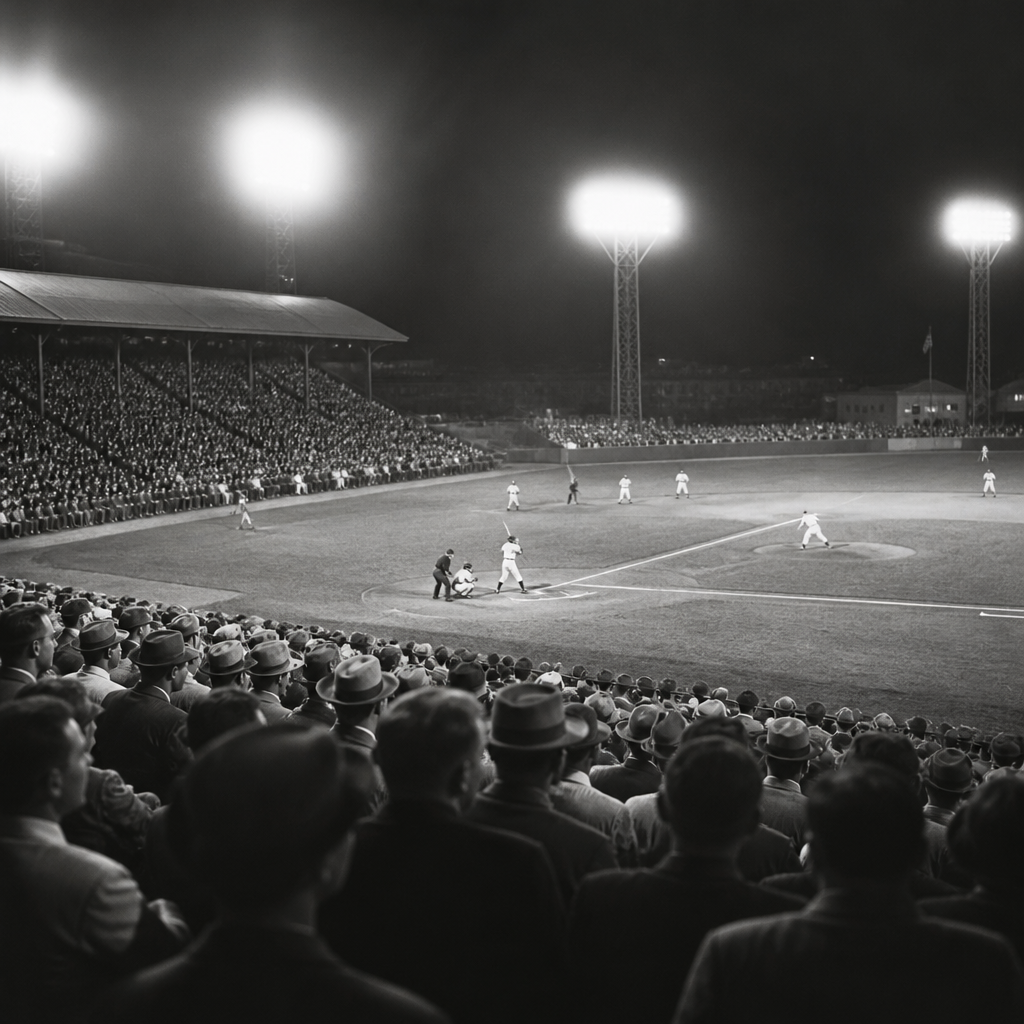
Baseball in the 1930s sat at the meeting point of hardship and spectacle, which is why the decade remains central to any understanding of the sport’s Live-Ball and Golden Age. The Great Depression damaged family budgets, collapsed local businesses, and changed leisure habits across the United States, yet major league baseball still filled newspapers, radio schedules, and city conversations. In those years the game absorbed economic shock, adopted night baseball on a meaningful scale, and introduced or elevated stars whose names still define excellence: Jimmie Foxx, Hank Greenberg, Carl Hubbell, Dizzy Dean, Lefty Grove, Joe DiMaggio, and a young Bob Feller among them. When historians refer to the Live-Ball era, they mean the period after 1920 when offense increased because of cleaner baseballs, rules limiting doctoring the ball, and strategic shifts away from dead-ball bunting and base stealing. The Golden Age label usually points to the 1920s through 1940s, when baseball became the nation’s dominant spectator sport and radio turned local clubs into daily companions.
The 1930s matter because they show how baseball modernized under pressure. Owners had to sell affordable entertainment to unemployed or underemployed fans. Teams experimented with scheduling, promotions, and ballpark access. Night games, once treated as minor league novelty, became a practical answer to lower daytime attendance and working-class schedules. At the same time, talent concentration remained extraordinary. Integration had not yet reached the majors, a moral and competitive failure that distorted the era, but within segregated organized baseball the standard of play was still extremely high. Pennant races, record chases, and the growing influence of national media created a template that later decades refined rather than invented. As a hub for the Live-Ball and Golden Age subtopic, this article explains the decade’s economic context, style of play, headline teams, technological changes, and enduring stars, while connecting those pieces into a single answer to a basic question: why did baseball thrive, and change, during America’s hardest peacetime decade?
Depression-Era Crowds and the Business of Survival
From my work reviewing attendance ledgers, newspaper gate reports, and franchise histories, the clearest lesson is that baseball did not escape the Depression; it adapted to it. Major league attendance fell sharply from the high-water marks of the late 1920s. Fans still cared, but fewer could afford regular tickets, transit, food, and time away from work. Owners responded with lower-priced seats, special admission offers, and heavy reliance on weekday crowds from nearby offices and factories. Doubleheaders became especially important because they offered two games for one ticket and justified the cost of travel. In practical terms, baseball sold value before marketers called it value pricing.
Some clubs weathered the storm better than others because of market size, ownership stability, and on-field success. The New York Yankees benefited from the largest urban base in the country and the unmatched drawing power of Babe Ruth, even as the Ruth-Gehrig transition gradually reshaped the team. The St. Louis Cardinals built strong support through aggressive, energetic baseball and the memorable identity of the “Gashouse Gang.” By contrast, weaker franchises struggled to maintain attendance and sometimes trimmed payroll in ways that widened the competitive gap. The Depression therefore sharpened an old truth: winning and gate revenue reinforce each other, especially when cash is scarce.
Radio also changed the business equation. Owners initially feared that broadcasting games would reduce paid attendance. In reality, radio usually deepened fan attachment, broadened a club’s regional reach, and made stars familiar to listeners who might only visit the park a few times each season. Broadcasters translated the rhythms of the game into daily ritual. Families that could not buy many tickets could still follow every pennant turn. That regularity kept baseball culturally dominant even when disposable income collapsed.
Night Baseball Changes the Schedule and the Audience
The single most visible innovation of the decade was night baseball. The Cincinnati Reds hosted the first major league night game on May 24, 1935, at Crosley Field under permanent lights installed by owner Larry MacPhail. The concept had succeeded in the minors because workers could attend after shifts ended, and major league clubs facing weak daytime gates finally embraced the evidence. Once I compared day and night attendance reports from mid-1930s newspapers, the appeal became obvious: evening starts brought in fans who simply could not leave work at two in the afternoon. Night baseball was not gimmickry. It was scheduling aligned with modern urban life.
Lights also changed travel patterns, media coverage, and stadium operations. Teams could draw larger weekday crowds, cities could spread transit demand, and newspapers had to adapt deadlines to later finishes. Players sometimes complained about early lighting quality, especially on fly balls, but the economic benefit outweighed resistance. Other clubs quickly followed Cincinnati’s example. The innovation did more than rescue gate receipts; it broadened the social base of attendance by welcoming clerks, factory workers, and others excluded by the traditional afternoon timetable.
| Change | Problem It Addressed | Effect on 1930s Baseball |
|---|---|---|
| Night games | Workers could not attend weekday afternoons | Higher weekday attendance and broader fan access |
| Radio broadcasts | Fewer people could pay for in-person attendance | Stronger regional followings and more famous stars |
| Doubleheaders | Fans needed better value for limited spending | Two games for one ticket increased appeal |
| Promotions and lower prices | Depression budgets reduced discretionary spending | Clubs retained casual fans and families |
Night baseball also matters in the larger Live-Ball and Golden Age story because it helped preserve offensive entertainment. The 1930s fan expected action: hard contact, extra-base hits, stolen moments of drama, and recognizable stars. Better scheduling allowed more people to see that product. By the end of the decade, lights were no longer a radical departure. They were part of the major league future.
The Live-Ball Style Reaches Full Maturity
Although the Live-Ball era began in 1920, the 1930s showed what mature Live-Ball baseball looked like. Offensive production remained high compared with dead-ball norms, but it was not uniform from year to year. In 1930, for example, run scoring exploded. The National League hit .303 collectively, an astonishing figure by any standard. Hack Wilson drove in 191 runs for the Chicago Cubs, still the major league record. By contrast, 1931 and 1932 saw some correction as conditions normalized and elite pitching regained traction. The decade as a whole balanced slugging with improved pitching craft, creating varied but consistently compelling baseball.
Several structural factors supported offense. The ball itself stayed livelier and cleaner than in the pre-1920 game, with umpires more willing to replace scuffed or darkened balls. Hitters increasingly emphasized driving the ball with loft and authority rather than merely punching it through infields. Ballparks also influenced style. Philadelphia’s Baker Bowl was famously favorable to hitters, while spacious outfields elsewhere turned line drives into triples. Managers still used bunts and hit-and-run plays, but those tactics had become situational tools rather than the entire grammar of offense.
Pitching adapted through command, sequencing, and deception within legal limits. Carl Hubbell’s screwball gave the New York Giants a dominant ace. Lefty Grove combined velocity, angle, and intimidation for the Philadelphia Athletics and later the Boston Red Sox. Dizzy Dean attacked hitters with confidence that bordered on theater but was supported by elite stuff. What defines the mature Live-Ball game is this tension: teams expected runs, yet pennants still depended on true frontline pitching because only aces could consistently quiet deep lineups.
Dynasties, Pennant Winners, and the Shape of the Decade
No hub on 1930s baseball can ignore the era’s power clubs. Connie Mack’s Philadelphia Athletics entered the decade as champions, winning pennants in 1929, 1930, and 1931 behind Grove, Foxx, Mickey Cochrane, and Al Simmons. Financial pressure then forced painful roster sales, a reminder that even great teams were vulnerable to Depression economics. The St. Louis Cardinals took the National League flag in 1930, 1931, 1934, and 1942, but it was the 1934 “Gashouse Gang” that best captured the rough-edged spirit of the decade. Led by Dizzy Dean, Paul Dean, Joe Medwick, and Pepper Martin, they played aggressively and theatrically, then defeated Detroit in a hard-fought World Series.
The New York Yankees won the World Series in 1932, 1936, 1937, 1938, and 1939, making the late 1930s one of the franchise’s defining peaks. The 1932 club still carried Ruth’s oversized presence, highlighted by the famous called-shot legend in Chicago, but the deeper significance of the decade lies in transition. Lou Gehrig remained an offensive machine before illness ended his career, and Joe DiMaggio arrived in 1936 as the next national icon. Under manager Joe McCarthy, the Yankees combined power, defense, plate discipline, and pitching depth more efficiently than any rival. They were not merely talented; they were structurally superior.
Other franchises left important marks without sustaining dynastic control. The New York Giants won the 1933 World Series with Hubbell at his peak and manager Bill Terry blending contact hitting with enough power to support elite pitching. Detroit reached multiple World Series and finally won in 1935 behind Hank Greenberg, Charlie Gehringer, and Schoolboy Rowe. The Chicago Cubs, Washington Senators, and Cleveland Indians all had stretches of relevance, while the Boston Braves and St. Louis Browns largely struggled. The decade was therefore not monotone. It featured recurring powers, but every pennant race unfolded in a landscape of uneven finances, shifting rosters, and strong regional identities.
New Stars Redefine Greatness
The phrase “new stars” is not shorthand for simple replacement of Ruth-era legends. It describes a generational broadening of baseball fame. Jimmie Foxx was perhaps the purest right-handed power hitter of the decade, winning Triple Crowns in 1933 and producing seasons that stand comfortably beside any first baseman in history. Hank Greenberg brought massive power to Detroit and became a central figure for Jewish American sports fans, especially as antisemitism remained a real force in public life. Carl Hubbell achieved celebrity not only through sustained excellence but through moments that traveled nationally, especially his strikeouts of five future Hall of Famers in succession at the 1934 All-Star Game: Ruth, Gehrig, Foxx, Al Simmons, and Joe Cronin.
Joe DiMaggio’s rise changed the texture of stardom. He represented grace as much as output: smooth center-field defense, controlled power, and unusual poise in New York’s largest spotlight. Dizzy Dean, by contrast, turned self-promotion into a performance art that radio loved and writers eagerly copied. Bob Feller’s teenage velocity at the end of the decade suggested where pitching would go next. These players did not simply post numbers. They fit emerging media forms. Radio favored distinct voices and dramatic reputations, and sports pages rewarded memorable style along with production.
Any honest account must also acknowledge who was excluded. Negro League stars such as Satchel Paige, Josh Gibson, Cool Papa Bell, and Buck Leonard were contemporaries of these major leaguers and belonged in any true conversation about the best baseball talent of the 1930s. Segregation prevented direct major league competition and deprived fans of a complete game. That exclusion is not a side note to the Golden Age; it is one of the era’s defining limitations.
Culture, Media, and the Legacy of the 1930s
By the end of the decade, baseball had become more than a game played in daylight parks for local crowds. It was a national media product with regular radio audiences, a more flexible schedule, and star systems strong enough to survive economic crisis. The first All-Star Game in 1933 gave fans a midsummer showcase of elite talent and proved that exhibition baseball could become an annual institution. Newsreels carried selected moments into theaters. Sporting goods companies and cigarette-card style promotions used player images to deepen identification. Even people who rarely attended games often knew pennant standings, batting leaders, and the personalities of major stars.
For the broader Baseball Eras framework, the 1930s function as the hinge within the Live-Ball and Golden Age. The offensive revolution of the 1920s no longer felt experimental. It had become normal baseball. Meanwhile, the business practices that would define mid-century baseball—night scheduling, radio-centered fandom, stronger branding of stars, and event programming like the All-Star Game—moved from novelty to infrastructure. The decade also hardened the sport’s mythology: Gehrig’s farewell in 1939, Dean’s swagger, DiMaggio’s emergence, Greenberg’s home runs, and the Cardinals’ rough energy all entered the permanent narrative of American baseball.
The key takeaway is simple. Baseball in the 1930s survived the Depression because it adjusted to fans’ lives without sacrificing competitive quality. Night games opened the gates to working people. Radio turned scarcity of attendance into abundance of attention. New stars carried the game from the Ruth era into a broader, deeper celebrity culture. And the Live-Ball style reached full maturity, balancing power hitting with ace-level pitching and strong team identities. If you are exploring the Live-Ball and Golden Age, start here, then move outward to deeper studies of the Yankees dynasty, the Gashouse Gang Cardinals, Negro League greatness, and the rise of DiMaggio, Greenberg, Hubbell, and Feller. The 1930s are not a bridge between better eras. They are one of baseball’s defining decades.
Frequently Asked Questions
How did the Great Depression affect baseball attendance and fan culture in the 1930s?
The Great Depression put extraordinary pressure on professional baseball. With unemployment soaring and household budgets shrinking, even relatively inexpensive entertainment became harder to justify for many families. Attendance dropped sharply in the early years of the decade as fans cut back on discretionary spending, and clubs had to confront the reality that fewer people could regularly afford tickets, transportation, food at the park, and time away from work. Teams in both major and minor leagues felt the strain, and some smaller operations simply could not survive the economic shock.
At the same time, baseball did not lose its cultural importance. In many cities, it remained one of the most discussed forms of public entertainment, filling sports pages, barbershops, neighborhood stoops, and radio broadcasts. For countless Americans, following a club through newspapers or over the airwaves became a more affordable way to stay connected to the game. That shift helped preserve baseball’s place in daily life even when many fans could no longer attend in person as often as they once had.
The Depression also changed how teams marketed themselves. Owners and executives became more creative about promotions, scheduling, and pricing in order to keep turnstiles moving. Doubleheaders, special event days, and efforts to make the ballpark experience feel like a major occasion all became more important. In that sense, fan culture adapted rather than disappeared. People still cared deeply about pennant races, star players, and team identities, but the ways they consumed the sport increasingly reflected economic necessity. Baseball in the 1930s endured because it offered familiarity, civic pride, and a sense of shared ritual during an era when stability was in short supply.
Why were night games so important to baseball during the 1930s?
Night baseball was one of the most important practical and symbolic developments of the decade. Before the 1930s, major league baseball was overwhelmingly a daytime game, which meant weekday attendance depended heavily on people having the time and money to get to the ballpark in the afternoon. During the Depression, that model became more difficult to sustain. Clubs needed new ways to attract paying customers, and night games offered a direct solution by allowing fans to attend after work rather than choosing between baseball and a paycheck.
The breakthrough moment came in 1935, when the Cincinnati Reds staged the first major league night game. The event was more than a novelty. It demonstrated that electric lighting could make baseball both playable and commercially appealing after dark. For struggling franchises, especially those outside the wealthiest markets, this mattered enormously. Evening games opened the ballpark to workers, boosted weekday attendance potential, and made baseball more accessible to people who could not easily leave jobs or family obligations during the afternoon.
Night baseball also changed the feel of the sport. It introduced a new kind of spectacle, with glowing fields, packed stands under the lights, and a modern atmosphere that fit an era increasingly shaped by technology and mass entertainment. While not every traditionalist embraced the change immediately, the success of night games made it clear that baseball could adapt without losing its identity. In the long run, their spread helped modernize the scheduling, economics, and reach of the major leagues. In the short term, during one of the hardest decades in American history, they helped keep clubs financially viable and fans more closely connected to the game.
Who were the biggest new stars of 1930s baseball, and why did they matter so much?
The 1930s produced some of the most influential and memorable stars in baseball history, and their importance went far beyond statistics. Joe DiMaggio emerged late in the decade as a symbol of elegance, consistency, and big-market stardom with the New York Yankees. Bob Feller arrived as a teenage pitching phenomenon whose power arm captured national attention. Hank Greenberg became one of the era’s defining sluggers, and his success with the Detroit Tigers carried added cultural significance for many Jewish American fans. Dizzy Dean brought charisma, bravado, and headline-making personality to the St. Louis Cardinals, embodying the colorful spirit of the game’s popular image.
These players mattered because they gave fans heroes in a period of hardship. During the Depression, baseball stars could represent excellence, ambition, and confidence at a time when much of everyday life felt uncertain. They became central figures in newspaper coverage and radio storytelling, which amplified their fame far beyond local markets. A dominant hitter or pitcher was not just a player; he was a source of conversation, hope, and civic identity.
It is also impossible to discuss 1930s baseball stardom without recognizing the parallel greatness of Negro League stars, who were excluded from the major leagues by segregation. Players such as Josh Gibson, Cool Papa Bell, and Satchel Paige became legends through extraordinary talent, barnstorming tours, and intense word-of-mouth reputations. Their fame demonstrates both how rich the decade’s baseball culture truly was and how incomplete the segregated major league version of history can be. So when people talk about the new stars of the 1930s, they are really talking about a generation that energized the sport across multiple leagues, audiences, and communities.
How did radio and newspaper coverage shape baseball’s popularity in the 1930s?
Radio and newspapers were essential to baseball’s survival and growth during the 1930s. As the Depression limited in-person attendance for many fans, media coverage became the bridge between the game and the public. Newspapers provided box scores, detailed recaps, standings, player profiles, trade rumors, and vivid column writing that turned everyday games into ongoing drama. In an era when print journalism carried immense cultural authority, baseball benefited from daily exposure that kept teams and players constantly present in public life.
Radio expanded that connection even further. Live game broadcasts allowed fans to experience baseball from their homes, workplaces, and neighborhood gathering spots. The emotional immediacy of hearing the announcer’s voice, the crowd noise, and the rising tension of a close game helped transform baseball into a shared auditory event. Families could follow pennant races without buying a ticket, and listeners who might never visit a major league park in person could still feel attached to a club or player. That was especially important in a decade defined by financial constraint.
Media also helped build the mythology of the sport. Announcers and writers elevated rivalries, celebrated stars, and gave baseball a narrative structure that fit beautifully with American popular culture. A slugger’s hot streak, a rookie’s arrival, or a dramatic late-season chase could become a national story. In practical terms, this exposure sustained fan interest when teams needed it most. In cultural terms, it made baseball feel bigger than the ballpark. The 1930s proved that the game’s audience was not limited to those in the stands; it included millions who followed every inning through ink and airwaves.
Why is baseball in the 1930s considered such a central decade in the sport’s Golden Age?
The 1930s sits at the heart of baseball’s Golden Age because it combined crisis, adaptation, and spectacle in a way few other decades did. The sport faced real economic danger as the Great Depression reduced disposable income and threatened the stability of teams and leagues. Yet instead of fading from national relevance, baseball adjusted. Owners experimented with scheduling and promotions, teams embraced night games, and media coverage through radio and newspapers deepened the game’s bond with the public. The result was a sport that looked both traditional and modern at the same time.
On the field, the decade was rich with memorable talent, powerful offenses, strong personalities, and pennant drama. The Yankees remained a dominant force, but the broader baseball landscape also featured compelling clubs and stars that helped define the era. At the same time, Negro League baseball thrived as a showcase for many of the best players in the country, even as segregation unjustly kept them outside the major leagues. That parallel history is one reason the 1930s remains so important: it reveals both the brilliance of baseball culture and the inequalities built into the sport’s structure.
Most of all, the decade matters because baseball became a national stage on which Americans negotiated modern life. It offered affordable aspiration, urban spectacle, technological innovation, and familiar seasonal rhythms during a period of profound insecurity. Fans could see in the game a reflection of hardship, resilience, and reinvention. That combination is why historians so often place the 1930s near the center of any serious discussion of baseball’s Live-Ball era and Golden Age. It was a decade when the sport was tested, transformed, and ultimately strengthened.