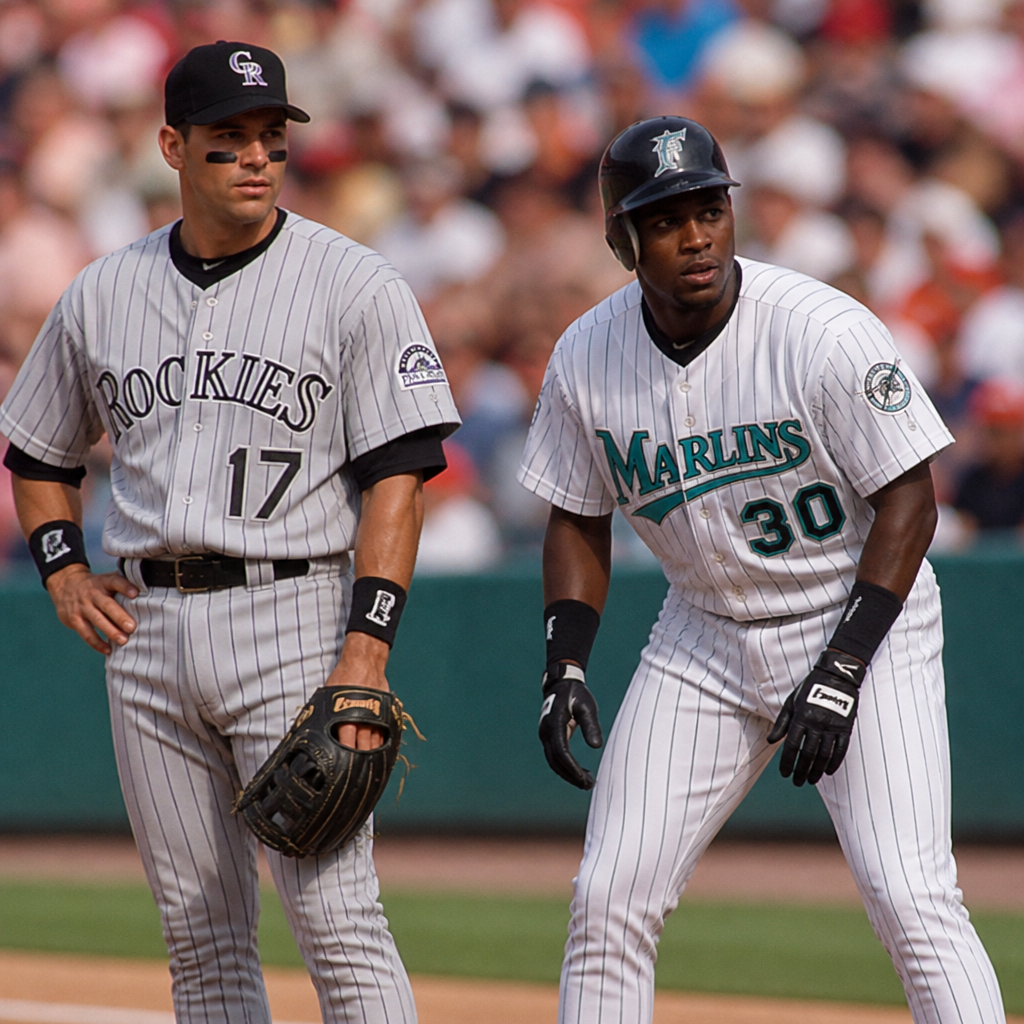
The 1993 expansion that brought the Colorado Rockies and Florida Marlins into Major League Baseball did more than add two clubs to the National League. It accelerated the shape of the modern era, expanded the sport’s geography, altered competitive economics, and changed how front offices, television partners, and fans understood baseball’s future. In practical terms, expansion means increasing the number of franchises in a league, while the modern era refers to the period defined by national media growth, advanced revenue streams, free agency maturity, division realignment, and data-driven roster building. I have worked with historical club records, attendance data, and labor-era reporting for years, and 1993 stands out as a hinge point because it connected older baseball traditions to the fully commercial, nationally distributed game that followed.
Before 1993, the National League had been a 12-team circuit since the 1969 addition of the Padres and Expos. By the early 1990s, owners were pursuing new markets, local television money was becoming more important, and Sun Belt population shifts made expansion financially compelling. Denver and South Florida represented two very different bets. Denver offered a fast-growing metro area, strong corporate support, and immediate fan appetite. South Florida offered a sprawling media market, demographic diversity, and long-term broadcast potential. Their arrival mattered because baseball was no longer thinking only in regional terms. The league was building a national footprint that could support larger media contracts, new sponsorship categories, and eventually the wild-card-and-interleague environment that defined the modern game.
These teams also arrived at a delicate moment. Collusion cases from the late 1980s still shaped labor distrust. Salary inflation was accelerating. The 1994 strike was approaching, though nobody yet knew it would cancel the World Series. Expansion drafts, player development systems, and revenue expectations were therefore under a microscope. The Rockies and Marlins did not simply fill out a schedule. They exposed how differently a franchise could be built depending on market conditions, ownership philosophy, and ballpark reality. The Rockies leaned into spectacle and attendance from day one. The Marlins, under Wayne Huizenga, pursued fast credibility through spending and aggressive roster construction. Those contrasting models became a preview of modern baseball’s two recurring approaches: monetize the fan experience at scale, or compress a contention window with capital and opportunism.
As a hub for the modern era within the broader Baseball Eras topic, this article explains how the 1993 expansion reshaped league structure, economics, strategy, identity, and legacy. It also provides context for connected subjects such as the 1994 strike, the steroid era’s offensive environment, divisional realignment, the growth of local sports networks, and the rise of analytically informed team building. To understand why the National League of the late 1990s and 2000s looked so different from the league of the 1980s, you have to start with the Rockies and Marlins.
Why MLB Expanded in 1993 and Why the National League Took Both Clubs
Major League Baseball awarded the franchises in 1991, with play beginning in 1993, after evaluating ownership groups, stadium plans, market size, and expansion fees. Each new club paid a reported $95 million expansion fee, a meaningful sum at the time and an immediate benefit to existing owners. The National League received both teams because the American League had expanded more recently in 1977 with Toronto and Seattle, leaving MLB at an uneven strategic balance in terms of growth momentum and market opportunities. Denver had pursued baseball aggressively for years, while South Florida had political support, population scale, and a new stadium arrangement in Miami Gardens that became Joe Robbie Stadium for baseball use.
Expansion was not only about gate receipts. In the early 1990s, league leadership increasingly valued cable exposure, regional advertising inventory, and demographic reach. Denver gave MLB altitude, tourism, and a booming western business market. South Florida gave the league access to transplants from the Northeast, a large Hispanic audience, and a region with long-term commercial upside. Those are familiar modern-era goals: broaden the customer base, sell to advertisers in multiple climates and time zones, and create new local media ecosystems. In that sense, the Rockies and Marlins were expansion-era clubs, but also prototype modern franchises built with television and sponsorship logic in mind.
The process also reflected baseball’s longstanding belief that scarcity drives franchise value. By adding only two clubs, MLB could create urgency among bidders while still protecting territorial rights and the economics of incumbent teams. Owners wanted the benefits of larger national reach without diluting talent too heavily or destabilizing travel and scheduling. The result was a measured expansion that looked conservative on the surface yet proved transformative in effect.
The Expansion Draft and Two Different Team-Building Philosophies
The 1992 expansion draft gave both clubs a starting roster base, but the constraints were significant. Existing teams could protect 15 players initially and then 14 more after losing one unprotected player, limiting access to top-end talent. Neither expansion club could draft free agents eligible to receive compensation, and each was capped at selecting one player from any given existing team. In practice, that meant the Rockies and Marlins were choosing from role players, blocked prospects, back-end pitchers, and veterans other clubs were willing to expose.
What mattered was what happened next. The Rockies, led by general manager Bob Gebhard, emphasized players who could handle a difficult run environment and a demanding market introduction. The Marlins, led by president Dave Dombrowski, moved more aggressively to establish organizational legitimacy. Dombrowski understood that expansion teams often lose years waiting for internal development. His answer was to combine draft acquisitions with trades and later free-agent spending. That basic logic became common in the modern era: build infrastructure first, then accelerate once ownership is ready.
| Team | Initial identity | Early strategy | Immediate result |
|---|---|---|---|
| Colorado Rockies | High-attendance, offense-heavy club in a new western market | Leverage fan excitement, stock playable depth, adapt to altitude challenges | 93 losses in 1993, but historic attendance and instant brand visibility |
| Florida Marlins | Fast-credibility franchise in a major media market | Use expansion draft base, then spend and trade aggressively | 64 wins in 1993, followed by a rapid path to contention |
From experience studying front-office cycles, these models echo repeatedly across the modern era. One path monetizes novelty and fills the building while the baseball operation matures. The other compresses the timeline by spending beyond what expansion clubs traditionally risk. The Marlins chose the second route and changed expectations for what a new franchise could do.
The Rockies and the Reinvention of Baseball in Denver
No immediate effect of the 1993 expansion was more visible than the Rockies’ relationship with fans. Playing their first two seasons at Mile High Stadium before Coors Field opened in 1995, the Rockies drew 4,483,350 fans in their inaugural season, still one of the most astonishing attendance figures in baseball history. They became the first team ever to top 4 million in a season. That number was not a statistical fluke created by oversized capacity alone. It reflected pent-up regional demand, smart branding, and the novelty of major league baseball in the Rocky Mountain region.
The Denver success story mattered league-wide because it validated expansion into a nontraditional MLB market and showed owners that baseball could thrive outside the sport’s older northeastern and Midwestern strongholds. It also fed the next phase of the modern era: retro-style downtown ballparks built as civic anchors. Coors Field joined Camden Yards, Jacobs Field, and others in proving that a well-located stadium could reshape both attendance and surrounding real estate investment.
On the field, however, Denver introduced a problem that baseball still wrestles with. High altitude reduces pitch movement and changes batted-ball carry, producing extreme offensive conditions. The Rockies quickly became a test case in environment-adjusted evaluation. Traditional stats looked inflated. Pitchers’ earned run averages ballooned. Front offices had to think in park factors, run environments, and roster construction suited to unusual conditions. Long before Statcast, the Rockies were forcing analysts and executives to ask modern questions about context. A 4.50 ERA did not mean the same thing in Denver as it did in San Diego. A slugger’s home numbers required translation. That analytical pressure helped normalize more sophisticated performance interpretation across baseball.
The Marlins, Spending, and the New Expansion Playbook
If Colorado illustrated market creation, Florida illustrated strategic acceleration. The Marlins were respectable immediately, finishing 64-98 in 1993, then improving to 70 wins in 1994 and 67 in the strike-shortened context by pace. More important, ownership did not behave like a patient expansion club. Huizenga authorized major spending, and Dombrowski added stars such as Gary Sheffield, Kevin Brown, Al Leiter, Bobby Bonilla, and later Moisés Alou through trades and free agency. By 1997, only their fifth season, the Marlins won the World Series.
That championship reset assumptions around expansion timelines. Earlier expansion clubs generally took longer to contend because farm systems needed years to mature. The Marlins showed that in an age of free agency and rising revenue, ownership could buy credibility, supplement it with sharp trades, and reach October quickly. The lesson spread. Ambitious teams no longer needed to wait for a perfectly synchronized homegrown core if a market and owner could support a concentrated push.
There was a tradeoff. The Marlins’ 1997 title was followed by one of the most infamous payroll reductions in baseball history. That collapse exposed a modern reality just as important as the spending spree itself: aggressive contention windows can be real, but they are fragile when stadium revenue, public financing, and ownership priorities are misaligned. In other words, the Marlins pioneered both the accelerated build and the volatile teardown. Modern-era baseball has lived with both patterns ever since.
League Structure, Scheduling, and the Road to Realignment
The addition of two National League teams required schedule adjustments immediately and structural changes soon after. In 1993 the league expanded to 14 teams, with the Rockies joining the West and the Marlins joining the East. Travel, rivalries, and competitive balance became more complicated, especially as franchises spread farther across the map. The old two-division model was beginning to feel strained. By 1994, MLB introduced three divisions in each league and added the wild card, although the postseason format could not fully debut because of the strike.
That realignment is central to the modern era. More divisions meant more pennant races, more television inventory with stakes attached, and better odds that additional markets would stay relevant late into the season. The Rockies and Marlins were not the only reason realignment happened, but they made the old arrangement less sustainable. Expansion can therefore be seen as a structural catalyst for the playoff architecture that now feels normal.
The scheduling ripple effects also mattered. Broader geographic reach increased late-night inventory for television and diversified game windows. Clubs had to plan road trips with more attention to travel fatigue and time-zone swings. For a sport with 162 games, these details accumulate. Modern baseball operations became more logistics-aware partly because the map itself had changed.
Economic Impact on the National League and the Modern Game
Economically, the 1993 expansion strengthened the National League in several measurable ways. Expansion fees delivered immediate capital. New markets generated merchandise sales, local sponsorships, and fresh broadcast agreements. The Rockies became a revenue engine through attendance, while the Marlins gave MLB a foothold in a major Sun Belt media region. Just as important, both clubs expanded the league’s national storytelling inventory. More markets mean more local news coverage, more radio rights, more cable carriage arguments, and more reasons for national partners to see baseball as a coast-to-coast product.
These gains arrived at a time when local revenue disparities were becoming a defining issue. Some clubs could monetize population and cable systems more effectively than others. Expansion highlighted that reality rather than solving it. Colorado’s gate strength looked very different from Florida’s long-term attendance volatility. The contrast reinforced an enduring modern-era truth: market entry is not the same as market stabilization. A launch can be spectacular; sustainable economics still depend on stadium fit, ownership consistency, competitive relevance, and media execution.
Seen broadly, the Rockies and Marlins helped move the National League from a tradition-bound competition into a more openly commercial entertainment business. That was not a corruption of baseball. It was recognition that survival and growth in the cable and free-agent age required scale, branding, and market diversification.
Lasting Legacy Across the Modern Era
The Rockies and Marlins changed the National League by proving that expansion could be immediate, disruptive, and strategically revealing. Colorado demonstrated the raw power of underserved markets, stadium experience, and environment-driven baseball analysis. Florida demonstrated that a new team could spend, contend, win fast, and just as quickly expose the risks of unstable franchise economics. Together they helped push the league toward realignment, expanded postseason thinking, and a broader national business model.
For readers exploring the modern era, this is the hub because so many later developments connect back to 1993. The 1994 strike makes more sense when viewed against expansion-era revenue pressures. The offensive boom of the late 1990s looks different when Coors Field enters the conversation. The rise of local sports networks, public stadium debates, front-office analytics, and short-cycle contention models all have roots in the choices made around these two franchises. If you want to understand how today’s National League was built, start with the Rockies and Marlins, then continue through the linked modern-era topics that grow from this turning point.
Frequently Asked Questions
What made the 1993 expansion with the Colorado Rockies and Florida Marlins so important to the National League?
The 1993 expansion mattered because it was much more than a routine increase in the number of teams. By adding the Colorado Rockies and Florida Marlins, Major League Baseball pushed the National League into new regions, new revenue opportunities, and a more modern way of thinking about the sport. The Rockies gave MLB a strong foothold in the Mountain West, while the Marlins established a National League presence in South Florida, one of the fastest-growing and most culturally dynamic markets in the country. That geographic expansion alone changed how the league viewed its national reach.
Just as important, the move reflected a broader shift in baseball’s business model. The league was increasingly shaped by television rights, regional sports networks, corporate sponsorships, stadium development, and long-term market positioning. Expansion was no longer simply about putting a team in a new city; it was about building the sport’s footprint for the media age. The Rockies and Marlins became examples of how MLB could grow attendance, create new fan bases, and sell the idea that baseball was a truly national product rather than a sport concentrated in older northeastern and midwestern strongholds.
On the field, expansion also altered the competitive landscape. New teams meant an expansion draft, talent redistribution, scheduling changes, and new divisional dynamics. Existing clubs had to think differently about roster protection and player development. In that sense, the 1993 expansion helped move the National League further into the front-office logic that defines the modern game: deeper planning, sharper market analysis, and a stronger awareness that baseball success was increasingly tied to organizational strategy as much as tradition.
How did the Rockies and Marlins change baseball’s geographic and cultural reach?
The Rockies and Marlins expanded the National League into places that represented very different but equally important growth opportunities. Colorado gave MLB access to Denver and the broader Rocky Mountain region, an area that had long been considered capable of supporting major league sports but had not yet been fully integrated into baseball’s top level. The immediate popularity of the Rockies, especially their massive attendance at Mile High Stadium in their early seasons, demonstrated that there was enormous pent-up demand for Major League Baseball outside the league’s traditional centers.
Florida, meanwhile, represented a different kind of strategic move. South Florida was a rapidly growing population center with international connections, diverse communities, and significant long-term media value. Bringing the Marlins into the league was a bet not only on local attendance, but also on demographic change, television potential, and the future cultural direction of baseball. The region’s strong ties to Latin American baseball culture made it especially significant for the sport’s evolving identity.
Together, these teams helped baseball look more national and forward-looking. They broadened the map of National League fandom and gave MLB new ways to market itself to audiences that were younger, more mobile, and increasingly shaped by television rather than local newspaper traditions. The expansion also sent a message that baseball intended to compete in emerging markets instead of relying only on legacy cities. In that way, the Rockies and Marlins did not just add two addresses to the league directory; they helped redefine who baseball was for and where its future growth would come from.
What economic effects did the 1993 expansion have on the National League and Major League Baseball?
The economic effects were substantial. Expansion created immediate financial benefits through franchise fees, but the larger impact came from the new revenue ecosystems built around each club. New teams meant new local television contracts, new sponsorship inventories, expanded merchandise sales, and increased ticket revenue in fresh markets. For MLB, the Rockies and Marlins represented long-term assets in regions where baseball could tap into corporate partnerships and growing consumer bases.
The Rockies quickly became one of the clearest examples of expansion success from a gate-revenue standpoint. Their early attendance numbers were extraordinary, proving that a new franchise in the right market could become an instant draw. That mattered to owners across baseball because it reinforced the idea that expansion and relocation were not just sporting decisions, but business strategies tied to market demand. The Marlins’ financial story was more complex, but they still gave MLB an important foothold in a major media market with long-range commercial value.
Expansion also affected competitive economics. Adding two teams diluted the available player pool to some degree, which increased the importance of scouting, development, and roster efficiency. Front offices had to think more carefully about how to build sustainable pipelines of talent. Existing clubs faced decisions about whom to protect in the expansion draft, and the broader league had to absorb the reality that player acquisition and cost control would become even more central to winning. In this way, the 1993 expansion was part of baseball’s movement toward the modern economic model, where revenue generation, analytics, market size, stadium deals, and player development all became deeply interconnected.
How did expansion influence front offices, roster construction, and competition in the National League?
Expansion forced teams to think strategically in ways that now feel very familiar in the modern game. Whenever new franchises are added, existing teams must make difficult decisions about which players to protect and which to expose in the expansion draft. That process can reveal how organizations value age, upside, contract status, and positional depth. It also highlights the importance of farm systems, since clubs with stronger developmental pipelines are generally better equipped to absorb talent losses.
For the Rockies and Marlins, building a roster from the ground up required creativity and patience. Expansion teams often begin with a mix of available veterans, unprotected younger players, and short-term solutions. That reality placed a premium on front-office planning, scouting judgment, and organizational structure. The Marlins, in particular, became an important case study in how quickly a new franchise could move from startup mode to contention with aggressive management and investment. Just a few years after joining the league, they won the 1997 World Series, showing that expansion clubs did not necessarily need decades to become competitive.
The Rockies changed competition in a different way because their home environment at altitude created unusual strategic questions. Pitching, defense, conditioning, and roster design took on special significance in Colorado, and that forced not only the Rockies but visiting clubs to adapt. More broadly, expansion added new variables to scheduling, travel, and divisional competition, all of which contributed to a league that felt less static and more complex. In many respects, this period helped usher in the contemporary front-office mindset: success depended on anticipating conditions, maximizing organizational depth, and treating baseball operations as a long-term strategic enterprise.
Did the arrival of the Rockies and Marlins help shape the modern era of baseball beyond the standings?
Yes, absolutely. The influence of the 1993 expansion went well beyond wins and losses. The Rockies and Marlins arrived at a time when baseball was increasingly being shaped by national media, regional broadcasting, new stadium economics, and evolving fan expectations. Their addition accelerated conversations about how the sport should grow, where it should invest, and how it should present itself to a broader audience. This is a major reason the expansion is often seen as part of the bridge into baseball’s modern era.
One major effect was symbolic: MLB signaled that its future would be built through strategic national growth rather than simple preservation of tradition. The league was adapting to a world where media markets mattered more, fan engagement was becoming more year-round, and teams were expected to operate as sophisticated businesses as well as sporting institutions. Expansion into Denver and South Florida fit that logic perfectly, giving baseball fresh stories, fresh rivalries, and fresh commercial opportunities.
The move also changed how fans understood the sport’s possibilities. New franchises generate local enthusiasm, but they also reshape the broader imagination of the league. Fans saw that baseball could thrive in nontraditional or previously underserved markets, and owners saw proof that new clubs could create enormous buzz and economic upside. In that sense, the Rockies and Marlins helped normalize the idea of MLB as an adaptable, expanding national entertainment product. Their arrival did not single-handedly create modern baseball, but it clearly accelerated many of the forces that now define it: market expansion, media-driven growth, front-office sophistication, and a wider vision of where the game belongs.