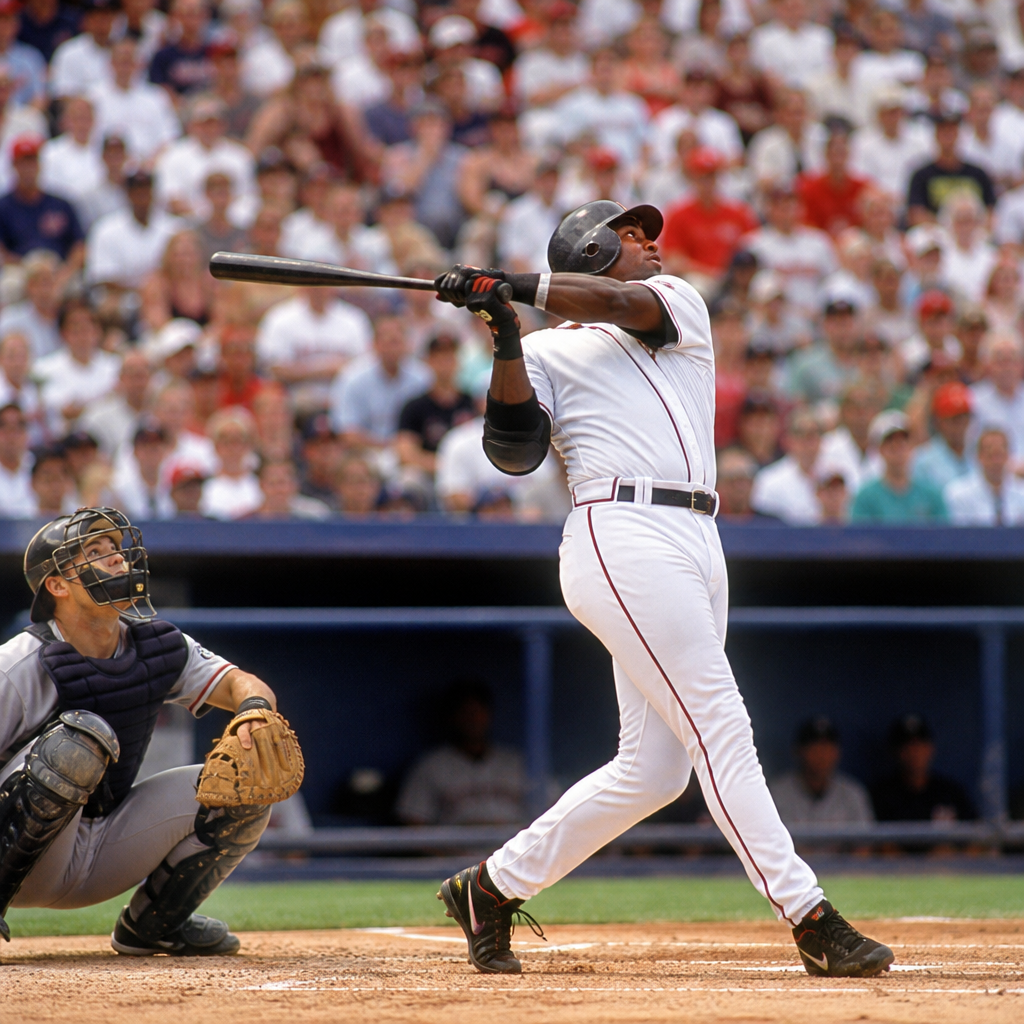
The 1990s transformed Major League Baseball more dramatically than any decade since integration. In one span of ten seasons, the sport added new franchises, lost a World Series to labor conflict, rewrote attendance records, moved into a new generation of ballparks, and watched sluggers chase home run totals once thought untouchable. When historians refer to baseball’s Modern Era, they often start here, because the 1990s created the commercial, cultural, and statistical environment that still shapes the game.
Three themes define baseball in the 1990s: expansion, labor conflict, and the home run boom. Expansion means the league grew its footprint with new clubs and broader regional markets. Labor conflict refers to the escalating disputes between owners and players over salaries, free agency, revenue distribution, and a proposed salary cap, culminating in the devastating 1994–95 strike. The home run boom describes the explosive rise in power hitting, highlighted by record-setting seasons from Mark McGwire, Sammy Sosa, and Ken Griffey Jr., and later shadowed by questions about performance-enhancing drugs. Taken together, these forces changed how teams were built, how fans consumed the sport, and how baseball was discussed in public.
I have always viewed this decade as baseball’s great contradiction. The game was bruised institutionally yet electrifying on the field. Front offices became more corporate and revenue conscious at the same moment individual stars became bigger national attractions. Local loyalty remained central, but television, sports radio, and early internet coverage made the sport feel more immediate and more national than before. To understand the Modern Era, you have to understand why the 1990s mattered not just as a sequence of memorable seasons, but as a reset of baseball’s economic model, media identity, and competitive style.
This hub article covers that transformation comprehensively. It explains how expansion reshaped the map of Major League Baseball, why labor negotiations collapsed in 1994, how the strike damaged trust, why offense surged so sharply, and what the home run race of 1998 meant for the sport’s recovery. It also places the decade in the context of changing ballparks, evolving front-office strategy, and the widening gap between baseball’s nostalgia and its rapidly modern business realities. If you want a clear foundation for the Modern Era, the 1990s are the essential starting point.
Expansion and the remaking of the league
Baseball entered the 1990s already thinking nationally, but expansion accelerated that shift. The Colorado Rockies and Florida Marlins began play in 1993, giving the National League two new franchises in fast-growing regions. The Rockies immediately became a major attendance story. Playing at Mile High Stadium before Coors Field opened in 1995, Colorado drew more than 4.4 million fans in its inaugural season, a figure that remains astonishing because it proved a new market could become a powerhouse gate almost overnight. Denver had long wanted a major league club, and the Rockies showed what happened when strong civic demand met a well-executed launch.
The Marlins represented a different model. South Florida offered demographic growth, tourism, and media potential, but it also presented the challenge of building consistent baseball identity in a region crowded with entertainment options and transient populations. Early attendance was solid, and the franchise moved aggressively, ultimately winning the 1997 World Series in just its fifth season. That title made the Marlins the fastest expansion team to win a championship at the time, but the club’s subsequent payroll cuts also exposed the era’s financial tensions. Expansion created opportunity, yet it did not guarantee stable fan trust or coherent ownership strategy.
By the end of the decade, Major League Baseball expanded again. The Arizona Diamondbacks and Tampa Bay Devil Rays debuted in 1998, bringing the total to 30 teams. Arizona became an immediate success at the gate and in competitive planning, using aggressive spending and experienced executive leadership to accelerate contention. Tampa Bay entered a crowded sports market and struggled more on the field, but its arrival reinforced baseball’s determination to occupy major Sun Belt markets. Expansion in the 1990s was not random; it followed population movement, television logic, and stadium politics.
| Team | First Season | League | Early Impact |
|---|---|---|---|
| Colorado Rockies | 1993 | National League | Record-setting attendance, immediate regional popularity, Coors Field became an offensive landmark |
| Florida Marlins | 1993 | National League | Rapid title run, highlighted volatility between competitive spending and roster dismantling |
| Arizona Diamondbacks | 1998 | National League | Fast-track contender model with assertive payroll and experienced leadership |
| Tampa Bay Devil Rays | 1998 | American League | Expanded league presence in Florida but struggled to establish winning momentum |
Expansion affected more than geography. It diluted pitching depth, created jobs for players, and increased the importance of player development systems. Clubs needed to protect talent in expansion drafts, while new teams had to assemble usable rosters quickly. It also pushed MLB toward structural change. Interleague play arrived in 1997, partly because a 30-team structure was approaching and the sport needed scheduling flexibility and fresh television inventory. For fans, expansion made baseball feel bigger, more national, and more commercially ambitious than ever before.
The 1994–95 strike and baseball’s deepest institutional crisis
The defining crisis of the decade began with economics. Owners argued that rising salaries and uneven local revenues threatened competitive balance. Players, represented by the Major League Baseball Players Association under executive director Donald Fehr, saw management’s push for a salary cap as a direct attack on free-market gains won through earlier labor battles. Those earlier battles mattered. Free agency, salary arbitration, and grievance victories in the 1970s and 1980s had shifted power toward players, and owners were determined to slow that trend.
The strike started on August 12, 1994. It did not merely interrupt the season; it erased history in progress. The Montreal Expos had the best record in baseball at 74–40 and looked like legitimate World Series favorites behind players such as Larry Walker, Marquis Grissom, Moisés Alou, and Pedro Martínez. Tony Gwynn was hitting .394 and had a real chance to become the first .400 hitter since Ted Williams in 1941. Matt Williams had 43 home runs and was threatening Roger Maris’s then-American League-based 61-homer benchmark pace. None of those storylines reached a conclusion because the season ended without a postseason.
The cancellation of the 1994 World Series was unprecedented since 1904, and the damage was severe. Fans did not just lose games; they lost faith. In market after market, I saw the same reaction: resentment toward both sides, skepticism toward ownership messaging, and fatigue with millionaire-versus-billionaire framing before that phrase was common shorthand. The legal battle intensified when owners attempted to use replacement players in 1995. Federal judge Sonia Sotomayor issued an injunction that helped restore the previous labor terms and effectively ended the strike in April 1995. Games resumed, but trust did not snap back quickly.
The strike matters in the Modern Era because it clarified baseball’s central tension: the sport wanted national scale and modern revenues while still operating through intensely local business disparities. Large-market clubs generated more through media deals and attendance. Small-market clubs sought more cost control. Players resisted mechanisms that would artificially suppress earnings. The result was not just a labor stoppage; it was a public demonstration that baseball’s business model was unstable. Later reforms, including the luxury tax and expanded revenue sharing under subsequent agreements, grew from the lessons of this collapse.
The home run boom and the rebranding of the sport
If the strike broke baseball’s public image, the home run boom helped rebuild it. Offense surged throughout the decade for several reasons: expansion diluted pitching, smaller ballparks rewarded fly-ball contact, strike zones tightened in practice, strength training improved, and the baseball environment generally favored hitters. Coors Field became the most visible symbol of this shift because altitude turned routine fly balls into extra-base hits and made run scoring look extreme. But the power spike was league-wide, not just a Denver effect.
The centerpiece was the 1998 home run race. Mark McGwire of the St. Louis Cardinals and Sammy Sosa of the Chicago Cubs chased Roger Maris’s 61 home runs with relentless drama. McGwire finished with 70; Sosa hit 66. Every at-bat became national news. ESPN cut into coverage, newspapers ran front-page updates, and even casual fans reengaged with the sport. That season mattered because it gave baseball a simple, vivid story after years of institutional bitterness. People could count home runs, compare totals, and feel the suspense without understanding collective bargaining or revenue structures.
Ken Griffey Jr. also defined the decade’s power culture. He hit 56 home runs in 1997 and 1998, combining elite center-field defense with a swing that became the era’s visual signature. Griffey mattered because he connected old and new baseball values: charisma without scandal at the time, power without selling out athleticism, and broad crossover appeal. Alongside Frank Thomas, Juan González, Albert Belle, Barry Bonds, and Rafael Palmeiro, he helped create an offensive environment where 40 home runs no longer felt extraordinary. By 1996, teams combined for a then-record 4,962 home runs. In 2000, that number would rise even higher.
Any honest account of the home run boom must address performance-enhancing drugs. During the late 1990s, testing was not yet part of MLB’s collectively bargained system, and clubhouses operated with far less scrutiny than they would after the BALCO revelations and congressional hearings of the 2000s. Historians now treat the period with caution. The offensive explosion cannot be reduced to one cause, but steroid use undeniably became part of the decade’s legacy. That ambiguity is central to the Modern Era: baseball recovered commercially through feats that later came under suspicion, leaving fans to reconcile excitement with doubt.
Ballparks, media, and the business of modern baseball
The 1990s also remade the baseball experience through architecture and media. Camden Yards opened in Baltimore in 1992 and became the template for the retro-modern ballpark. Instead of the multipurpose concrete style that had dominated the 1970s, teams now wanted asymmetry, brick facades, downtown placement, and neighborhood character. Cleveland’s Jacobs Field, opened in 1994, and Texas’s The Ballpark in Arlington, opened the same year, reinforced the trend. New parks generated premium seating revenue, sponsorship inventory, and civic buzz, while also making baseball more visually distinctive on television.
Television and cable deepened local attachment even as national narratives expanded. Superstations, regional sports networks, and highlight shows created a constant baseball presence. Fans could follow their own club nightly and still know what McGwire, Sosa, or Griffey had done two time zones away. Sports talk radio amplified controversy, turning ownership disputes, managerial decisions, and star performances into daily public debate. By the late 1990s, online coverage and early stat communities were beginning to change how informed fans talked about roster value and strategy.
On the business side, revenue became increasingly tied to market size, stadium deals, and media contracts. The New York Yankees exemplified the decade’s emerging powerhouse model. Their dynasty core—Derek Jeter, Mariano Rivera, Jorge Posada, Andy Pettitte, and Bernie Williams—was homegrown, but the organization also benefited from enormous financial strength and disciplined management under general manager Brian Cashman and manager Joe Torre. The Yankees won the World Series in 1996, 1998, 1999, and 2000, demonstrating that money alone was not enough; it had to be paired with player development, bullpen construction, and postseason adaptability.
How the 1990s shaped the Modern Era that followed
By 2000, baseball had become recognizably modern. The league was larger, more revenue driven, and more dependent on star-centered media narratives. Front offices were starting to integrate deeper analytical thinking, though the full public bloom of sabermetrics would come later. Labor peace remained fragile, but both sides understood the cost of another canceled postseason. The sport had learned that fans would return for great stories, but it had also learned that trust, once broken, is expensive to rebuild.
The decade’s legacy is therefore double-edged. Expansion succeeded in spreading the game and opening new markets, but it also exposed disparities in ownership competence and local support. The strike preserved player resistance to a salary cap, yet it inflicted one of the worst self-inflicted wounds in professional sports history. The home run boom reignited national passion, but later revelations complicated how that passion is remembered. Even so, the 1990s remain the essential hub of baseball’s Modern Era because they explain the structures, debates, and aesthetics that carried into the twenty-first century.
For readers exploring Baseball Eras, start with the 1990s and then follow the threads outward: the rise of new ballparks, the Yankees dynasty, interleague play, the steroid-era reckoning, and the data-driven front office revolution that followed. This decade was not a bridge between older baseball and newer baseball; it was the point where the bridge became the destination. Understanding baseball in the 1990s means understanding how the sport learned to grow, fight, sell, and survive under modern pressure. Keep this era at the center of your study, because nearly every major storyline in today’s game begins here.
Frequently Asked Questions
Why is the 1990s considered such a pivotal decade in Major League Baseball history?
The 1990s are widely seen as a turning point because the decade reshaped nearly every part of Major League Baseball at once. On the field, the game entered a new offensive age defined by soaring home run totals, changing expectations for power hitters, and a statistical environment that looked dramatically different from previous eras. Off the field, owners and players clashed in a labor dispute so severe that it canceled the 1994 World Series, an event that deeply damaged public trust and remains one of the most consequential disruptions in the sport’s history.
At the same time, baseball was expanding its physical and commercial footprint. New franchises arrived, broadening the league’s geography and fan base. Teams also began moving into a new generation of ballparks that rejected the cookie-cutter multipurpose stadium model of the 1960s and 1970s. These retro-inspired parks helped redefine the fan experience, boosted attendance, and became central to the business strategy of franchises seeking more premium seating, better concessions, and stronger local identity.
The decade also helped create the modern baseball economy. Television revenues, sponsorships, merchandising, and regional branding all became more sophisticated and lucrative. In many ways, the 1990s established the template for the contemporary game: highly commercialized, intensely data-conscious, nationally visible, and driven by both entertainment value and historical comparison. That is why historians often treat the decade not simply as another chapter in baseball history, but as the beginning of the sport’s modern form.
How did MLB expansion in the 1990s change the league?
Expansion in the 1990s changed Major League Baseball by increasing its reach, altering its competitive structure, and reinforcing the sport’s ambitions as a national and international business. The decade saw the arrival of the Colorado Rockies and Florida Marlins in 1993, followed by the Arizona Diamondbacks and Tampa Bay Devil Rays in 1998. These additions were not just symbolic; they brought baseball into fast-growing markets and introduced new fan communities to the major league experience.
The immediate effects were visible in attendance and local enthusiasm. Colorado, for example, quickly became one of the league’s attendance leaders, showing how powerful a new franchise could be in the right market. Expansion also required adjustments to scheduling, divisional alignment, player distribution, and organizational strategy. New teams had to build farm systems, scouting networks, front-office identities, and fan cultures from scratch, while existing clubs had to adapt to a larger and more complex league.
There were also longer-term consequences. Expansion diluted talent to some extent, a common concern whenever new teams are added, but it also created opportunities for more players and accelerated investment in player development and international scouting. Financially, expansion fees and new market penetration strengthened the league’s business position. Culturally, the added franchises helped baseball present itself as a growing enterprise at a time when other major sports were also competing for national attention. In that sense, expansion was not just about adding teams; it was about redefining what MLB could be in the late twentieth century.
What happened during the 1994–95 baseball strike, and why was it so important?
The 1994–95 strike was one of the most damaging labor conflicts in professional sports history. It began in August 1994 when players walked out amid a bitter dispute with team owners over major economic issues, especially salary controls, revenue sharing, and the owners’ push for a salary cap. These were not minor disagreements. They reflected a larger struggle over who would control baseball’s financial future and how the game’s growing revenues would be divided.
The strike escalated to the point that the remainder of the 1994 season was canceled, including the postseason and, most notably, the World Series. That cancellation was historic and shocking. Baseball had endured wars, scandals, and previous labor tensions, but losing the World Series represented a profound institutional failure. Fans were angry, players and owners both suffered reputational damage, and the sport’s standing in American culture took a serious hit.
The importance of the strike lies in both its immediate and lasting effects. In the short term, it disrupted pennant races, erased potential historic achievements, and caused financial losses throughout the sport. In the longer term, it hardened public cynicism about baseball’s labor politics and made the league’s eventual recovery all the more significant. When fans returned in large numbers later in the decade, especially during the home run chases of 1998, that resurgence was often interpreted as evidence of baseball’s resilience. Even so, the strike remains central to understanding the 1990s because it exposed the tension between baseball’s romantic image and its reality as a major business.
What drove the home run boom of the 1990s?
The home run boom of the 1990s was the result of several overlapping factors, which is why it remains one of the most discussed developments in baseball history. First, the game’s offensive environment changed in measurable ways. Players were becoming larger and stronger, training methods were evolving, and power production was increasingly prized by teams, media, and fans. Front offices and coaches also embraced lineups built around slugging, recognizing that home runs could drive scoring efficiently and dramatically.
Second, expansion and ballpark conditions likely played a role. New teams meant talent was spread across more rosters, which may have affected pitching depth. Certain stadiums also proved more favorable to hitters than others. At high-altitude Coors Field, for instance, offensive numbers reached extraordinary levels and became a defining feature of the era. Rule enforcement, travel conditions, equipment consistency, and changes in pitching usage patterns also formed part of the broader context in which offense surged.
Any serious discussion of the home run boom must also acknowledge the performance-enhancing drug issue. While not every power hitter from the era was implicated, the steroid controversy became inseparable from how the decade’s statistical explosion was later interpreted. Records that once seemed unreachable, including Roger Maris’s single-season mark of 61 home runs, suddenly came under repeated assault. The 1998 race involving Mark McGwire and Sammy Sosa captivated the country and helped revive baseball’s popularity after the strike, but it also became a symbol of how thrilling and complicated the era really was. That combination of excitement, suspicion, spectacle, and record-breaking achievement is exactly why the home run boom remains so historically important.
How did new ballparks and rising attendance help define baseball in the 1990s?
New ballparks and rising attendance were essential to baseball’s reinvention in the 1990s. After years in multipurpose concrete stadiums designed to host both baseball and football, teams began returning to baseball-specific parks with asymmetrical dimensions, intimate sightlines, and design elements meant to evoke classic venues. Oriole Park at Camden Yards, which opened in 1992, became the model for this movement. Its success influenced franchise after franchise, launching a stadium renaissance that changed how teams marketed themselves and how fans experienced a day at the ballpark.
These parks mattered for more than aesthetics. They improved the economics of the sport. Clubs could generate more revenue through luxury suites, club seating, naming rights, premium concessions, and expanded retail areas. Ballparks became year-round civic landmarks and engines of urban redevelopment, at least in the way they were often presented politically and commercially. Teams were no longer just selling baseball games; they were selling atmosphere, nostalgia, and a complete entertainment experience rooted in local identity.
Attendance gains reinforced the sense that baseball was entering a new era. Even after the shock of the strike, fans returned in impressive numbers, especially when compelling stars, new stadiums, and pennant races created momentum. The league drew huge crowds in many markets, and those attendance surges helped stabilize revenues and validate the business strategies teams were pursuing. In historical terms, the combination of retro ballparks and robust gate receipts signaled that baseball had found a way to modernize without fully abandoning its past. That balance between innovation and tradition became one of the defining features of the sport in the 1990s and beyond.