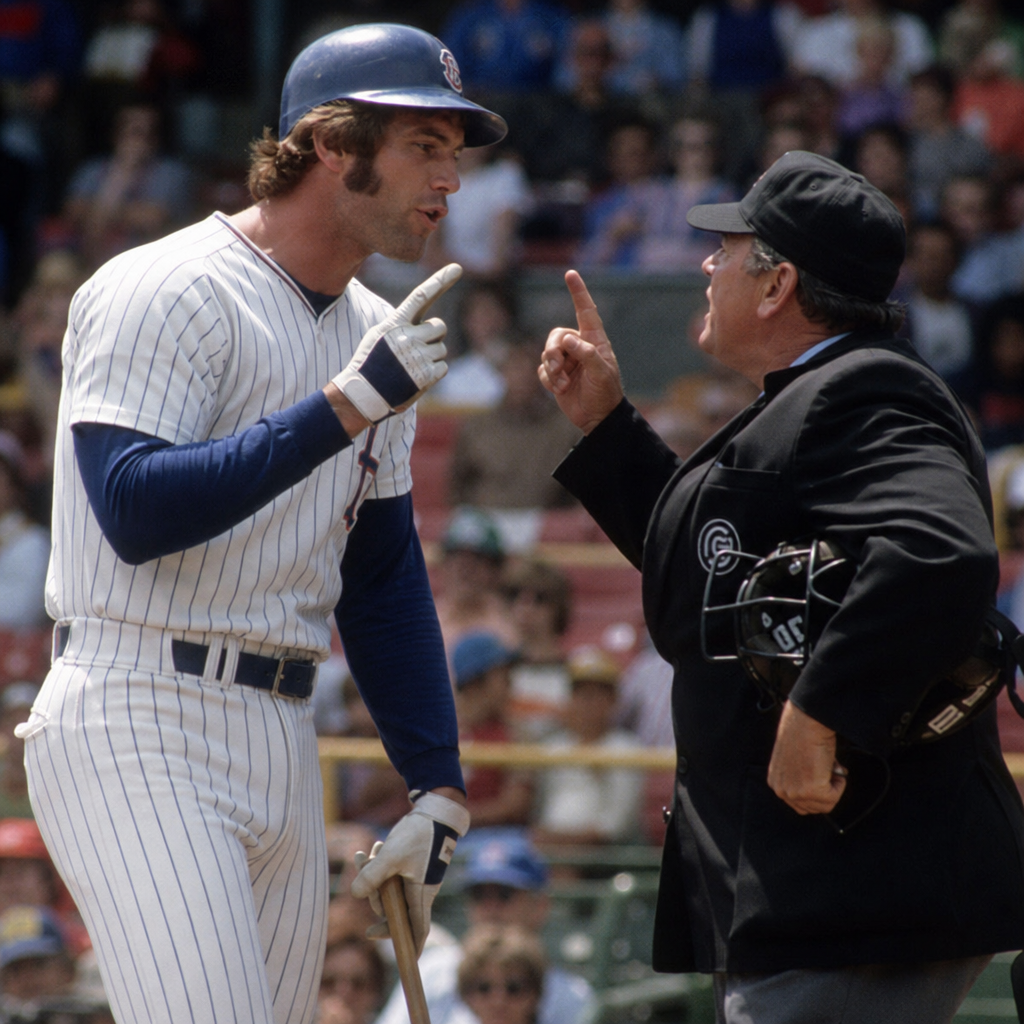
Dave Kingman remains one of baseball’s most polarizing figures, and the controversy attached to his name still raises a sharp question: where does talent end and sportsmanship begin? In Major League Baseball, sportsmanship refers to conduct that respects opponents, teammates, fans, and the basic standards of professional behavior. A controversy, by contrast, emerges when actions on or off the field appear to violate those standards strongly enough to shape public memory. Kingman’s case matters because it sits at the intersection of performance, personality, media treatment, and clubhouse culture, making it an essential hub topic within the broader landscape of sports scandals and controversies.
Kingman was not controversial because he lacked ability. He hit 442 career home runs, led the National League in home runs twice, and became famous for tape-measure power that could turn an ordinary game into a spectacle. Yet numbers alone never defined him. Writers, managers, and many fans saw him as moody, aloof, and sometimes openly hostile. The most cited episode, involving a rat sent to a female reporter in 1986, fixed his reputation in a way no home run could undo. That incident did not simply create a headline; it crystallized deeper concerns about respect, accountability, and how athletes treated the people around them.
As a hub article for miscellaneous scandals and controversies, this story is useful because it is not limited to gambling, cheating, or criminal conduct. Instead, it shows how reputational damage can grow from repeated clashes, abrasive behavior, and one symbolic act that confirms an existing narrative. In my experience studying old baseball coverage and comparing it with modern player relations, Kingman stands out as a case where media conflict and personal conduct became inseparable. Understanding his controversy helps explain how sportsmanship is judged, why some stars receive less benefit of the doubt, and how baseball culture has changed since the 1970s and 1980s.
The central issue is straightforward: Dave Kingman’s legacy forces a practical evaluation of whether exceptional performance can offset repeated questions about professionalism. For readers exploring the scandals and controversies category, this article provides the framework for that discussion by defining the event, tracing the background, and showing why the debate persists.
Who Was Dave Kingman and Why Was He So Polarizing?
Dave Kingman played sixteen seasons in the majors from 1971 through 1986, suiting up for clubs including the San Francisco Giants, New York Mets, San Diego Padres, California Angels, New York Yankees, Chicago Cubs, and Oakland Athletics. Standing 6-foot-6, he fit the image of a classic slugger before the modern power era fully took shape. He struck out often, walked enough to retain value, and hit towering home runs that made him must-watch even when the rest of his game looked incomplete. Baseball Reference credits him with 442 home runs, a .236 batting average, and an OPS+ of 126, meaning he was twenty-six percent better than league average as a hitter after adjusting for park effects.
The polarization came from the contrast between his strengths and his limitations. Managers wanted his power in the lineup, but critics pointed to his low batting average, defensive shortcomings, and perceived indifference. This was an era when effort and attitude were discussed almost as much as production. Reggie Jackson and other big personalities could be difficult too, but many journalists felt Kingman did not balance confrontation with charisma. He often seemed detached rather than theatrical, and that distinction mattered. A player who embraces the spotlight can survive criticism more easily than one who appears to resent the people documenting his career.
That background is important because controversies rarely begin with a single act. They usually build on an established pattern. By the mid-1980s, Kingman already carried a reputation for prickliness with the press. So when the defining incident occurred, it was interpreted not as an isolated lapse but as confirmation of long-simmering concerns.
The 1986 Rat Incident That Defined the Controversy
The most infamous Dave Kingman controversy occurred in 1986 while he was with the Oakland Athletics. After a game, USA Today reporter Susan Fornoff reportedly found a dead rat in her clubhouse area package with a note linked to Kingman. Contemporary reporting widely treated it as retaliation for coverage he disliked. The act was immediately understood as degrading and threatening in tone, especially because it targeted a woman working in a male-dominated sports environment. Even in a rougher media culture than today’s, this crossed a line.
The Athletics responded by fining Kingman, and the story spread nationally because it involved more than a routine player-reporter feud. It became a test of professional boundaries. Clubhouses in that era could be hostile spaces for reporters, particularly women, and the incident exposed how easily intimidation could be normalized if left unchecked. Fornoff was not merely offended; she was put in a position where basic workplace dignity had been violated. That is why the controversy endures. It was not trash talk. It was an act designed to humiliate.
Major League Baseball in the 1980s did not police conduct in the same way leagues attempt to now. Formal harassment training, media relations protocols, and workplace conduct standards were less developed. Even so, the reaction showed that contemporaries understood the severity. The story became shorthand for Kingman’s failures of judgment, and once that happened, his public image hardened permanently.
Why the Incident Raised Serious Questions About Sportsmanship
Sportsmanship is often reduced to handshakes and fair play, but in professional sports it has a broader meaning. It includes how athletes treat journalists, staff, and colleagues whose jobs are essential to the sport’s public life. A player does not need to like coverage, but professionalism requires proportionate response. Sending a dead rat was not competitive emotion spilling over during play. It was a deliberate off-field act, and that makes it a stronger measure of character than a heated argument at home plate.
From a standards perspective, the behavior failed multiple tests at once. It showed disrespect toward a reporter, disregard for the workplace, and poor judgment about power dynamics. Athletes hold status, access, and influence; using that status to demean someone with less institutional power is the opposite of sportsmanship. In practical terms, if a front office today reviewed such conduct under modern workplace policies, the response would likely involve not just a fine but formal disciplinary review, mandatory training, and potentially suspension.
The incident also illustrates a key truth in scandal analysis: intent does not rescue impact. Even if a player claimed it was a joke, the message received by the target and the wider public matters more. Professional environments depend on trust and minimum standards of respect. Kingman’s action violated both, which is why debates about his legacy cannot focus only on home runs.
Media Relations, Clubhouse Culture, and the Era Kingman Played In
To understand the controversy fully, readers need the cultural context of baseball in the 1970s and 1980s. Clubhouses were less controlled than they are now. Reporters often had broad access before and after games, players were expected to face uncomfortable questions in person, and conflict could become personal quickly. Women reporters, despite growing presence and legal victories over access restrictions, still faced discrimination that male colleagues often did not. Against that backdrop, hostile acts carried extra meaning.
I have found that when people revisit Kingman’s case, they sometimes excuse it as a product of a rougher era. That explanation is incomplete. Yes, the environment was harsher and less structured. But many players managed tense relationships with reporters without crossing into demeaning conduct. Era explains context; it does not erase responsibility. In fact, because sports media access depended so heavily on mutual norms, violations of those norms stood out more starkly.
The controversy therefore belongs in the miscellaneous branch of sports scandals because it reflects institutional culture as much as individual behavior. It connects to broader issues: locker room gatekeeping, treatment of women in sports journalism, and how teams handle misconduct that does not fit simple categories like cheating or violence. Those are exactly the kinds of topics a comprehensive controversies hub should surface.
| Issue | How It Appeared in Kingman’s Case | Why It Still Matters |
|---|---|---|
| Player-media conflict | Repeated tension with reporters culminated in a humiliating act | Shows how reputations form before a major incident |
| Workplace respect | A reporter was targeted in a professional setting | Highlights standards expected in clubs and leagues |
| Gender dynamics | The target was a woman in a historically exclusionary environment | Connects baseball history to wider inclusion debates |
| Team accountability | The Athletics issued a fine rather than ignoring the matter | Demonstrates how organizations shape scandal outcomes |
| Legacy impact | The incident overshadowed many on-field achievements | Explains why conduct can define public memory |
How Kingman’s On-Field Greatness Complicated the Public Verdict
One reason the Dave Kingman controversy remains compelling is that his baseball résumé was substantial enough to invite separation between player and person. He was not a marginal figure whose name survives only because of scandal. He hit mammoth home runs at Wrigley Field, Shea Stadium, and Candlestick Park. In 1979 he hit 48 home runs for the Cubs and won the National League home run title. Fans who saw him in person often remember the sheer violence of his power first.
That creates a familiar controversy pattern seen across sports: extraordinary skill tempts observers to minimize conduct problems. Some argue that abrasive personalities are part of what makes elite athletes effective. In Kingman’s case, that defense is weak because the central incident had no competitive function. Intensity on the field may explain a hard slide or an argument with an umpire. It does not explain calculated humiliation away from play. The distinction matters when judging sportsmanship.
His career also reveals how incomplete players can still become stars. Kingman was often criticized for strikeouts and defense, yet advanced metrics suggest he was a highly productive hitter relative to league context. That nuance is useful. A fair assessment should recognize both truths: he was a legitimate power threat of historical significance, and his conduct gave critics strong reason to question his professionalism. Holding both ideas at once is not contradiction; it is accurate analysis.
How the Controversy Fits Into a Broader Sports Scandals Hub
Within a scandals and controversies content hub, the Kingman story serves as an anchor for miscellaneous cases that do not fit neatly into doping, point shaving, game fixing, or legal prosecution. It represents the category of reputational controversy driven by behavior, disrespect, and culture clash. Readers exploring this branch should also think in terms of adjacent themes: media feuds, fan hostility, clubhouse harassment, insensitive pranks, retaliatory stunts, and incidents that reveal structural problems in a sport without necessarily changing official results.
This is why miscellaneous does not mean minor. Some controversies reshape policy; others reshape memory. Kingman’s case did more of the latter, but memory is powerful. Hall of Fame discussions, old-timers’ reputations, documentary framing, and fan nostalgia are all influenced by how a figure treated people. When a controversy becomes the first fact many readers learn about a player, it has effectively rewritten the legacy.
For internal topic exploration, this hub should lead readers toward related cases involving athlete-journalist conflict, women’s access to locker rooms, and examples where teams had to decide whether talent justified tolerance. Those connections make the Kingman controversy more than a biography note. It becomes a lens for evaluating how sports institutions respond when the issue is not competitive integrity, but human decency.
What Modern Sports Can Learn From the Dave Kingman Controversy
The lasting lesson is simple: talent does not excuse contempt. Modern teams invest heavily in media training, player engagement staff, and codes of conduct because they know a single incident can damage trust far beyond one clubhouse. Leagues such as MLB now operate in an environment shaped by digital amplification, human resources scrutiny, and public expectations around harassment and workplace respect. A controversy like Kingman’s would move faster, draw stronger condemnation, and likely trigger a more structured disciplinary process today.
There is also a lesson for fans and analysts. Evaluating legacy requires more than collecting statistics. Home runs, WAR, and awards tell us what a player produced. Sportsmanship tells us how that player inhabited the role of professional athlete. The best historical writing does not collapse one into the other. It weighs achievement, context, and conduct together. In Kingman’s case, that balanced view leads to a clear conclusion: his power was real, his impact on games was significant, and his most famous off-field act seriously undermined his standing.
For anyone building a deeper understanding of miscellaneous sports controversies, Kingman offers a durable case study in how behavior can outlast performance. The takeaway is not to erase what he accomplished, but to judge the full record honestly. That is the right standard for this topic and for every controversial figure worth revisiting. Explore the related scandals and controversies pages with that same standard in mind, and the patterns across sports become much easier to see.
Frequently Asked Questions
Why is Dave Kingman considered such a controversial figure in baseball history?
Dave Kingman is considered controversial because his legacy was never defined by talent alone. On the field, he was one of the most feared power hitters of his era, capable of hitting towering home runs that made him unforgettable to fans and opponents alike. Off the field, however, his reputation was complicated by repeated complaints about his attitude, his treatment of reporters, and the way he carried himself in public and professional settings. That combination made him a lightning rod: admired for his raw ability, but criticized for behavior that many believed fell short of baseball’s expectations for professionalism and respect.
What keeps the controversy alive is that Kingman’s story forces people to separate performance from conduct. In baseball, sportsmanship is not just about following the rules during a game. It also involves how a player treats teammates, responds to criticism, handles media attention, and represents the club. Kingman often appeared indifferent to those responsibilities, and that perceived disregard became a central part of how he was remembered. For many observers, the issue was not whether he could play, but whether his conduct diminished the value of his accomplishments.
What does the Dave Kingman controversy reveal about sportsmanship in Major League Baseball?
The Dave Kingman controversy reveals that sportsmanship in Major League Baseball is broader than avoiding obvious cheating or fighting. It includes respect for the people who make the sport function: teammates, managers, reporters, fans, and even critics. A player may be exceptionally gifted, but if he repeatedly behaves in ways that seem dismissive, hostile, or unprofessional, the public often sees that as a failure of sportsmanship. Kingman’s reputation became a case study in exactly that tension.
His story also shows how strongly baseball culture values conduct alongside results. Players are judged not only on home runs, batting averages, and wins above replacement, but also on whether they contribute positively to a team environment and uphold the image of the game. In Kingman’s case, the debate centered on whether great power hitting could outweigh a pattern of behavior many found arrogant or disrespectful. That debate remains relevant because it mirrors modern sports discussions: how much should character, professionalism, and public behavior matter when evaluating a player’s place in history?
Was the criticism of Dave Kingman mainly about his personality, or were there specific incidents behind it?
The criticism was not based only on a vague sense that Kingman had a difficult personality. It was fueled by specific incidents and repeated perceptions that he treated people poorly, particularly members of the media. The most widely remembered example involved his response to a female reporter, an incident that was viewed as disrespectful and deeply unprofessional. Moments like that gave critics concrete reasons to argue that his behavior crossed a line from being merely distant or aloof into conduct that reflected badly on him and on the sport.
At the same time, personality absolutely played a role in how those incidents were interpreted and remembered. Some athletes are gruff or private but still maintain a level of mutual respect with others around the game. Kingman often projected a more combative or dismissive image, which intensified reactions to his actions. As a result, individual controversies did not stand alone; they reinforced an already established reputation. That is why discussions of Kingman are rarely limited to one event. Instead, they tend to focus on a larger pattern that many felt called his sportsmanship into question.
How do fans and historians balance Dave Kingman’s talent against concerns about his conduct?
Fans and historians usually balance Kingman’s legacy by acknowledging both truths at once: he was a remarkable power hitter, and he was also a deeply divisive public figure. His home run totals, physical strength, and ability to change a game with one swing are impossible to ignore. For pure power, he remains one of the most memorable sluggers of his generation. That level of talent earns him continued attention and ensures that his name remains part of baseball conversations decades later.
But serious evaluations of his career rarely stop with statistics. Historians look at how a player fit into the broader culture of the sport, and Kingman’s strained relationships with the media and uneven reputation for professionalism become part of that assessment. Fans tend to divide into camps: some believe production on the field should be the main standard, while others argue that character and sportsmanship are essential parts of a player’s total legacy. Kingman sits right at the center of that divide, which is why his story still sparks debate. He is a reminder that baseball history is not written by numbers alone; it is also shaped by memory, behavior, and public trust.
Why does the Dave Kingman controversy still matter today?
The controversy still matters because it speaks to a question that has only become more important in modern sports: how should athletes be judged when excellence and behavior do not align? In today’s media environment, players are scrutinized constantly, and their interactions with fans, reporters, and communities can shape their reputations as much as their performances. Kingman’s case may come from an earlier era, but the core issue feels current. His story asks whether great talent excuses poor conduct, or whether sportsmanship should remain a non-negotiable part of professional success.
It also matters because baseball has long presented itself as a game of standards, traditions, and respect. When a prominent player appears to violate those values, the reaction often lasts far beyond his playing days. Kingman’s controversy endures not simply because he was flawed, but because he became an example of how difficult it can be to separate athletic achievement from personal behavior. For readers revisiting his career, the lesson is clear: legacy in baseball is built not only on what a player does with a bat or glove, but also on how he treats the game and the people around it.