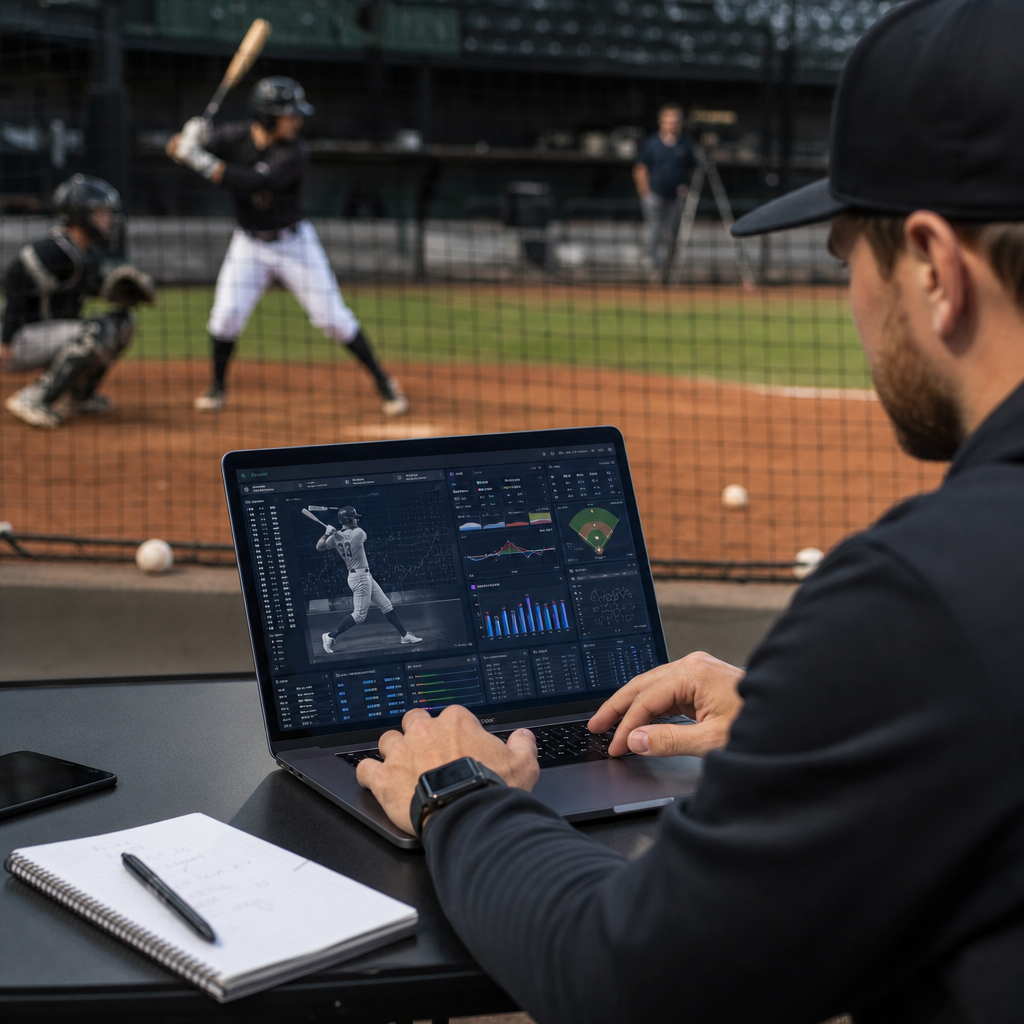
Predictive analytics in baseball is reshaping how teams scout players, value skills, prevent injuries, and project future performance. In simple terms, predictive analytics uses historical data, statistical modeling, and machine learning to estimate what is most likely to happen next. In baseball, that means moving beyond traditional scouting notes and basic box score statistics toward probability-driven evaluations built from pitch tracking, batted-ball data, biomechanics, health records, and game context. I have worked with baseball data pipelines and player evaluation models long enough to see the shift firsthand: clubs no longer ask only what a player did; they ask what underlying indicators suggest he will do next season, in a different park, against higher-level competition, or after a change in mechanics.
This matters because scouting has always been about uncertainty. Every draft pick, trade target, waiver claim, and international signing carries risk. The old model relied heavily on eyewitness reports, radar-gun readings, and broad descriptive grades. That information still matters, but it is now paired with measurable inputs from Statcast, Hawk-Eye, TrackMan, force plates, bat sensors, and medical screening. The result is a more complete view of talent. When people discuss the future of baseball stats, they are really talking about a new decision system: one that blends traditional observation with predictive models to estimate outcomes such as major league readiness, injury probability, aging curves, defensive value, and swing changes that can unlock power without sacrificing contact.
As a hub topic within statistics and record-breaking moments, predictive analytics sits at the center of modern baseball analysis. It influences how records are chased, how player development plans are built, and how front offices allocate millions of dollars. Teams use expected statistics like xwOBA and strikeout-minus-walk rate to separate skill from luck. They model pitch shape and release characteristics to identify overlooked pitchers. They study swing decisions by zone to predict whether a hitter’s breakout is sustainable. They even simulate game states to forecast the strategic value of roster construction. The future of baseball scouting is not replacing people with algorithms. It is using better baseball stats to ask sharper questions, reduce blind spots, and make decisions with evidence instead of instinct alone.
What predictive analytics means in modern baseball scouting
Predictive analytics in baseball scouting means estimating future value from present signals. Scouts and analysts gather data points that correlate with later success, then weight them according to competition level, age, physical traits, and role. For hitters, those signals often include bat speed, swing decisions, contact quality, chase rate, zone contact rate, launch angle distribution, platoon splits, and how performance changes against velocity or spin. For pitchers, useful indicators include extension, induced vertical break, horizontal movement, spin efficiency, velocity bands, command consistency, release deception, and workload trends. The purpose is not to admire numbers for their own sake. The purpose is to forecast what tools will translate and what flaws can be fixed.
A simple example is a minor league hitter with modest batting average but excellent swing decisions and hard-hit rates. Traditional evaluation might underrate him because the slash line looks ordinary. A predictive model may flag him as an undervalued asset if his chase rate is low, his in-zone contact is strong, and his expected slugging based on exit velocity is significantly better than his actual slugging. I have seen this happen repeatedly in player development: the player who “does not look like a prospect” by surface stats becomes valuable because the underlying traits are stable and projectable. In the same way, a pitcher with a mediocre ERA but elite strikeout rate, low walk rate, and unusual fastball carry may be far more interesting than his run prevention suggests.
Predictive scouting also accounts for context. Numbers from the Pacific Coast League are not interpreted the same way as numbers from the Florida State League. College statistics from the SEC carry different translation factors than production from smaller conferences. Park effects, defensive support, altitude, ball composition, and level-to-level adjustments all matter. Good models normalize those environments so decision-makers can compare players on more equal footing. That is why modern scouting departments combine public metrics, proprietary translations, biomechanical reports, and qualitative notes. Projection improves when raw data is cleaned, standardized, and interpreted by people who understand baseball realities.
The data revolution behind the future of baseball stats
The future of baseball stats depends on richer data sources than previous generations had available. Statcast made exit velocity, launch angle, sprint speed, catch probability, and expected outcomes part of mainstream analysis. Hawk-Eye expanded tracking precision for pitch movement and fielding. TrackMan changed amateur showcases and player development by measuring spin rate, release angle, and batted-ball quality. Blast Motion, K-Vest, and bat sensors added details about attack angle, hand speed, and rotational efficiency. Force plates and motion-capture labs now measure how players generate force through the ground and transfer it through the kinetic chain.
These tools matter because they measure process, not just result. A batter can line out three times and still demonstrate elite contact quality. A pitcher can allow runs because of poor defense while showing exceptional movement profiles. When clubs search for hidden value, they often begin with process metrics that stabilize faster than traditional outcomes. Strikeout rate becomes more useful when paired with called-strike-plus-whiff rate. Home run totals become more informative when tied to barrel rate and pull-side air contact. Defensive reputation becomes more reliable when tested against jump, route efficiency, arm strength, and conversion rates on specific ball types.
The competitive edge comes from integrating these sources into one player model. A club may merge scouting grades, medical risk markers, biomechanics, and in-game tracking into a single forecast that estimates median outcome, upside percentile, and downside probability. That framework changes draft boards and trade negotiations. It also changes development priorities. If the model suggests a pitcher gains the most value from improving fastball location at the top of the zone rather than adding velocity, coaches can target that. If a young hitter’s best path to power is lofting specific pitch locations rather than overswinging across the board, the data will often show it clearly.
How teams use models to project hitters, pitchers, and defenders
Projection models vary, but most strong systems combine descriptive statistics, physical measurements, and aging curves. For hitters, clubs ask several direct questions: Does the player control the strike zone? Does he make enough contact against quality velocity? Is the quality of contact consistent rather than occasional? Can his swing decisions survive promotion to better pitching? Is his body likely to support the same movement pattern over a full season? Those inputs can feed regression models, random forests, gradient boosting systems, or Bayesian updates that revise expectations as new data arrives.
For pitchers, forecasting is both easier and harder. Stuff can be measured with unusual precision, but health and command remain difficult to predict. Teams model arsenal quality by examining velocity, movement shape, release variance, location maps, and batter swing responses. A fastball with strong induced vertical break and flatter approach angle may play above its radar reading. A sweeper can miss bats because its movement profile creates late lateral separation from the fastball. Changeups are often evaluated by velocity separation, movement differential, release matching, and outcomes against opposite-handed hitters. Then the model must account for durability, which is where workloads, previous injuries, and biomechanical stress indicators become critical.
Defense has become far more projectable than it once was, especially in the outfield and at premium infield positions. Teams can measure first step, route efficiency, throw velocity, transfer time, and play completion rates by batted-ball type. Catchers are analyzed through receiving, blocking, exchange times, throwing mechanics, and game-calling patterns, although framing models require careful context. The point is not that a spreadsheet can see everything. The point is that a well-built model can quantify repeatable defensive actions that older methods judged loosely. Once those actions are quantified, teams can better predict whether a shortstop stays at the position or moves to third base, or whether a center fielder can keep enough range to remain up the middle into his late twenties.
| Scouting Area | Key Predictive Metrics | What Teams Are Forecasting |
|---|---|---|
| Hitters | Chase rate, zone contact, barrel rate, bat speed, expected wOBA | Plate discipline, power growth, major league translation |
| Pitchers | Velocity, movement profile, CSW%, release consistency, workload | Whiff potential, command growth, injury risk, role fit |
| Defenders | Jump, route efficiency, arm strength, exchange time, framing trends | Positional staying power, run prevention value, versatility |
| Athletic Development | Force production, mobility, asymmetry tests, recovery markers | Physical projection, durability, training response |
Why predictive analytics improves scouting without replacing scouts
One of the biggest misconceptions in baseball is that analytics and scouting compete with each other. In practice, the strongest organizations use each to sharpen the other. A scout may identify a hitter’s unusual balance, adjustability, and competitive at-bats before the model fully buys in. The model may then confirm that those observations align with elite contact traits and low chase behavior. I have seen analysts miss a player because the sample was small, while an area scout kept insisting the player’s timing and body control were special. I have also seen scouts fall in love with visual athleticism that the data correctly flagged as non-functional at higher levels. Better decisions usually come from the combination.
Human scouting remains essential because baseball performance is not only mechanical. Makeup, coachability, pain tolerance, routine quality, and game awareness still affect outcomes. A pitcher’s willingness to attack with a secondary pitch in fastball counts matters. A catcher’s ability to absorb a game plan and earn trust from a staff matters. A hitter’s capacity to adapt after opponents change attack patterns matters. These qualities are hard to quantify cleanly, and teams that pretend otherwise often overfit their models. The best predictive systems include structured qualitative inputs rather than excluding them.
The modern scout, however, needs statistical fluency. It is no longer enough to file a report that says “good arm” or “power potential” without evidence. Clubs increasingly expect scouts to understand which traits carry predictive weight and which visual cues may be misleading. That does not mean every scout becomes a data scientist. It means every scout should know why swing decisions may matter more than batting average, why a pitcher’s shape can outperform his raw velocity, and why age-relative-to-level changes the meaning of performance. The future of scouting belongs to evaluators who can move comfortably between the dugout rail and the data dashboard.
Injury forecasting, player development, and the next frontier
The most important future use of baseball analytics may be injury forecasting and individualized development. Performance models create value, but health models protect it. Teams already track workload, acute-to-chronic stress, sleep, recovery, previous injuries, and biomechanical markers to identify elevated risk. No system can predict injuries with certainty, and clubs should be honest about that limitation. Still, better monitoring can flag patterns such as velocity spikes, reduced shoulder range, asymmetrical force output, or mechanical drift that often precede trouble. In pitching especially, prevention is more valuable than reconstruction.
Player development is becoming more predictive as well. Instead of giving every prospect the same hitting program or throwing plan, clubs tailor interventions to measurable needs. A hitter struggling against fastballs at the top of the zone may need swing path adjustment, visual training, or timing work rather than generic cage volume. A pitcher with good raw stuff but poor strike efficiency may benefit from a different target strategy, mound positioning, or simplified cue set. Development departments now test changes in smaller controlled cycles, evaluate response through data, and keep what works. That is an enormous shift from the older “trust the eye test and wait” model.
The next frontier is combining biomechanics, cognitive performance, and game strategy into live predictive systems. Imagine a scouting and development platform that updates a prospect’s projection after every series, adjusts for fatigue, compares movement signatures to successful player comps, and recommends specific tactical changes. Parts of that already exist inside progressive organizations. Over time, more clubs will use integrated models that connect amateur scouting, minor league development, major league game planning, and contract valuation. The teams that do this best will find value earlier, develop it faster, and lose fewer wins to preventable mistakes.
Challenges, limits, and what smart teams do differently
Predictive analytics is powerful, but it is not magic. Models can fail because baseball environments change, inputs are noisy, or organizations measure the wrong things. Data quality is a constant issue. Amateur tracking can be inconsistent. Minor league samples can be thin. Injury records are often incomplete. Public metrics may not capture role-specific responsibilities. Even sophisticated systems can mistake correlation for causation if analysts are careless. That is why validation matters. Good teams back-test models, compare forecasts against actual outcomes, and revise assumptions when the game changes.
There is also a communication challenge. A model only helps if coaches, scouts, and executives trust the output and understand how to apply it. The best organizations translate analytics into plain baseball language. Instead of saying a pitcher has an optimized vertical approach angle distribution, they explain that his fastball will play better if he attacks at the top rail and tunnels the breaking ball off the same slot. Instead of dumping dashboards on coaches, they connect each metric to a decision. That practical translation is often the difference between clubs that collect data and clubs that create wins from it.
For anyone following the future of baseball stats, the key takeaway is clear: predictive analytics is the future of scouting because it improves projection, reduces avoidable risk, and gives teams a repeatable framework for finding talent. The winning approach is not numbers alone or tradition alone. It is integration. Teams that merge scouting experience, advanced tracking, biomechanics, health monitoring, and context-adjusted modeling will evaluate players more accurately than those relying on any single method. If you want to understand where baseball is going next, start here, then explore the connected topics in this hub on advanced metrics, player development, injury analysis, and record-level performance trends.
Frequently Asked Questions
What is predictive analytics in baseball scouting?
Predictive analytics in baseball scouting is the use of historical data, statistical models, and machine learning to estimate how a player is likely to perform in the future. Instead of relying only on traditional scouting observations such as “good swing,” “live arm,” or “strong instincts,” teams combine those qualitative notes with measurable inputs like pitch velocity, spin rate, exit velocity, launch angle, swing decisions, sprint speed, biomechanics, and even injury history. The goal is not simply to describe what a player has already done, but to forecast what is most likely to happen next.
In practical terms, predictive models help teams identify patterns that human evaluation alone might miss. A hitter with average current numbers, for example, may still project well if his contact quality, plate discipline, and bat speed suggest future growth. Likewise, a pitcher with strong results might be flagged as risky if his movement profile, workload trends, or mechanics point toward decline or injury. Predictive analytics does not replace scouts; it gives them a more precise framework for asking better questions, validating what they see, and separating short-term performance from long-term potential.
How is predictive analytics changing the way MLB teams evaluate players?
Predictive analytics is changing player evaluation by shifting the focus from surface-level outcomes to underlying traits that are more stable and more predictive over time. Traditional statistics like batting average, RBIs, wins, and ERA still have value, but they often fail to capture why a player is succeeding or struggling. Modern scouting departments now study deeper indicators such as strike-zone judgment, chase rate, hard-hit rate, pitch shape, release consistency, spin efficiency, defensive range metrics, and recovery data. These measures give teams a clearer picture of skill quality rather than just recent results.
This change affects every level of baseball operations. Amateur scouting uses models to compare high school and college players across different competition levels. International scouting blends live evaluation with physical data and developmental indicators. In the minor leagues, teams use predictive systems to identify which prospects are likely to improve with coaching and which current weaknesses are fixable. At the major league level, front offices use forecasts to guide trades, free-agent signings, contract extensions, and roster construction. The biggest difference is that teams are no longer evaluating players only by what they are today; they are valuing how likely those players are to become something better, remain stable, or decline.
Can predictive analytics really improve injury prevention in baseball?
Yes, predictive analytics can play a major role in injury prevention, although it is better understood as risk management than perfect prediction. Baseball teams now collect large amounts of information related to player health, including workload totals, pitch counts, recovery patterns, biomechanics, strength testing, movement efficiency, sleep data, and prior injury records. By analyzing these variables together, teams can identify warning signs that may indicate increased risk of arm trouble, soft-tissue injuries, fatigue-related performance drops, or overuse issues.
For pitchers in particular, this approach has become extremely important. Small changes in arm slot, velocity loss, release point, or spin characteristics can sometimes signal fatigue or mechanical stress before a major injury occurs. For hitters and fielders, force production, running loads, hip and shoulder mobility, and previous strain patterns can also reveal risk trends. No model can guarantee that an injury will or will not happen, because health is influenced by many variables and a great deal of randomness. However, predictive analytics helps teams make smarter decisions about rest, rehab progression, workload limits, training plans, and in-game usage. Over time, that can improve player availability and protect long-term value.
Does predictive analytics make traditional baseball scouting less important?
No, and in the best organizations, predictive analytics actually makes traditional scouting more valuable by giving it better context. Data can measure many things at a very high level, but it still cannot fully capture every part of a player’s makeup. Scouts evaluate body control, competitiveness, adaptability, poise, coachability, confidence, and how a player responds to failure or makes adjustments during games. Those observations matter, especially when projecting young players whose future development depends on much more than raw numbers.
The most effective scouting systems combine human judgment with analytical evidence. A scout may notice that a hitter has exceptional balance and timing, while the data confirms elite swing decisions and bat speed. A model might love a pitcher’s movement profile, while a scout notices delivery effort that could create durability concerns. When both perspectives align, teams can feel more confident in their decisions. When they differ, the disagreement often leads to better investigation. Rather than replacing scouts, predictive analytics changes their role from being the sole source of projection to being part of a broader, more rigorous evaluation process.
What does the future of predictive analytics in baseball look like?
The future of predictive analytics in baseball will likely be defined by deeper integration, faster decision-making, and more personalized player projections. Teams are moving toward systems that combine scouting reports, in-game tracking, biomechanics, medical information, and player development data into unified models. That means projections will become more dynamic and updated in near real time. Instead of evaluating a player once a season or once a series, teams will continuously refine their expectations based on new information about health, mechanics, skill growth, and competitive performance.
Machine learning will also continue to improve how teams identify hidden talent and design development plans. Rather than treating all prospects the same, clubs will build individualized forecasts that estimate not only major league potential, but also the most effective path to reach it. Coaches may use predictive tools to suggest pitch design changes, swing adjustments, defensive positioning, conditioning routines, and recovery strategies tailored to each player. At the same time, baseball will still need human expertise to interpret the numbers responsibly and avoid overconfidence in any one model. The future is not data instead of scouting. It is a more sophisticated partnership between information, technology, and baseball experience that gives teams a sharper understanding of performance, risk, and upside.