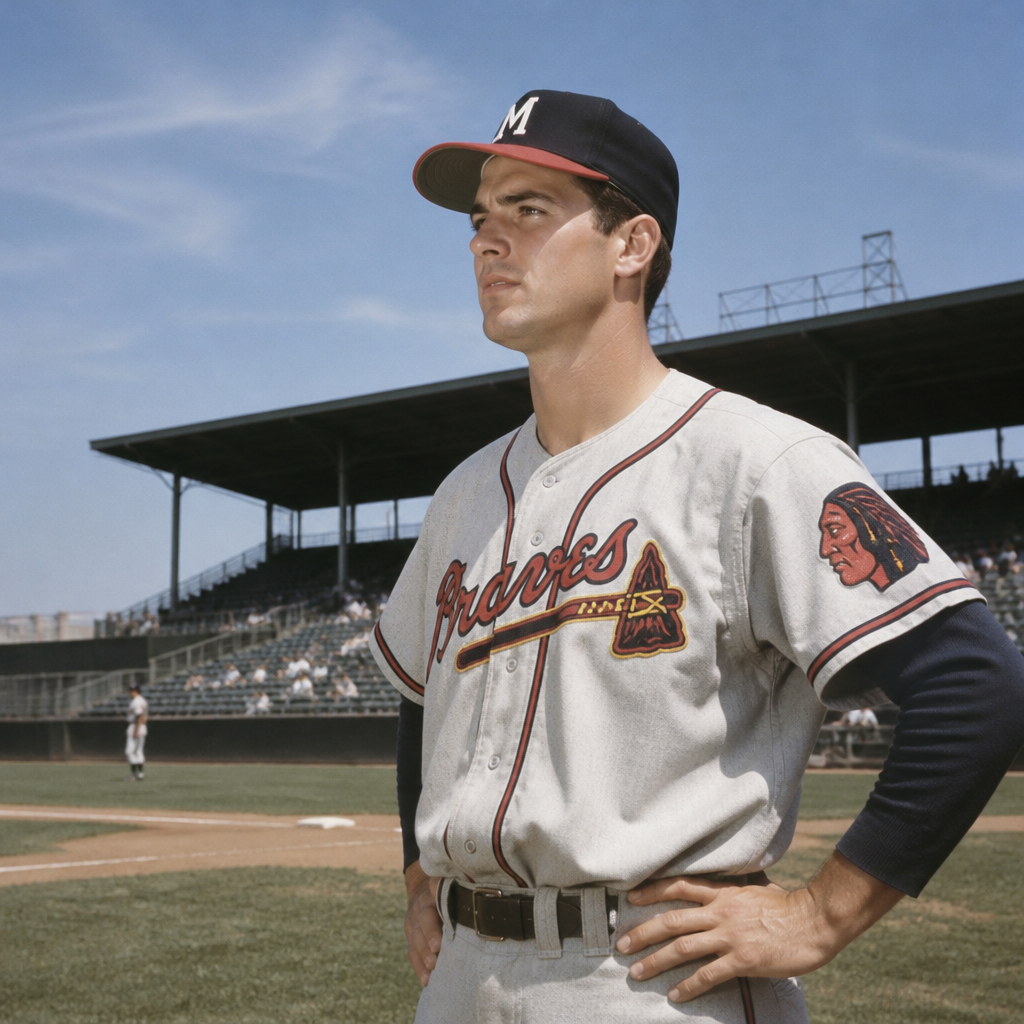
The story of the Boston Braves to Milwaukee Braves relocation explains how one of the National League’s founding franchises left New England, reshaped baseball’s geography, and became the clearest early model for modern franchise movement. For anyone studying relocated and defunct franchises, the Braves are not a side note; they are the essential case. The club began in Boston in the nineteenth century, survived multiple identities, won championships, faded behind the Red Sox, and then moved west in 1953 under owner Lou Perini. That move was not a sudden betrayal or a simple attendance problem. It was the product of ownership strategy, stadium economics, broadcasting limits, postwar population shifts, and the changing business of Major League Baseball.
In this context, a relocated franchise is a team that keeps its league membership, records, and organizational lineage while changing cities. A defunct franchise ceases operations entirely or is folded by its league. The Braves matter because they were relocated, not extinguished. Their history runs continuously from Boston to Milwaukee and then to Atlanta. That continuity distinguishes the Braves from truly vanished National League clubs such as the Worcester Ruby Legs or the old Cleveland Spiders. It also makes the franchise a useful hub for understanding why some teams move while others disappear.
I keep returning to the Braves when explaining baseball history because their path shows that fan loyalty alone does not guarantee local permanence. Boston supported baseball passionately, yet the Braves became financially and culturally secondary in their own city. By the early twentieth century, the American League’s Red Sox had seized more attention, and by the postwar years the imbalance had hardened. The Braves still had heritage, including the miracle 1914 pennant run and a 1948 National League title, but heritage did not solve weak gate receipts, an aging ballpark, or a market split between two major league clubs.
This article serves as a hub for the broader subject of relocated and defunct franchises. The Braves connect directly to other key cases: the Brooklyn Dodgers and New York Giants leaving for California, the St. Louis Browns becoming the Baltimore Orioles, the Philadelphia Athletics going to Kansas City and then Oakland, the Washington Senators shifting to Minnesota and later Texas, and National League clubs that vanished before the modern era stabilized. Understanding why the Braves left New England helps frame the larger pattern: baseball teams move when local revenues, facilities, and strategic territory no longer match ownership expectations.
How the Boston Braves became a National League original
The Braves were one of the National League’s original 1876 members, though their early identity was far less fixed than modern branding suggests. The franchise was commonly known by several nicknames over time, including Red Caps, Beaneaters, Doves, Rustlers, and Braves. That instability reflected nineteenth-century baseball culture, when clubs were identified more by city and ownership than by permanent marketing. Despite the shifting names, the underlying franchise endured and built a substantial baseball legacy in Boston before the move to Milwaukee ever entered discussion.
On the field, Boston’s National League club had real stature. It won eight league pennants before the modern World Series era and captured the 1914 World Series in one of the sport’s most famous turnarounds. The “Miracle Braves” were in last place on July 4 before surging past the New York Giants and sweeping Connie Mack’s Philadelphia Athletics. That title mattered deeply for the franchise’s identity. It proved the club could command national attention, but it also created a standard the team struggled to sustain as baseball’s economics changed.
By the time I compare the Braves with other historic clubs, one fact always stands out: being old and respectable did not protect them from market pressure. Boston had room for only so much baseball attention, and the Red Sox increasingly took the larger share. The Braves’ National League heritage remained important to traditionalists, yet tradition was becoming less valuable than radio reach, star power, modern facilities, and neighborhood convenience.
Why the Braves fell behind the Red Sox in Boston
The Braves’ central problem in Boston was not that they lacked any audience. It was that they were the number two club in a two-team city that was evolving around them. The Red Sox had Fenway Park, a more embedded American League following, and eventually a stronger cultural hold on the city. The Braves, meanwhile, played at Braves Field, which opened in 1915 and was enormous by design. Its vast outfield suited dead-ball thinking and initially allowed large crowds, but as the live-ball era matured it became a difficult, sometimes outdated asset.
Braves Field was impressive in scale, yet scale alone did not equal profitability. Large parks can look empty when attendance is mediocre, and emptiness changes fan perception. I have seen this dynamic in many relocation cases: a team in a too-large venue appears less relevant, sponsors feel less urgency, and ownership sees underused real estate rather than civic romance. For the Braves, the postwar period exposed that problem sharply. Even when the team was competitive, maintaining sustained momentum against the Red Sox was difficult.
The 1948 Braves won the National League pennant behind stars such as Warren Spahn, Johnny Sain, and Alvin Dark. More than 1.4 million fans attended, a franchise record in Boston. Yet the spike was not durable. By 1952, attendance had fallen below 300,000. That collapse was devastating. It signaled that the Braves were not merely having a bad season at the gate; they were losing structural relevance in their market. A club with declining turnout, limited parking, a difficult stadium footprint, and a stronger competitor across town became an obvious relocation candidate.
Lou Perini, postwar economics, and the Milwaukee opportunity
Owner Lou Perini was the key decision-maker, and his role needs to be treated seriously rather than caricatured. Perini was a successful construction executive who understood facilities, land value, and long-term operating leverage. He did not move the Braves on impulse. He recognized that postwar America was shifting population and commercial energy beyond the Northeast’s traditional core. Milwaukee, by contrast, offered a growing metropolitan area, a ready-made fan base from the high minor leagues, and local officials eager to secure a major league identity.
The immediate trigger was a combination of financial disappointment in Boston and unusual promise in Wisconsin. Milwaukee County Stadium had been built with major league ambitions. Originally intended in part to lure the St. Louis Browns, it was modern, accessible, and better aligned with automobile-era attendance patterns than Braves Field. Perini also had fresh evidence of the city’s appetite: when the Braves briefly played early 1953 home games in Milwaukee while Boston dates were unsettled, crowds were enormous. The market did not need to be imagined. It had already been demonstrated.
| Factor | Boston Braves | Milwaukee Opportunity |
|---|---|---|
| Attendance trend | Sharp post-1948 decline | Strong immediate demand |
| Stadium situation | Aging Braves Field | New County Stadium |
| Market position | Second team behind Red Sox | Only major league club |
| Regional reach | Split New England loyalty | Upper Midwest draw |
| Revenue outlook | Constrained | Expansion potential |
That table captures the business logic. Milwaukee was not just another city; it was a better revenue machine. In 1953 the Braves drew more than 1.8 million fans, then a National League record. The message to every owner in baseball was unmistakable: relocation could unlock demand that a legacy market no longer provided. The move became a precedent later owners studied closely.
What New England lost when the Braves left
When the Braves departed, New England lost its National League club and a distinct strand of Boston baseball culture. The city was no longer a two-league baseball capital. That mattered symbolically and practically. Fans who preferred National League style, rivalries, and stars now had no home team. The competitive civic dialogue between two major league clubs disappeared. College and amateur use eventually reshaped part of Braves Field’s site, now associated with Boston University, but the major league baseball function was gone for good.
The loss also narrowed the region’s baseball identity. Boston remained a major baseball city because of the Red Sox, but it ceased to be a place where two franchises contended for allegiance. In historical terms, that reduced local redundancy. If one club faltered, there was no second team to carry a different tradition. The Braves’ departure also confirmed that old urban baseball geography was weakening. Dense neighborhood loyalties could no longer reliably overcome parking needs, suburban migration, and television’s expanding influence.
I think this is why the Braves relocation still resonates beyond wins and losses. It marked the end of an older civic arrangement. New England did not merely lose a roster; it lost a National League inheritance dating to baseball’s founding generation.
The Braves as the model for relocated and defunct franchise history
As a hub topic, relocated and defunct franchises can be organized into three useful categories. First are continuous franchises that moved, such as the Braves, Dodgers, Giants, Athletics, and Senators/Twins lineage. Second are clubs that moved and later moved again, demonstrating that relocation solves some problems but not all; the Braves themselves fit here because Milwaukee was an intermediate stop before Atlanta. Third are defunct franchises that disappeared altogether, especially from the unstable nineteenth century, when league structures were weaker and travel, finance, and ownership standards were inconsistent.
The Braves are the best entry point because their move sits between baseball’s chaotic early decades and its fully modern national footprint. Earlier defunct clubs often collapsed because the sport itself was still unstable. Later relocations, especially after air travel and television matured, reflected strategic market engineering. The Braves’ 1953 move belongs to the transition. It was modern in its emphasis on stadium quality, territorial opportunity, and large-scale attendance, yet still close enough to the old two-team-city era to show what was being left behind.
This broader subtopic also includes the Federal League aftermath, the contraction fears that occasionally surfaced in both leagues, and the distinction between legal franchise continuity and emotional continuity. Fans often feel a team dies when it leaves, even if the league says the franchise lives on elsewhere. That tension defines the entire subject. The Boston Braves “survived” institutionally, but for many New England supporters the club effectively ended in 1953.
Legacy: from Milwaukee success to Atlanta permanence
The move to Milwaukee worked immediately and spectacularly, but it was not the franchise’s final answer. The Braves won the 1957 World Series in Milwaukee and returned to the Fall Classic in 1958, with Hank Aaron, Eddie Mathews, Warren Spahn, and Lew Burdette turning the club into a powerhouse. Yet attendance later softened, regional competition changed, and ownership again looked south and west. In 1966 the Braves moved to Atlanta, extending the same logic that had carried them out of Boston: chase population growth, media opportunity, and favorable facilities.
That later move is important because it proves the Boston-to-Milwaukee relocation was not solely about one city’s failure. It was about a new mobility in professional sports. Once owners learned a franchise could transfer its history to a stronger market, permanence became conditional. For readers exploring famous baseball teams, this is the lasting lesson. A franchise’s brand, records, and legends can travel, but the civic meaning changes each time.
The Boston Braves left New England because history could not outweigh economics, facilities, and market hierarchy. They were a National League original with genuine accomplishments, yet by the early 1950s they faced shrinking attendance, an aging ballpark, and life as Boston’s second club. Milwaukee offered what Boston no longer could: a modern stadium, uncontested regional attention, and dramatic revenue upside. Lou Perini recognized that opportunity and acted before other owners fully grasped how powerful relocation could be. The result changed baseball permanently.
As the central hub for relocated and defunct franchises, the Braves’ story provides the framework for understanding the rest of the category. Some clubs vanished because early baseball was unstable. Others moved because postwar America reorganized where fans lived, drove, listened, and spent. The Braves connect both eras. They began in the National League’s founding class, flourished, declined, relocated, thrived again, and eventually moved once more. Few franchises reveal the full arc of baseball business so clearly.
If you want to understand why famous baseball teams endure in memory even when they leave town, start with the Braves. Their path from Boston to Milwaukee shows how a franchise can preserve its official identity while transforming its regional meaning. Use this article as your starting point, then continue through the wider history of the Dodgers, Giants, Athletics, Browns, Senators, and the truly defunct clubs that never found a second home.
Frequently Asked Questions
Why did the Boston Braves leave Boston for Milwaukee?
The Boston Braves left Boston because the franchise had become economically and culturally overshadowed in its own city. Although the Braves were one of the National League’s original clubs and had deep roots in nineteenth-century baseball, by the mid-twentieth century they were no longer the dominant team in Boston. That status belonged firmly to the American League’s Red Sox, who had built a stronger fan identity, broader media presence, and more reliable box-office appeal. The Braves had moments of success, including pennants and a World Series title, but they struggled to sustain popularity over the long term. Attendance problems became chronic, and those weak gates directly affected revenue in an era before massive national television contracts could cushion a club’s financial instability.
Ownership also played a decisive role. By the early 1950s, baseball owners were beginning to think more aggressively about territorial opportunity, and Milwaukee stood out as a highly attractive destination. It had a modern stadium environment, strong civic ambition, and a large fan base eager for a major league team. In contrast, Boston offered the Braves a crowded market in which they were perpetually second. The relocation was not just a reaction to one bad season or one isolated financial setback; it was the result of years of declining relevance in New England combined with the realization that another city could offer far more growth. In that sense, the Braves’ departure marked a turning point in baseball history: it showed that tradition alone could not keep a franchise in place when attendance, revenue, and strategic opportunity pointed elsewhere.
How important were the Braves to early National League history before they moved?
The Braves were enormously important to the early history of the National League. This was not a marginal club that happened to relocate; it was one of the foundational franchises of professional baseball’s major league structure. The organization dated back to the nineteenth century and survived through multiple team names and baseball eras, which makes it one of the sport’s central historical threads. Long before the move to Milwaukee, the franchise had already experienced the unstable, fast-changing world of early baseball, when clubs frequently rebranded, leagues rose and fell, and the sport was still defining its national identity.
The franchise also contributed memorable competitive achievements to baseball history. The 1914 “Miracle Braves,” for example, remain one of the sport’s most celebrated turnaround stories, going from last place in July to winning the National League pennant and then sweeping the heavily favored Philadelphia Athletics in the World Series. That triumph gave the club one of the great underdog narratives in baseball lore. The Braves later won another World Series in Boston in 1948, proving that the franchise’s relevance did not end in the dead-ball era. Even so, their long-term historical importance goes beyond championships. The Braves embodied continuity from baseball’s earliest professional generations into the modern relocation era, which is why their move matters so much. When the Braves left Boston, it was not simply a team changing cities; it was one of the game’s oldest institutional pillars shifting the map of major league baseball.
Did the Braves move because they were unsuccessful on the field?
Not exactly. On-field performance was part of the story, but it was not the full explanation and probably not even the most important one. The Braves had experienced both success and decline during their Boston years. They won pennants, captured world championships, and fielded notable stars. So the move cannot be reduced to a simple claim that they lost too much and had to leave. A more accurate explanation is that the franchise struggled to convert its history and occasional success into sustained local dominance. Even when the Braves were competitive, they still had to operate in a city where the Red Sox commanded greater attention and emotional loyalty.
What mattered most was the business environment surrounding the team. Baseball in the first half of the twentieth century depended heavily on attendance revenue, and the Braves often drew poorly compared with their rivals. A team can survive mediocre seasons if it has a strong market identity, but the Braves’ problem was deeper: they were trapped in a two-team city where they were rarely the first choice. That meant less media oxygen, weaker fan momentum, and less financial flexibility. The owners saw Milwaukee as a place where the Braves would not be a secondary attraction but the center of the baseball landscape. Once that contrast became clear, relocation became increasingly likely. So while competitive inconsistency contributed to the franchise’s decline in Boston, the move was really driven by long-term market weakness rather than by standings alone.
Why was Milwaukee such an attractive destination for the Braves?
Milwaukee was attractive because it offered almost everything the Braves lacked in Boston: a hungry fan base, political and civic support, and a chance to become the undisputed major league team in the region. By the early 1950s, Milwaukee had already shown that it could support high-level professional baseball, and local leaders were eager to prove the city belonged on the major league map. There was also the appeal of a newer stadium situation and a market not already dominated by another established major league club. For owners looking at attendance potential, Milwaukee represented growth rather than struggle.
The Braves’ arrival there quickly validated the decision. The team drew enormous crowds and became one of baseball’s strongest gate attractions almost immediately. That response demonstrated a powerful lesson to the rest of organized baseball: relocation could unlock demand that had been dormant or inaccessible in older, crowded markets. Milwaukee was not just a convenient landing spot; it became a proof of concept. The success of the move showed that franchises were not forever tied to their original cities, even if they carried deep historical roots. In that sense, Milwaukee was attractive not only because it welcomed the Braves, but because it allowed ownership to reimagine what a franchise could become in a different geographic and economic setting.
Why is the Boston-to-Milwaukee Braves move considered so important in baseball history?
The move is considered pivotal because it established one of the earliest and clearest models for modern franchise relocation. Before the Braves left Boston, major league teams were generally seen as fixed civic institutions, especially older clubs with deep historical identities. The Braves challenged that assumption. Here was a founding National League franchise, rich in history and championships, deciding that tradition and longevity were less important than financial viability and market opportunity. That was a major conceptual shift. It signaled that the baseball map was not permanent and that owners could actively reshape it in search of stronger attendance, better facilities, and broader regional appeal.
The relocation also helped accelerate baseball’s geographic evolution beyond its old northeastern concentration. In symbolic terms, it marked the weakening of the idea that legacy alone guaranteed permanence. In practical terms, it gave other owners a highly visible example of successful movement. The Braves did not merely survive in Milwaukee; they thrived there, and that success gave credibility to future relocations across the sport. For historians of relocated and defunct franchises, this is why the Braves are such an essential case. Their departure from Boston was not an isolated event or a historical curiosity. It was a foundational episode in the transformation of Major League Baseball from a league rooted in inherited urban traditions into one increasingly shaped by mobility, market strategy, and national expansion.