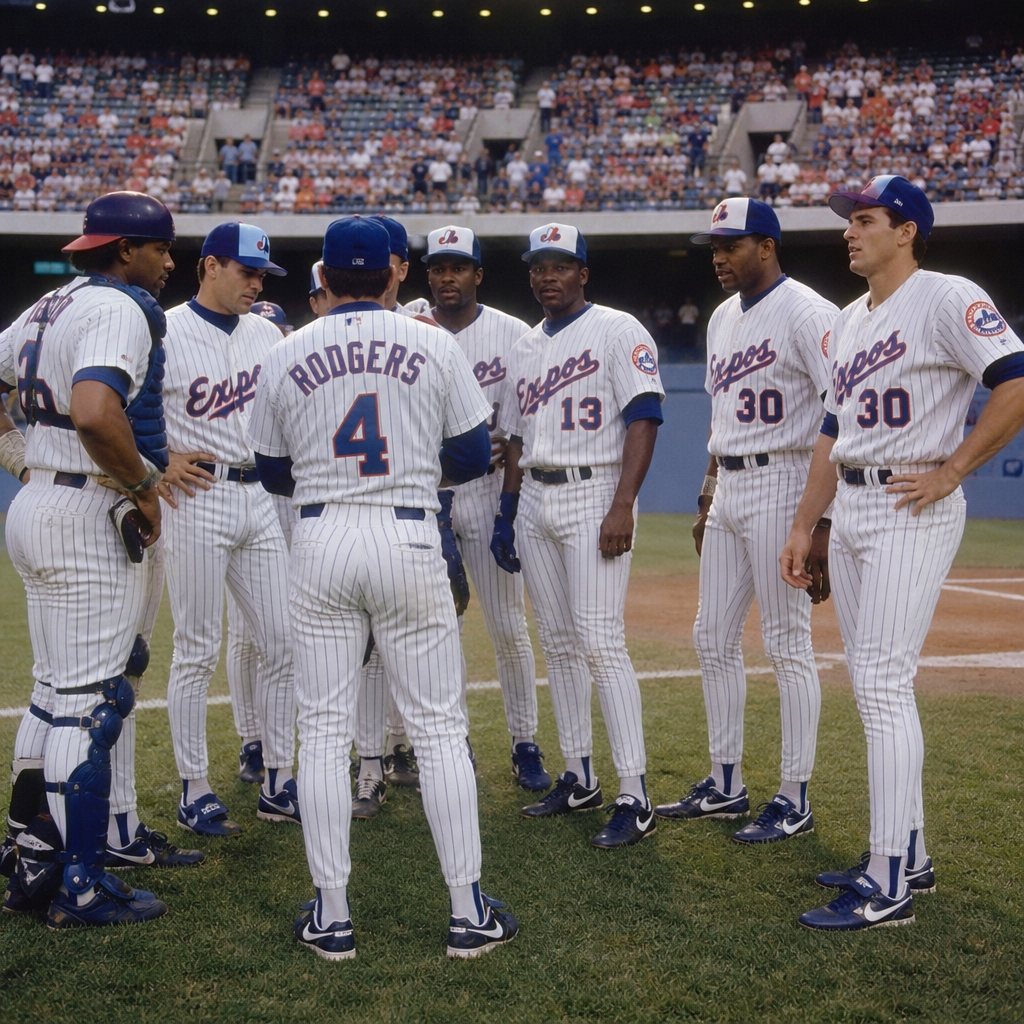
The 1994 Montreal Expos remain one of baseball’s clearest what-ifs, a team strong enough to alter franchise history yet denied a full ending by the strike that wiped out the World Series. For readers exploring famous baseball teams, especially relocated and defunct franchises, the Expos are essential because they connect brilliant on-field performance, unstable economics, and the larger story of how clubs survive, move, or disappear. In practical terms, a relocated franchise changes cities but keeps its legal identity, records, and league membership, while a defunct franchise ceases operations entirely or is absorbed into another structure. The Expos fit the first category: they began in Montreal in 1969 and later became the Washington Nationals in 2005. But to understand why the 1994 club still carries such emotional weight, you have to see how unusually complete that roster looked before labor conflict stopped the season.
I have spent years reviewing old standings, game logs, payroll reports, and front-office decisions from baseball’s most unstable franchises, and the 1994 Expos stand out because they were not a sentimental underdog fluking through a hot summer. They were a disciplined, balanced, intelligently built team leading the majors at 74-40 when play stopped on August 12. Montreal held a six-game lead over Atlanta in the National League East, had the best record in baseball, and looked equipped for postseason baseball in ways that many first-place teams do not. They could score, prevent runs, catch the ball, and shorten games with elite relief. That combination is why the 1994 Montreal Expos deserve to be discussed not just as a tragic story, but as one of the great unfinished teams in baseball history.
This article serves as a hub within the broader subject of relocated and defunct baseball franchises by using the Expos as the central case study. Their rise and interruption reveal the recurring forces that define the category: ownership constraints, television revenue gaps, stadium politics, labor disputes, and the difficulty of retaining star players in smaller markets. The lesson is bigger than one season. When people ask what happened to the Montreal Expos, whether the 1994 team could have won the World Series, or why certain franchises relocate while others endure, the same interconnected answers appear. Start with a superb roster, then follow the money, the governance structure of the sport, and the calendar. The result is one of baseball’s most compelling unfinished chapters.
Why the 1994 Expos Were So Good
The simplest answer is run differential backed by real talent. Montreal scored 585 runs and allowed only 454 through 114 games, a dominant profile that usually predicts October relevance better than one-run luck or a soft schedule. Manager Felipe Alou oversaw a roster with impact players at premium positions and enough depth to avoid depending on one superstar carrying the offense. At the top, Marquis Grissom gave the club speed, center-field range, and pressure on the bases. Larry Walker provided left-handed thump, elite defense, and one of the strongest outfield arms in the game. Moises Alou delivered middle-of-the-order production with hard contact to all fields, and Cliff Floyd added emerging power. Wil Cordero, Darrin Fletcher, and Mike Lansing supplied useful support rather than empty lineup spots.
On the pitching side, the Expos paired high-end starting talent with one of the best bullpens in baseball. Ken Hill was 16-5 with a 3.32 ERA when the season stopped and had become a reliable strike-thrower capable of working deep into games. A young Pedro Martinez was not yet the fully formed Cy Young version seen later in Boston, but his stuff was already electric, and his strikeout rate signaled ace potential. Jeff Fassero gave the rotation another quality left-handed option, while Butch Henry and Kirk Rueter helped stabilize innings. At the back end, John Wetteland was a proven closer, and Mel Rojas offered overpowering relief. Montreal’s staff did not simply survive; it missed bats, limited damage, and protected leads efficiently.
Defense mattered just as much. The 1994 Expos converted athleticism into run prevention in an era before every broadcast displayed advanced tracking metrics. Watching them then, and reviewing the club now, you can see how often Montreal turned likely doubles into outs and took extra bases away from opponents. Grissom and Walker covered huge portions of the outfield, while infield execution remained clean enough to support a pitching staff built on attacking the zone. Modern metrics such as defensive runs saved were not available in real time, but the observational record and team results point the same way: Montreal prevented runs with range, instincts, and arm strength. That is often the difference between a nice first-place team and a genuine championship threat.
The Strike That Froze a Pennant Race
The 1994-95 Major League Baseball strike began on August 12, 1994, after long-running labor conflict between owners and the Major League Baseball Players Association escalated over salary structures, revenue sharing, and management’s push for a salary cap. The regular season was eventually canceled on September 14, and for the first time since 1904 there was no World Series. For Montreal, the timing was devastating. Unlike clubs with longer windows or bigger payrolls, the Expos had built a contender that was unlikely to stay intact for financial reasons. The strike did not merely pause a season; it effectively erased the best chance that franchise ever had to win a championship.
People often ask whether the Expos were truly the best team in baseball or simply leading when everything stopped. The evidence supports the stronger claim. They owned the majors’ best record, had a plus-131 run differential, and were playing excellent baseball against strong competition. Their Pythagorean profile aligned with their actual record, suggesting they were not living on unsustainable luck. They were also built for the new postseason format that 1994 was supposed to introduce, which included division series play. A club with athletic defense, varied offense, and multiple power arms usually travels well in October because it can win low-scoring games and still break one open late.
At the same time, certainty would be dishonest. Great teams lose short series constantly. The Braves still had Greg Maddux, Tom Glavine, and John Smoltz. Cincinnati, Houston, and the Dodgers all had enough talent to create a difficult path, and the American League featured strong clubs as well. But that uncertainty should not dilute the main point. Montreal had earned favorite status. The strike did not rob fans of a sentimental dream; it removed a credible championship contender from the bracket entirely. That distinction matters when ranking the greatest teams that never finished the job.
The Financial Trap Behind the Team
The tragic force beneath the 1994 story was economics. Montreal drew well at moments, especially during contention, but the franchise operated with structural disadvantages that were becoming harder to overcome in the 1990s. Olympic Stadium, while iconic in scale, was a poor baseball environment in many respects: inconsistent attendance atmosphere, awkward sightlines, and limited revenue opportunities compared with newer parks designed around premium seating, suites, and sponsor integration. Canadian currency fluctuations worsened payroll pressure because player salaries were paid in U.S. dollars. Local television revenue also lagged behind larger American markets, and baseball’s broader revenue-sharing system was not yet robust enough to close the gap.
After the strike, ownership faced the same problem many vulnerable franchises face after a breakthrough season: how do you pay for success when success increases future salary obligations faster than revenue grows? Montreal answered by shedding talent. Walker left as a free agent after 1994 and became a superstar in Colorado. Wetteland departed. Ken Hill was traded during the season’s aftermath. Marquis Grissom was later moved as well. The Expos still developed excellent players, but the cycle kept repeating. They were forced to convert established talent into financial flexibility or younger assets before contention windows fully matured.
This pattern links the Expos to the broader study of relocated and defunct franchises. Teams rarely move because of one bad season. They move after years of constrained revenue, uncertain stadium situations, weak political support, ownership fragmentation, and fading public trust. The Expos are a textbook case because the 1994 club proved fan interest could rise when the product was elite, yet one great roster was not enough to solve institutional weaknesses. Baseball history contains several similar examples, from the Kansas City Athletics before Oakland to the Seattle Pilots before Milwaukee, where competitive flashes could not stabilize the business model.
Key Players Who Defined the Season
The roster’s star power is easier to appreciate now because several players went on to broader fame. Larry Walker hit .322 with power, plate discipline, and Gold Glove-caliber defense, then later reached the Hall of Fame. Marquis Grissom was one of the game’s best leadoff weapons, blending speed with surprising extra-base impact. Moises Alou hit .339 in 1994 and gave the lineup a relentless run-producing presence. Pedro Martinez, still early in his career, posted a 3.42 ERA with dominant strikeout ability that hinted at future greatness. Felipe Alou, meanwhile, managed personalities and roles with unusual steadiness, a skill often overlooked when discussing talented teams.
| Figure | 1994 Role | Why It Mattered |
|---|---|---|
| Felipe Alou | Manager | Balanced a deep roster, optimized roles, and kept the club focused through pressure. |
| Larry Walker | Right fielder | Middle-order production, elite defense, and arm strength changed games on both sides. |
| Marquis Grissom | Center fielder | Set the offensive tone and anchored outfield range critical to run prevention. |
| Moises Alou | Left fielder | Provided high-average impact hitting that sustained rallies and punished mistakes. |
| Ken Hill | Starting pitcher | Delivered ace-level results and dependable innings atop the rotation. |
| Pedro Martinez | Starting pitcher | Supplied swing-and-miss dominance that gave Montreal postseason-caliber upside. |
What made this group special was fit. Plenty of good teams collect stars without resolving lineup balance, defensive alignment, or bullpen leverage. Montreal aligned its pieces well. The club had left-right balance, speed without depending exclusively on stolen bases, and enough pitching variety to handle different opponents. In my review of comparable teams from the era, that coherence stands out. They looked built by baseball people who understood roster interaction, not just isolated talent grades. That is one reason the season still feels alive in memory rather than archived as a random first-place finish.
From Montreal to Washington: The Franchise Aftermath
The strike did not immediately relocate the Expos, but it accelerated franchise decline. Attendance fell sharply in later years, ownership instability deepened, and stadium efforts repeatedly stalled. In 2002, Major League Baseball itself purchased the Expos from Jeffrey Loria, John Henry, and other partners in an extraordinary move that underscored how precarious the club had become. For a period, Montreal even split “home” games to San Juan, Puerto Rico, an arrangement that illustrated both the desperation to find revenue and the absence of a durable local solution. In 2005, the franchise officially relocated to Washington, D.C., and became the Nationals.
That relocation matters within the larger map of famous baseball teams because it shows how baseball treats continuity. The Nationals are legally the same franchise as the Expos, just as the San Francisco Giants remain the old New York Giants franchise and the Los Angeles Dodgers remain the old Brooklyn Dodgers franchise. Records, lineage, and player history carry over even when civic identity changes. Yet emotionally, fans do not experience continuity so cleanly. Montreal supporters lost a major league club, while Washington gained one with inherited history that many local fans did not live through. Franchise continuity is a legal fact and a cultural compromise.
As a hub for relocated and defunct franchises, the Expos story also helps separate categories that casual readers often blend together. The Expos, Dodgers, Giants, Braves, Athletics, and Twins/Senators lines involve relocation. The Federal League clubs, the nineteenth-century Troy Trojans, and other vanished teams fit true defunct status. Understanding that distinction makes baseball history easier to navigate, especially when tracing records, uniforms, and Hall of Fame associations. The 1994 Expos sit at the center of that conversation because they were both a great team and a future relocation case, which gives their story unusual explanatory power.
How the 1994 Expos Compare With Other Lost Teams
Baseball has several famous unfinished or displaced clubs, but the 1994 Expos occupy a rare tier. The 1951 St. Louis Browns had little resemblance to contenders and eventually moved to Baltimore. The 1964 Colt .45s became the Astros through rebranding, not relocation. The 1981 Oakland Athletics started fast but were not denied a whole postseason by labor shutdown. The most meaningful comparison is with teams whose windows closed suddenly: the 1981 Reds missing the playoffs despite the best overall record in their division-era split season, or the 2001 Mariners winning 116 games but not the pennant. Montreal belongs in that family of great, incomplete outcomes.
What makes the Expos more haunting is that the interruption aligned with franchise fragility. Many excellent teams lose and come back the next year with most of the core intact. Montreal had no such safety net. Once the strike eliminated the postseason, the organization’s financial reality all but guaranteed roster erosion. That is why older fans speak of 1994 with a different tone than they use for ordinary playoff heartbreak. There was no clean defeat to absorb, no final out, no opponent celebrating on Montreal’s field. There was only suspension, followed by dispersal. If you are building a reading path through relocated and defunct franchises, this is the case that best merges competitive excellence with organizational vulnerability.
The strongest takeaway is simple: the 1994 Montreal Expos were not just a memorable anomaly but a historically significant team at the intersection of talent, labor, and franchise instability. They showed how a brilliantly assembled roster can still be overtaken by forces outside the foul lines, and why the history of relocated and defunct clubs cannot be told only through city moves and ownership transactions. It must also include the seasons that gave those franchises meaning. Montreal’s best club led baseball in wins, looked built for October, and never received its chance to finish. That absence is exactly why the team endures in serious baseball discussion.
For readers using this page as a hub within famous baseball teams, the Expos provide the ideal starting point for understanding lost baseball identities. Their story touches relocation, small-market economics, labor history, player development, stadium policy, and fan memory without reducing any of them to cliché. If you want to go deeper into relocated and defunct franchises, follow this thread into the Washington Nationals lineage, the Brooklyn Dodgers, the New York Giants, the Seattle Pilots, and the original Washington Senators. Begin with the 1994 Montreal Expos, because once you understand why that team never got to finish, the rest of this subtopic becomes much clearer.
Frequently Asked Questions
Why are the 1994 Montreal Expos considered one of baseball’s greatest “what-if” teams?
The 1994 Montreal Expos are widely viewed as one of baseball’s biggest “what-if” stories because they were having a remarkable season when the players’ strike abruptly stopped the year before it could be completed. Montreal finished with a 74-40 record, the best mark in Major League Baseball at the time play was halted, and the club had built that success with a balanced roster rather than one isolated superstar carrying the team. They had excellent starting pitching, a deep bullpen, strong defense, speed, and a lineup that could score in multiple ways. In other words, this was not a fluke first-place team hanging on for dear life; it looked like a legitimate championship contender.
What makes the question so enduring is that the strike canceled the postseason and the World Series entirely, denying the Expos any chance to prove themselves in October. Fans and historians are left with projections, momentum, and educated guesses rather than a real finish. That unfinished ending matters even more because the Expos were not a glamour franchise with endless resources. They had built a winner through smart scouting, player development, and careful roster construction. Had the season played out, Montreal might have reached the World Series, transformed the franchise’s finances, and changed the long-term future of baseball in the city. Because none of that could be tested on the field, the 1994 Expos remain a perfect example of how timing, labor conflict, and economic realities can freeze a great team in place as a permanent baseball mystery.
Who were the key players that made the 1994 Expos so special?
The 1994 Expos were special because they combined rising young stars, established contributors, and excellent pitching into a roster with very few weak spots. In the lineup, outfielder Moisés Alou was one of the club’s most important offensive forces, producing at an elite level and giving Montreal a dependable middle-of-the-order bat. Marquis Grissom brought speed, defense, and energy at the top of the lineup and in center field, while Larry Walker offered all-around excellence with power, athleticism, and a strong arm. Delino DeShields added speed and table-setting ability, and the lineup as a whole fit together well rather than relying on one-dimensional sluggers.
On the pitching side, the Expos were particularly impressive. Ken Hill was having an outstanding season and emerged as a major reason the team sat atop the standings. Young Pedro Martínez was beginning to show the brilliance that would later make him a legend, and his presence gave the staff a dynamic, high-upside arm. Jeff Fassero and Butch Henry provided important depth, helping the rotation avoid the kind of drop-off that can sink even talented clubs. In the bullpen, John Wetteland gave Montreal a reliable closer who could lock down late leads. Just as importantly, the team was managed well by Felipe Alou, whose steady leadership helped maximize a roster built on versatility, athleticism, and strong fundamentals. The result was a club that looked complete, which is exactly why its interrupted season still resonates so deeply.
Did the strike really change the future of the Montreal Expos franchise?
Yes, the strike is often seen as a turning point not just for the 1994 team, but for the future of the entire franchise. Montreal was already operating under financial pressure, and like many smaller-revenue clubs, it depended heavily on smart management, fan engagement, and the possibility of competitive momentum translating into stronger attendance and greater stability. A deep postseason run in 1994 could have energized the market, increased revenue, strengthened the club’s identity, and perhaps given ownership and baseball officials more reason to invest in the franchise’s long-term future in Montreal.
Instead, the strike wiped out that opportunity. The season ended without a playoff chase, without October gate receipts, and without the emotional payoff that might have turned a great regular season into a lasting civic and commercial breakthrough. In the years that followed, the Expos were forced to make difficult financial decisions, and several important players from the 1994 club were eventually traded or lost. That pattern fed a sense of instability that became part of the franchise’s identity. While it would be too simplistic to say the strike alone caused the Expos to decline or eventually relocate, it unquestionably removed what may have been their best modern chance to alter the story. For that reason, 1994 is often remembered not only as a lost pennant race, but as the moment when Montreal’s baseball future started to slip further out of reach.
How do the 1994 Expos fit into the bigger story of relocated and defunct baseball franchises?
The 1994 Expos matter far beyond one interrupted season because they illustrate how fragile a franchise can be when great on-field performance is not matched by long-term economic security. In baseball history, relocated and defunct franchises often share a common pattern: success on the field may create hope, but it does not always solve deeper problems involving ownership, stadium issues, media revenue, market size, or league politics. The Expos are a textbook case. They were talented enough to matter nationally, but the organization still faced structural pressures that could not be fixed by wins alone, especially once the strike prevented the team from converting its momentum into a larger breakthrough.
This is why the Expos remain essential in discussions of famous baseball teams, especially for readers interested in clubs that moved, disappeared, or were transformed by business realities. The franchise ultimately relocated and became the Washington Nationals, which means the Expos’ legacy lives on in a different city under a different identity. That transition highlights an important truth about relocated franchises: the team’s legal and organizational history continues, but the emotional history is split between places. Montreal fans remember what was lost, while Washington inherited the franchise’s future. The 1994 team sits at the center of that divide. It represents the peak of what Montreal baseball could be, while also foreshadowing how vulnerable even an excellent team can become when larger economic forces are working against it.
Would the Expos have won the World Series in 1994 if the strike had not happened?
No one can answer that with certainty, but it is entirely reasonable to say the Expos had a real and credible chance to win the World Series. They had the best record in baseball when the season stopped, and they looked built for postseason success. Strong pitching is often the foundation of October baseball, and Montreal had that. They also had athletic defenders, lineup balance, and enough offensive talent to compete against elite clubs. They were not simply leading their division by accident; they had the profile of a team that could beat anyone in a short series.
At the same time, baseball’s postseason is famously unpredictable. Great regular-season teams lose every year because of a cold streak, one dominant opposing pitcher, an injury, or a couple of badly timed mistakes. The Expos would have faced strong competition from other National League contenders and, if they had reached the World Series, from the American League champion as well. So the most honest answer is that they were not guaranteed a title, but they absolutely belonged in the top tier of likely champions. That distinction matters. The tragedy of 1994 is not merely that fans can imagine a championship; it is that a team good enough to earn its chance was never allowed to take that chance at all. That unresolved possibility is exactly why the Expos remain one of the most haunting teams in baseball history.