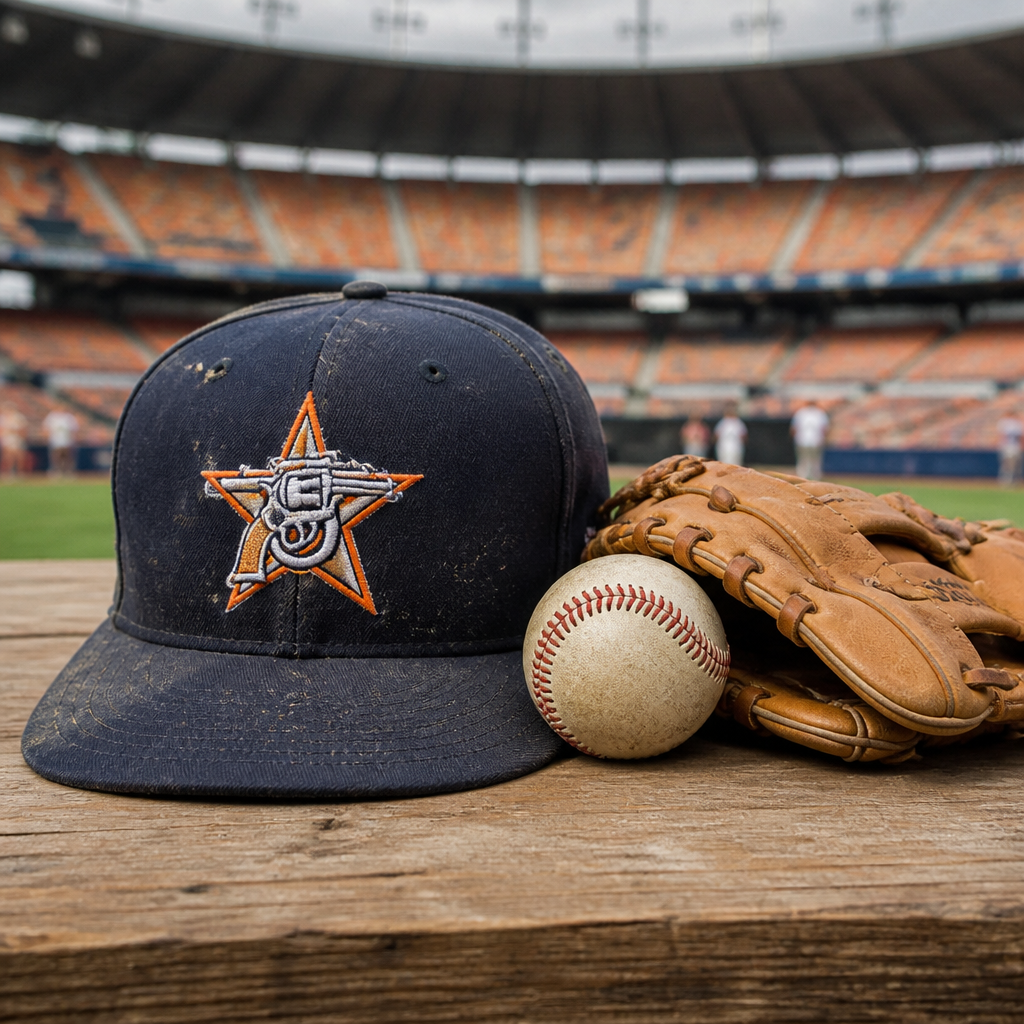
The Houston Colt .45s opened National League baseball in Texas with a name, look, and ballpark experience that sold the state’s frontier mythology as aggressively as any expansion club in modern sports. Before the Houston Astros became identified with the Astrodome, space-age branding, and later American League success, the franchise began in 1962 as the Colt .45s, a team created to prove that major league baseball could thrive in the South and in one of the nation’s fastest-growing metropolitan markets. For anyone studying famous baseball teams, relocated and defunct franchises, or the business of expansion, the Colt .45s matter because they sit at the intersection of civic ambition, branding strategy, and league realignment.
The term “defunct franchise” usually describes a club that folded, merged, or permanently ceased operations, while a “relocated franchise” refers to a team that kept its organizational history but moved to a new city. The Colt .45s are a useful edge case. The franchise did not relocate and it did not die; instead, it rebranded into the Astros after only three seasons. That makes Houston a natural hub topic for the broader subcategory of relocated and defunct franchises, because the club’s early history touches many of the same forces that drive baseball change: expansion politics, stadium economics, territorial rights, media market growth, and the need to reshape identity without breaking continuity. When readers move from this page to clubs such as the Brooklyn Dodgers, Montreal Expos, Seattle Pilots, St. Louis Browns, or Washington Senators, they will see recurring patterns.
I have always found the Colt .45s especially revealing because their story is not just about wins and losses. It is about how leagues select cities, how owners sell a brand to casual fans, and how a temporary identity can still leave a permanent mark. Houston’s first big league executives needed a name that instantly communicated Texas. They chose the Colt .45, one of the most famous firearms in American history, and built a visual system around Western colors, gunsmoke imagery, and the symbolism of the frontier. Yet even as the team leaned into the Old West, local boosters were planning a futuristic indoor stadium that would soon make the name feel outdated. That tension between frontier past and technological future explains why the Colt .45s existed, why they disappeared, and why their short life still belongs in any serious baseball history.
How Houston Won a National League Expansion Franchise
Houston entered the majors as part of the National League’s 1962 expansion, alongside the New York Mets. The key figure was Judge Roy Hofheinz, a charismatic Houston politician and businessman who understood both spectacle and leverage. Major League Baseball in the late 1950s and early 1960s was under pressure to expand beyond its traditional northeastern and midwestern footprint. The Dodgers and Giants had already moved to California in 1958, proving that geographic assumptions could be overturned. Texas, with its population growth, oil wealth, and rising corporate class, looked increasingly attractive. Houston in particular offered civic energy, business support, and a willingness to build infrastructure.
League expansion was never only about fan demand. Owners cared about market size, television potential, political influence, and whether a city could support a modern stadium. Houston checked those boxes. The city had minor league history through the Houston Buffaloes, but more importantly, it had leaders prepared to spend. Hofheinz and his partners secured the franchise for a reported expansion fee of $1.8 million, a significant sum at the time. Their mission was bigger than fielding a team. They had to convince skeptical executives and the national baseball audience that major league baseball belonged in a hot-weather, football-driven region far from the sport’s old power centers.
This is where Houston connects to the wider relocated and defunct franchise landscape. Baseball history repeatedly shows that cities win or lose teams based on political organization and facility plans as much as tradition. Milwaukee gained the Braves because of county stadium readiness. Kansas City inherited the Athletics after the Philadelphia move. Seattle briefly got the Pilots before weak finances and stadium trouble pushed the club to Milwaukee as the Brewers. Montreal lost the Expos after years of ownership instability and stadium uncertainty. Houston avoided that fate because from the start, its ownership group understood that survival in Major League Baseball required long-term structural thinking, not just novelty.
The Frontier Brand: Why the Team Was Called the Colt .45s
The Houston Colt .45s name was direct, memorable, and unmistakably Texan. It referenced the Colt Single Action Army revolver, often mythologized as “the gun that won the West.” In branding terms, it was perfect for 1962: a short, punchy name that instantly signaled regional identity to local fans and to a national audience that associated Texas with ranching, independence, and frontier lore. The uniforms used navy and orange, with an orange pistol motif that became one of the more distinctive visual marks among expansion-era clubs. Even the mascot logic was theatrical. A team in a new market needed immediate recognizability, and the Colt .45s had it.
There were drawbacks. Firearms branding would be controversial in later decades, but the bigger short-term issue was legal and commercial. Colt Firearms objected to the use of the name, and while the baseball club initially proceeded, the possibility of trademark disputes added friction. More important, Houston’s ownership was already envisioning the domed stadium that would open in 1965. A futuristic indoor venue called the Astrodome paired awkwardly with a 19th-century gunfighter identity. As the city marketed itself as modern, scientific, and space-oriented, the Colt .45s name began to feel less like a foundation and more like a bridge.
This kind of tension is common among relocated and renamed teams. Franchises often launch with imagery designed to create instant local attachment, then pivot when circumstances change. The Tampa Bay Devil Rays shortened to Rays to broaden meaning and modernize the brand. The Anaheim Angels, California Angels, and Los Angeles Angels cycled through geographic identities to chase market relevance. The Cleveland Naps became the Indians after a star-driven nickname lost context. In each case, naming reflected business strategy, not just sentiment. Houston’s Colt .45s identity was successful in its moment because it gave a brand-new franchise a personality before it had a record, stars, or history.
Playing at Colt Stadium and Building an Audience
Before the Astrodome, the Colt .45s played at Colt Stadium, an interim ballpark built next to the future dome site. It seated around 32,000, was assembled quickly, and became infamous for Houston heat and humidity. Summer games could be punishing. Fans dealt with temperatures often above 90 degrees, dense air, mosquitoes, and little relief from the sun. Visiting players complained openly. Yet that discomfort is central to the club’s story, because it strengthened the political and commercial case for the domed stadium Hofheinz championed. If fans and media experienced the climate problem firsthand, then the promise of air-conditioned baseball became a powerful selling point rather than a speculative luxury.
Attendance reflected both curiosity and challenge. The Colt .45s drew well for an expansion team in their inaugural season, topping one million fans in 1962, a strong result that placed them ahead of some established clubs. That mattered. New franchises need evidence of latent demand, and Houston produced it despite temporary facilities. On the field, manager Harry Craft guided a roster built through expansion drafting, trades, and patient talent acquisition. Like most new clubs, the Colt .45s were thin on high-end depth, but they were not a joke. They finished 64-96 in 1962, better than the 40-120 Mets, and showed stretches of competitiveness that helped legitimize the market.
| Topic | Houston Colt .45s Example | Why It Matters to Franchise History |
|---|---|---|
| Expansion strategy | National League placed a team in Houston in 1962 | Shows how leagues targeted high-growth Sun Belt markets |
| Temporary venue | Colt Stadium was used before the Astrodome opened | Illustrates how stadium transitions shape team identity and finances |
| Branding pivot | Frontier-themed Colt .45s became the space-themed Astros | Demonstrates rebranding without relocation or loss of franchise continuity |
| Hub relevance | Connects to Expos, Pilots, Browns, and Senators stories | Reveals recurring patterns behind moves, renamings, and franchise instability |
Early Rosters, Notable Players, and On-Field Identity
The best-known early Colt .45s player was Rusty Staub, the left-handed hitting outfielder nicknamed “Le Grand Orange.” Signed as a teenager and brought to the majors quickly, Staub became the first genuine offensive star in franchise history. He hit .224 as a 19-year-old rookie in 1963, then developed into a cornerstone, making the club more than a temporary curiosity. Another foundational figure was Bob Aspromonte, the third baseman selected first in the expansion draft. Roman Mejias provided power in the first season, and pitchers such as Turk Farrell, Ken Johnson, and Don Nottebart gave the team credible major league innings.
Ken Johnson’s 1964 no-hitter remains one of baseball’s strangest games and captures the oddity of early Houston history. Johnson threw a complete-game no-hitter against the Cincinnati Reds and still lost 1-0 because of errors and unearned runs. It is the only complete nine-inning no-hitter by a losing pitcher in Major League Baseball history. That single game helps explain why the Colt .45s remain historically interesting even without pennants or iconic postseason moments. Their short run produced episodes that serious baseball readers still cite because they reveal how unpredictable the sport can be.
Expansion teams usually struggle because talent distribution is unforgiving. Existing clubs protect core players, leaving newcomers to piece together rosters from older veterans, blocked prospects, and role players. Houston dealt with exactly that constraint. However, the organization was more disciplined than some failed or unstable franchises. It invested in scouting, signed international talent, and sought a developmental base rather than chasing empty headlines. That patient approach would matter after the name change, when the same franchise gradually built toward respectability. Readers exploring other defunct and relocated clubs should note the contrast: franchises that lack coherent player development often become financially and competitively fragile, which increases pressure for relocation or sale.
From Colt .45s to Astros: Rebranding for the Astrodome Era
The official transition to the Houston Astros came in 1965, timed to the opening of the Astrodome, the world’s first domed major league sports stadium. The new name drew from Houston’s role in the nation’s space program and the nearby Manned Spacecraft Center, later named for Lyndon B. Johnson and now known as the Johnson Space Center. The shift was logical and strategic. A team playing in an indoor stadium marketed as the “Eighth Wonder of the World” needed a name that suggested innovation, not saddle leather. Astros did exactly that. It aligned the baseball club with the city’s forward-looking identity and gave the franchise a more durable long-term brand.
Importantly, this was not a new franchise. The Colt .45s and Astros are the same continuous organization, sharing records, players, and lineage. That distinction matters in baseball history because fans often confuse rebranding with replacement. The Astros’ all-time history begins in 1962, not 1965. This is similar to how the Devil Rays remain part of Rays history or how the Browns’ lineage continued after relocation as the Baltimore Orioles. Understanding continuity is essential when discussing relocated and defunct franchises, because names change more easily than legal entities, ownership structures, or statistical records.
The rebrand also demonstrates how stadiums can force identity decisions. The Astrodome was not just a venue; it was a statement about controlled environments, entertainment packaging, and civic modernity. Once that building existed, every part of the baseball presentation had to match it, from logo design to public relations language. Houston’s executives understood this clearly. In practical terms, they converted a team born as a regional symbol into one that could represent national ambition. That strategic flexibility helped the franchise endure while other clubs in less organized markets drifted toward crisis.
What the Colt .45s Teach About Relocated and Defunct Franchises
As a hub topic within famous baseball teams, the Colt .45s are valuable because they help organize the larger story of franchise instability and reinvention. Start with the basic categories. Some clubs relocated but kept continuity, such as the Braves moving from Boston to Milwaukee to Atlanta, or the Senators becoming the Minnesota Twins. Some franchises relocated and later rebranded, like the Seattle Pilots becoming the Milwaukee Brewers. Some effectively disappeared through contraction, merger, or replacement in earlier eras, such as the Federal League clubs. Others stayed in place but changed names to match shifting civic identity, as Houston did. These are different outcomes, but the drivers are often the same.
The first driver is stadium viability. Ballparks influence revenue, attendance, local politics, and long-term ownership confidence. The second is market alignment: leagues want cities with population growth, corporate sponsorship potential, and media reach. The third is branding fit. A team identity must work on tickets, broadcasts, merchandise, and civic messaging. The fourth is governance. Stable ownership and competent front-office planning can rescue a weak early product, while mismanagement can ruin a promising market. Houston succeeded because it had all four elements moving in the same direction by the mid-1960s.
For readers exploring this sub-pillar further, the next useful comparisons are the Montreal Expos and Washington Nationals for relocation continuity, the Brooklyn Dodgers for emotionally disruptive moves, the St. Louis Browns for competitive and financial decline preceding relocation, and the Seattle Pilots for how quickly poor planning can unravel a franchise. The Colt .45s belong in that conversation not because they vanished, but because they show the alternative path: a club can adapt before instability becomes existential. That is the frontier-themed beginning of the Astros, and it remains one of baseball’s clearest examples of branding, venue strategy, and league expansion working together. If you are building out your understanding of famous baseball teams, continue with the related relocated and defunct franchise histories and trace the patterns city by city.
Frequently Asked Questions
Why were Houston’s first National League team called the Colt .45s instead of the Astros?
The franchise began play in 1962 as the Houston Colt .45s because the original identity was built around Texas frontier imagery, not the space-age identity that would come later. Team owners wanted a name that instantly connected with popular ideas about Texas in the national imagination: cowboys, the Old West, and rugged independence. The “Colt .45” name referenced the famous revolver associated with frontier mythology, and it gave the club a bold, unmistakably regional brand at a time when expansion teams needed to stand out quickly. Houston was entering Major League Baseball as a new National League market, and the organization leaned heavily into symbols that would feel familiar, dramatic, and marketable.
The change to “Astros” happened later, in 1965, when the team moved into the Astrodome. By then, Houston was increasingly associated with science, technology, and the emerging space program, making the old western identity feel less aligned with the city’s future-facing image. Rebranding as the Astros allowed the franchise to connect itself to a modern vision of Houston while still preserving a distinctive local identity. In other words, the Colt .45s represented the club’s frontier-themed beginning, while the Astros reflected the city’s ambition and transformation during the 1960s.
How did the Colt .45s use frontier-themed branding to establish themselves in Texas?
The Colt .45s used frontier branding as a full-scale marketing strategy, not just a team nickname. Everything about the club’s early public image emphasized Texas mythology. The name itself was overtly western, and the team’s visual identity, promotional materials, and game-day atmosphere reinforced that message. The organization presented itself as a baseball version of the Texas frontier, helping create an instantly recognizable identity in a state that had never before hosted National League baseball. For a new franchise trying to capture attention, this was a powerful way to build cultural familiarity and fan loyalty all at once.
This approach was especially effective because it matched how Texas was often sold to the rest of the country during the mid-20th century. Rather than resisting those stereotypes, the Colt .45s embraced them and turned them into spectacle. The branding suggested that seeing the team was not just attending a ballgame, but participating in a distinctly Texan experience. That mattered in Houston, one of the nation’s fastest-growing metropolitan areas, because the city was trying to prove it belonged on the national sports map. The club’s early identity helped package Houston as both proudly regional and major league worthy.
What was it like to attend a Houston Colt .45s game before the Astrodome?
Before the Astrodome era, attending a Colt .45s game meant experiencing Major League Baseball in a setting designed to feel specifically Texan and intentionally theatrical. The team played at Colt Stadium, an outdoor ballpark that became known as much for its atmosphere and climate as for the baseball itself. Fans did not get the climate-controlled, futuristic setting later associated with Houston baseball. Instead, they got an open-air experience shaped by heat, humidity, and the novelty of big-league baseball arriving in Texas. That combination made games memorable and helped define the team’s earliest years.
The ballpark experience was also part of the franchise’s larger effort to sell a frontier-flavored identity. This was not a generic expansion team presentation. The Colt .45s wanted fans and media to feel that Houston’s new club represented something different from older National League cities. The spectacle, branding, and local pride all worked together. At the same time, the harsh summer conditions at Colt Stadium made clear why Houston would later embrace the enclosed, revolutionary Astrodome. In that sense, the Colt .45s era sits at an important transition point: it was rooted in outdoor frontier pageantry, but it also set the stage for one of the most modern developments in sports architecture.
Why was the success of the Colt .45s important for Major League Baseball in the South?
The Colt .45s were important because they helped demonstrate that Major League Baseball could expand beyond its traditional northeastern and midwestern strongholds and succeed in the South. When Houston entered the National League in 1962, it represented a major test case. The city was growing rapidly, but the region did not yet have an established history as a major league baseball center. If Houston could support a new team, attract fans, and sustain public interest, it would strengthen the argument that professional baseball’s future depended on following population growth into new markets.
The franchise’s presence had symbolic value as well as practical importance. It signaled that Texas was no longer peripheral to the major league landscape. By putting a National League club in Houston, baseball acknowledged the economic and demographic rise of the Sun Belt. The Colt .45s helped pave the way for broader confidence in southern and western expansion, proving that baseball could thrive in places once considered outside the sport’s traditional heartland. Even though the Astros name and the Astrodome often receive more attention in hindsight, the Colt .45s period was the crucial first step in establishing Houston as a permanent major league city.
How did the Colt .45s lay the foundation for the Astros franchise that followed?
The Colt .45s laid the foundation for the Astros by doing the hardest work any expansion team faces: creating a fan base, building local credibility, and proving that the market could support major league baseball. Long before Houston became nationally identified with the Astrodome, artificial turf debates, or later American League success, the organization had to establish itself from scratch. The Colt .45s years gave the franchise its first supporters, its first traditions, and its first sense of place within the city. Those early seasons created the emotional and commercial base that made the later Astros identity possible.
Just as importantly, the Colt .45s established a pattern that would define the franchise for decades: tying the team’s brand closely to Houston’s civic self-image. In the beginning, that meant frontier symbolism and Texas mythology. Soon after, it meant space-age optimism and futuristic architecture. The names changed, and the imagery changed, but the underlying strategy remained consistent. The team reflected how Houston wanted to present itself at a given historical moment. That is why the Colt .45s are more than a trivia answer or a pre-Astros footnote. They represent the original version of Houston major league baseball, the moment when the franchise first connected local identity, regional ambition, and national sports relevance.