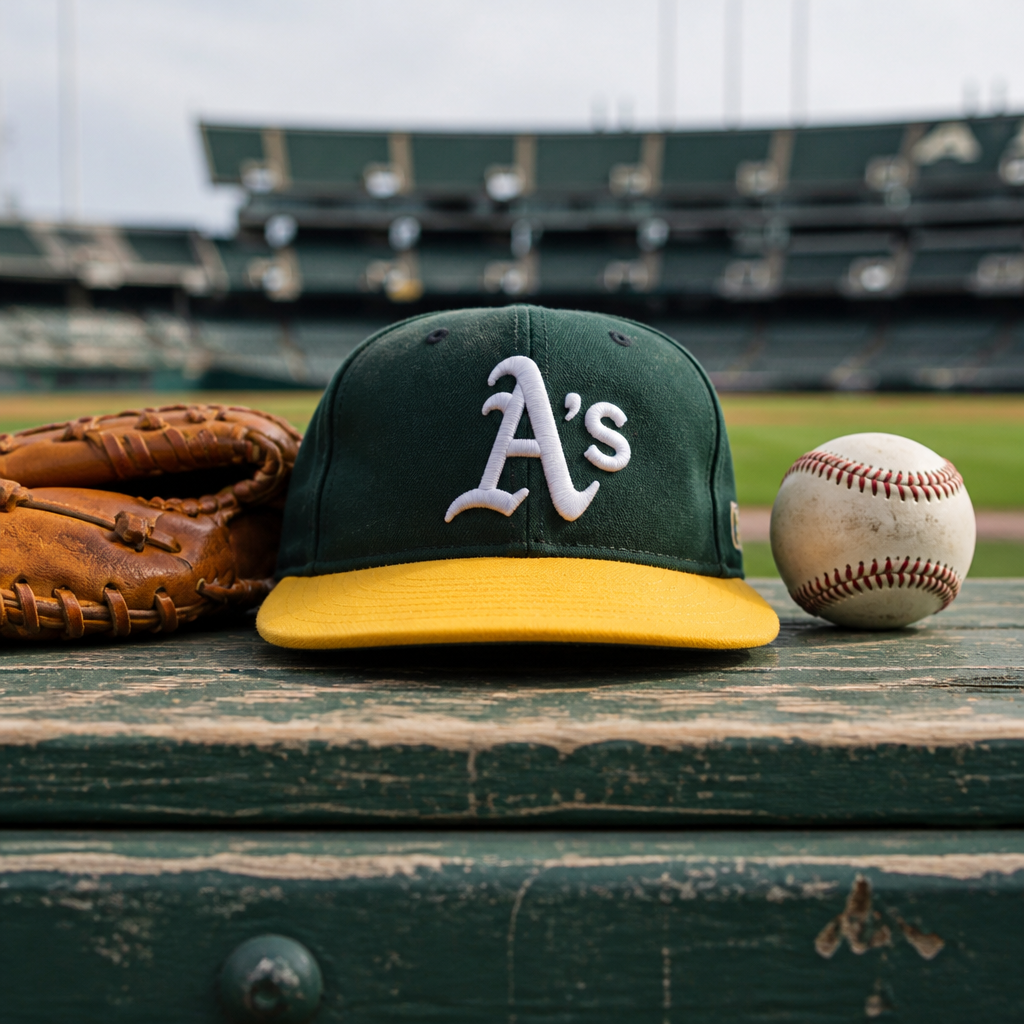
The Kansas City Athletics occupy a distinctive place in baseball history because they connect three eras of one American League franchise: the championship-rich Philadelphia years, the often turbulent Kansas City interlude, and the longer, better remembered run in Oakland. For readers exploring relocated and defunct franchises, this team is a vital case study in how ownership, stadium politics, television economics, farm systems, and league expansion can reshape a club’s identity. The Kansas City Athletics existed from 1955 through 1967, yet their significance reaches far beyond those thirteen seasons. They reveal why franchises move, how local fan support can be strong even when results are poor, and why the line between failure on the field and instability off it is often direct.
In baseball terms, a relocated franchise is an existing club that changes cities while preserving its league membership, player contracts, and official statistical history. A defunct franchise, by contrast, ceases operations entirely or is absorbed in a way that breaks continuity. The Athletics were relocated, not defunct. The same franchise that won five World Series titles in Philadelphia moved to Kansas City after the 1954 season, then moved again to Oakland after the 1967 season. That continuity matters. The records of Connie Mack, Jimmie Foxx, Lefty Grove, and Eddie Plank belong to the same franchise line later represented by Kansas City figures such as Hector Lopez, Bert Campaneris, and Catfish Hunter, and then by Oakland stars from Reggie Jackson to Rickey Henderson.
I have found that many fans know the broad outline but miss the central reality: Kansas City was not merely a stopover. It was a proving ground for modern franchise movement. Municipal leaders used baseball to signal big-league legitimacy. Owners weighed attendance against stadium revenue and media growth. The American League balanced competitive concerns with territorial strategy. By studying the Kansas City Athletics, readers can understand the wider story of relocated and defunct baseball franchises, including the Boston Braves in Milwaukee and Atlanta, the Washington Senators in Minnesota and Texas, and later debates involving Montreal, Tampa Bay, and Oakland itself. This article serves as a hub by explaining the Athletics’ Kansas City chapter in full while framing the larger patterns that define baseball’s most unsettled clubs.
From Philadelphia Dynasty to Kansas City Move
The Athletics began in Philadelphia in 1901 as a charter American League franchise under Connie Mack, one of the most influential figures in baseball history. Mack managed the club for fifty seasons and built multiple winners, including pennant teams in 1902, 1905, 1910, 1911, 1913, 1914, 1929, 1930, and 1931. The franchise won World Series titles in 1910, 1911, 1913, 1929, and 1930. Yet by the 1940s and early 1950s, the baseball landscape in Philadelphia had changed sharply. The Phillies improved, cultivated stronger local identification, and benefited from a newer ballpark arrangement. The Athletics, playing in aging Shibe Park and suffering from reduced revenues, became increasingly fragile.
Ownership instability accelerated the decline. After Connie Mack’s controlling role faded, the franchise passed to a group headed by Arnold Johnson, a Chicago businessman with significant baseball real estate ties. The move to Kansas City followed the 1954 season, the same year the Philadelphia Phillies outdrew the Athletics by a large margin. Kansas City, eager for major league status after supporting a successful American Association club, Municipal Stadium, offered a ready market and political enthusiasm. The transfer was approved by American League owners, and in 1955 the Athletics opened as Kansas City’s first major league team.
The relocation reflected broader postwar trends. Teams were no longer bound permanently to eastern cities. The Braves had moved from Boston to Milwaukee in 1953 and immediately became a model for relocation success, drawing more than 1.8 million fans in their first season there. Owners noticed. Air travel improved scheduling logistics, television altered revenue expectations, and fast-growing Midwestern and West Coast cities demanded representation. In that environment, Kansas City looked promising. It had civic ambition, a baseball tradition, and a municipal willingness to upgrade facilities. On paper, the Athletics seemed well positioned to become a stable small-market American League club.
Kansas City as a Major League Baseball Market
Kansas City was not an accidental choice. For decades it had been one of the strongest minor league cities in the country, home to the Kansas City Blues of the American Association and the Negro Leagues’ Kansas City Monarchs, one of the most storied teams in Black baseball history. That background gave the city a deep baseball culture before the Athletics arrived. Municipal Stadium, originally Blues Stadium, was expanded rapidly to accommodate major league dimensions and seating capacity. The city and local business leaders treated the Athletics as a declaration that Kansas City belonged in the top tier of American sports.
Attendance in the early years supports that point. The 1955 Athletics drew more than 1.39 million fans, a substantial increase over their final Philadelphia seasons and one of the strongest attendance marks in franchise history up to that point. Even though the team finished 63–91, local curiosity and civic pride produced real support. In practical terms, Kansas City did what relocation advocates promise: it greeted the club with energy, ticket sales, and media attention. The problem was that attendance alone could not overcome flawed baseball operations and unstable ownership priorities.
Municipal Stadium itself represented both opportunity and limitation. It was serviceable and lively, but it was not a long-term revenue machine on the level later clubs would seek with premium seating, parking control, and modern concessions. The Athletics played in a venue adapted for major league use rather than purpose-built for maximizing franchise economics. That distinction matters when analyzing relocated franchises. A move can solve one problem, such as weak attendance, while leaving another intact, such as inadequate long-range facility revenue. Kansas City gained big-league baseball, but the Athletics never developed the structural advantages needed to compete consistently with wealthier, better organized rivals.
Ownership, the Yankees Relationship, and Competitive Decline
No part of the Kansas City Athletics story is discussed more than their relationship with the New York Yankees, and for good reason. Arnold Johnson had previously owned Yankee Stadium and had business ties with Yankees owners Dan Topping and Del Webb. During the 1950s and early 1960s, the Athletics made a series of trades with New York that fueled a lasting public belief that Kansas City operated as a de facto Yankee farm club. That phrase oversimplifies the legal reality, but it captures how lopsided many observers felt the arrangement had become.
Examples drove the perception. The Athletics sent pitchers Clete Boyer, Bobby Shantz, Art Ditmar, and Ralph Terry through transactions linked to the Yankees at different points, while receiving players who often provided limited long-term value. Roger Maris, one of the most important players in franchise history, was traded by Kansas City to New York after the 1959 season and then became the American League MVP in 1960 and 1961, famously hitting 61 home runs in 1961. When a relocated franchise repeatedly parts with prime talent and the beneficiary is the league’s dominant power, fans reasonably question whether competitive ambition is genuine.
| Year | Event | Why It Matters |
|---|---|---|
| 1955 | Athletics debut in Kansas City | Shows immediate fan support for a relocated franchise |
| 1960 | Charlie Finley buys the club | Begins a more aggressive, controversial ownership era |
| 1963 | Team reaches 73 wins | Suggests Kansas City could support a competitive core |
| 1967 | Final season in Kansas City | Ends the city’s first major league chapter |
| 1968 | Franchise starts play in Oakland | Confirms Kansas City was a transitional market for this ownership group |
The results were bleak. Kansas City never posted a winning record. Their best finish came in 1966 at 74–86, while several seasons sank into the 90-loss range. Poor player development, uneven scouting execution, and roster churn undermined any chance of sustained growth. Competitive weakness affects more than standings. It lowers repeat attendance, weakens radio and newspaper enthusiasm, and creates a civic narrative that the city is being used rather than served. For a hub on relocated and defunct franchises, this pattern is central: relocation can deliver an initial honeymoon, but if ownership does not invest in winning, the market’s goodwill erodes.
Charlie Finley, Rebranding, and the Road to Oakland
When Charles O. Finley purchased the Athletics in 1960, he brought energy, showmanship, and relentless self-promotion. He also brought instability. Finley is better known for the later Oakland dynasty of the early 1970s, but many of his signature habits emerged in Kansas City. He changed managers frequently, clashed with league officials, experimented with branding ideas, and treated baseball operations as both business and spectacle. In some respects he was ahead of his time. In others he made the franchise harder to trust locally because long-term commitment to Kansas City always seemed uncertain.
Finley pushed visual identity aggressively. He emphasized the elephant symbol rooted in old Athletics history, promoted bright colors, and sought attention in ways that separated the club from more conservative rivals. He also improved certain baseball decisions, especially scouting and the accumulation of young talent. Under his watch, the organization signed or developed players who would matter greatly later, including Campaneris, Hunter, Blue Moon Odom, and Sal Bando. This is one of the sharpest ironies in franchise history: some of the groundwork for Oakland’s championship teams was laid in Kansas City, even though Kansas City itself never received the payoff.
By the mid-1960s, Finley was openly seeking a more lucrative market. He explored moves to Dallas-Fort Worth, Louisville, Atlanta, and Oakland. American League owners blocked some attempts, but the direction was unmistakable. Finley argued that Kansas City lacked sufficient stadium revenue and regional growth. Civic leaders countered that the city had supported the team despite losing seasons and deserved stability. Both claims contained truth, but the baseball lesson is hard-edged: once an owner believes another market offers stronger long-term returns, fan loyalty alone rarely secures a franchise.
The move to Oakland was approved after the 1967 season. To ease political fallout, Major League Baseball promised Kansas City an expansion team, which arrived in 1969 as the Kansas City Royals. That replacement matters historically because it demonstrates a common league strategy in relocation disputes: compensate a damaged market quickly to preserve political relationships and national credibility. Kansas City lost the Athletics, but unlike cities such as Montreal after the Expos left in 2004, it regained a club almost immediately. That quick restoration is one reason the Kansas City Athletics are remembered less as a tragic ending than as a transitional chapter.
Key Players, Seasons, and Legacy in Kansas City
Although the club never won big, the Kansas City Athletics were not devoid of memorable baseball. Vic Power brought elite first-base defense and charisma. Hector Lopez provided useful offense and later became the first Black manager at the Triple-A level in the American Association. Harry Simpson, Gus Zernial, and Woodie Held had productive stretches. Norm Siebern emerged as an All-Star caliber hitter after arriving from the Yankees. Diego Seguí supplied quality innings, and Campaneris electrified the club with speed and range. Fans who attended games in Kansas City saw authentic major league talent, even if it was rarely assembled into a complete contender.
The 1963 and 1966 seasons are especially worth noting. In 1963 the Athletics finished 73–89, respectable by franchise standards in Kansas City, while younger talent hinted at better years ahead. In 1966 they won 74 games, their high-water mark in the city, with strong contributions from Campaneris, Bando, and Seguí. Those teams mattered because they proved the market did not reject baseball; rather, ownership failed to deliver continuity long enough for success to mature locally. When later Oakland teams won three straight World Series from 1972 through 1974, Kansas City fans had every reason to recognize names first cultivated in Missouri.
As a hub for relocated and defunct franchises, the Kansas City Athletics teach several durable lessons. First, franchise history is continuous even when geography changes, so fans and researchers should trace ownership, records, and player development across cities. Second, relocation alone does not solve competitive problems; it must be paired with sound scouting, player retention, and trustworthy leadership. Third, civic support can be genuine and still prove insufficient when stadium economics and ownership ambition point elsewhere. Finally, baseball’s map is shaped as much by business leverage as by tradition. If you are exploring famous baseball teams through the lens of movement and disappearance, use the Kansas City Athletics as your anchor case, then follow the connected stories of the Braves, Senators, Browns, Expos, and Negro League clubs that vanished, merged, or moved. Understanding this franchise makes the rest of baseball’s unsettled history easier to read, and more honest to remember. Start there, then keep tracing how cities and teams keep remaking each other.
Frequently Asked Questions
Why are the Kansas City Athletics so important in baseball history?
The Kansas City Athletics are important because they represent the middle chapter of one of Major League Baseball’s most mobile and revealing franchise stories. The club began as the Philadelphia Athletics, one of the American League’s great early dynasties under Connie Mack, winning multiple pennants and World Series titles. After the team’s fortunes declined and financial pressures mounted, the franchise moved to Kansas City in 1955. That relocation made the Athletics one of the earliest modern examples of how market size, stadium arrangements, local politics, and ownership priorities could dramatically alter a team’s direction.
What makes the Kansas City period especially significant is that it was not simply a stopover on the way to Oakland. It was a full major league era with its own fan base, ballpark identity, front-office controversies, and roster churn. The franchise’s years in Kansas City exposed how fragile a team’s identity could become when ownership was unsettled and long-term planning was inconsistent. Those seasons also unfolded during a transformative period in baseball, when television revenue, westward expansion, and shifting population centers were changing the sport’s economic map.
For historians, the Kansas City Athletics offer a case study in transition: from old baseball wealth in Philadelphia to an uncertain Midwestern experiment, and eventually to a more durable home in Oakland. That makes them essential to understanding not just one franchise, but the broader story of relocation and modernization in twentieth-century baseball.
Why did the franchise move from Philadelphia to Kansas City in the first place?
The move from Philadelphia to Kansas City happened because the once-proud Philadelphia Athletics had fallen into sustained decline, both competitively and financially. Connie Mack’s club had been one of baseball’s great powers earlier in the century, but by the 1940s and early 1950s the team was struggling at the gate and on the field. The Athletics also shared Philadelphia with the Phillies, whose popularity surged as the A’s faded. In practical terms, that meant the franchise had trouble generating enough local support and revenue to remain stable.
Ownership instability made matters worse. After Connie Mack’s long tenure, the franchise became entangled in family and financial disputes. The eventual sale of the club opened the door to relocation, and Kansas City emerged as an attractive destination. The city had recently lost the minor league Kansas City Blues when the Philadelphia Phillies moved their Triple-A affiliate, creating a perceived opening for a major league team. Municipal leaders in Kansas City were eager to prove the city could support big-league baseball, and they offered a prepared venue in Municipal Stadium.
The relocation also reflected a larger trend in baseball. Franchise movement, once relatively rare, was becoming more plausible as owners looked beyond traditional eastern cities. Kansas City’s central location and enthusiasm for the game made it seem like a promising new market. In that sense, the Athletics’ move was not just about one team’s troubles in Philadelphia; it was part of a broader shift in how baseball evaluated geography, markets, and future growth.
What were the biggest challenges the Kansas City Athletics faced during their years in Missouri?
The Kansas City Athletics faced a combination of structural, managerial, and reputational problems that made sustained success difficult. One major challenge was ownership. Arnold Johnson purchased the team and moved it to Kansas City, but his connections to the New York Yankees and the frequent player transactions between the two clubs led many observers to believe the Athletics were functioning more as a pipeline for Yankees talent management than as an independent competitor. Whether that perception was fully fair or not, it damaged the franchise’s credibility and frustrated fans who wanted a team built to win in Kansas City.
Another challenge was instability in baseball operations. The Athletics struggled to develop continuity in their roster, leadership, and long-term strategy. Frequent trades and changing organizational direction made it hard to build momentum. Even when the team unearthed talented players, there was often a sense that the club lacked the structure needed to turn individual ability into sustained contention. This instability fed losing seasons, and losing seasons in turn made it harder to deepen fan loyalty over time.
Stadium and market realities also mattered. Municipal Stadium gave Kansas City a major league home, but the franchise still needed stronger financial footing and a coherent identity. The team was caught between its storied Philadelphia past and an uncertain future, trying to establish roots in a city that enthusiastically welcomed baseball but could not on its own solve front-office weaknesses. By the 1960s, as other cities competed for major league clubs and relocation became increasingly thinkable, the Athletics remained vulnerable.
Finally, the franchise operated during a period when television economics and league expansion were reshaping baseball. Teams with stronger ownership groups and clearer regional strategies were better positioned to take advantage of those changes. The Athletics, by contrast, often seemed reactive rather than visionary, which is one reason the Kansas City era is remembered as turbulent despite its historical importance.
How did the Kansas City Athletics influence the eventual move to Oakland?
The Kansas City Athletics influenced the move to Oakland by demonstrating both the possibilities and the limitations of mid-century franchise relocation. Kansas City proved that a city outside the traditional northeastern power centers could host a major league club and support fan interest. In that sense, the Athletics helped validate the idea that baseball’s future lay in broader national reach. But the team’s inability to achieve long-term stability in Missouri also showed that simply placing a club in a new city was not enough. Ownership vision, revenue opportunities, and political support all had to align.
When Charlie Finley took control of the franchise, the team entered a new and highly contentious phase. Finley was ambitious, promotional, and often combative, and he sought a setting that he believed would better fit his plans. He clashed with local officials and explored relocation options as baseball itself was becoming more open to geographic change. Oakland, in the rapidly growing Bay Area and connected to the sport’s westward expansion, offered a more attractive long-term horizon from his perspective.
The Kansas City years were therefore a proving ground and a warning sign. They proved the franchise could survive outside Philadelphia, but they also revealed how exposed a team could be if civic relationships frayed and business fundamentals remained shaky. By the time the Athletics left for Oakland in 1968, the franchise had already become a symbol of baseball’s mobile modern era. That move set the stage for the Oakland period, where the team would eventually build a stronger competitive identity, especially in the early 1970s.
How should fans and historians remember the Kansas City Athletics today?
Fans and historians should remember the Kansas City Athletics as far more than a historical footnote. While the club did not produce the championship success associated with the Philadelphia dynasty or the later title-winning Oakland teams, the Kansas City era is crucial because it reveals how baseball franchises are shaped by more than wins and losses. It highlights the role of ownership agendas, civic ambition, media economics, player development, and league strategy in determining whether a team flourishes or flounders.
This period also deserves recognition for its local significance. Kansas City embraced major league baseball enthusiastically, and the Athletics helped keep the city connected to the highest level of the sport. Even though the franchise eventually left, that experience mattered. It contributed to Kansas City’s identity as a legitimate baseball city and helped set the stage for the arrival of the Royals in the expansion era. In that way, the Athletics’ presence in Missouri had a lasting impact beyond the franchise’s own record.
From a historical perspective, the Kansas City Athletics are best understood as a bridge franchise: one that links the old world of the Philadelphia Athletics to the modern, westward-facing future represented by Oakland. Their story is instructive because it is messy, transitional, and deeply revealing. For anyone studying relocated or defunct franchises, the Kansas City Athletics show that a team’s middle years can be just as important as its most celebrated beginnings or endings.