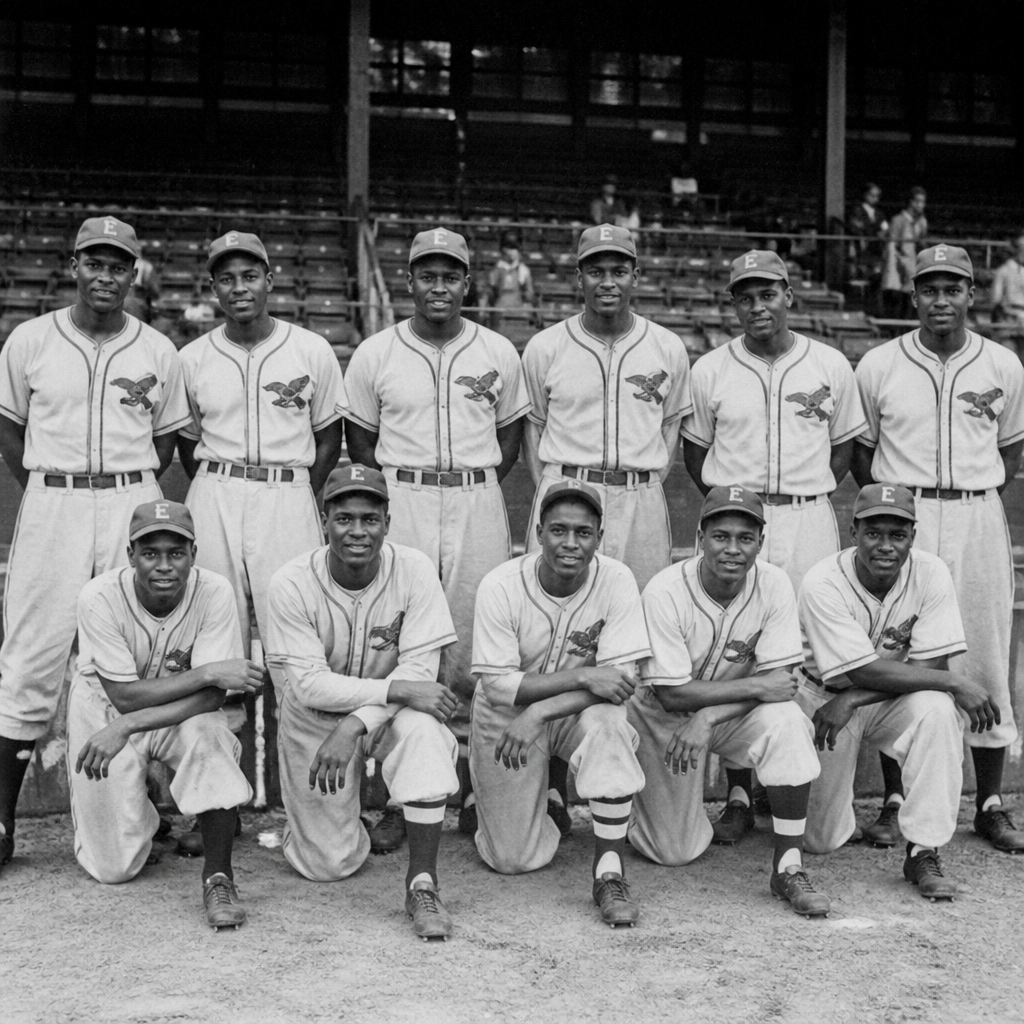
The Newark Eagles stand at the center of any serious discussion of Negro Leagues teams because their 1946 championship season captures the talent, business ingenuity, and social importance that defined Black baseball in the United States. The Newark Eagles were a professional baseball club based in Newark, New Jersey, and a flagship member of the Negro National League during the 1930s and 1940s. Their greatest triumph came in the 1946 Negro World Series, when they defeated the Kansas City Monarchs in seven games. That title made the Eagles more than a winning team. It made them a symbol of excellence at a moment when segregation still limited opportunity, media coverage, salaries, travel, and access to major league ballparks.
When people search for Negro Leagues teams, they often want more than a list of clubs. They want to know which teams mattered most, who owned them, where they played, how they developed stars, and why their stories still shape baseball history. The Newark Eagles answer all of those questions. In my experience researching historic baseball organizations, the Eagles consistently emerge as one of the best case studies because they combine elite roster construction with strong ownership and a clear championship peak. Their story also links directly to broader themes in baseball history: Black entrepreneurship, urban community identity, wartime change, postwar attendance booms, and the integration era that soon reshaped the sport.
Understanding the Newark Eagles also helps readers understand the structure of Black baseball itself. The term Negro Leagues refers to organized professional leagues created because African American and Afro-Latino players were excluded from white major leagues by an unwritten but rigid color line. Teams such as the Homestead Grays, Pittsburgh Crawfords, Birmingham Black Barons, Chicago American Giants, and Kansas City Monarchs built high-level competition despite economic instability and discrimination. The Eagles belonged in that top tier. They were not an afterthought or a regional curiosity. They were one of the strongest, best managed, and most historically significant Negro Leagues teams ever assembled.
What makes the 1946 Newark Eagles especially important is timing. The club won the Negro World Series one year before Jackie Robinson broke Major League Baseball’s color barrier with Brooklyn in 1947. That means the Eagles reached the summit just before the old Negro Leagues structure began to lose many of its brightest stars to integrated organized baseball. Their title season therefore stands as both a peak and a turning point. To understand Negro Leagues teams comprehensively, this hub starts with the Newark Eagles because their story connects competitive success, business leadership, memorable players, and enduring legacy in one remarkable franchise.
How the Newark Eagles Became a Model Negro Leagues Franchise
The Newark Eagles were founded by Abe and Effa Manley, one of the most influential ownership partnerships in baseball history. Abe Manley handled much of the business operation, while Effa Manley became an essential executive voice, promoter, advocate, and later a crucial preserver of Negro Leagues history. She remains the first woman inducted into the Baseball Hall of Fame. That fact alone tells you something important about the Eagles: this was not a loosely run barnstorming team surviving week to week. It was a professionally managed organization that understood ticket sales, scheduling, publicity, roster value, and fan experience.
Based primarily at Ruppert Stadium in Newark, the Eagles benefited from a strong Black urban fan base in northern New Jersey and the wider New York metropolitan area. Geography mattered. Newark gave the club access to dense populations, rail connections, press attention, and rivals within traveling distance. The Eagles also inherited talent streams and baseball culture from earlier eastern Black clubs. By the early 1940s, they were positioned to challenge powerhouse franchises regularly. Their rise reflected careful team building rather than a single lucky season, with ownership willing to invest in scouting and player acquisition when many clubs operated on much thinner margins.
In practical baseball terms, the Eagles were balanced. They developed strong pitching, athletic defense, and enough lineup power to win close games or slug with opponents. That balance separated them from teams built around one transcendent star. When I evaluate historic teams, I look first at whether they could win different styles of games against quality opposition. The Eagles could. They had frontline pitchers, middle-of-the-order production, speed, and players experienced in high-pressure championship settings. That roster depth became decisive in 1946 against the Monarchs, a club with its own tradition of speed, discipline, and postseason toughness.
The 1946 Newark Eagles Roster and Why It Worked
The championship Eagles featured several elite players whose names belong in any survey of Negro Leagues teams. Monte Irvin was the club’s central offensive force, a complete hitter with power, discipline, and defensive ability. Larry Doby brought athleticism and impact at a young age; within a year he would integrate the American League with Cleveland. Leon Day gave the club a dominant arm and all-around brilliance. Max Manning, Don Newcombe, and other contributors added depth that winning teams need but casual histories sometimes overlook. This was not a one-man roster. It was a championship group built with layered talent.
Monte Irvin’s importance cannot be overstated. Before his later major league career with the New York Giants, he was already one of Black baseball’s best hitters. He hit for average, drove the ball with authority, and performed in big moments. Doby, meanwhile, represented the next wave: quick, polished, and capable of changing games on both sides of the ball. Leon Day combined pitching excellence with athletic grace that old players and historians still praise. Newcombe, who later became a National League star and Cy Young winner in integrated baseball, illustrates another key point: Negro Leagues teams were full of major league caliber talent long before white baseball admitted it publicly.
Championship clubs usually have a clear baseball identity. The 1946 Eagles succeeded because they could pressure opponents in multiple ways. Their lineup forced pitchers to work. Their pitchers could miss bats and manage contact. Their defenders converted chances reliably. They also played with the urgency of a team aware of its opportunity in a rapidly changing baseball landscape. Postwar attendance was strong, and the Negro World Series had major visibility in Black newspapers such as the Pittsburgh Courier and Chicago Defender. The Eagles were built to meet that moment and had enough seasoned poise to recover when a long series turned tense.
The 1946 Negro World Series: Newark Eagles vs. Kansas City Monarchs
The 1946 Negro World Series matched two great Negro Leagues teams: the Newark Eagles from the East and the Kansas City Monarchs from the West. The Monarchs were not just another opponent. They were a dynasty-level franchise, famous for star players, disciplined management, and national reach. Beating them validated Newark’s status fully. The series went the distance, with the Eagles winning four games to three. That seven-game result matters because it shows the championship was earned against the strongest level of competition available in Black professional baseball.
Series narratives often flatten into one final score, but this matchup was a test of roster resilience. The Monarchs had experience, speed, and a deep competitive culture. Newark answered with timely hitting and pitching that held under pressure. In Game 7, the Eagles closed the job and secured the only Negro World Series title in franchise history. For Newark fans, it was the ultimate reward for years of supporting one of the East’s premier clubs. For the wider baseball world, it should have settled any debate about whether Black championship baseball matched the intensity and skill of white professional postseason play. The quality was there; the barrier was social, not athletic.
The championship also had symbolic power. In 1946, the United States had emerged from World War II, but Black Americans still faced segregated schools, housing restrictions, unequal job opportunities, and exclusion across institutions, including Major League Baseball. A Negro World Series title was therefore bigger than a sports trophy. It was proof of organizational excellence under exclusion. The Eagles won because they were smart, talented, and tough, not because they were granted equal conditions. That distinction is essential when placing the 1946 club within baseball history.
Where the Newark Eagles Fit Among the Greatest Negro Leagues Teams
Any hub page on Negro Leagues teams should place the Eagles within the wider ecosystem of Black baseball greatness. The Homestead Grays, powered by Josh Gibson and Buck Leonard, were a sustained dynasty. The Pittsburgh Crawfords assembled an extraordinary roster in the 1930s, including Gibson, Oscar Charleston, and Satchel Paige. The Kansas City Monarchs became the most durable and nationally recognized Negro Leagues brand, producing stars from Paige to Robinson. The Birmingham Black Barons developed Willie Mays. The Chicago American Giants set early standards for Black professional team organization. The Newark Eagles belong in this company because of their management strength, star pipeline, eastern influence, and 1946 title.
What differentiates the Eagles is the combination of championship success and executive legacy. Some Negro Leagues teams are remembered mainly for iconic players. Others are remembered for longevity or geographic reach. Newark checks several boxes at once: elite roster quality, major championship credentials, and ownership that mattered beyond the field. Effa Manley’s role especially elevates the franchise in historical significance. She fought for fair treatment, advocated for players, and later worked to protect the record of Black baseball when too much of the mainstream sports world treated these teams as side notes. In practice, that makes the Eagles a foundational team for anyone building a serious understanding of Negro Leagues history.
| Team | Primary Strength | Historic Significance |
|---|---|---|
| Newark Eagles | Balanced roster, strong ownership, 1946 title | Negro World Series champions; home of Irvin, Doby, Day |
| Kansas City Monarchs | Longevity, depth, national reach | One of the most famous Negro Leagues teams ever |
| Homestead Grays | Dynastic star power | Dominant multiyear champions with Gibson and Leonard |
| Pittsburgh Crawfords | Concentrated elite talent | Often cited among the greatest Black teams assembled |
| Chicago American Giants | Early organizational excellence | Helped establish professional standards in Black baseball |
Legacy, Integration, and Why the Newark Eagles Still Matter
The Newark Eagles matter today because their story sits at the junction of sporting achievement and social change. After 1946, integration accelerated. Jackie Robinson joined Brooklyn in 1947, and Larry Doby entered the American League that same year with Cleveland. Monte Irvin and Don Newcombe later thrived in the majors. That migration proved what Negro Leagues followers already knew: the talent had always been major league quality. Yet integration also weakened Negro Leagues teams financially. As white franchises signed Black stars, Black-owned clubs lost drawing power without receiving fair compensation equal to what their player development had produced.
This is one of the central truths readers should understand when studying Negro Leagues teams. Integration was morally necessary and historically transformative, but it carried painful business consequences for Black baseball institutions. The Newark Eagles felt that pressure. Attendance patterns changed, rosters were disrupted, and the economics of independent Black team ownership became harder to sustain. The franchise eventually relocated and ceased to exist in its original form. That arc is common across Negro Leagues history: triumph on the field followed by destabilization as the broader system slowly opened but rarely rewarded the Black organizations that had sustained the game for decades.
Even so, the Newark Eagles have gained renewed recognition as historians, museums, statisticians, and Major League Baseball itself have treated Negro Leagues records with increasing seriousness. MLB’s decision to recognize Negro Leagues statistics as major league records helped correct a longstanding distortion, though record recovery remains incomplete because schedules, box scores, and archival preservation were inconsistent. Researchers continue to refine player data, game accounts, and franchise histories. The Eagles benefit from that work because their players were too accomplished to remain marginalized in the official baseball narrative.
For anyone exploring famous baseball teams, the Newark Eagles offer a complete entry point into Negro Leagues teams: championship pedigree, Hall of Fame caliber talent, influential ownership, and a direct connection to baseball integration. They show that Black baseball was not a lesser parallel sport but a major professional world constrained by discrimination. Start with the 1946 champions, then branch outward to the Monarchs, Grays, Crawfords, Black Barons, and American Giants. Doing that gives you a truer map of baseball history. The best next step is simple: read deeper into Negro Leagues teams and place the Newark Eagles where they belong, among the game’s genuine champions.
Frequently Asked Questions
Who were the Newark Eagles, and why are they so important in Negro Leagues history?
The Newark Eagles were one of the premier franchises in Black baseball and a cornerstone of the Negro National League during the 1930s and 1940s. Based in Newark, New Jersey, the club represented far more than a successful team on the field. The Eagles embodied the competitive excellence, community pride, and entrepreneurial strength that made the Negro Leagues such a vital institution in American sports history. At a time when Major League Baseball remained segregated, teams like the Newark Eagles created opportunities for elite Black athletes to perform at the highest level and build lasting legacies.
The franchise is especially significant because it combined strong ownership, first-rate talent, and a major urban fan base. Effa Manley and Abe Manley helped build the Eagles into a model organization, and their work extended beyond baseball operations. They promoted the team aggressively, cultivated local support, and positioned the Eagles as both a business success and a cultural institution. The club’s roster featured stars and future Hall of Famers, making Newark a destination for top-level Black baseball.
The Eagles’ 1946 championship season is the clearest example of their historic importance. By winning the Negro World Series, they proved themselves against one of the era’s powerhouse teams and secured a place among the elite champions of Negro Leagues history. Their story also helps modern readers understand how Black baseball thrived in the face of exclusion, creating its own traditions, stars, rivalries, and championship moments that deserve full recognition in the broader history of the game.
What made the Newark Eagles’ 1946 season so memorable?
The 1946 season stands out because it brought together everything that made the Newark Eagles special: top-tier talent, disciplined team play, strong leadership, and a championship finish on one of Black baseball’s biggest stages. The Eagles had built a formidable club, but in 1946 they were able to turn that potential into a title run that culminated in a Negro World Series victory. For fans and historians, the season represents the peak of the franchise’s competitive achievement.
What made the year especially memorable was the level of competition. Negro Leagues baseball in the 1940s was rich with talent, and every championship had to be earned against seasoned clubs with deep rosters and experienced managers. The Eagles were not simply a good local team enjoying a strong year; they were champions in an environment filled with outstanding players who had been denied entry into the major leagues solely because of race. That context makes their accomplishment even more impressive.
The 1946 title also arrived at a pivotal moment in American history. World War II had just ended, the country was changing, and pressure to integrate organized baseball was increasing. Against that backdrop, the Eagles’ success symbolized both athletic excellence and the enduring strength of Black institutions. Their championship season serves as a snapshot of Negro Leagues baseball at a high point just before integration would begin reshaping the landscape of the sport forever.
How did the Newark Eagles win the 1946 Negro World Series?
The Newark Eagles captured the 1946 Negro World Series by defeating the Kansas City Monarchs, one of the most famous and consistently successful teams in Negro Leagues history. That alone tells you something about the scale of Newark’s achievement. Beating the Monarchs required more than a hot streak; it demanded resilience, depth, and the ability to execute under pressure against a battle-tested opponent with championship pedigree.
The series became memorable because Newark had to fight back rather than cruise to the title. The Eagles showed the kind of composure that marks true champions, responding to adversity with timely hitting, effective pitching, and steady leadership. Their roster was built to compete in close, high-stakes games, and over the course of the series they demonstrated why they belonged at the top of Black baseball. The victory was not accidental or symbolic alone; it was the result of real competitive quality on the field.
Just as important, the championship confirmed the Eagles’ place among the strongest Negro Leagues clubs of their era. The Monarchs were a measuring stick in Black baseball, so overcoming them gave the title enormous weight. For Newark supporters, the series validated years of team-building and investment. For historians, it remains one of the defining postseason triumphs in Negro Leagues history, illustrating how elite and dramatic these championship matchups could be.
Who were the key figures behind the Newark Eagles’ success?
No discussion of the Newark Eagles is complete without highlighting Effa Manley, one of the most important executives in baseball history. Alongside her husband, Abe Manley, she helped shape the Eagles into a first-class organization. Effa Manley was especially significant not only because she was a co-owner, but because she was one of the most influential women ever involved in professional baseball. She handled promotions, advocated for players, engaged with the community, and helped establish the business identity of the franchise. Her later Hall of Fame recognition reflects just how essential her role was.
On the field, the Eagles benefited from exceptional talent. Players associated with Newark included some of the finest names in Negro Leagues history, and the club’s reputation rested on a blend of star power and team cohesion. The Eagles were known for attracting and developing high-level players who could compete with anyone in Black baseball. Their 1946 title was the product of that roster strength as much as it was the result of good ownership.
The team’s success also came from the broader structure surrounding the club: smart management, a dedicated fan base, and a city that supported Negro Leagues baseball as a major attraction. Newark was not just home to a team; it was home to an institution. That combination of leadership and talent is what allowed the Eagles to rise from respected competitors to world champions.
Why does the legacy of the 1946 Newark Eagles still matter today?
The legacy of the 1946 Newark Eagles matters because it helps correct and deepen the story of American baseball. For too long, Negro Leagues teams were treated as side notes rather than central actors in the sport’s history. The Eagles’ championship season reminds us that Black baseball had its own dynasties, stars, rivalries, and championship drama long before integration opened the major leagues to Black players. Their achievements deserve to be remembered on equal footing with other great teams in baseball history.
The team’s story also matters because it highlights the connection between sports, business, and civil rights. The Newark Eagles were a successful professional club built and sustained within segregated America. Their presence demonstrated Black excellence not just in athletic performance, but in ownership, promotion, and community leadership. Effa Manley’s role in particular makes the Eagles’ story especially powerful, since it shows how Black women helped shape the business of sports in ways that were often overlooked for decades.
Finally, the 1946 championship remains relevant because it offers a vivid example of perseverance and achievement under unequal conditions. The Eagles succeeded in a system that excluded them from the mainstream major leagues, yet they still built a champion that inspired fans and left a permanent mark on the game. Remembering the Newark Eagles is not only about honoring the past; it is about recognizing that the full history of baseball includes the Negro Leagues at its very heart.