The Future Hall of Famers: Predicting the Next Generation of Greats sits at the intersection of history, scouting, analytics, and imagination. In every major sport, Hall of Fame debates begin long before a player reaches the ballot. Fans ask which young stars are building immortal résumés, executives ask who is separating from the pack, and analysts try to identify the signals that turn elite careers into all-time legacies. Reflecting on the past, looking to the future means doing more than naming popular stars. It requires understanding how greatness has traditionally been measured, how those standards are changing, and which modern players are accumulating the kind of evidence voters usually reward.
When I evaluate future Hall of Famers, I start with a simple definition: a Hall of Fame career is sustained excellence that holds up against era, competition, and historical context. Peak performance matters, but so does longevity. Individual awards matter, but they are rarely enough on their own. Championships help, yet voters in baseball, basketball, football, hockey, and soccer have repeatedly shown that ring counting is an incomplete method. Statistics, advanced metrics, cultural impact, postseason moments, and durability all shape the final judgment. The strongest predictions come from combining those factors instead of relying on one headline number.
This subject matters because Hall of Fame forecasting is really about understanding record-breaking moments before they become accepted history. It is also one of the best ways to organize a broader statistics conversation. A hub article on this topic should connect legacy metrics, milestone tracking, age curves, era adjustments, and positional value. Those are the foundations that support deeper articles on MVP trends, WAR leaders, playoff legends, scoring explosions, and the records that may fall next. If we can explain why certain players are tracking toward enshrinement, we also explain how modern greatness is quantified across sports.
Past voting patterns provide the first clue. Hall selectors generally favor players who dominate their peers over a long span, rank highly in all-time categories, or redefine expectations at a position. Think of the way baseball voters weigh WAR, JAWS, home runs, Cy Young Awards, and postseason contributions; how basketball observers combine All-NBA selections, MVP voting, Finals impact, and career efficiency; or how football cases often rest on first-team All-Pro honors, approximate value, playoff production, and the difficulty of standing out at a crowded position. The lesson is consistent: future Hall of Famers usually reveal themselves earlier than people think, but only if you know which evidence matters.
How Hall of Fame trajectories are actually built
Projecting the next generation of greats starts with a framework grounded in precedent. Across sports, the clearest predictors are elite peak, sustained prime, availability, and historical rank. In practical terms, I look for players who have already produced multiple seasons that would fit comfortably beside established Hall members at the same age. A 25-year-old with two MVP-caliber seasons, deep playoff runs, and top-tier rate metrics is on a stronger path than a more famous player whose résumé depends mostly on hype. Voters eventually strip away marketing and compare substance.
Age matters because most Hall-level careers announce themselves by the mid twenties. In baseball, stars who reach 30 wins above replacement before age 27 often remain on a strong path, although pitchers carry more injury risk. In basketball, repeated All-NBA selections before age 28 are one of the cleanest indicators of eventual enshrinement. In football, early dominance can matter even more because careers are shorter; a pass rusher with four Pro Bowls and two All-Pro seasons before 27 is already building a serious case. Hockey and soccer follow similar patterns, with point production, award voting, and international impact strengthening the projection.
Context is the safeguard against lazy forecasting. A 40-home-run baseball season in a hitter-friendly environment is not identical to one in a suppressed run-scoring era. A basketball scorer averaging 28 points per game today is operating in a spacing-heavy system that differs sharply from the late 1990s. NFL passing numbers have ballooned because of rule changes, offensive philosophy, and volume. Smart Hall of Fame predictions account for those changes through era-adjusted metrics such as OPS+, ERA+, true shooting percentage, passer rating indexes, expected goals, and opponent-strength models.
The same logic applies to position. Not every role offers the same counting stats, so the best evaluations compare players to their true peers. Catchers are measured differently from first basemen. Interior defenders are judged differently from quarterbacks. A hockey defenseman with excellent possession numbers, Norris-level recognition, and playoff mileage can be more historically significant than a winger with flashier scoring totals. The question is never just whether a player is great. It is whether the player is great relative to the standards of the position and the era.
The metrics that separate hype from Hall credentials
Every sport has numbers that carry unusual predictive power. In baseball, WAR remains the best single summary because it blends offense, defense, and positional adjustment. JAWS is especially useful because it compares a player’s career value and seven-year peak to existing Hall of Famers. For pitchers, strikeout-to-walk profile, innings load, ERA+, and postseason leverage performance help tell a fuller story than win totals. In basketball, box plus-minus, win shares, value over replacement player, usage paired with efficiency, and playoff on-off data often identify players who are doing more than scoring a lot of points.
Football requires more care because responsibilities are fragmented. Quarterbacks are evaluated through efficiency, adjusted net yards per attempt, EPA per play, sack avoidance, and postseason performance. Wide receivers need target share, yards per route run, catch efficiency, and longevity. Offensive linemen need All-Pro recognition because many of their contributions are difficult to capture fully with public statistics. On defense, pressure rate, run-stop win rate, coverage success, and snap-to-impact consistency matter more than simple tackle totals. Hall trajectories emerge when strong film and strong data tell the same story.
One pattern I have seen repeatedly is that milestone numbers still influence perception even when better tools exist. Three thousand hits, five hundred home runs, twenty thousand NBA points, one hundred sacks, or six hundred career goals remain shorthand for greatness. That does not make the milestones wrong; it means they work best when paired with rate quality and context. A player who reaches a famous number while remaining above average for a decade is far safer as a Hall projection than a compiler who survives long enough to get there.
| Sport | Early Hall signals | Context check |
|---|---|---|
| Baseball | WAR pace, MVP or Cy Young voting, postseason impact | Era-adjusted hitting or pitching metrics, defensive position |
| Basketball | All-NBA teams, MVP shares, playoff efficiency | Pace, role, usage, defensive versatility |
| Football | All-Pro honors, efficiency metrics, playoff production | Position scarcity, rule era, supporting cast |
| Hockey | Point share, major awards, playoff scoring | Two-way value, era scoring environment, ice time role |
| Soccer | League dominance, international tournament impact | Competition level, tactical role, continental strength |
For a hub article under Statistics and Record-Breaking Moments, these metrics are the connective tissue. They link future Hall of Fame projections to related topics such as all-time leaderboards, age-based comparisons, postseason legends, and the records that may be broken over the next decade. A strong subtopic page should guide readers from broad principles to player-specific case studies without losing statistical discipline.
Which young stars look most like future Hall of Famers
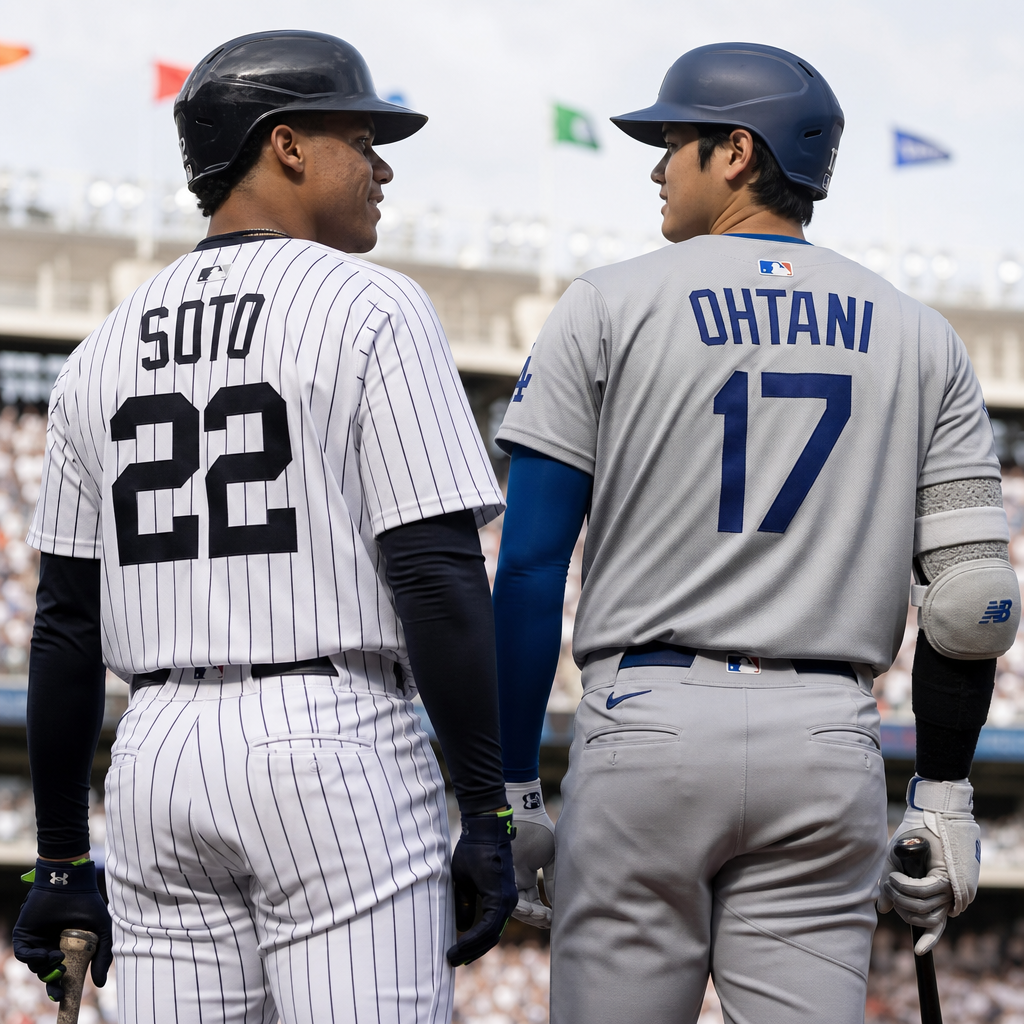
Across sports, the most convincing candidates are not necessarily the youngest phenoms but the players who already combine awards, efficiency, and durability. In baseball, names such as Juan Soto, Ronald Acuña Jr., Mookie Betts, and Shohei Ohtani stand out for different reasons. Soto’s plate discipline is historically rare for his age cohort, with on-base skill that evokes inner-circle offensive profiles. Acuña has paired power and speed at an MVP level. Betts has already built the résumé of a likely eventual inductee through elite two-way value. Ohtani is the clearest example of a player whose Hall case is not just statistical but transformational; his two-way excellence has altered what modern greatness can look like.
In basketball, Nikola Jokić, Giannis Antetokounmpo, Luka Dončić, and Jayson Tatum represent different stages of the path. Jokić and Giannis already have the award strength and playoff credibility that usually end the debate early. Luka’s usage, creation load, and early All-NBA profile place him on a historic trajectory if conditioning and longevity cooperate. Tatum’s case is less about one overwhelming metric and more about stacking elite seasons, deep postseason runs, and durable top-tier production in a highly visible market. That combination often ages well in Hall discussions.
Football is more volatile because injuries and shorter peaks can interrupt even dominant careers. Patrick Mahomes has already crossed from projection to expectation; his résumé is building at a pace matched by only a few quarterbacks in history. Justin Jefferson has produced early-career receiving numbers that compare favorably with several Hall legends, and if he maintains efficiency into his thirties, the case becomes straightforward. On defense, Myles Garrett and Micah Parsons illustrate what Hall paths look like for pass rushers: elite pressure, game-plan altering presence, and award-level impact that goes beyond sacks alone.
In hockey, Connor McDavid is tracking toward one of the strongest offensive résumés the sport has ever seen, while Cale Makar has established himself as the kind of defenseman who can define an era if health holds. In global soccer, Kylian Mbappé and Erling Haaland are already accumulating the blend of scoring dominance, big-stage production, and club visibility that drives long-term legacy. Not every great young player will finish with a Hall-worthy career, but the names that combine elite output with historically unusual age curves deserve special attention.
What can derail a Hall of Fame path
The biggest forecasting mistake is assuming linear growth. Careers rarely move in a straight line, and Hall cases are often damaged by factors outside raw talent. Injury is the obvious threat. Pitchers lose velocity, running backs age quickly, and explosive basketball guards sometimes decline once lower-body issues appear. Availability is itself a skill, and history shows that voters do not fully separate greatness from missed seasons. A player can be brilliant on a per-game basis yet still finish short of the standards created by healthier peers.
Environment also matters. Some stars arrive in unstable organizations that rotate coaches, alter roles, or fail to build competitive rosters around them. That can suppress awards, reduce playoff exposure, and distort public perception. Baseball players on rebuilding teams may lose MVP momentum despite elite value. NBA stars without postseason success are often judged more harshly than their numbers deserve. NFL defenders can disappear from wider discussion if they play in small markets or on losing teams, even when film and pressure data remain outstanding.
There are also narrative risks. Voters can be skeptical of short peaks, empty accumulation, off-field controversy, or postseason underperformance. In some sports, standards tighten at crowded positions. Baseball has historically forced first basemen and corner outfielders to clear higher offensive bars than middle infielders. Football voters often make wide receivers fight for recognition behind quarterbacks and running backs from older eras. Understanding these bottlenecks is essential when projecting who is truly on a Hall of Fame track versus who is merely famous right now.
How to use this hub to follow greatness in real time
The value of a page like this is not one definitive list; it is a repeatable method for tracking future Hall of Famers as their records evolve. Start with age-based leaderboards and compare players to Hall members at the same stage. Follow major awards, all-league selections, efficiency metrics, and postseason performance every season. Watch for category expansion: when a player moves from elite scorer to complete impact player, or from dominant regular-season star to playoff closer, the projection becomes stronger. Revisit the comparison annually because Hall trajectories sharpen through accumulation.
As the central hub for Reflecting on the Past, Looking to the Future, this article should point readers toward deeper studies of milestone math, era adjustment, peak versus longevity debates, and the record-breaking moments that accelerate legacy. The next generation of greats will not be identified by reputation alone. They will be identified by evidence: awards that signal peer dominance, metrics that survive context, and performances that still matter when the sport looks back twenty years from now. Use that lens, follow the data, and you will spot tomorrow’s Hall of Famers before the plaques are cast.
Frequently Asked Questions
What makes a young athlete look like a future Hall of Famer before their career is finished?
A future Hall of Fame case usually starts with a combination of elite peak performance, sustained excellence, and context. It is not enough for a player to be merely very good for a few seasons. The athletes who begin to look like eventual Hall of Famers tend to dominate their era in ways that are measurable and visible at the same time. That means major awards, All-Star or All-Pro level recognition, league-leading statistics, postseason impact, and a reputation as one of the defining players at their position. Analysts also look for traits that age well, such as plate discipline in baseball, shooting and decision-making in basketball, technical refinement in football, or adaptability in hockey and soccer.
Just as important is trajectory. When evaluating the next generation of greats, people ask whether a player is accumulating achievements early enough to create real career runway. If a star reaches elite status in their early 20s and maintains it, the odds of building a Hall-worthy résumé rise dramatically. Durability matters as well, because longevity often separates a Hall of Very Good player from a genuine all-time great. In other words, future Hall of Fame conversations are not built on hype alone. They are built on a pattern: standout talent, production against top competition, staying power, and signs that the player is not just excelling, but shaping the sport’s story.
How do analytics influence Hall of Fame predictions for the next generation of stars?
Analytics have become one of the most important tools in projecting Hall of Fame potential because they help distinguish true dominance from reputation-driven buzz. Traditional counting stats still matter, but modern evaluation goes much deeper. In baseball, for example, metrics like WAR, OPS+, ERA+, and defensive value help show whether a player is contributing in ways that translate historically. In basketball, efficiency numbers, impact metrics, playoff performance, and lineup data can reveal whether a player is driving winning at an elite level. In football, advanced passing metrics, pressure rates, coverage grades, and era-adjusted production provide a clearer picture than raw totals alone.
The real value of analytics is historical comparison. They allow analysts to ask whether a young star is performing like previous Hall of Famers did at the same age, in the same role, and under similar league conditions. That is especially important because sports evolve. Rules change, pace changes, schedules change, and statistical environments can become inflated or suppressed. Era-adjusted data helps avoid unfair comparisons across generations. At the same time, analytics are not meant to replace common sense. Hall of Fame forecasting still requires interpretation. Leadership, postseason moments, innovation, and cultural relevance often matter too. The smartest predictions combine numbers with scouting, narrative, and context rather than treating any single metric as a final answer.
Why is longevity so important in Hall of Fame debates, even for incredibly talented players?
Longevity matters because the Hall of Fame is usually designed to honor greatness over time, not just brilliance in short bursts. A player can have a sensational three- or four-year stretch and still fall short of immortality if they cannot maintain that level or remain meaningfully productive for a substantial portion of their career. The reason is simple: Hall of Fame recognition is often about proving that excellence was not accidental, temporary, or dependent on a narrow set of circumstances. Sustained performance shows adaptability, professionalism, and the ability to withstand the physical and tactical demands of elite competition year after year.
This does not mean every Hall of Famer needs two decades of productivity, but it does mean longevity often becomes the tiebreaker. When projecting younger stars, evaluators ask whether their game can evolve as athleticism changes, whether their body can handle the workload, and whether they can stay impactful even after their physical peak. A power hitter who also gets on base may age better than one relying only on bat speed. A quarterback with elite processing may extend greatness longer than one dependent solely on mobility. A basketball player with skill, size, and shooting touch may remain valuable longer than an explosive athlete with a narrower toolkit. Longevity is not just about surviving; it is about continuing to matter, and that is one of the strongest signals of a future Hall of Fame career.
Can postseason success and championships make or break a future Hall of Fame case?
Postseason success can significantly strengthen a Hall of Fame case, but it rarely tells the whole story by itself. Championships and iconic playoff performances become part of an athlete’s legacy because they happen under maximum pressure and attract lasting attention. Fair or not, fans and voters remember who elevated their game when stakes were highest. A player who delivers signature moments in title runs often gains a narrative advantage over another player with similar regular-season numbers but fewer defining postseason achievements. Those moments help transform a star into a historical figure.
Still, team success should be handled carefully when predicting future Hall of Famers. Many all-time great athletes play in flawed organizations, weaker supporting casts, or highly competitive eras where titles are difficult to win. It would be misleading to punish an individual for circumstances beyond their control. That is why the best evaluations separate personal playoff performance from simple ring counting. Did the player produce at an elite level against top opponents? Did they carry meaningful responsibility? Did they raise the ceiling of their team? In some sports, one player can influence outcomes more directly than in others, so context matters enormously. Championships can push a borderline candidate into obvious Hall territory, but they should complement a strong body of work, not substitute for one.
How early is too early to predict that a current star will eventually reach the Hall of Fame?
It is never too early to begin the conversation, but it is often too early to speak with certainty. Hall of Fame forecasting is inherently speculative because careers can change quickly due to injury, decline, role shifts, team context, or off-field issues. A player may look unstoppable at 24 and plateau by 28. Another may start more slowly and build a stronger long-term case through consistency and reinvention. That uncertainty is part of what makes projecting the next generation of greats so compelling. The exercise sits between evidence and imagination, using current performance as a guide without pretending the future is already written.
The most responsible way to make early predictions is to think in tiers rather than absolutes. Some young stars already look like they are on an all-time trajectory because they have stacked elite production, awards, and historical comparisons at an unusually young age. Others may be on a promising path but still need several more seasons of top-level play to move from potential to probability. In practical terms, Hall of Fame talk becomes more credible when a player has established themselves as one of the best in the sport, not just a breakout talent with one extraordinary season. Early predictions are useful when they are framed as evolving evaluations, grounded in data, informed by history, and open to revision as the career unfolds.