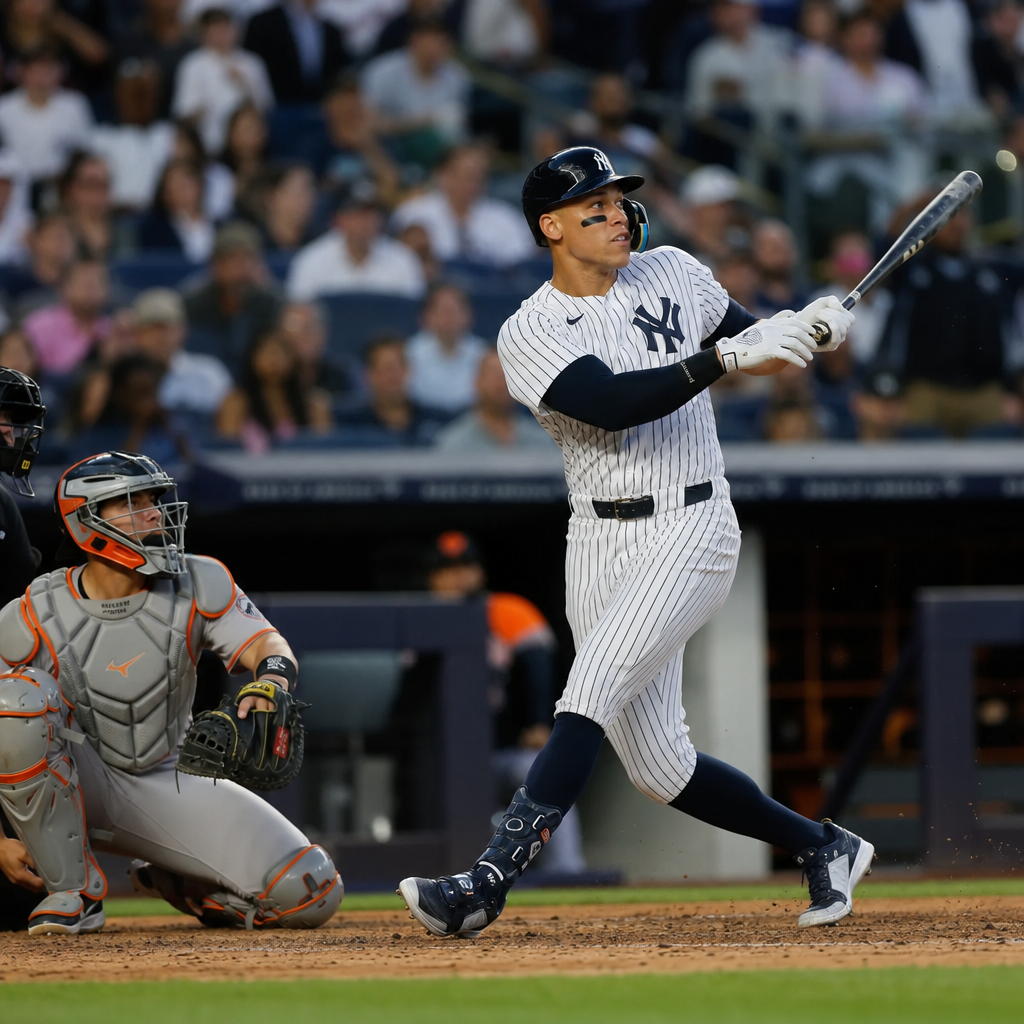
Baseball has always measured itself through numbers, but the next generation of statistical milestones in baseball is changing what counts, how it is tracked, and why it matters. Traditional milestones such as 3,000 hits, 500 home runs, 300 wins, and a .300 batting average still carry emotional weight, yet modern evaluation increasingly focuses on underlying skill, context, and repeatable performance. When people talk about the future of baseball stats, they mean a shift from simple accumulation totals to richer measures built from pitch tracking, batted-ball data, biomechanical analysis, and game-state context. In practical terms, that means front offices, broadcasters, coaches, bettors, fantasy players, and serious fans are no longer asking only what happened. They are asking how it happened, whether it was sustainable, and what is likely to happen next.
This evolution matters because baseball is a sport of tiny edges. A hitter who improves swing decisions by two percentage points can add wins over a season. A pitcher who changes release height by an inch can reshape the movement profile of a sweeper or four-seam fastball. Older statistics often flatten those differences. Batting average ignores walks and power. RBIs depend heavily on teammates reaching base. Pitcher wins say more about run support and bullpen preservation than individual dominance. The future of baseball stats addresses those blind spots by isolating player contribution more cleanly and by measuring actions that were once invisible. Systems such as Statcast, Hawk-Eye, and pitch modeling platforms have turned velocity, spin, launch angle, extension, jump, route efficiency, and framing into everyday language.
As someone who has worked with baseball data feeds, built player reports, and translated dense metrics for non-analysts, I have seen the gap between public milestones and decision-making milestones widen every year. Teams still celebrate round numbers, but internally they often care more about thresholds like sustained hard-hit rate above 50 percent, chase rate under 25 percent, or strikeout-minus-walk rate that predicts future run prevention. For a hub page on the future of baseball stats, the key idea is simple: the next great milestones will not replace baseball history, but they will redefine excellence. They will be more predictive, more precise, and more connected to how the game is actually played on the field and optimized off it.
How baseball milestones are shifting from totals to quality of performance
The first major change is philosophical. Historic milestones rewarded longevity and accumulation. Newer milestones reward process quality. That does not mean totals are irrelevant; availability remains a skill, and compiling elite numbers over fifteen years is extraordinarily hard. But a modern baseball statistic becomes powerful when it explains contribution independent of lineup context, park effects, era effects, and luck on balls in play. That is why on-base percentage overtook batting average in serious analysis, slugging expanded into OPS, and then more advanced measures like wRC+, OPS+, and WAR became central. They adjust for league scoring environments and park dimensions, making players from different teams and seasons easier to compare fairly.
Consider a classic example. A player hitting .285 with 35 home runs, 90 walks, and strong baserunning may provide much more offensive value than a .310 singles hitter with few walks. Older milestones often favored the second player because .300 was iconic. Modern systems recognize that creating runs depends on reaching base, hitting for power, and avoiding outs. Weighted metrics grounded in run expectancy capture this directly. The same shift is happening on the pitching side. Instead of celebrating 20 wins as a marker of ace status, evaluators lean toward strikeout rate, walk rate, swinging-strike rate, expected ERA indicators, and innings pitched adjusted for dominance. In short, the future of baseball stats values the ingredients of success, not just the final box score line.
The technologies driving the future of baseball stats
The next generation of statistical milestones in baseball is inseparable from the technology producing the data. MLB’s Statcast era began with radar and optical tracking, then deepened through Hawk-Eye camera systems capable of tracking all players and the ball in three dimensions. That change did more than create cool graphics. It made entirely new classes of metrics possible. Exit velocity measures how hard a ball is hit. Launch angle describes its vertical trajectory. Expected batting average and expected slugging estimate outcomes based on contact quality and strikeouts or walks. On defense, jump measures first-step reaction, while route efficiency captures whether a fielder took an optimal path. On the mound, induced vertical break, horizontal movement, extension, release point consistency, and seam-shifted wake discussions now shape player development.
For fans, the technology can feel abstract until it connects to an obvious example. Think of a slugger whose line drives are screaming at 108 mph but finding gloves for two weeks. Traditional stats label that player cold. Batted-ball metrics may show he is actually hitting better than ever and due for positive regression. Or think of a reliever whose ERA sits at 1.80 while his walk rate climbs and his fastball shape deteriorates. A data-rich model might warn that trouble is coming before the runs arrive. This predictive layer is why clubs invest heavily in tracking infrastructure. The future of baseball stats is not just more data; it is faster diagnosis, stronger forecasting, and clearer separation between skill and noise.
What the next milestone categories will look like
Future milestones will increasingly cluster around rate dominance, contact quality, plate discipline, pitch characteristics, defensive conversion, and all-around value. Some will remain fan-facing, while others will mostly influence awards, contracts, and Hall of Fame debates. A hitter may one day be celebrated for 10 straight seasons with a 150 wRC+ as readily as for 500 home runs. A pitcher may be known for crossing a career strikeout-minus-walk percentage threshold or for maintaining elite whiff rates with multiple pitch types. Fielders may gain milestone language around outs above average, conversion rates on difficult plays, and arm value. Catchers already receive more credit through framing, blocking, and game-calling analysis than public discourse allowed twenty years ago.
| Category | Traditional milestone | Next-generation milestone | Why it matters |
|---|---|---|---|
| Hitting | .300 batting average | 140+ wRC+ over multiple seasons | Measures total offensive production adjusted for park and league context |
| Power | 40 home runs | 95th percentile hard-hit rate and barrel consistency | Captures sustainable impact quality, not just final homer total |
| Plate discipline | 100 walks | Chase rate below 20 percent with elite contact decisions | Shows command of the strike zone and repeatable on-base skill |
| Pitching | 20 wins | 25 percent strikeout-minus-walk rate | Strong predictor of run prevention and future success |
| Defense | Fielding percentage | Consistent positive outs above average | Accounts for range and difficulty, not just errors |
| Overall value | Counting stat awards cases | 50-plus career WAR pace | Combines offense, defense, and baserunning into one value framework |
These categories matter because they align more closely with how teams acquire and develop talent. Clubs want indicators that stabilize quickly enough to inform decisions. Swing decisions often stabilize sooner than batting average. Strikeout and walk rates become meaningful before ERA settles. Bat speed, attack angle, and contact point can reveal a mechanical breakthrough before surface performance catches up. That makes future milestones more dynamic. Instead of waiting a decade to know whether a player is elite, teams can identify elite traits in weeks or months. Public milestones will likely follow that shift as fans grow more comfortable with thresholds tied to quality and context.
How hitting stats will define the next era
Offensive evaluation is already moving toward complete hitter profiles. The future of baseball stats for hitters centers on controlling the zone, producing optimal contact, and tailoring approach to pitch type and location. A modern hitting report does not start with average, homers, and RBIs. It starts with swing rate in and out of the zone, contact rate by swing decision bucket, exit velocity bands, barrel percentage, launch-angle distribution, pull-side air rate, and expected outcomes against different pitch shapes. When I have built hitter summaries for decision-makers, the questions were rarely “How many hits does he have?” They were “Can he handle velocity at the top of the zone?” “Does he chase spin away?” and “Is his power output supported by barrel quality?”
This change opens the door for new milestone discussions. Imagine a player becoming the first to post ten seasons with at least a .400 on-base percentage and a barrel rate above 15 percent. That combination would signal elite patience and elite damage. Another possible benchmark is cumulative expected weighted on-base value, which strips away some sequencing noise and luck. We may also see broader use of split-adjusted milestones, such as production against left-handed sweepers, high ride fastballs, or changeups below the zone. Those sound niche today, but they matter because modern pitchers are engineered around specific shapes. Great hitters are now judged by how broadly their skills survive specialized arsenals.
How pitching milestones are being redefined
Pitching is where the next generation of statistical milestones in baseball may feel most dramatic. Starter wins have been fading in importance for years because workloads, opener usage, bullpen specialization, and scoring context distort them. The better questions are whether a pitcher misses bats, limits free passes, suppresses damaging contact, and carries stuff deep into outings. Strikeout-minus-walk percentage has become one of the cleanest shorthand indicators of pitcher quality. Fielding Independent Pitching and skill-interactive ERA estimators add context. Stuff models from public sites and private team systems quantify pitch quality based on velocity, movement, release traits, and location interaction.
Real-world examples make this clear. A pitcher can have a middling ERA in April because bloops and defensive positioning failed him, yet his whiff rate, called-strike-plus-whiff rate, and contact suppression profile look ace-level. Another pitcher can ride strand rate luck for months while his arsenal has clearly regressed. The future of baseball stats helps separate those cases. Milestones may increasingly include seasons above a 30 percent strikeout rate, years with multiple plus pitches by run value, or career marks in bat-missing efficiency. Durability metrics will evolve too. With starters throwing fewer complete games, a new badge of honor may be repeated 180-inning seasons paired with elite per-batter dominance, not 20-win campaigns.
Defense, baserunning, and catcher value are finally measurable
One of the best developments in baseball analysis is that hidden value is less hidden now. Defense was once reduced to errors, assists, and fielding percentage, which badly underrated range. Baserunning was often treated as stolen bases minus caught stealing, ignoring first-to-third advances, tag-up decisions, and avoidance of double plays. Catching focused on arm strength and passed balls, overlooking pitch framing and subtle receiving skill. Modern tracking changed that. Outs Above Average, Defensive Runs Saved, sprint speed, route metrics, base advancement models, framing runs, and blocking evaluations now offer a fuller accounting of player impact.
This matters for milestone culture because it broadens who can be recognized as great. A center fielder with average power but elite jumps and routes may save enough runs to be a star. A catcher who turns borderline pitches into strikes changes at-bats and innings even if he hits ninth. A baserunner with strong reads and acceleration can create value without stealing 50 bases. In future Hall of Fame or award debates, those players should no longer be trapped by old accounting systems. The statistical milestones of tomorrow will honor complete players, not just those whose skills were easiest to count in the newspaper box score.
Why context, normalization, and communication matter
The biggest challenge in the future of baseball stats is not inventing more metrics. It is making them comparable, stable, and understandable. Context matters because offense changes by era, ballparks vary, defensive positioning evolves, and baseball itself can be livelier or deader from season to season. That is why normalized statistics such as OPS+ and wRC+ are so valuable. They anchor performance against league average and adjust for environment. Without that step, milestone comparisons across decades become misleading. A 40-homer season in one run environment may not mean what it meant in another.
Communication matters just as much. Analysts often lose audiences when they present numbers without explaining the baseball action beneath them. The best future-facing baseball writing translates metrics into plain terms: a lower chase rate means the hitter is no longer expanding the zone; more induced vertical break means the fastball resists gravity longer and plays above barrels; better route efficiency means the outfielder reaches difficult balls with fewer wasted steps. For a hub article like this one, the main takeaway is that advanced stats succeed when they clarify reality rather than replace it. Fans do not need fewer stories. They need better tools for understanding the stories the game is already telling.
The next generation of statistical milestones in baseball will redefine how greatness is identified, discussed, and remembered. Historic milestones still matter because they connect eras and preserve the sport’s emotional language, but they are no longer enough on their own. The future of baseball stats belongs to measurements that capture quality, context, and repeatable skill: park-adjusted offense, strikeout-minus-walk dominance, contact quality, defensive range, baserunning decisions, and catcher impact. Those metrics do a better job of describing what helps teams win, what skills age well, and what performances are sustainable.
For readers exploring the broader Statistics and Record-Breaking Moments topic, this page is the starting point because every subtopic branches from this central shift. Articles on hitter evaluation, pitching design, Statcast records, defensive metrics, projection systems, and Hall of Fame debates all depend on the same idea: baseball is moving from simple totals toward multidimensional value. That does not make the game colder. It makes the picture sharper. We can now see contributions that older systems missed and question results that older systems accepted too easily.
If you want to follow baseball more intelligently, start tracking a few modern benchmarks alongside the classics. Watch on-base skill with power, strikeout-minus-walk rate, hard-hit and barrel trends, outs above average, and context-adjusted value stats. Those are the milestones that will shape the next generation of contracts, awards, records, and arguments. Use this hub as your foundation, then continue into the deeper subtopic articles to see exactly how the future of baseball stats is already changing the sport.
Frequently Asked Questions
What does “the next generation of statistical milestones” in baseball actually mean?
The next generation of statistical milestones refers to a broader, smarter way of defining greatness in baseball. For decades, fans and analysts relied on clear counting benchmarks such as 3,000 hits, 500 home runs, 300 pitching wins, and a .300 batting average because they were easy to understand and easy to celebrate. Those marks still matter historically, but they no longer tell the full story of a player’s value or skill. Modern baseball increasingly focuses on measurements that capture how a player creates runs, prevents runs, controls the strike zone, limits hard contact, or sustains elite performance over time.
In practical terms, that means milestones are shifting away from simple totals and toward metrics that reflect quality and context. Instead of only asking whether a hitter reached a certain number of hits, people also ask whether he consistently produced elite on-base skills, hard contact, plate discipline, and run creation relative to the league. Instead of judging a pitcher mainly by wins, evaluators look at strikeout rate, walk rate, expected outcomes, workload quality, and how often he suppresses dangerous contact. The “milestone” may not always be a single round number anymore; it may be sustained excellence in a metric like WAR, OPS+, ERA+, strikeout-minus-walk percentage, or expected weighted on-base average. That evolution represents baseball adapting to better information rather than abandoning tradition.
Why are traditional milestones like 3,000 hits and 300 wins becoming less central in modern baseball analysis?
Traditional milestones are becoming less central because the modern game has changed in ways that make older benchmarks harder to reach and, in some cases, less meaningful as stand-alone measures. Pitchers do not accumulate wins the way they once did because starters throw fewer complete games, work fewer innings per outing, and are managed more carefully by bullpens and front offices. Hitters are also judged in a more specialized environment where lineup construction, defensive shifts, platoon usage, and changing offensive approaches affect raw totals. As a result, reaching classic milestones can depend heavily on era, opportunity, team context, and health rather than pure excellence alone.
There is also a philosophical shift behind this change. Analysts want stats that isolate what a player actually controls. A pitcher can throw brilliantly and get no win because of poor run support. A hitter can pile up hits without walking much or creating as much offensive value as someone with fewer hits but more power and on-base ability. Modern metrics try to correct for those distortions by measuring overall contribution in a more complete way. That does not make old milestones irrelevant; they remain iconic because they connect generations of fans. But in today’s game, they are increasingly viewed as part of the story rather than the final verdict on a player’s greatness.
Which modern baseball stats are most likely to become the new milestones fans and analysts care about?
Several advanced metrics are strong candidates to become the defining milestones of the modern era, especially because they capture all-around value more effectively than older stats. WAR, or Wins Above Replacement, is probably the clearest example. It gives fans a way to think about a player’s total contribution by combining offense, defense, baserunning, and positional value for hitters, and run prevention and workload for pitchers. While WAR is not as visually simple as 500 home runs, numbers like 50 career WAR, 70 career WAR, or repeated 6-to-8 WAR seasons already function as shorthand for star-level and Hall of Fame-level production.
Beyond WAR, rate stats adjusted for league and ballpark context are becoming increasingly important. OPS+ and wRC+ for hitters, and ERA+ for pitchers, help compare players across different offensive environments. A hitter posting multiple seasons at 150 wRC+ or an ace sustaining an ERA+ well above league average may become the kind of benchmark fans cite the way earlier generations cited batting average. For pitchers, strikeout-to-walk profile, whiff rate, innings quality, and expected indicators such as xERA can matter nearly as much as surface results. For hitters, exit velocity, barrel rate, chase rate, and on-base percentage increasingly shape how greatness is recognized. The future milestone may not be one dramatic total, but a combination of durability, efficiency, and dominance measured more precisely than ever before.
How does technology influence the way new baseball milestones are created and tracked?
Technology is the engine behind this entire shift. Systems such as Statcast allow baseball to measure things that were once invisible or subjective, including exit velocity, launch angle, sprint speed, route efficiency, spin rate, movement profiles, release characteristics, and catch probability. That level of detail changes not only how performance is evaluated, but also what can be celebrated. Fans no longer have to rely only on what happened; they can now examine how and why it happened. A home run is no longer just a home run. It can be understood through bat speed, contact quality, launch angle, and expected outcomes based on comparable batted balls.
This matters because better tracking creates better standards. If baseball can consistently measure bat-to-ball skill, swing decisions, hard-hit consistency, or pitch shape effectiveness, then new milestones can emerge from those categories. A player who sustains elite barrel rates for a decade or a pitcher who consistently ranks among league leaders in strikeout-minus-walk percentage may come to be viewed as achieving a meaningful modern benchmark. Technology also improves historical interpretation by allowing teams and analysts to separate luck from repeatable skill. That gives newer milestones more credibility because they are tied to underlying performance, not just accumulation. In short, better data is redefining what excellence looks like and making those definitions far more precise.
Will advanced statistical milestones ever replace the emotional appeal of classic baseball numbers?
Probably not completely, and that is part of what makes baseball so compelling. Classic milestones endure because they are memorable, simple, and woven into the sport’s mythology. Everyone understands the gravity of 500 home runs or 3,000 hits. Those numbers feel ceremonial. They carry nostalgia, history, and a sense of permanence that advanced metrics, at least for now, do not always match. A fan can instantly appreciate a player crossing a major threshold in a way that feels intuitive and dramatic.
What is more likely is coexistence rather than replacement. Advanced milestones will continue to gain influence because they do a better job of explaining who is truly elite and why. Traditional milestones will continue to matter because they connect the sport to its past and provide moments fans can rally around. The next generation of statistical milestones in baseball is therefore not about erasing old numbers; it is about adding smarter layers to them. A future superstar may be remembered both for reaching a traditional counting milestone and for sustaining elite WAR, on-base value, contact quality, or run prevention metrics over many seasons. That blended view is where the game is headed: honoring baseball’s history while using modern tools to understand greatness with far more clarity.