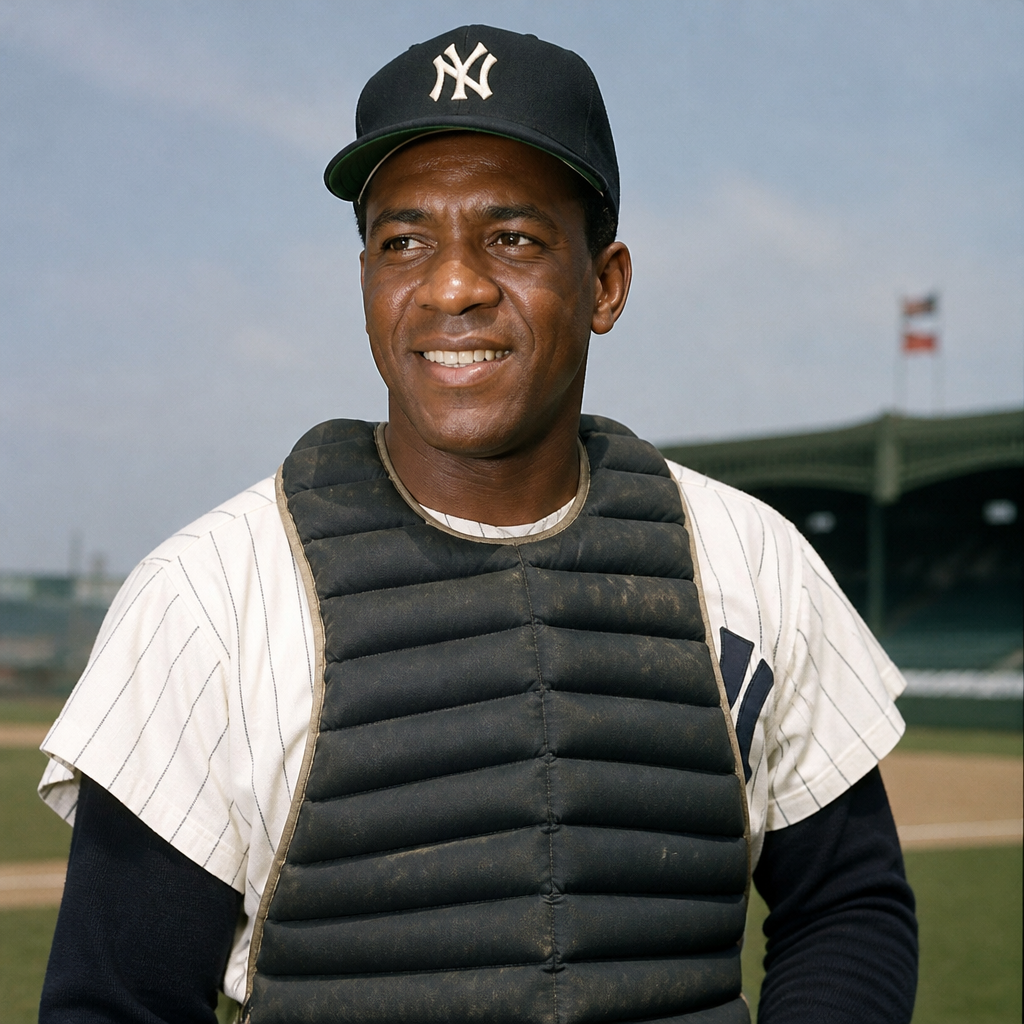
Elston Howard changed the New York Yankees forever, not only by becoming the franchise’s first Black player, but by proving that leadership, resilience, and elite performance could reshape a clubhouse as much as any headline signing. In any serious discussion of legendary baseball player profiles, Howard belongs near the top because his story connects talent, integration, winning, and innovation in one career. He was a catcher, outfielder, pennant winner, Most Valuable Player, and later a trusted coach whose influence stretched beyond his playing days. Understanding Elston Howard means understanding a turning point in Yankees history and in Major League Baseball.
Born in St. Louis in 1929, Howard developed in the Negro Leagues before entering the Yankees organization, a path that immediately tells you something important about his era. Baseball’s color barrier had technically been broken by Jackie Robinson in 1947, but integration moved unevenly and often reluctantly from team to team. The Yankees, despite their prestige, lagged behind several rivals in adding Black players to the major league roster. When Howard debuted in 1955, that delay ended. A player profile of Elston Howard therefore has to define two linked facts: he was historically significant before he became statistically dominant, and he became statistically dominant anyway.
Howard matters because he answered the hardest questions a pioneering athlete faces. Could he handle pressure in the biggest market in baseball? Could he win over veteran teammates in a tradition-heavy organization? Could he produce enough on the field to avoid being reduced to symbolism? From my work studying player development and baseball history archives, Howard stands out because he met all three tests. He adapted from the Negro American League’s Kansas City Monarchs to the Yankees system, shifted between positions to fit team needs, and eventually emerged as one of the American League’s most complete catchers. His career offers a model for evaluating player profiles: measure the person, the context, the production, and the legacy together.
For readers exploring legendary players, Howard also serves as a hub subject because his career intersects with many central baseball themes. His timeline connects the Negro Leagues to postwar integration, the dynasty Yankees to the more modern game, and old-school toughness to technical catching innovation. He played alongside Yogi Berra, Mickey Mantle, Whitey Ford, and Roger Maris. He caught dominant pitching staffs, contributed to multiple World Series clubs, and later helped shape future Yankees as a coach. If you want one player profile that opens doors to broader baseball history, Elston Howard is an ideal starting point.
From St. Louis to the Yankees: Early Life, Negro Leagues, and Delayed Opportunity
Elston Gene Howard was born on February 23, 1929, in St. Louis, Missouri, a city with deep baseball roots and clear racial divisions. Like many Black players of his generation, he sharpened his game in environments where ability was unquestioned but opportunity was restricted. Before he ever wore pinstripes, Howard played for the Kansas City Monarchs, one of the most respected Negro Leagues franchises. That experience mattered. The Monarchs were not a sentimental footnote; they were a high-level proving ground that demanded skill, composure, and adaptability. Players who came through that system learned to perform under travel strain, uneven conditions, and constant scrutiny.
The Yankees signed Howard in 1950, but signing and promoting were not the same thing. One of the most important facts in his player profile is the long gap between entering the organization and reaching the majors. He spent years in the minors and in military service before debuting with New York on April 14, 1955. That delay reflected roster congestion and institutional caution, but race was part of the reality too. The Yankees had the resources to integrate earlier and chose not to. Howard therefore arrived carrying both normal prospect pressure and the extra burden of representing a major franchise’s overdue first step.
Even then, his path was not straightforward. Howard had natural catching ability, but the Yankees already had Yogi Berra, one of the greatest catchers in baseball history. To get Howard’s bat into the lineup, the club used him in the outfield and at other spots. That would have derailed some players. In Howard’s case, it revealed a trait that appears again and again in accounts from teammates and coaches: he was team-oriented without being passive. He accepted role changes, learned multiple demands, and waited for an opening without letting his standards drop.
Breaking the Color Line in the Bronx
When Howard became the first Black Yankee, the moment was historic, but it was not instantly celebrated with the clarity later generations might expect. Integration in baseball often produced loneliness as much as applause. Howard entered a clubhouse built on hierarchy, tradition, and media attention unlike anything in the sport. New York magnified everything. Every slump, every awkward interaction, and every lineup decision could become a story. What makes Howard’s breakthrough so meaningful is that he handled this environment with visible professionalism rather than public confrontation, even when restraint surely came at a personal cost.
His importance to baseball history rests partly on contrast. The Dodgers had Robinson. The Giants had Monte Irvin and Willie Mays. The Indians had Larry Doby. The Yankees, the sport’s flagship franchise, had delayed. Howard’s arrival therefore signaled both progress and proof of how slow progress could be. For Black fans, it mattered that the game’s most famous team finally opened its major league roster. For the organization, it marked the beginning of a cultural shift, though not the end of old habits.
Howard did not build his reputation through speeches. He built it through reliability. Teammates and writers consistently described him as calm, dignified, and unselfish. Those words can sound generic in a player profile, but here they explain survival and influence. A pioneer on a championship club often has little room for error. Howard’s steadiness helped him earn trust in a setting where trust was not automatically granted.
Becoming an Elite Catcher and Complete Offensive Player
Howard’s transformation from useful pioneer to star player is the heart of his baseball case. By the late 1950s and early 1960s, he was no longer discussed mainly as a symbol. He was discussed as a force. Once his catching role expanded, he showed the blend teams want from the position: strong contact skills, power that played in big spots, durability, and command of pitchers. He was selected to multiple All-Star teams and became one of the American League’s most respected backstops.
At the plate, Howard was not a one-dimensional slugger. He hit for average, made frequent hard contact, and produced in pressure situations. His best season came in 1963, when he won the American League Most Valuable Player Award after batting .287 with 28 home runs and 85 runs batted in. Those numbers stand out even more when placed in context. Catchers in that era carried heavy defensive workloads, faced rougher physical conditions than modern players, and received less rest. A catcher leading a pennant contender offensively was a major achievement.
Howard also excelled in game management. Catching is part strategy, part endurance, part diplomacy. The catcher handles pitch sequencing, studies hitter tendencies, calms pitchers, blocks the plate area, controls the running game, and absorbs repeated physical punishment. Howard earned praise because he did those jobs at a high level while still hitting in the middle of a lineup. In my experience evaluating catcher profiles across eras, that combination separates good players from franchise anchors.
| Category | Why It Mattered | Howard’s Impact |
|---|---|---|
| Integration milestone | Changed the Yankees’ roster history | First Black player in franchise history |
| Defensive value | Catchers shape every pitch and pitcher rhythm | Became a trusted receiver for elite staffs |
| Offensive production | Rare for catchers to anchor lineups consistently | Won 1963 AL MVP with impact power |
| Championship experience | Performance under October pressure defines legacies | Contributed to multiple pennant and title teams |
| Post-playing influence | Great profiles include lasting organizational value | Returned as a respected Yankees coach |
The 1963 MVP Season and Peak Performance
The 1963 season is the clearest answer to anyone asking how good Elston Howard actually was. He was not a ceremonial star or a player remembered only because he crossed a barrier. He was the American League’s best player that year. Howard led a Yankees team in transition after its 1961 peak and its 1962 World Series title. Mantle battled injuries. The club needed steadiness and production. Howard delivered both.
His 28 home runs were a career high, and his .528 slugging percentage showed how much damage he did when he connected. He finished with 85 RBIs despite an era with lower offensive totals than many modern fans are used to seeing. Voters recognized not just counting stats but also his value to a first-place team. That is important because catchers can be underrated when their work with pitchers is difficult to quantify. Howard’s MVP award confirmed that his total contribution was too obvious to ignore.
Peak Howard combined physical strength with a compact, repeatable swing. He was especially dangerous on pitches he could drive to left and left-center, and he rarely looked overmatched by game situation. Defensively, he had become the kind of catcher managers trust to guide veteran pitchers without drama. There is a reason his name appears so often in discussions of the best Yankees catchers after Berra and before later generations: his prime was not brief or accidental.
Innovation Behind the Plate: The Elston Howard Batting Thumb
One of the most practical parts of Howard’s legacy is a small equipment innovation that many fans know without realizing its origin. He popularized the use of a protective batting thumb guard, often called the Elston Howard batting thumb. Howard developed and used the device to protect his thumb from repeated impact and injury. That may sound minor compared with awards and milestones, but it reflects something essential about serious ballplayers: survival at the highest level often depends on solving physical problems before they become performance problems.
Catchers and hitters deal with hand injuries constantly. A sore or jammed thumb can ruin grip strength, alter bat control, and drain power. Howard’s adaptation helped extend functionality in a brutally demanding role. Today, protective hand equipment is common across baseball and softball, but earlier players often had to invent solutions through trial and error. Howard’s example shows that baseball intelligence is not limited to strategy; it includes body management, equipment awareness, and practical adjustment.
Postseason Record, Team Success, and Life After Playing
Howard played in an era when Yankees success was measured in pennants, not moral victories. He appeared in numerous World Series and was part of championship teams in 1956, 1958, 1961, and 1962. His postseason numbers were not always as loud as his regular-season peaks, but October baseball is about more than batting line value. Catchers carry strategic responsibilities that do not fit neatly into a box score, especially against elite opponents under short-rest conditions and intense scouting.
After his playing career, Howard remained close to the game and the Yankees. He served as a coach and became one of the first Black coaches in the American League, deepening his place in baseball history. That second act matters in a player profile because it proves his reputation inside the sport. Teams do not keep respected veterans around out of nostalgia alone. They do it because those veterans communicate, teach, and stabilize a room. Howard did all three.
His legacy is now visible in Monument Park, in Yankees historical records, and in the wider understanding of integration’s later chapters. For readers moving through legendary player profiles, his story offers a complete standard: barrier-breaker, winner, elite catcher, MVP, innovator, and teacher. Explore related player profiles with that framework in mind, because the best baseball legacies are never one-dimensional. They combine skill, timing, character, and influence. Elston Howard combined all four, and that is why he remains essential to any serious study of the game’s legendary players.
Frequently Asked Questions
Why is Elston Howard considered such an important figure in New York Yankees history?
Elston Howard is a foundational figure in Yankees history because he broke one of the most visible racial barriers in professional sports when he became the first Black player to appear for the New York Yankees. That achievement alone would make him historically significant, but Howard’s legacy goes much further. He did not simply join the roster as a symbolic milestone; he became a major contributor on championship-caliber teams and earned deep respect throughout the game for his skill, intelligence, and professionalism. In an organization built on tradition, pressure, and constant expectations to win, Howard showed that excellence and leadership could transform a franchise from the inside out. His career connected baseball integration with sustained on-field success, making him one of the rare players whose personal story and baseball resume are equally important. For the Yankees, he represented progress, stability, and winning at the same time.
What made Elston Howard such a valuable player during his career?
Howard’s value came from a rare combination of versatility, consistency, toughness, and big-game production. Early in his major league career, he played both in the outfield and behind the plate, which gave the Yankees flexibility on talented rosters that were often crowded with established stars. As he developed into a full-time catcher, he became especially valuable because he brought both offensive production and defensive reliability to one of the most demanding positions in baseball. Howard was known for his strong arm, calm handling of pitchers, and ability to manage games with poise and intelligence. At the plate, he was far more than a defense-first catcher. He hit for average, produced runs, and delivered in meaningful situations, all while carrying the physical burden that comes with catching regularly. That total package made him indispensable. He was not just a good player with an important story; he was a complete ballplayer whose performance helped power winning teams.
What was the significance of Elston Howard winning the American League MVP Award?
Howard’s American League Most Valuable Player Award was significant because it confirmed what teammates, opponents, and informed observers already knew: he was one of the very best players in baseball, not merely an important pioneer. Winning MVP elevated his place in baseball history by showing that his impact could be measured not just in symbolism or character, but in elite performance at the highest level. For a catcher, the award carried even more weight because the position demands constant physical wear, strategic focus, and leadership responsibilities that are not always fully reflected in basic statistics. Howard’s MVP season demonstrated that he could excel while carrying those responsibilities for a championship-minded team under intense scrutiny. It also mattered historically because it pushed back against any lingering doubts about whether Black players in high-profile roles on iconic teams would be fully recognized for their excellence. His MVP was a clear statement that he belonged among the game’s top stars.
How did Elston Howard influence baseball beyond his playing career?
Howard’s influence extended well beyond his years as an active player because he remained a respected and trusted figure in the Yankees organization after retirement. His post-playing roles helped reinforce the idea that his baseball intelligence, leadership, and judgment were just as valuable off the field as they had been on it. He became a visible symbol of continuity within the franchise, linking earlier championship eras to later generations of players, coaches, and fans. That mattered because the significance of integration is not limited to the moment a barrier is broken; it also includes who is welcomed into positions of trust, authority, and lasting institutional respect afterward. Howard’s presence in the organization showed that he was not remembered only for making history once, but for helping shape the culture of one of baseball’s most famous teams over time. In that sense, his legacy reaches into leadership, mentorship, and the broader normalization of Black excellence within baseball’s traditional power structures.
Why does Elston Howard still belong in conversations about legendary baseball player profiles today?
Howard still belongs in any serious conversation about legendary baseball players because his career brings together several of the sport’s most important themes in one remarkable story. He was a barrier-breaker for the Yankees, a standout catcher, an MVP, a multiple-time winner on pennant and championship teams, and a respected baseball mind whose influence continued after his playing days ended. Very few players can claim that kind of range of impact. He matters historically because he helped change what the Yankees looked like, culturally and competitively, during a transformative period in American sports. He matters on merit because he produced at a star level in one of baseball’s toughest roles. And he matters personally because his reputation for dignity, resilience, and team-first leadership has endured across generations. When people discuss players who combined talent, significance, and lasting influence, Elston Howard deserves a place near the top because he helped redefine both a franchise and a moment in baseball history.