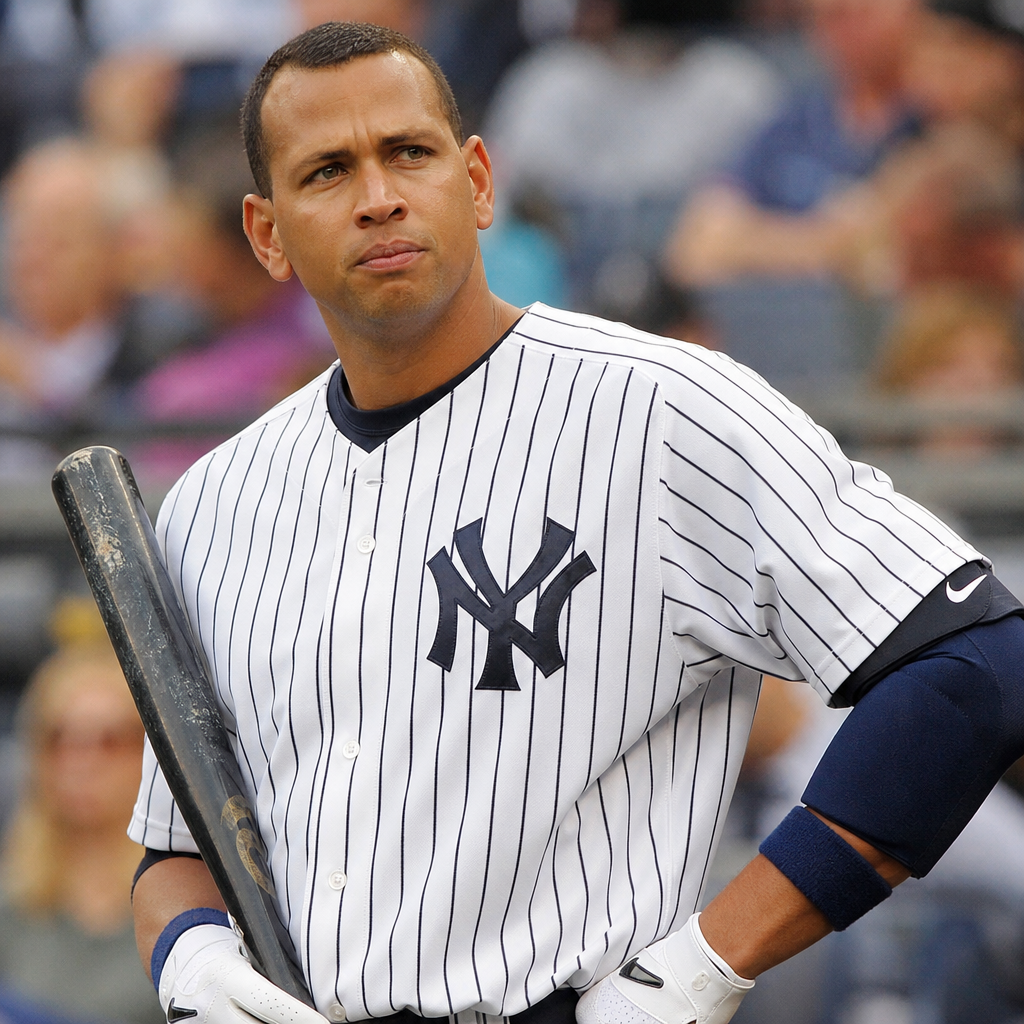
Alex Rodriguez’s contract history sits at the center of one of baseball’s most revealing stories about money, performance, labor power, and reputational risk. When fans search for “The Alex Rodriguez contract: controversy and consequences,” they are usually asking several connected questions at once: what made his deals so large, why did they trigger backlash, how did performance-enhancing drug scandals change the meaning of those contracts, and what long-term effects did they have on the Texas Rangers, the New York Yankees, Major League Baseball, and Rodriguez himself. The answers matter because Rodriguez was not merely a star shortstop with extraordinary numbers. He became a case study in how a single contract can reshape payroll strategy, public opinion, sponsorship value, clubhouse dynamics, and even league-level policy discussions.
In baseball, a contract is more than a salary agreement. It allocates financial risk across years, sets expectations for production, affects roster flexibility, and signals how a franchise views contention windows. Guaranteed contracts in Major League Baseball are especially consequential because clubs generally owe the money even if a player declines, gets injured, or becomes unavailable through suspension. Rodriguez’s landmark agreements—the 10-year, $252 million deal with the Rangers signed after the 2000 season and the 10-year, $275 million deal with the Yankees after the 2007 season—were historic in both headline value and cultural impact. They reset the market, intensified scrutiny around superstar compensation, and became inseparable from later revelations about steroid use and disciplinary action.
This article serves as a hub for the wider “Miscellaneous” branch of baseball scandals and controversies because Rodriguez’s contract story connects to nearly every major theme in that territory: inflated expectations, ownership strategy, union protections, luxury-tax pressure, image management, media narratives, and the limits of front-office forecasting. Having worked through contract analysis and roster planning cases, I can say Rodriguez’s deals are still cited because they show how the biggest risks are often not hidden in the fine print. They sit in plain sight: aging curves, durability assumptions, off-field volatility, and the danger of tying franchise identity to one player. To understand the controversy, you have to start with the baseball economy that made such a contract possible.
Why Alex Rodriguez’s contracts were unprecedented
Rodriguez entered free agency after the 2000 season at just 25 years old, which is a crucial fact. Most elite free agents hit the market later, after their clubs control their early prime seasons. Rodriguez reached free agency young enough that a buyer could reasonably expect multiple peak years at the front of a long deal. He was also a premium defender at shortstop, a position where power hitting was rare. By age 25, he had already produced numbers that placed him among the game’s elite, including a 40-home-run season in 1998 and 41 more in 2000, alongside speed, arm strength, and durability. That combination made him uniquely marketable and uniquely expensive.
The Rangers signed him for 10 years and $252 million, the largest contract in North American team sports at the time. On pure talent, the logic was understandable. Texas was buying a franchise centerpiece in his prime, hoping that a transformational player would lift attendance, boost national relevance, and anchor years of contention. The problem was structural. Baseball is not basketball, where one superstar can tilt a franchise immediately. A single shortstop, even a historically gifted one, cannot compensate for weak pitching depth, poor run prevention, or imbalanced payroll construction. The contract became controversial not because Rodriguez was undeserving as a player, but because the roster around him was too thin to justify such concentration of resources.
That same tension reappeared after 2007, when Rodriguez opted out during the World Series and later signed a new 10-year, $275 million contract with the Yankees. Again, age and performance supported a major commitment. He had just completed a 54-home-run season and won the American League Most Valuable Player Award. Yet the market reaction was more complicated. By then, Rodriguez was already one of the most scrutinized athletes in America. The new deal was viewed not simply as payment for greatness but as a test of whether a club could afford to carry both the financial and reputational volatility attached to him. The Yankees believed they could, largely because their revenues, brand power, and tolerance for luxury-tax consequences were unlike those of most teams.
The Rangers deal and the first wave of controversy
The immediate controversy around the Rangers contract had three parts: scale, team fit, and fairness. Scale dominated headlines because $252 million in 2000 felt almost surreal. Baseball had seen large deals before, but Rodriguez’s agreement created a psychological break from previous standards. Team fit became the smarter criticism. Texas had offense, but not enough pitching. Committing such a high percentage of payroll to one player restricted the club’s ability to build a balanced roster. In Rodriguez’s three seasons with Texas, he performed brilliantly, winning an MVP award in 2003, but the Rangers finished last in the American League West each year.
Fairness was the emotional layer. Many fans and commentators framed Rodriguez as overpaid, though that accusation missed the real issue. The contract did not fail because he underperformed. By most advanced and traditional measures, he delivered star-level value. The failure lay in team construction and the mismatch between individual excellence and organizational weakness. That distinction matters because it often gets lost in scandal discussions. Rodriguez became a symbol of excess partly because baseball audiences tend to judge contracts by team outcomes, not by whether the player actually met his own production standards.
When Texas traded Rodriguez to the Yankees before the 2004 season, the move underscored the burden of the deal. The trade required unusual financial engineering, including the Rangers agreeing to send money, because the contract had become difficult to move in full. Rodriguez also shifted from shortstop to third base to accommodate Derek Jeter, a baseball decision that fed a separate media debate about hierarchy, leadership, and image. His contract followed him, but the context changed: in New York, the question was no longer whether one player’s salary prevented contention. It was whether even the richest franchise could absorb the pressure that came with Rodriguez as both asset and spectacle.
The Yankees, image pressure, and performance expectations
In New York, every Rodriguez season was audited in public. The Yankees expected elite regular-season production and postseason leadership because that is how high-salary stars are judged in that market. Rodriguez did provide extraordinary numbers. He won MVP awards in 2005 and 2007 and remained one of the game’s premier hitters. But because he was attached to a record contract, ordinary slumps were treated as existential failures. This is one of the most important consequences of massive guaranteed deals: they raise not only internal expectations but also the threshold for public forgiveness.
Rodriguez’s postseason struggles in several early Yankees years deepened the controversy. Fans and media often used the contract as shorthand for disappointment, even when baseball’s small playoff sample sizes make broad conclusions unreliable. The criticism was not entirely irrational; stars are paid to shape October outcomes. Still, I have seen this pattern repeatedly in contract evaluation. Once the salary reaches a symbolic level, assessment stops being technical and becomes moralized. The player is no longer measured against realistic variance. He is measured against an imagined obligation to dominate every defining moment.
| Contract | Year Signed | Reported Value | Main Controversy | Primary Consequence |
|---|---|---|---|---|
| Rangers | 2000 | $252 million over 10 years | Too much payroll tied to one star on a flawed roster | Limited flexibility and eventual salary-assisted trade |
| Yankees | 2007 | $275 million over 10 years | Huge commitment amid rising scrutiny and opt-out drama | Long-term financial risk amplified by scandal and suspension |
The opt-out itself became a controversy. Rodriguez and agent Scott Boras announced the opt-out during the 2007 World Series, a timing widely criticized as tone-deaf and self-serving. Even though opting out was a negotiated right, baseball culture reacted strongly because the moment appeared to center individual leverage over the sport’s biggest shared event. This episode damaged Rodriguez’s public standing and shaped how the new Yankees contract was received. The deal was no longer just about baseball value. It was also about whether the organization was binding itself to a player whose brand instincts repeatedly generated friction.
Performance-enhancing drug revelations changed the contract story
The most serious controversy attached to Rodriguez’s contracts came from performance-enhancing drug revelations. In 2009, Sports Illustrated reported that Rodriguez had tested positive for anabolic steroids in 2003 under MLB’s survey testing program. Rodriguez admitted using banned substances from 2001 to 2003 while with the Rangers. That admission rewired public understanding of his first mega-contract. Numbers that had justified the market-breaking deal now carried an asterisk in the public imagination, even though the contractual obligations themselves did not disappear. The moral debate quickly became a financial debate: had teams paid premium prices for chemically enhanced production?
Years later, Rodriguez became central to the Biogenesis scandal, which led to MLB’s aggressive investigation into performance-enhancing drug distribution. In 2013, he received a 211-game suspension, later reduced on appeal to 162 games for the 2014 season plus the postseason. That suspension created a direct link between off-field conduct and contract value. Even for a club as wealthy as the Yankees, paying for declining years while losing access to the player’s services exposed the full downside of long guarantees. The controversy also affected milestone marketing. Rodriguez had contract provisions tied to historic home run achievements, and the Yankees reportedly challenged or resisted some related marketing bonus questions once the legitimacy of the pursuit became more contested.
This is where Rodriguez’s case became broader than one athlete. Front offices across baseball took note. Teams already understood injury risk and aging decline, but Rodriguez highlighted a harder variable: behavioral and integrity risk. Modern clubs now invest heavily in background analysis, medical review, biomechanics, and scenario modeling, yet no model can fully price the reputational consequences of scandal. Rodriguez’s contracts showed that a player can remain talented enough to justify part of the salary while still becoming much more expensive in practical terms because controversy consumes management attention, damages sponsor alignment, and complicates every public message the club wants to send.
Financial, legal, and legacy consequences
The financial consequences of Rodriguez’s deals were different for each organization. For Texas, the contract became an emblem of poor resource allocation. The Rangers did not fail because Rodriguez lacked value; they failed because too much value was concentrated in one place while the rest of the roster lagged. For the Yankees, the contract was survivable in a way it would not have been for most franchises, but survivable does not mean painless. The back end of the deal arrived during Rodriguez’s decline phase, when hip injuries, age, suspension, and reduced performance made the salary far less efficient than the front-office ideal at signing.
Legally and institutionally, the saga reinforced how strongly MLB’s guaranteed contract system protects players while leaving clubs to absorb most downside once a deal is executed. That is not a flaw; it is a central achievement of the players’ union and part of baseball’s labor identity. But Rodriguez’s case exposed the tension between guaranteed pay and conduct-related discipline. Teams cannot easily unwind a contract because of public embarrassment. They need specific collectively bargained mechanisms, medical findings, or disciplinary rules. That reality is one reason clubs now seek more complete risk assessments before making decade-long commitments.
Rodriguez’s legacy remains divided because the contract story cannot be separated from the player’s actual baseball accomplishments. He was one of the most gifted players of his generation, a three-time MVP with rare power and infield athleticism. He also became one of the sport’s defining examples of how scandal can alter the meaning of achievement without erasing the achievement itself. The 2009 Yankees championship helped his on-field narrative because he was excellent in that postseason, but it did not settle the debate. For Hall of Fame voters, historians, and fans, the question is still not merely how good Rodriguez was. It is how the sport should interpret greatness purchased at record prices and later shadowed by admitted and penalized violations.
The clearest takeaway is that Rodriguez’s contracts were never only about dollars. They were about concentration of risk. A franchise can measure projected wins above replacement, age curves, and revenue impact with reasonable sophistication. It cannot fully control the social meaning of a superstar once controversy enters the picture. Rodriguez demonstrated both truths at once. He was valuable enough to command unprecedented guarantees, and controversial enough to make those guarantees feel unstable long after the ink dried.
For readers exploring baseball’s broader scandals and controversies, this contract story is a useful hub because it touches economics, ethics, governance, and media perception in one timeline. If you are building a deeper understanding of the subject, follow the connected themes from here: steroid-era enforcement, blockbuster trade mechanics, opt-out strategy, luxury-tax planning, clubhouse politics, and the reputational afterlife of star contracts. Alex Rodriguez’s deals changed baseball’s market, but their lasting lesson is simpler. The largest contract is never just a bet on talent. It is a bet on health, conduct, narrative, and the organization’s ability to live with consequences when any of those variables turn.
Frequently Asked Questions
Why was Alex Rodriguez’s contract considered so groundbreaking at the time?
Alex Rodriguez’s contract was considered groundbreaking because it redefined what a single player could command in Major League Baseball and forced the sport to confront a new level of financial ambition. In 2000, Rodriguez signed a 10-year, $252 million deal with the Texas Rangers, which was, at the time, the richest contract in North American professional sports history. The sheer size of the agreement stunned fans, executives, and players alike. It was not just the total dollar amount that made headlines, but what that number represented: a major shift in labor power, elite player valuation, and long-term risk tolerance.
Rodriguez was uniquely positioned to land such a deal. He was young, already a superstar, durable, marketable, and productive at a premium defensive position. Teams were not merely paying for past performance; they were buying what they believed would be a decade of MVP-level output during a player’s prime. In that sense, the contract reflected both Rodriguez’s extraordinary talent and the growing financial confidence of baseball in the post-1990s boom era. Clubs were increasingly willing to think in terms of superstar branding, television revenue, attendance impact, and franchise visibility, not just traditional baseball metrics.
What made the contract especially important historically is that it became a benchmark. It changed how agents, front offices, and rival players thought about value at the very top of the market. Even people who believed the Rangers had overpaid still recognized that Rodriguez had reset expectations for elite free agents. The deal effectively announced that transcendent talent could demand terms once viewed as unrealistic, and it opened the door for future mega-contracts across the sport.
Why did Alex Rodriguez’s deals generate so much controversy and backlash?
The controversy surrounding Rodriguez’s contracts came from a combination of economics, expectations, personality, and timing. First, there was the raw scale of the money. Even in a sport with no hard salary cap, a contract of that size felt excessive to many fans and commentators, especially when compared with the salaries of Rodriguez’s peers. Critics argued that no single player, no matter how great, could justify consuming such a large portion of a team’s payroll. That criticism intensified in Texas, where the Rangers struggled to build a balanced roster around him and failed to become serious contenders despite employing one of the best players in the league.
There was also a cultural backlash. Rodriguez became a symbol of baseball’s escalating financial arms race, and symbols tend to attract criticism beyond the facts of any one deal. Fans often project broader anxieties onto superstar contracts: rising ticket prices, perceived greed, clubhouse hierarchy, and the fear that winning is being distorted by money. Rodriguez, because he was so highly paid and so visible, became the focal point for many of those concerns.
His later contract history with the New York Yankees deepened the controversy. After being traded from Texas, Rodriguez opted out of his Yankees contract during the 2007 World Series, a move widely criticized as tone-deaf and poorly timed. Although he eventually signed a new 10-year, $275 million deal with New York, the opt-out reinforced an image of aggressive self-interest. Fair or not, that image affected how the public interpreted everything that followed. In short, Rodriguez’s contracts became controversial not only because they were enormous, but because they sat at the intersection of winning pressure, celebrity scrutiny, and baseball’s uneasy relationship with superstar economics.
How did performance-enhancing drug scandals change the way people viewed the Alex Rodriguez contract?
The performance-enhancing drug scandals fundamentally changed the meaning of Rodriguez’s contracts because they transformed them from symbols of historic baseball value into cautionary examples of reputational and organizational risk. Before the PED revelations, debates about Rodriguez’s salary centered mostly on whether he was worth the money in baseball terms. He was still producing at an elite level, winning awards, and posting numbers that looked worthy of a record-setting player. Once steroid-related admissions and later suspensions entered the picture, however, the conversation expanded well beyond performance.
Rodriguez’s 2009 admission that he had used performance-enhancing drugs earlier in his career damaged public trust, but the later Biogenesis scandal and his 2014 suspension were even more consequential. At that point, teams, fans, and media were no longer just evaluating his contract based on home runs, WAR, or playoff hopes. They were evaluating it through the lens of credibility, brand damage, and uncertainty. A player under a massive long-term deal is already a risk because age and injuries can erode value. A player carrying PED controversy adds another layer: possible suspensions, legal disputes, public relations fallout, and tension between the player and the organization.
For the Yankees in particular, Rodriguez’s contract became more than a payroll commitment. It became an ongoing management challenge. The club had to navigate insurance questions, milestone bonus disputes, media scrutiny, and fan fatigue, all while determining how much baseball value remained in the deal. More broadly, Rodriguez’s situation taught teams that a superstar contract does not exist in a vacuum. Off-field conduct can dramatically alter how a deal is judged, especially when the player’s earnings and visibility are so large that every controversy becomes front-page news.
What were the long-term effects of Alex Rodriguez’s contract on the Texas Rangers and New York Yankees?
The long-term effects were significant for both franchises, though in very different ways. For the Texas Rangers, Rodriguez’s contract became a classic example of the limits of star-centered spending without enough roster depth or organizational support. Rodriguez performed brilliantly in Texas, but the team did not translate that individual excellence into sustained winning. His salary absorbed a major share of payroll, and while one contract alone does not explain all of a franchise’s shortcomings, it became part of a larger story about inefficient resource allocation. The Rangers eventually traded Rodriguez to the Yankees, and in the years that followed, the deal was often cited as proof that even generational talent cannot carry an unbalanced roster by itself.
At the same time, the Texas contract had an indirect silver lining. The trade helped the Rangers move away from a financially top-heavy structure and eventually contributed to a broader reset. The organization later built more effectively, developed talent, and reached the World Series in 2010 and 2011. In hindsight, Rodriguez’s tenure in Texas showed both the appeal and the danger of using one blockbuster contract as a shortcut to relevance.
For the Yankees, the impact was more complicated. Rodriguez helped deliver a championship in 2009 and remained one of the most productive players in baseball for stretches of his New York tenure, so the Yankees did receive major on-field value, especially in the early years. But the back half of the relationship became increasingly burdensome due to injuries, decline, suspension, and controversy. The team was left managing a high-cost veteran whose public profile often overshadowed baseball considerations. Financially, the Yankees could absorb more than most clubs, but even they had to confront the downside of a long-term mega-deal tied to an aging superstar with off-field baggage.
In the bigger picture, Rodriguez’s contracts influenced how both organizations were remembered during those eras. For Texas, the deal became shorthand for overreach. For New York, it became a lesson in how even wealthy clubs are not immune to the complexities of long-term superstar commitments. In both cases, the consequences were not just financial. They shaped public narratives, front-office strategy, and the broader conversation about how teams should balance elite talent against flexibility and risk.
What does Alex Rodriguez’s contract history reveal about baseball’s larger issues of money, labor power, and reputational risk?
Rodriguez’s contract history reveals that baseball’s biggest deals are never just about baseball performance. They are also about leverage, market structure, image, and institutional tolerance for risk. From a labor perspective, Rodriguez represented the full power of an elite free agent in a system without a hard salary cap. His ability to secure record-setting guarantees showed what happens when a generational player reaches the market at the right age and in the right economic climate. For players and agents, that was a powerful demonstration of labor strength. It showed that ownership’s financial resources could be challenged and expanded by star talent with true negotiating leverage.
At the same time, Rodriguez’s story exposed the limits of financial logic when public perception turns negative. A contract may be rational on paper if a player projects as historically productive, but that logic can unravel when issues of trust and reputation enter the equation. PED scandals, legal conflicts, media wars, and fan resentment can all reshape a deal’s meaning. That is one of the central lessons of Rodriguez’s career: teams are not just buying future statistics. They are also buying a public relationship, and that relationship can appreciate or collapse depending on events that have little to do with batting average or home run totals.
His contracts also highlighted a recurring tension in baseball economics: superstar players can be underpriced relative to the revenue they help generate, yet still provoke backlash when their salaries become culturally uncomfortable. In other words, a player may be worth the money in business terms and still be treated as a symbol of excess. Rodriguez lived at the center of that contradiction. His deals helped push the sport forward in terms of player compensation, but they also became warnings about concentration of resources, aging curves, and the fragility of reputation.
Ultimately, the Alex Rodriguez contract story remains so enduring because it