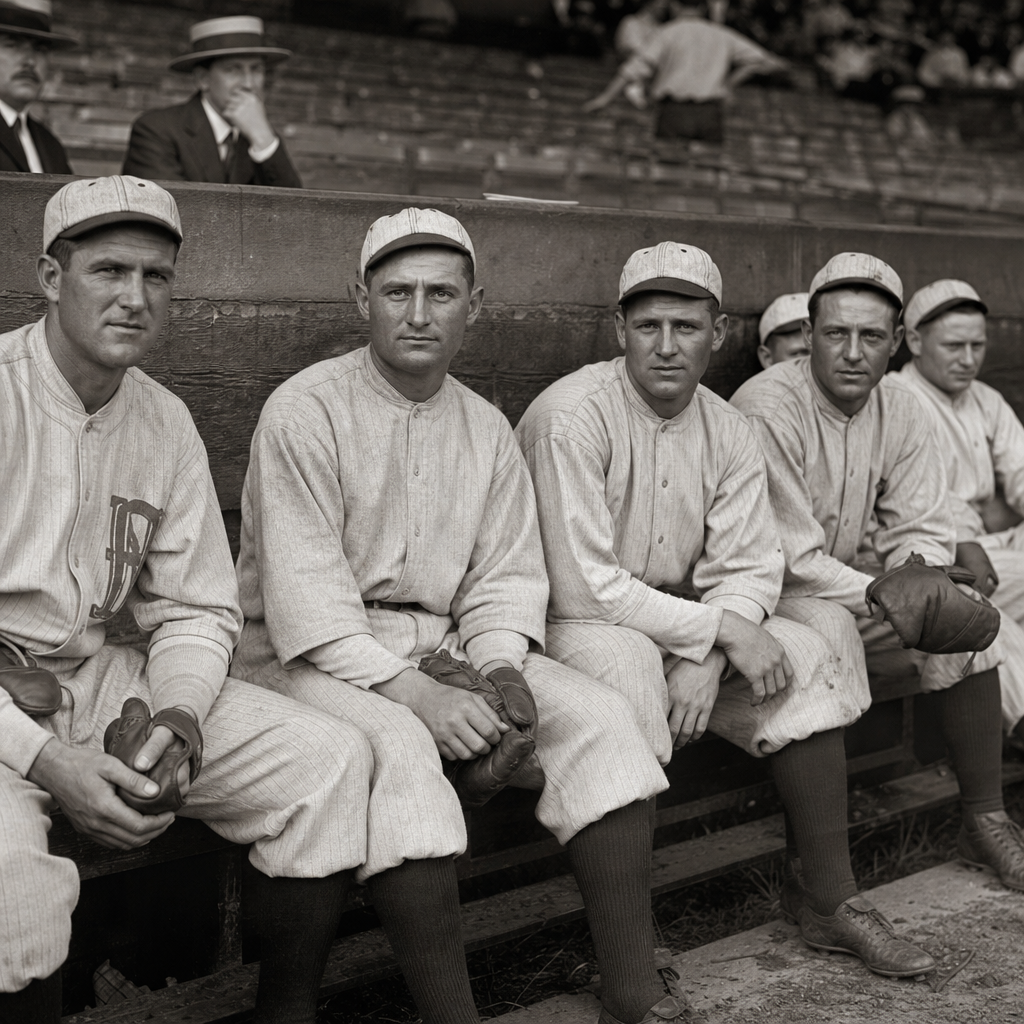
Baseball’s early twentieth century is usually remembered through heroic shorthand: Ty Cobb spikes sharpened by myth, Honus Wagner cards locked behind museum glass, and the Black Sox fixed forever as the sport’s defining betrayal. Yet the period also produced a wider, messier catalog of forgotten cheaters whose schemes fell outside one famous scandal. In clubhouses, betting rooms, front offices, and coaching boxes, players, managers, and owners tested the boundaries of a rapidly professionalizing game. To understand scandals of the early 1900s, you have to look beyond one headline and treat baseball corruption as a system, not an isolated sin.
In this context, cheating means any deliberate effort to gain unfair competitive or financial advantage by violating written rules, accepted sporting norms, or fiduciary obligations. That includes game fixing, sign stealing aided by hidden devices, doctoring baseballs before regulation caught up, contract manipulation, gambling entanglements, identity deception, and owner misconduct. “Forgotten” does not mean trivial. It means these episodes were overshadowed by later legends, poorly documented by uneven newspapers, or folded into the rough-and-tumble image of Deadball Era baseball. Many were serious enough to alter pennant races, stain careers, and push the sport toward stronger governance.
This matters because modern debates about integrity in baseball did not begin with steroids, replay rooms, or video sign stealing. The infrastructure of scandal was already present by 1900: weak central authority, uneven umpiring, low player leverage, open gambling markets, and clubs willing to exploit gray areas. I have spent years reading box scores alongside league rulings and contemporary sporting papers, and one pattern repeats constantly: people cheated most aggressively where baseball lacked clear enforcement. The result was a chain of controversies that connected obscure players to powerful executives and shaped the office of the commissioner, the tightening of rules, and the public demand that the game look clean even when it was not.
As a hub for miscellaneous scandals and controversies, this article maps the lesser-known terrain. It explains how early baseball cheating worked, why it flourished, which episodes still matter, and where each controversy fits within the broader history of the sport. If you want a useful framework, divide these scandals into five buckets: gambling-related manipulation, on-field trickery, roster and contract fraud, front-office corruption, and disciplinary failures. That structure makes sense of a chaotic era and helps connect individual cases that are too often treated as colorful anecdotes instead of evidence of a deeper integrity problem.
Why cheating flourished in baseball’s early professional era
Cheating thrived because baseball expanded faster than its oversight. The National League, American League, and a web of minor leagues operated in an environment with inconsistent discipline and powerful local interests. Before Judge Kenesaw Mountain Landis became commissioner in 1920, league presidents had limited practical control over owners and only partial leverage over players. Ban Johnson, for example, was forceful in public but could not fully police every club, road trip, or gambling relationship. Enforcement depended on witnesses, newspaper pressure, and the willingness of club officials to expose their own men, which was often low.
Money also mattered. Even star players had shorter earning windows than fans assume, and many nonstars earned modest salaries while traveling constantly. Gambling money, offseason jobs, and under-the-table inducements filled real economic gaps. Owners were hardly moral counterweights. Some manipulated player contracts, concealed financial arrangements, or tolerated rule bending if it won games. In cities where bookmakers were visible around ballparks, the distance between spectator, bettor, fixer, and player could be dangerously small. That ecosystem made corruption less an aberration than an occupational hazard.
The style of play created opportunity as well. Deadball Era baseball emphasized bunting, stolen bases, hit-and-run tactics, and close, low-scoring games. A stolen sign, softened baseball, hidden spitball, or arranged misplay could swing an afternoon. Umpires had fewer technological aids, and official baseballs were less tightly standardized before later reforms. Small manipulations had outsized effects. When every run mattered, marginal cheating became strategically attractive. That reality helps explain why scandals ranged from grand conspiracies to tiny deceptions repeated daily.
Gambling, game fixing, and the long shadow beyond the Black Sox
The 1919 World Series fix dominates baseball memory, but it did not emerge from nowhere. Gambling scandals stretched backward for decades. The most important precursor was the 1877 Louisville Grays affair, technically nineteenth century but crucial to understanding the 1900s because it established the template: gamblers targeted underpaid players, clubs hesitated to act until losses became obvious, and baseball framed punishment as a public morality play. That precedent remained alive in sporting culture well into the new century.
By the early 1900s, rumors of thrown regular-season games were common, even when proof was elusive. Hal Chase became the era’s emblem of suspected corruption. A brilliant first baseman, Chase was repeatedly accused by teammates, managers, and executives of associating with gamblers and undermining clubs from within. Christy Mathewson and John McGraw both distrusted him. Chase was not legally convicted in the modern sense, and evidence often came through testimony tangled in baseball politics, but the pattern is too extensive to dismiss as gossip. He was released, blacklisted informally, reinstated in lesser settings, and implicated again. His career shows how baseball’s weak governance allowed a player under recurring suspicion to keep resurfacing.
Another revealing case involved the 1914 Miracle Braves. No credible evidence proves that Boston’s pennant was tainted, but bookmakers and suspicious line movements around certain games intensified public scrutiny of player-bettor contact across both leagues. Newspapers of the period routinely linked odd on-field decisions to gambling chatter. Even when allegations proved unsubstantiated, the sport’s reputation suffered because fans believed fixing was plausible. That loss of trust was itself a scandal.
The Federal League years added another layer. As the upstart circuit competed with organized baseball from 1914 to 1915, contract jumping, clandestine payments, and accusations of bad-faith negotiations multiplied. Not all of that was cheating in the game-fixing sense, but the climate normalized duplicity. Executives poached players while publicly denying contact; players signed overlapping agreements; legal threats were used as leverage. The collapse of trust between labor and management made later gambling approaches easier, because many players already felt the system itself was dishonest.
| Scandal type | Typical method | Why it worked | Long-term effect |
|---|---|---|---|
| Game fixing | Players accepted money to misplay key moments | Low salaries and visible betting markets | Stronger bans and commissioner authority |
| Gambling influence | Ongoing relationships with bookmakers | Weak monitoring of off-field conduct | Permanent suspicion around certain stars |
| Contract fraud | Secret deals, duplicate signings, reserve-clause pressure | Limited player bargaining power | More formal documentation and league review |
| Equipment doctoring | Spit, scuffing, emery, discoloration | Umpires struggled to detect subtle alterations | Tighter ball regulation and later restrictions |
| Sign stealing | Coaches, decoys, hidden signals, optical aids | Close tactical games magnified information edge | Ongoing rules debates that continue today |
On-field trickery: doctored balls, hidden signals, and the art of not getting caught
Not every early cheater was trying to throw a game. Many were trying to win one by manipulating baseball’s equipment and information systems. The spitball was legal for much of the era, but its boundary with illegal doctoring was porous. Pitchers used saliva, tobacco juice, licorice, mud, resin, and abrasives to change movement and visibility. Some of this was culturally accepted until rule changes after the 1920 season, when the league moved against several trick pitches in part because of safety concerns after Ray Chapman’s death. But even before formal restriction, many pitchers crossed from tolerated craft into covert alteration.
The emery ball is a clear example. Russ Ford popularized it after discovering that a scuffed ball could dive sharply. He reportedly used emery paper hidden on his glove or belt. Once opponents noticed unnatural break, complaints followed and the league banned the practice. The significance is broader than Ford alone: his success proved that hidden material and subtle ball damage could create elite advantages before umpires had reliable inspection routines. Similar accusations followed other pitchers, some fairly, some as gamesmanship by frustrated hitters.
Sign stealing occupied another gray zone. Traditional decoding from second base was accepted as baseball intelligence. Mechanical or concealed systems were different. Early clubs used elaborate decoys, coaches with coded gestures, scoreboard cues, and outfield relays. The 1900 Philadelphia Phillies and New York Giants were among teams repeatedly discussed in newspapers for aggressive sign work, though documentation varies by incident. The complaint was not merely that signs were stolen, but that organized bench systems turned private tactical communication into a technological contest long before electronics. Fans often romanticize this ingenuity, yet participants at the time understood the ethical line and argued over it constantly.
Then there were physical deceptions: hidden-ball tricks aided by uniform camouflage, infielders obscuring tags, runners cutting bases when umpire sightlines were poor, and catchers framing before framing had a name. Some tactics were legal stunts; others were straightforward cheating. The challenge for historians is that early baseball culture admired cunning. A player could be praised as “heady” in one paper and condemned as crooked in another for essentially the same maneuver. That ambiguity helped misconduct survive.
Roster fraud, contract manipulation, and age-old identity schemes
Baseball scandals of the early 1900s were not limited to what happened between first pitch and final out. Clubs and players also manipulated eligibility and employment rules. The reserve clause gave owners extraordinary power, allowing them to bind players while limiting open bidding. Owners used blacklist threats, delayed reporting of releases, and side agreements to suppress salaries or block movement. Players responded with aliases, barnstorming violations, and contract jumping. These disputes may look administrative today, but they were central integrity controversies because they involved deception about who had rights to a player’s labor.
The most common pattern was double dealing during league competition for talent. A player might sign with an American League club while quietly negotiating with the National League or Federal League. Owners did the same in reverse, promising terms they later denied or structuring unofficial bonuses outside recorded salary. The legal battles around Napoleon Lajoie’s jump to the American League and later Federal League raids exposed how fragile baseball’s contractual order really was. Although those cases are usually told as business history, they belong in any catalogue of scandals because misrepresentation was routine and often intentional.
Identity manipulation also appeared. Documentation standards were inconsistent, especially in the minors and in semipro circuits feeding the majors. Players shaved years off their ages, altered names to evade reserve claims, or hid prior disciplinary histories. Because records were fragmented, clubs could plausibly deny knowledge. This was less spectacular than a fixed World Series, but it mattered. A roster built on concealed ineligibility or false identity distorted competition and undermined confidence in league control.
One underappreciated issue involved amateur status and college affiliations. As baseball expanded, some supposedly amateur players accepted covert payments, while clubs used sham jobs or expense arrangements to preserve eligibility optics. That practice foreshadowed later debates in college athletics. In the early 1900s, however, oversight was so limited that exposure often depended on local rivals rather than central investigation.
Owners, managers, and officials were part of the problem
It is a mistake to frame early baseball cheating as a player-only story. Owners and managers often created the incentives, tolerated the conduct, or participated directly in questionable schemes. Charles Comiskey remains central here. He is remembered mainly as the aggrieved owner of the White Sox during the Black Sox case, yet his labor practices and penny-pinching reputation contributed to player resentment and vulnerability. That does not excuse game fixing, but it demonstrates a structural truth: corruption grows when leadership treats rules as flexible and workers as disposable.
John McGraw presents another example of complexity. He was one of baseball’s great tactical minds, but his Giants teams were repeatedly associated with aggressive bench deception, umpire intimidation, and strategic use of loopholes. McGraw did not invent rule stretching, and many rivals behaved similarly, yet his career shows how respected baseball men could normalize ethically dubious behavior while still being celebrated as geniuses.
League officials also failed. The National Commission, baseball’s governing body before the commissioner era, was poorly equipped for credible independent discipline. Conflicts of interest were built in because club power remained close to the enforcement mechanism. Investigations were inconsistent, and sanctions often depended on politics, publicity, and personal alliances. Landis later projected severity by banning the Black Sox for life despite acquittal in court, but his rise itself was an admission that the previous system had lost public confidence.
What these forgotten scandals changed in baseball
The legacy of these early controversies is not just moral caution; it is institutional reform. Baseball tightened control over gambling contacts, formalized disciplinary authority, and moved toward cleaner ball handling and clearer equipment rules. The 1920 creation of the commissioner’s office was the most visible response, but change also occurred in quieter ways: standardized contracts, more scrutiny of player eligibility, stricter policing of doctored pitches, and a stronger expectation that clubs protect the game’s commercial legitimacy.
Just as important, these scandals shaped baseball storytelling. The sport preserved some villains and buried others based on market size, press access, and the convenience of having one master narrative. As a result, many fans know the Black Sox but not Hal Chase, know the spitball as folklore but not the emery ball as competitive fraud, and know owner outrage without studying owner misconduct. A complete understanding of scandals and controversies requires widening the frame.
That is the value of this miscellaneous hub. It connects gambling, on-field cheating, contract abuse, and governance failure into one historical map. If you are exploring related articles in this subtopic, use this page as your starting point: identify the type of misconduct, ask who benefited from weak enforcement, and trace what reform followed. Baseball’s forgotten cheaters matter because they reveal how the sport actually matured. Integrity was not inherited. It was demanded, often after embarrassment. Read deeper into each case, and the early 1900s stop looking quaint. They start looking familiar.
Frequently Asked Questions
Were cheating scandals in early 1900s baseball limited to the Black Sox?
No. The Black Sox scandal became the era’s most famous symbol of corruption, but it was only the best-known episode in a much broader culture of rule-bending, gambling influence, and competitive deception. In the early twentieth century, professional baseball was still trying to define its authority, standardize enforcement, and separate acceptable gamesmanship from outright fraud. That left room for a range of scandals involving players taking money from gamblers, clubs stealing signs through elaborate systems, managers manipulating rosters or umpiring conditions, and owners making ethically dubious decisions behind the scenes. Many of these incidents never reached the mythic status of the 1919 World Series because they were less dramatic, less documented, or easier for the sport to bury.
What makes these forgotten scandals so important is that they reveal corruption as structural rather than exceptional. Baseball was growing into a national business, but its oversight was uneven, salaries were often contentious, and gambling was deeply woven into sporting culture. That environment encouraged small cheats as well as major betrayals. Some participants saw their actions as practical survival, others as clever strategy, and still others as simple profit. Looking beyond the Black Sox helps us understand that early baseball’s integrity crisis was not one isolated collapse, but a recurring struggle over money, control, and the meaning of fair play.
What kinds of cheating were common in baseball during the early 1900s?
The cheating of the period came in many forms, and not all of it looked the same to contemporaries. Gambling-related misconduct was the most serious category: players or associates might share inside information, shave effort, or in extreme cases help influence outcomes for bettors. Sign stealing was another major issue, especially when clubs used hidden observers, scoreboards, mirrors, telescopes, or relay systems from the stands or coaching boxes. While basic sign stealing from a runner on base was often tolerated as part of strategy, mechanical or organized systems pushed it into scandal territory even then.
There were also more physical and tactical forms of cheating. Players doctored baseballs with spit, emery boards, mud, tobacco juice, or other substances to alter movement and make pitches harder to read. Fielders sometimes manipulated equipment or conditions, and managers looked for every legal gray area they could exploit, from deceptive substitutions to attempts to influence umpires. Owners and executives could participate in a different kind of dishonesty by suppressing controversy, leaning on league politics, or handling discipline selectively when a star player or profitable club was involved. In other words, cheating was not one behavior but a spectrum, ranging from “everyone tries it” tricks to actions that threatened the legitimacy of results themselves.
Why have so many early baseball cheaters been forgotten?
Many early scandals faded because the record itself was fragmentary. Sports journalism in the early 1900s could be aggressive, but it was also inconsistent, partisan, and sometimes reluctant to damage the game’s reputation. Teams, league officials, and newspapers often had shared incentives to downplay controversy, especially as baseball tried to present itself as the respectable national pastime. Smaller scandals could disappear quickly if no formal investigation followed, if the accused lacked star power, or if the evidence remained circumstantial. In an era before modern broadcast archives and digital databases, memory depended heavily on what reporters chose to preserve.
Another reason is narrative competition. Baseball history tends to compress eras into iconic names and defining events. The Black Sox scandal became the master story of corruption, leaving less room in public memory for dozens of lesser-known episodes involving gamblers, sign thieves, doctored-ball specialists, and compromised officials. Some cases were also morally ambiguous, which made them harder to remember. A player who illegally scuffed a ball could be seen as crafty rather than criminal, while a club that stole signs with technology might be criticized but not immortalized. The result is that many early cheaters slipped into footnotes, not because they were unimportant, but because later storytelling preferred cleaner legends and clearer villains.
How did baseball respond to these scandals before strong modern league oversight existed?
Before the commissioner system brought more centralized authority, baseball’s responses were often uneven, political, and reactive. Discipline could vary dramatically depending on who was involved, how public the scandal became, and whether ownership feared financial damage. League presidents had some power, but enforcement was not always consistent across teams or situations. A marginal player suspected of gambling might be pushed out quietly, while a star with comparable allegations could receive more protection. Clubs sometimes handled problems internally, which meant punishment could be shaped by competitive needs rather than principle.
This inconsistency was one reason scandal kept resurfacing. Without a trusted, independent mechanism for investigating misconduct, rumors could linger and confidence could erode even when formal proof was scarce. The post-Black Sox reforms, including the rise of Commissioner Kenesaw Mountain Landis, reflected baseball’s recognition that piecemeal responses were no longer enough. But the roots of that change lie in the forgotten scandals that came before: years of betting concerns, sign-stealing disputes, doctored-ball controversies, and club-level evasions that exposed how vulnerable the game was when authority was fragmented. The early system did not merely fail to eliminate cheating; it often struggled to define and confront it coherently.
What do these forgotten scandals reveal about early baseball culture?
They reveal a sport caught between rough-edged nineteenth-century habits and the demands of modern professionalism. Early baseball celebrated cunning, intimidation, and competitive nerve, so many participants operated with a flexible sense of what counted as acceptable advantage. Players were expected to be tough and resourceful, managers were praised for outsmarting opponents, and owners often prioritized gate receipts over moral clarity. In that culture, some forms of cheating could be reframed as gamesmanship until they became too visible to ignore. The boundary between cleverness and corruption was constantly contested.
These scandals also show how commercialization changed the stakes. As baseball grew into a bigger business, every pennant race, attendance figure, and gambling connection carried more financial weight. That pressure encouraged both innovation and abuse. Forgotten cheaters from the early 1900s matter because they complicate the nostalgic image of a simpler game. The era was not just a gallery of legends and sepia-toned heroes; it was a proving ground where the sport learned, often painfully, that popularity without strong governance invites manipulation. Understanding that tension makes the period more human and more historically honest.