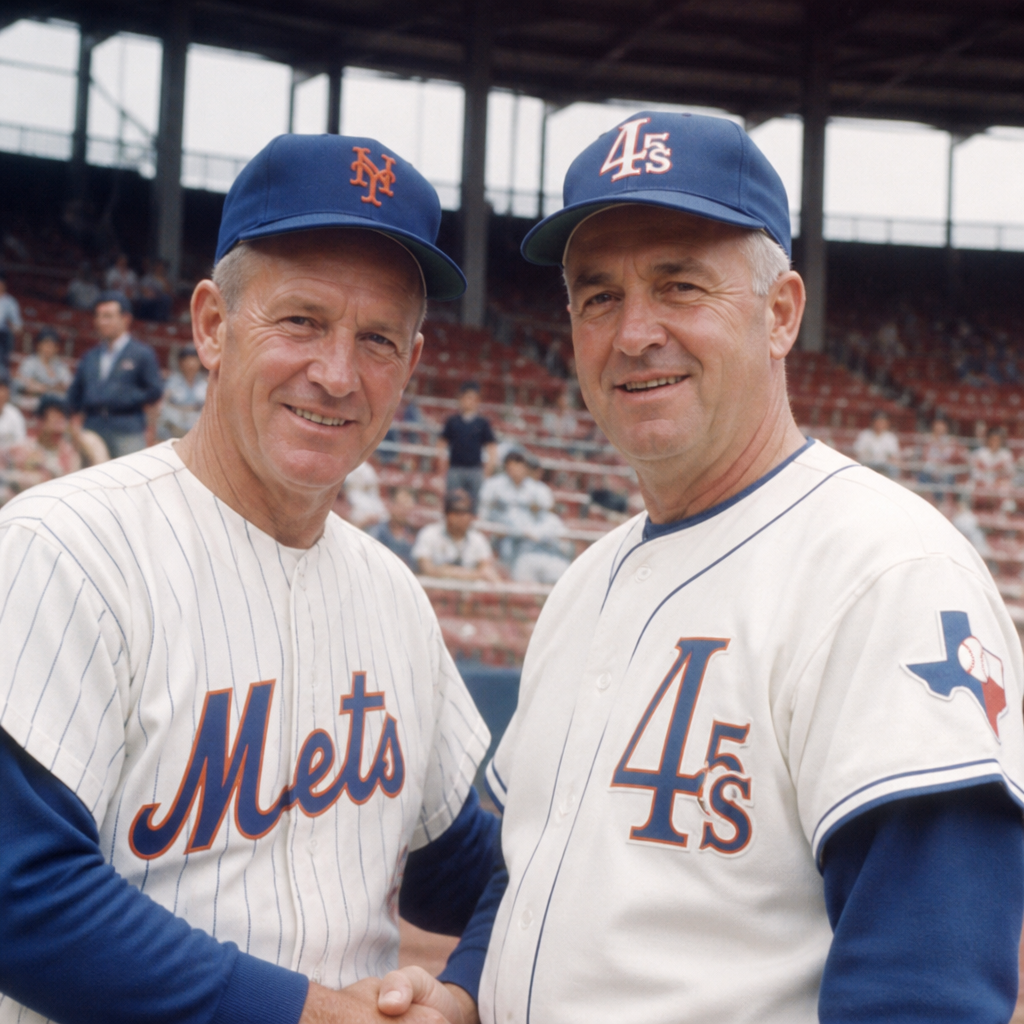
The 1962 expansion season changed Major League Baseball by adding the New York Mets and Houston Colt .45s to the National League, but its real importance goes far beyond two new uniforms and two new ballparks. It marked the moment when modern baseball accepted that growth, relocation pressure, television markets, labor change, and competitive balance would shape every era that followed. In baseball terms, expansion means adding new franchises to a league, while free agency refers to the right of players to choose employers after meeting contractual rules rather than remaining tied indefinitely to one club. Those ideas did not fully arrive together in 1962, yet they are inseparable in any serious history of baseball’s business evolution. I have worked through this period in newspaper archives, league records, and front-office histories, and the pattern is unmistakable: 1962 was the hinge point between the old reserve-clause game and the national entertainment industry baseball became. For readers exploring baseball eras, this expansion and free agency hub explains how the Mets and Colt .45s entered the league, why owners approved them, how expansion drafts worked, what immediate competitive effects followed, and how the same forces eventually opened the door to player mobility. If you want to understand later milestones such as divisional realignment, amateur draft reform, owner collusion disputes, and the rise of blockbuster payrolls, start with 1962, because this is where the logic of modern baseball begins.
Why the National League Expanded in 1962
The National League did not expand out of pure optimism. It expanded because market pressure, political pressure, and strategic fear made standing still more dangerous than change. The Dodgers and Giants had left New York after the 1957 season, creating a massive vacuum in the nation’s largest media market. National League owners understood that abandoning New York entirely risked weakening sponsorships, television relevance, and public legitimacy. At the same time, Houston represented a fast-growing Sun Belt city with population growth, business investment, and civic ambition. Bringing a team to Texas also gave the league a foothold in a region that looked increasingly important for travel, broadcasting, and future fan development.
There was another factor owners rarely admitted plainly: competition from the proposed Continental League. Led in part by Branch Rickey and backed by powerful civic interests, the Continental League threatened to become a legitimate third major league if established baseball refused to grow. Expansion became a defensive move. By awarding franchises to New York and Houston, and by promising future placements elsewhere, Major League Baseball undercut the insurgent league before it could fully launch. In practice, the 1962 season was a negotiated answer to a governance crisis. Baseball kept control by giving cities what they wanted without surrendering monopoly power.
This matters to the larger topic of expansion and free agency because ownership decisions in baseball usually follow leverage. Cities gained leverage through stadium deals and political organization. Later, players gained leverage through grievance procedures, arbitration, and antitrust pressure. The mechanisms differed, but the pattern was similar: the side with alternatives forced the institution to modernize. The 1962 expansion season is the cleanest early example of that dynamic inside the sport’s structure.
The New York Mets: Replacing a Lost Baseball Identity
The Mets were created to restore National League baseball to New York, but they were more than a sentimental project. They were an economic necessity wrapped in civic theater. The franchise drew immediately on the emotional residue left by the departed Dodgers and Giants, using blue and orange to connect both traditions. Joan Whitney Payson became the first majority female owner in Major League Baseball, and club executives understood from day one that the Mets had to sell memory before they could sell victories. Their first home, the Polo Grounds, was itself a symbolic bridge to New York baseball history, even if it was aging and imperfect.
On the field, the 1962 Mets were famously poor, finishing 40-120, still one of the worst records in modern major league history. Yet reducing them to comic failure misses the deeper point. Expansion teams were built from exposed players, aging veterans, unprotected prospects, and castoffs from stronger rosters. The Mets’ inaugural team included recognizable names such as Gil Hodges, Richie Ashburn, Frank Thomas, and Roger Craig, but most were past peak value or ill-suited to build a contender. In practical terms, the club was assembling inventory, not crafting a finished competitive machine. Casey Stengel, already a legend from his Yankees years, gave the franchise instant visibility and enough personality to turn defeat into narrative.
That public narrative mattered. Attendance proved New York would support National League baseball again, and the Mets quickly became commercially viable despite losing. This is one of the most important lessons of baseball expansion: a new club does not need immediate wins to succeed if it has market fit, civic identity, and ownership willing to absorb early losses. Future expansion franchises repeatedly followed that template, and it remains relevant whenever leagues evaluate whether a city can sustain a team.
The Houston Colt .45s: Baseball Enters the Modern Sun Belt
Houston’s entry into the National League signaled a geographic future for baseball. The Colt .45s, who became the Astros in 1965 when they moved into the Astrodome, represented more than Texas pride. They represented a shift toward growth markets outside the traditional northeastern and midwestern power centers. Judge Roy Hofheinz, one of the central figures behind the franchise, understood that big-league status was tied to civic branding, infrastructure, and spectacle. Houston was selling itself as modern, expansive, and technologically ambitious, and baseball fit that identity perfectly.
The 1962 Colt .45s were much more competitive than the Mets, finishing 64-96. That record was not good, but it was respectable for an expansion club. Manager Harry Craft oversaw a roster that mixed veterans and useful younger pieces more effectively than New York did. Roman Mejias provided power, and the team played with enough competence to avoid becoming a punchline. In front-office terms, Houston’s debut showed that expansion outcomes could vary sharply depending on scouting, roster construction, and organizational discipline.
Houston also matters in the free agency story because Sun Belt expansion widened the labor map of the sport. As baseball entered new cities, players gained more potential destinations, owners chased new revenues, and the economic scale of the game increased. More money in more markets did not automatically create player freedom, but it raised the stakes of labor control. Once revenues expand, fights over who captures them become inevitable. Houston’s arrival was one early sign that baseball’s old labor restraints would eventually collide with its new commercial reach.
How the 1961 Expansion Drafts Shaped the 1962 Season
The Mets and Colt .45s did not build from scratch in a vacuum. They stocked their rosters through expansion drafts held in October 1961, selecting from players left unprotected by existing National League clubs. Expansion drafts are designed to distribute enough major league talent to make new teams functional without crippling established teams. In practice, the balance usually favors incumbents. Clubs protect core contributors and premium prospects, exposing older veterans, role players, injury risks, or players blocked at their positions. I have reviewed several expansion mechanisms across eras, and the same principle appears every time: the rules tell you what owners value and what they are willing to lose.
For 1962, both new clubs also used conventional trades, waiver claims, minor league acquisitions, and cash purchases to round out their organizations. That broader acquisition picture is often overlooked. Expansion teams are not formed by one draft alone; they are built through months of opportunistic transaction work. The table below summarizes the environment the two clubs faced in plain terms.
| Topic | New York Mets | Houston Colt .45s | Why It Mattered |
|---|---|---|---|
| Primary market purpose | Restore NL presence in New York | Establish NL foothold in Texas | One franchise repaired a lost market; the other opened a growth market |
| 1962 record | 40-120 | 64-96 | Showed how different expansion outcomes could be under similar rules |
| Roster profile | Aging veterans, castoffs, name recognition | More balanced mix of usable veterans and younger pieces | Expansion success depended on selection quality, not just draft order |
| Strategic value to league | Recaptured media relevance | Expanded geographic footprint | Together they strengthened league bargaining power and reach |
The limitations of the 1961 process help explain why expansion and free agency belong together in one historical conversation. Owners were comfortable redistributing marginal talent by rule, but they fiercely resisted a system in which players could redistribute themselves by choice. Expansion was controlled mobility; free agency would become worker mobility. That distinction is the heart of baseball’s labor history.
Competitive Consequences Across the League
Adding two teams changed more than the standings for New York and Houston. It altered scheduling, diluted pitching depth, created new travel patterns, and redistributed veteran playing time. Existing clubs had to expose players, and even if they mostly protected stars, the loss of useful depth mattered over a long season. The league expanded from eight to ten teams, increasing the number of roster spots and the demand for major league-caliber talent. Whenever baseball expands, the first strain appears on pitching, because reliable arms are the hardest asset to replace quickly.
The 1962 pennant race also shows why expansion can intensify competition at the top rather than weaken it uniformly. The San Francisco Giants and Los Angeles Dodgers fought one of the most dramatic races in history, ending in a three-game playoff after a 101-61 tie. Expansion did not make the season forgettable. It made the league broader while preserving elite rivalry at the summit. That is a useful corrective to the lazy assumption that expansion always ruins quality. In reality, quality shifts unevenly. Depth gets thinner, but star power and pennant drama can remain exceptional.
From a development perspective, expansion also created opportunity. Players who might have been bench pieces or upper-minors regulars on older clubs suddenly received regular major league innings and plate appearances. Some failed under that exposure. Others established careers because the new clubs needed volume and patience. Modern analysts would call this an opportunity-cost reshaping of the labor market: when the number of jobs rises, organizations re-evaluate fringe talent. That same labor-market logic later underpinned salary arbitration and free agency, where more competition for services increased player value.
Why 1962 Belongs in the Story of Free Agency
Free agency did not arrive in 1962. The reserve clause still bound players to clubs, and true modern free agency would not emerge until after the Messersmith-McNally decision in 1975 and the 1976 Basic Agreement. Yet 1962 belongs in the same hub because expansion accelerated the economic and structural conditions that made labor reform unavoidable. More teams meant more revenue streams, more owners with different competitive needs, and more pressure to secure talent efficiently. The larger the industry became, the harder it was to justify a labor system built for a smaller, regional game.
Several milestones connect directly to this arc. The 1965 amateur draft attempted to rationalize talent acquisition and curb bonus wars. Marvin Miller’s rise as executive director of the Major League Baseball Players Association in 1966 gave players disciplined representation. Salary arbitration began in 1973, creating a formal mechanism to challenge club salary decisions. Then came the Seitz ruling after pitchers Andy Messersmith and Dave McNally played without signed contracts and challenged perpetual renewal. Once free agency arrived, owner strategy changed permanently. Clubs had to think not only about scouting and development, but also retention, market pricing, contract length, and long-term payroll risk.
Seen this way, the 1962 expansion season is the front end of a chain. Expansion increased the scale of the business. Scale intensified labor tension. Labor tension produced new bargaining frameworks. New bargaining frameworks produced player movement and a transformed roster economy. If your larger interest is “Expansion and Free Agency,” this is the proper starting point because it shows the industry before player choice, at the exact moment the business became too large to remain governed by old assumptions.
The Lasting Legacy for the Expansion and Free Agency Era
The legacy of the Mets and Colt .45s is not limited to nostalgia, logos, or the novelty of first seasons. Their arrival established the practical blueprint for how baseball grows: identify underserved markets, negotiate stadium solutions, construct temporary rosters from protected systems, accept short-term competitive imbalance, and monetize long-term regional loyalty. Later expansions in 1969, 1977, 1993, and 1998 all followed variations of this model. So did relocations, divisional redesigns, and broadcast strategies built around new households and new time zones.
Just as important, 1962 reminds us that ownership expansion and player freedom are two sides of the same modernizing process. Owners sought new territory, new revenues, and new leverage. Players eventually sought new employers, new salaries, and new leverage. Baseball’s contemporary structure, from luxury-tax planning to long-term extensions and opt-outs, rests on that shared history. When I explain this era to readers, I emphasize one simple truth: expansion changed where baseball could go, and free agency changed who controlled the journey.
For anyone building a deeper understanding of baseball eras, use this article as the hub for the entire expansion and free agency subject. From here, the next logical steps are to study the Continental League threat, the 1961 expansion draft, the 1965 amateur draft, Marvin Miller’s union strategy, the Messersmith-McNally case, and the free-agent market that reshaped roster construction in the 1980s and beyond. The 1962 expansion season is where that story becomes visible. Revisit the Mets, revisit the Colt .45s, and you will see the beginning of modern baseball clearly.
Frequently Asked Questions
Why was the 1962 expansion season such a major turning point for Major League Baseball?
The 1962 expansion season was important because it represented far more than the simple addition of two National League clubs, the New York Mets and the Houston Colt .45s. It signaled that Major League Baseball was entering a new era in which growth was no longer optional. Population shifts, new media markets, political pressure from cities seeking teams, and the financial influence of television all made expansion an increasingly logical and necessary strategy. Baseball had long been tied to its traditional urban centers, but by the early 1960s it was clear that the sport needed to adapt to a changing United States.
This season also reflected the league’s response to instability created by franchise movement. The Dodgers and Giants had moved west just a few years earlier, proving that geography in baseball was no longer fixed. That change created both opportunity and anxiety. On one hand, the sport could now reach new audiences. On the other, fans in abandoned markets and officials in ambitious cities demanded answers. The 1962 expansion helped address those pressures by restoring National League baseball to New York through the Mets and planting a new franchise in Houston, a fast-growing city that symbolized baseball’s southern and southwestern future.
Just as importantly, the expansion season revealed a modern truth that would define the decades ahead: baseball’s structure would increasingly be shaped by business realities. Market size, stadium deals, regional identity, attendance potential, media reach, and eventual labor changes all became part of the conversation. In that sense, 1962 was a bridge between the old major leagues and the modern game. It showed that baseball was no longer just preserving tradition; it was actively redesigning itself to survive and grow.
Why were the New York Mets and Houston Colt .45s chosen as expansion teams?
The Mets and Colt .45s were chosen because each franchise answered a different strategic need for the National League. In New York, the case was obvious and urgent. When the Brooklyn Dodgers and New York Giants left for California after the 1957 season, the National League abandoned one of the most important baseball cities in the world. New York still had the American League’s Yankees, but there was a massive fan base that had identified with National League baseball and felt disconnected after the departures. Creating the Mets gave the league a way to reclaim that audience, restore its presence in the nation’s largest media market, and capitalize on the deep emotional attachment New Yorkers still had to the game.
Houston offered a different kind of value. The city represented growth, geography, and future potential. Texas was expanding economically and demographically, and Houston in particular was emerging as a major urban center with strong business support. By placing a team there, the National League moved into a new region and positioned itself in a market that could grow with the sport. The Colt .45s gave the league a foothold in the South and Southwest, helping baseball extend beyond its older northeastern and midwestern base.
The selections also reflected practical and political considerations. Ownership groups had to demonstrate financial stability, local backing, and a workable stadium situation. Expansion was not just about enthusiasm; it required credible investors and cities willing to support a major league operation. New York and Houston both met those tests in different ways. One restored a lost baseball capital, while the other opened the door to a broader national footprint. Together, they made the 1962 expansion feel both corrective and forward-looking.
How did the 1962 expansion season affect competitive balance in the National League?
Expansion always places pressure on competitive balance, and 1962 was no exception. When new teams enter a league, they must build rosters from a limited player pool, usually through expansion drafts, minor league acquisitions, trades, and castoffs from established clubs. That process almost guarantees short-term weakness. Existing teams protect their best talent, leaving expansion franchises to assemble lineups and pitching staffs with many second-tier players, veterans near the end of their careers, and unproven younger pieces. The Mets became famous for their struggles in 1962, and while the Colt .45s were more competitive, both teams illustrated the challenge of immediate viability.
At the same time, the expansion season forced the league to confront a larger issue: how to grow without undermining the quality of play. Baseball wanted new markets and new revenue, but it also needed to maintain public confidence in the product on the field. The difficulties faced by the new clubs highlighted the tension between rapid growth and competitive integrity. That tension would remain central in future expansions, leading leagues to refine draft rules, revenue structures, talent development systems, and scheduling models.
In the long run, however, expansion can improve competitive balance by broadening opportunity and forcing institutional adaptation. More teams mean more jobs for players, more demand for scouting and player development, and more reasons for the sport to distribute resources more carefully. The 1962 season showed the immediate downside of expansion in win-loss terms, but it also helped set the stage for a more sophisticated baseball system. Over time, the league learned that balance was not something preserved by standing still; it had to be managed actively as the sport grew.
What role did television, market expansion, and relocation pressure play in the 1962 changes?
Television, market expansion, and relocation pressure were central to why the National League expanded in 1962. By the early 1960s, baseball was operating in a country transformed by postwar migration, suburban growth, and the rapid expansion of broadcast media. Television in particular changed the economics of sports. Teams were no longer limited to the fans who could physically attend games. A franchise in a large media market offered enormous value because it could attract advertisers, create regional loyalty, and generate broader visibility for the league. New York’s return as a National League city was especially important in that respect, while Houston represented a chance to establish the game in a booming market before rivals could dominate it.
Relocation pressure also mattered because baseball had already seen that franchises were willing to move when they believed better opportunities existed elsewhere. The Dodgers and Giants had shattered the idea that clubs were permanently tied to their historical homes. That precedent meant any city without a team might campaign aggressively for one, while any city with stadium problems or financial frustrations might fear losing its club. Expansion offered baseball a way to respond to some of that pressure without relying exclusively on relocation. Instead of merely shifting teams around, the league could create new ones and expand its overall footprint.
This combination of factors made 1962 feel unmistakably modern. Baseball was no longer organized only around legacy, tradition, and gate receipts. It was increasingly shaped by media access, regional strategy, demographic growth, and civic competition. The Mets and Colt .45s were products of that reality. Their arrival showed that league decisions would now be heavily influenced by broadcast value, market reach, and the need to manage political and economic pressure from cities across the country.
How does the 1962 expansion season connect to later changes like free agency and the modern business of baseball?
The 1962 expansion season connects to later developments such as free agency because it reflected the beginning of a broader transformation in how baseball understood power, labor, and economics. Expansion increased the number of major league jobs, spread the sport into new markets, and heightened the importance of revenue generation. Those changes did not create free agency by themselves, but they helped build the conditions for a more complex and modern baseball economy. As the game grew, owners, players, and the league office all had to think more carefully about contracts, talent distribution, franchise value, and the relationship between competition and business strategy.
Free agency, in baseball terms, refers to a player’s right to sign with a new team after meeting certain contractual and service requirements rather than being controlled indefinitely by one club. That system emerged later, but the pressures that made it meaningful were already becoming visible in the early 1960s. More teams meant more demand for players. More markets meant more money at stake. More media attention meant that player value became easier to recognize and compare. As baseball expanded, it became harder to maintain older labor assumptions without challenge.
The 1962 season therefore matters not just as a historical milestone, but as an early chapter in baseball’s modernization. It showed a sport adjusting to national scale, market competition, and institutional change. In the decades that followed, those same forces would shape collective bargaining, salary structures, franchise relocation debates, divisional realignment, playoff expansion, and media rights. Seen that way, the arrival of the Mets and Colt .45s was not an isolated event. It was part of a much larger shift toward the modern major leagues, where business decisions, labor rights, competitive balance, and audience growth are all tightly connected.