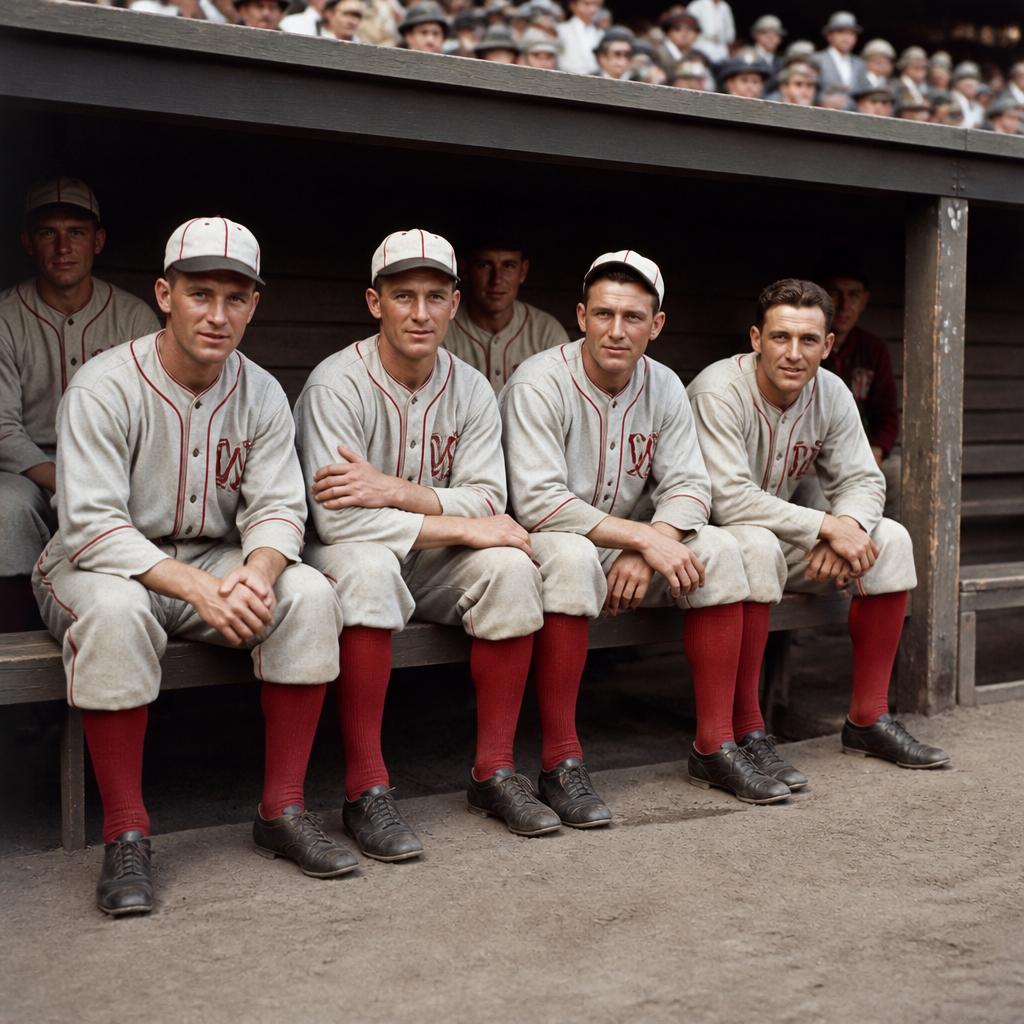
The Worcester Ruby Legs were one of baseball’s shortest-lived major league clubs, yet they occupy an outsized place in the history of 19th-century clubs because their story captures the volatility, ambition, and experimentation that defined early professional baseball. Founded in Worcester, Massachusetts, and admitted to the National League for the 1880 season, the club represented a bold small-market gamble at a time when organized baseball was still deciding what a major league team should look like, where it could survive, and how tightly the sport needed to be managed. For readers exploring famous baseball teams through the lens of 19th-century clubs, Worcester is essential because the franchise sits at the crossroads of league expansion, player labor controls, regional economics, and the uneven shift from loosely organized professional clubs to durable national institutions.
The nickname itself is a reminder of how fluid baseball identity was in the 1870s and 1880s. Contemporary newspapers used “Worcesters,” “Brown Stockings,” and eventually “Ruby Legs,” though the last label was never as official or universal as later baseball branding. In practical terms, the team evolved from the successful Worcester Worcesters of the minor-league National Association and won admission to the National League after the collapse or instability of several earlier clubs. That progression matters because 19th-century clubs were not yet fixed entertainment brands with century-long continuity. They were civic ventures, often undercapitalized, dependent on local gate receipts, railroad access, weather, and league politics. Worcester’s rise and fall shows how thin the margin could be between a respected regional power and a failed major league experiment.
Understanding the Worcester Ruby Legs also helps explain broader patterns across 19th-century clubs. Small-city franchises regularly sought legitimacy by joining or challenging the National League, while rival circuits such as the American Association, Union Association, and Players’ League tested different business models. Rules changed quickly, schedules were unbalanced, and rosters were unstable. Owners fought over territorial rights, player contracts, and Sunday baseball. In that environment, Worcester became both participant and case study. The club produced memorable on-field moments, including Lee Richmond’s perfect game in 1880, but its larger significance lies in what it revealed about market size, fan support, and the league’s appetite for disciplined governance over speculative expansion.
How Worcester Reached the National League
Worcester did not appear from nowhere. The city had a serious baseball culture, and the local club built credibility through strong play in the late 1870s. In 1879, Worcester won the National Association pennant, positioning itself as a logical candidate when the National League needed a replacement for the defunct Syracuse Stars. League officials wanted stability more than glamour. They valued clubs that would honor travel commitments, pay obligations, and maintain order in an era when franchise failures were common. Worcester looked disciplined, geographically sensible within the league’s northeastern footprint, and respectable enough to be trusted with major league status.
That promotion reflected a recurring pattern among 19th-century clubs: minor-league success could open the door to major league entry, but the standards were financial and political as much as competitive. I have worked through old standings and league reports often enough to say that teams in this era were judged on whether they could finish a schedule, not simply whether they could win one. Worcester’s admission therefore says as much about the fragile ecosystem of the National League as it does about the club’s own merit. The league preferred controlled growth and respectable operators after the chaos that had damaged earlier professional associations.
Worcester’s home setting also mattered. New England offered rail connections and a baseball-aware public, even if Worcester itself was not a giant population center. The club’s ballpark, the Worcester Driving Park Grounds, gave the city a place to stage top-level baseball, but attendance ceilings were evident from the start. Compared with Boston, Chicago, or Philadelphia, Worcester had less room for error. A rainy week, a poor home stand, or weak visiting draw could significantly hurt revenues. That structural constraint would follow the franchise throughout its National League life.
Why the Ruby Legs Matter Among 19th-Century Clubs
Among 19th-century clubs, Worcester is not remembered because it dominated the standings. It matters because it demonstrates what the National League was trying to become. By 1880, the league was moving toward stricter centralized control, cleaner scheduling, and more predictable business practices than the old National Association of Professional Base Ball Players had offered. Worcester represented a test of whether a well-run but modest market could fit inside that model. The answer was mixed. The club proved that baseball quality could emerge outside the largest cities, but it also exposed how heavily major league survival depended on urban scale and recurring gate revenue.
Worcester also helps historians bridge the gap between famous dynastic clubs and the many teams that disappeared. Baseball memory naturally favors champions such as the Chicago White Stockings or later powerhouse franchises, but the sport’s structure was shaped just as much by clubs that failed. Every early folding team taught owners something about territory, travel, local support, roster retention, and the economics of weekday afternoon baseball. Worcester’s tenure from 1880 through 1882 delivered lessons the league clearly absorbed: smaller cities faced chronic revenue disadvantages, and even competent baseball operations could not overcome limited attendance for long.
Another reason Worcester matters is that the club’s story is unusually rich in landmark events despite its brevity. Lee Richmond’s perfect game on June 12, 1880, against Cleveland was the first in major league history. Pitcher Monte Ward later threw the second perfect game, against Buffalo that same month, making Worcester the only franchise to record the first two major league perfect games. Those achievements ensure that the club belongs in any serious overview of 19th-century baseball, not as trivia, but as evidence that transient teams could still produce foundational moments in the sport’s statistical and narrative record.
On-Field Performance, Style, and Signature Players
Worcester’s National League results were respectable at first and poor by the end. The club finished 40-43 in 1880, sixth in an eight-team league, then 32-50 in 1881, and finally 18-66 in 1882. Those records show a franchise that entered competitively enough but could not sustain talent depth against stronger rivals. Run prevention was often its best path to success, reflecting the era’s low-scoring environment, evolving pitching mechanics, and the strategic premium on fielding and control. Teams did not rely on modern power hitting; they won through contact, bunting, baserunning pressure, and exploiting defensive mistakes.
Lee Richmond was the club’s defining early star. A right-handed pitcher and capable hitter, Richmond brought credibility immediately. His perfect game, achieved despite an injured hand, stands as one of the era’s great performances. Monte Ward, another elite pitcher, added prestige before his later fame as a star, labor activist, and legal thinker in baseball’s reserve-rule battles. The roster also included players such as Lip Pike, a major figure from baseball’s transitional years, though by the time he reached Worcester he was closer to the end of his best seasons. The team therefore blended emerging talent with veterans whose reputations exceeded their remaining value, a common pattern for 19th-century clubs trying to compete without the deepest financial resources.
| Season | National League Finish | Record | Notable Fact |
|---|---|---|---|
| 1880 | 6th of 8 | 40-43 | Lee Richmond threw the first major league perfect game |
| 1881 | 8th of 8 | 32-50 | Attendance and competitive depth became clear problems |
| 1882 | 8th of 8 | 18-66 | Franchise collapsed after a severe decline on the field |
When I compare Worcester with better-known 19th-century clubs, the biggest difference is not effort or even baseball intelligence. It is margin. Large-market clubs could survive a bad month, replace an injured pitcher, or absorb a disappointing gate. Worcester usually could not. That made every roster decision more consequential. In an era before farm systems, television revenue, or robust front-office analytics, clubs relied on local investors, personal networks, and imperfect scouting. A small mistake in talent evaluation could reshape an entire season.
The Small-Market Problem in Early Major League Baseball
Calling Worcester a small-market club is historically accurate, but the phrase means something different in the 1880s than it does now. There were no national broadcast contracts and almost no revenue sharing in the modern sense. Gate receipts were the business. If fewer people lived nearby, fewer people could attend, and if factories, weather, or transport conditions interfered, those fans stayed home. Worcester’s challenge was not only that it had a smaller population than Boston. It also had less drawing power for visiting teams and fewer opportunities to turn baseball into a mass urban habit.
The National League’s business model amplified that disadvantage. Clubs played many weekday games during working hours, limiting attendance to those with flexibility or proximity. Sunday baseball, which could have expanded crowds, was restricted or politically contentious in many cities. Temperance sentiment and local civic standards also shaped operations. Worcester’s ownership had to navigate these pressures while competing against clubs located in larger commercial centers. As a result, the team became a practical test of whether strong governance could compensate for market limitations. It could not, at least not enough to build a sustainable franchise.
This pattern appeared elsewhere across 19th-century clubs. Troy, Providence, Syracuse, and other smaller-city entrants had moments of relevance, but structural fragility persisted. Providence briefly beat the odds by winning championships behind exceptional pitching and management, proving that small markets were not automatically doomed. Yet Providence also folded later, underscoring the central truth: in the 19th century, even well-run clubs needed sufficient urban demand to survive over multiple seasons. Worcester’s fate fits that broader economic map almost perfectly.
League Politics, Scheduling, and the Business of Survival
To understand Worcester fully, you have to look beyond wins and losses to league administration. The National League in this period was a gatekeeping institution that prized reliability. Owners wanted clubs that would complete schedules, avoid drunkenness and gambling scandals, and respect territorial discipline. Worcester was attractive because it seemed orderly. But order did not guarantee profitability, and league schedules could punish weak-drawing teams. Long road trips, inconsistent weather, and cancellations hurt everyone, but they hurt marginal clubs most because every lost date meant lost cash with little cushion.
Player control systems also mattered. The reserve rule, first introduced in a limited form in the late 1870s and expanded over time, allowed clubs to restrict player movement. In theory, that helped stabilize rosters. In practice, stronger organizations still held significant advantages in prestige and resources. Worcester could retain some talent, but it struggled to build a broad base of high-end players. Once performance dipped, attendance followed, and once attendance fell, improvement became even harder. That cycle is one of the clearest business lessons from the franchise’s history.
By 1882, the situation had become untenable. Worcester’s 18-66 finish reflected not only weak play but organizational exhaustion. The National League replaced the franchise after the season, and the city’s major league chapter ended. This was not unusual. Early baseball leagues routinely removed struggling clubs in search of better markets and stronger finances. In that sense, Worcester was less an anomaly than a representative example of how ruthless 19th-century baseball could be when business realities overtook civic aspiration.
What the Worcester Ruby Legs Reveal About the 19th-Century Game
The Worcester Ruby Legs illuminate several defining features of 19th-century clubs. First, baseball was still regionally rooted even as leagues claimed national status. Railroads made intercity competition possible, but travel remained expensive and tiring. Second, player roles were more fluid. Pitchers hit, stars moved between positions, and roster construction depended heavily on versatility. Third, legitimacy was constantly negotiated. Newspaper coverage, league membership, and local boosters all helped determine whether a club was seen as major or marginal. Worcester had enough success and credibility to join the top league, but not enough scale to remain there.
The club also reveals how quickly baseball institutions professionalized. Scorekeeping improved, records gained importance, and landmark achievements such as perfect games entered permanent memory. At the same time, nicknames, branding, and franchise identity remained unstable. That combination can confuse modern readers accustomed to fixed logos and uninterrupted lineage. Worcester is useful precisely because it forces a more accurate understanding of the period: 19th-century clubs were often fragile enterprises with real competitive significance, even if they lasted only a few seasons.
For anyone building a deeper map of famous baseball teams, Worcester should be read alongside Providence, Troy, Louisville, Indianapolis, the St. Louis Brown Stockings, and the many clubs that moved between leagues or vanished entirely. Together, they form the true backbone of the century’s baseball story. Champions show what worked at the highest level; clubs like Worcester show why the system evolved the way it did.
Legacy Within Baseball History
The lasting legacy of the Worcester Ruby Legs is not a pennant, a dynasty, or a surviving franchise line. It is a set of hard-earned truths about baseball growth. Small-market ambition can produce excellence in moments, but market constraints shape the long run. Strong league governance can improve standards, but it cannot manufacture attendance. Brief-lived teams still matter because they generate firsts, force policy decisions, and expose the economics underneath the romance of the game. Worcester did all three.
For a hub on 19th-century clubs, that is the key takeaway. The Worcester Ruby Legs are an ideal entry point into the era because their rise from top minor-league status, their landmark perfect games, and their rapid collapse all happened within the same compressed window. They embody the promise and peril of early professional baseball more clearly than many longer-lasting teams. If you want to understand how famous baseball teams became institutions, start with the clubs that did not survive. Explore the neighboring 19th-century club histories, compare their markets and league contexts, and Worcester’s experiment becomes more than a footnote. It becomes a blueprint for understanding the century that built the modern game.
Frequently Asked Questions
Who were the Worcester Ruby Legs, and why do they matter in baseball history?
The Worcester Ruby Legs were a National League club based in Worcester, Massachusetts, that played in the major leagues from 1880 through 1882. Although their stay was brief, they matter because they represent one of the clearest examples of how unstable, experimental, and regionally ambitious professional baseball was in the late 19th century. At a time when the sport was still defining league structure, travel demands, financial expectations, and the difference between large-city and small-city franchises, Worcester became a test case. The National League admitted the club as part of its effort to expand and stabilize the circuit, but the experiment quickly revealed the challenges of sustaining a major league team in a smaller market.
Worcester’s importance goes beyond wins and losses. The club is tied to some of the era’s most fascinating developments, including the growing professionalism of roster construction, the economics of attendance-driven survival, and the pressures that came with competing against teams in larger population centers. The franchise is also remembered for featuring Hall of Fame pitcher Lee Richmond, who threw the first perfect game in major league history in 1880. So while the Ruby Legs were short-lived, they remain historically significant because their story captures both the promise and the fragility of early major league baseball.
Why was Worcester admitted to the National League in the first place?
Worcester was admitted because early professional baseball was not yet organized around the modern assumption that only the largest metropolitan areas could support top-level clubs. League officials and club owners were still experimenting with geography, market size, and business models. Worcester had a respectable baseball following, a civic desire to be recognized on a bigger stage, and enough organizational confidence to persuade the National League that it could function as a viable member. In that sense, the city appealed to the league’s broader goals: expand the map, bring in clubs that promised discipline and stability, and strengthen organized baseball’s claim to legitimacy.
It is also important to remember that the National League of the 1880s operated in a very different environment from modern Major League Baseball. Travel was harder, revenue streams were narrower, and franchise permanence was far less certain. Owners were looking for cities that could field competitive teams, draw paying crowds, and behave responsibly under league rules. Worcester appeared to offer enough of those qualities to justify inclusion. In hindsight, the move looks like an ambitious small-market gamble, but at the time it fit the league’s trial-and-error approach. Worcester was not an oddity so much as a revealing example of how fluid the professional game still was.
What challenges did the Worcester Ruby Legs face as a small-market National League team?
The Ruby Legs faced the core problem that has haunted small-market teams across baseball history: limited local revenue. In the 1880s, that issue was even more severe because teams depended heavily on gate receipts. There were no television contracts, no modern sponsorship structures, and no broad national merchandising business to soften the financial blows of weak attendance. If a team did not draw enough paying customers, it struggled almost immediately. Worcester simply did not have the same population base, media attention, or drawing power as clubs in larger cities, and that made every slump, rainy day, or unpopular home date more costly.
They also dealt with the competitive realities of roster building in a volatile era. Clubs were constantly trying to secure talent, manage contracts, and stay respectable on the field while balancing fragile finances. Travel could be exhausting, league scheduling could be uneven, and the standards of club management were still developing. On top of that, Worcester had to convince both players and fans that it belonged at the highest level. That is a difficult task for any expansion-style club, but especially so in an age when league identity itself was still being formed. The Ruby Legs were not just trying to win games; they were trying to prove that a smaller industrial New England city could sustain a major league presence in a sport increasingly pulled toward bigger urban markets.
What is the most famous moment in Worcester Ruby Legs history?
The most famous moment in franchise history is Lee Richmond’s perfect game on June 12, 1880, the first perfect game in major league baseball history. Richmond retired every opposing batter he faced, giving Worcester a singular place in the sport’s record book. Even though the club itself did not last long, that achievement ensured that Worcester would never be just a forgotten footnote. In historical terms, the perfect game connected the franchise to one of baseball’s most celebrated forms of pitching excellence and gave the team a permanent claim to a landmark first.
The significance of that game grows when viewed in context. Early baseball was still building its mythology, and singular performances helped define how fans and writers understood greatness. Richmond’s perfect game was not simply an isolated statistical feat; it became part of the narrative that even unstable or short-lived clubs could produce moments of lasting importance. For Worcester, that mattered enormously. Teams with brief existences often disappear into lists and ledgers, but the Ruby Legs remain part of baseball conversation because they were present for one of the game’s foundational milestones.
Why did the Worcester Ruby Legs disappear, and what does their story tell us about early baseball?
The Worcester franchise disappeared after the 1882 season because the same structural problems that challenged many early clubs eventually became overwhelming. The city’s limited market size restricted attendance and revenue, and that made long-term survival difficult in a league increasingly shaped by larger, more commercially promising urban centers. Even if a smaller club could occasionally compete, sustaining operations year after year required financial resilience that Worcester struggled to maintain. As professional baseball matured, the gap between experimental inclusion and practical viability became harder to ignore, and Worcester fell on the wrong side of that divide.
Their story reveals a great deal about early baseball. It shows that the major leagues were not born fully formed, with stable franchises and obvious markets. Instead, they were built through repeated experiments, some successful and some not. Worcester’s rise and fall illustrate how civic pride, entrepreneurial ambition, and sporting optimism could briefly elevate a smaller city into the top tier, even if the economics ultimately proved unforgiving. In that sense, the Ruby Legs are historically valuable precisely because they were short-lived. They help explain how professional baseball learned what kind of league it wanted to be, what kinds of markets could endure, and how difficult it was to transform local enthusiasm into lasting major league stability.