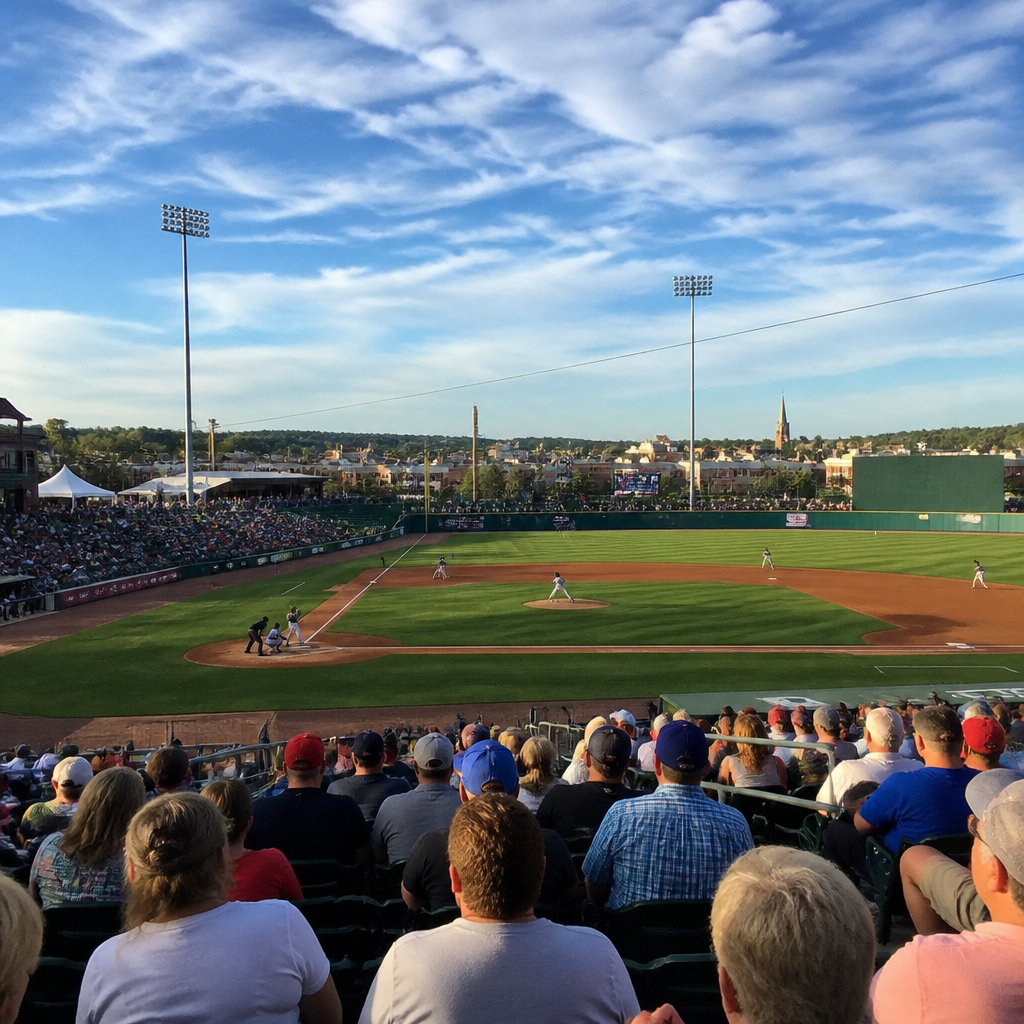
The Troy Trojans occupy a distinctive place in baseball history because they prove that Major League Baseball in Upstate New York did not begin with modern franchises or media markets, but with compact industrial cities that embraced the professional game early. The club, based in Troy, New York, played in the National League from 1879 through 1882, and although its major league life was brief, its influence reaches far beyond four seasons. Any serious look at Famous Baseball Teams, especially 19th-century clubs, has to account for Troy’s role in shaping schedules, player movement, pitching usage, and the geography of the sport.
In practical terms, the Troy Trojans were a nineteenth-century professional baseball club that competed at the highest recognized level of the era. Upstate New York refers here to the Hudson and Mohawk corridor and neighboring cities that supported early professional baseball long before television revenue or large suburban populations existed. A hub page on 19th-century clubs should do two things at once: explain the team itself and connect it to the broader ecosystem of early baseball. Troy is ideal for that purpose because its story touches the National League’s business model, labor conditions for players, and the unstable economics that defined the sport before the modern World Series.
I keep coming back to Troy when mapping early baseball because the club sits at the intersection of promise and fragility. It drew enough local passion to join the National League, employed elite talent such as Buck Ewing and Mickey Welch, and even hosted one of the most famous pitching performances ever recorded. Yet it also reveals how vulnerable nineteenth-century teams were to travel costs, weather, uneven attendance, and competition from larger markets. Understanding the Troy Trojans gives readers a clear frame for the entire 19th-century clubs landscape: talented rosters, improvised business operations, and leagues still deciding what a major league franchise could be.
Troy’s Place in the Rise of Professional Baseball
By the late 1870s, professional baseball was moving from loosely organized associations toward tighter league governance. The National League, founded in 1876, aimed to replace instability with fixed schedules, membership standards, and stronger financial controls. Troy entered that environment in 1879. This was not a random small-town experiment. Troy was an affluent manufacturing center known for iron works, shirts, and river commerce, and it sat within a region already familiar with high-level baseball through clubs in Albany, Rochester, Syracuse, and other New York cities.
What made Troy significant was not simply that it fielded a team, but that it showed the National League’s willingness to plant franchises outside the very largest urban centers. In the nineteenth century, league officials valued rail access, civic backing, and orderly management as much as raw population. Troy could support visiting clubs traveling the northeastern circuit, and it brought a serious baseball culture into the league. This mattered because baseball’s early growth was regional before it became national in the modern sense. The Troy Trojans help explain that expansion pattern better than later myths centered only on New York, Chicago, or Boston.
The club’s timeline also places it in a transitional period. Rules, equipment, and playing styles were changing quickly. Pitchers worked from a box, not a mound in the modern form. Fielders used smaller gloves or none at all. Schedules were shorter, travel harder, and rosters less protected by long contracts. When historians discuss nineteenth-century clubs, they are really discussing a sport still standardizing itself. Troy was part of that standardization process by participating in league competition under increasingly formal rules and commercial expectations.
The Troy Trojans Team: Seasons, Players, and Identity
The Troy Trojans competed in the National League for four seasons, finishing with mixed results but producing several lasting historical markers. Their best-known stars were catcher Buck Ewing, one of the most complete players of the nineteenth century, and pitcher Mickey Welch, later inducted into the Hall of Fame. Tim Keefe, another elite pitcher and Hall of Famer, also emerged from Troy’s orbit after beginning with the club in 1880. That concentration of talent alone makes Troy more than a footnote. Few short-lived teams can claim such a direct connection to multiple all-time greats.
The Trojans were competitive enough to matter, even if they were not a dynasty. In 1880, they finished fourth in the National League, a respectable outcome in an era with fewer teams and compressed standings. Their games were shaped by the strategic logic of the period: heavy dependence on top pitchers, aggressive baserunning, bunting and placement hitting, and constant adaptation to uneven fields and shifting rules. Modern readers sometimes expect explosive offense from old baseball because fielding was rougher, but the reality is more nuanced. Pitching stars could dominate, especially when managers rode them relentlessly.
Troy’s identity was also intensely local. Nineteenth-century clubs did not build brands through national broadcasting; they built them through newspaper coverage, civic pride, and recurring appearances by recognizable players. In that environment, a team’s relationship with its city was direct and personal. Supporters knew where the grounds stood, followed train arrivals, and tracked league standing through box scores and dispatches. The Trojans represented Troy in a literal sense, and that local bond is essential to understanding all 19th-century clubs as community institutions as much as sports properties.
Why the Troy Trojans Matter to the Story of 19th-Century Clubs
The Troy Trojans matter because they illustrate the defining characteristics of nineteenth-century major league baseball better than many longer-lasting teams do. First, they show how fluid franchise survival was. A capable team with excellent players could still fold if the local revenue base was too narrow. Second, they show how talent was not confined to the biggest cities. Third, they show how early leagues relied on geographic clusters to control costs, with Upstate New York serving as a meaningful baseball corridor rather than an afterthought.
They also anchor broader subtopics readers often search for when studying 19th-century clubs. Those subtopics include early National League expansion, the economics of small-market baseball before revenue sharing, the rise of star pitchers, and the path of players who moved between unstable franchises. Troy is therefore an effective hub entry point. From here, readers can branch into articles on the Worcester Ruby Legs, Providence Grays, Buffalo Bisons of the nineteenth century, the National Association era, or the evolution of baseball in New York State before the Yankees and Mets defined the state’s major league image.
Another reason the Trojans deserve attention is that their history corrects a common misconception: that early major league baseball was centered only in giant metropolises. In reality, industrial cities with strong rail connections and organized civic leadership could briefly sustain top-tier clubs. That does not mean every small city succeeded. It means baseball’s first major league map was more experimental, and the Trojans are one of the clearest examples.
Key Facts About the Troy Trojans and Related 19th-Century Clubs
| Topic | Troy Trojans Detail | Why It Matters for 19th-Century Clubs |
|---|---|---|
| League membership | National League, 1879 to 1882 | Shows how the league tested viable smaller-city markets |
| Geography | Troy, Upstate New York, near Albany and key rail lines | Explains regional travel logic and northeastern baseball concentration |
| Star players | Buck Ewing, Mickey Welch, Tim Keefe | Demonstrates that elite talent played for short-lived clubs |
| Historic event | 1880 game in which Lee Richmond pitched the first perfect game in major league history | Connects Troy directly to a foundational MLB record |
| Economic challenge | Limited gate revenue and market size | Captures the central survival problem for many nineteenth-century teams |
| Hub relevance | Links to league formation, player labor, travel, and small-market instability | Makes Troy a strong organizing subject for the full 19th-century clubs subtopic |
Signature Moments, Including the First Perfect Game
No discussion of the Troy Trojans is complete without Lee Richmond’s perfect game on June 12, 1880. Facing the Cleveland Blues, Richmond retired every batter and recorded the first perfect game in major league history. Even allowing for differences in rules and style, the achievement remains extraordinary. Perfect games are rare in any era because they require dominance, clean defense, and favorable sequencing. Troy’s place in baseball memory is permanently secured by that afternoon.
The roster around Richmond and his contemporaries also matters. Buck Ewing would become one of the era’s defining players, valued for catching skill, throwing arm, offensive production, and leadership. Mickey Welch became one of the nineteenth century’s great workhorse pitchers, eventually winning 307 major league games. Tim Keefe, who debuted with Troy, developed into one of the most effective pitchers in baseball history by rate metrics; his career earned run average and adjusted statistics still stand out in historical databases such as Baseball-Reference. When a four-year club touches this much elite talent, it deserves close study.
These moments are useful for a hub article because they connect isolated facts into a larger pattern. Nineteenth-century clubs often seem obscure until readers realize how many foundational records, rules, and stars came through them. Troy offers exactly that bridge. It is not just a vanished team; it is a site where baseball’s enduring statistical and narrative traditions took shape.
Business Reality: Why the Trojans Folded
The Troy Trojans left the National League after the 1882 season primarily because the business model was unforgiving. Gate receipts were the lifeblood of clubs. There were no national television contracts, no digital subscriptions, and no broad merchandising system to cushion weak attendance. A rainy week or a poor home schedule could materially damage finances. Smaller cities had less room for error because their fan base and corporate support were inherently smaller.
Travel costs also mattered. Even with Troy’s favorable rail access, nineteenth-century transportation imposed time, expense, and physical strain. Teams needed schedules that balanced competition with survivable logistics. The National League regularly adjusted membership based on who could meet obligations, draw crowds, and remain solvent. In that environment, folding was not always a sign of incompetence. Sometimes it simply meant the local market could not keep up with league economics as ambitions rose.
I have found that modern readers understand this best when comparing Troy to later baseball contractions and relocations. The difference is that today’s franchises usually fail after prolonged negotiations over stadiums, media rights, or ownership structures. In the 1880s, failure could arrive faster and more bluntly. If attendance lagged and bills mounted, a club could vanish from the major league map almost immediately. Troy’s short existence is therefore a case study in early baseball’s structural volatility.
How Troy Connects to Other Important 19th-Century Teams
As a sub-pillar hub, this article should point readers toward the wider network of nineteenth-century clubs that shaped the sport. Troy belongs in conversation with the Providence Grays, who won championships and showcased stars such as Old Hoss Radbourn; the Worcester Ruby Legs, another short-lived National League entry from a smaller New England city; the Buffalo Bisons, who represented another important upstate and Great Lakes market; and the St. Louis Brown Stockings and Louisville Eclipse, which illustrate western expansion within the era’s meaning of “west.”
Readers interested in organizational history should also connect Troy to the National Association clubs of the early 1870s, because many of the same issues carried over: unstable finances, uneven competitive balance, and shifting standards of professionalism. Those studying player careers can follow Ewing, Welch, and Keefe into later franchises, showing how individual stars linked otherwise fragile teams into a coherent league history. That is one of the most useful ways to study 19th-century clubs: not as isolated failures, but as nodes in the sport’s developing system.
For internal site structure, Troy works especially well as a hub because it invites related pages on early New York baseball, Hall of Famers from defunct franchises, firsts in MLB history, and the economics of nineteenth-century leagues. A reader who starts here can move naturally into deeper profiles of teams, players, ballparks, and league reforms.
What Modern Fans Can Learn From the Troy Trojans
The Troy Trojans show that baseball’s major league past was broader, riskier, and more regionally textured than modern branding suggests. They remind fans that elite baseball once thrived, however briefly, in smaller industrial cities whose identities were tied to mills, railroads, and local newspapers rather than giant stadium districts. They also show that foundational baseball history is not limited to champions. Some of the game’s most revealing stories belong to clubs that struggled to survive but still produced landmark moments and all-time talent.
For anyone exploring Famous Baseball Teams through the lens of 19th-century clubs, Troy offers a practical starting point. You get a definable franchise timeline, Hall of Fame connections, a major historic first, and a clear example of why early leagues were so unstable. Most importantly, you get context. The Trojans make it easier to understand why some clubs endured, why others disappeared, and how major league baseball evolved from a fragile regional enterprise into a permanent national institution. If you are building out your knowledge of nineteenth-century baseball, start with Troy, then follow the links outward to the other clubs, leagues, and players that completed the era’s remarkable foundation.
Frequently Asked Questions
Who were the Troy Trojans, and why do they matter in baseball history?
The Troy Trojans were a National League club based in Troy, New York, that played from 1879 through 1882. At first glance, their four-season run may seem short compared with the long histories of better-known franchises, but their importance is much larger than their lifespan suggests. The Trojans are one of the clearest examples that Major League Baseball took root in places far removed from today’s giant metropolitan markets. In the nineteenth century, a compact industrial city like Troy could support top-level professional baseball, and that says a great deal about how deeply the game was woven into community life in early America.
The team matters because it helps correct a common modern assumption that major league baseball history belongs only to New York City, Boston, Chicago, or other major urban centers. The Trojans show that Upstate New York played a real role in the formation of the professional game. Their presence in the National League demonstrates that baseball’s early geography was broader, more experimental, and more regional than many fans realize. For anyone studying famous baseball teams, the Trojans are important not because they built a dynasty, but because they reveal how the sport evolved, where it spread, and what kinds of communities sustained it in its formative decades.
Was the Troy Trojans franchise really considered a Major League Baseball team?
Yes, the Troy Trojans were absolutely a major league team. They competed in the National League, which was already recognized as a top-tier professional circuit during their years of operation. Because they played in the National League from 1879 to 1882, their games, players, and statistics are part of official major league history. This is a crucial point, because some nineteenth-century clubs are sometimes confused with minor league, regional, or loosely organized professional teams. The Troy club was not one of those cases. It was a legitimate major league franchise.
This matters because the phrase “Major League Baseball in Upstate New York” is not simply a poetic or symbolic claim when discussing the Trojans. It is historically accurate. Their existence proves that the major leagues once extended into communities that would not fit modern expectations for MLB markets. The scale of the league, the economics of the sport, and the structure of fan support were all different in that era. The Trojans remind us that major league status in the nineteenth century depended less on media reach and corporate infrastructure and more on whether a city could field and support a club in a recognized top-level league.
Why is the Troy Trojans story important to the history of Major League Baseball in Upstate New York?
The Troy Trojans are central to this story because they establish that Upstate New York’s relationship with major league baseball dates back to the nineteenth century, not just to later minor league traditions or modern nostalgia. Their National League membership proves that the region was involved in elite professional baseball at an early stage. That is historically significant because it widens the map of baseball’s origins and challenges the idea that major league development was confined to the nation’s largest commercial centers.
Troy itself was an industrial city with strong civic identity, and that local pride helped make high-level baseball viable, even if only for a limited time. The Trojans demonstrate how early baseball thrived in communities where the sport was a public attraction, a social event, and a reflection of local ambition. In that sense, they are more than a defunct franchise. They are evidence of a broader pattern in which smaller cities helped shape the game’s institutional growth. For readers interested in famous baseball teams, the Trojans deserve attention because they represent an early chapter in how baseball became truly national while still remaining intensely local.
Did the Troy Trojans have any lasting influence despite only playing four seasons?
They did, and their influence is best understood through historical significance rather than championship legacy. The Trojans helped define the early National League landscape during a period when professional baseball was still stabilizing its identity, geography, and business model. Even though the club did not last long, it contributed to the league’s competitive fabric and showed that smaller industrial cities could briefly stand on equal footing with larger markets in top-level baseball.
The franchise also endures because of the players and moments associated with it, most notably Hall of Fame pitcher Tim Keefe, who began his major league career with Troy and became one of the era’s great stars. Connections like that give the club a tangible link to the broader story of baseball excellence. Beyond individual talent, the Trojans remain influential because historians and fans return to them when examining how the major leagues expanded, contracted, and experimented in their early decades. Their short existence tells us something essential: baseball history is not just the story of the teams that survived, but also of the teams that reveal what the sport once was.
Why don’t the Troy Trojans receive as much attention as other famous baseball teams?
The main reason is simple: they were short-lived, they did not build a long-term dynasty, and they disappeared before modern baseball culture developed its strongest media traditions. Teams that survive for generations naturally accumulate legends, championships, rivalries, and multigenerational fan bases. The Troy Trojans did not have that opportunity. Their four-year run ended before they could establish the kind of enduring public identity enjoyed by franchises that continued into the twentieth century and beyond.
Even so, lack of fame should not be mistaken for lack of importance. The Trojans receive less attention because their story requires a deeper look into early baseball history, where many significant clubs are overshadowed by later success stories. For historians, though, that is exactly what makes Troy compelling. The team opens a window into a formative era when professional baseball was less polished, more regionally varied, and still discovering what a major league should look like. In other words, the Troy Trojans may not be famous in the popular sense, but they are essential in the historical sense, especially for anyone interested in the roots of Major League Baseball in Upstate New York.