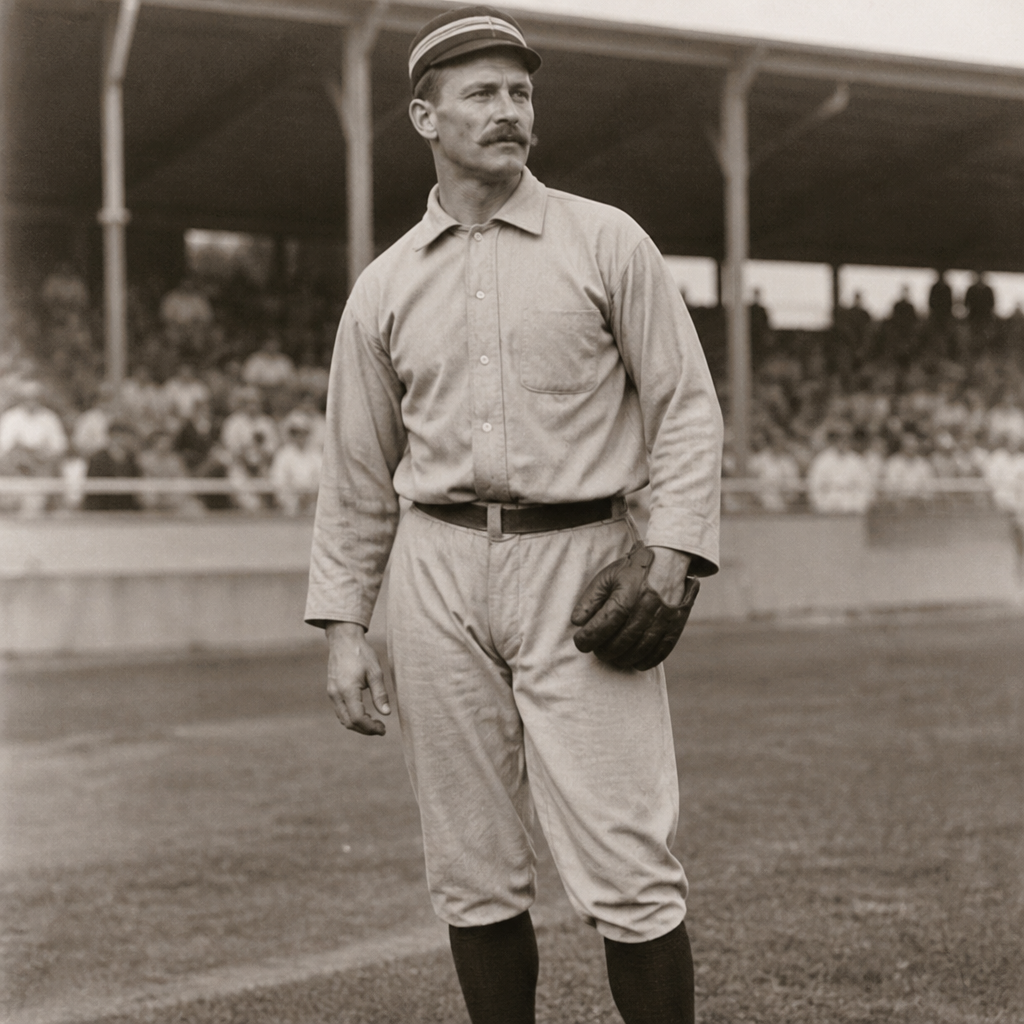
The Providence Grays stand at the center of any serious discussion of 19th-century baseball because they combined star power, tactical innovation, and league-shaping success at a moment when the sport was still defining itself. Founded in 1878 and based in Providence, Rhode Island, the Grays became one of the National League’s most formidable early clubs, winning pennants in 1879 and 1884 and claiming the 1884 world championship behind one of the most astonishing pitching seasons ever recorded. That season belonged to Charles “Old Hoss” Radbourn, whose workload, endurance, and results remain almost unimaginable in modern baseball. For readers exploring famous baseball teams, the Providence Grays are not just an isolated curiosity. They are a gateway into the full landscape of 19th-century clubs: compact rosters, unstable franchises, rough travel, evolving rules, and a game that looked familiar in outline but radically different in execution.
To understand why the Providence Grays matter, it helps to define what a 19th-century championship power was. In that era, dynasties were built less through farm systems and long-term contracts than through savvy ownership, territorial advantages, and the ability to hold together a core of elite players despite weak labor structures and constant financial strain. League schedules were shorter, but the physical demands were severe. Pitchers threw from flatter distances under changing rules. Fielding gloves were primitive or absent. Teams often folded, relocated, or sold players simply to survive. Within that unstable environment, the Grays created a model of competitive excellence. They signed and developed top talent, adapted quickly to rule changes, and played with a discipline that separated contenders from clubs merely trying to stay solvent. When I study 19th-century clubs, Providence consistently emerges as a benchmark because its rise captures both the promise and fragility of early professional baseball.
This hub article covers the Providence Grays in depth while also positioning them within the broader world of 19th-century baseball teams. It addresses the key questions searchers usually have: Who were the Providence Grays? Why is Old Hoss Radbourn famous? How dominant was the 1884 championship team? How did the Grays compare with contemporaries such as the Chicago White Stockings, St. Louis Brown Stockings, Boston Beaneaters, New York Gothams, and Detroit Wolverines? Most important, it explains how one short-lived franchise left an oversized mark on baseball history. Providence did not survive into the 20th century, yet its story still shapes how historians talk about workload, pennant races, postseason origins, and the transition from regional clubs to nationally recognized baseball powers.
The Providence Grays in the rise of professional baseball
The Providence Grays joined the National League in 1878, only two years after that circuit was founded to bring more order and credibility to professional baseball. The league wanted stable clubs in credible markets, and Providence, though small by later major league standards, offered commercial backing and civic ambition. The Grays played at Messer Street Grounds and quickly proved they were more than a filler franchise. In just their second season, they won the 1879 National League pennant with a 59–25 record, establishing Providence as one of the era’s strongest operations.
That 1879 title matters beyond a single standings line. Early baseball was chaotic, with uneven schedules, disputed contracts, gambling concerns, and frequent roster raids. A championship team had to do more than pile up wins. It had to travel reliably, hold its roster together, and beat clubs that often played with radically different tactical styles. Providence did that with pitching from John Montgomery Ward, strong defense, and balanced offense. Ward later became one of the sport’s most important labor and organizational figures, which gives the Grays an unusual place in baseball history: they were not only successful on the field but also tied to larger institutional changes in the game.
The club’s early success also reflects a larger truth about 19th-century clubs. Championships often emerged from concentrated excellence rather than deep organizational infrastructure. A team with two elite pitchers, a few sound bats, and competent financial oversight could vault to the top quickly. The Grays mastered that formula as well as any team of their generation.
Old Hoss Radbourn and the greatest workload in baseball history
No player defines the Providence Grays more than Old Hoss Radbourn. A powerfully built right-hander with a fierce competitive streak, Radbourn delivered the most famous pitching season of the 19th century in 1884. Depending on the source and scoring conventions used, he won either 59 or 60 games, threw 73 complete games, and worked 678.2 innings for Providence. In modern terms, that total is beyond comparison. Recent Cy Young winners rarely reach 220 innings. Even the heaviest workloads of the live-ball era do not approach what Radbourn handled.
The circumstances behind that season are essential. Providence entered 1884 expecting to rely on a two-ace arrangement featuring Radbourn and Charlie Sweeney. Sweeney was talented but volatile, and after disputes with management and disciplinary problems, he left the club. Providence suddenly needed one pitcher to carry nearly everything. Radbourn reportedly agreed to do it after securing promises about future compensation and use rights, a revealing example of how star players negotiated leverage even before modern free agency. From that point forward, the Grays rode him relentlessly.
Radbourn’s dominance was not only about volume. He was effective by every important measure available to historians. He finished with a 1.38 earned run average in a league where run prevention still separated elite teams from the pack, and he regularly beat quality opponents in pennant pressure games. His delivery, stamina, and command made him more than a novelty of overuse. He was a genuine ace by the standards of his own time, and his season remains one of baseball’s clearest examples of a player shaping an entire championship race almost single-handedly.
The 1884 championship season and the first World Series
The 1884 Providence Grays went 84–28 and won the National League pennant by 10.5 games, a substantial margin in a competitive environment. Their success set up a postseason meeting with the New York Metropolitans of the American Association. Historians generally recognize this best-of-three matchup as the first World Series, even though the event was not yet standardized in the modern sense. Providence swept the series in three straight games, and Radbourn threw every inning.
That championship matters for several reasons. First, it established Providence as the top club in organized baseball for that season, not just the winner of one league’s internal race. Second, it linked the Grays to the origins of postseason baseball. Third, it gave Radbourn’s season a crowning moment that transformed statistical dominance into enduring legend. In a sport built on October memory, winning the title matters, and Providence did not merely appear on that stage. It controlled it.
The roster around Radbourn deserves attention too. First baseman Joe Start, one of the game’s earliest stars, brought veteran steadiness. Shortstop Jack Farrell and outfielder Paul Hines supplied all-around value. Providence was not a one-man team in the simplistic sense. Rather, it was a well-built club whose extraordinary pitcher allowed every other strength to scale upward. That is often how 19th-century champions worked: one transformational player amplified a roster that was already structurally sound.
| Team | League | Peak 19th-century identity | Why it matters in this hub |
|---|---|---|---|
| Providence Grays | National League | Elite pitching and 1884 world champions | Best case study in ace-driven dominance |
| Chicago White Stockings | National League | Early dynasty under Cap Anson | Benchmark for sustained league success |
| St. Louis Brown Stockings/Browns | American Association | Championship run in the 1880s | Key rival power outside the National League |
| Boston Beaneaters | National League | Deep roster strength and repeated pennants | Model of late-century continuity |
| New York Gothams/Giants | National League | Big-market prestige and postseason success | Bridge to the modern National League story |
| Detroit Wolverines | National League | Brief but brilliant 1887 champion | Example of how quickly teams could rise and fall |
How the Grays compare with other great 19th-century clubs
As a hub for 19th-century clubs, this page needs to place Providence in context. The Chicago White Stockings were more durable and, across the decade, more consistently dominant. Boston’s later clubs built longer-running success. St. Louis assembled an American Association powerhouse with broader championship continuity. By lifespan and institutional legacy, Providence cannot match those franchises. Yet peak for peak, the Grays belong in the top tier because their best seasons were unmistakably elite and historically influential.
The simplest way to frame the comparison is this: Chicago represents sustained superiority, Boston represents organizational evolution, St. Louis represents rival-league excellence, and Providence represents concentrated greatness. If a reader wants one team that captures the intensity, instability, and brilliance of 19th-century baseball in a single story, the Grays are hard to beat. Their arc includes rapid ascent, pennant success, transcendent pitching, early postseason glory, and eventual collapse. That pattern was common in the century’s professional game, but Providence experienced it at a championship level.
Another useful comparison is with the Detroit Wolverines, who won the 1887 championship and then disappeared soon afterward. Like Detroit, Providence shows that early baseball power did not guarantee longevity. Market size, ownership resources, player costs, and league politics could end a contender quickly. That reality is one reason historians value 19th-century clubs on both achievement and context. The Grays excelled in an environment where survival itself was uncertain.
Playing style, rules, and why 19th-century baseball looked different
Modern readers often misunderstand teams like the Providence Grays because they compare them directly to current major league baseball without adjusting for the period. The 1880s game featured underhand or partially sidearm pitching traditions that had only recently given way to more forceful deliveries. The pitching distance and box dimensions were not yet modern. Fielders used minimal protection, bunting and placement hitting were tactically central, and stolen bases were understood differently from today’s rulebook. Statistical records also require careful interpretation because scoring standards varied and official classifications were still evolving.
In practical terms, this means Radbourn’s season should not be reduced to a gimmicky innings total, nor should Providence’s offense be judged solely by modern slash-line habits. Teams won through contact quality relative to the era, defensive reliability on difficult surfaces, endurance, and the ability to avoid collapse during long road swings by rail. When I evaluate 19th-century clubs, I look first at league standing, run prevention dominance, roster quality relative to peers, and performance in high-leverage games. By those standards, the Grays were a complete championship team.
The conditions also explain why one pitcher could start almost every important game. Rosters were smaller, bullpen specialization did not exist, and recovery expectations were completely different. That does not make Radbourn less impressive. It makes him perfectly suited to the exact demands of his time, which is the right way to assess greatness in historical baseball analysis.
Why the Providence Grays disappeared but never became irrelevant
The Providence Grays left the National League after the 1885 season, largely because Providence was a small market facing attendance and revenue limits that larger cities could better withstand. This is a familiar pattern in 19th-century baseball history. Competitive success could elevate a club temporarily, but financial gravity often pulled the sport toward bigger urban centers. Without modern media rights, national merchandising, or stable long-term franchise systems, a team’s survival depended heavily on gate receipts and local business support.
Even so, the Grays never became irrelevant. Radbourn entered the Hall of Fame. John Montgomery Ward became a foundational figure in player organization and baseball law. The 1884 title remained attached to the origins of the World Series. And Providence itself stayed in historical conversation because serious baseball scholarship repeatedly returns to teams that reveal turning points in the sport’s structure. The Grays do exactly that. They show how an elite 19th-century club was built, how championships were won before modern roster management, and how fragile even the best teams could be.
For anyone building a deeper understanding of famous baseball teams, the Providence Grays are the right hub for the 19th-century club story. Start here, then branch into related studies of the White Stockings, Beaneaters, Browns, Gothams, and Wolverines. You will see repeating themes: unstable markets, star-driven success, changing rules, and the gradual creation of modern baseball institutions. Yet Providence remains distinctive because its peak was so dramatic. The Grays gave the sport one of its earliest champions, one of its most extreme individual seasons, and one of its clearest lessons about excellence in a volatile age. If you want to understand 19th-century championship power, begin with Old Hoss Radbourn and the Providence Grays, then keep exploring the clubs that built baseball’s first great era.
Frequently Asked Questions
Who were the Providence Grays, and why are they so important in early baseball history?
The Providence Grays were a National League club based in Providence, Rhode Island, and active from 1878 through 1885. Although their lifespan was relatively short, their impact on the game was enormous. The Grays emerged during a formative period in professional baseball, when leagues were still stabilizing, rules were still evolving, and the sport’s competitive structure had not yet fully settled into the modern shape fans recognize today. In that environment, Providence distinguished itself as one of the era’s strongest and most respected organizations.
The team mattered for several reasons. First, it won at the highest level, capturing National League pennants in 1879 and 1884. Success on the field always shapes how a club is remembered, but in the Grays’ case, those pennants came at moments when the National League was establishing itself as the leading major circuit in professional baseball. That means Providence was not simply a good team; it was one of the clubs helping define what elite baseball looked like in the nineteenth century.
Second, the Grays were built around genuine star talent. Most famously, they featured Charles “Old Hoss” Radbourn, whose 1884 season became one of the most legendary pitching performances in the sport’s history. They also had key contributions from players such as Joe Start, Paul Hines, and others who gave the club depth, professionalism, and competitive toughness. In an age when rosters could be unstable and player movement could dramatically alter a franchise overnight, Providence managed to field a team with both standout stars and strong supporting pieces.
Third, the Grays are central to understanding how baseball strategy worked before the modern game took shape. Nineteenth-century baseball emphasized endurance, defensive reliability, situational hitting, and roster flexibility in ways that can seem unfamiliar today. Providence excelled in that context. Their success reflected not just individual brilliance but also adaptation to the sport’s demanding rhythms, especially at a time when pitchers threw staggering workloads and clubs often relied heavily on one or two elite players.
Finally, the Providence Grays hold a special place in baseball memory because they linked regional pride, league prestige, and postseason significance. Their 1884 championship gave them a claim to being the best team in professional baseball, and that title was won in an era when the game was still sorting out what a true champion looked like. For historians, that makes the Grays more than a forgotten small-market success story. They were a defining power at a pivotal stage in baseball’s development.
Why is Old Hoss Radbourn’s 1884 season considered one of the greatest in baseball history?
Old Hoss Radbourn’s 1884 season is considered one of the greatest ever because it combined extraordinary performance, astonishing durability, and historic stakes in a way that has never really been matched. Pitching workloads in the nineteenth century were dramatically heavier than they are now, but even by the standards of that era, Radbourn’s season stood out as almost unbelievable. He carried the Providence Grays through the bulk of the schedule and did so while producing results that directly powered the team to a pennant and then to a championship.
The most famous number attached to Radbourn is his win total, commonly listed at 59 victories under the rules and records generally recognized today, with some nineteenth-century accounting having placed the number even higher. Either way, the point is the same: he won an enormous number of games in a single season, a total that modern pitchers do not approach and likely never will. More than just accumulating decisions, he was consistently effective, dependable, and available, taking the ball again and again in an environment with few of the protections, specialized roles, or medical understandings that exist in the modern sport.
What makes the season even more remarkable is the context in which it happened. Providence’s other ace, Charlie Sweeney, had been a major part of the pitching picture before leaving the club amid conflict and instability. That departure placed immense pressure on Radbourn, who essentially became the Grays’ answer to nearly every challenge on the schedule. His season became not just a feat of endurance but a crisis response that kept a championship-caliber team from collapsing at the most important point of the year.
Radbourn also capped that season by starring in the 1884 championship series between the National League champion Providence Grays and the American Association champion New York Metropolitans. Providence swept the series, and Radbourn was at the center of that result. So when historians discuss his 1884 campaign, they are not talking about an isolated statistical curiosity. They are talking about a season in which one pitcher dominated the league, stabilized his team, won at a historic rate, and then finished the job on the sport’s biggest stage.
There is also a mythic quality to Radbourn’s season that helps explain its lasting fame. Nineteenth-century baseball already feels distant to many modern fans, and Radbourn’s workload seems almost superhuman from a contemporary perspective. But his reputation is not based only on legend. The records, the team’s success, and the testimony of baseball history all support the same conclusion: his 1884 season remains one of the most extraordinary individual performances the game has ever seen.
What did the Providence Grays accomplish in the 1884 championship, and why does it matter?
The Providence Grays’ 1884 championship is significant because it represented one of the earliest and most meaningful interleague title claims in professional baseball. After winning the National League pennant, the Grays faced the New York Metropolitans, champions of the American Association, in a postseason series that is widely recognized as a precursor to the modern World Series. Providence swept the Metropolitans in three games, establishing itself as the top club in the professional game for that season.
This mattered on several levels. On the most basic level, it confirmed that the Grays were not merely the best team in one league but the strongest club among the top professional circuits then operating. In an age when rival leagues competed for legitimacy, attendance, and talent, that distinction carried real weight. Baseball in the 1880s did not have the same polished postseason structure that developed later, so these early championship series helped shape public perceptions of supremacy and helped define what a “world champion” could mean in baseball terms.
The sweep also reinforced Providence’s status as a complete team rather than a one-man operation. Radbourn understandably receives most of the attention, but a championship result requires defense, timely hitting, organization, and steadiness under pressure. The Grays met that test. They were not simply a regular-season survivor propped up by heroic pitching; they were a disciplined and talented club that proved capable of closing the season with authority against another league champion.
The 1884 title matters historically because it sits at the intersection of several major baseball developments: league rivalry, the rise of postseason competition, and the increasing importance of formal championships in measuring greatness. Before the modern World Series became a fixed institution, these contests helped establish the idea that league winners should face each other to settle broader claims of baseball supremacy. Providence’s victory is therefore part of the lineage that eventually led to the sport’s most famous annual championship tradition.
For the Grays specifically, the 1884 championship gave the franchise its crowning achievement. The club had already won a pennant in 1879 and had proven itself as a premier National League power, but the 1884 season elevated its legacy from excellent to iconic. Historians return to that team because it united regular-season dominance, a transcendent individual campaign, and a championship finish. In other words, it delivered one of the clearest early examples of a nineteenth-century baseball dynasty at its peak.
How did the Providence Grays build such a strong team in the late 1870s and early 1880s?
The Providence Grays became such a strong team because they combined shrewd roster building, high-end star talent, and the kind of baseball intelligence that was essential in the sport’s early professional era. Building a winner in the late nineteenth century was not the same as constructing a modern franchise. There were fewer layers of formal development, less stability from season to season, and more dependence on identifying players who could handle the broad demands of the game. Providence succeeded because it assembled players who fit those demands and then got elite production from its core.
One major factor was the club’s ability to secure impact players. Hall of Fame-caliber talent such as Old Hoss Radbourn, Paul Hines, and Joe Start gave the Grays a powerful foundation. These were not just recognizable names; they were players who influenced games in multiple ways. Hines was a major offensive and defensive contributor, Start was one of the era’s most respected veteran first basemen, and Radbourn became the kind of pitcher around whom an entire season could revolve. In a period when stars could dramatically tilt league races, Providence had the personnel to compete with anyone.
Another factor was organizational seriousness. The Grays were playing in an era when some clubs were unstable, underfunded, or inconsistent in discipline and planning. Providence developed a reputation as a strong National League club because it operated with competitive purpose. That did not mean the team was free of internal conflict—few nineteenth-century clubs were—but it did