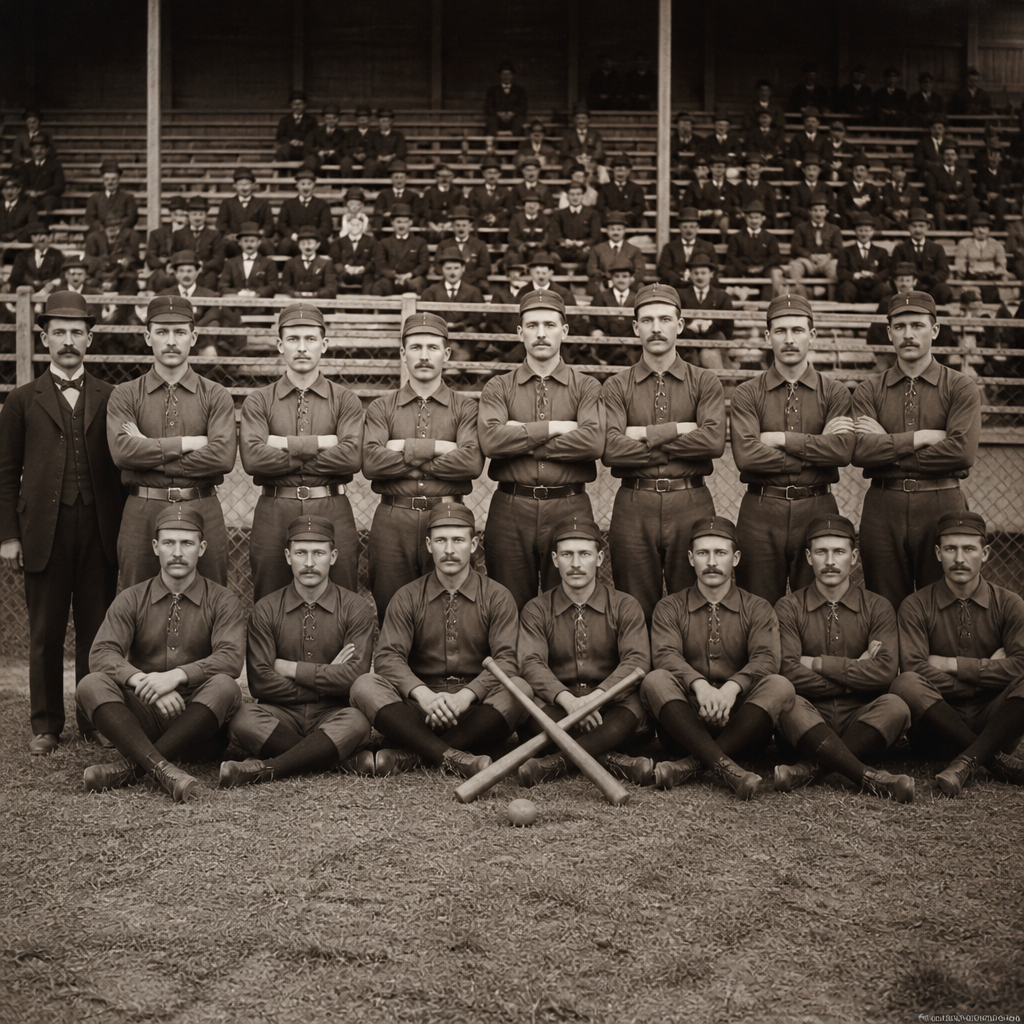
The St. Louis Browns of the 1880s were one of baseball’s first great dynasties, winning four straight pennants in the American Association from 1885 through 1888 and helping define what a championship club looked like in the sport’s formative decades. In discussions of famous baseball teams, later powerhouses often dominate attention, yet the Browns deserve a central place because they combined sustained winning, tactical innovation, star talent, shrewd management, and a fiercely loyal fan base at a time when professional baseball was still sorting out its identity. For readers exploring 19th-century clubs, this team serves as an ideal hub subject: the Browns connect to the rise of rival major leagues, the development of the modern World Series idea, the emergence of superstar player-managers, and the rough-and-tumble culture of Gilded Age baseball. Understanding their run requires a few key definitions. The American Association, founded in 1882, was a major league competitor to the National League, known for lower ticket prices, Sunday baseball in some cities, and beer sales, all of which made it more accessible to working-class fans. A pennant, in 19th-century usage, meant finishing first in the league standings over the full season. The Browns’ four straight pennants therefore represent annual league championships earned through depth and consistency, not a short postseason hot streak. Their success matters because it shows that baseball excellence did not begin with the dead-ball era powers or the early Yankees; it was already taking shape in St. Louis under owner Chris von der Ahe and player-manager Charles Comiskey. When I have reviewed 19th-century club records, newspaper accounts, and season summaries, the Browns consistently stand out for their combination of dominance and relevance. They were not a novelty champion that flashed briefly. They were the standard other clubs had to measure themselves against, and their story opens a wider understanding of the era’s most important teams.
The American Association and the Baseball World the Browns Inherited
To grasp why the St. Louis Browns mattered, it helps to understand the league they ruled. The American Association began in 1882 as a direct alternative to the National League. NL owners had embraced a more exclusive model, with higher admission prices and stricter rules around alcohol and Sunday play. The Association moved the other way. Clubs generally charged 25 cents rather than 50, welcomed urban working-class crowds, and often treated the ballpark as part sporting venue and part social gathering place. That strategy expanded baseball’s reach. Cities like St. Louis were especially well positioned because of large populations, strong beer culture, and business leaders willing to invest in entertainment.
Chris von der Ahe, the Browns’ owner, understood that environment better than most. A saloonkeeper and entrepreneur, he recognized that affordability and spectacle could build both attendance and loyalty. His club was not simply a team on a schedule; it was a commercial attraction designed to fill grandstands repeatedly. The Browns entered the Association’s first season in 1882 and immediately became competitive, but the true breakthrough came after sharper roster building and more disciplined field leadership. St. Louis was a booming river city with ethnic diversity, industrial energy, and a strong appetite for public amusement, and the Browns became one of its civic symbols.
The level of play in the American Association was major league caliber, even if older narratives treated it as inferior because the National League survived longer. Historians now evaluate the AA as a legitimate top circuit. Its best clubs, especially St. Louis, Brooklyn, Cincinnati, and Philadelphia at various points, featured accomplished professionals playing long schedules under pressure. The Browns’ pennants came against quality opponents over seasons that tested pitching durability, travel stamina, and roster depth. In practical terms, a first-place finish in that setting was a major achievement.
How St. Louis Built a Four-Pennant Dynasty
The Browns did not win four consecutive championships by accident or by relying on one transcendent player. They built an integrated baseball machine. Charles Comiskey was the central organizer. Before he became famous as a major owner in Chicago, he was a respected first baseman and one of the era’s smartest on-field tacticians. As player-manager, he controlled strategy, lineups, player discipline, and game tempo. Contemporary accounts frequently praised his baseball intellect. He positioned fielders aggressively, demanded alert baserunning, and valued adaptability over individual showmanship. That managerial edge mattered greatly in the 1880s, when formal front offices were limited and game preparation depended heavily on the field leader.
Roster construction was equally important. Pitcher Dave Foutz gave St. Louis elite two-way value in several seasons, excelling on the mound while also contributing with the bat and in the field. Bob Caruthers, another standout pitcher, was among the era’s most versatile stars and a major reason the club maintained dominance after injuries or slumps elsewhere. Tip O’Neill became one of the most feared hitters in baseball, capturing the 1887 Triple Crown by leading in batting average, home runs, and runs batted in. Arlie Latham brought energy, speed, and relentless disruption on the bases. Yank Robinson, Curt Welch, Silver King, and others added depth that turned the Browns from a good team into a relentless one.
Several structural factors also favored St. Louis. The club retained talent effectively for the period, avoiding the complete instability that plagued some rivals. It played in a city large enough to support payroll ambition. It embraced a style suited to 19th-century rules: pressure the defense, run aggressively, take extra bases, and exploit every mistake. Baseball then was played with looser gloves, rougher fields, and evolving pitching regulations, so forcing action often created runs more reliably than waiting for extra-base power alone. The Browns mastered that reality.
| Season | Result | Key Strength | Notable Figure |
|---|---|---|---|
| 1885 | American Association pennant | Balanced roster and tactical discipline | Charles Comiskey |
| 1886 | American Association pennant | Elite pitching and big-game resilience | Dave Foutz |
| 1887 | American Association pennant | Explosive offense | Tip O’Neill |
| 1888 | American Association pennant | Depth during a lower-scoring season | Bob Caruthers |
The Four Pennant Seasons, Year by Year
The 1885 Browns announced the beginning of the dynasty. St. Louis finished first in the American Association and then faced the National League champion Chicago White Stockings in a postseason series that ended in dispute and is generally treated as a tie. Even though 19th-century championship arrangements lacked modern standardization, the mere fact that St. Louis was contesting supremacy with Chicago shows where the club stood nationally. The Browns were no regional curiosity. They were a first-rank team confronting Cap Anson’s powerhouse on nearly equal terms.
In 1886, the Browns repeated as league champions and this time defeated Chicago in the postseason meeting that many historians recognize as an early World Series. That result was significant beyond local pride. For American Association supporters, it validated the league against the National League’s claims of superiority. St. Louis won not just a pennant but a reputational battle. The city celebrated intensely, and newspaper coverage reflected the sense that the Browns had become champions of the broader baseball public.
The 1887 season may have been the most spectacular offensively. Tip O’Neill was brilliant, and the lineup produced runs in bunches. St. Louis again won the Association pennant, then met the Detroit Wolverines of the National League in an extended postseason series. Detroit prevailed, but the Browns’ appearance reinforced their status as an annual benchmark. By this point, sustained excellence had replaced surprise. Rivals expected St. Louis to contend every day, and beating them required extraordinary play.
The fourth straight pennant in 1888 may be the most underrated of all. League offense declined that year, making run prevention and execution especially valuable. Dynasties often look strongest at the start, when freshness and momentum carry them, but their truest test comes when conditions change and everyone is targeting the champion. The Browns still finished first. That resilience is one reason historians treat them as the greatest club in American Association history. Their success survived tactical shifts, roster wear, and constant pressure.
The Stars, Style, and Tactics That Made the Browns Famous
Every dynasty has signature personalities, and the Browns had several. Comiskey set the tone with cerebral leadership. He was famous for playing behind the first-base bag, a tactical wrinkle that anticipated later defensive experimentation and helped him handle bunts and infield positioning more actively. In an era before specialized coaching staffs, a player-manager who could think several pitches ahead was a massive competitive advantage. Comiskey provided that edge daily.
Tip O’Neill was the lineup’s headline hitter. In 1887 he hit .435 by the commonly cited official record of the time, though 19th-century statistical rules differed from modern ones. Regardless of exact recalculations, his production was dominant. He drove the ball, hit for average, and delivered in run-scoring situations. Dave Foutz and Bob Caruthers represented the period’s unusual versatility. Both men pitched extensively and contributed offensively, a reminder that 19th-century stars often impacted games in more than one way. Caruthers, in particular, combined excellent mound work with strong batting numbers, making him one of the most valuable players of the decade.
Arlie Latham embodied the Browns’ aggressive spirit. Contemporary observers called him one of the game’s great clowns and irritants, but reducing him to comic relief misses his baseball value. He pressured infielders, distracted opponents, and turned athletic boldness into tactical leverage. On rough fields with inconsistent umpiring and limited equipment, unsettling the defense could materially change outcomes. St. Louis understood that baseball was not only about cleaner execution; it was also about controlling nerves and pace.
The team’s style was advanced for its context. The Browns emphasized contact, speed, situational hitting, and pressure on the bases. They were willing to exploit hit-and-run ideas, bunting concepts, and aggressive extra-base decisions that modern fans would associate with small ball, though 1880s baseball was not yet using the later vocabulary. They also managed pitching workloads creatively because staffs were small and aces carried immense innings totals. Winning over a long season demanded endurance, and St. Louis had more of it than almost anyone else.
Rivalries, Legitimacy, and the Browns’ Place Among 19th-Century Clubs
No hub article about 19th-century clubs is complete without placing the Browns among their peers. Their chief measuring-stick rivals were the Chicago White Stockings of the National League, the Detroit Wolverines, the Brooklyn Bridegrooms, the Cincinnati Red Stockings, and, in the Association’s early years, strong Athletics and Metropolitans clubs. These teams collectively formed the competitive landscape of late-19th-century major league baseball. St. Louis stood out because it sustained championship-level performance longer than most.
The Chicago rivalry mattered most for historical memory. Chicago, led by Cap Anson, represented establishment baseball: disciplined, powerful, and associated with the older league’s prestige. St. Louis represented a more open, populist version of the sport. When the Browns beat Chicago after tying them the previous year, the victory resonated as more than a scoreboard result. It suggested that baseball’s future audience would be broad, urban, and commercially dynamic. In many ways, the Browns were playing for the legitimacy of a different business model.
Compared with other famous 19th-century clubs, the Browns rank exceptionally high for peak and duration. The 1869 Cincinnati Red Stockings remain iconic as fully professional pioneers. The Chicago clubs of the 1880s were dominant and influential. The 1890s Baltimore Orioles shaped strategy and style. But the Browns’ four straight pennants give them a claim few teams can match. If a reader is building a map of 19th-century baseball history, St. Louis belongs near the center because the team links competitive greatness with the broader evolution of the major leagues.
Why the Dynasty Ended and What the Browns Left Behind
Even great clubs decline, and the Browns were no exception. By 1889, the strain of repeated contention, roster turnover, and shifting league economics began to show. The American Association itself grew less stable toward the end of the decade. Competition for players, disputes over contracts, and financial imbalances weakened several franchises. The Players’ League revolt in 1890 further disrupted the baseball business. In unstable systems, dynasties are harder to sustain because the environment keeps changing beneath them.
St. Louis remained important, but the specific championship formula of the mid-1880s could not last forever. Key stars aged or moved on. Competitive advantages narrowed as rivals adjusted. The Browns later joined the National League, and the franchise history eventually became tangled in reorganizations and name changes common to the period. That can make the team feel distant to modern fans. Yet the achievements remain clear. Four consecutive pennants in a recognized major league is an elite accomplishment in any era.
The Browns also left a deeper legacy. They helped normalize the idea of postseason championship meetings between leagues. They proved that working-class accessibility and winning baseball could thrive together. They developed stars whose reputations influenced later generations, especially Comiskey, whose managerial and executive career extended well beyond St. Louis. Most important, they established that dynastic baseball was possible before the modern World Series, before radio, and before today’s statistical infrastructure. Their success was built on observation, adaptation, and competitive nerve.
The St. Louis Browns of the 1880s should be remembered not as a footnote but as one of baseball’s foundational championship teams. They ruled the American Association, stood toe to toe with National League powers, and gave 19th-century baseball one of its clearest examples of sustained excellence. For anyone exploring famous baseball teams or the wider world of 19th-century clubs, this Browns dynasty is the essential starting point. Use it as a hub: from here, branch into the White Stockings, Wolverines, Bridegrooms, Orioles, and Red Stockings, then return to St. Louis and measure them all against a club that won four straight pennants. If you want to understand how early baseball became major league baseball, start with the Browns and keep going.
Frequently Asked Questions
Why were the St. Louis Browns of the 1880s considered one of baseball’s first dynasties?
The St. Louis Browns earned that label because they did something very few clubs in the early game could sustain: they kept winning year after year in a period when baseball was still unstable, highly competitive, and constantly evolving. From 1885 through 1888, the Browns captured four straight American Association pennants, a run of dominance that immediately set them apart from most 19th-century teams. In an era before modern farm systems, long-term player development plans, and the kind of financial infrastructure later clubs would enjoy, holding together a championship core and consistently finishing on top was a major achievement.
What makes their run even more significant is that it was not built on luck or a single great season. The Browns developed a recognizable identity: aggressive, smart baseball paired with strong roster construction and excellent field leadership. They featured elite talent, but they also understood how to exploit the style of play that defined the 1880s, including speed, pressure, situational hitting, and tactical awareness. Their success also came during a time when leagues were competing for status and legitimacy, so repeated pennants carried tremendous symbolic value. The Browns were not just winning games; they were helping establish the idea of what a championship organization looked like in professional baseball’s formative decades.
What made the Browns’ four straight pennants from 1885 to 1888 so impressive in the context of 19th-century baseball?
To appreciate the Browns’ achievement, it helps to understand how unpredictable 19th-century baseball could be. Rosters were less stable than they would become later, travel was difficult, playing conditions were inconsistent, and league structures were still maturing. Teams often faced sharp swings in performance from season to season. Against that backdrop, St. Louis’s ability to remain at the top for four consecutive years was extraordinary. It reflected not only talent but also organizational discipline, strategic clarity, and the ability to adapt to changing opponents and circumstances.
The American Association itself was a serious and influential major league, and winning it repeatedly was no small feat. The Browns had to overcome challengers who were eager to knock off the standard-bearer, and every pennant made them a larger target. Sustained success under those conditions says a great deal about the club’s depth and resilience. Their streak demonstrated that an elite baseball team could be more than a one-year wonder; it could establish habits, expectations, and systems that kept it ahead of the field. That is one reason historians continue to place the Browns among the foundational powers of the sport.
Who were the key figures behind the success of the St. Louis Browns during this dynasty?
No discussion of the Browns is complete without mentioning manager Charlie Comiskey, one of the central architects of the club’s rise. Long before he became known for later chapters of baseball history, Comiskey was a brilliant and influential baseball mind. As manager and first baseman, he brought discipline, tactical intelligence, and a deep understanding of how to maximize his roster. He was widely respected for his leadership and for the way he organized the club on the field. In many ways, he embodied the player-manager model that was so important in 19th-century baseball.
The Browns also benefited from standout players who gave the team star power as well as substance. Pitcher Bob Caruthers was one of the era’s most valuable all-around players, capable of dominating on the mound while also contributing with the bat. Dave Foutz was another major force, excelling both as a pitcher and position player, which gave the Browns unusual flexibility and matchup advantages. Outfielder Tip O’Neill was among the club’s offensive stars, known for his hitting production and overall impact in the lineup. Curt Welch added speed and spark, while catcher Doc Bushong provided toughness and reliability at a demanding position. Together, these players formed a roster that was not only talented but also unusually versatile, a trait that gave St. Louis a competitive edge throughout its pennant run.
How did the Browns play, and what tactical strengths helped them dominate the American Association?
The Browns succeeded because they were exceptionally well suited to the strategic environment of 1880s baseball. This was not an era built around modern home-run power; clubs won by pressuring defenses, running aggressively, making contact, taking extra bases, and exploiting every opening an opponent gave them. St. Louis excelled in exactly that kind of game. They were smart, alert, and willing to force action. Rather than waiting for big innings to happen, they helped create them through hustle, execution, and tactical pressure.
Another major advantage was versatility. Several Browns stars could contribute in more than one way, and that made the team harder to plan against. The club also benefited from strong in-game leadership, with Comiskey helping direct strategy and keep the roster aligned with a consistent style. In addition, the Browns understood the value of balance. They were not dependent on one superstar or one singular formula. They could pitch well, score in multiple ways, and respond to the flow of a game. That balance is often what separates a champion from a contender, and in the Browns’ case it was a defining feature of their dynasty. Their style may look different from the game played today, but in their own time it was sophisticated, effective, and often ahead of the competition.
Why do the St. Louis Browns of the 1880s deserve more recognition in baseball history today?
The Browns deserve more recognition because they were central to the sport’s early development, yet they are often overshadowed by better-known dynasties from later eras. When fans think of baseball greatness, they usually jump to teams from the 20th century with broader media coverage, deeper statistical records, and stronger links to modern fandom. But the Browns helped build the foundation those later clubs inherited. Their four straight pennants, their star-driven roster, and their organized, winning culture all make them a crucial chapter in the history of championship baseball.
They also mattered beyond the standings. The Browns energized St. Louis and cultivated a deeply loyal fan base, showing how a successful club could become part of a city’s identity. They played in a league that was important to the shape of professional baseball, and their success gave legitimacy and excitement to that competition. Most importantly, they proved that a team in baseball’s early decades could combine shrewd management, tactical innovation, star talent, and sustained excellence into something bigger than a brief hot streak. In that sense, the Browns were not just winners; they were a model for what dominance in professional baseball could look like. That is why they deserve a central place in any serious conversation about the sport’s first great teams.