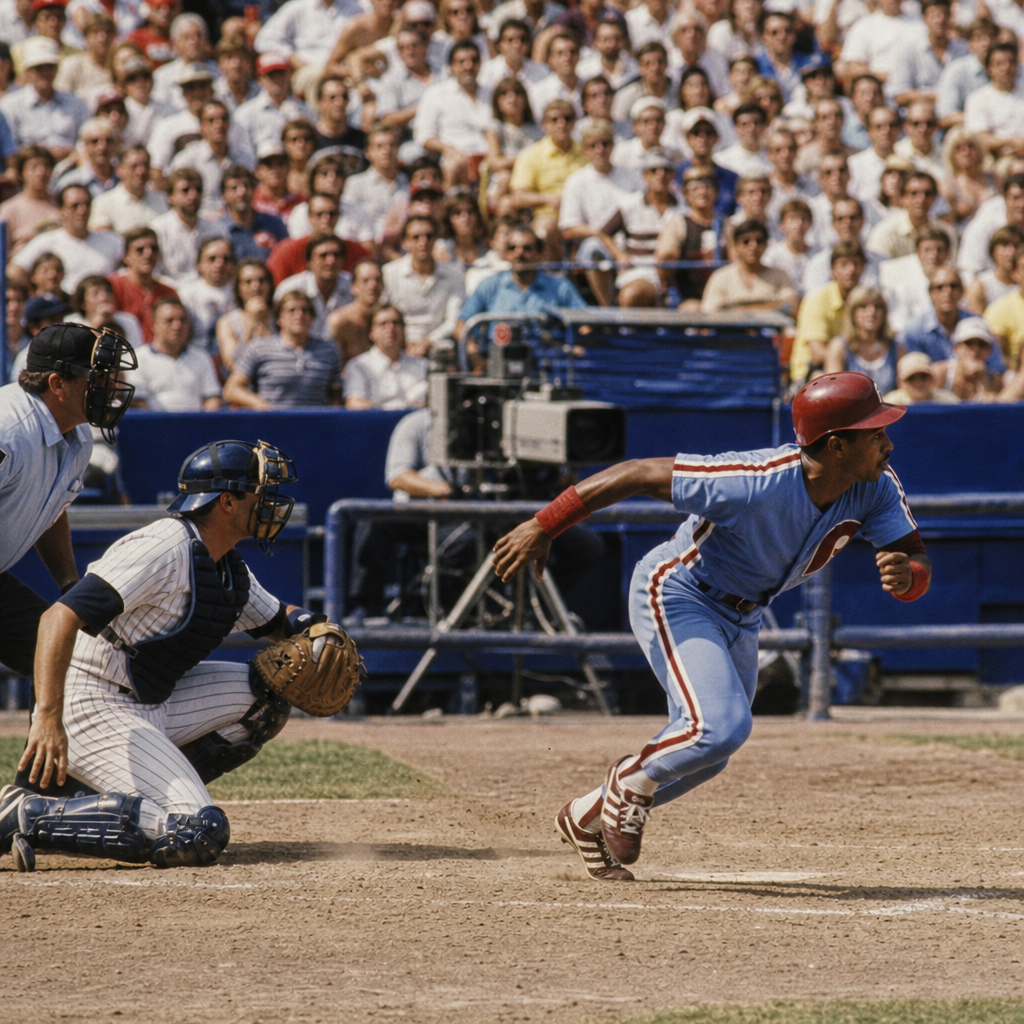
The 1980s reshaped Major League Baseball as completely as any decade since integration. On the field, teams emphasized speed, defense, specialized relief pitching, and artificial-turf versatility. Off the field, owners, players, agents, and television executives turned the sport into a more national, more expensive, and more openly corporate business. For anyone studying baseball eras, the 1980s matter because expansion and free agency stopped being side stories and became central forces that changed roster building, payroll strategy, media reach, and fan expectations across both leagues.
When people discuss baseball in the 1980s, they usually picture stolen bases, split-finger fastballs, Eckersley-style late innings, and postseason games carried into millions of homes by cable television. Those images are accurate, but they only tell part of the story. The decade also saw the aftershocks of the reserve clause’s collapse, a maturing arbitration system, collusion by owners, franchise instability, and a more aggressive marketplace for stars. Expansion and free agency are the hub topics because they connect nearly every other change: where teams played, how front offices valued players, how salaries rose, and why competitive balance looked different from what fans had known in the 1950s, 1960s, or 1970s.
Expansion in this context means more than adding franchises. It includes the league’s push into new Sun Belt markets, the pressure to secure modern stadium deals, and the broader geographic spread of fandom through television. Free agency refers to the right of players to offer their services on an open market after meeting service requirements, a system born from the Messersmith-McNally decision in the mid-1970s and shaped through collective bargaining in the years that followed. By the 1980s, clubs were no longer only developing and controlling talent internally. They were competing for it, pricing it, and sometimes conspiring to suppress it. I have spent years working through box scores, labor timelines, broadcast records, and roster transactions from this decade, and one conclusion is unavoidable: the baseball of the 1980s cannot be understood without seeing business decisions and tactical trends as parts of the same story.
This hub article explains how that story unfolded. It covers the rise of speed-and-bullpen baseball, the economics of free agency, the role of expansion-minded growth in reshaping markets, the influence of cable TV, and the labor conflicts that exposed owners’ resistance to a truly open market. Along the way, it points to the names, teams, and turning points that define the era, from Whitey Herzog’s Cardinals and the 1985 Royals to the Mets, A’s, Blue Jays, and the owner collusion cases that permanently altered trust between labor and management.
How the 1980s game looked on the field
The style of play shifted toward quickness and prevention. Multi-purpose stadiums with artificial turf rewarded line drives, range, and aggressive baserunning. The Cardinals under Whitey Herzog became the clearest example. In 1985 they stole 314 bases, a modern National League benchmark, and built an offense around Vince Coleman, Willie McGee, Ozzie Smith, and pressure. Herzog’s “Whiteyball” was not small ball in the simplistic sense. It was a tailored response to Busch Stadium’s surface, roster strengths, and the run-scoring environment of the period. The Royals, Expos, and Astros also leaned into defense, contact, and athleticism, while the 1980s Mets paired power with speed and premium up-the-middle play.
The bullpen changed just as dramatically. Earlier eras often asked a top reliever to work multiple innings several times a week. By the 1980s, managers increasingly carved out inning-specific roles, even if the one-inning closer model was not yet fully standardized. Goose Gossage remained a bridge between eras because he could dominate in long relief, but clubs were already moving toward tighter specialization. Tony La Russa’s use of Dennis Eckersley at the decade’s end with Oakland became a template for the modern closer: enter with a lead, attack one inning, finish the game efficiently. That evolution changed roster construction. Teams carried more relievers, protected starting pitchers differently, and placed new value on strike-throwing late-inning arms.
Pitching strategy also reflected the decade’s experimentation. The split-finger fastball spread through the majors, associated with pitchers such as Bruce Sutter, Dave Stewart, Mike Scott, and later many copycats. Weight training gained broader acceptance, though not yet in the systematic, organization-wide form that became common in the 1990s and 2000s. Front offices still depended heavily on scouting judgment, but they were making more explicit cost-benefit choices about veterans, arbitration years, and free-agent contracts. The on-field product therefore mirrored the business climate: more specialized, more strategic, and less tied to old assumptions about fixed player-team relationships.
Free agency becomes the engine of the decade
Free agency was legal before the 1980s, but in this decade it became the engine that drove headlines and front-office planning. The reserve system had effectively bound players to clubs for generations. After arbitrator Peter Seitz ruled in favor of Andy Messersmith and Dave McNally in 1975, the old order collapsed. The basic principle was simple: after a defined period of service, players could negotiate with other teams. In practice, the system became a maze of service-time thresholds, compensation rules, salary arbitration, and owner resistance.
For clubs, free agency created a second talent market beside scouting and player development. A contending team no longer needed to wait years for a prospect to mature if it could buy proven production. For players, the market finally put a visible price on elite performance. Reggie Jackson’s earlier deal with the Yankees signaled the change, but the 1980s normalized it. Tim Raines, Jack Morris, Kirk Gibson, Andre Dawson, Carlton Fisk, and many others became reference points in disputes over value, leverage, and contract structure. Average salaries rose sharply over the decade, though not in a straight line, and the increase reflected both genuine competition and periodic suppression by ownership.
Arbitration worked alongside free agency and often mattered just as much. A player with enough service time but not yet on the open market could still force a salary hearing, where comparable players, counting stats, awards, and durability all became financial evidence. That process changed the way teams documented performance and the way agents framed player value. In practical terms, the 1980s taught front offices that every decision had a future price tag. A breakout season did not just help in the standings; it established a benchmark for the next contract negotiation.
Expansion, relocation pressure, and the new baseball map
There was no actual franchise expansion during the 1980s after the Blue Jays and Mariners entered in 1977, but expansion remained a central issue because baseball spent the decade thinking and acting like a sport preparing for broader national reach. Owners evaluated emerging markets, public financing options, and media potential with more urgency than before. Toronto became a proof point that nontraditional or previously underdeveloped major league markets could support strong attendance and regional identity. The Blue Jays steadily built a fan base and by the late 1980s had become a model expansion success, combining player development, shrewd transactions, and market growth.
At the same time, relocation threats and stadium politics shaped the business. The Giants nearly moved to Toronto in the 1970s and came close to a sale that would have sent them to St. Petersburg in 1992, showing how unstable some franchise situations remained through the 1980s. The Mariners fought attendance and ownership concerns. The Expos drew strong support at times but faced long-term structural issues. Expansion, then, was not just about adding clubs; it was about determining which cities could sustain modern baseball economics, especially with rising salaries and growing demands for better facilities and luxury revenue streams.
Cable television amplified this geographic change. Braves games on WTBS and Cubs games on WGN turned local teams into national brands. A child in the South could watch Dale Murphy nightly. A fan outside Illinois could become a Cubs regular without ever visiting Wrigley Field. That mattered for future expansion because it trained the sport to think beyond gate receipts. Media reach could build loyalty in markets that did not yet have teams and increase the strategic value of every franchise.
| Force | 1980s effect | Example |
|---|---|---|
| Free agency | Raised salary competition and shortened club control over stars | Kirk Gibson leaving Detroit for Los Angeles after 1987 |
| Arbitration | Turned performance into formal salary evidence | Agents using awards and counting stats in hearings |
| Cable TV | Expanded team brands beyond local markets | WTBS Braves and WGN Cubs |
| Stadium politics | Made franchise stability depend on public-private deals | Ongoing concerns around Seattle and San Francisco |
| Bullpen specialization | Changed roster construction and late-game tactics | Eckersley’s role with the A’s |
Collusion, labor conflict, and the limits of the open market
The biggest challenge to free agency in the 1980s came from ownership itself. After salaries climbed, owners coordinated their behavior to avoid bidding seriously on free agents following the 1985, 1986, and 1987 seasons. These actions became known as collusion, and arbitrators ultimately ruled against the clubs. The evidence showed a pattern: stars found fewer offers than expected, markets moved suspiciously slowly, and teams acted with unusual restraint despite obvious needs. The result was one of the most consequential labor scandals in baseball history.
The damages were enormous. Owners paid roughly $280 million in settlements to players, and the cases hardened distrust between management and the union. This matters for any 1980s baseball overview because it proves that free agency’s impact was not automatic or smooth. The system existed, but powerful owners still tried to limit it. For players, collusion confirmed the value of a strong union under Marvin Miller’s legacy and later leadership. For fans, it explained why some offseasons felt strangely stagnant despite the era’s supposed market freedom.
The 1981 strike belongs in this conversation too. Triggered by conflict over free-agent compensation and club control, it split the season in two and forced an awkward playoff structure. The strike was not just a labor interruption; it was a referendum on who controlled baseball’s economics. Owners argued that wealthier teams could strip talent from others. Players argued that management was trying to claw back rights already won. Both sides had real concerns, but the decade showed that suppressing player movement was not a sustainable answer. Teams had to adapt through smarter development, better scouting, and clearer payroll strategy.
Teams that defined the decade’s baseball-business crossover
Several franchises serve as case studies for the 1980s. The Cardinals showed how a club could exploit ballpark conditions and roster speed without running a top-heavy payroll. The Mets demonstrated how elite young talent, once developed, became both a competitive advantage and a future payroll challenge. The Blue Jays illustrated patient growth in a newer market. The Athletics, especially from 1988 forward, previewed modern bullpen management and the power of strong central leadership under Tony La Russa, Dave Duncan, and front-office support.
The Yankees remained baseball’s financial symbol, but they were not the only important business story. The Dodgers used market size and player development together. The Tigers balanced a strong homegrown core with selective spending. The Royals won in 1985 with depth, contact, defense, and a capable bullpen rather than overwhelming star power. Even teams that did not win championships contributed to the decade’s lessons. The Cubs proved a national television footprint could transform relevance. The Braves showed that poor on-field results did not prevent broad brand visibility if media distribution was strong enough.
These examples matter because they dispel a common myth that the 1980s were simply a transition decade between the freewheeling 1970s and the power surge of the 1990s. In reality, the 1980s established the operating rules of modern baseball: labor rights mattered, media markets mattered, relief roles mattered, and front offices had to manage both baseball fit and business risk at the same time.
Why this era remains essential to understanding baseball eras
If you are exploring baseball eras, the 1980s provide the clearest bridge between the traditional game and the fully commercial, nationally mediated sport that followed. Expansion thinking broadened baseball’s map, even before new clubs officially arrived in the 1990s. Free agency and arbitration changed the life cycle of every star. Cable TV made regional teams national habits. Bullpen specialization altered tactics in ways still visible today. Labor conflict revealed that every gain in player freedom would be contested.
The key takeaway is straightforward: baseball in the 1980s was not defined by one champion, one dynasty, or one trend. It was defined by interconnected change. The sport became faster on the field, more segmented on the mound, more national on television, and more competitive in the marketplace for talent. To go deeper into the Baseball Eras topic, use this hub as your starting point and follow each subtopic—free agency, labor battles, expansion markets, television, and tactical evolution—to see how the decade built the modern game.
Frequently Asked Questions
Why is baseball in the 1980s considered such a turning point in Major League Baseball history?
The 1980s are widely seen as a turning point because the decade changed both how baseball was played and how it operated as a business. On the field, many clubs moved away from the home-run-heavy identity associated with some earlier eras and leaned into speed, defense, stolen bases, matchup-based bullpen usage, and roster flexibility. Artificial turf in multipurpose stadiums also influenced strategy, rewarding quickness, range, and line-drive contact over slower, station-to-station styles. Teams like the St. Louis Cardinals became emblematic of this approach, showing that pressure offense, aggressive baserunning, and elite defense could define a winning model.
Off the field, the 1980s pushed baseball into a more modern economic structure. Free agency was no longer a novelty; it became a central part of roster building and salary growth. Player agents gained influence, owners adjusted to a more competitive labor environment, and front offices had to think more aggressively about contracts, arbitration, and long-term financial planning. Expansion, franchise movement discussions, national television exposure, and the growing power of cable all helped make baseball feel less regional and more national. In that sense, the decade did not just produce memorable teams and players; it helped create the framework for the modern game.
How did speed and artificial turf shape the way teams played during the 1980s?
Speed was one of the defining tactical themes of 1980s baseball, and artificial turf played a major role in making that style more practical and more visible. Turf fields tended to produce faster bounces and quicker infield play, which rewarded hitters who could put the ball in play, run well, and force defensive mistakes. Rather than waiting for a three-run homer, many teams emphasized singles, stolen bases, hit-and-run plays, first-to-third baserunning, and defensive pressure. This style fit the personnel of many successful clubs and changed the visual feel of the game.
The best example is often the Whitey Herzog-era St. Louis Cardinals, who built contenders around speed, range, athleticism, and run prevention. Players who could cover ground in the outfield, steal bases, and disrupt pitchers became especially valuable. Turf also increased the importance of infield defense because ground balls got on fielders quickly, making reaction time and sure hands essential. While not every contender played exactly the same way, the decade clearly rewarded athletic versatility. In practical terms, the 1980s taught teams that roster construction could be tailored to ballpark conditions, surface type, and run-scoring environment, a lesson that remained important long after many turf-heavy stadiums disappeared.
What changed about bullpen strategy in the 1980s?
The 1980s were crucial in the rise of the specialized bullpen. Relief pitching had always mattered, but during this decade teams became much more intentional about assigning pitchers to defined late-game roles. Managers increasingly relied on closers to protect leads in the ninth inning and turned to setup relievers or situational arms earlier in tight games. This role-based thinking helped reshape pitching staffs and influenced how starters were used, especially as teams became more cautious about asking them to finish games consistently.
The decade featured some of the most iconic relievers in baseball history, and their success reinforced the value of bullpen specialization. Rather than treating relief pitchers as failed starters or emergency options, clubs began to see elite relievers as strategic weapons capable of shortening games. If a team led after six or seven innings, a deep bullpen could make that advantage feel decisive. This shift also changed front-office priorities, as relief pitching became a roster area worth real investment. Over time, the bullpen-heavy logic that gained traction in the 1980s became a foundation of the modern game, where leverage, matchups, and bullpen depth are now central to championship planning.
How did cable television and national media change baseball during the 1980s?
Cable television helped transform baseball from a sport experienced mainly through local radio, local TV, and newspaper coverage into one with broader national reach. As cable expanded, fans could see more games from outside their home markets, and teams gained new ways to build audiences beyond the immediate city or region. Superstation broadcasts, most famously associated with clubs like the Chicago Cubs on WGN and the Atlanta Braves on TBS, turned local franchises into nationally familiar brands. That exposure helped reshape fan loyalties, player recognition, and the commercial value of the sport.
The effect went beyond visibility. Television revenue became a bigger factor in team economics, and media relationships took on greater strategic importance for owners and executives. Baseball was no longer just competing on the field; it was competing for ratings, advertising dollars, and national attention in an increasingly crowded entertainment landscape. The result was a more commercial, more media-aware version of the sport. In many ways, the 1980s laid the groundwork for today’s broadcast-driven baseball economy, where media rights, brand reach, and content distribution are inseparable from competitive and financial planning.
How did free agency, owners, and player salaries change the business of baseball in the 1980s?
By the 1980s, free agency had moved from being a dramatic new development to being a permanent force in the industry. That shift changed nearly every level of baseball operations. Teams had to think beyond scouting and player development alone; they also had to navigate open-market bidding, salary arbitration, long-term contracts, and the growing leverage of star players represented by powerful agents. For players, this meant more freedom and, for many veterans, significantly greater earning power. For owners, it meant a more competitive and more expensive labor environment than the one they had controlled in earlier eras.
This tension helped define the business side of the decade. Labor disputes, collusion controversies, and public arguments over money became part of the sport’s identity in a way that felt more visible and less romanticized than before. At the same time, rising revenues from television and the growing national profile of the game helped make larger payrolls possible, even as they created new inequalities and frustrations. The 1980s therefore matter not just because salaries increased, but because baseball became more openly corporate and structurally complex. Front offices had to balance winning, budgets, media opportunities, labor law realities, and public relations. That modern business mindset is one of the decade’s most important legacies.