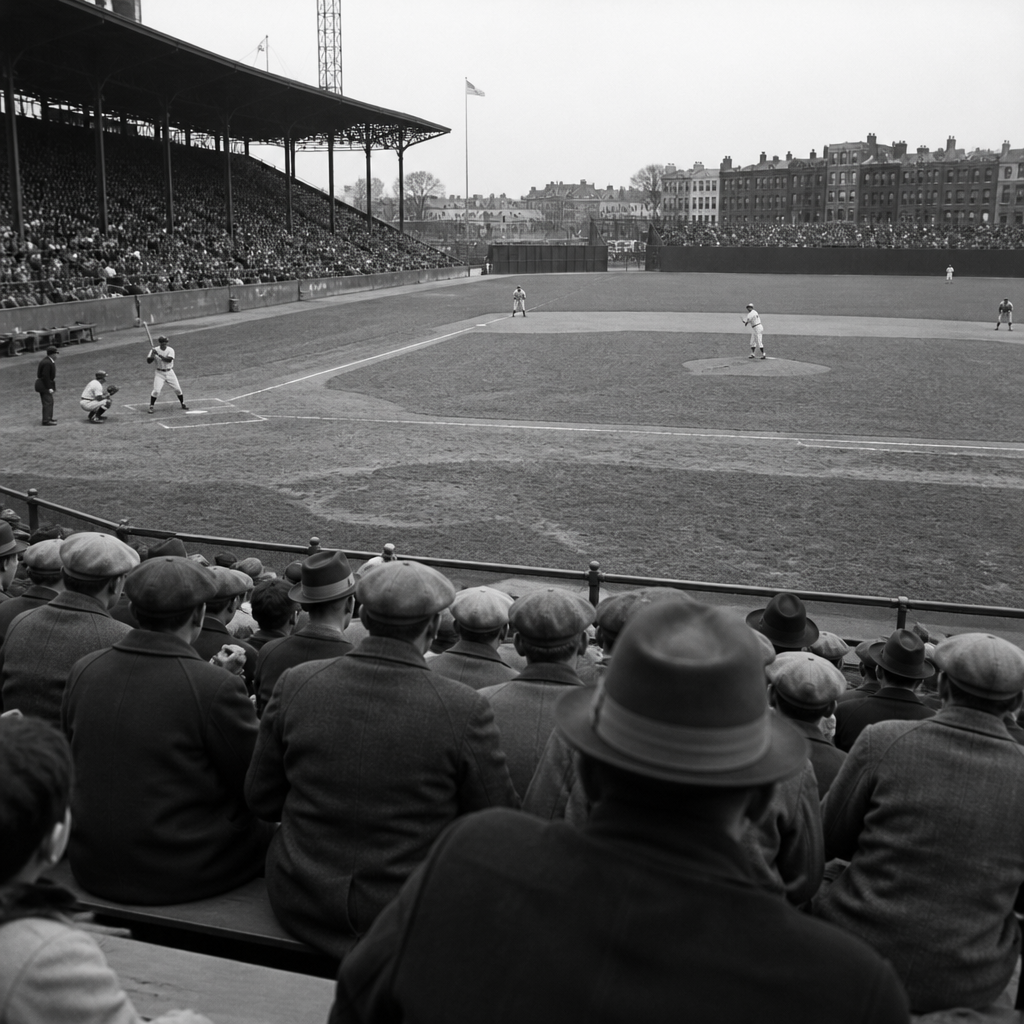
Baseball during the Great Depression became a test of whether a mass entertainment business could survive when millions of Americans lost jobs, banks failed, and family budgets collapsed. In this period, usually framed within the late live-ball era and the broader Golden Age of baseball, the game moved from the offensive explosion that followed 1920 into a harsher economic reality after the 1929 stock market crash. The live-ball era refers to the style of play shaped by a cleaner, livelier ball, rising home run totals, and stars such as Babe Ruth, while the Golden Age describes the wider stretch from the 1920s through the 1940s when baseball held a dominant place in American culture. Understanding ticket prices, attendance, and survival matters because those three forces explain how clubs operated, why leagues made specific decisions, and how baseball remained visible even as much of the country struggled to pay rent. I have spent years working through box scores, financial summaries, and newspaper coverage from the early 1930s, and the central lesson is clear: baseball did not simply endure on nostalgia. It survived through price adjustments, promotional creativity, labor restraint, shared civic identity, and the drawing power of a handful of superstars who could still make a day at the ballpark feel worth the cost.
The economic shock that hit baseball
The Great Depression damaged baseball because the sport depended on discretionary spending. A factory worker who could no longer count on steady wages might still love the Yankees or Cardinals, but affection did not guarantee the price of a ticket, trolley fare, a scorecard, and a sandwich. By 1933, U.S. unemployment had reached roughly 25 percent, and that collapse in purchasing power translated quickly to the gate. Baseball economics at the time were direct and unforgiving: clubs earned most of their money from ticket sales, with far smaller media income than modern teams receive from national television deals, streaming rights, and sponsorship portfolios. If fans stopped attending, clubs immediately felt the loss in operating cash.
The contrast with the 1920s is essential. The home run boom created by Babe Ruth, offensive rule changes, and fan fascination with sluggers had helped teams fill large urban parks. Then the economy contracted. Even teams with strong brands saw attendance fall sharply, and weaker clubs faced existential pressure. Franchise survival was never guaranteed. Owners cut payroll, delayed improvements, sold players, and sought local investors. Minor leagues collapsed in waves because they lacked the reserves and market strength of the majors. The major leagues survived, but survival should not be confused with stability. In practical terms, clubs were fighting year to year to keep enough paying customers coming through the turnstiles.
Ticket prices and the value proposition of a game
Ticket prices during the Great Depression became one of the clearest indicators of baseball’s attempt to stay reachable. Prices varied by city, seat location, and opponent, but owners broadly understood that premium pricing from the boom years could not continue unchanged. Bleacher and pavilion seats offered lower-cost entry, while box seats and prime grandstand locations remained more expensive for fans who still had discretionary income. In many parks, the cheapest admissions stayed within a range that ordinary workers could at least consider, even when attendance overall was down. That affordability was strategic, not charitable. Clubs needed volume, and a partially filled park generated concessions, atmosphere, and the impression that the team remained relevant.
Owners also learned that “cheap enough” was not a fixed number. A 50-cent ticket carried a different burden in 1932 than it had in 1928 because wages had fallen and joblessness had soared. Some clubs used ladies’ days, discounted weekday admissions, doubleheaders, bat days, and youth promotions to lower the effective cost of attendance without permanently destroying standard pricing. That distinction mattered. Teams wanted to protect the idea that baseball retained value while still coaxing hesitant families to buy. In modern terms, they were managing price elasticity before the phrase became common in sports business analysis.
Transportation and time costs mattered as much as the posted ticket. Urban baseball relied on streetcars, elevated rail lines, and walking distance from working-class neighborhoods. A low ticket price could still fail if getting to the park cost too much or if a worker feared losing a day’s pay. That is why Sunday baseball, where legal, became more important: it matched available leisure time with the best chance of turning interest into actual attendance. In city after city, clubs were not selling only a seat. They were selling an affordable block of escape.
Attendance trends across the live-ball and Golden Age landscape
Attendance dropped across baseball after the crash, but the decline was uneven. Successful clubs with iconic stars and pennant chances generally held up better than second-division teams. The Yankees remained a major attraction because Ruth and later Lou Gehrig drew national attention. The Cardinals, managed under Branch Rickey’s broader organizational vision, benefited from competitive teams and deep regional support. By contrast, struggling franchises in smaller or more economically distressed markets could not count on loyalty alone. Fans might follow the standings in newspapers while attending only a handful of games all season.
League-wide numbers tell the broader story. Major League Baseball attendance fell steeply in the early 1930s before improving later in the decade as the economy stabilized somewhat and stars such as Joe DiMaggio helped renew interest. The low point came near 1933, the same year the first All-Star Game was staged in Chicago. That event was not a coincidence. Baseball needed spectacles that could command national attention, generate fresh newspaper coverage, and remind the public that the sport still represented excellence rather than decline. The strategy worked. The All-Star Game became both a revenue event and a cultural statement that baseball could innovate while preserving tradition.
| Factor | How it affected attendance | Example from the era |
|---|---|---|
| Star power | Boosted gate receipts even in weak economies | Babe Ruth and Lou Gehrig kept the Yankees a national draw |
| Team performance | Pennant races increased repeat attendance | The Cardinals’ winning clubs sustained fan interest |
| Pricing and promotions | Lowered barriers for budget-conscious families | Discount days and doubleheaders increased perceived value |
| Local economy | Job losses reduced discretionary spending | Industrial cities often saw sharp gate declines |
| Ballpark access | Transit convenience influenced turnout | Urban parks near streetcar lines retained an advantage |
Another attendance driver was the style of the live-ball game itself. Fans had grown used to action: home runs, extra-base hits, and visible star performances. During hard times, spectacle mattered more, not less. A fan paying scarce money wanted a game that felt eventful. Ruth’s chase for distance, Gehrig’s consistency, and Dizzy Dean’s personality offered marketable reasons to choose baseball over other uses of cash. In newspaper language of the period, clubs that could promise excitement had a better chance to put bodies in seats.
How clubs cut costs and stayed solvent
Survival required relentless cost control. Owners reduced payroll whenever they could, and players discovered that bargaining power weakened when teams could credibly claim financial distress. Salaries declined across the league. Even stars were not immune, though transcendent players retained leverage because owners knew certain names directly translated into gate revenue. For ordinary roster players, the reserve system left few alternatives. If a player refused terms, he often had nowhere equivalent to go. That imbalance helped owners manage expenses, but it also revealed a harsher side of baseball’s economic structure in the Depression years.
Farm systems became more valuable in this environment. Branch Rickey’s player-development model with the Cardinals gave the club a pipeline of cheaper talent and made the organization more resilient than rivals relying heavily on expensive purchases. Teams that developed and controlled players efficiently could replace veterans, trade from depth, and avoid overpaying on the open market. This was not merely a scouting story. It was a survival system. The Depression rewarded organizations that could produce talent internally and spread risk across affiliated clubs.
Front offices also economized on travel, staffing, and ballpark maintenance. Teams deferred nonessential renovations and relied on multipurpose staff. Radio, still expanding, created a complicated tradeoff. Some owners feared broadcasts would keep customers home, while others saw radio as advertising that strengthened attachment and boosted future attendance. In practice, radio helped keep teams culturally present when many fans could not afford frequent tickets. That mattered because baseball’s challenge was not just to earn today’s dollar, but to preserve tomorrow’s audience.
Promotions, stars, and the business of emotional escape
Baseball survived in part because it sold relief from economic anxiety. That sounds abstract, but clubs treated it as a concrete business function. Promotional days, celebrity appearances, band concerts, and special exhibitions aimed to make attendance feel like a fuller experience than nine innings alone. Owners understood that fans comparing every household expense needed more than routine. They needed occasion. The game had to feel memorable enough to justify the outlay.
Stars carried this burden most visibly. Ruth remained baseball’s greatest gate attraction into the early 1930s because he represented abundance in a period of scarcity. Gehrig embodied durability and excellence. Dean brought bravado and quotable confidence. Jimmie Foxx, Lefty Grove, Carl Hubbell, and Mel Ott provided additional reasons for newspaper readers to become paying customers. This was the celebrity economy of the Golden Age: newspapers built narratives, radio amplified them, and ballparks monetized them. The mechanism was simple. Fans would stretch budgets for performers who felt singular.
The first modern All-Star Game in 1933 showed how effectively baseball could package its elite talent. Staged at Comiskey Park as part of Chicago’s Century of Progress Exposition, it gathered the sport’s biggest names into one national showcase. The game generated publicity, reinforced baseball’s major figures as household names, and delivered a successful gate at a moment when the sport needed confidence as much as cash. It also helped create a new annual event that linked local loyalty with league-wide interest.
The wider baseball ecosystem: minor leagues, Negro Leagues, and community ties
No account of baseball during the Great Depression is complete without looking beyond the major leagues. Minor league baseball suffered devastating contraction. Many clubs folded because their margins were thin even in good years, and local economies could not support regular attendance after 1929. When a town lost its club, it lost affordable entertainment, seasonal jobs, and a point of civic identity. The shrinkage of the minors also changed the talent pipeline, making strong farm systems even more important for the organizations that remained standing.
The Negro Leagues faced equally severe pressures, compounded by racial exclusion from the majors and unstable access to capital, ballparks, and scheduling. Yet Black baseball remained a major cultural force because teams adapted through barnstorming, flexible scheduling, and star-centered promotion. Clubs featuring Satchel Paige, Josh Gibson, and Cool Papa Bell could draw substantial crowds when conditions aligned. Their survival strategies often required more mobility and improvisation than those of white major league clubs. That instability should not obscure the quality of play. On talent and entertainment value, many Negro League teams were exceptional; what they lacked was equal institutional protection.
At the community level, baseball kept its place because it was woven into everyday life. Newspapers devoted extensive space to results and personalities. Children played improvised versions in vacant lots. Workers debated lineups and pennant chances even when they could not attend often. Churches, ethnic associations, and neighborhood groups organized amateur games. In that sense, the major leagues survived partly because baseball as a social habit survived. The sport was not merely consumed. It was practiced, discussed, and shared, which helped preserve demand through the worst years.
What this era reveals about baseball’s long-term resilience
The Depression-era game shows that baseball’s Golden Age was not built only on romance. It was built on adaptable business practices layered onto a popular product with deep cultural roots. Ticket prices had to remain within reach. Attendance depended on stars, winning, access, and timing. Survival required payroll discipline, player development, creative promotions, and media visibility. Those same themes echo through later baseball history, from postwar expansion to modern debates over local broadcasting, stadium financing, and fan affordability.
For anyone studying the live-ball and Golden Age period as a hub within baseball eras, the Depression years are the bridge between the offensive revolution of the 1920s and the institutional maturity of the late 1930s and 1940s. They explain why the Yankees’ star system mattered, why Branch Rickey’s methods were transformative, why the All-Star Game stuck, and why ballparks functioned as civic spaces as much as commercial ones. Most important, they show that attendance figures are not just numbers. They are evidence of how ordinary people valued joy under pressure.
The key takeaway is straightforward: baseball survived the Great Depression because it stayed emotionally important while becoming economically flexible. Clubs that adjusted prices, controlled costs, promoted stars, and maintained public visibility gave fans enough value to keep coming when they could. That survival preserved the Golden Age and shaped every era that followed. If you are exploring baseball eras in depth, use this period as a foundation, then continue into team economics, star culture, the farm system, the Negro Leagues, and wartime baseball to see how the game’s resilience kept expanding.
Frequently Asked Questions
How did the Great Depression affect baseball ticket prices?
The Great Depression put immediate pressure on baseball’s entire pricing structure because club owners could no longer assume that fans had spare cash for regular leisure spending. After the 1929 stock market crash, unemployment rose sharply, wages fell, and many families began cutting anything that was not essential. Baseball teams responded by reducing ticket prices in some markets, introducing more promotional offers, and trying to make a day at the ballpark feel affordable even to fans under severe financial strain. In practical terms, that often meant experimenting with cheaper bleacher seats, bargain days, family-friendly pricing, and other incentives designed to preserve turnout without completely undermining gate revenue.
Teams had to strike a careful balance. If prices stayed too high, attendance could collapse because fans simply could not justify the expense. If prices were cut too deeply, clubs risked losing the revenue needed to pay players, maintain parks, and cover travel and operating costs. This was especially important in an era when baseball depended heavily on gate receipts. There was no modern television money to cushion losses, so ticket sales remained the financial lifeblood of the sport. As a result, Depression-era pricing became less about maximizing profits in a booming economy and more about survival, flexibility, and keeping the game within reach of ordinary Americans.
Why did attendance decline during the Great Depression, and how severe was the drop?
Attendance declined because baseball was a discretionary purchase in a period when millions of Americans were struggling to pay for food, rent, and basic household needs. Even fans who remained emotionally attached to their teams often had to choose between attending games and preserving limited cash. Travel to the ballpark, food at the game, and time away from work or job searching could all add to the real cost of attending. In that environment, the issue was not whether people still loved baseball. Many did. The issue was whether they could afford to participate as paying customers.
The drop was serious enough to threaten the financial stability of multiple franchises. While the exact pattern varied by city and by team performance, the overall trend in the early 1930s was downward as the broader economy worsened. Clubs in working-class cities or in markets hit especially hard by industrial contraction often felt the pain most intensely. Winning could still help, and star players could still draw crowds, but even competitive teams were not immune to the larger economic collapse. Attendance problems became one of the clearest indicators that baseball, despite its cultural importance, was not insulated from national hardship.
What makes this decline historically significant is that it showed the limits of baseball’s presumed permanence. Before the Depression, the live-ball era had energized the sport with bigger offensive numbers, famous stars, and renewed public excitement. Yet the Depression revealed that entertainment demand had a breaking point. Fans continued to follow games through newspapers and radio when possible, but physical attendance became much harder to sustain. That gap between emotional loyalty and financial capacity is central to understanding baseball’s Depression-era experience.
How did baseball teams survive financially during the Depression?
Baseball teams survived through a combination of cost-cutting, creative promotion, roster adjustments, and, in some cases, sheer resilience from ownership groups determined to keep franchises operating. Because clubs depended so heavily on ticket sales, declining attendance forced them to reduce expenses wherever possible. This could include trimming payroll, delaying improvements to stadiums, limiting nonessential spending, and making more conservative business decisions overall. Teams also looked for ways to generate interest through special events, doubleheaders, giveaways, and community-oriented promotions that could attract larger crowds without requiring major capital investment.
Player salaries became an especially important part of the survival equation. Even star players were not entirely shielded from economic reality, and salary disputes took place in a climate where owners argued that shrinking revenues left little room for expensive contracts. Some teams sold players to reduce payroll pressure, while others relied more heavily on younger or less costly talent. This did not mean that owners were always financially desperate to the same degree, but it does mean that the Depression intensified baseball’s economic hierarchy. Wealthier or better-managed clubs generally had more room to absorb losses than weaker franchises.
Another survival tool was maintaining baseball’s role as a relatively accessible form of mass entertainment. Compared with more expensive leisure options, a ballgame could still be presented as a manageable outing, especially if clubs adjusted prices or bundled value into admission. The sport’s established place in American culture also helped. Fans who could not attend regularly still cared, still read about teams, and still followed pennant races, which preserved a foundation of public interest. In short, baseball survived not because the Depression spared it, but because teams adapted their business practices while the game retained deep emotional importance for the public.
Did the live-ball era and offensive style of play help baseball remain popular during the Depression?
Yes, the live-ball era helped baseball remain compelling, even though it could not fully offset the economic damage of the Depression. The live-ball era, which emerged after 1920, was associated with a cleaner, livelier ball, higher scoring, more home runs, and a style of play that felt more dramatic and modern to many fans. Offensive fireworks, star sluggers, and headline-making performances gave newspapers strong material and kept public attention focused on the game. That entertainment value mattered a great deal during hard times because people still wanted diversion, excitement, and a sense of continuity with pre-Depression life.
However, popularity and profitability were not the same thing. A fan could be fascinated by a great hitter, follow standings closely, and discuss the pennant race every day without buying many tickets. The Depression exposed this distinction very clearly. The sport’s offensive energy and celebrity appeal helped preserve relevance, but they did not erase the fact that many households had drastically reduced spending power. In that sense, the live-ball era gave baseball a cultural advantage but not an economic guarantee.
It is also important to note that the appeal of offense fit neatly into baseball’s role as escapist entertainment. In bleak years, spectators and readers often gravitated toward spectacle, personality, and heroics. Slugging stars and high-scoring games could provide exactly that. So while the live-ball style did not solve baseball’s financial troubles, it almost certainly helped keep the sport visible, discussed, and emotionally meaningful at a time when many other institutions were also under strain.
What does baseball’s survival during the Great Depression reveal about its place in American society?
Baseball’s survival during the Great Depression reveals that the sport occupied a uniquely important place in American society as both a business and a cultural institution. Economically, baseball was vulnerable. It relied heavily on ticket-buying fans, and those fans were living through one of the most devastating downturns in modern history. Yet culturally, the game remained deeply embedded in everyday life. People continued to follow teams in newspapers, talk about players, listen to reports, and use the season as a familiar rhythm in an unstable world. That persistence matters because it shows that baseball was more than a product for sale. It was also a source of identity, routine, and shared national experience.
The Depression years demonstrated that baseball could bend without entirely breaking. Teams faced shrinking crowds, lower revenues, and difficult payroll decisions, but the sport still held a broad emotional claim on the public. In a period marked by bank failures, unemployment, and social uncertainty, baseball offered continuity. Opening Day still arrived. Pennant races still developed. Stars still gave people something to admire and debate. Even when fans could not attend in person, the game remained part of the country’s mental and cultural landscape.
This endurance helps explain why historians often treat Depression-era baseball as a test case for the resilience of mass entertainment in modern America. The sport did not escape the crisis, and it certainly did not thrive uniformly through it. But it adapted, endured, and remained relevant. That combination of financial strain and cultural staying power is exactly what makes baseball during the Great Depression such a revealing chapter in both sports history and American social history.