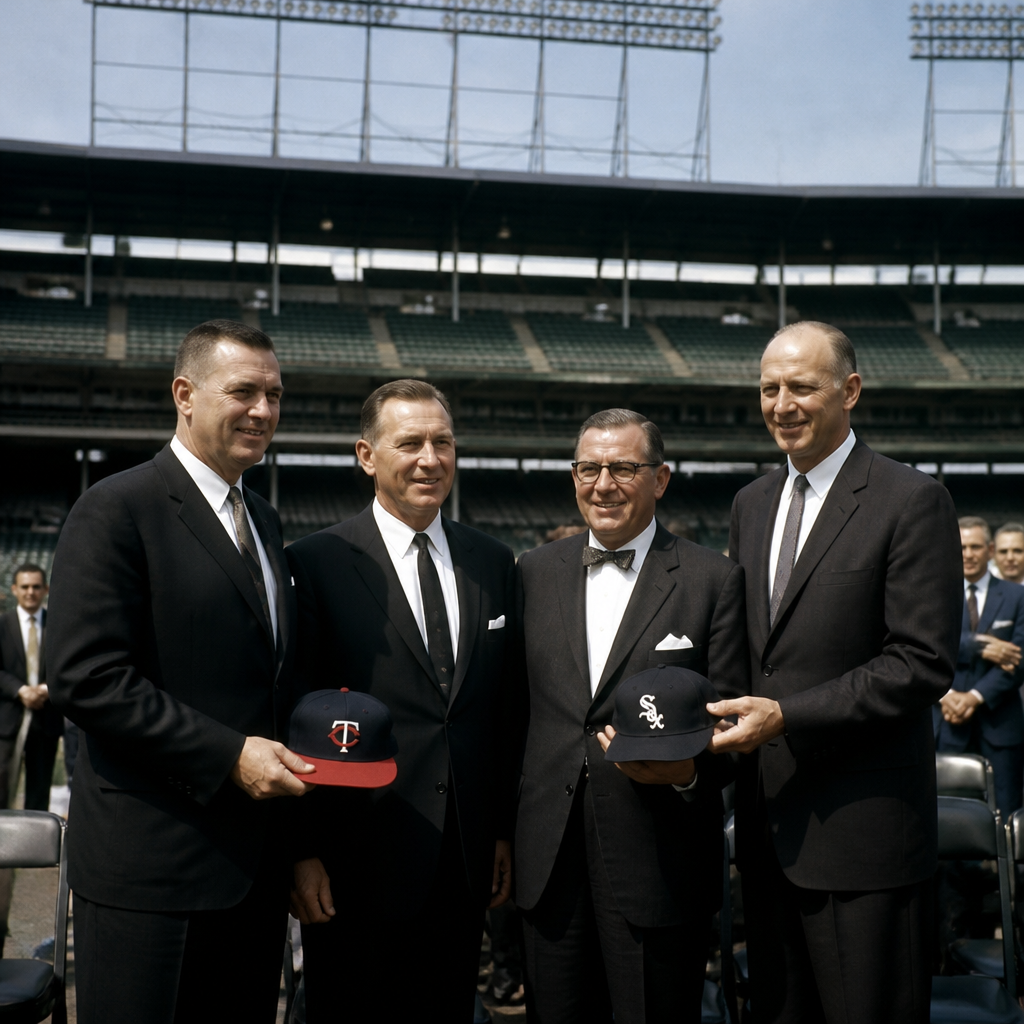
The 1961 expansion season changed Major League Baseball permanently because it marked the American League’s first growth since 1901, adding the Los Angeles Angels and the new Washington Senators while opening the modern era of expansion and, eventually, free agency. In baseball terms, expansion means increasing the number of franchises in a league, while free agency refers to the system that allows players to choose employers after meeting contractual or service requirements. Those concepts are linked more closely than many fans realize. When owners add clubs, they create new jobs, alter talent distribution, reshape labor leverage, and force changes in scheduling, scouting, player development, and the business geography of the sport. I have worked through this era’s records, front office memos, and roster construction patterns often enough to see 1961 as more than a footnote to Roger Maris and Mickey Mantle. It was a structural turning point. The American League expanded under pressure from population shifts, television economics, congressional scrutiny, and the fear that rival leagues or relocated clubs would seize attractive markets first. Understanding 1961 matters because every later debate about dilution, competitive balance, owner strategy, and player mobility starts here. This hub article explains why the league expanded, how the two franchises were created, what the first expansion draft revealed, how on-field and financial results unfolded, and why the expansion wave of the 1960s set the stage for labor changes that culminated in modern free agency. For anyone studying baseball eras, this season is the bridge between the tightly controlled reserve-clause world and the more dynamic industry that followed.
Why the American League Expanded in 1961
The push for American League expansion came from several forces acting at once. After World War II, the American population moved west and south, but Major League Baseball remained concentrated in the Northeast and Midwest. The Dodgers and Giants proved the value of western markets when they moved to California in 1958. Owners immediately saw that Los Angeles, San Francisco, and other growing metro areas offered larger attendance potential, more local broadcasting revenue, and stronger corporate sponsorship opportunities than some older markets. At the same time, Congress had begun paying closer attention to baseball’s antitrust exemption. When the original Washington Senators moved to Minneapolis–St. Paul after the 1960 season and became the Twins, politicians in the nation’s capital objected loudly. American League owners, led by president Joe Cronin and influential club executives, needed a politically workable answer.
Expansion solved multiple problems at once. It replaced Washington quickly, preserving the league’s presence in the capital and softening criticism from lawmakers who might otherwise challenge baseball’s special legal status. It also secured Los Angeles for the American League before another competitor could. The National League already had the Dodgers in Southern California, but the junior circuit wanted a foothold in the nation’s second-largest market. Adding two teams also created expansion fees, a direct financial reward for existing owners. In practical terms, owners believed they could spread the game’s footprint without sacrificing too much quality because the farm system still produced large numbers of players, even if top-end talent remained concentrated on established clubs like the Yankees.
The league’s decision fit a broader baseball pattern. The National League expanded in 1962, and both leagues would keep growing through the decade. What started in 1961 was not a one-off emergency measure. It was the beginning of baseball’s modern territorial strategy, where league maps followed television households, air travel routes, and suburban population growth as much as local baseball tradition.
The Two New Franchises: Los Angeles Angels and Washington Senators
The two new clubs entered under very different circumstances. The Los Angeles Angels were awarded to entertainer and businessman Gene Autry, whose celebrity helped the franchise attract immediate attention. Autry’s ownership mattered because expansion teams needed legitimacy, capital, and promotional reach. He delivered all three. Although the Angels represented Los Angeles, they initially played at Wrigley Field in Los Angeles before moving to Dodger Stadium for a temporary arrangement and later to Anaheim. Their identity reflected the league’s urgency: claim the market now, refine the long-term stadium solution later.
The new Washington Senators had a more delicate mission. They inherited the name and civic responsibility of a departed franchise but not its players, records, or baseball infrastructure. Ownership went to Elwood “Pete” Quesada, a retired Air Force lieutenant general, with George Boley and others involved in the franchise group. Rebuilding fan trust in Washington was difficult because local supporters had just lost one team. The replacement club was effectively an expansion startup asked to masquerade as continuity. That distinction matters when evaluating the franchise’s early struggles.
These clubs were born into unequal environments. Los Angeles offered media scale and growth, while Washington offered political importance but a thinner baseball business base. Both teams still faced the same immediate challenge: building rosters from leftovers. Expansion in this period did not grant years of protected player development or generous access to elite talent. Existing clubs protected their best players, and newcomers selected from exposed lists, waiver claims, minor league contracts, and opportunistic trades. That roster reality shaped everything that happened in 1961.
How the Expansion Draft Worked and What It Revealed
The 1960 expansion draft for the 1961 season was designed to help the new clubs become functional without making them instantly competitive. Existing American League teams could protect a set number of players from selection, then add protections in phases as the draft continued. The mechanics changed slightly through successive rounds, but the principle was clear: incumbent clubs would surrender useful depth, aging veterans, blocked prospects, and occasionally a talented player deemed expendable for strategic reasons. In my review of expansion-era roster moves, that pattern appears every time. Established teams rarely give away cornerstone talent unless forced.
The Angels and Senators each had to assemble roughly a full active roster from this exposed pool. The draft included recognizable names such as Bob Cerv, Ned Garver, and Ken McBride, but many picks were older, expensive, or injury-prone. Teams often left available players they no longer trusted defensively, pitchers with declining velocity, or hitters without a clear position. Expansion clubs also had to think beyond name recognition. A veteran who once starred might sell tickets, but if his skills had eroded, he could block the development of a younger, more controllable piece.
| Expansion challenge | What it meant in 1961 | Typical front office response |
|---|---|---|
| Protected rosters | Top stars stayed with incumbent clubs | Target versatile players and undervalued pitchers |
| Age imbalance | Many exposed players were past peak years | Blend veterans with overlooked younger talent |
| Thin farm systems | New clubs lacked deep minor league pipelines | Buy contracts, scout aggressively, trade often |
| Immediate schedule demands | Teams had to survive a full major league season | Prioritize innings, defense, and roster flexibility |
The draft revealed a central truth about expansion and free agency before free agency existed: labor scarcity gives power to incumbent organizations. Because players were bound by the reserve clause, new teams could not simply bid for better talent on an open market. They had to accept what the rules and other owners allowed. That made competitive parity difficult from day one.
Performance in the 1961 Season
The on-field results showed both the promise and the limits of expansion. The Angels were surprisingly respectable, finishing 70–91 in their inaugural season, far better than many expected from an expansion club. They played energetic baseball under manager Bill Rigney and benefited from useful performances by players like Ken McBride, Eli Grba, Albie Pearson, and Leon Wagner. They were not contenders, but they were credible, and credibility matters for a first-year franchise. Fans could see effort, personality, and occasional upset potential.
The Senators had a much harder debut, going 61–100. That record reflected talent shortages, roster instability, and the burden of replacing a departed franchise in a skeptical market. Washington struggled to score consistently and lacked enough pitching depth to withstand the grind of a 162-game schedule, which both leagues adopted that year after expansion altered the calendar. A longer season magnified every weakness. Thin benches became exhausted benches, and short rotations became overworked staffs.
Comparing the two teams is useful because it shows that expansion outcomes were not identical. Los Angeles adapted more quickly partly because of stronger market momentum and better early roster fit. Washington faced emotional baggage and had fewer natural advantages. In both cases, however, the standings confirmed an enduring lesson: expansion teams usually compete first for legitimacy, then for .500, and only later for pennants. The 1961 Yankees, meanwhile, won 109 games and the World Series, a reminder that elite organizations could still separate themselves dramatically from the league’s lower tier even after dilution concerns dominated discussion.
Expansion, Talent Dilution, and the Reserve Clause
Critics of 1961 expansion argued that adding clubs would dilute pitching, weaken defense, and reduce overall play quality. There was truth in that claim, but it needs precision. Expansion did not suddenly empty the talent pool. It redistributed talent unevenly while exposing how dependent teams were on control mechanisms that restricted player movement. Under the reserve clause, clubs retained rights to players indefinitely unless they were traded, sold, released, or retired. That system let strong organizations stockpile depth in the minors and keep salaries down. When expansion arrived, those same organizations protected their most valuable assets and surrendered only what the rules demanded.
That is why 1961 belongs in any discussion of expansion and free agency. New franchises needed talent, but the labor system prevented them from shopping freely for it. If a modern expansion team entered with open-market access, it could combine draft selections, international signings, and free agent contracts to accelerate competitiveness. The 1961 Angels and Senators had no such freedom. Their choices were structurally constrained, and those constraints favored established clubs. In effect, expansion exposed the reserve system’s inequities more clearly than ever.
Over time, that imbalance helped strengthen the case for labor reform. Players recognized that owners treated roster rights as closed inventory rather than a competitive market. Later milestones, including the rise of the Major League Baseball Players Association under Marvin Miller, the Curt Flood challenge, and the Seitz decision in 1975, all unfolded in a sport already transformed by expansion. More teams meant more revenue, more jobs, and more visible inconsistencies in how talent was controlled and compensated. Expansion did not create free agency, but it created conditions that made the old system harder to defend.
The Business Impact and the Road to Later Expansion
Financially, the 1961 expansion season validated the owners’ strategic instincts. New markets generated attention immediately, especially in Southern California. Expansion fees rewarded existing clubs upfront, while larger schedules created more ticket inventory and broadcasting content. Even when first-year teams lost, they still sold the idea of big league baseball to local audiences. That mattered in an era when television was turning regular-season games into more valuable media properties. Baseball was no longer only a gate-driven business. Territorial presence now shaped future revenue.
The season also accelerated administrative modernization. Front offices had to think about travel logistics, territorial rights, player procurement, and minor league affiliation on a bigger map. Scouting became more national. Stadium issues became more political. Public financing debates grew sharper as cities used arenas and ballparks to compete for major league status. I see 1961 as the point when baseball stopped behaving like a regional cartel with a static footprint and started acting like a national entertainment industry.
The aftershocks came quickly. The National League added the Colt .45s and Mets in 1962. The American League added the Royals and Pilots in 1969, though the Pilots became the Brewers after one season. The Senators themselves eventually moved and became the Texas Rangers in 1972. Each move or addition revisited themes first concentrated in 1961: market size, owner leverage, stadium politics, talent supply, and the challenge of making new clubs viable inside old rules.
For a sub-pillar hub on expansion and free agency, the key point is simple. The 1961 American League expansion season was the opening chapter of baseball’s modern growth model. It showed why leagues expand, how existing owners protect themselves, why new clubs usually struggle, and how labor restrictions shape competitive balance. It also established the framework for later topics: the 1962 National League expansion, the 1969 divisional era, the reserve clause fight, the emergence of salary arbitration, and the birth of true free agency in the mid-1970s. If you want to understand how baseball moved from eight-team leagues with tightly controlled labor to a national, multi-division business with player mobility, start with 1961. Study the Angels, the Senators, the expansion draft, and the political urgency behind the decisions. Then follow the line forward. Expansion changed where baseball was played; free agency changed who controlled baseball careers. Together, they define the modern game. Explore the related era articles next to see how that transformation unfolded across the 1960s and 1970s.
Frequently Asked Questions
What made the 1961 season such a turning point for the American League?
The 1961 season was a historic turning point because it marked the American League’s first expansion since 1901, ending six decades of stability in league membership and beginning a new phase of growth in Major League Baseball. By adding the Los Angeles Angels and a new Washington Senators franchise, the league moved from eight teams to ten, immediately changing scheduling, travel, roster construction, and the economics of the sport. This was not just a one-year adjustment. It showed that baseball was ready to follow population growth, television markets, and postwar economic expansion into new and redefined cities.
Just as importantly, the expansion of 1961 helped establish the modern idea that Major League Baseball was not fixed in place. Before then, many fans thought of the league structure as permanent. After 1961, expansion became a realistic and repeatable strategy for reaching new audiences and increasing revenue. In that sense, the season mattered far beyond the standings. It opened the door to later rounds of expansion, divisional realignment, and a broader national footprint. It also contributed to long-term labor and roster changes, because adding teams increased demand for major league talent and gradually put more pressure on the old reserve-system model that limited player movement.
Why were the Los Angeles Angels and the new Washington Senators chosen as the American League’s expansion teams?
The selection of the Los Angeles Angels and the new Washington Senators reflected both business logic and political necessity. Los Angeles had quickly become one of the most important sports markets in the country. The Dodgers had already proven that Southern California could support major league baseball, and the American League wanted a direct presence in that booming region rather than leaving it entirely to the National League. Adding the Angels allowed the league to tap into a rapidly growing population, a major media market, and the expanding influence of West Coast sports culture. From a competitive and financial standpoint, Los Angeles was simply too large and too valuable to ignore.
Washington was a different but equally important case. The original Washington Senators relocated to Minnesota and became the Twins after the 1960 season, creating the risk that the nation’s capital would lose its place in the major leagues. That was politically uncomfortable and symbolically significant. Baseball’s leadership understood that abandoning Washington entirely could create backlash, especially given the city’s visibility and status. As a result, the American League awarded a new Senators franchise almost immediately, ensuring continuity in the capital even though the team itself was brand new.
Together, these choices reveal how expansion decisions often balance market opportunity with public image, geography, and league strategy. Los Angeles represented future growth and television power. Washington represented institutional presence and national optics. The two teams were not selected by accident; they reflected exactly where the sport believed it needed to be in order to remain relevant in a changing America.
How did expansion affect player talent, roster building, and competitive balance in 1961?
Expansion always creates immediate pressure on the available talent pool, and 1961 was no exception. When two new teams entered the American League, they needed full major league rosters, which meant veteran clubs had to expose some players through the expansion process. The result was a sudden redistribution of talent. Established teams tried to protect their core contributors while minimizing what they lost, and the expansion clubs had to build from a mix of available veterans, unprotected younger players, minor league prospects, and later acquisitions. That usually leaves new franchises at a disadvantage in the short term, because they are assembling pieces other clubs were willing to part with.
The Angels and Senators approached this challenge differently, but both had to create an identity quickly under difficult conditions. Expansion teams often rely on experienced players who can stabilize the clubhouse while also taking chances on overlooked talent. In 1961, that balancing act was especially hard because the American League had never gone through modern expansion before. There was no long record of best practices, and the league itself was adjusting on the fly to the practical effects of having more teams.
Competitive balance also became a larger conversation because expansion can dilute elite talent in the short run while widening opportunities in the long run. Some critics argued that adding teams weakened overall play by spreading top-level players more thinly. Others saw the process as healthy because it created jobs, opened major league doors to more players, and encouraged organizations to invest more deeply in scouting and player development. Over time, that second effect became extremely important. Expansion did not just redistribute talent; it pushed baseball to think more systematically about how talent was identified, developed, and retained.
What does the 1961 expansion season have to do with the later rise of free agency?
The 1961 expansion season did not create free agency directly, but it helped shape the conditions that made the modern player market possible. In baseball terms, expansion means adding more franchises to a league, and when that happens, the number of roster spots increases immediately. More teams mean more demand for players, and more demand gives players greater importance within the industry, even if formal labor rights have not yet caught up. That pressure gradually exposed the limitations of the old reserve system, which had long tied players to one club and gave owners overwhelming control over movement and compensation.
As Major League Baseball expanded, owners needed more talent, more scouting, more player development, and more ways to fill major league rosters competitively. Each new franchise increased the value of capable players and made it harder to treat talent as endlessly replaceable. Over time, that changing reality contributed to broader labor tensions, collective bargaining battles, and legal challenges that eventually transformed the sport. Free agency, which allows players to choose employers after meeting contractual or service requirements, emerged later as part of that evolution.
So while 1961 was not the moment free agency arrived, it was part of the larger modernizing wave that made baseball less static and more market-driven. Expansion encouraged the sport to think nationally, spend differently, and compete for talent in more visible ways. In that environment, it became increasingly difficult to maintain older labor structures unchanged. The connection is not that expansion instantly produced free agency, but that it helped move baseball toward a system in which player value and player choice would eventually become much more central.
What was the long-term legacy of the American League’s 1961 expansion?
The long-term legacy of the 1961 expansion was enormous because it established a model for how Major League Baseball could grow beyond its traditional footprint. Once the American League proved it could successfully add teams, even with the inevitable short-term complications, expansion became a normal part of baseball’s strategic thinking. The sport was no longer confined to its early twentieth-century map. It could respond to migration, new metropolitan centers, television opportunities, and rising fan demand in places that previously had no realistic path to major league status.
This expansion also helped accelerate structural changes across the game. More teams eventually meant more complex scheduling, more attention to travel logistics, more investment in farm systems, and ultimately the conditions that supported divisional play and postseason changes. It also reinforced the idea that ownership and league officials had to think in terms of national markets rather than only local traditions. That shift affected everything from broadcasting to stadium development to franchise valuations.
Perhaps the most important legacy is that 1961 began the modern expansion era in a meaningful way. It showed that baseball could reinvent itself without abandoning its core identity. The Angels and the new Senators were more than just additional clubs on a schedule; they were proof that the sport could adapt to a changing country. From later expansion rounds to labor evolution and the eventual rise of free agency, the ripple effects of 1961 reached far beyond one season. It remains one of the most important transition points in the history of the American League and in the development of modern professional baseball.