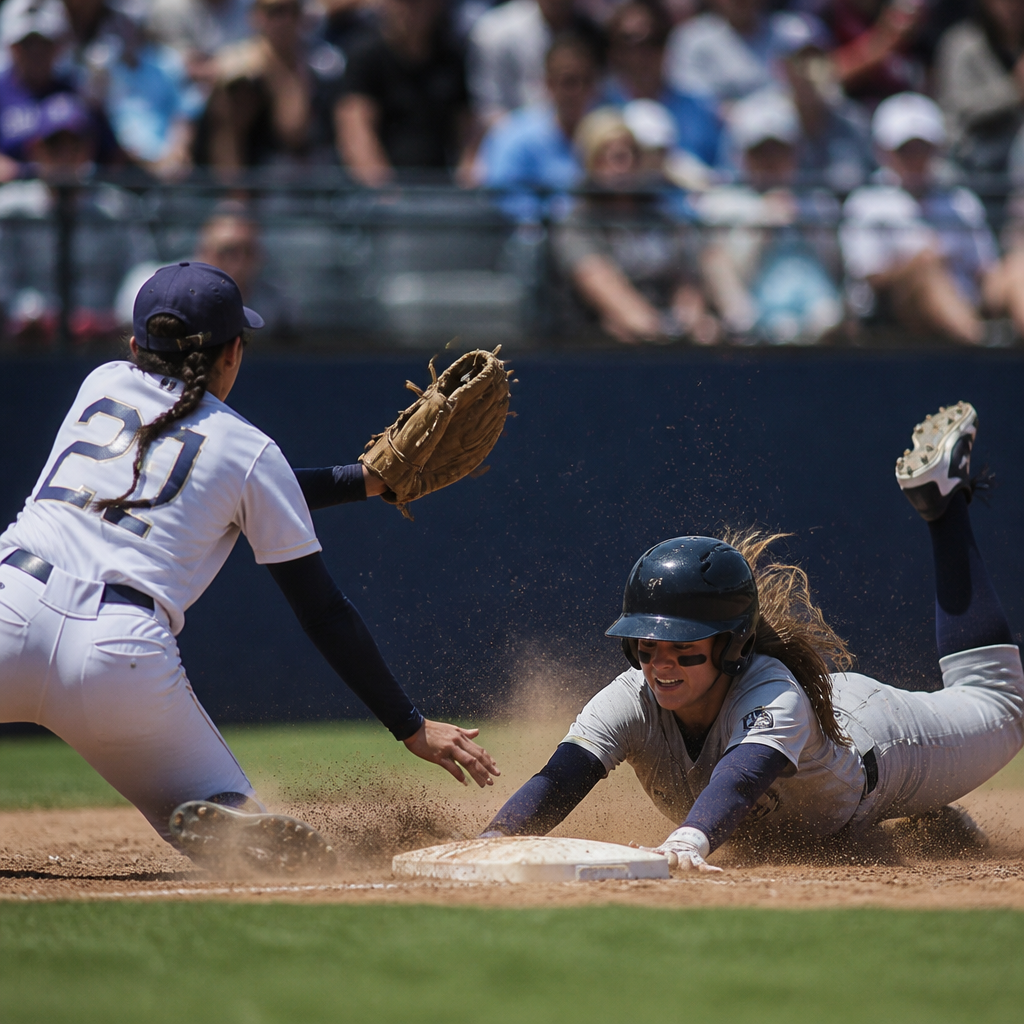
Women’s baseball in the 21st century has moved from the margins toward a more visible, better organized, and increasingly global future. The sport still lives in the shadow of men’s professional baseball and, in many countries, women’s softball, yet that contrast hides a remarkable story of growth. When people ask what women’s baseball means today, they are really asking about several connected developments: expanding participation, international competition, changing media coverage, new development pathways, and the stubborn barriers that remain. As a hub within the broader Women in Baseball topic, this article maps the full miscellaneous landscape, connecting the players, leagues, tournaments, institutions, and cultural shifts that define the modern era.
In practical terms, women’s baseball refers to girls and women playing hardball under baseball rules rather than softball rules. That distinction matters because access, coaching pipelines, field availability, and governing support often differ sharply between the two sports. I have worked around baseball development environments where talented girls were quietly pushed toward softball because it was seen as the established option, even when their skills and ambitions were rooted in baseball. That pattern remains common. Understanding women’s baseball in the 21st century therefore requires looking beyond isolated success stories and examining the systems that shape opportunity from youth leagues through national teams and elite competition.
The topic matters for more than representation. Women’s baseball tests whether a global sport can widen its talent base without treating inclusion as a side project. It also reveals how governing bodies build or neglect pathways. The World Baseball Softball Confederation, national federations, independent clubs, and advocacy groups all influence who gets to play, who gets seen, and who stays in the sport long enough to lead the next generation. For readers exploring this subtopic, the key questions are straightforward: where is women’s baseball growing, what structures support it, which obstacles still hold it back, and what signs suggest the ceiling is finally starting to crack?
Global growth, from scattered participation to connected competition
The clearest change since 2000 is that women’s baseball is no longer a collection of isolated local scenes. It has become a connected international ecosystem, uneven but undeniably real. The Women’s Baseball World Cup, first held in 2004, gave the sport a recurring elite event and a visible benchmark for national programs. Japan established itself as the standard-bearer, winning multiple world titles through disciplined player development, strong fundamentals, and a domestic culture that treats women’s baseball as a serious competitive pursuit. Countries such as Canada, the United States, Australia, Chinese Taipei, Hong Kong, Cuba, Venezuela, Mexico, and South Korea have all contributed to a broader competitive map.
This growth has not followed one model. In Japan, high school and club structures helped produce depth. In the United States, progress has relied more heavily on advocacy organizations, showcase events, travel opportunities, and athletes resisting the assumption that softball is the only route. In Latin America, momentum often comes from community baseball culture and national pride, but it can be constrained by funding and limited girls’ leagues. In Europe, development is generally earlier-stage, with federations trying to convert recreational interest into sustainable competition. The common thread is that international events create legitimacy. Once a federation can point to a World Cup roster, a continental championship, or a national women’s team, recruiting players and sponsors becomes easier.
Visibility has also improved through digital distribution. Twenty years ago, following women’s baseball often meant hunting for local newspaper clippings or federation updates. Now tournament streams, social clips, team accounts, and athlete-led storytelling give the sport a permanent public record. That matters because discoverability drives retention. A twelve-year-old girl who sees women playing baseball at a high level is more likely to imagine a future in the sport than one who only hears that such opportunities might exist somewhere else.
Pathways, player development, and the institutions that matter
If one issue determines the future of women’s baseball more than any other, it is the quality of the player pathway. Talent alone is not enough. Players need age-appropriate competition, coaches who understand baseball-specific development for girls, access to facilities, and regular game volume. In many places, the dropout point comes early. Girls can often play in mixed youth baseball when they are young, but participation narrows during adolescence as social pressure, roster bias, and the lack of girls-only teams start to bite. Without a clear bridge from youth ball to adult competition, even outstanding players disappear from the system.
Several organizations have worked to address that gap. In the United States, Baseball For All has been especially influential in creating tournaments, camps, and community for girls who want baseball rather than softball. The program’s visibility has helped normalize girls competing in baseball spaces while also connecting families who might otherwise feel isolated. MLB and USA Baseball have also expanded development initiatives, including girls’ baseball events and identification opportunities. Those efforts matter most when they lead to repeated competition and coaching, not just one-off inspiration. In my experience, families can find motivation almost anywhere; what they need from institutions is structure.
Strong pathways usually combine four elements: entry-level access, competitive repetition, elite identification, and leadership continuity. Entry-level access means girls are welcomed in tee-ball and youth leagues without subtle steering. Competitive repetition means enough games and practices to build baseball instincts. Elite identification means showcases, regional events, or national trials that reward performance. Leadership continuity means former players becoming coaches, administrators, umpires, and advocates. Without that last element, every generation has to reinvent the wheel.
| Development area | What effective support looks like | Common failure point |
|---|---|---|
| Youth entry | Open registration, trained coaches, inclusive local leagues | Girls are redirected to softball before skills are assessed |
| Teen retention | Girls’ teams, tournament calendars, peer community | Few age-group teams and long travel demands |
| Elite progression | National team trials, data-driven evaluation, regular camps | Selection happens without enough scouting depth |
| Long-term growth | Former players become coaches, officials, and organizers | Programs depend on a few volunteers and lose momentum |
Equipment and training quality also matter more than they are often given credit for. Baseball is a repetition-heavy sport built on timing, throwing workload management, defensive reads, and game awareness. A player who gets thirty meaningful games a year develops differently from one who gets six. Modern tools such as Rapsodo, Blast Motion, and high-speed video have started appearing in some women’s baseball settings, but access remains inconsistent. The point is not technology for its own sake. It is about giving women players the same feedback environments that accelerate male player development across academies, colleges, and pro systems.
Leagues, landmark moments, and the fight for visibility
Women’s baseball in the 21st century has advanced through a mix of formal leagues, national team events, and breakthrough moments that changed public perception. Japan’s Women’s Baseball League offered one of the clearest examples of organized elite competition, even though its long-term sustainability proved difficult. Independent clubs and regional competitions in other countries have often been fragile, but they still serve a crucial purpose: they turn aspiration into routine. A player does not grow only through symbolic milestones; she grows by having a season, teammates, standings, and opponents to prepare for every week.
Some of the most influential moments have come through men’s baseball institutions opening specific doors. Women coaching in affiliated baseball, women working as scouts, women umpiring at higher levels, and women appearing in MLB development showcases all signal that baseball knowledge is not gendered. The story of women’s baseball today is therefore linked to the larger baseball labor market. When girls see women not only playing but also coaching first base, running player development meetings, or evaluating talent with TrackMan reports, the sport’s culture changes. Opportunity becomes less exceptional and more normal.
Media coverage remains uneven, but it is better than it was. Coverage improves when it treats women’s baseball as sport first, novelty second. The strongest reporting explains roster construction, tournament stakes, training methods, and tactical details such as pitch sequencing or defensive alignment. Weak coverage leans on surprise that women can play. Audiences notice the difference. So do players. Credible coverage builds credibility for the sport itself.
Social media has helped athletes bypass traditional gatekeepers. Players now document training sessions, batting practice work, bullpen progress, strength programs, and tournament travel directly. That first-person visibility has a practical effect: it creates searchable proof that women’s baseball exists year-round. For a hub page covering this miscellaneous subtopic, that point is central. The modern ecosystem includes not only games and leagues, but also creators, photographers, streaming crews, equipment partners, nonprofit organizers, and parents who become logistical engines behind teams.
Persistent barriers: funding, culture, and the softball shadow
The biggest obstacles facing women’s baseball are not mysterious. They are structural, recurring, and measurable. Funding is the most obvious. Many national teams operate on limited budgets, forcing athletes to cover travel or training costs that would be absorbed in more established programs. Sparse funding reduces camp frequency, shrinks coaching support, and limits scouting. It also narrows the player pool to those who can afford to stay involved.
The second barrier is cultural sorting. In countries where softball has stronger school or college infrastructure, girls who love baseball are frequently told that switching sports is the realistic path. For some athletes, softball becomes a fulfilling destination. For others, it is a compromise forced by the absence of baseball opportunities. This distinction is important. Supporting softball should never require erasing baseball. The healthiest ecosystem gives girls a genuine choice.
Third, competition density remains thin. A national team can create headlines, but athletes need domestic repetition to maintain standards. Without enough regular baseball against peers, player evaluation becomes distorted. Coaches end up projecting potential instead of judging sustained performance. That is manageable in a small talent pool, but it limits the ceiling. The countries that keep winning usually do the simple things best: more reps, more games, clearer roles, better continuity.
There are also subtler barriers. Uniform design, access to safe changing facilities, assumptions about strength training, and the quality of medical support all affect whether players feel respected. I have seen programs improve dramatically once organizers addressed these supposedly minor details. Athletes interpret professionalism through the accumulation of practical signals. If a federation says women’s baseball matters but schedules it on leftover fields at poor times, the message does not land.
Another challenge is historical memory. Because women’s baseball has often been poorly archived, each new surge can seem unprecedented even when it builds on decades of prior work. That weakens advocacy. When administrators think they are dealing with a niche experiment rather than a long-running sporting tradition, investment becomes easier to postpone. Strong documentation, statistics, and storytelling are therefore not extras. They are part of infrastructure.
What comes next for women in baseball
The future of women’s baseball will be shaped less by slogans than by decisions. Federations must decide whether girls’ baseball is a permanent line item or a temporary initiative. Clubs must decide whether they will create girls’ teams instead of waiting for numbers to appear magically. Broadcasters must decide whether major events deserve professional production. Sponsors must decide whether they want short-term campaign value or long-term credibility. Progress is possible because the blueprint already exists in pieces across different countries.
The most promising next step is pathway consolidation. That means linking grassroots play to regional tournaments, regional tournaments to national identification, and national identification to meaningful international preparation. It also means investing in coaches. A sport grows faster when technical instruction improves at the base. Hitting mechanics, arm care, catching development, and game strategy should be taught with the same seriousness afforded elsewhere in baseball. There is no developmental law saying women’s baseball must remain thinly supported. It is a policy choice.
For readers using this page as a Women in Baseball hub, the main takeaway is clear: women’s baseball in the 21st century is no longer a novelty story. It is an evolving competitive ecosystem with proven international standards, recognizable development models, and identifiable bottlenecks. The sport has elite performers, respected organizers, and young players ready for better systems. What it needs now is consistency: more teams, better schedules, stronger funding, fuller archives, and coverage that understands the game on its own terms. Follow the tournaments, support local programs, and keep women’s baseball in the conversation, because sustained attention is how ceilings finally break.
Frequently Asked Questions
What has changed most for women’s baseball in the 21st century?
The biggest change has been the sport’s shift from scattered participation to a more visible, organized, and internationally connected movement. In the past, many girls and women who wanted to play baseball had limited pathways, few age-specific programs, and almost no long-term structure beyond local teams or informal competition. In the 21st century, that has begun to change. More countries now support women’s national teams, more tournaments exist for youth and adult players, and governing bodies have taken women’s baseball more seriously as a distinct part of the sport rather than a novelty or side story.
Another major development is the rise of international competition. Global events have given players a stage, created rivalries, and helped establish standards for coaching, player development, and scouting. That matters because visibility is not just about media attention; it is also about having a competitive ecosystem that proves the sport’s quality and staying power. As national federations invest in training camps, regional competitions, and player pipelines, women’s baseball becomes easier for new athletes to enter and easier for fans to follow.
Just as important, public perception has started to evolve. Women’s baseball is increasingly discussed as a legitimate competitive sport with its own history, present, and future. While it still faces structural barriers, including fewer professional opportunities and less funding than the men’s game, the 21st century has brought real momentum. The sport is no longer defined only by exclusion from traditional baseball spaces; it is increasingly defined by its own growth, talent base, and global ambition.
Why does women’s baseball still receive less attention than men’s baseball and women’s softball?
Women’s baseball exists in a complicated sports landscape. Men’s professional baseball has more than a century of institutional support, commercial investment, media infrastructure, and cultural familiarity in many countries. That means women’s baseball is not just competing for fans; it is competing against one of the most established sports systems in the world. At the same time, in many places, girls and women have historically been directed toward softball rather than baseball, especially in school systems and amateur development programs. As a result, softball often has clearer funding channels, more scholarships, and stronger public recognition.
This imbalance is not simply about popularity. It is also about infrastructure. Sports grow when there are leagues, fields, coaches, governing support, youth programs, sponsors, and consistent media coverage. Women’s baseball has often lacked those reinforcing systems. When fewer games are televised or covered by major outlets, fewer casual fans discover the sport. When fewer girls are offered baseball opportunities at a young age, the talent pipeline narrows. When organizations treat softball as the default option for female athletes, baseball participation has to fight for legitimacy before it can even fight for resources.
That said, the relative lack of attention can obscure how much progress has already been made. More people are now aware that women’s baseball and women’s softball are separate sports with different histories and skill demands. Athletes, coaches, historians, and advocates have worked hard to challenge old assumptions about who belongs on a baseball field. The attention gap remains real, but it is no longer the whole story. What matters now is that women’s baseball is building the kind of foundation that can support larger audiences over time.
How important is international competition to the future of women’s baseball?
International competition is absolutely central to the future of women’s baseball because it gives the sport visibility, credibility, and a reason for national organizations to invest in development. When players represent their countries in major tournaments, it raises the profile of the game far beyond what isolated local leagues can achieve on their own. Fans respond to high-level competition, national pride, and recognizable storylines, and those elements help transform women’s baseball from a niche activity into a serious international sport.
These events also improve the sport from the inside. International play encourages countries to strengthen coaching standards, identify talent earlier, and create better player pathways from youth baseball to elite competition. It pushes federations to think long term: not just about winning a single tournament, but about building sustainable systems. In that sense, global competition acts like a development engine. It creates benchmarks, exposes players to different styles of play, and helps everyone involved understand what it takes to compete at the highest level.
There is also a symbolic dimension. International tournaments send a clear message that women’s baseball belongs on the global stage. They create iconic moments, role models, and historical milestones that younger players can see and aspire to. For a sport still fighting for recognition, those moments matter. They give journalists something to cover, sponsors something to support, and communities something to rally around. If women’s baseball is going to continue growing in the 21st century, international competition will remain one of its most powerful drivers.
What role do media coverage and visibility play in the growth of women’s baseball?
Media coverage is one of the most important factors in whether women’s baseball remains a hidden success story or becomes a widely recognized part of the sporting world. Visibility affects everything: fan interest, sponsorship, player recruitment, legitimacy, and even policy decisions. If people do not see the games, hear the players’ stories, or understand the scale of the sport’s growth, they are less likely to support it financially or emotionally. Coverage turns participation into presence.
In the 21st century, traditional media still matters, but digital media has changed the equation in useful ways. Social platforms, streaming services, team-produced content, and independent sports journalism have made it easier for women’s baseball to reach audiences without waiting for full approval from major broadcasters. Highlights, interviews, documentaries, and behind-the-scenes storytelling help fans connect with athletes as competitors and personalities. That connection is crucial because sports followings are built not only on results, but also on familiarity and narrative.
At the same time, better visibility must be paired with better framing. Women’s baseball should not be covered only as an inspiring exception or a curiosity. It deserves analysis, statistics, tactical discussion, and historical context just like any other sport. The more coverage treats women’s baseball as real baseball rather than a novelty, the more seriously audiences will take it. Strong media attention cannot solve every structural challenge, but it can accelerate almost all of the solutions by making the sport harder to ignore.
What does the future of women’s baseball look like, and what needs to happen next?
The future of women’s baseball looks more promising than at any point in recent memory, but progress will depend on whether today’s momentum turns into durable systems. The sport needs clear pathways from childhood participation to elite competition. That means more girls must have the option to play baseball from a young age, more coaches must be trained to support them, and more clubs and federations must commit to building teams rather than treating women’s baseball as an occasional project. Sustainable growth happens when opportunity becomes normal, not exceptional.
Another priority is expanding high-level competition. More domestic leagues, regional tournaments, and international events would give players consistent opportunities to improve and would make the sport more attractive to fans, sponsors, and broadcasters. In many countries, talented players still face a difficult gap between grassroots baseball and national team competition. Closing that gap is essential. The stronger the competitive ladder, the more likely athletes are to stay in the sport and develop into stars who can carry it forward.
Finally, the future depends on recognition: from governing bodies, schools, communities, media outlets, and baseball culture itself. Women’s baseball does not need to imitate the men’s game to justify its place; it needs investment, access, and respect as a competitive sport in its own right. If those pieces continue to grow together, the 21st century could be remembered as the era when women’s baseball moved decisively out of the margins and into a stable, global future.