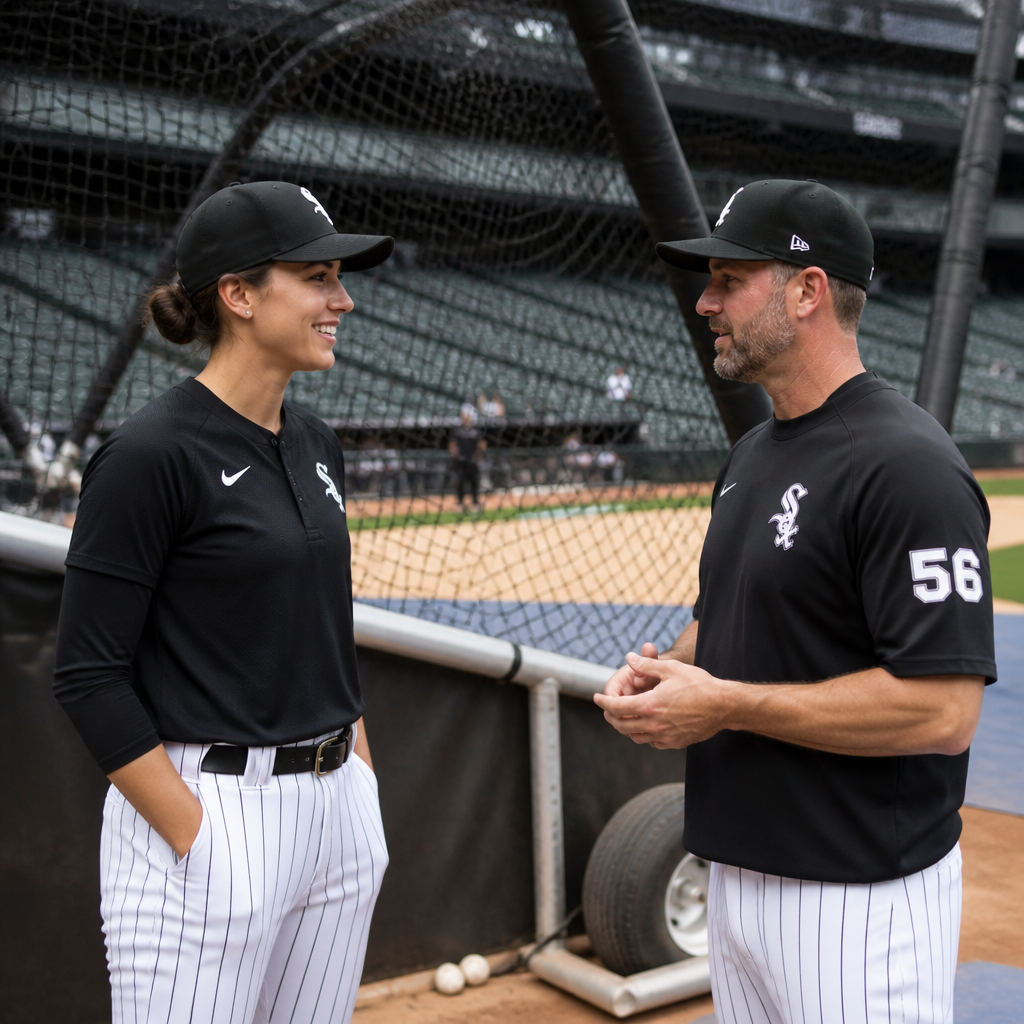
The integration of women into Major League Baseball is no longer a speculative cultural question; it is a practical, developmental, and institutional issue shaped by history, labor structures, talent pipelines, and the changing definition of who belongs in professional baseball. In this context, integration means more than a symbolic appearance on a roster. It refers to women entering every competitive and decision-making layer tied to Major League Baseball: playing roles, coaching staffs, front office leadership, scouting departments, medical and performance teams, umpiring pathways, broadcasting, and ownership influence. As someone who has spent years analyzing baseball operations and the systems that move talent from amateur fields to professional clubhouses, I have seen one constant truth: MLB changes slowly until incentives, evidence, and public expectation align. That alignment is now underway.
Understanding why this topic matters requires a clear look at how baseball actually works. MLB is not just thirty teams on a major league schedule. It is a network of youth leagues, high school and college programs, independent leagues, international academies, minor league affiliates, collective bargaining rules, biomechanics labs, player development departments, and media ecosystems that shape who gets seen and who gets hired. When women have been excluded from those channels, the result has not simply been unfairness; it has been a narrower talent pool and a weaker sport. Integration matters because baseball depends on skill identification, repetition, decision speed, and institutional trust, none of which are inherently male traits.
The modern conversation also benefits from precision. Women in baseball is not the same thing as women around baseball. The first phrase includes athletes competing on the field, as well as people making strategic baseball decisions. The second can become so broad that it hides the central issue of access to baseball authority and baseball opportunity. A useful hub article, therefore, has to connect the well-known milestones with the less visible barriers that still shape outcomes. It must address pioneers like Jackie Mitchell, Ila Borders, Kim Ng, Alyssa Nakken, Rachel Balkovec, and Bianca Smith, while also explaining why their breakthroughs remain exceptional rather than routine. That wider frame is what turns isolated stories into a serious understanding of integration.
There is another reason this subject deserves comprehensive treatment: baseball has already created the mechanisms needed for broader inclusion, even if it has not applied them consistently. Teams rely on objective data, bat-tracking systems, force-plate analysis, pitch design models, and video-based scouting reports. Those tools can challenge inherited bias because they measure output rather than stereotype. At the same time, data does not erase structural inequality by itself. If women are less likely to receive elite coaching, accumulate innings against top competition, or enter visible feeder leagues, the numbers teams see will reflect limited opportunity as much as pure ability. Integration succeeds only when baseball evaluates both performance and pathway.
Historical barriers and early breakthroughs
Women have played baseball for generations, but organized professional structures repeatedly pushed them to the margins. In the nineteenth and early twentieth centuries, women appeared in barnstorming clubs, exhibition teams, and local leagues, yet baseball culture hardened around the idea that elite competition was male. The All-American Girls Professional Baseball League, founded in 1943, proved that women could sustain high-level professional play, draw crowds, and build identifiable stars such as Dorothy Kamenshek and Sophie Kurys. Still, that league was designed partly to protect the business of baseball during wartime rather than to create a permanent route into MLB. When men returned from military service, the institutional commitment to women’s professional baseball faded.
That pattern is central to understanding integration. Baseball has often welcomed women when convenient, then restricted them when tradition reasserted itself. Jackie Mitchell’s 1931 exhibition strikeouts of Babe Ruth and Lou Gehrig became famous, but the publicity obscured the deeper reality: novelty did not become access. Decades later, pitcher Ila Borders reached independent professional baseball and logged meaningful innings, showing that women could survive in men’s leagues when given a real chance. Her career remains instructive because it demonstrated both possibility and fragility. She had to be extraordinarily resilient just to receive opportunities that marginal male prospects often got by default.
In the front office and coaching world, recent firsts have been more durable because the league’s business side modernized faster than its playing pathways. Kim Ng’s appointment as general manager of the Miami Marlins in 2020 mattered not simply because she was first, but because she had spent decades building one of the strongest résumés in the sport through the White Sox, Yankees, Dodgers, and MLB central office. Alyssa Nakken becoming an on-field coach for the San Francisco Giants and Rachel Balkovec managing in the Yankees’ minor league system signaled a similar shift. These appointments were earned through competency, not ceremonial inclusion, and their impact is larger than a headline because they normalize women exercising baseball judgment in competitive environments.
Where integration is happening now
The integration of women into MLB is most advanced in coaching, player development, analytics, medicine, and executive leadership. That reality sometimes disappoints fans who want immediate progress toward a woman appearing in a major league game, but it should be read accurately. Baseball organizations are finally placing women inside daily competitive workflows: bullpen planning, baserunning instruction, swing assessment, rehab progression, advance scouting, roster construction, and mental skills support. Once women become standard participants in these baseball functions, exclusion becomes harder to defend elsewhere. The club environment starts changing from within.
Several organizations illustrate this broader pattern. The Giants placed Alyssa Nakken in a visible major league coaching role after years of work in baseball operations and player development. The Red Sox hired Bianca Smith as a professional coach in the minor leagues. The Yankees promoted Rachel Balkovec through hitting and development roles before she managed the Tampa Tarpons. Kim Ng led the Marlins to a postseason berth and helped oversee a pitching-rich organizational strategy. None of these cases solved integration by themselves, but each showed that women can hold authority in spaces where communication, technical knowledge, and credibility are tested every day.
Off the field, women have become increasingly influential in departments that shape wins and losses. Baseball operations now depend on research and development analysts, quantitative modelers, biomechanists, sports dietitians, and performance specialists. These jobs matter because they are no longer peripheral. A pitch-design coordinator can materially improve a prospect’s breaking ball. A strength coach can reduce soft-tissue injury risk. A director of baseball systems can make sure coaches and scouts access reliable information quickly. When women are integrated into these functions, they are participating in the competitive engine of MLB, not merely its public-facing image.
The talent pipeline problem
The biggest obstacle to women playing in MLB is not a lack of baseball intelligence or athletic capacity; it is the developmental pipeline. Baseball is a repetition-intensive sport in which elite players usually accumulate thousands of high-quality reps before professional clubs evaluate them seriously. Boys who project as professionals often play year-round travel ball, enter showcase circuits, face stronger velocity earlier, and receive specialized instruction in throwing mechanics, swing decisions, and defensive footwork. Girls with comparable interest rarely encounter the same concentrated pathway because softball is treated as the default destination, even though softball and baseball are different games with different movement patterns, field dimensions, and tactical demands.
That distinction matters. A softball shortstop cannot simply be assumed to convert seamlessly to baseball, just as a baseball pitcher cannot casually switch to elite softball pitching. Arm slots, release distances, reaction windows, and base-running environments differ significantly. Integration into MLB, therefore, requires baseball-specific development opportunities for girls from a young age. Programs such as MLB Develops, the Trailblazer Series, Girls Baseball Breakthrough Series, and USA Baseball women’s initiatives have become important because they provide instruction, visibility, and competition calibrated to baseball rather than redirecting athletes away from it.
| Pipeline Stage | Typical Barrier for Girls | Most Effective Intervention |
|---|---|---|
| Youth baseball | Pressure to switch to softball by ages 10 to 13 | Dedicated girls baseball teams, local league protection, trained coaches |
| Amateur development | Fewer showcases and weaker scouting exposure | National events, video databases, objective testing, recruiting support |
| Advanced competition | Limited access to high-velocity and elite defensive play | Mixed competition, year-round baseball reps, specialist instruction |
| Professional entry | No formal women-to-MLB bridge league | Independent league trials, partner leagues, MLB-backed development camps |
If MLB wants a woman player to emerge legitimately, the sport needs more than one inspirational story. It needs a dense talent ecosystem. That means better coaching access, routine competition against strong opponents, strength and conditioning programs designed for baseball tasks, and scouting networks willing to evaluate women as prospects rather than publicity risks. In practical terms, the first woman to reach MLB would most likely come from a background with elite baseball reps, measurable carrying tools, and unusual mental durability. She would not appear by accident. She would come from a pathway baseball intentionally built.
Can a woman realistically play in Major League Baseball?
The honest answer is yes, but under narrow conditions and not on a predictable timeline. MLB is an extreme outlier environment. Only a tiny fraction of male baseball players reach the majors, and the performance thresholds are unforgiving. Average four-seam fastball velocity in MLB now sits in the mid-90s, and even bench players typically own elite bat speed or defensive skill. For a woman to break through as a position player, pitcher, or two-way player, she would need major league-caliber tools relative to the role. There is no quota that can bypass that standard, nor should there be.
Pitching may offer the clearest theoretical route because baseball history includes successful pitchers with varied body types, unconventional deliveries, and role-specific arsenals. A woman with exceptional command, deception, movement efficiency, and a distinctive release profile could potentially survive, especially if she developed a specialty role. Knuckleball discussions often appear here because the pitch reduces reliance on velocity, though relying on that possibility alone oversimplifies the challenge. More realistic is a scenario in which a pitcher with elite command and modern pitch-shape optimization earns opportunities through independent leagues, affiliated development, and performance data too strong to ignore.
For position players, the path is steeper because major league hitting places extraordinary demands on reaction time and rotational power. Yet “steeper” does not mean impossible. Baseball has repeatedly adjusted to players who did not fit old assumptions, from undersized middle infielders to late-blooming international signees. The key question is not whether women as a category can play MLB tomorrow. The key question is whether the system currently allows enough women to train, compete, and be evaluated long enough for an MLB-caliber outlier to emerge. Right now, the answer is no. That is a pipeline failure, not proof of incapacity.
What MLB must do next
Serious integration requires policy, investment, and accountability. First, MLB and its clubs should expand girls baseball infrastructure at the grassroots level, including equipment grants, coach education, and protected roster access in youth leagues. Second, the league should formalize more scouting touchpoints for women players through combines, partner events, and data collection similar to what clubs already use for amateur men’s baseball. Third, clubs should continue hiring women in baseball operations and uniformed roles, not to create optics, but because organizational competence improves when teams widen the pool of informed decision-makers.
There are also cultural practices that matter inside clubhouses. Women in coaching or leadership roles should not be isolated as symbols, expected to represent an entire gender while proving themselves under harsher scrutiny than peers. The best organizations set clear job scopes, measurable performance standards, and reporting structures that support authority. They also train staff on professional conduct and communication, because integration fails when institutions add talent without updating workplace norms. Baseball likes to describe itself as a meritocracy. Merit only functions when access, evaluation, and environment are aligned.
The integration of women into Major League Baseball will likely remain uneven in the near term, but the direction is unmistakable. History shows that women have always been part of baseball, even when official structures denied it. The present shows that women can already lead, coach, evaluate, and develop talent at professional levels. The future question is whether MLB will treat women’s integration as a collection of firsts or as a long-term talent strategy. The smarter course is obvious. Build the pipeline, widen the opportunities, and let baseball’s standards apply to everyone who earns the chance. Readers following the broader Women in Baseball topic should use this hub as a starting point, then explore the connected stories, roles, and pathways that are turning inclusion from exception into infrastructure.
Frequently Asked Questions
What does the integration of women into Major League Baseball actually mean?
The integration of women into Major League Baseball means far more than a one-time publicity moment or a symbolic roster move. In practical terms, it refers to women participating across the full competitive and institutional structure connected to MLB. That includes on-field playing opportunities, coaching positions, player development roles, scouting, analytics, front office leadership, medical and performance departments, umpiring, broadcasting, and ownership-level influence. The key point is that true integration is structural, not ceremonial. It is about women being present where decisions are made, where talent is developed, and where careers are built over time.
Historically, baseball has often framed women’s participation as peripheral, even when women have demonstrated elite skill, leadership, and baseball intelligence. A modern conversation about integration challenges that older framework. It asks whether MLB and its affiliated systems are organized in a way that allows talented women to enter, advance, and remain in the sport under the same serious standards applied to everyone else. That means discussing scouting exposure, training quality, access to high-level competition, workplace culture, and institutional expectations.
It also means distinguishing between visibility and inclusion. A woman in a high-profile baseball role may represent progress, but integration is only meaningful if women are part of repeatable pathways rather than exceptional cases. If girls and women can see a clear route from youth baseball to elite amateur competition, then into player development, coaching, or executive leadership, the sport moves from symbolic openness to real participation. In that sense, integration is a developmental and organizational issue as much as a cultural one.
Has Major League Baseball already begun integrating women, or is this still mostly theoretical?
It has already begun, but unevenly and in different forms depending on the role. Women have made visible gains in front offices, player development, coaching, analytics, and broadcasting. Several MLB organizations have hired women into positions once treated as male-only domains, including minor league coaching jobs, strength and conditioning roles, and baseball operations posts. These changes matter because they show that baseball institutions are no longer treating women’s involvement as purely hypothetical. Women are already helping shape how players are evaluated, trained, and managed inside professional baseball organizations.
At the same time, the most publicly discussed frontier remains playing integration at the MLB level, and that question is still unresolved in practice. The reason is not simply resistance at the top league level. It has to do with the entire talent pipeline beneath it. Professional baseball players reach MLB after years of advanced competition, coaching, physical development, and scouting exposure. For women to appear regularly as realistic MLB player candidates, they need sustained access to that same developmental ladder from an early age onward. Without that infrastructure, the conversation can become distorted, as though women’s absence at the MLB level proves lack of capability, when in many cases it reflects unequal opportunity and limited pathway design.
So the most accurate answer is that integration is real, but incomplete. Women are increasingly present in major areas of the professional baseball system, especially in leadership and technical roles. However, full integration, especially in competitive playing roles tied directly to Major League Baseball, depends on long-term institutional investment rather than isolated breakthroughs. The process is underway, but it is still being built.
What are the biggest barriers to women entering playing, coaching, and leadership roles in MLB?
The biggest barriers are structural, developmental, and cultural all at once. One major issue is the talent pipeline. Baseball development starts early, and the best prospects typically benefit from years of specialized coaching, competitive repetitions, travel ball exposure, strength training, and scouting attention. Girls who want to stay in baseball rather than move into softball often encounter shrinking opportunities as they get older. That affects everything downstream. If fewer girls remain in baseball through adolescence and elite amateur competition, fewer women will be positioned for professional opportunities later.
Another barrier is institutional habit. Baseball is a tradition-heavy sport, and longstanding assumptions about who belongs in certain roles can quietly shape hiring, promotion, and evaluation. A woman applying for a coaching job or baseball operations role may still face skepticism that a male candidate would not. Sometimes this bias is explicit, but often it appears in subtler forms: limited mentoring, fewer chances to lead, heightened scrutiny, or the expectation that a woman must be unusually exceptional just to be considered standard. Those patterns can slow integration even when organizations publicly support it.
There are also practical barriers related to access and visibility. Scouting networks, informal baseball relationships, and developmental opportunities often operate through longstanding personal connections. If women have historically been excluded from those networks, they may be less likely to hear about openings, receive endorsements, or get key opportunities. In playing terms, the issue is similar: if girls and women are not competing consistently in environments where professional scouts evaluate talent, they are less likely to be seen as legitimate candidates, regardless of actual ability.
Finally, there is the challenge of sustainability. It is one thing to make a headline-generating hire; it is another to create an environment where women can build long careers. That requires fair evaluation standards, professional support, organizational accountability, and a workplace culture that treats women as baseball professionals rather than novelties. Without that foundation, progress can remain fragile. The real barrier is not just entry, but whether the system is designed to convert entry into long-term participation and advancement.
Why is the talent pipeline so important to the future of women in Major League Baseball?
The talent pipeline is important because MLB is the endpoint of a very long developmental system, not an isolated destination. No player, coach, or executive arrives in Major League Baseball by accident. They move through years of training, competition, evaluation, and institutional reinforcement. If women are underrepresented at the youth, amateur, collegiate, and minor league levels, that underrepresentation will inevitably appear at the top. In other words, integration at the MLB level depends on earlier integration throughout baseball’s feeder systems.
For players, this means girls need opportunities to stay in baseball and compete at increasingly advanced levels. They need access to skilled coaching, regular game action, strength and conditioning resources, showcase events, and competitive environments where development is taken seriously. If the sport does not provide those things consistently, then female players are asked to reach professional standards without professional-grade preparation. That is not a fair test of talent. A healthy pipeline creates repeated chances for ability to be identified, refined, and rewarded.
For coaches and baseball operations professionals, the pipeline matters in a slightly different way. Many future MLB staff members build credibility through college programs, independent leagues, minor league roles, performance labs, scouting departments, and player development jobs. If women are present in those earlier stages, then MLB clubs have a deeper pool of experienced candidates ready for promotion. That makes integration normal rather than exceptional. It also changes perception within the sport, because women are then encountered regularly as instructors, evaluators, and leaders long before they reach the major league level.
In the broadest sense, the pipeline determines whether integration can scale. A single breakthrough can inspire people, but it cannot transform an institution by itself. A functioning pipeline can. It creates continuity, develops expertise, and ensures that women in baseball are not treated as isolated anomalies. If MLB wants lasting integration, building and maintaining that pipeline is one of the most important tasks in the entire conversation.
What would meaningful progress look like over the next decade?
Meaningful progress would look like measurable, repeated advancement across multiple layers of the baseball system. At the most visible level, that would include more women in coaching staffs, player development departments, scouting roles, front office leadership, and other positions directly tied to competitive decision-making. It would also mean those hires are no longer framed as rare experiments. When women are routinely considered for baseball jobs because they are recognized as fully legitimate candidates, that signals deeper institutional change.
Progress would also be evident in stronger developmental pathways for female players. Over the next decade, that could include better support for girls who remain in baseball, more serious investment in identification and training, and expanded access to competitive environments that feed into professional systems. If MLB and affiliated organizations help create clearer bridges from youth baseball to elite amateur play and then into professional opportunities, the conversation about women as players becomes more grounded in infrastructure rather than speculation.
Another sign of progress would be retention and promotion. It is not enough for women to enter baseball organizations; they need real opportunities to advance into positions of influence. That means assistant roles leading to coordinator roles, coordinator roles leading to director positions, and director roles leading to top decision-making authority. The same principle applies in coaching. A meaningful shift happens when women are not just present in support positions, but trusted with strategy, instruction, and leadership at the highest levels.
Perhaps most importantly, progress would mean that integration stops feeling unusual. When the baseball world no longer reacts to women’s presence as a novelty, that is a sign that the institution has changed in a durable way. Over the next decade, success should be judged not only by firsts, but by systems: how many women are entering, how many are staying, how many are advancing, and whether the sport has made room for them in a way that is stable, competitive, and real.