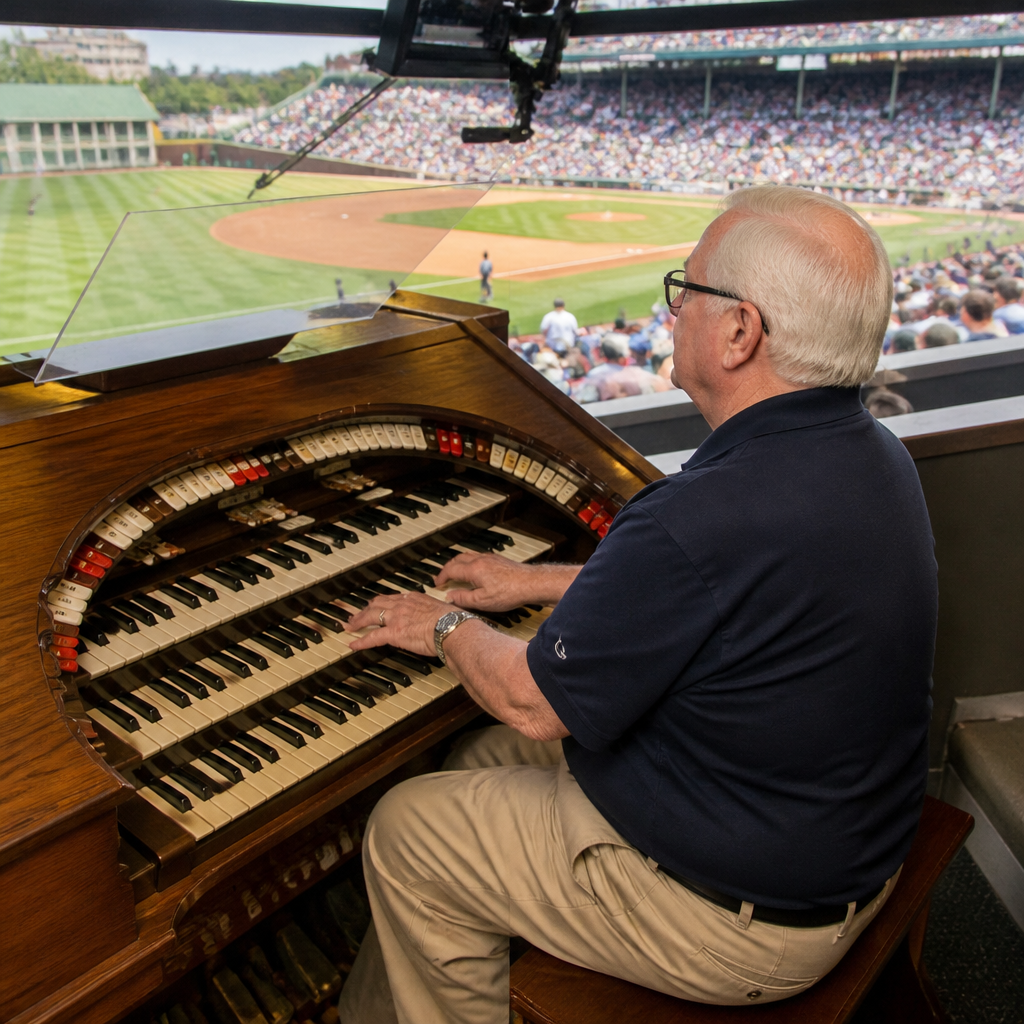
Ballpark organ music is one of the defining sounds of baseball, as recognizable as the crack of the bat, the vendor’s call, and the crowd rising in the ninth inning. In discussions of iconic ballparks, organ music belongs squarely within ballpark design and features because it is not just entertainment layered on top of the game. It is a built-in part of how many stadiums shape atmosphere, pace, memory, and fan behavior. A stadium organ can direct attention, fill dead time, heighten suspense, signal tradition, and give a venue an identity that survives roster changes and renovations.
When people hear the phrase stadium organ, they usually picture a musician at a console playing short musical cues between pitches, during mound visits, after strikeouts, or as players walk to the plate. That image is accurate, but the larger story is more interesting. Ballpark organ music emerged from practical needs inside large venues: owners wanted a reliable way to energize crowds, cover pauses, and create a family-friendly entertainment layer before amplified recorded music became dominant. Over time, that practical solution evolved into a cultural symbol. Certain riffs, melodic jokes, and victory themes became inseparable from the baseball experience.
As someone who has worked around live event presentation, I can say the organ’s value is most obvious in what it does quietly. It bridges downtime without overwhelming conversation. It can react in real time to the game in a way a fixed playlist cannot. It can also make a ballpark feel local. A good organist reads the room, understands baseball rhythm, and supports the architecture of the event as surely as lighting, sightlines, concourse flow, and scoreboard design. That is why any serious guide to ballpark design and features needs to treat organ music as infrastructure, not nostalgia.
This hub article explains how the stadium organ became part of baseball culture and why it still matters within the wider topic of ballpark design and features. It covers the organ’s origins, its role in shaping atmosphere, the technology behind it, the ways teams use it differently, and how it fits with modern sound systems, branding, and fan expectations. It also serves as a foundation for related articles on acoustics, scoreboards, seating bowls, public-address systems, and other iconic ballpark elements that influence the live baseball experience.
The Origins of Ballpark Organ Music
The modern relationship between baseball and the organ began in earnest in the early 1940s, when teams looked for ways to make games feel more theatrical and engaging. The milestone most often cited is the Chicago Cubs’ installation of an organ at Wrigley Field in 1941, with Ray Nelson becoming the first regular stadium organist in Major League Baseball. That decision mattered because it proved live music could be synchronized with baseball’s stop-and-start tempo. Unlike football, which has long continuous breaks between downs and possessions, baseball unfolds in brief bursts separated by many short pauses. The organ fit those spaces perfectly.
Early ballpark owners were solving several problems at once. They wanted to soften the tension that could settle over a slow game, reduce the perception of empty time, and create an atmosphere that felt festive without becoming chaotic. Before today’s dense video board programming, there were fewer tools available. The organ was flexible, audible, and comparatively economical. A single skilled player could provide intros, comic cues, patriotic themes, and situational songs from one instrument. Because baseball crowds include families, older fans, and frequent repeat visitors, the organ also offered a broadly acceptable musical language.
The instrument’s rise tracked with wider trends in American entertainment. Theater organs and electronic organs were already used in cinemas, arenas, and civic spaces. Companies such as Hammond and Lowrey developed instruments that could project strongly in large rooms and simulate multiple tonal colors. Stadium operators discovered that these instruments carried well in open seating bowls and could be mic’d through venue sound systems. As more clubs adopted the practice, organ music stopped being a novelty and became a baseball convention, especially in midcentury urban ballparks.
Why the Organ Fits Baseball Better Than Almost Any Other Sport
Baseball is uniquely compatible with reactive live music because its pace is episodic. Every pitch resets attention. That structure gives the organist hundreds of decision points over nine innings. A quick vamp can underscore a two-strike count. A playful quote can respond to a player’s name, a defensive error, or a mascot’s bit. A suspenseful progression can thicken the atmosphere before a closer’s final batter. In practical terms, the organ works because it is modular. The musician can start or stop instantly, extend a phrase, change harmony to match crowd energy, or leave silence when the moment needs to breathe.
From an event design standpoint, the organ also complements baseball’s acoustic ecology. Fans want to talk, keep score, hear umpire calls, and react to each pitch. Constantly blasting recorded music can flatten those layers. Organ music occupies a middle ground: present, directional, and emotionally useful without always dominating the soundscape. At many classic parks, that balance helps preserve what designers value most in live sport, which is a sense of shared anticipation rather than nonstop stimulation.
The organ’s tonal character matters too. It can sound triumphant, mischievous, ceremonial, or gently ironic. A guitar riff or pre-recorded hype track often arrives with a fixed emotional message. An organist can shade the cue. That nuance is why fans remember individual organists as much as the instrument itself. The best ones are not merely musicians. They are game readers and crowd psychologists.
How the Organ Became a Signature Ballpark Feature
Once teams saw that organ music improved atmosphere, the instrument became part of stadium planning and operations. In older parks, organ consoles were often placed in booths or tucked into press-level spaces where the musician could see the field clearly and maintain line of sight with game presentation staff. That placement reflected a larger design principle in ballpark operations: features work best when they are integrated into the control system of the venue rather than added as disconnected entertainment pieces.
As clubs renovated or built new stadiums, they began thinking more intentionally about how sound, architecture, and branding fit together. The organ became one of several features that gave a park sensory identity, alongside hand-operated scoreboards, distinctive outfield walls, local food programs, and signature lighting cues. At Dodger Stadium, for example, the organ became linked with Nancy Bea Hefley’s style and with the broader image of sunny, relaxed Los Angeles baseball. At Fenway Park, ballpark music has long been part of a layered atmosphere where history, intimacy, and crowd noise matter more than overproduced spectacle.
Organ music also reinforced continuity. Rosters turn over quickly. Even stadium names change. But repeatable sensory features endure. Fans return expecting certain sounds in certain moments, and those expectations become traditions. In branding terms, the organ provides an audio logo far more flexible than a recorded jingle.
Key Ways Organ Music Shapes the Fan Experience
In live venue planning, the organ affects fan experience in measurable and intuitive ways. It supports emotional pacing, reduces perceived downtime, amplifies rituals, and strengthens local identity. It can also help crowd participation because melodies are easier to follow and sing with than many modern tracks. Here is how teams typically use organ music within the broader framework of ballpark design and features.
| Function | How the Organ Helps | Ballpark Impact |
|---|---|---|
| Crowd warm-up | Plays familiar themes before first pitch and during breaks | Raises energy without overwhelming early-arriving fans |
| Game tension | Uses suspense chords or rhythmic stabs in key counts | Sharpens focus during critical moments |
| Humor and personality | Quotes songs tied to player names or game situations | Makes the venue feel human and memorable |
| Tradition signaling | Repeats recognizable cues tied to team history | Builds continuity across seasons and generations |
| Noise management | Fills pauses selectively instead of saturating every second | Preserves conversation and natural crowd sound |
These functions matter because baseball is experienced as a long-form live event, not a nonstop burst. Fans remember whether a stadium feels tense in the right spots, relaxed between innings, and connected to local culture. The organ contributes to all three outcomes.
The Technology Behind the Stadium Organ
Many fans imagine a giant pipe organ, but most baseball venues have historically used electronic or theater-style organs connected to amplification systems. Hammond models became especially associated with stadium use because they produced a powerful, sustained tone and worked well with speakers in large venues. Over time, digital instruments expanded the palette further, giving organists access to cleaner presets, MIDI integration, and easier maintenance than some older electromechanical rigs required.
What matters in a ballpark is not only the instrument but the entire signal chain. The organ must route cleanly through the stadium’s public-address infrastructure, coexist with announcer microphones, and remain intelligible in a reflective or partially open acoustic environment. In venue commissioning, operators adjust equalization, delay, and zoning so music reaches seating sections evenly without becoming muddy. This is where organ music intersects directly with ballpark design. A beautiful console means little if speaker placement, reverberation control, and operator sightlines are poor.
Modern organists often work with digital consoles, cue sheets, communication headsets, and integrated production software. Yet the core requirement has not changed: they need immediate visual access to the game and freedom to respond faster than a playlist operator could. In practical operations, latency and timing are everything.
Famous Organists and Team Identities
Baseball culture attached itself not just to the sound of the organ but to individual musicians who made each park distinctive. Nancy Bea Hefley at Dodger Stadium became one of the most beloved figures in the sport by blending traditional baseball cues with broad musical knowledge and impeccable timing. Matthew Kaminski carried forward the Wrigley Field lineage with a style that mixed reverence for old-school organ playing and a willingness to wink at modern pop culture. Across the majors and minors, similar figures have given teams personalities that cannot be mass-produced.
This matters for stadium identity because the organist often becomes a curator of collective memory. Fans may not remember every mid-rotation starter from a given season, but they remember the cue played after a big strikeout, the melody that launched the seventh-inning stretch, or the running joke tied to a rival player. Those repeated moments become part of a park’s heritage just as surely as its facade, dimensions, or neighborhood setting.
Minor League Baseball has been especially creative here. Smaller clubs often use organists to underline quirky promotions, regional references, and mascot comedy in ways that feel spontaneous rather than scripted. That flexibility shows why live music remains valuable even in an era of massive video boards.
The Organ in the Era of Walk-Up Songs and Video Boards
Recorded music, player walk-up songs, LED ribbon boards, and cinematic scoreboard packages changed the ballpark entertainment mix dramatically from the 1980s onward. Some observers assumed the organ would disappear. Instead, it adapted. In many parks, the organ now works alongside prerecorded elements, handling quick transitions, in-game humor, and connective tissue between larger production beats. Walk-up songs may define a batter’s entrance, but the organ often shapes the many smaller moments surrounding that entrance.
The tradeoff is real. A fully modernized ballpark can easily overprogram itself. If every stoppage includes a sponsored read, a board animation, a sound effect, and a music hit, the game loses texture. Teams that use the organ well understand restraint. They treat it as a conversational instrument inside the event, not just another noisemaker. This is one reason several clubs that once leaned heavily on canned audio have renewed interest in live organ performance, especially for weekend games and heritage branding.
For designers and operators, the lesson is straightforward: the best ballpark features are not the loudest ones. They are the ones that improve rhythm, support rituals, and deepen place identity. The stadium organ still does all three better than most alternatives.
Why Ballpark Organ Music Still Matters to Iconic Ballparks
In the broader study of iconic ballparks, organ music matters because great venues are remembered through multisensory design. Fans do not separate architecture from sound, tradition from operations, or nostalgia from physical space. They experience all of it at once. The organ helps translate a stadium from a structure into a living setting with timing, personality, and emotional range. It turns pauses into atmosphere and ordinary innings into shared ritual.
That is why ballpark design and features should be understood as more than dimensions, seats, and concessions. Signature sound is a feature. So is the human performer who knows when to lift a crowd and when to leave room for the game itself. From Wrigley Field’s pioneering adoption to today’s digitally integrated live presentation, the stadium organ has remained relevant because it serves baseball rather than competing with it.
For anyone exploring iconic ballparks, start listening as closely as you look. Notice how music supports sightlines, scoreboard timing, crowd behavior, and memory. Then follow that thread into related topics such as acoustics, public-address design, historic preservation, and in-game presentation strategy. The more carefully you study ballpark organ music, the clearer it becomes: this classic feature did not survive by accident. It endured because it makes baseball feel like baseball.
Frequently Asked Questions
Why did stadium organs become such an important part of baseball culture?
Stadium organs became central to baseball culture because they fit the sport’s rhythm better than almost any other form of live entertainment. Baseball has a stop-and-start pace, with natural pauses between pitches, innings, mound visits, and batter introductions. The organ was perfectly suited to fill those short gaps without overwhelming the game itself. Instead of competing with the action, it supported it. A skilled organist could quickly shift the mood from playful to suspenseful, encourage crowd participation, and keep energy moving through quieter stretches of play.
Just as important, the organ became associated with the emotional memory of attending a game. Fans did not just hear music; they connected it to the experience of being in the ballpark. The sound of an organ before first pitch, during a rally, or after a big home run became part of baseball’s sensory identity alongside the smell of concessions, the sightlines of the field, and the sounds of the crowd. Over time, that made the organ more than a musical instrument. It became part of the architecture of the baseball experience, helping define what made a ballpark feel alive, familiar, and distinctly tied to the traditions of the sport.
How is organ music considered part of ballpark design rather than just entertainment?
Organ music belongs in the conversation about ballpark design because it directly shapes how fans experience the stadium as a built environment. Design is not only about seating bowls, outfield walls, concourses, and scoreboards. It also includes the systems that influence atmosphere, behavior, and the emotional flow of an event. The organ does exactly that. It helps mark transitions, draw attention to moments that matter, and create a sense of continuity across the game. In that sense, it functions like lighting, public address systems, or even the placement of fan gathering areas: it guides the audience’s response.
In many classic parks, the organ was woven into the identity of the venue itself. Fans expected certain cues at certain moments, and those cues became part of the stadium’s personality. A rally tune, a comic riff after a strikeout, or a dramatic swell during a tense at-bat could influence how the crowd reacted in real time. That means the organ was not merely background sound added on top of the event. It was part of the ballpark’s operating language. It helped turn open space into atmosphere, structure dead time, and transform thousands of individual spectators into a coordinated audience with shared attention and emotion.
What role does a stadium organist play during a baseball game?
A stadium organist does much more than play familiar songs. In practice, the organist acts as a live interpreter of the game. Timing is everything. The organist has to read the pace of play, anticipate emotional shifts, and respond instantly to what is happening on the field and in the stands. During slower moments, a light musical phrase can keep the energy from dipping. During tense situations, the organ can build suspense without distracting from the action. After a key play, it can reinforce excitement and help sustain crowd momentum.
The best organists also understand crowd psychology. They know when to invite participation, when to stay subtle, and when silence is more powerful than sound. Their job often includes tailoring music to players, moments, traditions, and local fan expectations. A clever organ cue can be humorous, nostalgic, celebratory, or dramatic, and experienced organists often become known for their personality and feel for the game. In many ways, they serve as both musicians and atmosphere managers, helping connect baseball’s natural pauses into a cohesive, memorable experience that feels responsive rather than prerecorded.
Why do fans still value organ music in an era of digital sound systems and recorded music?
Fans continue to value organ music because it offers something that recorded audio often cannot: spontaneity, personality, and a sense of authenticity. A live organist can react in the moment, matching the exact emotional temperature of the game. That creates a more human and more organic interaction between the ballpark and the crowd. Even when modern stadiums use sophisticated sound systems, fans often respond strongly to organ music because it feels rooted in baseball’s traditions while still being flexible enough to suit the present moment.
There is also a strong nostalgia factor, but it goes beyond simple sentiment. Organ music links generations of fans. Older attendees may associate it with the ballparks of their youth, while younger fans may experience it as part of the timeless qualities that make baseball distinct from other sports. In a heavily produced entertainment environment, the organ can make a stadium feel less generic and more local. It reminds people that baseball’s atmosphere has historically been built through live, responsive elements, not just preprogrammed playlists. That blend of tradition, immediacy, and ballpark character is why the organ still holds lasting appeal.
How does stadium organ music influence fan behavior and the overall game-day atmosphere?
Stadium organ music influences fan behavior by giving the crowd cues about when to focus, cheer, laugh, anticipate, or join in together. Because baseball includes frequent pauses, those moments can either feel flat or become opportunities for collective engagement. The organ helps shape that outcome. A short familiar melody can prompt singing, clapping, or a chant. A suspenseful progression can heighten attention during a crucial at-bat. A playful musical reaction can lighten the mood after a tense sequence. In all of these cases, the organ helps transform passive spectators into active participants.
On a broader level, the organ helps define the emotional contour of the entire event. It smooths transitions, fills silence without clutter, and contributes to the sense that a game unfolds within a shared ritual. Fans may not always consciously notice every musical choice, but they feel the cumulative effect. The result is a ballpark atmosphere that seems more connected, more theatrical, and more memorable. That is why organ music has endured as one of baseball’s signature features: it does not simply accompany the game, it helps organize the experience of being there.