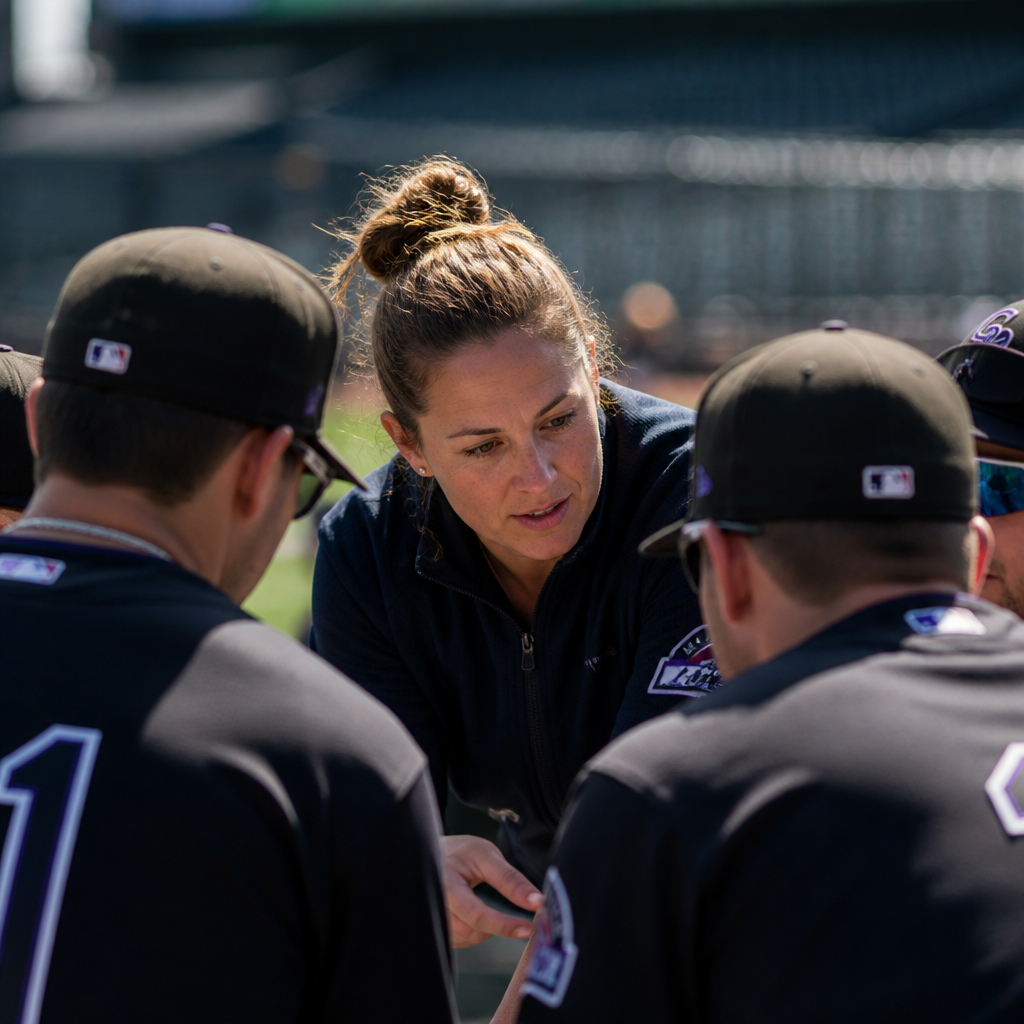
Women in baseball team management have shaped rosters, budgets, player development, and daily operations for decades, yet their contributions rarely receive the same attention as players on the field. In this context, team management includes front office leadership, scouting administration, farm system coordination, analytics, contract strategy, clubhouse operations, travel logistics, and the many executive roles that keep a baseball organization functioning. A sub-pillar hub on this subject matters because women in baseball are often discussed through playing history alone, while management reveals another powerful lane of influence: decision-making. I have worked on baseball content and organizational analysis long enough to see how often the public reduces management to a few famous general managers, ignoring the broader network of assistant GMs, directors, coordinators, and operations specialists who build winning environments. Understanding women in baseball team management means understanding how clubs actually run, why representation changes institutional culture, and where progress remains uneven across Major League Baseball, Minor League Baseball, independent leagues, college programs, and international baseball systems.
The phrase women in baseball team management covers both visible executives and less public leaders whose work directly affects performance. Kim Ng, for example, became the first woman general manager in Major League Baseball history when the Miami Marlins hired her in 2020, but her achievement was built on more than thirty years of front office work with the Chicago White Sox, New York Yankees, Los Angeles Dodgers, and MLB’s central office. Raquel Ferreira, widely respected in player development and baseball administration, rose to executive vice president and assistant general manager with the Boston Red Sox after years overseeing international and minor league operations. Jean Afterman spent decades as assistant general manager and contract expert for the Yankees, helping structure arbitration cases and long-term deals. These careers show a central truth: baseball management is specialized, technical, and collaborative. It requires fluency in labor rules, performance metrics, medical coordination, travel planning, leadership, and constant communication. This hub article maps that landscape clearly, so readers can move from broad understanding to deeper articles on executives, operations roles, barriers, career paths, and the future of women’s leadership in baseball organizations.
What Baseball Team Management Actually Includes
Baseball team management is broader than the title general manager suggests. In a typical organization, authority is distributed across baseball operations, business operations, player development, scouting, medical and performance departments, and clubhouse support. Women have worked in every one of these areas. Some lead pro scouting schedules, some manage international signing logistics, some oversee advance reports for coaches, and others coordinate the player movement puzzle between rookie ball, Double-A, Triple-A, and the major league roster. A front office depends on Rule 5 draft planning, option-year tracking, waiver timing, visa paperwork, compliance with the collective bargaining agreement, and communication with agents. These tasks are not glamorous, but they are decisive. A poorly handled roster transaction can cost a club depth. A well-managed development system can turn a fringe prospect into a contributor. When readers ask what women in baseball team management do, the shortest accurate answer is this: they help organizations make baseball decisions efficiently, legally, and strategically.
That breadth explains why the miscellaneous side of this topic is important as a hub. Not every influential figure fits neatly into one category like general manager or owner. Many women hold titles such as coordinator, director, vice president, assistant general manager, special assistant, chief of staff, and head of operations. These positions often combine administrative precision with baseball judgment. For example, player development administration requires understanding inning limits, rehab assignments, housing, education, nutrition, and transportation. International operations may involve signing periods, academy logistics, language support, and cross-border compliance. Analytics leadership can mean translating TrackMan, Hawk-Eye, biomechanics data, and video systems into plain recommendations for coaches and executives. In practice, baseball management rewards people who can connect departments rather than operate in silos. That is one reason women have advanced meaningfully in the sport: clubs increasingly value communication and interdisciplinary management as much as old-school gatekeeping instincts.
Pioneers, Breakthroughs, and the Leaders Who Changed Perception
Several women forced baseball to rethink who belongs in executive decision-making roles. Kim Ng is the most cited modern example because the general manager title carries public visibility, but her importance runs deeper. She developed a reputation for command of roster rules, contracts, scouting processes, and organizational planning well before receiving the Marlins job. Her tenure did not erase structural barriers overnight, yet it permanently weakened the argument that women lacked the background for top baseball operations posts. Long before that breakthrough, Jean Afterman built one of the strongest résumés in contract and arbitration work in the Yankees front office. Her influence illustrates how specialized mastery can shape championship organizations even without daily media attention. Raquel Ferreira’s rise with Boston highlighted another avenue: expertise in player development and baseball administration, especially within the minor league and international systems that feed long-term success.
Other names deserve regular inclusion in any serious conversation about women in baseball team management. Ng’s predecessor generation includes trailblazers such as Elaine Weddington Steward, one of the first women to serve as assistant general manager in the majors, and Marty Scott, whose executive work in independent baseball demonstrated leadership pathways beyond MLB. On the field-management edge of this conversation, Rachel Balkovec’s rise through hitting and player development roles before becoming the first woman to manage a Yankees-affiliated minor league team mattered because team leadership and team management are linked. In newer front office and strategic roles, women across clubs have led research, operations, and development initiatives that are often reported only inside industry circles. The practical takeaway is not that one hire solved representation. It is that repeated examples across departments have created proof of concept. Baseball organizations now have evidence, not theory, that women can lead player-centered, analytically informed, and operationally disciplined environments.
Key Management Roles Women Hold Across Baseball
Readers looking for a clear map of roles can use the breakdown below. These jobs vary by club size and league level, but together they show where women in baseball team management make daily impact.
| Role Area | Primary Responsibilities | Why It Matters |
|---|---|---|
| Baseball Operations | Roster moves, transactions, rules compliance, agent communication | Keeps the organization legal, efficient, and strategically flexible |
| Player Development | Minor league assignments, development plans, rehab coordination | Turns raw talent into major league contributors |
| Scouting Administration | Draft logistics, reporting systems, travel, evaluation workflows | Improves decision quality before money is committed |
| Analytics | Data modeling, video integration, performance reporting | Supports sharper player acquisition and coaching choices |
| International Operations | Academy support, visas, language resources, signing administration | Expands and stabilizes global talent pipelines |
| Clubhouse and Travel Operations | Scheduling, equipment coordination, player services, logistics | Reduces friction so athletes and staff can focus on performance |
In my experience reviewing how clubs function, the strongest organizations treat these areas as connected systems rather than separate boxes. A player development director cannot operate effectively if travel is chaotic, medical information is siloed, or analytics recommendations arrive in language coaches will not use. Likewise, a contract specialist needs scouting and health context before advising on a long-term commitment. Women have often excelled in these integrated environments because the job rewards detail, collaboration, and organizational trust. It is also worth noting that management opportunities differ by level. Minor league and independent clubs may offer wider responsibilities earlier, while major league front offices often have narrower but more specialized pathways. For readers exploring this hub, that distinction matters: women’s advancement in baseball has often been built through accumulated mastery in practical roles long before public-facing titles arrived.
Why Representation in Baseball Management Changes Organizations
Representation is not merely symbolic in baseball management. It affects hiring networks, communication norms, problem-solving styles, and ultimately competitive outcomes. When leadership teams are homogeneous, clubs tend to recycle assumptions about who looks authoritative, who gets stretch assignments, and whose judgment is trusted under pressure. Bringing more women into baseball operations disrupts those habits. It broadens the candidate pool, introduces different professional backgrounds, and often improves the flow of information across departments. I have seen this pattern in many sports organizations: when executives value a wider range of voices, meetings become less performative and more evidence-driven. That matters in baseball, where decisions about draft strategy, promotion timing, injury risk, or free-agent fit are rarely simple. Better questions produce better decisions.
There is also a player-facing impact. Organizations that hire women in management roles often become more intentional about professionalism, policy, and workplace standards. That does not mean women automatically create perfect cultures, and it would be simplistic to claim otherwise. But broader representation tends to force clubs to clarify expectations around conduct, reporting lines, travel, housing, and mentorship. In the long run, that improves institutional health. It can also affect fan perception and business value. Clubs that visibly open leadership pathways signal seriousness about modernizing, which matters to sponsors, employees, and communities. The strongest argument for women in baseball team management, however, remains performance. If a club ignores qualified talent because of gendered assumptions, it handicaps itself. Baseball is too competitive, too data-rich, and too expensive to justify self-imposed blind spots.
Barriers, Tradeoffs, and the Reality Behind Progress
Progress has been real, but it has not been smooth or evenly distributed. Baseball remains relationship-driven, and many opportunities still emerge through networks historically dominated by men. That affects internships, early-career visibility, and access to informal mentoring. Women entering team management also face the credibility tax familiar across sports: they are often expected to be exceptionally prepared before receiving the same trust granted more casually to male peers. The hours are another barrier. Baseball operations can mean year-round schedules, late-night transactions, heavy travel, and relocation across levels of the farm system. Those demands are difficult for anyone, but they become sharper when workplaces lack supportive policies around caregiving, advancement timing, or inclusive leadership.
There are subtler problems too. Tokenism can place women in visible roles without giving them decision authority. Media coverage may overfocus on “firsts,” then fail to cover the actual work that sustains a career. Some organizations celebrate diversity publicly while keeping succession planning opaque. And because baseball titles vary widely, an impressive-sounding position does not always indicate real influence over roster, budget, or development choices. Honest coverage of this subtopic must acknowledge those limits. At the same time, the picture is not static. Industry conferences, formal fellowship programs, analytics departments, and cross-functional operations roles have expanded entry points. Clubs are more likely than before to recruit from law, data science, biomechanics, performance training, and international administration. Those trends create practical openings for women, especially when organizations tie hiring to transparent evaluation instead of comfort-level assumptions.
Career Paths, Best Practices, and Where This Hub Leads Next
For readers using this page as a hub, the most useful next step is to understand the common career routes into baseball team management. Many professionals start through internships in baseball operations, communications, scouting support, or player development administration. Others enter through adjacent expertise: sports law, contract administration, data analysis, biomechanics, nutrition, finance, or event operations. From there, advancement usually depends on three things. First, technical competence: knowing roster rules, database systems, video workflows, or development processes cold. Second, reliability under pressure: baseball rewards people who can solve urgent problems during road trips, deadline weeks, or injury cascades. Third, relationship capital earned through substance: executives trust staff who communicate clearly, protect confidentiality, and improve decision quality.
This miscellaneous hub should connect naturally to deeper articles on front office pioneers, women general managers, minor league leadership, analytics careers, operations roles, and barriers in sports management. It should also point readers toward practical learning. Study MLB transaction rules, arbitration basics, and the structure of the player development pipeline. Learn the difference between amateur scouting and pro scouting. Understand how tools like TrackMan, Rapsodo, Synergy, and Hawk-Eye influence reporting. Follow organizations that publish staff promotions and baseball operations directories. Most importantly, pay attention to the less celebrated jobs. Baseball runs on coordinators, administrators, and specialists who make systems work every day. Women in those roles are not side notes to baseball history; they are builders of the sport’s present and future. If you are exploring women in baseball, use this hub as your starting point, then keep digging into the people, pathways, and decisions that shape the game behind the scenes.
Frequently Asked Questions
What does team management in baseball actually include, and where have women made the biggest impact?
Team management in baseball covers far more than the public-facing roles most fans recognize. It includes front office leadership, scouting administration, player development planning, analytics, contract strategy, budgeting, farm system coordination, clubhouse operations, travel logistics, medical and performance support coordination, and the day-to-day executive decisions that keep an organization moving. Women have contributed across all of these areas, often in positions that shape the long-term direction of a franchise without attracting the same visibility as on-field personnel.
One of the biggest areas of impact has been organizational infrastructure. Women in baseball operations have helped build scouting workflows, modernize communication between the major league club and the farm system, improve data use in decision-making, and strengthen the systems that support players from the draft through the big leagues. Others have influenced roster construction, contract evaluation, and departmental strategy by bringing expertise in law, finance, analytics, leadership, and operations. In practical terms, that means women have helped determine which players are signed, how prospects are developed, how budgets are allocated, and how efficiently the entire baseball operation functions.
Why are women in baseball team management often called “unsung heroes”?
They are often described that way because so much of their work happens behind the scenes. Fans usually see the players, the manager, and perhaps a general manager, but the success of a baseball organization depends on many layers of planning and execution that rarely make headlines. Women working in management roles have long handled essential responsibilities such as coordinating player movement, managing internal systems, overseeing travel and scheduling, negotiating operational challenges, supporting development staffs, and helping executives make informed decisions. These jobs are foundational, yet they are frequently overlooked because they do not play out in front of cameras during a game.
There is also a historical dimension to that label. For decades, women in baseball have had to build influence in spaces where their authority was not always assumed or properly recognized. Even when they achieved high-level results, media coverage often lagged behind reality. As a result, many women have been central to franchise stability, innovation, and growth without receiving the same cultural recognition granted to more visible baseball figures. Calling them “unsung heroes” acknowledges both the importance of their contributions and the longstanding tendency to undervalue the labor that keeps a team competitive, organized, and forward-looking.
How have women influenced player development and roster-building in baseball organizations?
Women have influenced player development and roster-building by helping create the structures that turn raw talent into major league contributors. In player development, that can mean coordinating communication between coaches, analysts, trainers, and front office leaders; tracking progress across the farm system; shaping individualized plans for prospects; and ensuring that information from scouting, biomechanics, performance science, and game data is used effectively. The modern baseball pipeline depends on collaboration, and women in management have often played vital roles in making that collaboration functional and consistent across multiple levels of an organization.
In roster-building, their influence shows up in both strategy and execution. Women working in baseball operations, analytics, legal affairs, and executive leadership have contributed to player valuation models, free-agent decisions, trade analysis, contract structure, and 40-man roster planning. They may not always be the public spokesperson announcing a move, but they are frequently part of the process that identifies needs, weighs risk, compares alternatives, and aligns transactions with a club’s competitive window and financial goals. In many organizations, successful roster construction is not the result of one voice, but of an integrated decision-making system, and women have been instrumental in building and improving those systems.
What challenges have women faced in baseball management, and how has the industry changed?
Women in baseball management have faced a mix of structural, cultural, and visibility-related challenges. Historically, one of the biggest barriers was access: access to leadership pipelines, professional networks, field credibility, and advancement opportunities in a sport that often relied on tradition and informal gatekeeping. Many women had to prove expertise repeatedly in environments where men were more automatically seen as baseball authorities. Others encountered limited mentorship, inconsistent promotion paths, or assumptions that certain areas of the sport were not meant for them.
The industry has changed in meaningful ways, though progress remains uneven. As baseball has become more data-driven, interdisciplinary, and operationally complex, teams have increasingly recognized the value of talent from varied professional backgrounds, including law, finance, analytics, technology, communications, and organizational leadership. That shift has opened more doors for women, especially in front office and administrative roles tied directly to competitive decision-making. There is also greater public awareness today of women serving as executives, coordinators, analysts, and department heads. Still, visibility does not automatically equal equity. Representation in top leadership roles remains a work in progress, and many advocates argue that the next phase of change depends on sustained hiring, promotion, mentorship, and recognition rather than symbolic milestones alone.
Why does recognizing women in baseball team management matter for the future of the sport?
Recognition matters because it changes how the sport understands expertise, leadership, and success. When women in team management are acknowledged for their real contributions, baseball gains a more accurate picture of how organizations actually win. Championships and sustainable success are built not just on star players, but on smart systems, disciplined operations, long-term planning, and strong leadership behind the scenes. Giving women proper credit highlights the full ecosystem of baseball and helps fans, media, and aspiring professionals appreciate that management roles are central to a team’s identity and performance.
It also matters because visibility shapes opportunity. When girls, young professionals, and career changers can clearly see women succeeding in baseball operations, scouting administration, analytics, contract strategy, and executive leadership, the talent pipeline grows stronger. Teams benefit when they draw from the widest possible pool of capable people, and the sport benefits when it becomes more inclusive, modern, and representative of the expertise required to compete. In that sense, recognizing women in baseball management is not just about correcting the historical record. It is about strengthening the future of baseball by valuing the people who help guide it every day.