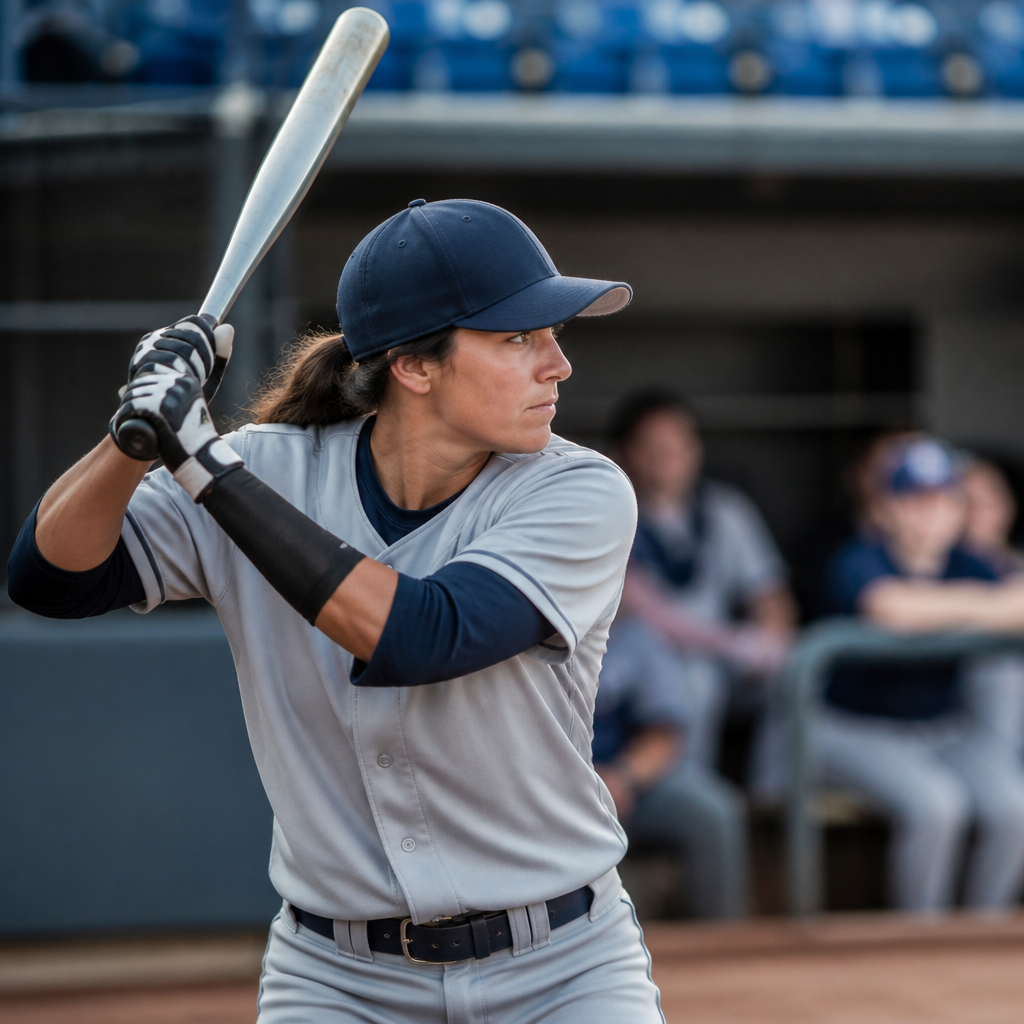
Baseball’s batting story is usually told through men’s record books, but women have excelled with the bat for more than a century, building a rich tradition that deserves a central place in the history of women in baseball. In this hub on Silver Sluggers: The Women Who Excelled in Baseball Batting, the term “silver sluggers” refers broadly to elite women hitters whose value came from contact skill, plate discipline, power, run production, and the ability to perform under pressure. Batting is not just swinging hard. It includes strike-zone judgment, bat speed, timing, situational hitting, and the mental discipline to adjust pitch by pitch. I have worked through women’s baseball archives, museum collections, and league statistical summaries, and one pattern appears again and again: when women received consistent competition, coaching, and schedule length, outstanding hitters emerged in every era. This matters because batting excellence reveals development pathways, league quality, and the broader visibility of women in sport. It also anchors this miscellaneous hub within the wider Women in Baseball topic, connecting pioneers, modern national teams, professional leagues, and overlooked local stars through the most measurable offensive skill in the game: producing at the plate.
The history is scattered across barnstorming clubs, industrial teams, international tournaments, segregated circuits, and the All-American Girls Professional Baseball League, so a useful hub must explain both the stars and the context that shaped their numbers. Some women played with wood bats against men, some dominated women’s leagues, and some built reputations in short tournaments where one hot week defined a season. That variety makes direct statistical comparison difficult, yet it does not weaken the achievement. Instead, it shows why batting evaluation in women’s baseball must combine numbers, scouting language, league context, and eyewitness testimony. Readers looking for famous names, breakthrough seasons, technical hitting insight, or pathways into related articles should find them here. The women below represent different eras and competitive environments, but they share the same core trait: they hit baseballs with authority, intelligence, and consistency, proving that offensive excellence in baseball has never belonged to one gender.
What defines an elite woman baseball hitter
An elite hitter in women’s baseball is defined by repeatable offensive process, not by a single highlight. The key indicators are the same ones evaluators use anywhere else in baseball: on-base ability, slugging, contact quality, strikeout control, and performance against top competition. In archival leagues where complete analytics are unavailable, historians lean on batting average, extra-base hit totals, RBI, walk rates when preserved, and contemporary reports describing line-drive frequency, opposite-field hitting, or pull power. In modern events, video adds another layer. You can assess launch angle tendencies, hip-shoulder separation, swing decisions, and whether a player handles velocity or spin. Across eras, the best women hitters have shown compact mechanics, balance through contact, and the confidence to hit with two strikes rather than simply survive the at-bat.
Context is essential. A .300 average in a league with long travel, uneven fields, deadened baseballs, and daytime doubleheaders can be more impressive than a higher mark in a weaker environment. I always look at who the hitter faced, how often she played, and whether league rules affected offense. In the AAGPBL, for example, equipment and rule changes over time altered run scoring and power output. Early players dealt with a larger ball and style influences from softball, while later seasons moved closer to standard baseball dimensions and tactics. International tournaments bring another challenge: small sample sizes. A hitter may have only a handful of games, but if those at-bats come against Japan, the United States, Canada, or Chinese Taipei at the Women’s Baseball World Cup level, the quality of opposition is elite. Great women batters should be judged with rigor, but also with informed respect for the conditions under which they produced.
Pioneers who proved women could rake
Long before organized women’s leagues gained stable attention, women were already showing real batting ability in exhibition, semipro, and barnstorming settings. Alta Weiss, often remembered primarily as a pitcher in the early twentieth century, also played in lineups that demanded offensive contribution, and her popularity helped normalize the image of women as legitimate baseball players rather than novelty acts. Lizzie Murphy went further. A first baseman from Rhode Island, Murphy was one of the most accomplished early women players and reportedly hit with enough authority to earn spots against male semipro competition. In 1922 she became the first woman to play in a major league exhibition game, appearing with the Boston Red Sox. That invitation was not charity. It reflected a serious reputation built on years of hard contact, defensive reliability, and baseball intelligence.
Toni Stone, Connie Morgan, and Mamie Johnson are more often discussed within the Negro Leagues and women’s integration history, yet Stone’s offensive profile deserves special attention in any batting hub. Facing the cultural hostility and competitive demands of men’s professional Black baseball, she put the ball in play, handled middle infield responsibilities, and proved she belonged in lineups built to win. Stone was not marketed as a slugger, but effective batting is broader than home run totals. Her value came from contact ability and fearlessness against quality pitching. That same principle applies to many underdocumented women hitters from industrial leagues and regional clubs. Newspaper accounts often used phrases such as “timely hitting,” “clean drives,” and “hard batting exhibition.” Those reports matter because they are the surviving scouting notes of their time. They show a continuous, if fragmented, lineage of women who could really hit.
The All-American Girls Professional Baseball League and its best bats
No discussion of women who excelled in baseball batting is complete without the AAGPBL, the most studied professional women’s baseball league in North American history. Operating from 1943 to 1954, the league created the longest sustained environment for women hitters to build statistical legacies. Players adapted as the game evolved from a hybrid style toward full baseball, and the best batters separated themselves through consistency over long schedules. Dottie Kamenshek stands near the top of any list. A left-handed first baseman with superb bat control, she won multiple batting titles and was renowned for spraying line drives. Opponents and managers respected her so much that she was often compared favorably with major league first basemen of her era. Her combination of average, on-base skill, and defensive excellence made her one of the league’s most complete stars.
Sophie Kurys offers a different model of offensive impact. She is usually celebrated for stolen base totals, but speed alone did not make her dangerous. Kurys got on base, pressured defenses, and turned singles and walks into immediate scoring threats. Jean Faut, remembered as one of the league’s dominant pitchers, also contributed offensively in ways modern two-way enthusiasts would appreciate. Then there were productive hitters such as Dorothy Schroeder, Betty Cihak, and others whose seasonal records show how offense developed as league conditions changed. Power numbers in the AAGPBL were modest by modern standards, but that does not imply weak hitting. Ball size, park factors, travel fatigue, and strategic emphasis all mattered. A double in a deep alley or a hard single through the infield often represented excellent barrel control rather than limited strength. For researchers and fans, the league remains the best entry point for understanding women’s professional batting excellence because it combines named stars, preserved statistics, and a competitive structure strong enough to reveal true offensive skill.
Modern international baseball created new batting benchmarks
The launch of formal women’s international competition gave hitters a new stage and a clearer comparative framework. Since the Women’s Baseball World Cup began in 2004 under the sport’s global governing structure, standout batters from Japan, the United States, Canada, Australia, Venezuela, and other nations have faced one another in meaningful games with medal stakes. Japan, in particular, set the modern standard for offensive precision. Its lineups have consistently featured hitters with disciplined swings, situational awareness, and strong contact rates. Watching Japanese women’s baseball over the years, I have been struck by how reliably hitters execute simple but difficult tasks: moving runners with authority, staying inside outside pitches, and refusing to chase spin below the zone. That is advanced batting, not conservative batting.
Players such as Ayami Sato are famous for pitching, yet modern women’s baseball has also produced accomplished everyday hitters whose reputations spread more through national team circles than mainstream media. On Team USA rosters, athletes like Tamara Holmes and others have provided examples of balanced offensive profiles, combining gap power with patience. In Canadian baseball, veteran leaders have often anchored lineups through mature at-bat quality rather than sheer physical dominance. International play is especially useful because the level at the top is high and scouting is sophisticated. Video review, strength training, and national development pipelines mean modern hitters are better prepared mechanically than many pioneers were. At the same time, short tournaments amplify pressure. A player who goes 7-for-16 with extra-base impact against the world’s best may have delivered one of the finest offensive performances in women’s baseball that year, even if the public never sees it on a major broadcast.
Batting styles, strengths, and how stars compare
Women who excelled in baseball batting have never fit one offensive mold. Some were table setters with elite contact skill. Others produced doubles power, while a smaller group paired bat speed with true over-the-fence authority. The most useful way to compare them is by offensive role.
| Hitting profile | Core traits | Representative examples | Why it matters |
|---|---|---|---|
| High-contact catalyst | Low swing-and-miss, line drives, speed pressure | Sophie Kurys, Toni Stone | Creates runs even without home run power |
| Batting title technician | Zone control, all-field approach, consistent hard contact | Dottie Kamenshek, Lizzie Murphy | Sustains average and on-base percentage over time |
| Gap-power run producer | Doubles power, RBI skill, strong situational hitting | Many AAGPBL middle-order bats, modern national team veterans | Turns traffic on base into crooked numbers |
| Modern complete hitter | Strength training, video-informed adjustments, plate discipline | Recent World Cup standouts from Japan, USA, Canada | Represents the highest technical refinement in current women’s baseball |
This framework prevents simplistic arguments. A leadoff hitter who posts high on-base numbers and steals extra bases can be as valuable as a cleanup hitter with more extra-base hits. In women’s baseball, where league environments have varied dramatically, role-based comparison is often more honest than raw stat comparison. When I review old scorebooks and modern video side by side, the common denominator among great hitters is decision quality. They know which pitches they can drive, they keep their shape through contact, and they compete every at-bat with a plan. That is why elite batters remain recognizable across generations, even when uniforms, tournament formats, and media exposure change.
Why women’s batting achievements are often underrated
Women’s batting achievements are underrated for structural reasons, not baseball reasons. First, records are incomplete. Many regional leagues kept partial box scores, and some surviving newspapers covered women’s teams as curiosities rather than serious sporting enterprises. Second, opportunities were inconsistent. A gifted hitter might lose prime seasons to league collapse, war work, family expectations, travel barriers, or the absence of nearby competition. Third, media framing has long favored novelty stories over technical analysis. Instead of discussing bat path, strike-zone management, or opposing pitch quality, coverage often reduced players to symbolic figures. That flattening still affects search behavior today, because fans know a few famous names yet miss the broader batting tradition beneath them.
There is also a statistical literacy problem. People see low home run totals in historical women’s leagues and assume weak offense, ignoring dead-ball conditions, larger parks, evolving equipment, and tactical environments built around speed and placement. A hitter can dominate a league through doubles, walks, and relentless line drives. Baseball people understand that immediately. Anyone who has charted games knows a batter who controls the barrel and refuses easy outs changes the entire contest. The solution is better documentation and smarter interpretation. That means preserving box scores, publishing translations of international coverage, digitizing scorebooks, and linking player profiles within broader Women in Baseball resources so readers can move from a hub like this to deeper biographies, league histories, and tournament analysis.
How to use this hub within Women in Baseball research
This miscellaneous hub works best as a launch point for deeper exploration across the Women in Baseball topic. If you are researching pioneers, start with Lizzie Murphy, Alta Weiss, and Toni Stone to understand how women hitters earned credibility in male-dominated baseball spaces. If you want the clearest professional statistical record, move next to AAGPBL batting leaders, especially Dottie Kamenshek and Sophie Kurys. If your focus is current performance, follow international women’s baseball through World Cup results, WBSC coverage, national federation rosters, and tournament video. Those paths answer different questions: who hit first, who sustained greatness longest, and who best represents the present technical ceiling of women’s batting.
The bigger lesson is simple. Women have always excelled in baseball batting when given real games, real coaching, and real competitive stakes. Their success appears in barnstorming legends, Negro Leagues integration stories, AAGPBL records, and modern international lineups built with professional training methods. For readers, coaches, and historians, the benefit of studying these silver sluggers is not just inspiration. It is a more accurate understanding of baseball itself. Offensive excellence follows opportunity, structure, and skill development, and women have met that standard repeatedly. Use this page as your starting map, then continue into player profiles, league histories, and tournament breakdowns to build a fuller picture of women in baseball and the hitters who shaped it.
Frequently Asked Questions
What does the term “Silver Sluggers” mean in the context of women’s baseball?
In this context, “Silver Sluggers” is a broad, descriptive label for women who stood out as exceptional hitters in baseball, regardless of era, league, or level of public recognition. It does not refer only to home run power. Instead, it includes the full range of offensive excellence: consistent contact, smart strike-zone judgment, extra-base ability, run production, situational hitting, and the knack for delivering in high-pressure moments. A true silver slugger could be a feared power bat, a high-average line-drive hitter, or a complete offensive player who combined patience and bat control with timely production.
That broader definition matters because women’s baseball history cannot be reduced to a single offensive style. Different periods of the game emphasized different skills, and many women hitters excelled under conditions that were not always favorable to offense, visibility, or statistical preservation. Some played in organized professional leagues, others in barnstorming clubs, industrial teams, international competition, or regional circuits where records were incomplete. Even so, their reputations were built on results and on the respect they earned from teammates, opponents, managers, and fans. Calling them “Silver Sluggers” helps center their batting achievements as a major part of the history of women in baseball rather than treating them as a footnote.
Why is batting such an important part of the story of women in baseball?
Batting is central because it is one of the clearest and most visible ways players shape games, create momentum, and establish reputations. A great hitter changes how opponents pitch, how defenses align, and how entire lineups function. In women’s baseball history, standout hitters often served as the offensive backbone of their teams, generating scoring chances through disciplined at-bats, advancing runners, and supplying power when it was available. Their performances demonstrated not only individual skill but also the tactical sophistication and competitive quality of women’s baseball across generations.
It is also important because mainstream baseball history has long leaned heavily on men’s batting records and milestones, leaving women’s offensive accomplishments underrepresented. That imbalance can create the false impression that women’s baseball lacks a deep hitting tradition, when the opposite is true. For more than a century, women have excelled with the bat in multiple settings and under a wide range of playing conditions. Telling the batting story restores balance to the historical record. It shows that women were not merely participating in baseball; they were mastering one of its most demanding crafts and building legacies through production, consistency, and competitive poise.
What traits made elite women hitters stand out from their peers?
Elite women hitters typically separated themselves through a combination of technical skill, mental discipline, and adaptability. At the plate, they often showed excellent bat control, allowing them to make frequent, quality contact against different pitch types and game situations. Many had a refined sense of the strike zone, which meant they did not chase recklessly and could force pitchers into mistakes. Others added real power, driving the ball with authority to the gaps or over the fence. Just as important, the best hitters understood how to tailor an at-bat to the moment: shortening a swing with two strikes, moving a runner, attacking an early-count fastball, or working a walk when pitchers refused to challenge them.
Another defining trait was performance under pressure. Great hitters are remembered not only for season-long numbers but for what they do when the game is tight and the outcome hangs on a single plate appearance. Women who earned reputations as premier bats often came through in those moments, giving their teams confidence that an inning was never out of reach. Durability, preparation, and baseball intelligence also mattered. The best offensive players made adjustments over time, learning how to handle scouting, fatigue, changing competition, and evolving game strategies. Their success was rarely accidental; it reflected repeatable skill and a deep understanding of hitting as both an art and a discipline.
How should readers evaluate great women hitters when historical records are incomplete or uneven?
Incomplete records are a real challenge in women’s baseball history, but they do not make serious evaluation impossible. The best approach is to combine available statistics with broader forms of evidence, including contemporary newspaper coverage, league accounts, tournament summaries, team documents, player testimony, and the assessments of coaches, opponents, and historians. If a hitter was consistently described as the most dangerous bat in a lineup, known for driving in runs, feared by pitchers, or celebrated for clutch performances, that testimony has value, especially when it appears across multiple independent sources. Reputation alone should not replace evidence, but in underdocumented eras it becomes an important part of the historical picture.
Context is equally important. Readers should ask what kind of league a player competed in, how long she performed at a high level, what offensive environment she played in, and whether she excelled against top competition. A strong batting average or run-production record means more when it comes against elite opponents or under conditions that suppress offense. Longevity, consistency, and postseason impact can also reveal greatness even when complete season-by-season data is missing. In short, evaluating women hitters requires a historian’s mindset: respect the numbers that exist, acknowledge the gaps honestly, and use context to understand how extraordinary these players were within their own competitive worlds.
Why does it matter to give women hitters a central place in baseball history today?
It matters because history shapes legitimacy. When women’s batting achievements are overlooked, the public receives a narrower and less accurate version of baseball’s past. Restoring women hitters to the center of the conversation corrects that distortion and recognizes that offensive excellence in baseball has never belonged to one gender alone. These players developed advanced hitting skills, carried lineups, won games with their bats, and inspired teammates and future generations. A fuller history acknowledges that women were not peripheral figures; they were accomplished ballplayers whose offensive contributions enriched the game itself.
It also matters for how the sport is understood in the present. Highlighting elite women hitters gives fans, researchers, coaches, and young players a richer set of role models and reference points. It opens the door to better scholarship, more complete storytelling, and a deeper appreciation for the diversity of baseball talent across eras. Most of all, it honors the players who excelled despite limited recognition, inconsistent media attention, and fewer institutional resources than many of their male counterparts. Giving women hitters their due is not an act of token inclusion. It is an act of historical accuracy and a necessary step toward telling baseball’s batting story in full.