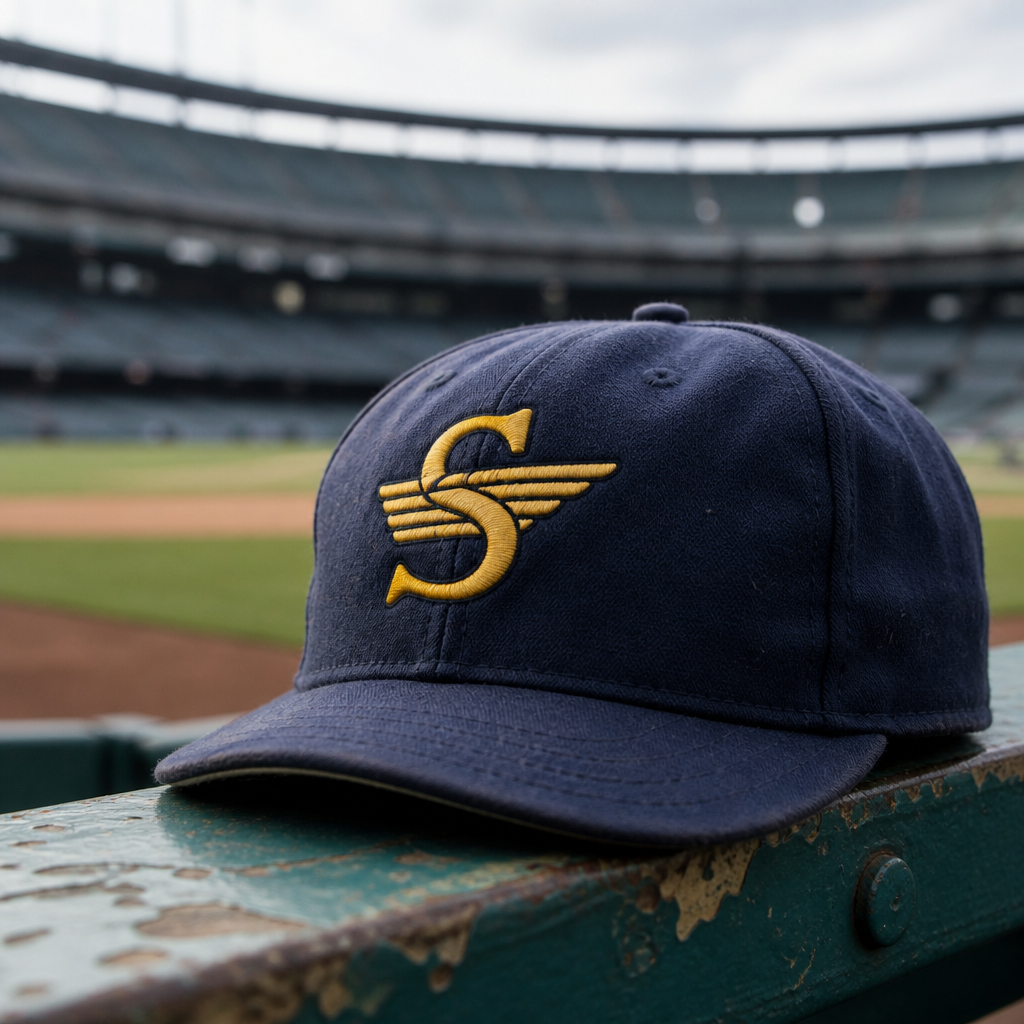
The Seattle Pilots existed for only one major league season, yet their brief life changed baseball in two cities and helped define the modern story of relocated and defunct franchises. Launched in 1969 as an American League expansion club, the Pilots were born from political pressure, stadium urgency, and the sport’s race to plant flags in growing markets. Within months, ownership instability, poor finances, and a crumbling temporary ballpark pushed the team into bankruptcy court. By spring 1970, the franchise had moved to Wisconsin and reemerged as the Milwaukee Brewers. That sequence makes the Pilots more than a historical curiosity. They are the clearest example of how expansion, relocation, municipal financing, league governance, and fan loyalty can collide in one compressed episode.
In baseball history, a defunct franchise is a club that ceases operations or disappears entirely, while a relocated franchise continues its legal existence in a new city under a different name or identity. The Pilots belong to the second category, but their story also serves as a gateway to the wider landscape of vanished and moved clubs, from the Brooklyn Dodgers and New York Giants leaving for California to the Montreal Expos becoming the Washington Nationals. As a hub within the broader topic of famous baseball teams, this article connects those patterns: why teams move, why some fail, what stadiums and television money do to franchise stability, and how one season in Seattle still echoes through the sport.
I keep coming back to the Pilots because their case strips baseball economics down to essentials. You see what happens when expansion fees outrun preparation, when temporary facilities become permanent liabilities, and when league leaders promise a market more time than they can practically deliver. You also see how a “failed” franchise can become a long-term civic asset elsewhere. Milwaukee lost the Braves after the 1965 season and spent four years fighting for another club. Seattle gained a team partly because Kansas City owner Charlie Finley moved the Athletics to Oakland, provoking legal and political backlash in the Pacific Northwest. The Pilots therefore sit at the center of a chain reaction. To understand relocated and defunct franchises comprehensively, start with Seattle’s one-year team and follow the forces that created it, sank it, and transformed it into something enduring.
Why the Seattle Pilots Were Created
The American League awarded Seattle an expansion franchise for 1969, earlier than many local planners expected, largely because Major League Baseball needed to calm political anger over the loss of the minor league Seattle Rainiers and the region’s exclusion from the major leagues. The catalyst was Senator Stuart Symington of Missouri, who was furious when the Athletics left Kansas City after the 1967 season. Symington threatened to challenge baseball’s antitrust protections unless Kansas City received a replacement club quickly. To solve one crisis, the leagues accelerated broader expansion. Kansas City got the Royals. Seattle got the Pilots. The compressed timeline mattered because ownership groups usually need years, not months, to build sponsorship pipelines, season-ticket bases, and a suitable front office.
The new team was led by Dewey Soriano, with financial backing that never matched the demands of operating a major league club. Their home, Sick’s Stadium, had been a solid Pacific Coast League venue, but it was not a true major league facility. Capacity upgrades, clubhouse changes, and infrastructure work lagged behind schedule, and many improvements remained incomplete or inadequate even after opening day. Fans encountered obstructed views, drainage concerns, and a stadium atmosphere that felt provisional. In franchise history, temporary can be fatal. When a team asks customers, corporate partners, and players to accept a stopgap environment, it must compensate with strong ownership and deep reserves. The Pilots had neither. Their creation was rooted in understandable civic ambition, but the business plan was too thin for the speed and scale of the assignment.
The 1969 Season on the Field and in the Stands
On the field, the Pilots were not hopeless. Managed by Joe Schultz, they finished 64–98, last in the American League West, yet they were competitive often enough to suggest a normal expansion growth curve rather than immediate collapse. Outfielder Tommy Harper provided speed and production, stealing 73 bases and scoring 105 runs. Mike Hegan and Don Mincher supplied power. Gary Bell and Diego Seguí gave the pitching staff some credibility. For a first-year roster stitched together through an expansion draft, trades, and waiver claims, the club looked rough but recognizable as a major league team. This is important because the Pilots did not disappear because they were uniquely bad at baseball. They disappeared because their off-field structure could not sustain even an ordinary expansion season.
Attendance told the harsher story. Seattle drew just over 677,000 fans in 1969, respectable in absolute terms for a rushed expansion club but insufficient against debt, stadium limitations, and weak premium revenue. Today, analysts would immediately ask about local media rights, sponsorship inventory, and per-cap spending, but in 1969 the gate still dominated the equation. A team with poor weather early in the season, a substandard park, and uncertain civic confidence had little margin for error. The club’s finances deteriorated fast enough that payroll and creditor obligations became existential issues. Jim Bouton’s famous memoir Ball Four, drawn from his season with the Pilots, later gave the franchise cultural immortality. It also preserved a ground-level picture of a team that felt unstable from inside the clubhouse. Players knew the operation was under strain long before the legal end arrived.
How Bankruptcy Forced the Move to Milwaukee
By the end of the 1969 season, the Pilots were in severe financial distress. The central problem was not a single bad month but a layered failure: undercapitalized ownership, stadium debt, lower-than-needed attendance, and limited confidence from lenders. Bankruptcy became the mechanism that decided the franchise’s future. In March 1970, just before opening day, a federal bankruptcy referee approved the sale of the club to Milwaukee interests led by car dealer and future commissioner Bud Selig. That timing remains astonishing. Equipment, uniforms, scheduling logistics, and commercial arrangements had to be redirected almost overnight. The legal franchise survived, but Seattle lost its club after one season and Milwaukee suddenly had baseball again.
The move also revealed how much practical power league owners held even when courts entered the picture. Baseball has long presented relocation as a matter of market logic, but the Pilots case shows it is equally a matter of institutional tolerance. Owners were willing to let Milwaukee reclaim a franchise because the city had already shown it could support one after the Braves left. County Stadium was major league ready, local demand was proven, and Selig had spent years organizing exhibition games there to demonstrate viability. Compared with Seattle’s uncertainty, Milwaukee looked stable immediately. Bankruptcy did not create desire for relocation from nowhere; it accelerated a solution that the league considered operationally safer. For students of relocated franchises, that distinction matters. Teams rarely move simply because finances are weak. They move when a weaker market is paired with a clearly stronger alternative.
From Pilots to Brewers: What Changed in Wisconsin
Once the franchise became the Milwaukee Brewers, the same legal entity entered a dramatically different business environment. County Stadium offered more capacity, better amenities for the era, and a fan base primed by the departure of the Braves in 1965. Milwaukee had not stopped acting like a major league city during those four years without a team. Selig’s efforts to bring exhibition games to town kept public interest warm, gave sponsors a reason to stay engaged, and signaled to the league that demand was measurable rather than speculative. The renamed Brewers drew more than 900,000 fans in 1970 despite the chaotic transfer. That increase was not accidental. It reflected the value of readiness, local identity, and a proper venue.
The franchise then grew roots. While the early Brewers were not immediate contenders, the team became a durable part of Wisconsin sports culture and eventually reached the 1982 World Series. In historical terms, that arc underscores a hard truth: franchise failure in one city can coexist with franchise success in another without contradicting the same evidence. The Pilots did not prove Seattle was inherently unfit for baseball; they proved the 1969 Seattle arrangement was unfit. Seattle later rejoined the majors with the Mariners in 1977 and, after long stadium battles of their own, developed into a stable market. Milwaukee, meanwhile, validated itself again. The same franchise therefore generated opposite narratives depending on the timeframe chosen. Good history resists simple blame and instead tracks the conditions around ownership, ballparks, and league incentives.
What the Pilots Teach About Relocated and Defunct Franchises
The Pilots are the ideal hub case because nearly every major theme in franchise movement appears in their story. Stadium quality matters because an inadequate park suppresses revenue, damages brand perception, and can even affect scheduling and player relations. Ownership depth matters because expansion and relocation create hidden costs far beyond player salaries. League politics matter because baseball does not operate like an open market; territory rights, owner votes, and legal threats shape outcomes. Civic strategy matters because public officials often negotiate from emotion when they need leverage, timelines, and realistic infrastructure plans.
Across baseball history, those same factors appear repeatedly. The Boston Braves moved to Milwaukee in 1953, then to Atlanta in 1966, pursuing stronger attendance and television opportunity. The Brooklyn Dodgers and New York Giants left for Los Angeles and San Francisco in 1958, changing the national map of the sport and proving that geography could be reinvented by air travel and westward population growth. The Washington Senators became the Minnesota Twins in 1961, and a later Senators franchise became the Texas Rangers in 1972. The Montreal Expos relocated to Washington in 2005 after years of attendance decline, ownership confusion, and stadium uncertainty. Some clubs vanish more fully in public memory, but most “defunct” teams in the modern era are really transformed entities whose records, contracts, and league memberships continue under new names.
| Franchise shift | Primary pressure | Key lesson |
|---|---|---|
| Seattle Pilots to Milwaukee Brewers, 1970 | Bankruptcy, weak stadium setup, undercapitalization | Speed to market cannot replace operational readiness |
| Brooklyn Dodgers to Los Angeles, 1958 | Stadium dispute, market expansion | Facility control can outweigh historic fan loyalty |
| Montreal Expos to Washington, 2005 | Revenue weakness, ownership instability | Long uncertainty erodes support even in major markets |
| Washington Senators to Texas Rangers, 1972 | Attendance and stadium concerns | Political symbolism rarely offsets weak business fundamentals |
Why Seattle’s Loss Still Matters to Baseball History
Seattle’s grievance over the Pilots did not end with the move. The city, county, and state pursued litigation against the American League, and that pressure helped produce the Mariners as part of the 1977 expansion round. In that sense, the Pilots’ collapse directly shaped the next decade of baseball geography. It also left a lasting cautionary tale for expansion policy. Leagues now perform deeper market studies, ownership vetting, and stadium planning because rushed launches can damage both local trust and national credibility. The Pilots are often remembered through nostalgia or oddity, but the more serious lesson is procedural: if the timetable is wrong, almost every other decision becomes harder.
For readers exploring famous baseball teams under the relocated and defunct franchises subtopic, the Pilots provide the connective tissue between civic myth and financial reality. Fans tend to frame moves as betrayal or rescue, and sometimes they are. But the durable explanation is usually structural. Teams need capital, venue control, media reach, and patient governance. When those pieces align, a market can thrive for generations. When they do not, even a major league badge can vanish in a year. If you want to understand why baseball teams move, why some names disappear, and why others survive by changing cities, begin with the Seattle Pilots. Their single season captures the stakes with unusual clarity. From there, explore the Braves, Dodgers, Giants, Senators, and Expos to see the same forces play out on larger stages. The history is not just about loss. It is about how baseball keeps remaking itself, one franchise decision at a time.
Frequently Asked Questions
Why did the Seattle Pilots exist for only one season?
The Seattle Pilots lasted only one major league season because the franchise was rushed into existence under difficult circumstances and never had a stable financial foundation. The team joined the American League in 1969 as part of baseball’s expansion era, but the move was driven as much by politics and urgency as by long-term planning. Seattle had been promised a replacement for the Pacific Coast League’s Seattle Rainiers after local pressure and legal threats followed the departure of another major league club from the region. Major League Baseball wanted to secure the market quickly, and that meant the Pilots were born before ownership, facilities, and revenue streams were truly ready.
Once the season began, the organization faced major problems almost immediately. Sick’s Stadium, a minor league park hastily upgraded for major league use, was not suited for a full-time big league operation. Attendance lagged behind expectations, corporate support was not strong enough to offset losses, and the ownership group struggled with mounting debt. The club’s expenses rose while its income fell short, creating a crisis that could not be solved during the offseason. By the spring of 1970, the team had entered bankruptcy proceedings, and that opened the door for an out-of-state buyer to acquire and relocate the franchise. In short, the Pilots disappeared so quickly because they were a major league team built on unstable ground, and baseball’s timetable moved faster than the franchise’s ability to become viable.
What led to the Seattle Pilots’ bankruptcy so quickly after their inaugural season?
The Pilots’ bankruptcy was the result of several interconnected problems rather than one single failure. The most important issue was undercapitalization. The ownership group did not have the deep financial reserves typically needed to absorb the heavy losses that often come with launching an expansion team. New franchises usually need time to build fan loyalty, sponsorships, broadcasting relationships, and a workable front-office structure. The Pilots did not have that luxury, and every weakness was exposed at once.
Another major factor was the stadium situation. Sick’s Stadium was intended as a temporary home, but “temporary” became a serious liability. Renovations were incomplete, amenities were limited, and the ballpark lacked the revenue-generating features that help sustain major league clubs. That meant fewer premium opportunities, a less appealing fan experience, and a weaker overall business model. On the field, the team was competitive at times but not strong enough to create the kind of sustained excitement that might have overcome the structural disadvantages off the field.
There were also broader economic and legal pressures. Creditors wanted payment, ownership was scrambling for cash, and the club’s financial obligations kept piling up. Bankruptcy court became the arena where the franchise’s future would be decided. When a Milwaukee-based group led by Bud Selig emerged with the money and motivation to buy the team, relocation became the practical solution. So the Pilots’ collapse was not simply about poor attendance or a bad season. It was about a franchise launched too quickly, financed too thinly, and housed in conditions that made long-term stability extremely difficult.
How did the Seattle Pilots become the Milwaukee Brewers?
The transformation from Seattle Pilots to Milwaukee Brewers happened through a rapid and unusually dramatic legal and business process. After the 1969 season, the Pilots’ financial condition deteriorated so badly that the franchise entered bankruptcy. At the same time, Milwaukee was desperate to regain major league baseball after the Braves had moved to Atlanta earlier in the decade. Local baseball supporters, civic leaders, and businessman Bud Selig had already spent years trying to bring a team back to the city, and the Pilots’ instability created an unexpected opportunity.
A Milwaukee ownership group purchased the bankrupt Seattle franchise in the spring of 1970, just before the new season was set to begin. The timing was so tight that the club’s relocation became one of the most chaotic in baseball history. Equipment, uniforms, schedules, and administrative logistics all had to be sorted out in a hurry. The team was moved to Milwaukee and renamed the Brewers, a nod to the city’s brewing heritage and baseball tradition. In effect, the 1970 Brewers were the direct continuation of the 1969 Pilots franchise, just in a different city and under a new identity.
This was more than a routine relocation. It reshaped baseball in both Seattle and Milwaukee. Milwaukee got its replacement for the departed Braves, while Seattle lost a team almost as soon as it had gained one. That sense of injustice lingered and became a major reason the city later fought successfully for another franchise, which arrived as the Seattle Mariners in 1977. The Pilots-to-Brewers transition remains a landmark example of how financial instability, civic ambition, and league politics can alter the map of professional sports almost overnight.
Why is the Seattle Pilots story so important in baseball history?
The Seattle Pilots matter because their one-year existence had consequences far beyond their brief time on the field. Historically, the franchise sits at the intersection of expansion, relocation, stadium politics, and bankruptcy law. Their rise and fall showed how vulnerable a major league club could be when league ambitions outpaced local readiness. Baseball in the late 1960s was aggressively expanding into new markets, but the Pilots became a cautionary example of what could happen when a city received a team before the financing, facilities, and ownership structure were secure.
The franchise also influenced the futures of two major baseball cities. For Milwaukee, the Pilots became the vehicle through which major league baseball returned after the Braves’ departure. For Seattle, the loss of the Pilots intensified political and legal pressure on baseball to restore the city’s place in the majors. That pressure helped pave the way for the Mariners. In that sense, the Pilots were not just a failed team; they were a bridge between eras and markets, linking one city’s loss to another’s revival.
The team’s legacy also lives on culturally. The Pilots are remembered through stories, historical retrospectives, and especially through Jim Bouton’s famous baseball memoir Ball Four, which offered a candid and influential portrait of the 1969 club and the broader culture of the sport. Because of that book and the unusual circumstances of the franchise’s demise, the Pilots occupy a larger place in baseball memory than most one-season teams ever could. Their story endures because it captures baseball as both a game and a business, with all the instability, personality, and civic emotion that come with it.
Did Seattle’s loss of the Pilots directly lead to the creation of the Seattle Mariners?
Yes, the loss of the Pilots was a direct and highly important factor in the creation of the Seattle Mariners. When the Pilots left for Milwaukee, Seattle officials and local interests were furious. The city had barely been given a chance to establish itself as a major league market before the team vanished. That anger did not fade quickly. Instead, it turned into organized political and legal action aimed at Major League Baseball. Seattle and officials in Washington state pursued remedies and applied pressure to the league, arguing that the city had been unfairly stripped of its franchise.
Those efforts mattered. Baseball had strong reasons to settle the dispute and restore goodwill in the region. By the mid-1970s, expansion offered the league a way to resolve the issue while also continuing to grow its national footprint. As a result, Seattle was awarded a new American League franchise that began play in 1977 as the Mariners. While the Mariners were not a continuation of the Pilots organizationally, they were very much a response to the Pilots’ departure politically and historically.
That is why the Pilots’ story is often viewed as foundational to Seattle baseball. Without the shock of losing the 1969 club, the campaign to bring another team to the city might not have carried the same urgency or leverage. The Pilots’ failure exposed the risks of rushed expansion, but their departure also helped force baseball to make amends. In that way, the team’s legacy did not end with bankruptcy and relocation. It continued in the form of Seattle’s eventual return to the major leagues and the long-term baseball identity the city built afterward.