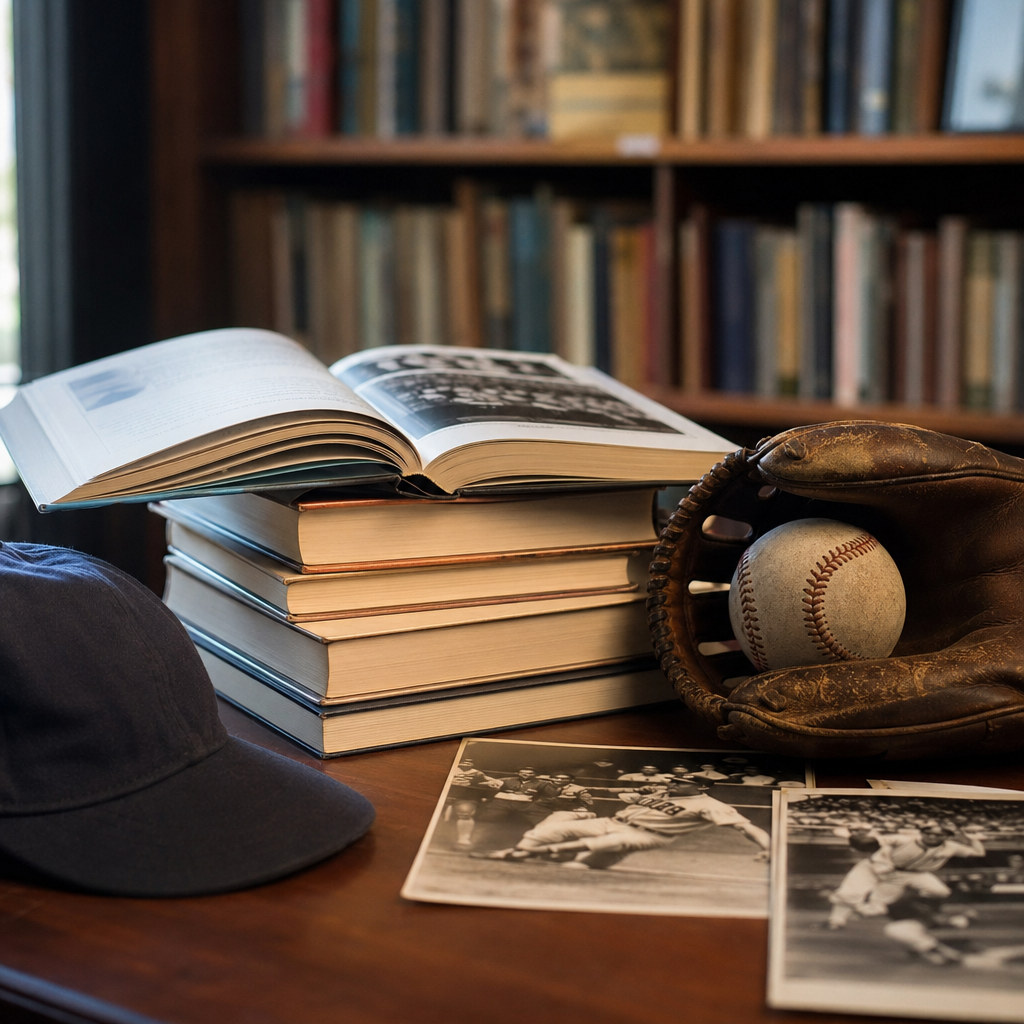
Baseball has always inspired writers, but literary tributes to baseball legends occupy a special place because they turn athletic achievement into cultural memory. In books, a legend is more than a record holder or Hall of Famer; he becomes a symbol shaped by biography, memoir, poetry, criticism, fiction, and even children’s literature. This matters within baseball in literature and film because books preserve context that highlight reels cannot: the feel of a pennant race, the sound of a crowded grandstand, the burden of race and class, and the private discipline behind public greatness. I have worked through shelves of baseball writing while building reading lists for fans, students, and collectors, and the most enduring titles do not simply praise famous players. They interpret them. A literary tribute explains why Babe Ruth represented modern celebrity, why Jackie Robinson embodied democratic struggle, why Roberto Clemente came to signify dignity and service, and why players such as Satchel Paige, Lou Gehrig, Mickey Mantle, Ted Williams, Hank Aaron, and Willie Mays continue to live vividly on the page. As a hub topic, miscellaneous literary tributes includes many forms: full-length biographies, essay collections, oral histories, historical novels, chapbooks, anthology pieces, graphic narratives, and commemorative volumes published after milestone anniversaries or deaths. Readers searching this subject usually want clear answers to practical questions. What counts as a tribute book? Which baseball legends receive the richest treatment? How do these books differ from standard sports biographies? Which titles belong on a serious reading path? The short answer is that a tribute book centers remembrance, interpretation, and legacy. It may still report facts rigorously, but its deeper purpose is to honor meaning. That makes the category broad, useful, and central to any sub-pillar on baseball in literature and film.
What literary tributes to baseball legends include
A literary tribute to a baseball legend is any book that uses literary craft to commemorate a player, manager, broadcaster, or icon whose influence extends beyond box scores. Traditional biographies fit here when they are written with interpretive ambition, but so do memoirs by teammates, books of reportage, regional histories, elegiac essays, and novels that fictionalize a famous figure without losing the truth of his cultural role. Roger Kahn’s work on the Brooklyn Dodgers, for example, functions as a tribute because it places players inside families, neighborhoods, and postwar America. Donald Honig’s compilations and Lawrence Ritter’s oral histories preserve voices that would otherwise disappear. In practice, the category thrives on variety. Some books reconstruct a career inning by inning; others focus on one summer, one city, or one moment of reckoning, such as Lou Gehrig’s farewell, Jackie Robinson’s debut, or Roberto Clemente’s final humanitarian mission. The distinguishing feature is not genre but intent. Tribute books ask readers to remember a legend fully: talent, flaws, era, and afterlife.
This breadth makes miscellaneous coverage valuable as a hub. A fan might arrive looking for the best Mickey Mantle biography and leave interested in poetry about the Negro Leagues or a children’s picture book about Clemente. Teachers may need age-appropriate entry points, while collectors may seek limited editions, anniversary reissues, or books with archival photographs and original newspaper excerpts. Film scholars also benefit because many screen portrayals of baseball legends are downstream from literary treatments. The language, myths, and character frames often begin in books. Once you recognize that, tribute literature becomes a map of how baseball legends are made in public memory.
Why baseball legends attract literary treatment
Baseball legends attract literary treatment because the game naturally produces narrative structure. A season is long enough for rise, collapse, reinvention, and redemption. Individual confrontations are discrete and dramatic. Statistics provide evidence, while radio, photography, and journalism supply atmosphere. For writers, that combination is ideal. The sport also intersects with major American themes: immigration, industrial labor, segregation, wartime service, masculinity, urban development, television, nostalgia, and commercialization. A great baseball life can therefore be written as social history as easily as sports history.
Jackie Robinson is the clearest example. A tribute to Robinson cannot stop with stolen bases or Rookie of the Year honors. It must address Branch Rickey’s strategy, the color line, press hostility, clubhouse tension, and Robinson’s later civil rights work. The player’s career becomes a lens on the nation. The same pattern applies elsewhere. Babe Ruth invites writing about celebrity capitalism and the Jazz Age. Hank Aaron opens discussion of consistency, racism, and the pressure of chasing Ruth’s record. Roberto Clemente demands attention to Latin American identity, media bias, and service beyond sport. Even legends associated mostly with style, such as Willie Mays, lead writers into questions of artistry, instinct, and racial geography in New York and San Francisco. Literary tributes endure because they help readers understand not just who these figures were, but what their careers meant.
Core forms of tribute books and how readers use them
Readers often ask which kind of baseball tribute book to choose first. The best answer depends on purpose. Biographies offer depth and chronology. Oral histories give atmosphere and multiple viewpoints. Essay collections are ideal for readers who want context without committing to one player for four hundred pages. Historical novels can humanize an era, especially for general readers or younger audiences, though they should be paired with factual works. Photo-driven commemorative books serve collectors and gift buyers well, but they vary widely in research quality. In my experience, the strongest reading path starts with one major biography, adds an oral history for texture, and then widens into themed works on the Negro Leagues, integration, wartime baseball, or a specific franchise.
| Type of tribute book | Best for | Typical strengths | Main limitation |
|---|---|---|---|
| Biography | Readers seeking a full career arc | Deep research, chronology, context, archives | Can be lengthy and interpretive |
| Oral history | Fans wanting authentic voices | Multiple perspectives, vivid anecdotes, clubhouse feel | Memories may conflict or soften facts |
| Essay collection | Broad exploration of several legends | Range, critical insight, flexible reading | Less sustained focus on one subject |
| Historical novel | General readers and crossover audiences | Emotional immediacy, strong scene building | Requires fact-checking against nonfiction |
| Illustrated commemorative volume | Collectors and gift buyers | Photos, ephemera, accessible overview | Sometimes light on analysis |
This range is why a miscellaneous hub matters. It lets readers branch from one mode to another without losing the central theme of honoring baseball legends through books. It also creates natural internal pathways to more focused articles on biography, fiction, children’s books, Negro Leagues literature, and baseball cinema adaptations.
Legends who dominate tribute literature
Some baseball figures generate far more literary attention than others, usually because they sit at the crossroads of greatness and symbolism. Babe Ruth remains foundational. Writers return to him because he changed how power hitting was understood and because his life embodied excess, reinvention, and media spectacle. Jackie Robinson attracts an enormous literature because his importance to civil rights is inseparable from his baseball career. Lou Gehrig inspires tributes grounded in stoicism, illness, and the power of farewell. Joe DiMaggio and Mickey Mantle anchor contrasting visions of the Yankees: grace and reserve versus wounded charisma and modern fame.
Willie Mays, Hank Aaron, and Roberto Clemente each produce a different kind of tribute tradition. Mays is often celebrated through language of wonder and completeness; writers struggle, productively, to describe a player who seemed to do everything beautifully. Aaron’s books emphasize disciplined excellence and the cruelty of racist backlash during the home run chase. Clemente’s literary afterlife is especially rich because he represents both athletic brilliance and humanitarian virtue. His death while carrying aid to earthquake victims in Nicaragua transformed biography into elegy. Satchel Paige, Josh Gibson, Cool Papa Bell, and other Negro Leagues stars are equally central because tribute literature helps correct historical neglect. Here the act of writing is partly restorative. Authors assemble newspaper archives, oral testimony, and league records to return these legends to the broader baseball story.
How tribute books shape memory, myth, and historical understanding
Every tribute book balances three forces: memory, myth, and history. Memory brings intimacy, especially in memoirs by family members, teammates, and beat writers who observed habits the public never saw. Myth supplies the grandeur that keeps a legend alive, but it can flatten complexity if left unchecked. History tests both against records, contemporary reporting, and social context. The best baseball books handle all three. They admit that legends are built partly by storytelling, then show why the stories persisted.
Consider the case of Babe Ruth calling his shot, a moment repeated in books for decades. Strong writers do not merely repeat the legend. They compare eyewitness accounts, film evidence, and later recollections, then explain why the scene mattered regardless of literal certainty. The episode captures Ruth’s role as a theatrical national hero. Similarly, books on Joe Jackson must navigate disputed guilt, folk memory, and archival evidence from the Black Sox scandal. Tribute literature is not valuable because it avoids ambiguity. It is valuable because it teaches readers how baseball memory works. That function is especially important for younger readers who know legends mainly through clips, merchandise, or social media fragments. Books restore scale and seriousness.
Standards for judging the best books on baseball legends
Not all commemorative books are equally useful. The best ones rest on recognizable standards. First, they use primary sources well: newspapers, letters, interviews, scorebooks, census records, Hall of Fame archives, and where available, team documents. Second, they demonstrate command of baseball history without trapping readers in jargon. Third, they situate a player in the realities of race, labor, health, travel, and media. Fourth, they acknowledge contradiction. Mickey Mantle can be both mesmerizing and self-destructive; Ty Cobb can be great, abrasive, and historically distorted by hostile biography. Fifth, strong tribute books are written with style. Baseball rewards rhythm on the page. You can hear the difference between flat chronology and prose that understands tension, pause, and release.
For readers building a serious library, publishers and reference tools matter. University presses often produce excellent historically grounded works. The Society for American Baseball Research has shaped research standards across the field, and the Baseball Hall of Fame’s archival materials remain indispensable. Major trade publishers bring wider reach, while children’s imprints can offer surprisingly rigorous introductions. Reviews in outlets such as The New York Times, The Wall Street Journal, Kirkus, and Library Journal help assess readability, but baseball-specific communities often notice factual errors faster. My practical rule is simple: check the notes, bibliography, and source diversity before trusting a glowing jacket description.
Building a reading path within this sub-pillar hub
As a hub page under baseball in literature and film, miscellaneous literary tributes should guide readers outward. Start with one representative legend whose significance is beyond dispute, such as Robinson, Ruth, or Clemente. Then add a book that broadens the frame: an oral history of an era, a Negro Leagues collection, or a franchise-centered work that shows how communities participate in hero making. After that, move into adjacent formats. A poetry collection can reveal the lyric possibilities of baseball memory. A graphic biography can introduce younger readers to complex history. A novel inspired by a real player can sharpen interest before a deeper nonfiction study. Film viewers should pair screen portrayals with books to see what cinema condenses, invents, or omits.
The main benefit of treating this page as a miscellaneous hub is discoverability. Readers rarely begin with a complete map. They search one name, one moment, or one recommendation. A well-built hub turns that isolated interest into a structured reading journey across biographies, memoirs, essays, fiction, youth literature, and adaptation studies. Baseball legends deserve that breadth because their literary presence is larger than any single shelf category.
Literary tributes to baseball legends matter because they preserve greatness with context, not just sentiment. The strongest books do more than celebrate stars. They explain how careers were shaped by race, region, economics, war, media, family, and memory. They also show why certain figures keep returning in American writing: Ruth as spectacle, Robinson as democratic courage, Gehrig as grace under suffering, Mays as artistry, Aaron as endurance, Clemente as service, Paige as invention, and Gibson as recovered brilliance. As a miscellaneous hub within baseball in literature and film, this topic should not be treated as a catchall afterthought. It is the connective tissue linking biography, fiction, oral history, children’s publishing, visual culture, and screen adaptation. If you want to understand how baseball legends become cultural legends, start with the books. Build a reading list that mixes major biographies with oral histories and era-based works, then follow the paths that fit your interests. That approach will deepen any baseball library and make every future article in this subtopic more useful.
Frequently Asked Questions
What makes literary tributes to baseball legends different from standard sports books?
Literary tributes stand apart because they do much more than list statistics, recount game results, or summarize a player’s career milestones. A standard sports book may focus primarily on chronology, records, and on-field performance, but a literary tribute asks a deeper question: why did this player matter, and why does that meaning endure? In these books, a baseball legend becomes a cultural figure as well as an athletic one. Writers use biography, memoir, essays, fiction, poetry, and criticism to explore not only what happened on the field, but how a player’s presence shaped fans, cities, eras, and national memory.
That difference is especially important in baseball, a sport already rich with nostalgia, storytelling, and symbolism. Literary works preserve atmosphere in a way box scores never can. They capture the pressure of a pennant race, the emotional texture of a clubhouse, the sound of a crowd swelling in a crucial inning, and the way a single player can come to represent resilience, grace, rebellion, or hope. In that sense, literary tributes transform achievement into narrative and memory into meaning. They help readers understand why certain legends continue to loom large long after their final at-bat.
Which types of books are most effective at honoring baseball legends?
There is no single best form, because different genres reveal different dimensions of a legend. Biography is often the most direct and comprehensive approach. A strong biography places the player in historical context, tracing childhood, career, public image, private struggles, and long-term influence. This format is especially effective when readers want a full portrait of someone like Jackie Robinson, Babe Ruth, Roberto Clemente, or Hank Aaron, because it connects athletic greatness with broader social and cultural currents.
Memoir offers something equally valuable but more intimate. When a teammate, family member, journalist, or fan writes about a baseball icon, the legend emerges through lived experience rather than historical distance. Poetry can be surprisingly powerful as well, because it distills emotion, myth, and memory into language that feels ceremonial and reflective. Fiction also plays a major role, particularly when authors create characters inspired by real stars or use legendary players as symbolic presences in larger stories about America, masculinity, race, ambition, or loss. Even children’s literature deserves attention, since it often introduces young readers to baseball heroes in ways that are accessible, morally resonant, and emotionally memorable. Together, these forms show that honoring a legend is not just about accuracy; it is about creating a lasting human portrait.
Why do baseball legends appear so often in literature compared with athletes in other sports?
Baseball lends itself to literature because the sport naturally invites reflection. Its rhythm is slower, its structure is episodic, and its history is deeply tied to ideas of memory, place, and generational continuity. Unlike faster sports that can be harder to pause and interpret moment by moment, baseball creates space for observation and storytelling. Every pitch carries tension, every season unfolds like a long novel, and every ballpark seems to generate its own mythology. Writers are drawn to that pace because it allows them to explore character, ritual, anticipation, and meaning in detail.
Baseball also occupies a unique position in American cultural history. Its legends are often attached not just to athletic excellence, but to larger themes such as immigration, segregation and integration, war, labor, celebrity, regional identity, and nostalgia for vanished eras. A player can symbolize far more than individual achievement. Jackie Robinson represents moral courage and social transformation. Lou Gehrig evokes dignity and endurance. Clemente embodies excellence, pride, and humanitarian legacy. Because baseball legends often stand at the intersection of sport and society, they provide rich material for writers who want to explore history through a personal and emotionally resonant lens.
How do literary tributes preserve aspects of baseball history that film or highlight reels cannot?
Film and highlights are powerful, but they are often selective and immediate. They show action, motion, and spectacle, yet they usually compress events into brief, dramatic moments. Books can preserve everything around those moments: context, interiority, contradiction, and consequence. A literary tribute can explain what a season felt like from week to week, what a player meant to a particular neighborhood, how newspapers described him at the time, how teammates understood his habits, and how public perception changed over decades. That layered context is essential when trying to understand why a legend truly mattered.
Books also excel at rendering subjective experience. They can describe fear, pressure, loneliness, confidence, ritual, and memory in ways visual media often cannot sustain. A reader may come away from a literary tribute with a deeper sense of how a player inhabited his era, how fans invested him with symbolic importance, and how later generations reinterpreted his legacy. In addition, books are uniquely suited to preserving language itself: the metaphors, voices, local idioms, and storytelling traditions that surrounded baseball in a given period. That is why literary tributes function as cultural archives. They do not merely replay greatness; they interpret it, situate it, and keep it alive.
What should readers look for in a great book about a baseball legend?
A great book about a baseball legend should balance factual authority with emotional insight. Accuracy matters, of course, but the strongest works go beyond reliable research. They reveal the person behind the reputation and the world that helped shape him. Readers should look for books that place statistics and achievements within a wider frame, connecting the player to teammates, communities, historical events, media narratives, and evolving cultural values. A truly memorable tribute does not treat greatness as self-explanatory; it investigates how greatness was seen, contested, celebrated, and remembered.
It is also worth paying attention to voice. The best books have a clear perspective and a sense of purpose, whether they are scholarly, poetic, personal, or narrative-driven. Strong writing can make familiar figures feel newly alive by showing contradictions, vulnerabilities, and defining moments with freshness and precision. Readers should also value books that resist turning legends into flat myths. Reverence is part of tribute, but complexity is what makes a portrait lasting. When a book captures both achievement and humanity, it does more than celebrate a baseball icon. It helps readers understand why that figure continues to matter in literature, in history, and in the imagination of the game.