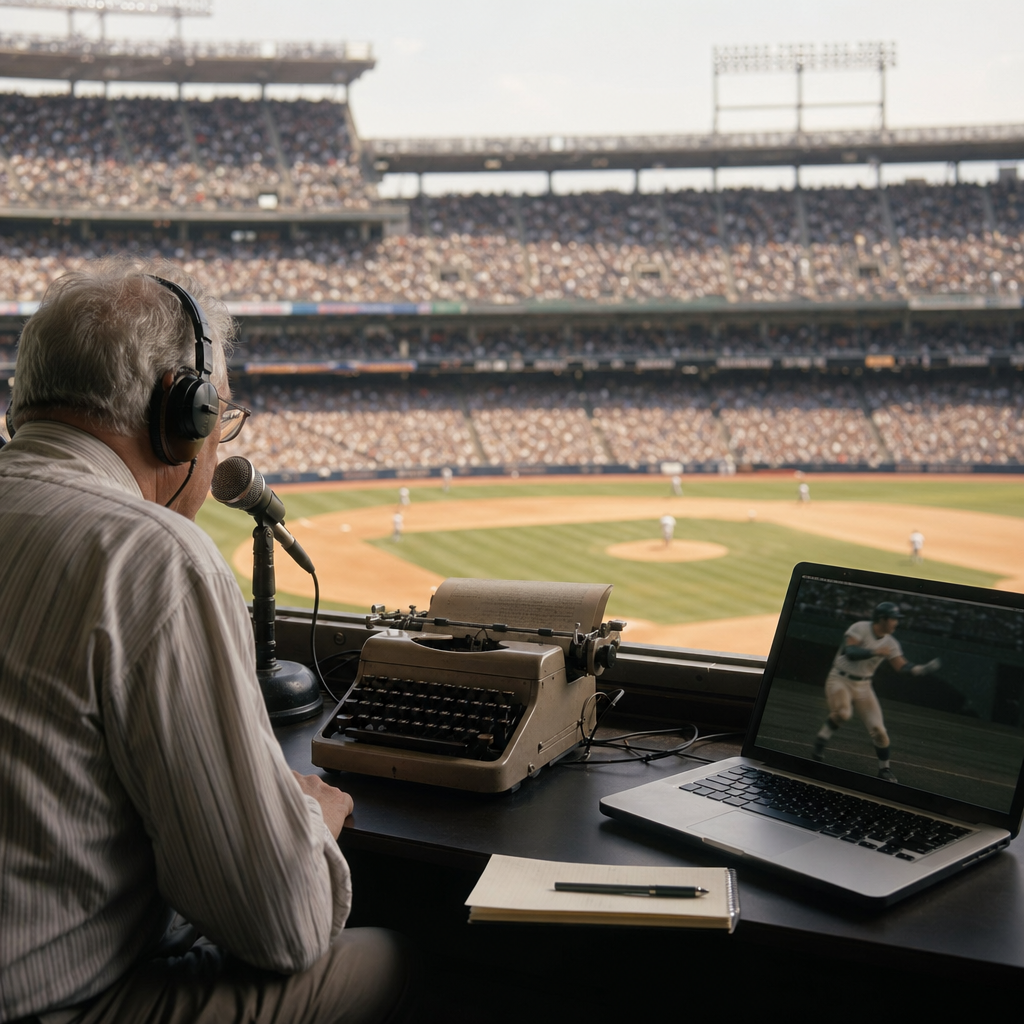
Baseball media has never merely documented the sport; it has interpreted, mythologized, commercialized, and continually reintroduced the game to new audiences through newspapers, radio, photography, television, film, books, and digital platforms. In this hub for the miscellaneous branch of Baseball in Literature and Film, historical perspectives in baseball media means examining how storytelling formats changed what fans knew, what they valued, and even how the sport itself was remembered. The phrase includes journalism, memoir, documentary, fiction, broadcast commentary, studio production, and the many hybrid forms that blur reporting with entertainment. Understanding that evolution matters because baseball’s cultural identity was built as much by writers, announcers, and filmmakers as by players on the field. I have worked through archival game stories, early newsreels, broadcast transcripts, and modern streaming packages, and the pattern is clear: each medium reshaped baseball history by choosing which voices sounded authoritative, which moments became iconic, and which communities were centered or overlooked.
That long view helps readers navigate this subtopic with precision. Baseball media is not one thing. A dead-ball era newspaper column served a different purpose than a 1950s radio call, a Ken Burns documentary episode, a Sabermetric blog post, or a modern prestige film drawing on nostalgia and race, labor, or small-town memory. Yet all belong in the same conversation because they answer the same core questions. How has baseball been represented over time? Which technologies changed access to the game? Why do some narratives endure while others disappear? What role did commercialization, regional identity, nationalism, and celebrity play? This article maps those questions and sets up the wider miscellaneous cluster by showing how media history connects literature, cinema, documentary practice, fandom, and historical memory. If you want context for every related piece in this section, start here, because the history of baseball media is the history of how America learned to see the game.
Print Origins and the Invention of Baseball Narrative
Baseball’s first mass media home was print, and early newspapers established the language that still shapes the sport. Nineteenth-century game accounts did more than relay scores; they standardized terminology, elevated clubs into civic symbols, and taught readers how to interpret strategy and character. Henry Chadwick, often called the father of baseball journalism, helped popularize the box score and statistical recordkeeping. That innovation mattered because it translated a fluid contest into a reproducible text that could travel far beyond the ballpark. Once numbers could be printed consistently, fans could compare players, debate merit, and build memory around evidence instead of rumor alone.
Print also encouraged a distinctive blend of fact and flourish. Beat writers, columnists, and magazine essayists gave baseball an expansive prose tradition, where a pennant race could become a morality tale and a player’s slump could read like serialized drama. By the early twentieth century, outlets such as The Sporting News functioned as industry authorities, while metropolitan dailies shaped local baseball consciousness in New York, Chicago, St. Louis, Boston, and beyond. These publications created recurring archetypes: the gritty catcher, the cerebral manager, the fading veteran, the natural-born hitter. Later literature and film borrowed heavily from these templates, often without acknowledging how deeply journalism had already scripted the game’s emotional vocabulary.
Print history also reveals exclusions. Black newspapers like the Pittsburgh Courier and Chicago Defender were essential to covering the Negro Leagues when mainstream white outlets minimized or ignored them. Their reporting preserved box scores, player reputations, travel realities, and community significance that would otherwise be badly fragmented in the archive. For anyone studying baseball in literature and film, this is a foundational lesson: media history is inseparable from power. The record reflects who had institutional backing, whose audience was considered valuable, and whose stories required alternative channels to survive.
Radio, Voice, and the Intimate National Pastime
Radio changed baseball by replacing the silent printed recap with a living voice. Once fans could hear an announcer narrate pitch by pitch, baseball became immediate, domestic, and emotionally shared across distance. In practical terms, radio widened the audience. Families gathered in kitchens and living rooms, workers listened in stores and taxis, and regional fandom intensified because local announcers became trusted companions. The best broadcasters did not simply describe action. They built atmosphere, pacing, suspense, and identification. Their cadences taught listeners what mattered in a game and how to feel about it.
From a historical perspective, radio mattered because it rewarded imagination. Unlike television, it required the listener to visualize the diamond from verbal cues. That made language central. Broadcasters such as Red Barber, Mel Allen, and Vin Scully became narrative stylists, able to move from scorekeeping to anecdote, humor, silence, and reflection without losing clarity. Scully in particular demonstrated how baseball broadcasting could carry literary qualities: scene setting, character detail, restraint, and a sense of time unfolding. His calls remain important not simply because they were accurate, but because they fused journalism with oral storytelling at a high level.
Radio also introduced new tensions. Teams worried at times that home broadcasts would reduce attendance, leading to blackout practices and uneven access. Networks and sponsors recognized baseball as premium programming, linking the game to consumer culture through advertising reads and branded segments. That commercial layer never disappeared; it became part of the media form itself. Modern baseball coverage, from pregame shows to streaming integrations, still follows structures that radio normalized: personality-driven presentation, sponsor-supported continuity, and the idea that fans return as much for the voice as for the event.
Film, Newsreels, and the Rise of Baseball Mythmaking
Long before prestige sports documentaries, moving images helped fix baseball in public memory. Early newsreels offered highlights, ceremonial first pitches, World Series glimpses, and player appearances that translated the sport into national spectacle. These short films were often selective and promotional, but that selectivity is historically important. Audiences did not see a whole game; they saw curated moments designed to symbolize excellence, drama, patriotism, or celebrity. In other words, film trained viewers to think of baseball through montage and emblematic images, a habit that later fiction films and documentaries would refine.
Baseball movies expanded that process by turning the game into metaphor. Films such as The Pride of the Yankees, Bang the Drum Slowly, Field of Dreams, A League of Their Own, Moneyball, and 42 each capture a different historical concern: heroism, mortality, memory, gender, analytics, and racial integration. None should be read as transparent history. Each compresses events, simplifies timelines, and heightens conflict. Yet that does not make them trivial. Popular films often become the public’s first historical reference point, which means their narrative choices directly affect collective understanding.
Working with baseball film history, I have found that the most revealing question is not whether a movie is perfectly accurate, but what version of baseball history it needs in order to function. Field of Dreams requires baseball as spiritual inheritance. Moneyball requires baseball as inefficient market corrected by analysis. A League of Their Own requires baseball as a site where women’s labor was real but underremembered. These frames shape subsequent books, classroom discussions, and fan expectations. Film does not just depict baseball history; it actively prioritizes one interpretation over another.
Television, Celebrity, and the Nationalized Game
Television transformed baseball from a primarily local experience into a national visual product. The medium emphasized body language, replay, crowd reaction, and graphic framing in ways print and radio could not. National broadcasts of the World Series and later regular-season marquee games amplified star power, helping certain players become recognizable far beyond their home markets. Television also influenced style. Camera placement highlighted pitching mechanics, defensive artistry, and managerial gesture, while slow motion made split-second athletic actions newly legible.
As television rights grew in value, the economics of baseball media changed with them. Revenue from broadcast deals shaped franchise finances, scheduling decisions, and league priorities. Cable superstations, especially WGN and TBS, allowed teams like the Cubs and Braves to build broad national fan bases untethered from geography. Regional sports networks then deepened local loyalty with near-daily coverage, pregame analysis, and postgame debate. This was more than distribution. It was identity production. Fans came to know a team through recurring studio talent, theme music, graphics packages, and a season-long narrative arc built night after night.
| Medium | What It Added | Representative Effect on Baseball Culture |
|---|---|---|
| Newspapers | Box scores, columns, serialized reporting | Standardized statistics and civic rivalry |
| Radio | Live voice, immediacy, shared listening | Created intimate announcer-fan relationships |
| Newsreels and film | Curated images and visual memory | Turned key moments into enduring myths |
| Television | Replay, close-ups, national reach | Expanded celebrity and reshaped fandom |
| Digital platforms | On-demand access, data visualization, social sharing | Fragmented audiences while multiplying voices |
Television had limits too. Broadcasts tended to privilege major markets, familiar franchises, and conventional storylines over broader historical context. For years, coverage often reduced labor disputes, race, or ownership politics to brief interruptions in the game product. Even so, television gave baseball some of its most durable public memories: Bill Mazeroski’s home run, Hank Aaron’s 715th, Kirk Gibson in 1988, Cal Ripken Jr.’s streak game, and countless postseason images replayed until they became historical shorthand. That repetition is one of television’s defining powers. It turns an event into a shared archive.
Documentary, Biography, and the Archive of Memory
Documentary and biography occupy a crucial middle ground between journalism and art. They promise factual grounding, but they still depend on structure, selection, and point of view. Baseball documentaries often lean on photographs, voice-over, oral history, and period music to produce authority and nostalgia at the same time. Ken Burns’s Baseball is the most cited example because it synthesized an enormous archival range into a sweeping national narrative. Its influence is undeniable. It introduced many viewers to key figures, linked the sport to broader American history, and modeled the form of the prestige historical sports documentary.
At the same time, later critics have correctly noted its limitations, especially around proportional attention, racial framing, and the weight it gave nostalgia. That criticism is useful because it teaches readers how to analyze baseball media responsibly. No documentary is complete. A strong one creates a coherent account from incomplete evidence. The same is true of biography. Robert Creamer’s Babe books, Roger Kahn’s The Boys of Summer, David Halberstam’s October 1964, and Doris Kearns Goodwin’s Wait Till Next Year each present baseball through a distinct interpretive lens: celebrity, generational memory, season-as-history, and family life. These works are essential not because they are neutral, but because they show how baseball writing turns lived experience into durable narrative form.
For this miscellaneous hub, documentary and biography matter because they connect all neighboring topics. They influence film adaptation, shape classroom reading lists, provide source material for screenwriters, and preserve voices unavailable anywhere else. They also model source use. Interviews, box scores, contracts, letters, and footage are not interchangeable. Good baseball history weighs them differently, checks memory against records, and recognizes when legend has outrun documentation.
Digital Media, Analytics, and Fragmented Modern Fandom
The digital era has produced the biggest structural shift in baseball media since television. Websites, podcasts, streaming services, social media, newsletters, and video platforms ended the old scarcity model in which a few newspapers and broadcasters controlled most public conversation. Fans now encounter baseball through highlight clips, Statcast visualizations, beat reporters on X, long-form newsletters on Substack, prospect videos on YouTube, and data-rich analysis from FanGraphs, Baseball Prospectus, and MLB’s own media ecosystem. This abundance democratized commentary, but it also fragmented attention. There is no single baseball public anymore; there are overlapping publics with different levels of statistical fluency, historical interest, and emotional investment.
Analytics changed baseball media language as much as front offices changed roster construction. Terms like WAR, wRC+, FIP, launch angle, spin rate, and framing moved from specialist circles into mainstream broadcasts and articles. The best modern outlets translate those concepts without treating numbers as self-explanatory. A pitcher’s induced vertical break or a hitter’s chase rate only matters when tied to mechanics, tactics, and outcomes. When media does this well, it improves fan understanding. When it does it poorly, it mistakes jargon for insight.
Digital platforms also corrected some blind spots of older baseball media by giving historians, independent researchers, women writers, and writers of color more direct access to audiences. Projects on Negro League statistics, women’s baseball history, labor relations, disability, queer fandom, and Latin American baseball pathways gained visibility through digital publishing that legacy sports pages rarely offered consistently. The tradeoff is uneven quality control. The modern reader benefits from more voices, but must judge sourcing, context, and expertise carefully.
How to Read Baseball Media Historically
To read baseball media historically, start with medium, moment, and motive. Ask what technology made the piece possible, what audience it served, and what commercial or editorial incentives shaped it. A 1910 newspaper profile, a 1947 radio call, a 1970s clubhouse memoir, and a current streaming documentary may describe the same sport, but they do not operate under the same assumptions. Next, separate event from interpretation. Box scores, transaction logs, and contemporaneous reporting establish baseline facts; commentary and later retellings explain what those facts were made to mean. Finally, compare accounts across communities. Mainstream dailies, Black press archives, local broadcasts, league films, and fan-produced media often preserve sharply different versions of the same baseball story.
This hub exists to support that kind of reading across the broader Baseball in Literature and Film topic. Use it as a starting map for related articles on sportswriting, baseball memoir, documentary traditions, adaptation, nostalgia on screen, race and representation, women in baseball media, and the influence of new technologies on storytelling. The central takeaway is simple: baseball media evolved from recordkeeping into a complex system of narration that defines how the game is remembered. If you want to understand baseball’s place in culture, study not just the innings and outcomes, but the writers, voices, cameras, and platforms that taught generations what baseball was supposed to mean. Explore the connected articles in this subtopic and read them with history, form, and perspective in mind.
Frequently Asked Questions
What does “historical perspectives in baseball media” actually mean?
“Historical perspectives in baseball media” refers to the study of how different forms of media have shaped public understanding of baseball over time. It is not limited to reporting scores or documenting famous games. Instead, it looks at how newspapers, radio broadcasts, magazines, photography, newsreels, television, film, biographies, novels, documentaries, and now digital platforms have all influenced the way the sport is interpreted and remembered. Each medium highlights certain details, values certain voices, and frames the game in specific ways, which means baseball history is always being filtered through storytelling choices.
In practical terms, this perspective asks important questions: How did newspaper writers turn players into legends? How did radio create emotional intimacy between fans and teams? How did television change the visual language of the sport? How have films and books transformed baseball into a symbol of nostalgia, identity, race, community, and national memory? By examining those questions, readers can see that baseball media has never been neutral. It has actively participated in constructing the meaning of the game for different generations.
How has baseball media evolved from print to digital platforms?
The evolution of baseball media mirrors broader changes in communication technology, but baseball offers an especially rich case because the sport has long depended on narration, statistics, and storytelling. In the print era, newspapers were central. Beat writers and sports columnists shaped fan opinion, established rivalries, and often elevated players into folk heroes. Box scores, game recaps, feature stories, and serialized commentary gave readers a structured way to follow teams and understand the season as an unfolding narrative.
Radio then transformed baseball into a more immediate and intimate experience. Fans who could not attend games suddenly had access to live play-by-play, and broadcasters became trusted interpreters of the action. Radio relied on descriptive language, suspense, pacing, and personality, making the listener an imaginative participant. Television later shifted the experience again by emphasizing visual spectacle. Camera angles, instant replay, on-screen graphics, and color broadcasts changed what fans noticed and valued, from pitching mechanics to defensive positioning to emotional reactions in the dugout.
In the modern digital era, baseball media has become faster, more fragmented, and more interactive. Fans can now consume highlights in seconds, track advanced metrics in real time, revisit historical footage instantly, and engage with commentary across social media, podcasts, streaming services, and independent platforms. This shift has democratized baseball storytelling by allowing more voices to participate, but it has also intensified competition for attention. As a result, the sport is no longer mediated by a small number of gatekeepers; it is continuously reframed by journalists, analysts, historians, fans, creators, and algorithms.
Why is baseball especially important in discussions of media history and storytelling?
Baseball occupies a unique place in media history because its pace, structure, and cultural role lend themselves unusually well to storytelling. Unlike faster, more continuous sports, baseball unfolds in discrete moments, creating natural pauses for commentary, analysis, memory, and anticipation. That rhythm made it ideal for newspaper prose, radio narration, and televised drama. Broadcasters and writers could build tension pitch by pitch, inning by inning, and season by season, turning routine contests into compelling narratives with heroes, villains, streaks, slumps, and redemption arcs.
Baseball is also deeply tied to American cultural identity, which has made it a frequent subject in literature and film. It has been used to explore themes such as immigration, race, masculinity, nostalgia, labor, regional identity, family tradition, and the tension between business and myth. Because of this symbolic flexibility, baseball media often says as much about the society producing it as it does about the sport itself. A newspaper feature from one era, a wartime radio broadcast, a postwar documentary, or a modern streaming series can each reveal contemporary values and anxieties.
For historians and media scholars, baseball therefore serves as a valuable lens. It demonstrates how media does not simply preserve events but organizes them into meaning. The stories told about baseball often become inseparable from baseball itself, which is why examining its media history is essential for understanding both the game and the culture around it.
How have literature and film influenced the way baseball is remembered?
Literature and film have had a profound impact on baseball memory because they do more than recount facts; they interpret the sport emotionally and symbolically. Books, essays, memoirs, and novels have long treated baseball as a vehicle for reflecting on childhood, memory, place, disappointment, ambition, and the passage of time. Some works focus on realism, capturing the daily grind of players and teams, while others elevate baseball into myth, using the game as a metaphor for national hopes, personal identity, or lost innocence. In both cases, literature helps turn baseball from a sequence of events into a meaningful cultural language.
Film extends that process through image, sound, and performance. Baseball movies and documentaries often shape public memory more strongly than archival facts because they offer emotionally coherent versions of the past. They condense complex histories into memorable scenes, recognizable character types, and powerful visual motifs: the empty ballpark, the summer sunset, the final at-bat, the father-and-child catch, the underdog team, the overlooked player. These images become part of how audiences remember baseball, even when they were not present for the events being portrayed.
This influence can be illuminating, but it also requires critical attention. Literature and film can recover neglected stories and deepen appreciation for the sport’s human dimensions, yet they can also oversimplify, romanticize, or selectively erase difficult aspects of baseball history, including segregation, labor conflict, commercial pressures, and inequity. That is why historical analysis of baseball media matters: it helps distinguish between memory shaped by art and history grounded in broader evidence, while still appreciating the power of storytelling to keep the game culturally alive.
What can readers learn by studying how baseball media has changed over time?
Readers can learn that the history of baseball is inseparable from the history of how baseball has been presented to the public. Studying media change reveals that fans in different eras did not simply receive more or less information; they received different kinds of baseball altogether. A fan relying on a morning newspaper experienced the sport differently from one gathered around a radio, one watching nationally televised games, or one following live analytics and highlight clips on a phone. Each format changes what feels important, what becomes memorable, and how emotional attachment is formed.
This kind of study also shows how media has influenced baseball’s broader cultural reputation. Coverage has helped define which players become iconic, which teams become dynasties, which controversies become central to public debate, and which stories are left at the margins. It reveals the role of media in creating nostalgia, reinforcing stereotypes, expanding access, and commercializing fandom. At the same time, it highlights the growing complexity of historical interpretation, especially as modern audiences revisit earlier narratives with new questions about race, gender, labor, technology, and authorship.
Ultimately, examining baseball media over time teaches readers to see the sport as both an athletic contest and a continuously edited cultural story. That perspective enriches appreciation of baseball itself, because it makes clear that every era has watched, heard, read, and remembered the game in its own way. Understanding those shifts is essential for anyone interested in baseball in literature and film, sports history, media studies, or the enduring relationship between popular culture and collective memory.