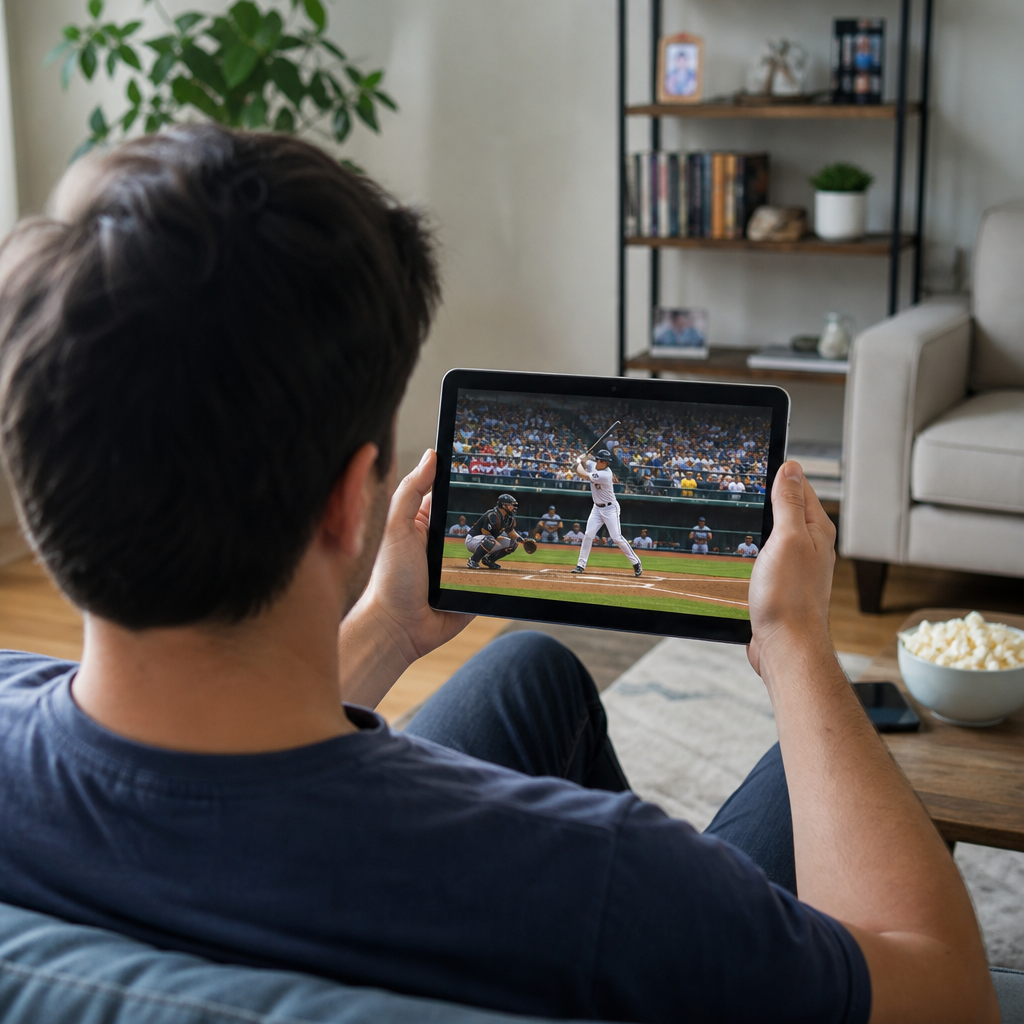
Streaming the Diamond: How Online Platforms are Changing Viewership begins with a simple reality: baseball is no longer tied to a living room television, a cable bundle, or a fixed first pitch on a regional sports channel. Broadcasting evolution now describes a broader shift in how games are distributed, discovered, watched, discussed, and monetized across digital platforms. For baseball, that shift has been especially important because the sport depends on long seasons, local loyalty, out-of-market curiosity, and a rhythm that rewards deep engagement rather than occasional tune-in moments.
In practical terms, online platforms include league-operated streaming services, network apps, subscription bundles, virtual multichannel providers, social video outlets, connected TV devices, and direct-to-consumer products sold by teams or media companies. Viewership no longer means only average minute audience measured by linear ratings. It also includes concurrent streams, authenticated app sessions, watch time, completion rate, second-screen activity, churn, subscriber acquisition, and the ability to turn a casual clip viewer into a recurring paid customer. I have worked on digital sports publishing and audience strategy long enough to see that this measurement change is not cosmetic; it has altered what broadcasters make, how rights are sold, and what fans expect every night.
This matters because baseball’s economics and cultural reach are tightly connected to distribution. National windows on Fox, ESPN, TBS, Apple TV+, Roku, Amazon channels, and league products shape sponsorship value and brand visibility. Local game access influences attendance interest, merchandise demand, and fan retention over a 162-game season. Younger viewers often encounter baseball first through highlights on YouTube, TikTok, Instagram, or X before they ever sit through nine innings. Older fans still want reliable live coverage, but they increasingly use connected TVs, mobile apps, and cloud DVR features. The hub topic of broadcasting evolution is therefore not just about technology. It is about access, rights, discoverability, production workflows, fan behavior, and the future business model of the sport.
To understand how online platforms are changing baseball viewership, it helps to break the issue into six questions fans and industry operators ask most often. How did the sport move from cable dominance to streaming distribution? What has changed in viewing habits and audience metrics? Why are blackouts and regional sports network instability accelerating change? How are production and presentation evolving for digital audiences? What revenue opportunities and risks come with direct streaming? And what should teams, leagues, and media companies do next? As a hub for broadcasting evolution, this article answers those questions clearly and gives a framework that connects local rights, national strategy, fan experience, and long-term growth.
From appointment television to platform distribution
For decades, baseball broadcasting followed a stable hierarchy. National networks carried marquee games, regional sports networks handled daily local coverage, radio served commuters and traditional fans, and highlights reached everyone else through nightly sports shows. That model rewarded consistency. A fan knew where to find the team, advertisers bought dependable inventory, and rights holders could project revenue years ahead. The weakness was rigidity. Distribution depended on cable carriage, and younger viewers who never signed up for pay TV were effectively outside the system.
Streaming broke that structure by separating content from a single pipe. MLB.TV proved early that out-of-market baseball had strong digital demand if quality was high and the archive was deep. Fans living away from their home market could watch nearly every game on phones, laptops, consoles, and smart TVs. The product also trained audiences to expect pause, rewind, condensed games, alternate audio, and seamless switching across devices. In other words, convenience became part of the value proposition, not a bonus feature.
As broadband improved and connected TV adoption expanded, rights holders realized streaming was not just a companion to television but a primary delivery channel for many households. National packages began to include exclusive digital windows. Apple’s Friday night games and Roku’s Sunday package showed that baseball could be positioned as a subscriber acquisition tool for tech platforms, not merely a cable rating asset. This is a fundamental point in broadcasting evolution: the game itself now helps platforms compete for users, data, and time spent.
How online platforms are changing baseball viewership behavior
Online platforms change viewership by increasing choice and reducing friction. Fans can watch full games live, jump into a late inning, view a condensed replay in under twenty minutes, or follow key moments through real-time clips. That flexibility is especially meaningful in baseball because the season is long and the schedule is dense. A supporter who cannot commit three hours every night can still maintain a relationship with the team through highlights, leverage-index alerts, and on-demand recaps.
The result is a more fragmented but often more engaged audience. Linear television historically optimized for one large simultaneous crowd. Streaming supports many modes of fandom. One viewer watches every pitch on a smart TV. Another follows Statcast clips on mobile and opens the full stream only in the ninth inning. Another listens to the radio call synced with a muted video feed. From an audience strategy perspective, all three behaviors matter because each can be measured, monetized, and nurtured differently.
Baseball has also benefited from interface improvements that make a slow-building sport easier to follow digitally. Watch bars show inning state, probability charts provide context, and personalized notifications surface milestones like a no-hitter through six or a pitcher nearing 100 strikeouts on the season. These tools answer a common fan question directly: why should I tune in right now? When done well, they increase session starts without forcing viewers to begin at first pitch.
| Viewing Mode | Typical Platform | Fan Benefit | Business Impact |
|---|---|---|---|
| Full live game | Connected TV app | Best immersive experience | Higher ad value and watch time |
| Condensed replay | League app or YouTube | Fast catch-up after work | Retention and archive usage |
| Live highlights and clips | Social platforms | Low-commitment discovery | Top-of-funnel audience growth |
| Audio plus data overlay | Mobile app | Portable, low-bandwidth access | Broader daily engagement |
These changes are visible in real-world baseball consumption. A fan in London can discover a star through short-form video, subscribe to MLB.TV for postseason races, and later buy a team-specific package if local rights permit. A displaced fan in Denver can follow the Orioles daily without cable. A commuter can start a Yankees game on a phone, continue on a subway platform through audio, then finish on a connected TV at home. The core game has not changed, but the path into it has.
Blackouts, regional sports networks, and the push toward direct access
No discussion of baseball broadcasting evolution is complete without blackouts and the regional sports network crisis. For years, the league’s digital promise was constrained by local restrictions designed to protect cable exclusivity. That meant the most motivated fans, those living inside a team’s market, often had the hardest time streaming legally without a full pay TV package. In user research, this was consistently the most frustrating issue because it violated a basic expectation: if I am willing to pay, I should be able to watch my local team.
The financial pressure on regional sports networks accelerated the need for alternatives. Cord-cutting reduced subscriber fees, distributors pushed back on carriage costs, and some RSN operators faced bankruptcy or restructuring. When Diamond Sports Group entered bankruptcy proceedings, it highlighted a structural weakness in local sports media: rights fees had been built for a cable universe that was shrinking. Teams needed continuity of distribution, and leagues needed a path that did not depend entirely on legacy bundles.
Baseball’s response has moved toward direct-to-consumer access in selected markets, with the league taking over production and distribution in some cases. That matters because control over the stream means control over customer data, packaging, user experience, and upsell opportunities. It also allows simpler products. A team can offer local streaming, annual subscriptions, monthly options, or bundles with out-of-market access. The tradeoff is that replacing guaranteed cable affiliate revenue with subscriber revenue is difficult unless pricing, marketing, and retention are handled well.
For fans, the best outcome is straightforward availability with clear rules. For rights holders, the challenge is balancing reach and revenue. A lower-priced direct package may expand audience but generate less immediate cash than traditional carriage. Yet broader access can support long-term gains through ads, sponsorships, merchandise, and stronger fan habit. In baseball, habit is crucial. Miss too many April and May games because access is confusing, and a marginal fan may never become a regular summer viewer.
Digital production is changing the presentation of the game
Streaming is not just a new pipe for the same broadcast. It is changing how baseball is produced and presented. Digital-first telecasts can customize graphics, integrate advanced data, and serve alternate feeds for different audiences. One feed may emphasize traditional play-by-play and booth analysis. Another may lean on Statcast metrics such as exit velocity, expected batting average, chase rate, and pitch movement. A third may target newer fans with simpler explainers and more camera cuts. Because digital distribution is software-driven, these options are easier to test than in a fixed linear schedule.
Production teams are also using cloud-based workflows, remote replay systems, and IP delivery to reduce cost and increase flexibility. During recent seasons, many sports broadcasters expanded REMI models, where more of the production crew works from centralized hubs instead of traveling. That can lower expenses and standardize quality across multiple games in one night. The downside is that some productions lose local texture when fewer staff members are in the ballpark. Good operators compensate by keeping strong on-site camera coverage, reporter access, and communication between venue and control room.
Enhanced data has improved storytelling when it serves the moment instead of overwhelming it. Hawkeye tracking and Statcast can explain why a sinker generated weak contact or why an outfielder’s route was unusually efficient. Used sparingly, those tools deepen appreciation for skill. Used constantly, they can distract from tension and pace. The strongest digital baseball broadcasts understand that the product is not a spreadsheet. Fans want context that makes live action more legible, not endless overlays competing with the game.
The business model behind streaming baseball
Online platforms are changing baseball viewership because they change incentives. In the cable era, rights value was heavily driven by subscriber fees paid by many households that did not actively watch games. In streaming, payment is more directly tied to actual customer choice, whether through subscriptions, advertising, bundles, or hybrid models. That puts pressure on every part of the funnel: awareness, conversion, product satisfaction, and retention.
Subscription video on demand works well when a service offers enough live inventory and archive value to justify recurring payment. Baseball has an advantage here because the season is large and the habit potential is high. Ad-supported models can also work, especially for free games, highlights, shoulder programming, and FAST channels that recycle classic games and studio coverage. The smartest operators use a layered model: free clips for discovery, affordable entry products for local fans, premium packages for heavy users, and sponsorship integration across all tiers.
Advertising within streamed baseball is becoming more targeted and measurable. Dynamic ad insertion allows different households to receive different spots during the same game stream. That improves relevance and can raise yield, particularly for regional advertisers who care about geography and frequency. Sponsorship inventory now extends beyond the traditional commercial break into pregame shows, data visualizations, branded segments, and interactive features. Measured correctly, these units can outperform broad linear buys because attribution is stronger.
Still, streaming economics are not automatically superior. Rights costs remain high, churn can be brutal outside the season, and customer acquisition through paid marketing is expensive. Technical failures also damage trust quickly. A buffering local stream on Opening Day creates more backlash than a niche drama app glitch because sports is live, communal, and time-sensitive. Any serious baseball streaming strategy therefore needs robust content delivery networks, responsive customer support, device compatibility testing, and clear subscriber communication.
What comes next for broadcasting evolution in baseball
The next phase of broadcasting evolution will likely center on simplification, personalization, and greater control by leagues and teams over local distribution. Fans do not want a maze of exclusions, separate logins, and inconsistent start points. They want to know where the game is, what it costs, whether it works on their television, and whether they can watch replays without spoilers. Products that solve those basics will win share even before adding advanced features.
Personalization will become more important as platforms learn from viewing data. Expect smarter alerts, better recommendation systems, alternate commentary options, and interfaces tailored to fan intensity. A diehard may want pitch charts, bat tracking, and minor league call-up notes. A casual viewer may want key moments, rivalry framing, and explanatory graphics. The same stream can increasingly support both audiences if product design is disciplined.
There is also room for broader distribution experiments. Local over-the-air partnerships combined with streaming subscriptions can maximize reach while preserving premium options. Team bundles with ticket benefits or merchandise credits can reduce churn. International windows can be packaged around stars and time-zone friendly replays. Every one of these ideas reflects the same truth: baseball viewership grows when access is easy, context is strong, and the product fits real fan schedules.
Streaming the Diamond: How Online Platforms are Changing Viewership ultimately shows that broadcasting evolution is reshaping baseball from the rights deal to the living room screen. The key takeaway is not that television disappears, but that digital distribution now defines convenience, measurement, and audience growth. Fans gain flexibility, leagues gain data, and broadcasters gain new ways to package and monetize the game. The winners will be the organizations that remove friction, respect local loyalty, and build products around how people actually watch. If you are mapping the future of baseball media, start with access, trust the data, and design every broadcast for a fan who expects the game to meet them wherever they are.
Frequently Asked Questions
How have online streaming platforms changed the way baseball fans watch games?
Online streaming platforms have fundamentally changed baseball viewership by making games more flexible, accessible, and personalized than traditional television ever allowed. Instead of planning an evening around a regional sports network schedule or a cable package, fans can now watch live games on phones, tablets, laptops, smart TVs, and connected devices from almost anywhere. That shift matters in a sport like baseball, where the season is long, the audience is diverse, and viewing habits often vary between die-hard local followers and casual national fans. Streaming has also introduced on-demand behavior into a live sports environment, allowing viewers to jump between games, catch condensed replays, watch highlights instantly, and follow key moments in real time through apps and social platforms.
Just as important, streaming platforms have changed discovery. Fans do not only find games through a fixed channel guide anymore. They encounter live matchups through platform recommendations, league apps, social clips, push notifications, and integrated sports hubs. That means baseball is no longer confined to habitual television viewers; it can reach younger audiences who are more likely to consume sports through digital ecosystems. In practical terms, streaming has turned baseball from a scheduled broadcast product into an always-available media experience, where the game itself, pregame coverage, postgame analysis, stats, highlights, and fan conversation all exist in the same connected environment.
Why is streaming especially important for baseball compared with other sports?
Streaming is especially important for baseball because the structure of the sport makes digital distribution unusually valuable. Baseball plays a long regular season with games nearly every day, which creates a constant demand for convenient access. Fans do not just tune in for one weekly event; they often want regular contact with their team across months of the season. Traditional television models can struggle to serve that kind of modern, mobile, frequent engagement, especially when viewers are commuting, traveling, working irregular hours, or living outside their team’s home market. Streaming solves many of those friction points by allowing fans to watch from multiple devices and locations without being tied to one screen or one room.
Baseball also depends heavily on local loyalty and out-of-market interest at the same time. A fan may deeply follow a hometown team while also tracking a favorite player, a fantasy roster, or a playoff race across the league. Streaming platforms support that layered behavior much better than older broadcast systems. They make it easier to move between local games, national packages, highlights, advanced stats, and alternate feeds. Because baseball is rich in data, history, and storytelling, digital platforms can also enhance the experience with overlays, interactive features, and personalized content that deepen engagement rather than simply replacing a TV signal with an internet feed.
What impact has streaming had on local broadcasts, regional sports networks, and blackout concerns?
Streaming has put significant pressure on the traditional local broadcast model, especially regional sports networks that long served as the main home for regular-season baseball coverage. For decades, that system relied heavily on cable subscriptions and territory-based rights agreements. As more households cut the cord and move away from expensive cable bundles, the old model has become less stable. Teams, leagues, and media companies are now trying to balance legacy contracts with a growing demand for direct-to-consumer access. That transition has created both opportunity and confusion, particularly for fans who expect digital convenience but still encounter restrictions shaped by older business arrangements.
Blackout rules remain one of the biggest frustrations in the streaming era because they can limit local access even when fans are willing to pay. In many cases, streaming technology is not the problem; rights structures are. Local exclusivity agreements, distribution contracts, and market boundaries can still prevent fans from watching games smoothly in their own area. At the same time, the pressure created by streaming has made those policies harder to defend, since consumers increasingly compare sports access with the simplicity of entertainment platforms. The broader trend is clear: baseball’s future depends on making local and out-of-market viewing easier, more transparent, and less fragmented. Streaming has not fully solved those issues yet, but it has made them impossible to ignore.
How do streaming platforms affect baseball’s business model and revenue opportunities?
Streaming platforms are reshaping baseball’s business model by expanding how games are packaged, sold, monetized, and measured. Under the traditional system, revenue often centered on cable carriage fees, advertising tied to linear broadcasts, and large rights agreements negotiated through established networks. Streaming introduces new layers. Subscription models can target specific fan segments, from full-season league access to single-team offerings and premium digital experiences. Advertising can also become more precise, using audience data to deliver targeted campaigns rather than relying only on broad television demographics. That level of personalization can make inventory more valuable to advertisers and more relevant to viewers.
Beyond direct game access, streaming creates revenue opportunities through sponsorship integration, in-app commerce, betting partnerships where legal, premium analytics, alternate broadcasts, and international audience expansion. It also gives teams and leagues more insight into viewer behavior, such as how long fans watch, which devices they use, when they drop off, and what content keeps them engaged. Those insights can influence everything from ad strategy to programming decisions. The challenge, however, is balancing innovation with reach. A fragmented streaming market can make it harder for casual fans to find games, and overcomplicated subscription structures may weaken audience growth. The most successful models will likely be the ones that combine convenience, clarity, and broad accessibility with strong digital monetization.
What does the future of baseball viewership look like as streaming continues to grow?
The future of baseball viewership will likely be more digital, more personalized, and more interactive, but also more dependent on solving access and fragmentation issues. As streaming grows, fans can expect more choice in how they experience games: traditional live broadcasts, alternate commentary feeds, data-rich presentations, mobile-first clips, condensed replays, and personalized alerts built around favorite teams and players. The viewing experience will increasingly extend beyond the game window itself, blending live action with social conversation, real-time statistics, highlight culture, and recommendation-driven discovery. For younger audiences especially, baseball’s media future may depend on meeting fans where they already spend time rather than expecting them to adopt older viewing routines.
At the same time, the long-term health of baseball viewership will depend on reducing friction. If too many games are split across too many services, fans may disengage. If local access remains inconsistent, loyalty can erode. If the sport wants streaming to grow its audience rather than merely shift it, digital distribution must become simpler and more consumer-friendly. The upside is substantial: streaming gives baseball the chance to reach international viewers, reconnect with cord-cutters, engage younger fans, and package the sport in ways that reflect modern habits. In that sense, online platforms are not just changing where baseball is watched. They are redefining what it means to follow the sport day to day, season to season, and community to community.