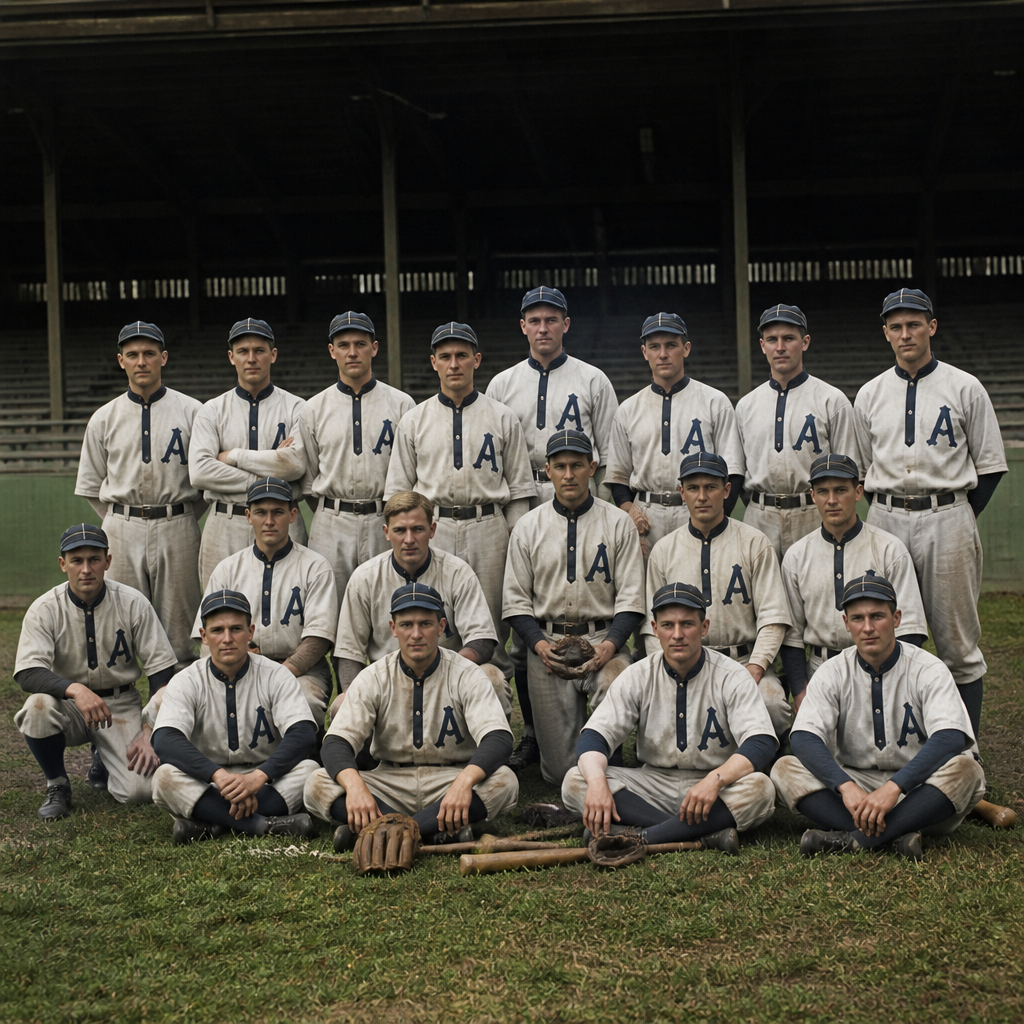
The Atlantic Base Ball Club of Brooklyn stood at the center of amateur baseball’s formative decades, and its story explains how loosely organized local recreation became a competitive, rule-bound national game. Founded in 1855 in Brooklyn, the Atlantics were more than a strong team. They were a model club in the years before fully professional leagues, a standard-bearer for the amateur era, and a bridge between neighborhood sport and organized championship play. To understand early baseball history, readers need to understand clubs like Atlantic, because the club system shaped scheduling, rules, prestige, crowds, and the very meaning of competition.
In the 1850s and 1860s, “base ball” referred to a family of bat-and-ball games gradually settling into the New York game, the code that became dominant through club play. Amateur clubs were member-run associations, often organized around neighborhoods, occupations, or social networks. Players generally were not openly paid salaries, though travel expenses, jobs, gifts, and under-the-table inducements increasingly blurred the line between amateurism and professionalism. Competition came through challenge matches, annual conventions, and eventually championship races under the National Association of Base Ball Players, founded in 1857. Within that environment, the Atlantics earned a reputation for skill, discipline, and resilience that few rivals matched.
This article serves as a hub for amateur clubs and early competition by using the Atlantics as the main case study. Their rise illuminates how clubs formed, how they practiced, how they arranged games, why crowds cared, and why the amateur system both succeeded and broke down. It also matters because many features of modern baseball culture—standings, title claims, road trips, media coverage, and debates over competitive integrity—appeared first in this supposedly simpler era. When I have worked through nineteenth-century box scores, club reports, and convention proceedings, the same point keeps surfacing: the amateur age was not primitive chaos. It was an organized, ambitious sporting world, and the Atlantic Base Ball Club of Brooklyn was one of its clearest expressions.
How the Atlantic Club Emerged in Brooklyn’s Sporting Culture
Brooklyn in the 1850s was fertile ground for organized baseball. Growing population, expanding transportation, and strong neighborhood identities helped clubs recruit members and attract spectators. The Atlantic club drew from a city already rich in sporting activity, including cricket, rowing, boxing culture, and volunteer associations. Baseball fit this civic environment because it offered regular sociability, orderly competition, and public prestige without requiring the expensive grounds or elite traditions associated with some older sports. The club quickly became prominent not simply by winning, but by adopting durable club practices: elected officers, written constitutions, scheduled meetings, subscriptions, and a recognizable home identity.
The Atlantics also benefited from Brooklyn’s rivalry with Manhattan and other New York-area clubs. In the pre-league era, status came from defeating other respected nines and maintaining a strong public reputation. Clubs needed dependable administration as much as talent. Grounds had to be secured, invitations answered, lineups settled, and disputes managed under evolving rules. The Atlantic club proved unusually capable on those fronts. Contemporary coverage often praised their steady fielding and coolness under pressure, traits that reflected practice habits and continuity of membership. That organizational competence helped the team remain near the top while many early clubs rose briefly and disappeared.
Key figures reinforced that stability. Players such as Joe Start, Dickey Pearce, and later others associated with top-level Brooklyn baseball became central names in nineteenth-century accounts. Pearce, especially, is often credited with helping pioneer the shortstop position as a tactical necessity when infielders played close and balls were softer. Such innovations did not emerge from abstract theory; they arose from repeated club competition. The Atlantics became influential because they adapted faster than many opponents, turning practical experimentation into repeatable advantage.
How Amateur Clubs Worked and Why They Mattered
An amateur baseball club in this period was a social institution as much as an athletic team. Members paid dues, elected officers, maintained bylaws, and often imposed standards of conduct and attendance. The club represented a locality and reflected civic pride. Matches were occasions, not just fixtures. Newspapers previewed them, crowds gathered around roped-off fields, and postgame dinners or speeches reinforced the sense that baseball belonged to respectable public life. This structure helped legitimate the sport at a time when many games still fought perceptions of disorder or gambling influence.
The amateur label, however, needs careful definition. It did not always mean athletes played only for pure recreation. By the 1860s, leading clubs increasingly sought advantages by arranging favorable employment, covering travel, or quietly compensating star players. That pressure intensified because winning mattered. The Atlantics competed in an environment where reputation translated into invitations, gate interest, and broader influence at conventions. Amateurism was therefore best understood as a governing ideal rather than a perfectly enforced reality. This tension became one of the main engines driving baseball toward professionalism.
For the Atlantics, the club model created continuity. Because the organization was larger than any single season, it could survive player changes and still maintain standards. That is one reason the club is so useful in a hub article on amateur competition. It shows that early baseball was built by durable institutions, not isolated games. Readers exploring related topics such as the Knickerbockers, Excelsiors, Mutuals, Eckfords, and the NABBP should see the Atlantics as part of an interconnected ecosystem of clubs that collectively standardized baseball.
Competition Before Leagues: Challenges, Conventions, and Championships
Before formal leagues controlled schedules, clubs arranged matches through challenges and correspondence. A strong club needed both athletic ability and diplomatic skill. Opponents might dispute dates, grounds, eligibility, or stakes. Championship claims could be confusing by modern standards because title possession often passed through challenge results rather than balanced league standings. Yet this system was not meaningless. It reflected the realities of travel, local autonomy, and uneven club strength. The Atlantics mastered it by accepting significant challenges and proving themselves repeatedly against leading rivals.
The National Association of Base Ball Players gave this competition a broader framework. Founded in 1857, the association codified rules and brought clubs into annual convention culture. It did not create a modern league schedule, but it made the baseball world more legible. Clubs now had recognized standing, shared procedures, and more consistent regulations. The Atlantic club thrived under these conditions because it combined local strength with regional ambition. Their championship run from the late 1850s into the 1860s helped establish the idea that one club could be acknowledged as best in the country, even without a league table in the modern sense.
The famous Atlantic winning streak demonstrated how championship legitimacy worked in practice. The club went years without a defeat in match play before finally losing to the Eckfords in 1861. Even allowing for incomplete records and the era’s scheduling irregularities, that run mattered enormously to contemporaries. It gave the Atlantics a public aura similar to later dynasties. More important, it proved that sustained excellence was possible in amateur baseball, which encouraged wider press coverage and sharper competitive ambition across the sport.
What Made the Atlantics Champions on the Field
The Atlantics were not champions merely because rivals admired them. They were excellent in the practical details that decided nineteenth-century games: clean catching, alert baserunning, smart positioning, and emotional steadiness in long contests. Rules differed from today’s game. Underhand pitching emphasized putting the ball in play rather than overpowering hitters. Gloves were minimal or absent for much of the period, making reliable fielding a defining skill. Outs could once be recorded on a bound ball, though that rule changed over time. In that context, a disciplined defensive club gained an enormous edge.
Atlantic teams repeatedly showed that edge. Contemporary reports described their composure, especially in close games. Their players understood situational play before the modern language of strategy existed. They advanced runners aggressively, took extra bases on errors, and punished defensive lapses. Dickey Pearce’s short fielding role, positioned between the infield and outfield, addressed real tactical needs and influenced defensive alignment beyond Brooklyn. Joe Start brought power and consistency that made him one of the era’s most respected batsmen. These were not isolated stars carrying a weak side; the club’s strength came from coordinated play.
A celebrated example is the 1870 victory over the Cincinnati Red Stockings, baseball’s first openly all-salaried touring powerhouse. Although that match falls at the edge of the amateur era, it captures the Atlantic identity perfectly. Cincinnati entered unbeaten in 1869 and nationally famous. Brooklyn beat them in extra innings, ending the aura of invincibility. The game symbolized both Atlantic toughness and the changing sport. An elite amateur-rooted club had toppled a professional juggernaut, showing how thin the line between the two worlds had become.
| Feature | Amateur Era Pattern | Atlantic Example |
|---|---|---|
| Club organization | Member-run associations with officers and bylaws | Stable administration and long-term identity in Brooklyn |
| Scheduling | Challenge matches rather than fixed league seasons | Accepted major contests to defend prestige |
| Championship claims | Based on reputation, key victories, and challenge results | Long unbeaten run built national standing |
| Player status | Officially amateur, often with indirect compensation | Competed in an environment where talent drew incentives |
| Tactical evolution | Rules and positions still developing | Pearce helped establish shortstop as a vital role |
| Public interest | Newspaper-driven local and regional attention | Brooklyn crowds followed the club as a civic symbol |
The Atlantic Club as a Gateway to the Wider Amateur Baseball World
As a hub topic, amateur clubs and early competition should not be reduced to one famous team. The Atlantics matter most when placed alongside peers and rivals. The Knickerbockers helped formalize rules and club customs; the Excelsiors expanded the game’s geographic reach through travel; the Eckfords embodied Brooklyn rivalry at the highest level; the Mutuals and Athletics represented the increasingly competitive urban scene that pushed baseball toward commercial professionalism. Studying the Atlantics provides a strong entry point into all of these related histories because they interacted with each trend directly.
The club also highlights how baseball spread beyond New York. Strong Brooklyn and Manhattan nines became reference points for clubs in Philadelphia, Washington, Boston, and eventually the Midwest. Newspapers reprinted game accounts, rules, and club notices across state lines. Traveling teams demonstrated standards of play, and local clubs copied organizational models from established eastern powers. The Atlantic name therefore had influence beyond the games they won. It signaled what a first-rate club looked like: orderly, ambitious, technically sound, and publicly visible.
For readers building a broader understanding of early baseball history, several themes radiate outward from the Atlantic story. One is rule evolution, including pitching restrictions, fair-foul conventions, and the decline of bound catches. Another is club governance, especially how conventions and committees tried to maintain order in a fast-growing game. A third is commercialization, visible in gate receipts, enclosed grounds, and player movement. The Atlantics sit at the intersection of all three. That makes them an ideal anchor for this subtopic and a practical starting point for deeper reading across the amateur era.
Why the Amateur Era Ended and the Atlantic Legacy Endured
The amateur era did not vanish because clubs like Atlantic failed. It ended because success created pressures the old system could no longer contain. Better players wanted compensation. Clubs wanted reliable schedules, stronger control over eligibility, and more revenue certainty. Spectators were willing to pay for higher-quality contests. The NABBP responded unevenly, and by 1869 it formally recognized professionalism. That shift did not erase amateur baseball, but it changed the center of power. The logic of open competition, urban rivalry, and public demand pushed the sport toward salaried teams and eventually the National Association and National League structures that followed.
The Atlantics adapted to this transition, but their greatest historical significance remains tied to the amateur age they helped define. They proved that baseball could sustain enduring clubs, national reputations, and meaningful championship standards before modern leagues existed. They showed that tactics, administration, and culture mattered as much as raw talent. They also reveal a truth that still applies across sports: when competition becomes important, institutions matter. Rules, governance, and credibility determine whether victories carry weight.
For anyone exploring the early history of baseball, the Atlantic Base Ball Club of Brooklyn is the essential hub for understanding amateur clubs and early competition. Their record, rivals, innovations, and public presence illuminate the entire subtopic. Start with the Atlantics, then branch into the Knickerbockers, Eckfords, Excelsiors, NABBP governance, and the rise of professionalism. Doing so turns scattered nineteenth-century anecdotes into a coherent history of how American baseball learned to compete.
Frequently Asked Questions
What made the Atlantic Base Ball Club of Brooklyn so important in early baseball history?
The Atlantic Base Ball Club of Brooklyn was one of the defining organizations of baseball’s amateur era because it helped transform the sport from a loose local pastime into a structured, widely followed competitive game. Founded in 1855, the Atlantics emerged at a moment when baseball rules, club organization, and championship customs were still taking shape. They were not simply a successful team; they were an example of how a club could be run with discipline, continuity, and serious competitive ambition while still operating within the amateur ideals of the period.
Their importance also comes from timing. The Atlantics rose during the years when baseball was spreading rapidly through New York and beyond, especially under the influence of the Knickerbocker-style rules and the activities of the National Association of Base Ball Players. Because they were consistently strong against leading clubs, their games attracted broad attention and helped establish the idea that baseball contests could carry regional and even national significance. In that sense, the Atlantics were central to the sport’s early public identity.
Just as important, they served as a bridge between eras. On one side was neighborhood recreation, with flexible customs and local character. On the other side was a more formal baseball culture built around recognized rules, championship claims, regular interclub competition, and growing spectator interest. The Atlantics stood squarely in the middle of that transition. Their success, reputation, and visibility made them one of the clubs through which baseball became a more organized national game.
Why are the Atlantics often called champions of the amateur era?
The Atlantics are often described as champions of the amateur era because they became one of the most dominant and admired clubs before professional baseball fully took over the sport. In the 1850s and 1860s, baseball did not yet operate under the league structure familiar today. Instead, prestige was earned through interclub competition, challenge matches, and the recognition of fellow clubs, newspapers, and baseball followers. In that world, the Atlantics built a championship reputation through repeated victories over elite opponents and sustained excellence over time.
Their prominence was especially evident in the early 1860s, when they established themselves as one of the strongest clubs in the country. They were known for defeating major rivals and defending their standing against challengers in an era when a club’s claim to supremacy depended on performance rather than league standings. Because there was no modern postseason system, championship status was often connected to consensus and results, and the Atlantics earned both. They were widely seen as a standard of excellence during baseball’s most influential amateur years.
Calling them champions of the amateur era also reflects more than wins and losses. The phrase captures the fact that they symbolized the highest level of preprofessional baseball culture. They represented discipline, club loyalty, tactical sophistication, and a serious commitment to competition without yet belonging to the fully salaried, openly professional structure that would later define the game. That combination of dominance and historical position is why the Atlantics remain closely associated with amateur baseball at its peak.
How did the Atlantic Base Ball Club reflect the transition from informal play to organized championship baseball?
The story of the Atlantics reflects this transition very clearly because their career unfolded during the decades when baseball was becoming more regulated, more competitive, and more publicly important. In the earliest years of the sport, many games were arranged casually, local customs could vary, and clubs often existed as social groups as much as athletic organizations. The Atlantics were part of that world at the beginning, but they quickly became leaders in a new kind of baseball culture that emphasized standard rules, recognized competition, and sustained club identity.
As baseball organization improved, clubs increasingly scheduled serious matches, kept records, adopted common rules, and measured themselves against acknowledged rivals. The Atlantics thrived under those conditions. Their prominence in high-profile contests helped reinforce the idea that games should be governed by accepted standards and that a club’s reputation should be built through credible competition. They also participated in the environment created by early baseball associations, where clubs debated rules, shared practices, and contributed to the sport’s developing structure.
This transition also had a social dimension. Baseball was no longer just something played for local amusement; it was becoming a game followed by newspapers, discussed by supporters, and watched by growing crowds. The Atlantics were one of the clubs that helped make that change visible. Their contests had meaning beyond a single afternoon, and their status connected Brooklyn baseball to a wider sporting public. In many ways, their history shows how the amateur game laid the foundations for the championship traditions, organized schedules, and public attention that later professional baseball would inherit.
What role did Brooklyn play in the rise of the Atlantic Base Ball Club and early baseball itself?
Brooklyn was essential to the rise of the Atlantics because it was one of the great centers of early baseball development. In the mid-19th century, Brooklyn had the population, local pride, and active club culture necessary for the sport to flourish. The city supported multiple strong clubs, encouraged frequent competition, and provided an environment in which baseball could grow from neighborhood pastime into a serious organized pursuit. The Atlantics benefited from that setting and, in turn, helped define Brooklyn as one of the game’s earliest strongholds.
The city’s baseball culture was highly competitive, which pushed clubs to improve their play and organization. Facing nearby rivals on a regular basis gave the Atlantics opportunities to prove themselves and build a reputation. Brooklyn’s close connection to New York’s broader baseball world also meant that leading clubs from the area played an outsized role in shaping standards, customs, and prestige. When the Atlantics succeeded, they were not doing so in isolation; they were emerging from one of the most important baseball communities in the country.
Brooklyn also mattered symbolically. Before baseball became a truly national professional spectacle, much of its identity was rooted in local civic pride. Clubs carried the reputation of their neighborhoods and cities, and successful teams helped turn local enthusiasm into broader recognition. The Atlantics embodied that civic energy. Their achievements made Brooklyn synonymous with first-rate amateur baseball and helped elevate the city’s place in the sport’s early history. In that sense, understanding the Atlantics also means understanding Brooklyn’s role as one of baseball’s original power centers.
Why does the legacy of the Atlantic Base Ball Club still matter today?
The legacy of the Atlantic Base Ball Club still matters because it helps explain how baseball became the organized sport people recognize today. Modern fans often look back at early baseball as a vague prehistory, but clubs like the Atlantics show that the game’s foundations were built by real institutions with clear identities, rivalries, standards, and influence. Their history reveals that long before the modern major leagues, baseball already had championship debates, prominent clubs, evolving rules, and passionate followers.
The Atlantics also matter because they represent a formative stage in the sport’s values and structure. They belonged to a period when amateur ideals still carried prestige, yet competition was becoming more intense and more public. That makes them especially useful for understanding the shift from gentlemanly recreation to high-stakes organized sport. Their example shows how club discipline, sustained excellence, and intercity competition prepared the way for professionalism. In other words, they were part of the machinery that built baseball’s future.
Finally, their legacy endures because early baseball history is not complete without recognizing the clubs that made the game credible before leagues and stars dominated the story. The Atlantics were one of those clubs. They helped establish standards of play, contributed to baseball’s growing authority as a rules-based sport, and gave the amateur era some of its clearest champions. For historians, fans, and anyone interested in how national pastimes are formed, the Atlantic Base Ball Club remains a vital chapter in baseball’s origin story.