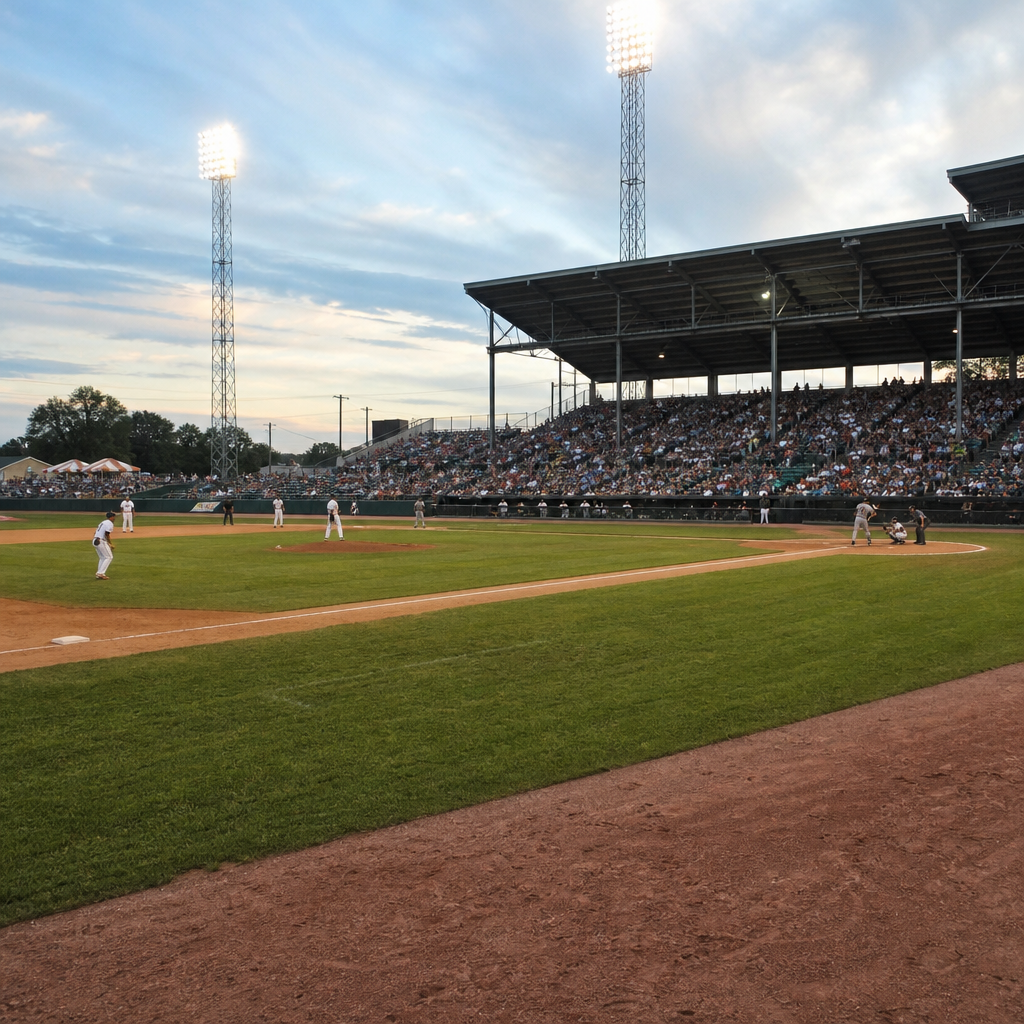
Ruppert Stadium in Kansas City stands as one of the most important addresses in the story of Negro Leagues ballparks, not simply because elite teams played there, but because the venue sat at the intersection of Black baseball excellence, urban culture, and the business of segregated sport. In the context of Kansas City baseball history, “Ruppert Stadium” usually refers to the park also widely remembered as Blues Stadium, the home field of the Kansas City Monarchs and the Kansas City Blues at different points in its life. For readers exploring iconic ballparks, this site matters because it helps explain how Negro Leagues teams used major urban venues, how ownership and scheduling worked in the Jim Crow era, and why surviving documentation about Black baseball parks often requires careful interpretation. I have worked through old schedules, newspaper clips, and ballpark references enough to know that Negro Leagues venues cannot be treated like modern franchise homes with neat continuity. Teams rented, shared, barnstormed, shifted leagues, and adapted constantly. That is exactly why Ruppert Stadium deserves a hub-level treatment. It opens the door to broader questions: what made a Negro Leagues ballpark significant, how did the Monarchs build a national brand, and why do so many great Black baseball sites remain less recognized than white major league parks? Understanding this stadium gives readers a practical framework for studying the full landscape of Negro Leagues ballparks.
What Ruppert Stadium Was and Why It Matters
Ruppert Stadium was a professional baseball park in Kansas City, Missouri, associated most prominently with the American Association’s Kansas City Blues and, crucially, with the Kansas City Monarchs of the Negro Leagues. The park opened in 1923 and was built on the site of an earlier ballpark fire, reflecting a common pattern in early twentieth-century baseball architecture: wooden parks gave way to larger steel-and-concrete facilities after fires, capacity pressures, and commercial ambition forced upgrades. In many references, the venue is called Blues Stadium, while “Ruppert Stadium” reflects the influence of baseball executive and owner Jacob Ruppert. For researchers, both names are essential search terms because archives, maps, and newspapers may use one or the other.
The stadium matters because the Monarchs were not a marginal club borrowing an occasional field. They were one of the central institutions in Black baseball, known for sustained winning, deep talent pipelines, and innovative promotion. When the Monarchs played in a high-capacity urban park like this one, they presented Negro Leagues baseball at a scale that challenged racist assumptions about Black sport. Fans saw stars in a setting that looked and felt big league. That visual mattered. So did location. Kansas City sat within strong rail connections and barnstorming circuits, making it a practical and symbolic anchor for Black baseball in the Midwest. A hub article on Negro Leagues ballparks has to begin with places like this because they reveal how quality facilities, transportation access, and city demographics shaped league survival.
Ruppert Stadium as a Negro Leagues Ballpark
Calling Ruppert Stadium a Negro Leagues ballpark does not mean it was built exclusively for Negro Leagues use. In Black baseball history, a ballpark’s significance often comes from how teams occupied, scheduled, and transformed a venue rather than from formal ownership alone. The Monarchs, like many Negro Leagues clubs, operated in a sports economy where control of dates could be as important as control of real estate. Weekend gates, holiday doubleheaders, and night baseball exhibitions determined revenue. A stadium became meaningful when a Black club could consistently draw there, create ritual there, and tie its identity to that place in the minds of fans.
The Monarchs achieved exactly that. Their use of Kansas City’s premier park connected Black baseball to civic pride and mainstream attention, even within a segregated system. This pattern appears across the broader subtopic. Several major Negro Leagues clubs played in parks shared with white minor league teams, municipal sites, or multipurpose fields. As a result, historians evaluate these venues through recurring criteria: frequency of use, quality of facilities, role in championship or showcase games, transportation access, and cultural footprint in Black neighborhoods and newspapers. Ruppert Stadium scores strongly on all counts. It hosted a flagship franchise in a major Black baseball city, elevated fan experience, and provided the physical stage for a team that influenced the sport nationwide.
The Kansas City Monarchs and the Stadium’s Identity
The Kansas City Monarchs are the main reason Ruppert Stadium belongs near the center of any discussion of Negro Leagues ballparks. Founded in 1920 as a charter member of the Negro National League organized by Rube Foster, the Monarchs became one of Black baseball’s most durable and successful clubs. They won league titles, developed stars, and stayed relevant through multiple reorganizations of Negro Leagues structure. Their reputation rested not just on talent but on professionalism: smart travel, aggressive promotion, and willingness to adopt innovations such as portable lighting for night games during barnstorming tours.
At home, a quality venue strengthened that brand. Fans attending Monarchs games at Ruppert Stadium could see a polished product in a substantial urban ballpark rather than in a makeshift lot. That distinction matters when assessing historical influence. Ballparks shape memory. A championship team playing in a prominent stadium leaves stronger newspaper coverage, civic discussion, and community attachment. The Monarchs’ relationship with this park also helps explain why Kansas City became such fertile ground for Black baseball spectatorship. The team was not hidden from view. It occupied an important sports space and used that platform to attract local supporters, traveling fans, and curious white spectators, especially for crossover exhibitions and high-profile dates.
How the Blues and Monarchs Shared the Space
One reason Ruppert Stadium is so useful as a hub topic is that it illustrates a central reality of Negro Leagues venues: sharing. The Kansas City Blues, a prominent minor league franchise, had their own schedule, financial priorities, and fan base. The Monarchs worked within that calendar, often securing dates around the Blues and other events. This arrangement was not unusual. Black teams across the country frequently negotiated for access to better parks because the gate potential justified the complexity. Sharing could create limitations, but it also offered advantages, including superior seating, better field conditions, stronger transit links, and greater legitimacy in the public eye.
From an operational perspective, shared parks influenced everything from start times to maintenance. Grounds crews might prepare the field differently depending on back-to-back tenants. Advertising space, ticketing routines, and clubhouse access could vary. Even newspaper framing could shift: white papers might foreground the park and treat the Black team as an event tenant, while Black papers emphasized the club’s ownership of the occasion through crowd size and performance. I have found that reading both types of coverage side by side gives a much clearer picture of how the stadium functioned socially, not just architecturally.
| Feature | Why It Mattered to the Monarchs | Broader Negro Leagues Pattern |
|---|---|---|
| Shared tenancy | Allowed access to a larger, better-equipped park | Common among elite Black clubs in major cities |
| Urban location | Improved attendance through streetcar and rail access | Critical for weekend and holiday gates |
| Large capacity | Supported marquee games and touring opponents | Helped Black teams monetize star power |
| Professional amenities | Enhanced fan experience and team presentation | Reinforced claims that Negro Leagues baseball was top-tier |
| Flexible scheduling | Enabled doubleheaders, exhibitions, and special promotions | Essential in a business built on gate receipts |
What Fans Experienced at Ruppert Stadium
For spectators, Ruppert Stadium represented more than a diamond and grandstand. It was an event space where baseball, music, fashion, and neighborhood identity met. In the Negro Leagues era, attending a Monarchs game could be a social occasion equal to the contest itself. Fans arrived dressed for the city, met friends, followed box scores in Black newspapers, and watched players whose reputations extended far beyond local standings. That atmosphere is essential to understanding why Negro Leagues ballparks should be studied as cultural sites, not just sports facilities.
The physical scale of the park changed the emotional effect of the game. Big crowds amplify drama. A close contest, a stolen base, or a towering drive feels different in a substantial stadium than in a small field with temporary seating. The Monarchs’ style of play, often fast, opportunistic, and entertaining, matched that environment well. So did their star power. Across different eras, the club featured players connected to the highest level of Black baseball, and later to integrated major league history. When readers study ballparks like Ruppert Stadium, they should imagine not only architecture but also sound: vendors, band music, crowd reaction, and the pregame buzz that made these parks engines of communal life.
Ruppert Stadium in the Wider Map of Negro Leagues Ballparks
As a sub-pillar hub, this article should place Ruppert Stadium within the larger geography of Negro Leagues ballparks. Important comparison sites include Rickwood Field in Birmingham, Hinchliffe Stadium in Paterson, Hamtramck Stadium near Detroit, Martin Stadium in Memphis, and Comiskey Park in Chicago for major events involving Black clubs. Some parks were long-term homes. Others were recurring rental stages for classics, league games, or exhibitions. Together, they show that Black baseball thrived in many kinds of venues: purpose-built parks, shared minor league stadiums, municipal complexes, and occasionally major league grounds for special dates.
Ruppert Stadium belongs in the upper tier of these discussions because of the Monarchs’ national stature. A ballpark attached to a flagship club becomes a reference point for the whole network. When touring teams came through Kansas City, when sportswriters evaluated facilities, or when promoters judged where a marquee matchup could draw, the quality of the venue shaped decisions. This is one reason hub coverage must move beyond nostalgia. Ballparks affected labor conditions, revenues, media attention, and competitive balance. Better parks usually meant better dates and bigger gates, which in turn helped clubs sign and retain talent. In that sense, stadium infrastructure was part of baseball strategy.
Research Challenges, Preservation, and Lasting Significance
Anyone writing seriously about Negro Leagues ballparks has to address documentation limits. Records can be fragmented. Team schedules shifted. Newspaper accounts disagree on attendance, naming, or tenancy. Ballparks themselves were renamed, rebuilt, or demolished, leaving later writers to compress complicated histories into tidy labels. Ruppert Stadium is a good example of why precision matters. Readers should track dates, alternate names, and the difference between a team’s official home and its practical home field usage. Reliable research usually means combining city directories, Sanborn maps, black press coverage, white daily coverage, league guides, and work by specialized baseball historians.
The preservation lesson is straightforward: sites tied to Negro Leagues history require active interpretation or they disappear from public memory. Even when the physical structure is gone, the location still deserves markers, archival work, and inclusion in local heritage trails. Kansas City has rightly invested in Negro Leagues memory through institutions such as the Negro Leagues Baseball Museum, but individual ballpark stories still need clear public explanation. Ruppert Stadium’s legacy is not only that games happened there. Its deeper importance is that it demonstrates how Black excellence in baseball occupied major urban space, built commercial success under discrimination, and created traditions strong enough to influence the integrated game that followed.
Ruppert Stadium in Kansas City remains essential for anyone studying the Monarchs, the Blues, and the broader world of Negro Leagues ballparks because it brings the big themes of the subject into one place. It shows how a premier Black club used a substantial city stadium to build identity, draw fans, and prove that top-level baseball flourished outside the segregated major leagues. It also shows why ballpark history is never just about bricks, steel, or seating charts. Venue access shaped revenue, prestige, travel, scheduling, and public memory. For the Kansas City Monarchs, a strong home setting amplified an already exceptional franchise. For modern readers, the stadium provides a practical starting point for understanding the wider network of Black baseball venues across Birmingham, Chicago, Memphis, Detroit, Paterson, and beyond.
The key takeaway is simple: if you want to understand Negro Leagues baseball fully, study the ballparks as seriously as the box scores. Parks like Ruppert Stadium reveal how teams operated, how communities gathered, and how Black baseball claimed visibility in a segregated nation. They also remind us that many iconic sites were shared, renamed, or lost, which makes careful historical work especially important. Use this hub as your launching point into the full subtopic of Negro Leagues ballparks, then continue with deeper profiles of individual stadiums, preservation efforts, and the cities that sustained these remarkable teams.
Frequently Asked Questions
What was Ruppert Stadium in Kansas City, and why is it so important in baseball history?
Ruppert Stadium in Kansas City was one of the city’s most historically significant baseball venues, best known as the home ground of the Kansas City Monarchs of the Negro Leagues and the Kansas City Blues of the American Association. In many historical discussions, the name “Ruppert Stadium” is used interchangeably with “Blues Stadium,” which can sometimes confuse readers, but both names point to the same essential place in Kansas City baseball history. Its importance goes well beyond the fact that professional teams played there. The ballpark became a stage where Black baseball excellence, local civic identity, and the realities of segregated sport all met in a very visible way.
For the Monarchs in particular, the stadium represented much more than a home field. It was a place where one of the most successful and influential franchises in Black baseball showcased elite talent before large and enthusiastic crowds. The Monarchs were not a marginal club; they were one of the defining teams of the Negro Leagues, and their association with this ballpark helped cement Kansas City as a major center of Black baseball. At the same time, the stadium’s use by the Kansas City Blues connected it to the broader professional baseball landscape, making it a rare urban venue where parallel baseball worlds existed in close proximity, though under unequal social conditions.
That combination is what gives Ruppert Stadium its lasting significance. It was not just a sports facility; it was part of a larger story about race, business, entertainment, and community life in Kansas City. When historians study Negro Leagues ballparks, they often focus on what happened on the field, but in the case of Ruppert Stadium, the surrounding cultural and economic context matters just as much. The venue helps illustrate how Black teams built loyal fan bases, sustained professional operations, and claimed space and visibility in an era shaped by segregation.
Why is Ruppert Stadium also called Blues Stadium?
Ruppert Stadium is also widely remembered as Blues Stadium because of its strong association with the Kansas City Blues, the city’s American Association club. Over time, both names became part of the stadium’s historical identity, and that dual naming reflects the layered baseball history of the site. In practical terms, when many writers and researchers refer to Ruppert Stadium in Kansas City baseball history, they are talking about the same ballpark that fans and local memory often identify as Blues Stadium.
The use of multiple names was not unusual in the first half of the twentieth century, especially for prominent sports venues that changed ownership, branding, or public association. A stadium’s formal name might differ from the one most commonly used by newspapers, local residents, or baseball followers. In this case, the “Blues Stadium” name stuck because the Kansas City Blues were an established professional club, and their presence gave the ballpark a strong identity in organized baseball. At the same time, the name “Ruppert Stadium” tied the venue to a broader commercial and ownership context.
For modern readers, the key point is that the two names should not be treated as references to entirely different places. Instead, they reflect the stadium’s shared life in Kansas City baseball. That shared identity is especially important because it reminds us that the ballpark was not limited to one team or one audience. It belonged to overlapping baseball communities, including fans of the Blues and supporters of the Monarchs, even though those communities operated within a segregated society. Understanding the dual name helps clarify the stadium’s place at the crossroads of white minor league baseball and Black professional baseball.
What role did Ruppert Stadium play in the history of the Kansas City Monarchs?
Ruppert Stadium played a central role in the public life and competitive success of the Kansas City Monarchs, one of the greatest franchises in Negro Leagues history. As a home ground, it gave the Monarchs a major urban venue in which to present themselves as a first-class professional club. That mattered enormously. In the segregated sports world of the early and mid-twentieth century, access to quality facilities affected everything from scheduling and attendance to public image and financial stability. A strong home ballpark helped the Monarchs operate not just as a talented team, but as a durable and visible institution.
The stadium served as the setting where fans could watch high-level Black baseball at its best. The Monarchs built a reputation for disciplined play, star power, and consistent excellence, and the home setting amplified that reputation. When crowds came to see the Monarchs, they were not simply attending a game; they were taking part in one of the most important cultural traditions in Black sports. Ballparks like Ruppert Stadium functioned as gathering places where community pride, commercial entertainment, and athletic achievement came together. For Black Kansas City, the Monarchs’ presence at the stadium represented accomplishment and prestige in a society that routinely denied equal access and recognition.
Just as importantly, the ballpark helped situate the Monarchs within the larger baseball map of the United States. Negro Leagues teams often had to be flexible, barnstorm, and navigate unstable economic conditions, so a recognized home venue carried real value. Ruppert Stadium gave the Monarchs a physical anchor in Kansas City and reinforced the city’s status as one of the key capitals of Black baseball. That is why the stadium is remembered not merely as a location on a map, but as an essential part of the Monarchs’ identity and legacy.
How did Ruppert Stadium reflect the connection between baseball, Black urban culture, and segregation in Kansas City?
Ruppert Stadium reflected that connection in a very direct way because it was both a baseball venue and a social space shaped by the realities of segregated America. On the surface, it was a ballpark where professional teams played games. But beneath that, it was also a place where race, commerce, and community life were constantly interacting. For Black fans, especially those following the Monarchs, attending games could be an expression of neighborhood identity, cultural participation, and collective pride. The stadium became part of the city’s Black public life, not just part of its sports calendar.
At the same time, the stadium’s history cannot be separated from the business structure of segregated sport. Negro Leagues teams operated in an unequal system in which Black athletes and owners often had to create opportunities outside the white major leagues and much of organized baseball. Ballparks such as Ruppert Stadium were therefore crucial assets. They provided a place where Black baseball could generate revenue, attract large audiences, and demonstrate an exceptionally high level of play despite exclusion from the established major league system. The venue stood as evidence that Black baseball was not secondary in quality or importance, even if segregation tried to make it appear that way.
In an urban context, this gave the stadium a meaning that was larger than sports. It sat within a city where entertainment, transportation, neighborhood life, and racial boundaries all influenced who gathered where and why. A stadium like this could be a place of celebration, aspiration, and business opportunity, while also reminding everyone of the unequal world in which those experiences unfolded. That tension is central to understanding Ruppert Stadium. It was a site of joy and excellence, but also a product of a segregated era that forced Black baseball to build its own institutions and audiences.
Why does Ruppert Stadium still matter when discussing Negro Leagues ballparks today?
Ruppert Stadium still matters because it helps historians and fans understand that Negro Leagues history is not only about legendary players and famous box scores; it is also about place. Ballparks were where Black baseball became visible, sustainable, and communal. In the case of Ruppert Stadium, the importance lies in its ability to tell several stories at once: the rise of the Kansas City Monarchs, the coexistence of the Monarchs and the Kansas City Blues within the same baseball environment, and the broader economic and racial structures that shaped professional sports in the city.
It also matters because memory of the Negro Leagues can sometimes become simplified into a handful of star names or milestone events. Studying a venue like Ruppert Stadium adds texture and depth. It reminds us that Black baseball required infrastructure, management, fan support, and civic presence. The Monarchs did not become iconic in the abstract; they did so in real places, before real crowds, in ballparks that carried symbolic and practical weight. Ruppert Stadium is one of those places, and its story helps ground Negro Leagues history in the lived realities of urban America.
Finally, the stadium remains important because Kansas City occupies such a prominent place in baseball heritage. Any serious discussion of the city’s baseball past eventually arrives at this venue and what it represented. It was home to winning teams, connected to multiple layers of professional baseball, and embedded in the history of segregation, entrepreneurship, and Black cultural life. That combination makes Ruppert Stadium more than a former sports site. It is a landmark in the historical imagination of baseball, especially for anyone seeking to understand how the Negro Leagues shaped the game and the communities that supported it.