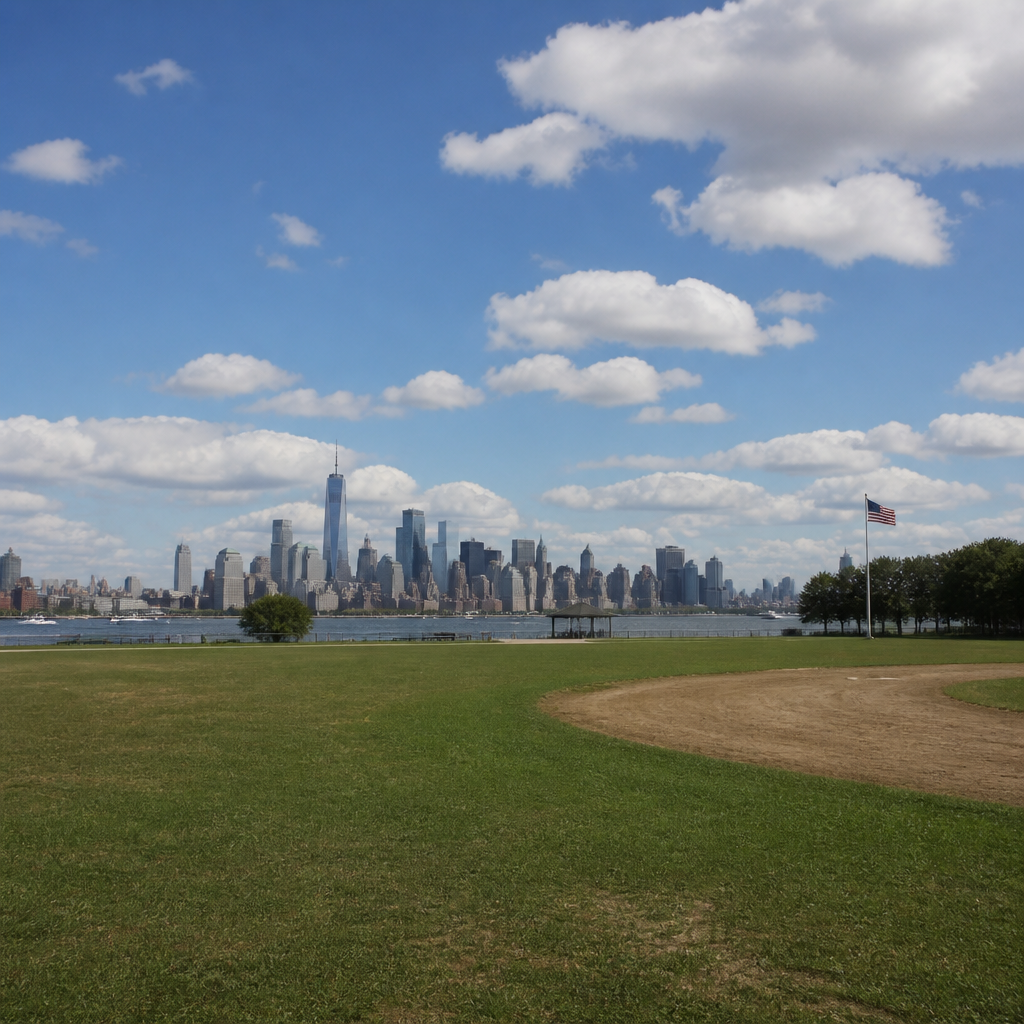
Elysian Fields in Hoboken played a decisive role in the early history of baseball because it gave New York’s first organized clubs the space, access, and social setting they could not easily find in Manhattan. In the 1840s and 1850s, amateur baseball clubs crossed the Hudson River not by accident or fashion alone, but because Hoboken offered large open grounds, reliable ferry links, and a neutral meeting place where competition could grow into a repeatable public pastime. For anyone studying amateur clubs and early competition, Elysian Fields is not a side note. It is one of the main stages on which the modern game began to take shape.
When historians refer to early baseball clubs, they usually mean self-organized urban associations such as the Knickerbocker Base Ball Club, the New York Base Ball Club, the Eagle Club of New York, and later the Gothams, Empires, Excelsiors, and Atlantics. These clubs were amateur in the formal sense: members played for honor, fellowship, reputation, and local prestige rather than wages. Competition in this period was also different from the league structures fans know today. Matches were arranged challenge by challenge, rules were still being standardized, and clubs often balanced athletic seriousness with a strong social calendar that included dinners, speeches, and printed notices. Elysian Fields fit that culture perfectly.
The site mattered for practical reasons first. Lower Manhattan and the built-up districts of New York City had limited open land suitable for repeated club matches. By contrast, Hoboken’s waterfront and adjoining pleasure grounds provided broad, relatively level green space. A baseball club needed more than a patch of grass. It needed room for multiple nines, spectators, carriages, practice, and a full match under agreed rules. In my work reviewing nineteenth-century club accounts and match reports, the same pattern appears repeatedly: organized play flourished where clubs could secure dependable grounds. Elysian Fields offered exactly that, and that reliability encouraged clubs to schedule games more formally.
The site also mattered culturally. Elysian Fields was already known as a resort landscape before baseball made it famous. Families visited for walking, picnics, and recreation. That atmosphere softened the rougher edges associated with some urban sports and gave emerging baseball clubs a respectable venue. For middle-class clerks, merchants, and professionals, that distinction was important. A club wanted to be seen as disciplined and gentlemanly, not disorderly. Early baseball competition therefore developed in a place where recreation, public visibility, and social legitimacy could reinforce each other.
Elysian Fields as the Ground of Early Organized Baseball
Elysian Fields was a landscaped recreational area on Hoboken’s waterfront, developed in the early nineteenth century and associated with the Stevens family’s improvements to the area. By the 1840s, it had become one of the region’s best-known leisure destinations. Its open meadows made it unusually well suited to bat-and-ball games at a moment when baseball was shifting from informal neighborhood play to organized club competition. The importance of this transition cannot be overstated. A game becomes a sport in the modern sense when participants can meet regularly, apply rules consistently, and compare results across clubs. Elysian Fields enabled all three.
The most famous date tied to the grounds is June 19, 1846, when the Knickerbockers played the New York Club in what is often described as the first recorded match between organized baseball clubs under the Knickerbocker rules. Historians correctly note that baseball existed before this game and that earlier forms of base ball were already being played. Still, the 1846 match remains a landmark because it was documented, club-based, and connected to a rules framework that helped shape later practice. Hoboken offered the conditions that made such a match possible and repeatable.
Just as important, Elysian Fields was not a one-day monument. It functioned as an active hub for years. Clubs met there for practice, arranged matches there against rivals, and used the location as common ground when interclub play expanded. In period newspapers, match reporting increasingly turned baseball into a readable competitive culture. The grounds therefore served as both athletic infrastructure and media stage. As reports accumulated, they gave clubs reputations, created comparative status, and encouraged more formal competition.
Why Clubs Crossed the Hudson Instead of Playing in Manhattan
The simplest answer is space, but the full answer includes geography, transportation, cost, and social order. Mid-nineteenth-century Manhattan was growing rapidly. Streets, housing, commerce, and port activity consumed land that might otherwise have supported large recreational fields. Baseball clubs needed open areas free from heavy traffic and frequent interruption. Elysian Fields, reached by ferry from Manhattan, offered a practical solution just across the river.
Transportation mattered more than modern readers sometimes assume. Ferry service linked New York and Hoboken closely enough to make regular club travel realistic. A club could assemble in Manhattan, cross together, carry bats and balls, and arrive at a recognized playing ground without planning an expedition into the countryside. That short journey also reinforced club identity. Members traveled together, played together, and returned together, often followed by socializing and reporting. Repetition built tradition.
There was also a neutrality advantage. In the absence of permanent enclosed home fields, clubs benefited from meeting on common ground not fully identified with one urban ward or one local social faction. Elysian Fields reduced disputes over whose neighborhood conditions governed the day. A known site with room for several clubs lowered friction and made challenge matches easier to arrange. In practical terms, that helped amateur competition scale up.
Finally, Hoboken provided a setting consistent with the values many clubs wanted to project. Baseball in this period was promoted as healthful exercise and disciplined recreation. A scenic pleasure ground aligned with that message better than a cramped vacant lot. When clubs invited members, guests, or onlookers, the location itself supported the claim that baseball was worthy of respect. That perception mattered because public legitimacy helped the game attract participants beyond a small inner circle.
Amateur Clubs and the Competitive Culture They Built
Early baseball clubs were voluntary associations governed by constitutions, officers, membership procedures, and written rules. The Knickerbockers are the most famous example, but they were part of a wider club world. Teams such as the Gothams and Eagles helped spread interclub competition, while Brooklyn clubs including the Excelsiors and Atlantics later elevated the standard of play. These organizations were amateur, but not casual. They kept records, enforced attendance expectations, and treated club reputation seriously.
Competition usually grew through challenges. One club would invite another to a match on a specific date under agreed rules. Results mattered, yet the social ritual around the match mattered too. Clubs often dined together afterward and observed forms of courtesy that reflected the era’s associational culture. In that sense, early baseball was both athletic contest and civic performance. Elysian Fields supported this dual character because it offered enough room for the game and enough public visibility for the occasion.
As more clubs appeared, a network effect took hold. Shared grounds made it easier for clubs to observe one another, learn tactics, compare skill levels, and adopt common expectations. Standardization accelerated when clubs played repeatedly in the same environment. Differences in local custom still existed, but common competition gradually pushed toward agreed practice. That is one reason hub articles on amateur clubs must treat place seriously. Rules alone did not unify baseball. Repeated encounters in a stable setting did.
| Club or Factor | Why It Matters to the Elysian Fields Story | Connection to Early Competition |
|---|---|---|
| Knickerbocker Base Ball Club | Codified influential rules and used Hoboken for organized matches | Shows the shift from informal play to documented interclub baseball |
| New York Base Ball Club | Opponent in the landmark 1846 match | Demonstrates that competition already required multiple structured clubs |
| Ferry access | Made travel from Manhattan practical and repeatable | Allowed regular scheduling instead of occasional informal gatherings |
| Open grounds | Provided sufficient space for matches, spectators, and practice | Enabled consistent play under emerging standards |
| Respectable leisure setting | Linked baseball with orderly recreation | Helped clubs attract members and public acceptance |
Rules, Reputation, and the Move Toward Standard Play
The early history of baseball is often oversimplified into a single invention story, but the record shows gradual consolidation. Different bat-and-ball traditions existed, and even among clubs using related rules, details varied. The Knickerbocker rules are important because they rejected some older customs, including forms of plugging or throwing the ball at a runner to record an out, and encouraged a cleaner, more regulated style of play. Yet rules only gain force when clubs actually apply them in recurrent competition. Elysian Fields provided the environment where that application became visible.
Match reports in newspapers helped turn local games into public benchmarks. Clubs earned reputation not merely by claiming excellence but by defeating named opponents under known conditions. That process resembles later standings, though without a formal league table. A strong club attracted challenges; a weak performance could damage standing. Because many significant matches occurred at shared grounds, Elysian Fields became part of the credibility structure of the sport. People knew where the clubs met, and they could compare reports over time.
This setting also exposed competitive pressures within amateurism. Clubs publicly emphasized honor and fair play, but they were intensely ambitious. As standards rose, clubs practiced more systematically and recruited better players from the same urban social world. By the late 1850s and early 1860s, the line between pure amateur ideal and performance-driven competition had already begun to blur. Understanding that tension is essential for this subtopic hub because it explains how baseball moved from social club recreation toward a more organized, status-conscious sport.
From Hoboken Hub to Wider Baseball World
Elysian Fields was central, but it was not the end point of early competition. As baseball spread, clubs in Brooklyn, Manhattan, and beyond developed additional grounds and stronger local identities. The formation of the National Association of Base Ball Players in 1857 marked a major step toward broader governance. That body did not create baseball from nothing; it formalized and coordinated a culture already built through repeated club interaction. Elysian Fields belongs at the center of that pre-association story.
Brooklyn’s rise is especially important. Clubs such as the Atlantics became dominant and helped shift the competitive center of gravity. Better local grounds, larger followings, and intensifying rivalries reduced Hoboken’s exclusive role over time. At the same moment, urban development changed the recreational landscape on both sides of the river. What had once been ideal open space became harder to preserve as the region urbanized. This pattern is common in sports history: a pioneering venue matters most during the phase when a game needs room to standardize, gather audiences, and build habit.
For readers exploring amateur clubs and early competition, the key takeaway is that Elysian Fields functioned as a hub in both the literal and interpretive sense. Literally, it was a shared field reached by ferries. Interpretively, it connects several crucial themes: the codification of rules, the growth of interclub play, the social identity of amateur associations, and the emergence of public sporting reputation. Any deeper article on the Knickerbockers, early match rules, Brooklyn supremacy, newspaper coverage, or the amateur-to-professional transition links back to this landscape.
What Elysian Fields Reveals About Early Baseball Competition
Elysian Fields reveals that early baseball developed through infrastructure as much as through ideas. People often look for founders, first games, or single moments of invention. Those matter, but the stronger explanation is institutional. Clubs needed accessible grounds, a transportation network, agreed procedures, and enough social legitimacy to keep recruiting members. Hoboken supplied these conditions at a formative moment. That is why clubs crossed the Hudson.
The site also shows how amateur competition can be highly organized without being fully professional. Early clubs prized decorum, constitutions, and ritual, yet they competed fiercely for recognition. Their matches generated news, comparative status, and pressure to improve. In effect, they created the habits that later leagues and governing bodies would formalize. Seen this way, Elysian Fields was not merely where baseball was played; it was where baseball learned how to behave as a sport.
If you are building a deeper understanding of the early history of baseball, start with Hoboken and then branch outward to club rules, ferry geography, newspaper culture, Brooklyn rivals, and the rise of governing associations. Elysian Fields ties those threads together better than any other single amateur-era site. Explore the related topics in this sub-pillar, and the evolution of early competition becomes far clearer.
Frequently Asked Questions
Why did early baseball clubs from New York choose Elysian Fields in Hoboken instead of playing in Manhattan?
Early baseball clubs crossed the Hudson because Hoboken solved several practical problems that Manhattan could not. In the 1840s and 1850s, organized clubs needed broad, relatively unobstructed open land where a full match could be played safely and consistently. Manhattan was already densely developed, and large vacant spaces suitable for repeated club play were harder to secure, more contested, and less predictable. Elysian Fields offered the opposite: roomy grounds, a more relaxed physical setting, and enough space for clubs to mark out games without constantly negotiating around city congestion.
Just as important, Hoboken was not remote. Ferry service made the trip manageable and routine for players and spectators coming from New York. That combination of accessibility and open space mattered enormously. It meant clubs could plan matches in advance, gather enough participants, and return to the same location often enough to establish habits, rivalries, and rules. In other words, Elysian Fields was not simply a scenic alternative to Manhattan; it was a functional sports venue before formal ballparks existed. Its appeal lay in geography, transportation, and practicality all working together at exactly the moment organized baseball was beginning to take shape.
What made Elysian Fields such an important place in the early history of baseball?
Elysian Fields was important because it helped turn baseball from a loosely played recreational activity into a more organized and repeatable club sport. Early baseball needed more than enthusiasm. It needed a dependable setting where clubs could meet, schedule contests, attract onlookers, and play under increasingly regular conditions. Elysian Fields provided that setting. By giving clubs a familiar and accessible ground, it supported the routines that are essential to any organized game: recurring matchups, agreed meeting places, and public visibility.
Its importance also comes from the social role it played. Because multiple clubs could use the grounds, Elysian Fields acted as a neutral meeting place where competition could develop between teams rather than remain confined within isolated neighborhoods. That neutral ground encouraged interaction among clubs and helped create a culture of challenge matches and inter-club play. In the broader story of baseball, that is a decisive step. A sport becomes established not only when people know how to play it, but when communities of players return again and again to shared spaces where customs, expectations, and standards can take root. Elysian Fields was one of those spaces, and that is why it occupies such a central place in baseball history.
How did transportation, especially the ferry system, help baseball grow at Elysian Fields?
Transportation was one of the hidden foundations of early baseball’s development, and the ferry connection between New York and Hoboken was crucial. Without reliable access, even the best playing grounds would have been of limited value. The ferry made Elysian Fields a practical destination rather than an inconvenient excursion. Players could leave New York, cross the Hudson with relative ease, and arrive at grounds suited to organized play. That regularity made scheduling matches much more realistic and reduced the uncertainty that might otherwise have discouraged inter-club competition.
The ferry also expanded the social reach of the game. Spectators, club members, and curious visitors could attend matches without needing a long overland journey. That matters because early baseball was not growing only through rule books or club records; it was growing through repeated public occasions. People watched, discussed, and imitated what they saw. Easy transport helped turn a local club activity into a visible pastime. In that sense, the ferry was more than a means of travel. It linked urban New York to a sporting landscape in Hoboken and made Elysian Fields part of a regular metropolitan circuit. The growth of early baseball depended on exactly that kind of connection between city life and open recreational space.
Was Elysian Fields chosen mainly for its beauty and leisure atmosphere, or were there more practical reasons?
Elysian Fields certainly had a reputation as an attractive leisure destination, and that pleasant atmosphere was part of its appeal. However, to say clubs played there mainly because it was fashionable or beautiful would miss the larger point. The decisive reasons were practical. Baseball clubs needed enough room to play properly, enough access to gather participants reliably, and a setting where repeated inter-club matches could happen without the constant pressures of crowded urban land use. Elysian Fields offered all three.
Its leisure character did matter, though, because early baseball emerged within a broader culture of organized recreation and social outings. Clubs were not operating in isolation from the customs of the day. A place that was already known for excursions, open-air enjoyment, and sociability made it easier for baseball to attract attention and fit into weekend or holiday rhythms. So the answer is both practical and cultural: Elysian Fields was useful first because it worked as a playing ground, and influential second because it gave baseball a public and respectable setting. The clubs did not cross the river merely to enjoy the scenery; they did so because the scenery came with space, access, and a social environment that helped the game flourish.
What does the story of Elysian Fields reveal about how baseball became a public pastime in the 1840s and 1850s?
The story of Elysian Fields shows that baseball became a public pastime through infrastructure and routine as much as through enthusiasm. The game’s early growth was not simply a matter of inventing rules and finding willing players. It required places where those players could meet consistently, play before others, and develop habits of competition that the public could recognize and follow. Elysian Fields offered the physical and social conditions that made this possible. It gave early clubs a recurring stage on which baseball could become visible, legible, and repeatable.
It also reveals that the rise of baseball was metropolitan rather than narrowly local. Even though many of the leading clubs were based in New York, their regular movement to Hoboken demonstrates how the sport developed across connected urban spaces. The Hudson was not a barrier; it was part of the route by which the game found its footing. In that environment, baseball became something people could plan to attend, discuss afterward, and begin to understand as an organized contest rather than a casual diversion. That transition is critical. Elysian Fields helps explain how baseball moved from informal recreation toward a more structured sporting culture, laying groundwork for the game’s later expansion and enduring popularity.